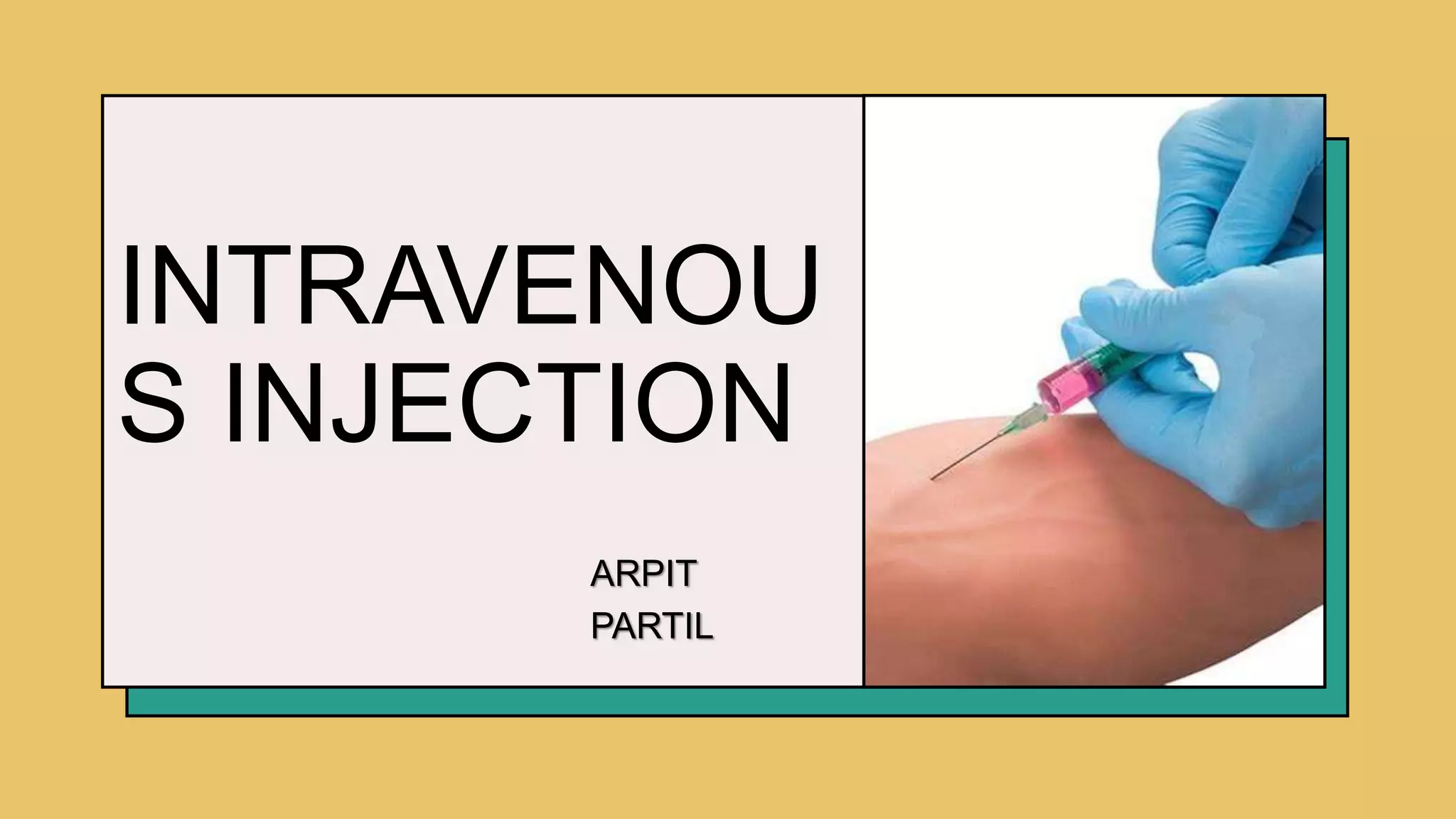
INTRAVENOU
S INJECTION
ARPIT
PARTIL
Introduction
• Intravenous therapy is a therapy that delivers liquid substance
directly into a vein.
• The intravenous route of administration can be used for injections
or infusions.
• The IV route is the fastest way to deliver medications and fluid
replacement throughout the body.
• Drugs are administered as;
• Bolus : large dose of drug injected rapidly.
• Slow IV injection : e.g., IV morphine in MI.
• IV infusion : e.g., dopamine in cardiogenic shock, fluid infused in
dehydration.
2 Presentation title 20XX
Indications
• To have fast action of the drug or fluid in emergency conditions
• Blood transfusion
• Induction of anaesthesia
• To give medications that are irritating or ineffective when given by
other routes
3 Presentation title 20XX
Contraindications
• Avoid vein that cross over the joints
• Extremities with renal fistula and shunt
• Avoid extremities with extreme oedema, burns or injury
• Avoid are of cellulitis or any other area with infection
4 Presentation title 20XX
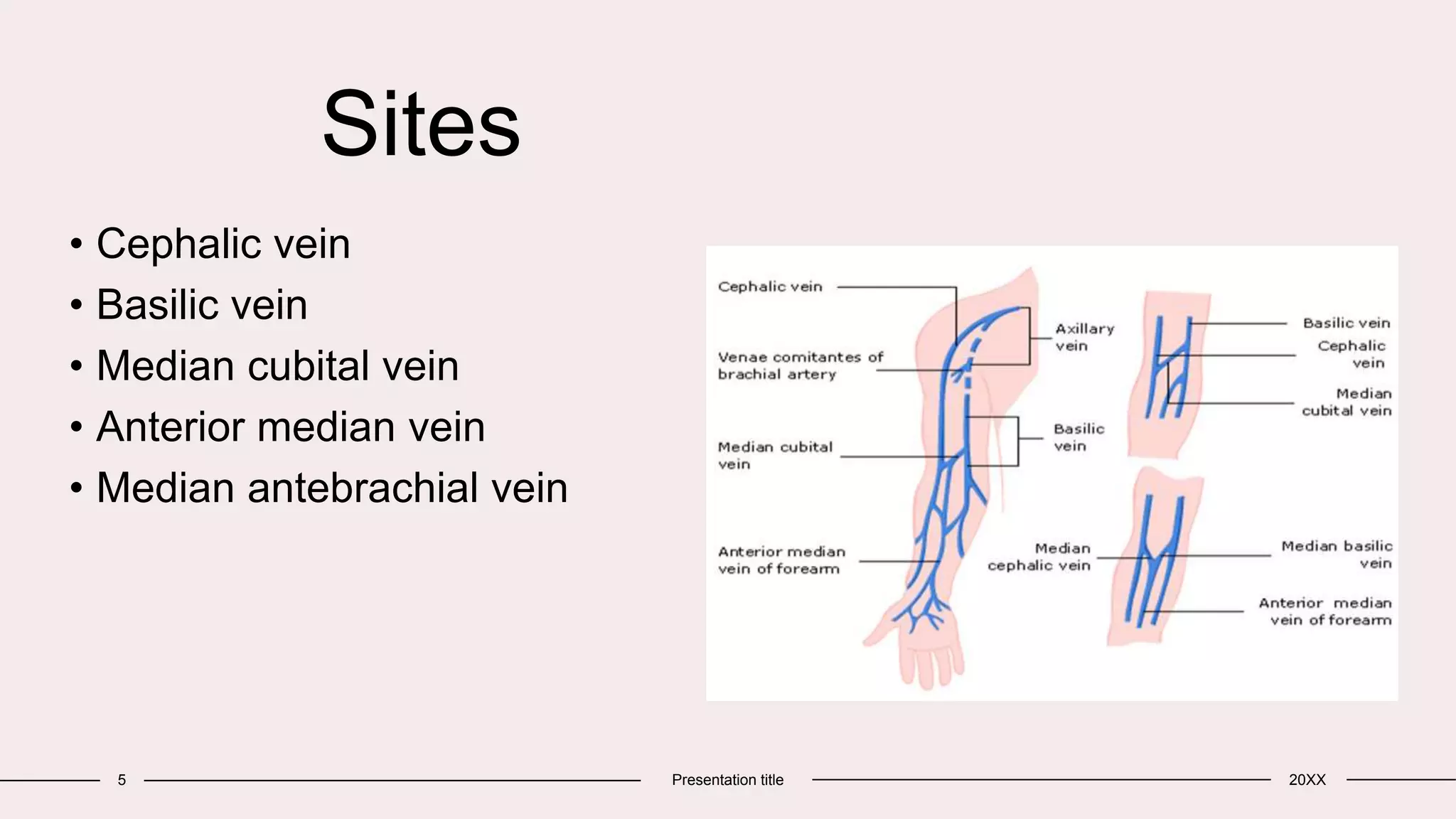
Sites
5 Presentation title 20XX
• Cephalic vein
• Basilic vein
• Median cubital vein
• Anterior median vein
• Median antebrachial vein
Articles
• Medication card Alcohol swab
• IV cannula Prescribed
medication
• Tourniquet 10 ml flush syringe
• Adhesive tape Kidney tray and paper bag
• IV stand Sterile injection tray
• IV set
• Sterile gloves
6 Presentation title 20XX
Procedure
• Check the doctor’s order for medication.
• Confirm patient identity, explain procedure and provide privacy.
• Wash hands, prepare required material near to the patient.
• Place the patient in a comfortable position.
• Wear gloves, apply tourniquet about 10 cm above the injection site.
• Select the appropriate vein for giving the injection.
• Tell the patient to close the fist.
• Vein is distended by moving the arm, inspect and palpate the vein
using fingertips.
7 Presentation title 20XX
• Clean the injection site with alcohol swab using single stroke in
circular motion with one single swab at one time.
• Take the syringe and remove needle cap, stabilize the vein and
apply counter tension to the skin.
• Insert the needle at 25-35 degree angle, keep its bevel upside.
• Blood will appear at the needle hub, aspirate and venous blood
appears in the syringe, reduce the angle of needle and proceed
approximately 3-5 mm further into vein.
• Release the tourniquet, inject the drug slowly (check for pain,
swelling, hematoma, if occurs withdraw the needle).
8 Presentation title 20XX
• After administration of medication, withdraw the needle smoothly,
apply pressure with sterile dry gauze on the puncture site.
• Dispose all the sharp material.
• Make the patient comfortable.
• Remove gloves and wash hands.
• Document the procedure.
9 Presentation title 20XX
Complications
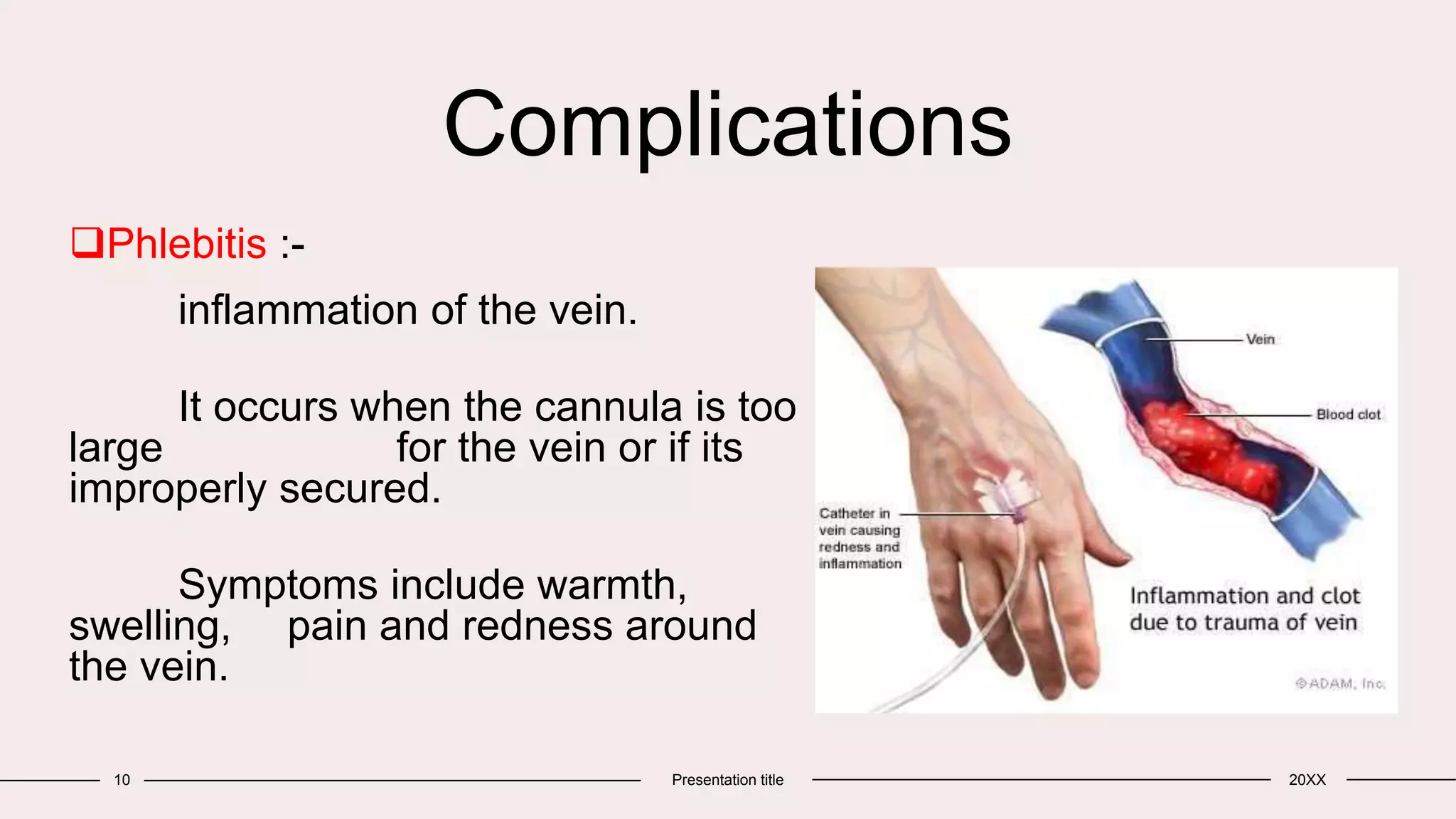
Phlebitis :-
inflammation of the vein.
It occurs when the cannula is too
large for the vein or if its
improperly secured.
Symptoms include warmth,
swelling, pain and redness around
the vein.
10 Presentation title 20XX
Extravasation :-
• This happens when the
liquid/medication in the IV
leaks to the tissue surrounding
the vein.
• It can also be caused by
inserting a cannula that’s too
big for the patient’s vein.
• The symptoms include burning
sensation and swelling around
the IV.
11 Presentation title 20XX
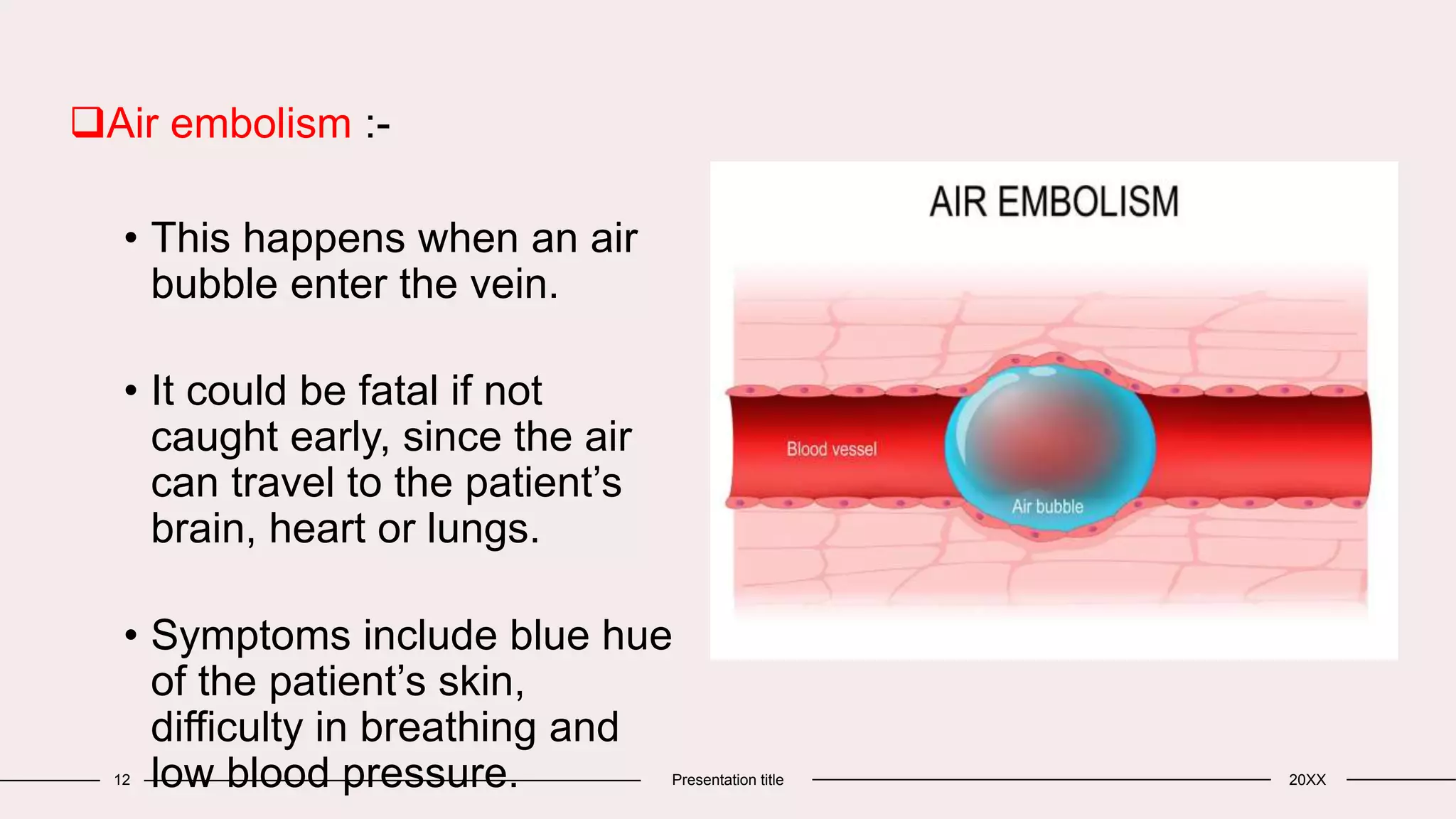
Air embolism :-
• This happens when an air
bubble enter the vein.
• It could be fatal if not
caught early, since the air
can travel to the patient’s
brain, heart or lungs.
• Symptoms include blue hue
of the patient’s skin,
difficulty in breathing and
low blood pressure.
12 Presentation title 20XX
Hypervolemia :-
• This is an abnormal increase in
blood volume.
• Its more likely to happen in
pregnant women, young
children, elderly patients or
people with kidney problems.
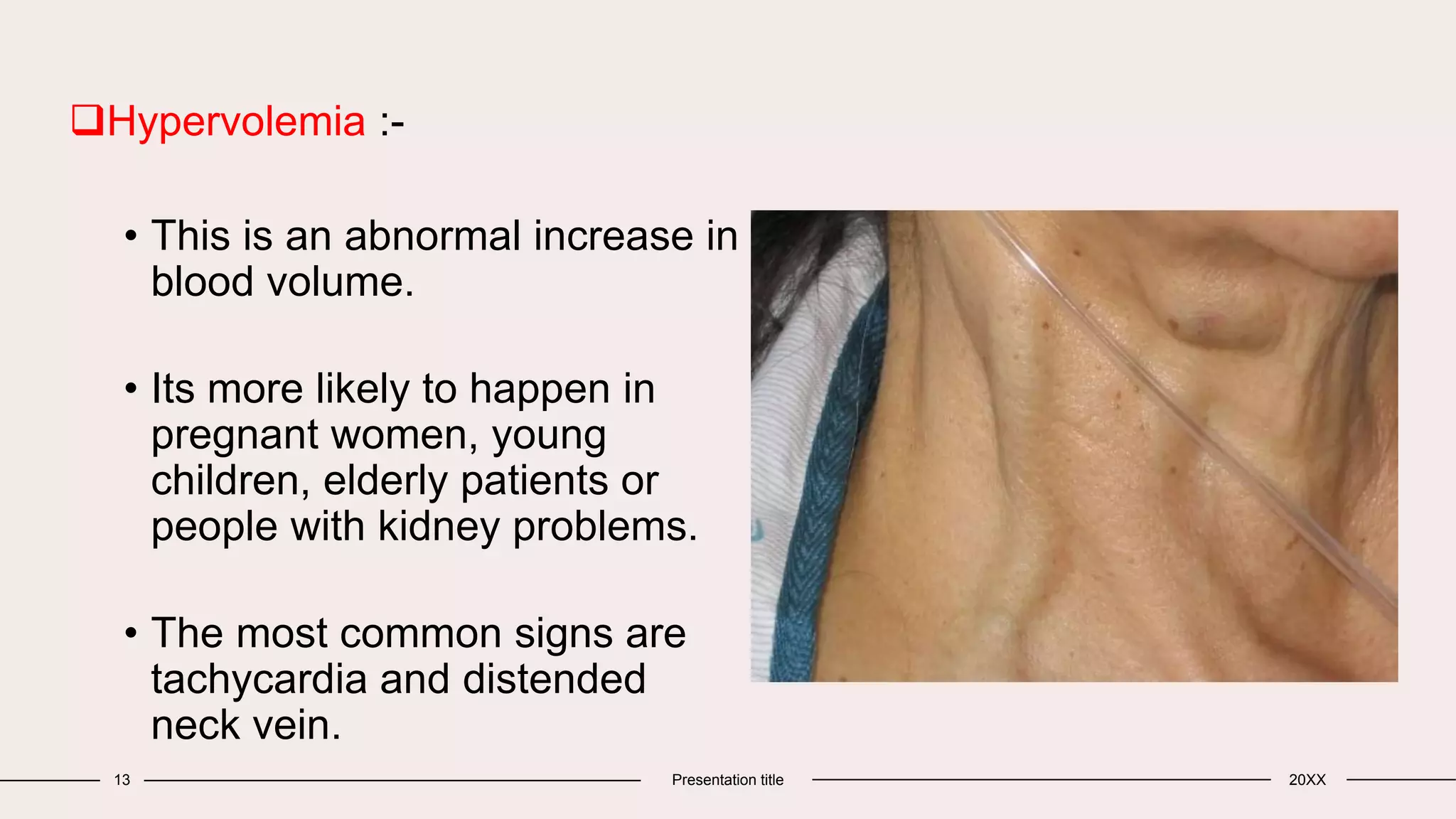
• The most common signs are
tachycardia and distended
neck vein.
13 Presentation title 20XX
Thank you.

INTRAVENOUS INJECTION.pptx

  • 1.
  • 2.
    Introduction • Intravenous therapyis a therapy that delivers liquid substance directly into a vein. • The intravenous route of administration can be used for injections or infusions. • The IV route is the fastest way to deliver medications and fluid replacement throughout the body. • Drugs are administered as; • Bolus : large dose of drug injected rapidly. • Slow IV injection : e.g., IV morphine in MI. • IV infusion : e.g., dopamine in cardiogenic shock, fluid infused in dehydration. 2 Presentation title 20XX
  • 3.
    Indications • To havefast action of the drug or fluid in emergency conditions • Blood transfusion • Induction of anaesthesia • To give medications that are irritating or ineffective when given by other routes 3 Presentation title 20XX
  • 4.
    Contraindications • Avoid veinthat cross over the joints • Extremities with renal fistula and shunt • Avoid extremities with extreme oedema, burns or injury • Avoid are of cellulitis or any other area with infection 4 Presentation title 20XX
  • 5.
    Sites 5 Presentation title20XX • Cephalic vein • Basilic vein • Median cubital vein • Anterior median vein • Median antebrachial vein
  • 6.
    Articles • Medication cardAlcohol swab • IV cannula Prescribed medication • Tourniquet 10 ml flush syringe • Adhesive tape Kidney tray and paper bag • IV stand Sterile injection tray • IV set • Sterile gloves 6 Presentation title 20XX
  • 7.
    Procedure • Check thedoctor’s order for medication. • Confirm patient identity, explain procedure and provide privacy. • Wash hands, prepare required material near to the patient. • Place the patient in a comfortable position. • Wear gloves, apply tourniquet about 10 cm above the injection site. • Select the appropriate vein for giving the injection. • Tell the patient to close the fist. • Vein is distended by moving the arm, inspect and palpate the vein using fingertips. 7 Presentation title 20XX
  • 8.
    • Clean theinjection site with alcohol swab using single stroke in circular motion with one single swab at one time. • Take the syringe and remove needle cap, stabilize the vein and apply counter tension to the skin. • Insert the needle at 25-35 degree angle, keep its bevel upside. • Blood will appear at the needle hub, aspirate and venous blood appears in the syringe, reduce the angle of needle and proceed approximately 3-5 mm further into vein. • Release the tourniquet, inject the drug slowly (check for pain, swelling, hematoma, if occurs withdraw the needle). 8 Presentation title 20XX
  • 9.
    • After administrationof medication, withdraw the needle smoothly, apply pressure with sterile dry gauze on the puncture site. • Dispose all the sharp material. • Make the patient comfortable. • Remove gloves and wash hands. • Document the procedure. 9 Presentation title 20XX
  • 10.
    Complications Phlebitis :- inflammation ofthe vein. It occurs when the cannula is too large for the vein or if its improperly secured. Symptoms include warmth, swelling, pain and redness around the vein. 10 Presentation title 20XX
  • 11.
    Extravasation :- • Thishappens when the liquid/medication in the IV leaks to the tissue surrounding the vein. • It can also be caused by inserting a cannula that’s too big for the patient’s vein. • The symptoms include burning sensation and swelling around the IV. 11 Presentation title 20XX
  • 12.
    Air embolism :- •This happens when an air bubble enter the vein. • It could be fatal if not caught early, since the air can travel to the patient’s brain, heart or lungs. • Symptoms include blue hue of the patient’s skin, difficulty in breathing and low blood pressure. 12 Presentation title 20XX
  • 13.
    Hypervolemia :- • Thisis an abnormal increase in blood volume. • Its more likely to happen in pregnant women, young children, elderly patients or people with kidney problems. • The most common signs are tachycardia and distended neck vein. 13 Presentation title 20XX
  • 14.