

 Introduction
 Contraception
 Need of Contraceptives
 Anatomy of uterus
 Types of contraception
 Introduction of IUDs
 Intra Uterine Devices-
 Types of IUDs
 Advantages of IUDs
 Disadvantages of IUDs
 Design of IUDs
 Development of medicated IUDs
 Copper bearing IUDs
 Hormone releasing IUDs
 Comparative efficacy of medicated & non-medicated IUDs
 New development
 References
INTRODUCTION
CONTRACEPTION:
• Contra-opposite/ prevent
• Ception- conception (union of male & female
gamates to reproduce new ones)
It is the method or technique or process
which results into temporary or permanent loss
of capability to reproduce or conceive a young
one.
 1975- United state
 From approximately 27 million couples of child baring
age 76.3% expressed desire to prevent conception
either temporarily or Permanently.
Method of
Contraception
% of those
served
Oral contraceptive pills 26.3
Condom or Diaphragm 10.0
Intrauterine devices 6.4
Foam 2.6
Rhythm 2.2
Other 28.8
Pear shaped, thick-walled
muscular organ suspended in the
anterior wall of pelvic cavity.
Shape: triangular, flattened
antero-posteriorly.
Dimensions: (in normal state)
Length- 3 inches
Width- 2 inches
Parts-
 Fundus
Body (Uterine Cavity, Isthmus)
Cervix (Cervical canal, Internal Os,
External Os)
Openings-
Superior- fallopian tubes
Inferior- Vagina (mouth of
Uterus)
 Endometrium – inner coat of uterine wall made up of
simple columnar epithelium, areolar connective tissue &
endometrial glands.
 Stratum Functionalis- innermost, sloughed off during
menstruation
 Stratum Basalis- permanent, gives new s. functionalis.
 Myometrium – Thick, muscular middle layer made up of
3 layers of smooth muscles (Middle thick circular &
other two longitudinal)
 Peritoneum – External surface of uterus which attaches
uterus to pelvic cavity by ligaments
 During reproductive ages nonpregnant woman
exihibit cyclic changes in ovaries & uterus, called
as Menstrual cycle.
 Typically of 28 days & divided into 4 phases-
 Menstrual Phase (5 days)
 Pre-ovulatory phase / Follicular phase (6-13 days)
 Ovulatory phase (on 14th day)
 Post-ovulatory phase / Leutial phase (14-28 days)
 Menstrual phase- (5 days)
 Decrease in levels of estrogen & progesterone
 Stimulates release of prostaglandins
 Produce arteriole constriction, decrease blood supply to s.
functionalis
 Cells starts to die & s. functionalis sloughed off.
 Bleeding takes place for about 5 days.
 Follicular phase- ( up to 13th day)
 Estradiole is secreted from ovaries by secondary follicle
 Secondary follicle is converted in graffian follicle.
 Estrogen restores blood supply to endometrium & stimulates
formation of s. functionalis from s. basalis.
 S. functionalis starts to grow and become 3-4 mm thick.
 Endometrial glands increase in length & tortuosity.
 Ovulation-( on 14th day)
 Release of oocyte outside of ovaries into fallopian tube.
 Takes place at the day of 14 of M.C. under the influence of
Leutinizing hormone (LH) & Gonadotropin releasing hormone
(GnRH)
 Released oocyte remain viable for 2 days.
 Leutial phase-(15-28 day)
 In ovary graffian follicle collapse to form corpus luteum. It
release progesterone & estrogen.
 In uterus, these hormones promote growth, thickning & coiling
of endometrium. Glycogen is secreted by glands.
 Fertilization- changes remain constant
 No fertilization- corpus luteum disappear, decrease in level of
estrogen & progesterone. Menstruation occurs.
 DEFINITION
IUD’s are medicated devices intended to release a small quantity of drug
into uterus in a sustained manner over prolonged period of time.
 3 most popular methods of contraception:
 Oral contraceptive pills
 Condoms or diaphragms
 Intrauterine device
Methods of
contraception
Pregnancies Births Deaths MBR (Mortality
Benefit Ratio)
P M Total
None 60,000 50,000 12 0.0 12.0 -
Condom or diaphragm 13,000 10,833 2.5 00 2.5 0.664
Oral pills 100 83 0.0 3.0 3.0 0.060
IUDs 2190 1825 0.44 0.3 0.74 0.015
MBR-Deaths per 1000 births averted as related to pregnancy (P) Or Method (M)
1,00,000 fertile women data with each method
 NON MEDICATED:
 Ring shaped iud’s made of stainless steel which haven used by 50
millions women in china .
 Plastic IUDS :
Fabricated from polyethylene or polypropylene which are sold in
Asia, south Africa ,south America.
 Lippes loop iud & Saf -T-coil is still available commercially in US.
 MEDICATED:
 Copper bearing IUD E.g. cu 7, CuT-380
 Progesterone releasing IUDS e.g., Progestasert
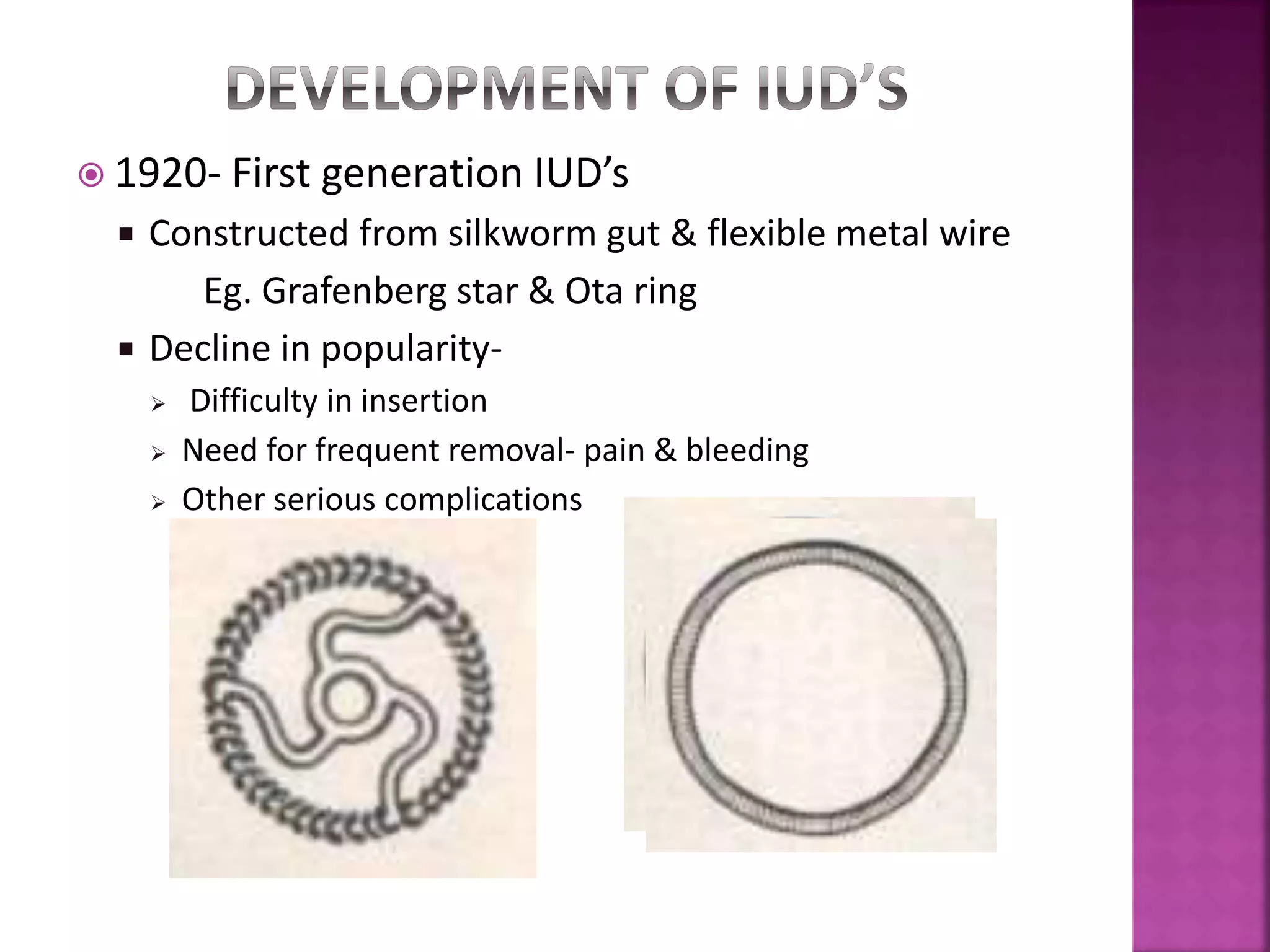
 1920- First generation IUD’s
 Constructed from silkworm gut & flexible metal wire
Eg. Grafenberg star & Ota ring
 Decline in popularity-
 Difficulty in insertion
 Need for frequent removal- pain & bleeding
 Other serious complications
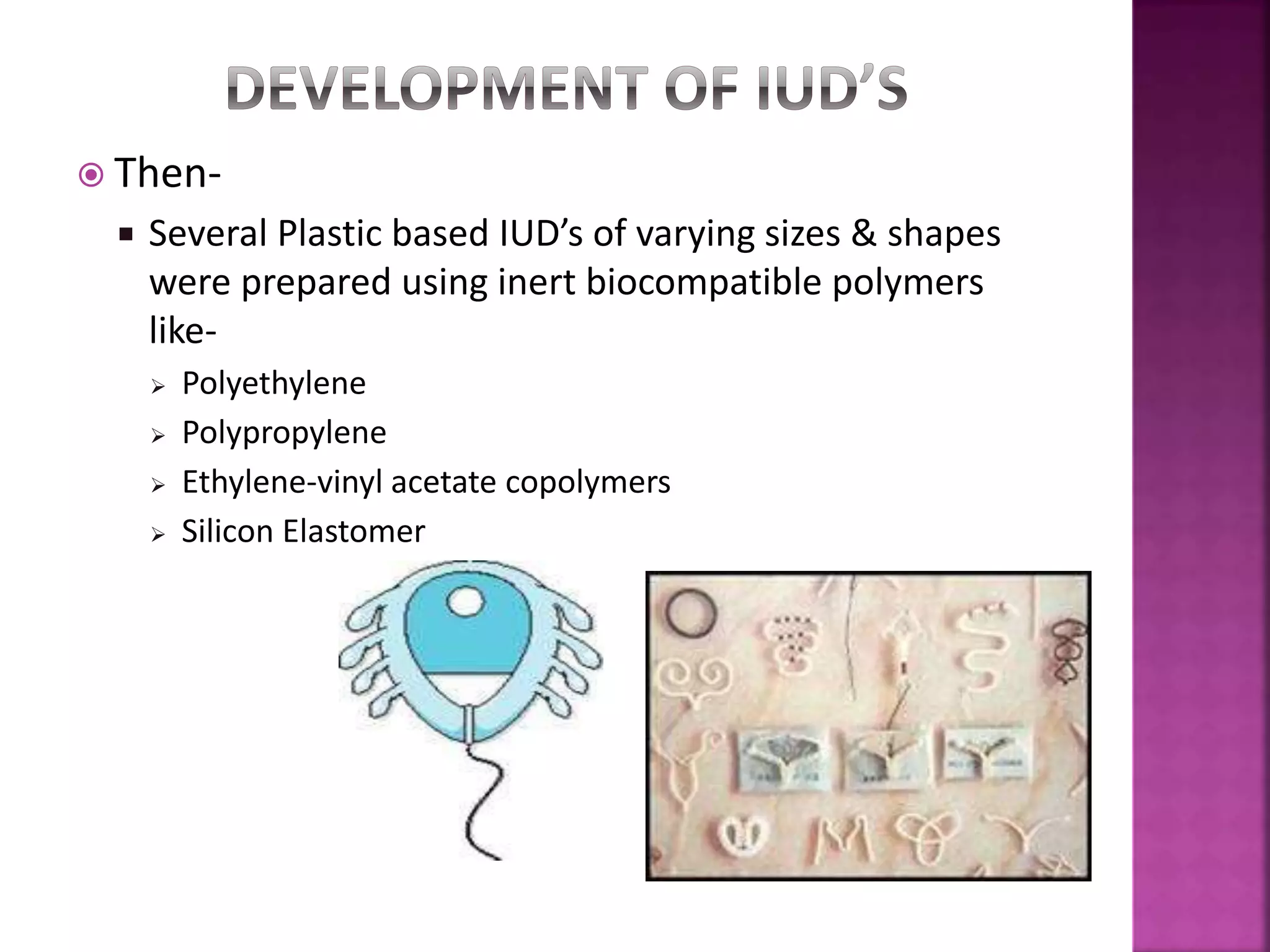
 Then-
 Several Plastic based IUD’s of varying sizes & shapes
were prepared using inert biocompatible polymers
like-
 Polyethylene
 Polypropylene
 Ethylene-vinyl acetate copolymers
 Silicon Elastomer
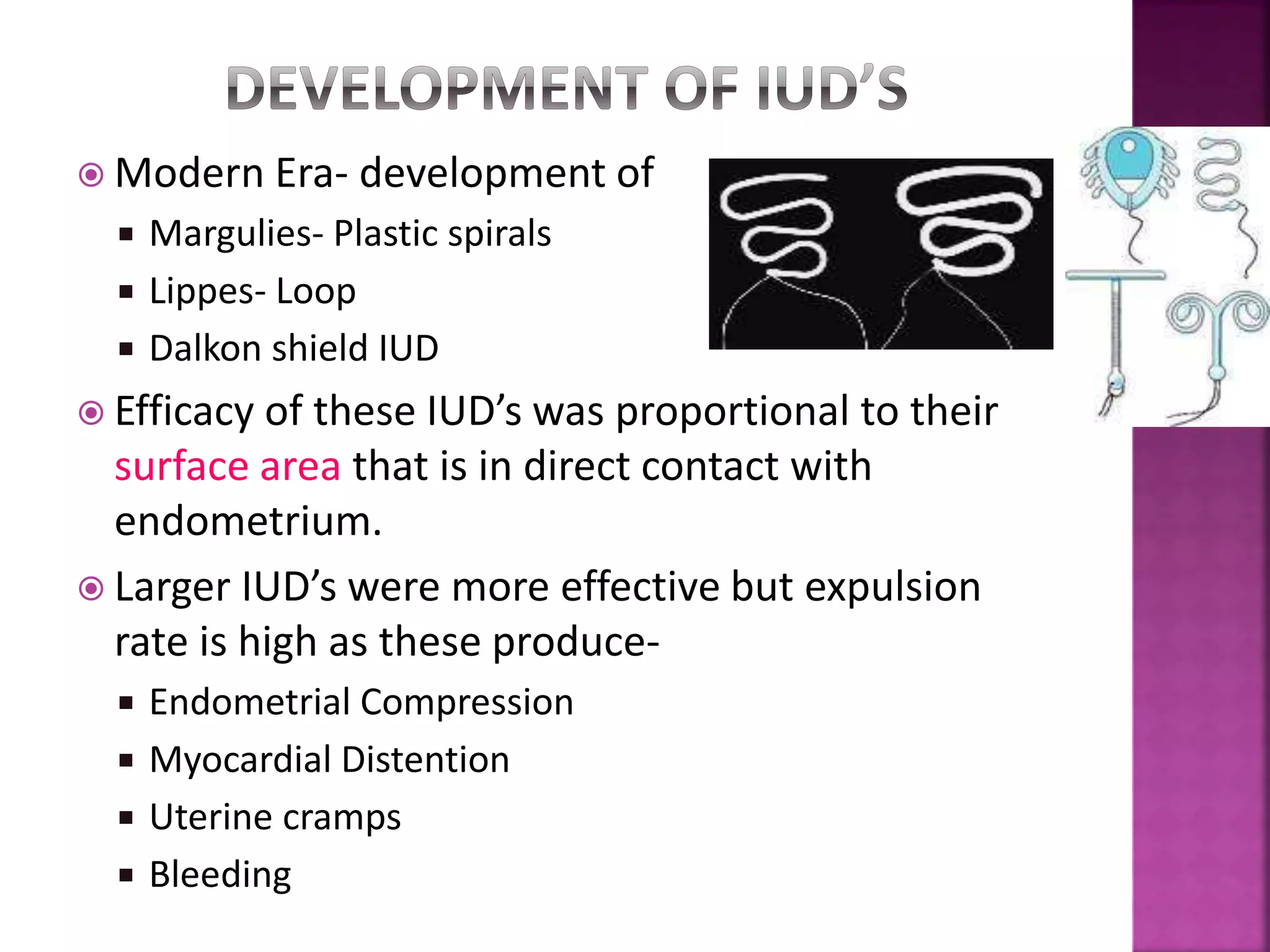
 Modern Era- development of
 Margulies- Plastic spirals
 Lippes- Loop
 Dalkon shield IUD
 Efficacy of these IUD’s was proportional to their
surface area that is in direct contact with
endometrium.
 Larger IUD’s were more effective but expulsion
rate is high as these produce-
 Endometrial Compression
 Myocardial Distention
 Uterine cramps
 Bleeding
 Tatum & Zipper (1967) develop T- Shaped polyethylene
device.
 This significantly reduce side effects
 Pregnancy rate become to 18%
 Good Uterine tolerance
 Non-medicated IUD’s-
 Act through mechanical contact with endometrium
 Size is important factor
 Large size produce irritation & other side effects
 High expulsion rate
 No improvement in contraception efficacy.
 Starting of new era-
 As this devices acts as carrier of choice for intrauterine
delivery of contraceptive agents.
 1969
 Zipper et. al. reported- copper attached to an
IUD markedly enhanced the effectiveness.
 T-shaped polyethylene device wound with
30 mm2 copper wire (Cu-T-30)
 The pregnancy rate was reduced to 5% from
18%.
 Additional clinical evaluations with larger
surface area of copper wire
 200 mm2 – found maximum contraceptive
efficiency.
18
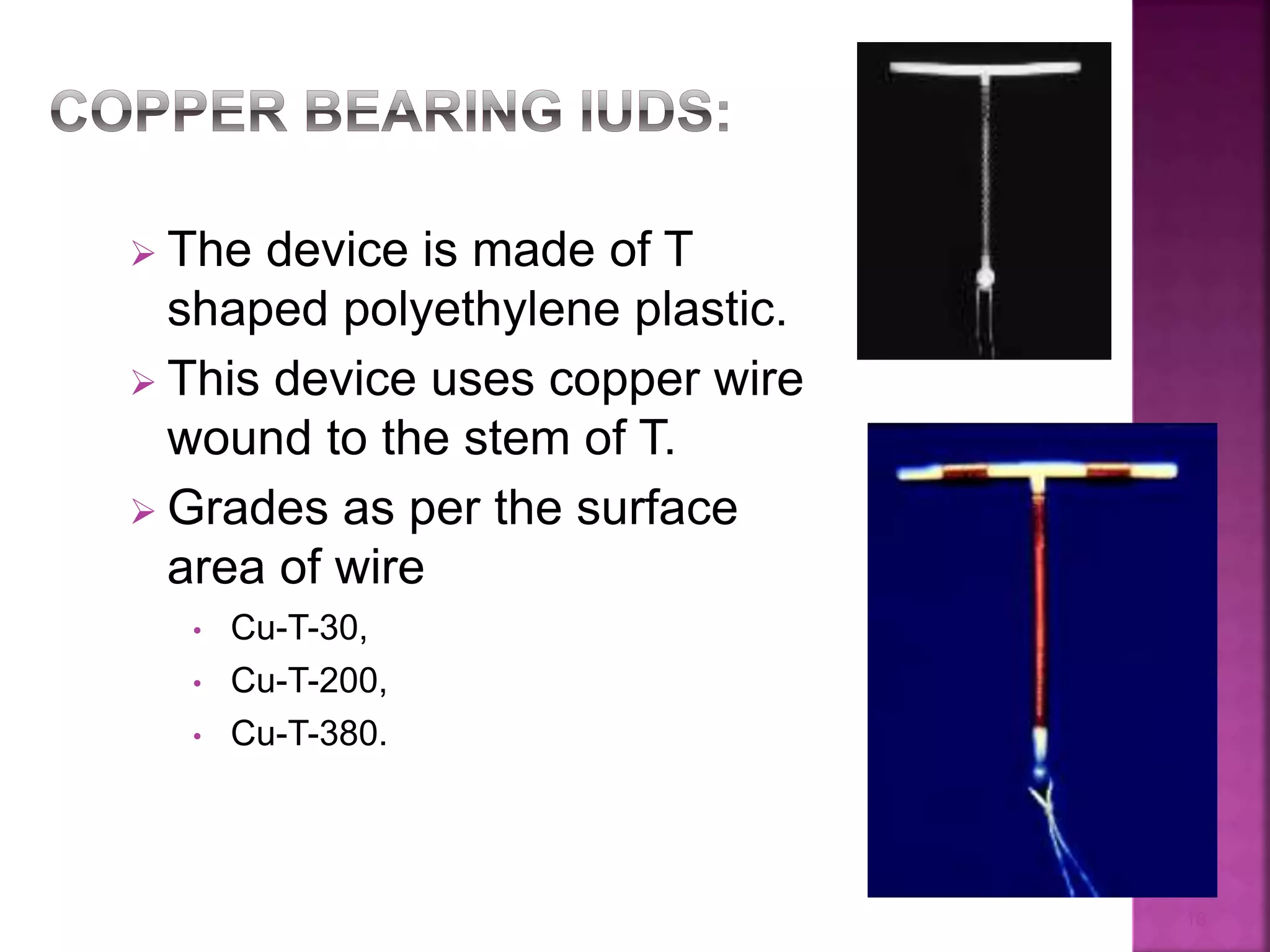
 The device is made of T
shaped polyethylene plastic.
 This device uses copper wire
wound to the stem of T.
 Grades as per the surface
area of wire
• Cu-T-30,
• Cu-T-200,
• Cu-T-380.
 Cytotoxic, Spermatocidal & spermato-depressive action
 Competitive inhibitor of steroid-receptor interaction.
Eg. Cupric ions –Potent inhibitor
 17 estradiol & Progesterone binding to their receptors.
 Progesterone receptors were more susceptible.
 Progestational proliferation severely inhibited.
 Cu taken up by endometrial epithelium & stromata.
 Cu conc. in uterine cytoplasm –1.4 x 10⁻⁶ M
 Little effect on sperm mobility.
 Continuous release by ionization & chelation process.
 Diameter of wire was reduce with time by corrosion
& flacking of metal
 Cu-7 284 deliver Cu at a rate of following expression-
Dosage (mg)=0.3 * month + 3.79
 Release 9.87 µg/day
 Linear relationship between cumulative copper
release with the duration
 Reduction in copper release due to formation of-
 Corrosion layer- of protein
 Encrustation layer- of calcium (impermeable)
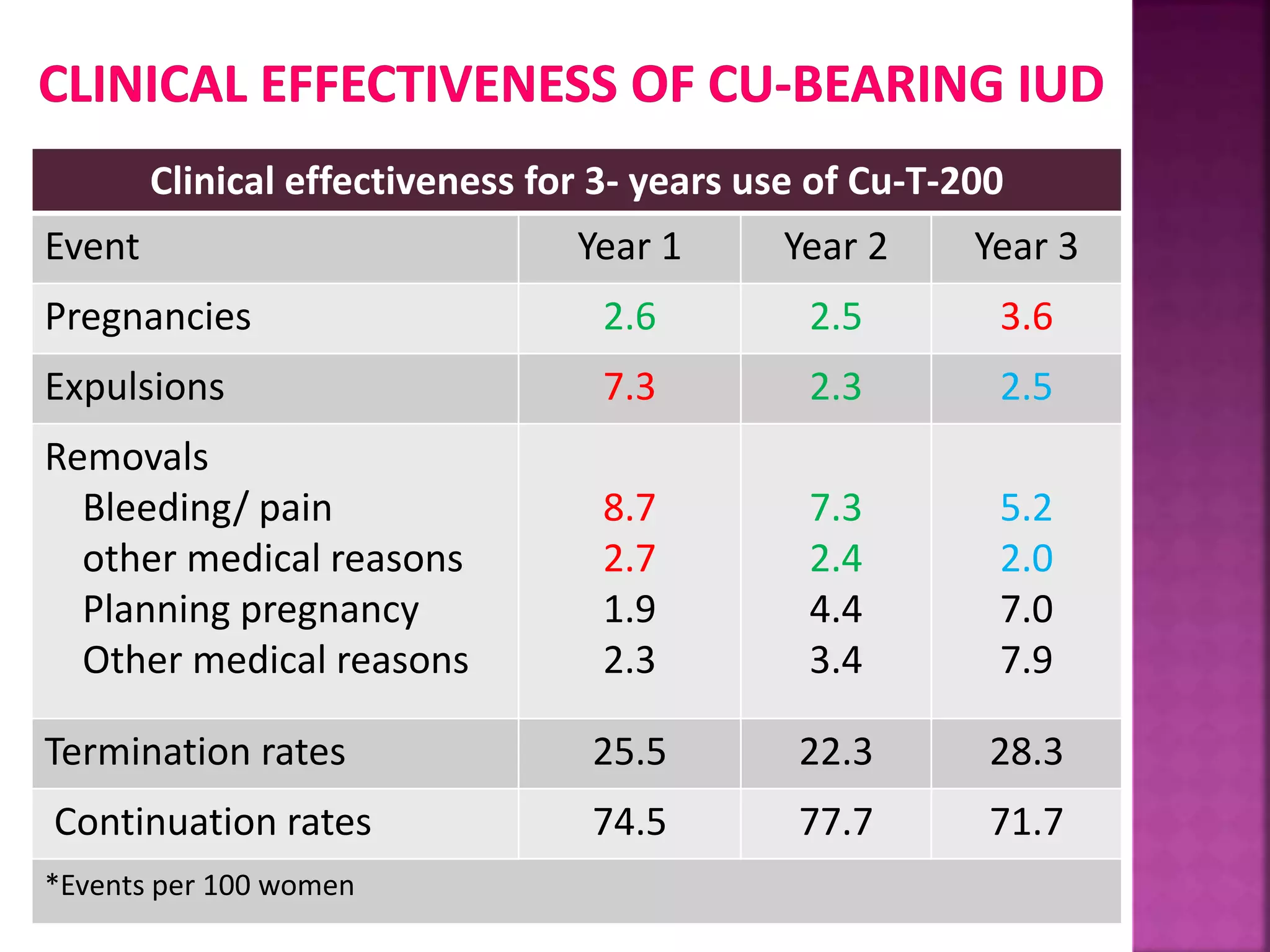
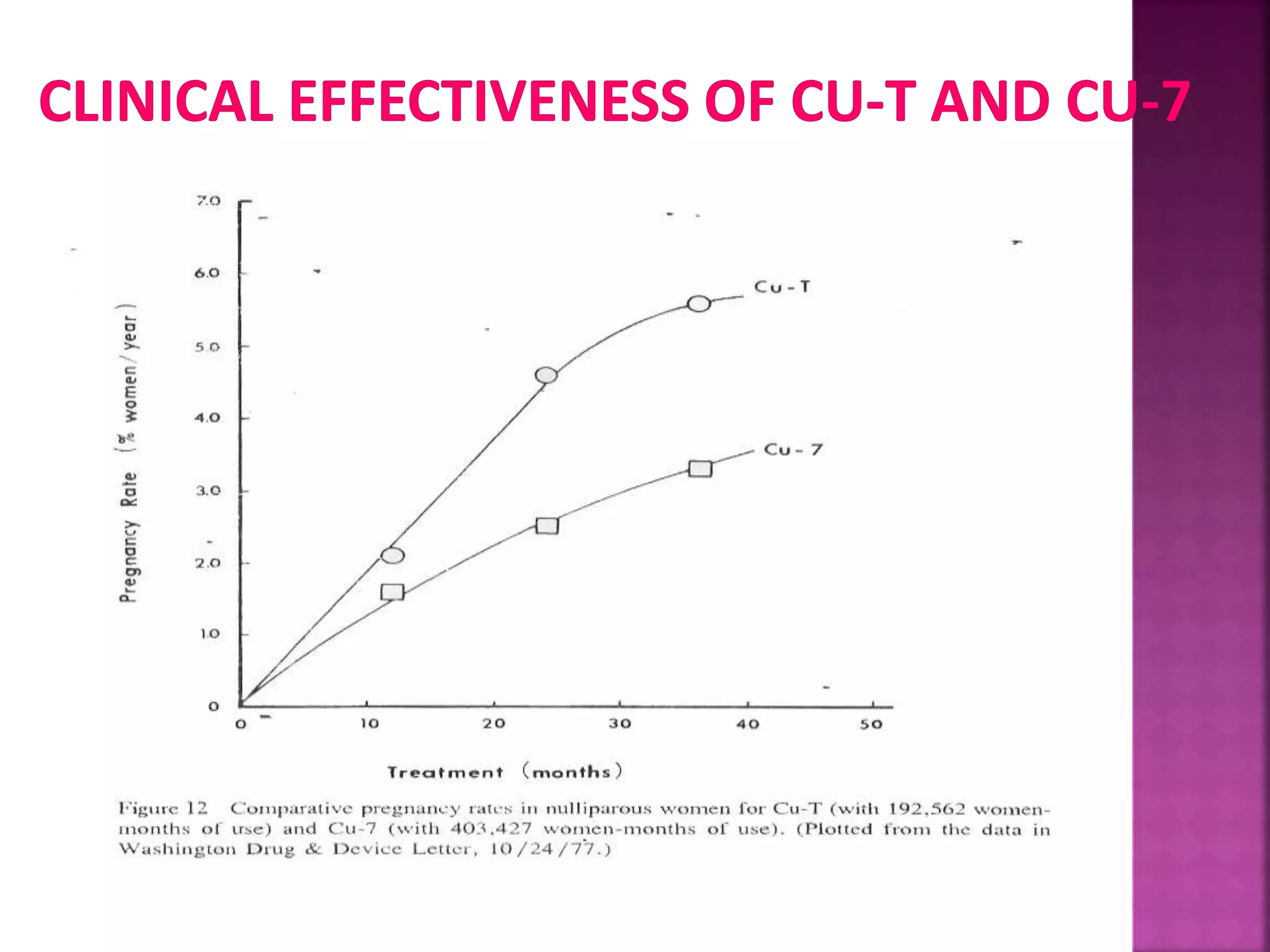
Clinical effectiveness for 3- years use of Cu-T-200
Event Year 1 Year 2 Year 3
Pregnancies 2.6 2.5 3.6
Expulsions 7.3 2.3 2.5
Removals
Bleeding/ pain
other medical reasons
Planning pregnancy
Other medical reasons
8.7
2.7
1.9
2.3
7.3
2.4
4.4
3.4
5.2
2.0
7.0
7.9
Termination rates 25.5 22.3 28.3
Continuation rates 74.5 77.7 71.7
*Events per 100 women
 Mfg by G.D. Searle & Co.
 First device approved by US- FDA for 3 yrs of
use.
 Polypropylene plastic device shaped like 7
 89 mg copper wire around vertical limb with
surface area of 200 sq. mm
 Release 9.87µg/day for 40 months
 Smaller volume (0.09 cm3) than Cu-T (0.16 cm3)
- easily inserted in nulliparous women.
 No need of cervical dilation
 Removal is painless.
 Efficacy improved when copper wire is located on the
transverse arm as in close contact with upper portion of
uterine cavity.
 Cu-T-380A (US approval -1980)
 Two collars of Cu on transverse arm
 Each collar provides additional surface are of 30 sq. mm.
 Cu-T-200C
 Seven copper sleeves of Copper on both arms
 Efficious same as Cu-T-380A
 Retain physical integrity for 15-20 yrs.
 Long acting- beneficial to population in which medical
care not readily available.
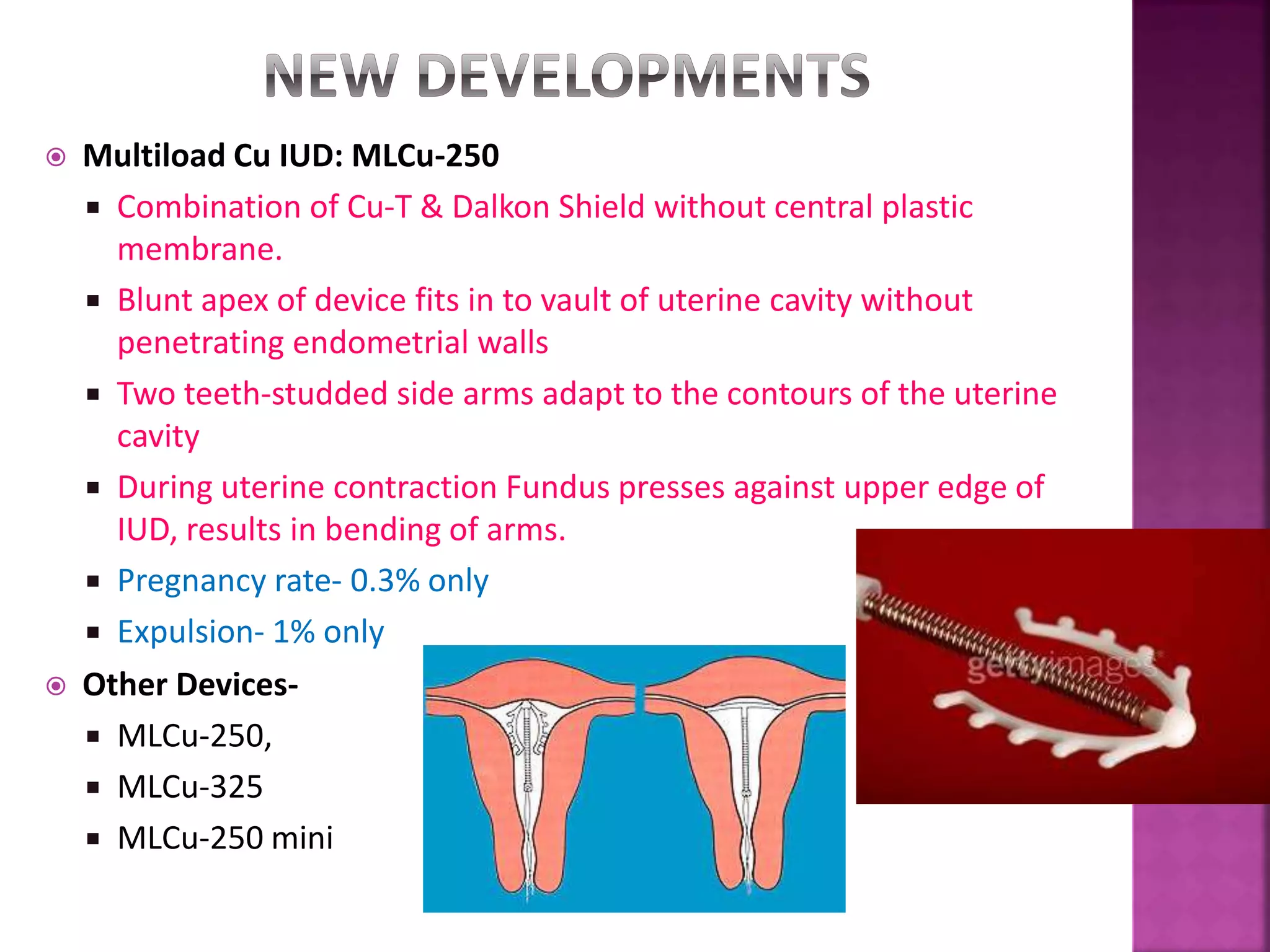
 Multiload Cu IUD: MLCu-250
 Combination of Cu-T & Dalkon Shield without central plastic
membrane.
 Blunt apex of device fits in to vault of uterine cavity without
penetrating endometrial walls
 Two teeth-studded side arms adapt to the contours of the uterine
cavity
 During uterine contraction Fundus presses against upper edge of
IUD, results in bending of arms.
 Pregnancy rate- 0.3% only
 Expulsion- 1% only
 Other Devices-
 MLCu-250,
 MLCu-325
 MLCu-250 mini
 Use of hormone in IUD- initiated by Doyle & Clewe
 Then Croxatto et al showed that a progestin released
at a controlled rate from a silicone capsule inserted in
rabbit uterine cavity, prevent implantation.
 1970- Scommegna & coworkers affix progesterone
containing silicone capsules to modified Lippes loop.
Granted US-patent.
 Early models had high expulsion rates or side effects.
 T-shaped progesterone releasing IUD were
developed, improvement in efficacy.
 Release rate of 65 µg/day was found to produce
contraception & selected as final design of IUD.
 Secretion of secretary phase is hormonally controlled
 Optimum amt. of estrogen & progesterone required for
proper development.
 Implantation of blastocyst takes place on secretary
endometrium.
 Decidual reaction- after implantation
 Stromal cells enlarge & grow as polyhedral cells rich in
glycogen & lipids. These changes takes place in presence
of implanted blastocysts.
 Once decidual reaction occurred, implantation of
blastocyst cannot takes place again.
 Endometrial hyper-maturation is unfavorable for
implantation.
 Maturation of endometrium is associated with decidual
formation which is induced by Progesterone.
 Dependant upon daily
dose of progesterone
released
Dose release per day (µg) Pregnancy rate
(%)
No Progesterone 22
10 5.2
25 2.7
65 1.1
120 0.6
Life table analysis of the clinical effectiveness of Progestasert
Events Parous women Nulliparous
women
Pregnancy 1.9 2.5
Expulsions 3.1 7.5
Removals 12.3 16.4
Continuation rate 79.1 70.9
 Membrane Controlled Reservoir type D.D.Ds-
Polymeric membrane encapsulates the drug &
also controls the release.
 Two types
 Single Component System
 Multiple Component System
Cont.
 Single Component System
 Drug in solid form encapsulated in capsule of
biocompatible polymeric material
 Polymer- Silicone elastomer / Polyethylene
 E.g. Scommegna’s silicone-based IUD
 Drug release- zero order kinetics
 Silicone elastomer widely used previously as
polymer- do not posses required tensile
strength or elastic modulus.
 To overcome drawbacks- copolymers of
Poly(dimethylsiloxone) with polycarbonate or
polyurethane were prepared.
Cont.
 Multi component System-
 Encapsulation of liquid medium saturated with
excess of drug in rate controlling polymeric
membrane.
 E. g. Progestasert (Alza Corp.)
 Membrane- Ethylene vinyl acetate copolymer
 38 mg of Progesterone suspended in silicone oil
 Release at constant rate of 65 µg/day
 Zero order release rate till drug solution become
unsaturated
 60% of loading dose in reservoir compartment
depleted during first year.
 Useful life is 1 yr.
 Polymer-matrix Diffusion-Controlled D.D.Ds-
Homogenously dispersing drug particles in a cross
linked polymeric matrix
 Two types
 Retrievable Matrix Device
 Biodegradable Matrix Device
 Retrievable Matrix Device-
 Retrieved or removed after termination of
treatment
 Preparation-
1) Mix drug powder with a semisolid silicone
elastomer  vulcanization at room / low temp.
2) Mix drug powder with low density polyethylene
particles  Melt & extrude
 Drug release is linearly proportional to square root
of time
Cont.
 Biodegradable matrix device:
 No need of retrieving at the termination of treatment.
 Preparation –
Dissolve drug + Biodegradable polymer e.g.
Poly(lactic acid)  in common organic solvent 
Melt pressing at elevated temp. after flashing off
solvent
 Drug release is combination of polymer hydrolysis &
drug diffusion
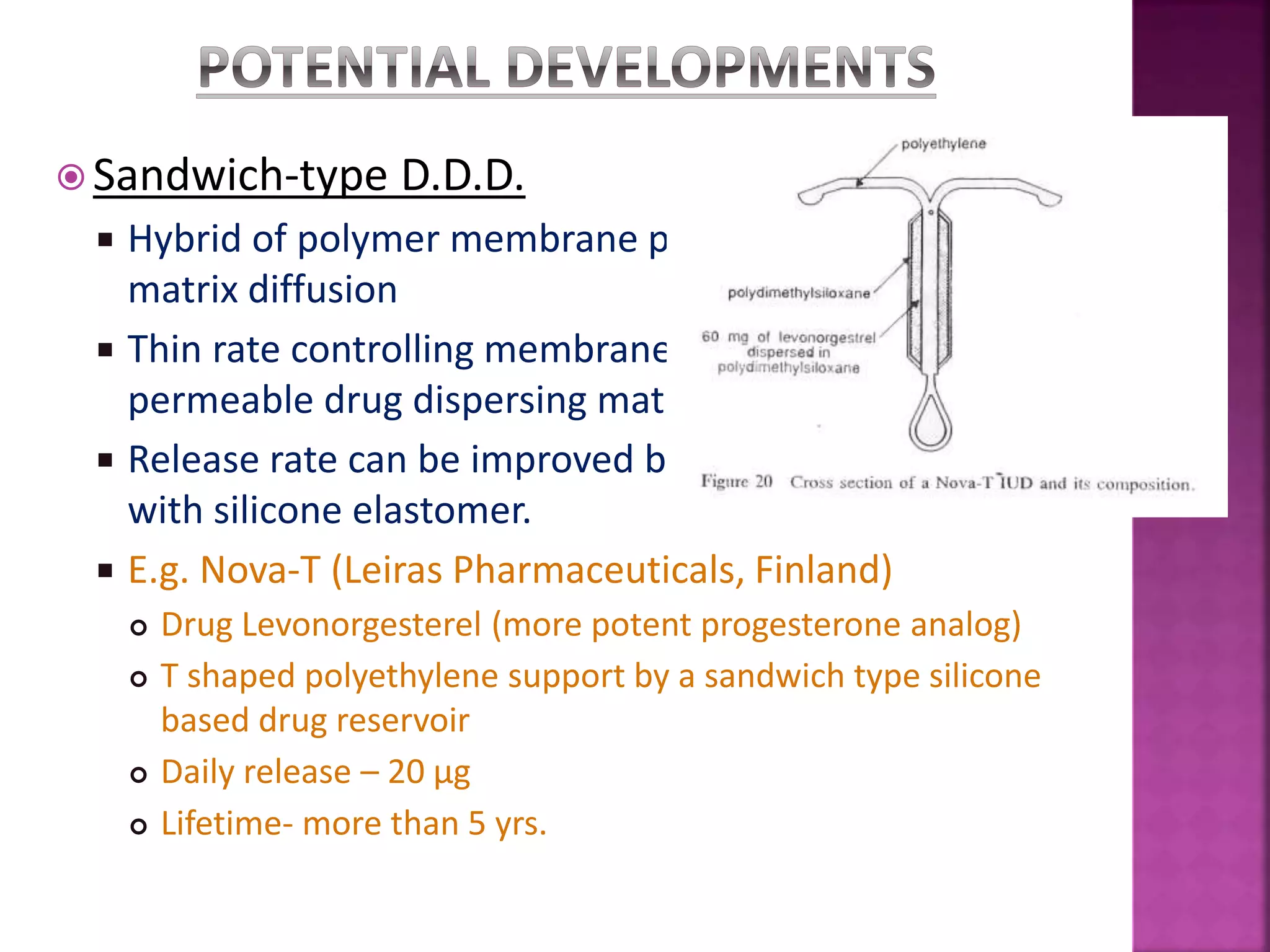
 Sandwich-type D.D.D.
 Hybrid of polymer membrane permeation with polymer
matrix diffusion
 Thin rate controlling membrane encapsulates a high
permeable drug dispersing matrix.
 Release rate can be improved by coating porous support
with silicone elastomer.
 E.g. Nova-T (Leiras Pharmaceuticals, Finland)
 Drug Levonorgesterel (more potent progesterone analog)
 T shaped polyethylene support by a sandwich type silicone
based drug reservoir
 Daily release – 20 µg
 Lifetime- more than 5 yrs.
 Estriole Releasing IUD’s
 Synthesis of estradiole dependant
uterine RNA is essential for
implantation
 Estriole binds with uterine
receptors & compete with
estradiole. But incapable of
inducing uterine growth.
 It interfere with synthesis of
estradiole induced uterine RNA,
preventing implantation.
 Release rate of 1.25 µg/day
effectively inhibits development &
implantation of blastocyst.
 Use of Cu -7 group was declined due to the problem
of excessive bleeding .
 Irregular bleeding was higher in Cu – 7 group
(13.4%) than in progestasert group (7.5%).
 But progestasert has a limited life span of one year
which is disadvantageous as compared to three
year users life of Cu -7.
Cont.
Changes in enzymatic activity-
 Copper bearing IUD produce significant variations in
secretary phase of the endometrium with two fold
increase in total enzyme activity.
 Progesterone releasing IUD induced no (or only small )
change in activity of lysosomal enzymes and increased
the stability of lysosomal membrane during secretary
phase.
 The changes in activities and sub cellular distribution
of lysosomal enzymes induced by non medicated
placebo IUD were found to be quantitatively small and
of limited biological significance .
Cont.
Changes in endometrium-
 The plain and copper bearing spring coil IUDs the cyclic
patterns of endometrium was preserved .
 Progesterone releasing IUDs produce the histological
changes that made endometrium unsuitable for
implantation .
 Mestranol releasing device produces proliferative or
hyperplastic changes in both glandular & stromal cells
with prevention of secreatory changes in endometrium
which become unreceptive to ova
Cont.
Changes in menstrual bleeding-
 Insertion of copper bearing IUDs has resulted in
increased in menstrual blood loss and decreased in Hb
compared to pre insertion cycle
 Insertion of progesterone releasing IUDs yielded either
no change or reduction in menstrual blood loss & no
significant variation in Hb conc.
 The copper IUD prevents ectopic pregnancies.
 This contraceptive is very cost effective
(inexpensive) over time.
 Use of an IUD is convenient, safe & private.
 The IUD may be inserted immediately following
the delivery of a baby or immediately after an
abortion.
 Some studies of IUDs have shown a decreased
risk for uterine cancer. There is also some
evidence that IUDs protect against cervical
cancer.
 There may be cramping, pain after insertion.
 The number of bleeding days is slightly higher than
normal
 Somewhat increased menstrual cramping.
 If bleeding pattern is bothersome, contact the doctor.
 The IUD provides no protection against sexually
transmitted infections.
 There is a higher initial cost of insertion. However, after 2
years, it is the most cost-effective contraceptive method.
 The IUD must be inserted by a doctor, nurse or physician’s
assistant.
 Y.W. Chien. Novel Drug Delivery
System, 2nd edition, Marcel
Decker , page no.- 585-630
 Advanced in controlled & novel
drug delivery-N.K.Jain.
 Remington-the science & practice
of pharmacy vol.1&2.
 www.google.com.
INTRAUTERINE DRUG DEVICES.ppt

INTRAUTERINE DRUG DEVICES.ppt

  • 2.
     Introduction  Contraception Need of Contraceptives  Anatomy of uterus  Types of contraception  Introduction of IUDs  Intra Uterine Devices-  Types of IUDs  Advantages of IUDs  Disadvantages of IUDs  Design of IUDs  Development of medicated IUDs  Copper bearing IUDs  Hormone releasing IUDs  Comparative efficacy of medicated & non-medicated IUDs  New development  References
  • 3.
    INTRODUCTION CONTRACEPTION: • Contra-opposite/ prevent •Ception- conception (union of male & female gamates to reproduce new ones) It is the method or technique or process which results into temporary or permanent loss of capability to reproduce or conceive a young one.
  • 4.
     1975- Unitedstate  From approximately 27 million couples of child baring age 76.3% expressed desire to prevent conception either temporarily or Permanently. Method of Contraception % of those served Oral contraceptive pills 26.3 Condom or Diaphragm 10.0 Intrauterine devices 6.4 Foam 2.6 Rhythm 2.2 Other 28.8
  • 5.
    Pear shaped, thick-walled muscularorgan suspended in the anterior wall of pelvic cavity. Shape: triangular, flattened antero-posteriorly. Dimensions: (in normal state) Length- 3 inches Width- 2 inches Parts-  Fundus Body (Uterine Cavity, Isthmus) Cervix (Cervical canal, Internal Os, External Os) Openings- Superior- fallopian tubes Inferior- Vagina (mouth of Uterus)
  • 6.
     Endometrium –inner coat of uterine wall made up of simple columnar epithelium, areolar connective tissue & endometrial glands.  Stratum Functionalis- innermost, sloughed off during menstruation  Stratum Basalis- permanent, gives new s. functionalis.  Myometrium – Thick, muscular middle layer made up of 3 layers of smooth muscles (Middle thick circular & other two longitudinal)  Peritoneum – External surface of uterus which attaches uterus to pelvic cavity by ligaments
  • 7.
     During reproductiveages nonpregnant woman exihibit cyclic changes in ovaries & uterus, called as Menstrual cycle.  Typically of 28 days & divided into 4 phases-  Menstrual Phase (5 days)  Pre-ovulatory phase / Follicular phase (6-13 days)  Ovulatory phase (on 14th day)  Post-ovulatory phase / Leutial phase (14-28 days)
  • 9.
     Menstrual phase-(5 days)  Decrease in levels of estrogen & progesterone  Stimulates release of prostaglandins  Produce arteriole constriction, decrease blood supply to s. functionalis  Cells starts to die & s. functionalis sloughed off.  Bleeding takes place for about 5 days.  Follicular phase- ( up to 13th day)  Estradiole is secreted from ovaries by secondary follicle  Secondary follicle is converted in graffian follicle.  Estrogen restores blood supply to endometrium & stimulates formation of s. functionalis from s. basalis.  S. functionalis starts to grow and become 3-4 mm thick.  Endometrial glands increase in length & tortuosity.
  • 10.
     Ovulation-( on14th day)  Release of oocyte outside of ovaries into fallopian tube.  Takes place at the day of 14 of M.C. under the influence of Leutinizing hormone (LH) & Gonadotropin releasing hormone (GnRH)  Released oocyte remain viable for 2 days.  Leutial phase-(15-28 day)  In ovary graffian follicle collapse to form corpus luteum. It release progesterone & estrogen.  In uterus, these hormones promote growth, thickning & coiling of endometrium. Glycogen is secreted by glands.  Fertilization- changes remain constant  No fertilization- corpus luteum disappear, decrease in level of estrogen & progesterone. Menstruation occurs.
  • 11.
     DEFINITION IUD’s aremedicated devices intended to release a small quantity of drug into uterus in a sustained manner over prolonged period of time.  3 most popular methods of contraception:  Oral contraceptive pills  Condoms or diaphragms  Intrauterine device Methods of contraception Pregnancies Births Deaths MBR (Mortality Benefit Ratio) P M Total None 60,000 50,000 12 0.0 12.0 - Condom or diaphragm 13,000 10,833 2.5 00 2.5 0.664 Oral pills 100 83 0.0 3.0 3.0 0.060 IUDs 2190 1825 0.44 0.3 0.74 0.015 MBR-Deaths per 1000 births averted as related to pregnancy (P) Or Method (M) 1,00,000 fertile women data with each method
  • 12.
     NON MEDICATED: Ring shaped iud’s made of stainless steel which haven used by 50 millions women in china .  Plastic IUDS : Fabricated from polyethylene or polypropylene which are sold in Asia, south Africa ,south America.  Lippes loop iud & Saf -T-coil is still available commercially in US.  MEDICATED:  Copper bearing IUD E.g. cu 7, CuT-380  Progesterone releasing IUDS e.g., Progestasert
  • 13.
     1920- Firstgeneration IUD’s  Constructed from silkworm gut & flexible metal wire Eg. Grafenberg star & Ota ring  Decline in popularity-  Difficulty in insertion  Need for frequent removal- pain & bleeding  Other serious complications
  • 14.
     Then-  SeveralPlastic based IUD’s of varying sizes & shapes were prepared using inert biocompatible polymers like-  Polyethylene  Polypropylene  Ethylene-vinyl acetate copolymers  Silicon Elastomer
  • 15.
     Modern Era-development of  Margulies- Plastic spirals  Lippes- Loop  Dalkon shield IUD  Efficacy of these IUD’s was proportional to their surface area that is in direct contact with endometrium.  Larger IUD’s were more effective but expulsion rate is high as these produce-  Endometrial Compression  Myocardial Distention  Uterine cramps  Bleeding
  • 16.
     Tatum &Zipper (1967) develop T- Shaped polyethylene device.  This significantly reduce side effects  Pregnancy rate become to 18%  Good Uterine tolerance  Non-medicated IUD’s-  Act through mechanical contact with endometrium  Size is important factor  Large size produce irritation & other side effects  High expulsion rate  No improvement in contraception efficacy.  Starting of new era-  As this devices acts as carrier of choice for intrauterine delivery of contraceptive agents.
  • 17.
     1969  Zipperet. al. reported- copper attached to an IUD markedly enhanced the effectiveness.  T-shaped polyethylene device wound with 30 mm2 copper wire (Cu-T-30)  The pregnancy rate was reduced to 5% from 18%.  Additional clinical evaluations with larger surface area of copper wire  200 mm2 – found maximum contraceptive efficiency.
  • 18.
    18  The deviceis made of T shaped polyethylene plastic.  This device uses copper wire wound to the stem of T.  Grades as per the surface area of wire • Cu-T-30, • Cu-T-200, • Cu-T-380.
  • 19.
     Cytotoxic, Spermatocidal& spermato-depressive action  Competitive inhibitor of steroid-receptor interaction. Eg. Cupric ions –Potent inhibitor  17 estradiol & Progesterone binding to their receptors.  Progesterone receptors were more susceptible.  Progestational proliferation severely inhibited.  Cu taken up by endometrial epithelium & stromata.  Cu conc. in uterine cytoplasm –1.4 x 10⁻⁶ M  Little effect on sperm mobility.
  • 20.
     Continuous releaseby ionization & chelation process.  Diameter of wire was reduce with time by corrosion & flacking of metal  Cu-7 284 deliver Cu at a rate of following expression- Dosage (mg)=0.3 * month + 3.79  Release 9.87 µg/day  Linear relationship between cumulative copper release with the duration  Reduction in copper release due to formation of-  Corrosion layer- of protein  Encrustation layer- of calcium (impermeable)
  • 21.
    Clinical effectiveness for3- years use of Cu-T-200 Event Year 1 Year 2 Year 3 Pregnancies 2.6 2.5 3.6 Expulsions 7.3 2.3 2.5 Removals Bleeding/ pain other medical reasons Planning pregnancy Other medical reasons 8.7 2.7 1.9 2.3 7.3 2.4 4.4 3.4 5.2 2.0 7.0 7.9 Termination rates 25.5 22.3 28.3 Continuation rates 74.5 77.7 71.7 *Events per 100 women
  • 22.
     Mfg byG.D. Searle & Co.  First device approved by US- FDA for 3 yrs of use.  Polypropylene plastic device shaped like 7  89 mg copper wire around vertical limb with surface area of 200 sq. mm  Release 9.87µg/day for 40 months  Smaller volume (0.09 cm3) than Cu-T (0.16 cm3) - easily inserted in nulliparous women.  No need of cervical dilation  Removal is painless.
  • 24.
     Efficacy improvedwhen copper wire is located on the transverse arm as in close contact with upper portion of uterine cavity.  Cu-T-380A (US approval -1980)  Two collars of Cu on transverse arm  Each collar provides additional surface are of 30 sq. mm.  Cu-T-200C  Seven copper sleeves of Copper on both arms  Efficious same as Cu-T-380A  Retain physical integrity for 15-20 yrs.  Long acting- beneficial to population in which medical care not readily available.
  • 25.
     Multiload CuIUD: MLCu-250  Combination of Cu-T & Dalkon Shield without central plastic membrane.  Blunt apex of device fits in to vault of uterine cavity without penetrating endometrial walls  Two teeth-studded side arms adapt to the contours of the uterine cavity  During uterine contraction Fundus presses against upper edge of IUD, results in bending of arms.  Pregnancy rate- 0.3% only  Expulsion- 1% only  Other Devices-  MLCu-250,  MLCu-325  MLCu-250 mini
  • 26.
     Use ofhormone in IUD- initiated by Doyle & Clewe  Then Croxatto et al showed that a progestin released at a controlled rate from a silicone capsule inserted in rabbit uterine cavity, prevent implantation.  1970- Scommegna & coworkers affix progesterone containing silicone capsules to modified Lippes loop. Granted US-patent.  Early models had high expulsion rates or side effects.  T-shaped progesterone releasing IUD were developed, improvement in efficacy.  Release rate of 65 µg/day was found to produce contraception & selected as final design of IUD.
  • 27.
     Secretion ofsecretary phase is hormonally controlled  Optimum amt. of estrogen & progesterone required for proper development.  Implantation of blastocyst takes place on secretary endometrium.  Decidual reaction- after implantation  Stromal cells enlarge & grow as polyhedral cells rich in glycogen & lipids. These changes takes place in presence of implanted blastocysts.  Once decidual reaction occurred, implantation of blastocyst cannot takes place again.  Endometrial hyper-maturation is unfavorable for implantation.  Maturation of endometrium is associated with decidual formation which is induced by Progesterone.
  • 28.
     Dependant upondaily dose of progesterone released Dose release per day (µg) Pregnancy rate (%) No Progesterone 22 10 5.2 25 2.7 65 1.1 120 0.6 Life table analysis of the clinical effectiveness of Progestasert Events Parous women Nulliparous women Pregnancy 1.9 2.5 Expulsions 3.1 7.5 Removals 12.3 16.4 Continuation rate 79.1 70.9
  • 29.
     Membrane ControlledReservoir type D.D.Ds- Polymeric membrane encapsulates the drug & also controls the release.  Two types  Single Component System  Multiple Component System Cont.
  • 30.
     Single ComponentSystem  Drug in solid form encapsulated in capsule of biocompatible polymeric material  Polymer- Silicone elastomer / Polyethylene  E.g. Scommegna’s silicone-based IUD  Drug release- zero order kinetics  Silicone elastomer widely used previously as polymer- do not posses required tensile strength or elastic modulus.  To overcome drawbacks- copolymers of Poly(dimethylsiloxone) with polycarbonate or polyurethane were prepared. Cont.
  • 31.
     Multi componentSystem-  Encapsulation of liquid medium saturated with excess of drug in rate controlling polymeric membrane.  E. g. Progestasert (Alza Corp.)  Membrane- Ethylene vinyl acetate copolymer  38 mg of Progesterone suspended in silicone oil  Release at constant rate of 65 µg/day  Zero order release rate till drug solution become unsaturated  60% of loading dose in reservoir compartment depleted during first year.  Useful life is 1 yr.
  • 32.
     Polymer-matrix Diffusion-ControlledD.D.Ds- Homogenously dispersing drug particles in a cross linked polymeric matrix  Two types  Retrievable Matrix Device  Biodegradable Matrix Device
  • 33.
     Retrievable MatrixDevice-  Retrieved or removed after termination of treatment  Preparation- 1) Mix drug powder with a semisolid silicone elastomer  vulcanization at room / low temp. 2) Mix drug powder with low density polyethylene particles  Melt & extrude  Drug release is linearly proportional to square root of time Cont.
  • 34.
     Biodegradable matrixdevice:  No need of retrieving at the termination of treatment.  Preparation – Dissolve drug + Biodegradable polymer e.g. Poly(lactic acid)  in common organic solvent  Melt pressing at elevated temp. after flashing off solvent  Drug release is combination of polymer hydrolysis & drug diffusion
  • 35.
     Sandwich-type D.D.D. Hybrid of polymer membrane permeation with polymer matrix diffusion  Thin rate controlling membrane encapsulates a high permeable drug dispersing matrix.  Release rate can be improved by coating porous support with silicone elastomer.  E.g. Nova-T (Leiras Pharmaceuticals, Finland)  Drug Levonorgesterel (more potent progesterone analog)  T shaped polyethylene support by a sandwich type silicone based drug reservoir  Daily release – 20 µg  Lifetime- more than 5 yrs.
  • 36.
     Estriole ReleasingIUD’s  Synthesis of estradiole dependant uterine RNA is essential for implantation  Estriole binds with uterine receptors & compete with estradiole. But incapable of inducing uterine growth.  It interfere with synthesis of estradiole induced uterine RNA, preventing implantation.  Release rate of 1.25 µg/day effectively inhibits development & implantation of blastocyst.
  • 37.
     Use ofCu -7 group was declined due to the problem of excessive bleeding .  Irregular bleeding was higher in Cu – 7 group (13.4%) than in progestasert group (7.5%).  But progestasert has a limited life span of one year which is disadvantageous as compared to three year users life of Cu -7. Cont.
  • 38.
    Changes in enzymaticactivity-  Copper bearing IUD produce significant variations in secretary phase of the endometrium with two fold increase in total enzyme activity.  Progesterone releasing IUD induced no (or only small ) change in activity of lysosomal enzymes and increased the stability of lysosomal membrane during secretary phase.  The changes in activities and sub cellular distribution of lysosomal enzymes induced by non medicated placebo IUD were found to be quantitatively small and of limited biological significance . Cont.
  • 39.
    Changes in endometrium- The plain and copper bearing spring coil IUDs the cyclic patterns of endometrium was preserved .  Progesterone releasing IUDs produce the histological changes that made endometrium unsuitable for implantation .  Mestranol releasing device produces proliferative or hyperplastic changes in both glandular & stromal cells with prevention of secreatory changes in endometrium which become unreceptive to ova Cont.
  • 40.
    Changes in menstrualbleeding-  Insertion of copper bearing IUDs has resulted in increased in menstrual blood loss and decreased in Hb compared to pre insertion cycle  Insertion of progesterone releasing IUDs yielded either no change or reduction in menstrual blood loss & no significant variation in Hb conc.
  • 41.
     The copperIUD prevents ectopic pregnancies.  This contraceptive is very cost effective (inexpensive) over time.  Use of an IUD is convenient, safe & private.  The IUD may be inserted immediately following the delivery of a baby or immediately after an abortion.  Some studies of IUDs have shown a decreased risk for uterine cancer. There is also some evidence that IUDs protect against cervical cancer.
  • 42.
     There maybe cramping, pain after insertion.  The number of bleeding days is slightly higher than normal  Somewhat increased menstrual cramping.  If bleeding pattern is bothersome, contact the doctor.  The IUD provides no protection against sexually transmitted infections.  There is a higher initial cost of insertion. However, after 2 years, it is the most cost-effective contraceptive method.  The IUD must be inserted by a doctor, nurse or physician’s assistant.
  • 43.
     Y.W. Chien.Novel Drug Delivery System, 2nd edition, Marcel Decker , page no.- 585-630  Advanced in controlled & novel drug delivery-N.K.Jain.  Remington-the science & practice of pharmacy vol.1&2.  www.google.com.

Editor's Notes

  • #16 To improve effectiveness size of the device should require to increase.
  • #17 As myocardium contract, uterine wall thickens & shortens. In response to that endometrial cavity becomes smaller in all dimensions. As contraction increases lateral walls of uterus come close to one another & cavity assumes the shape of T. An intrauterine device in the shape of T can easily conform to the shape as well as size of uterine cavity causing minimal endometrial distension & compression. This theoretical considerations were tested by Tantum & Zipper in 1967.
  • #21 Corrosion layer- Cupric ion was found to be precipitated with proteins. Encrustation layer- Calcium carbonate deposits were detected on copper bearing IUD’s forms compact, impermeable layer which impair release of Cu from IUD.
  • #26 MLCu-250: During the uterine contraction, the fundus presses against the upper edge of multiload IUD; this results in bending of the two side arms, leading to enhanced resistance to expulsions.
  • #40 Mestranol releasing device produces proliferative or hyperplastic changes in both glandular & stromal cells from week first to week fifth with prevention of secreatory changes in endometrium which become unreceptive to ova