
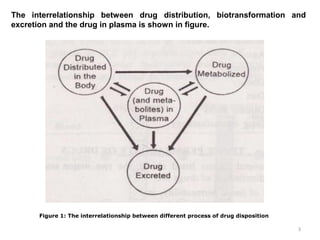
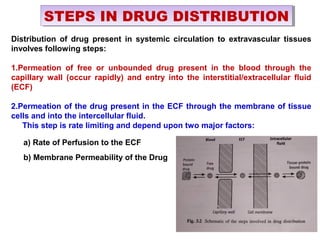
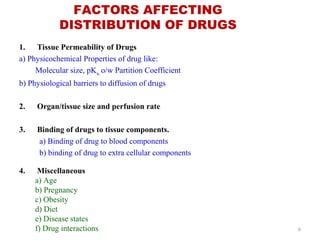
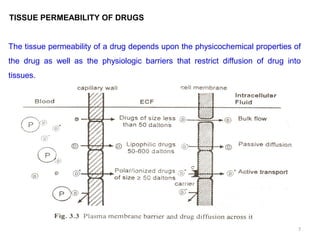
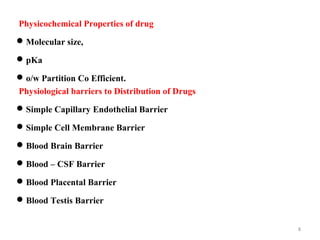
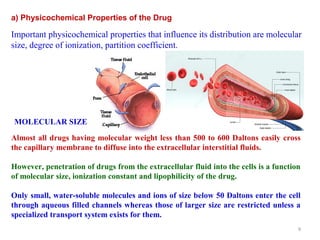
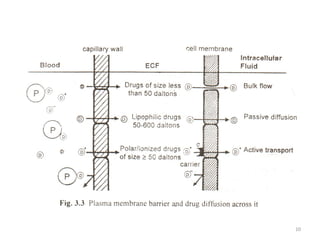
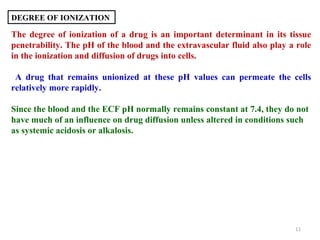
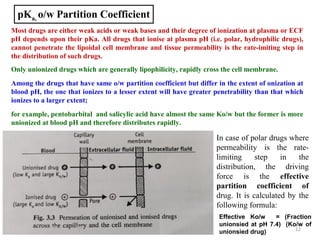
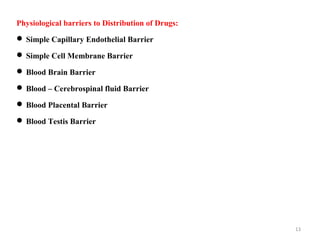
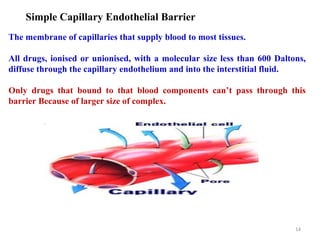
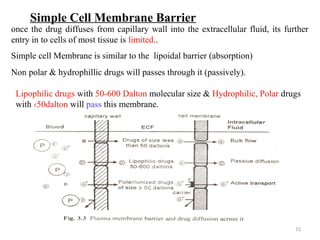
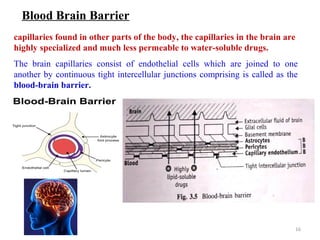
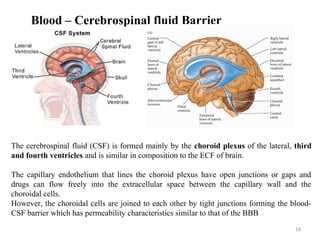
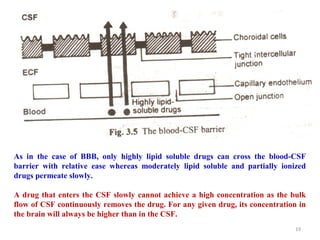
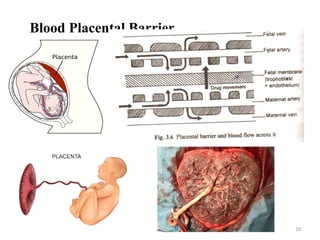
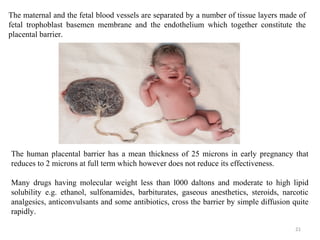
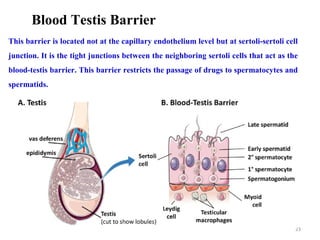
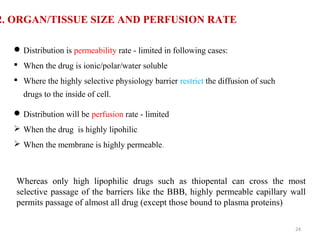
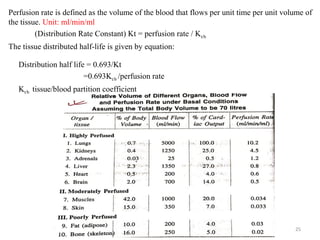
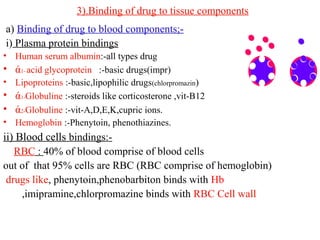
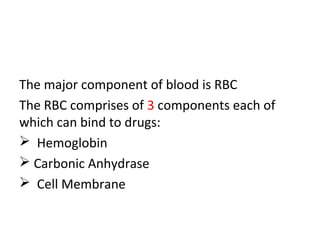
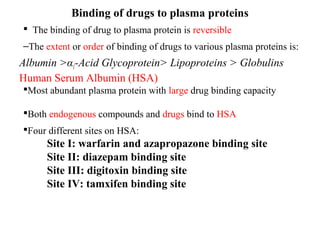
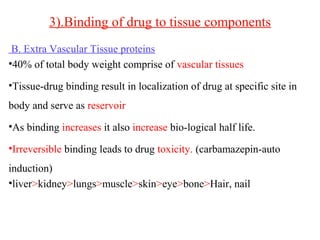
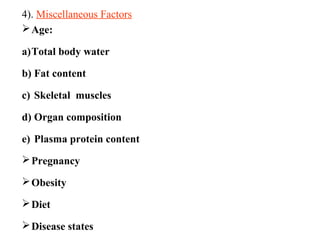
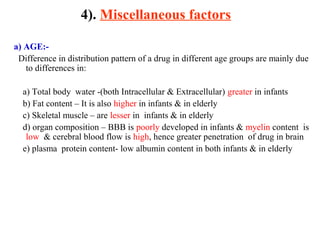
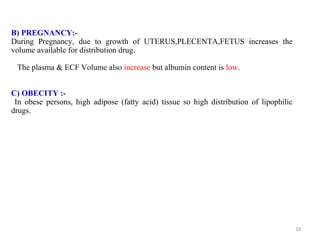
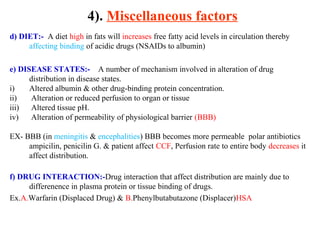


1. After entering systemic circulation, drugs undergo disposition processes like distribution and elimination. Distribution involves the reversible transfer of drugs between compartments while elimination causes the irreversible loss of drugs from the body. 2. Several factors affect the distribution of drugs between compartments including tissue permeability, which depends on a drug's physicochemical properties and ability to pass physiological barriers. Organ size and blood flow rates also influence distribution. 3. Binding of drugs to blood components or extracellular tissues can impact distribution by altering a drug's ability to pass between compartments. Other miscellaneous factors like age, disease states, and drug interactions also affect distribution.


