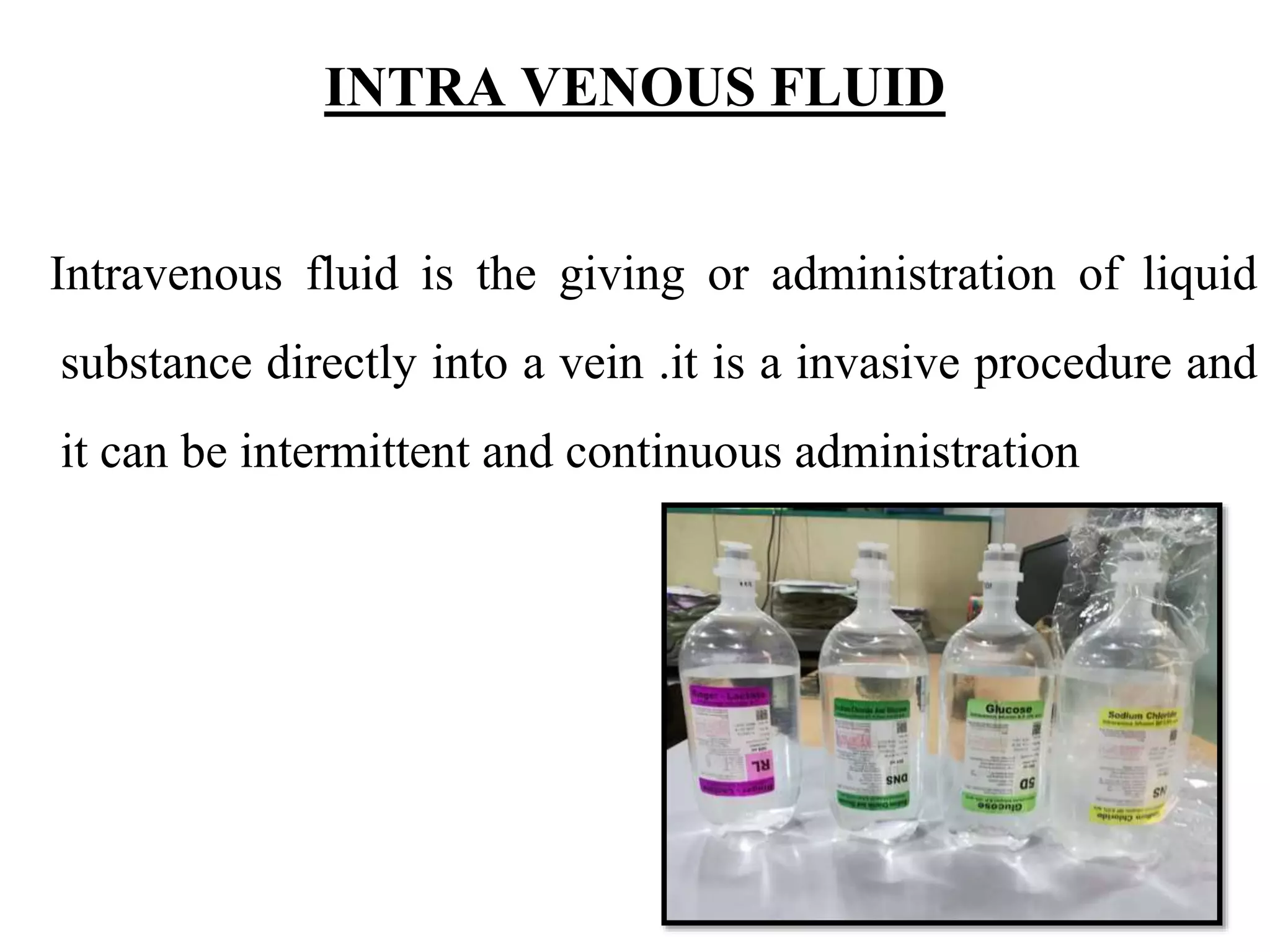
INTRA VENOUS FLUID
Intravenous fluid is the giving or administration of liquid
substance directly into a vein .it is a invasive procedure and
it can be intermittent and continuous administration
TYPES OF IV FLUID
Crystalloid colloid
CRYSTALLOID
It is a clear solution fluid made up of water and
electrolyte solution .it contain small molecule which
easily cross cell membrane.
Crystalloid also are three types
Hypotonic
 Isotonic
 hypertonic
HYPOTONIC
it has less osmolarity . The solute are less than in
solvant . The diffusion of water molecule from less
concentration to higher concentration
ISOTONIC FLUID
In this solute and solvent both are equal . Isotonic crystalloid
do not cause a significant shift of water between blood
vessels and cell .
Example- Normal saline 0.9 % Ringer lactate
HYPERTONIC
• In this solute concentration. Higher than solvent .
These have higher osmolarity
Example -Dextrose 5% Normal saline 3%Dextrose
10%
COLLOID
Colloid are large molecular weight solution . These
solute are macromolecule or substance made of
gelatinous solution which have particle suspended in
solution and do not cross semi permeable
membrane
Example -Albumin , dextran , hexastarch
IV FLUID INDICATION
Dehydration
Fluid and electrolyte imbalance
 Burn Injury
Blood loss
Trauma
FLUID CALCULATION
To calculate amount of fluid require for replacement
with in 24 hour period
Method Flow rate = total volume in ml / time in
minute × drop factor
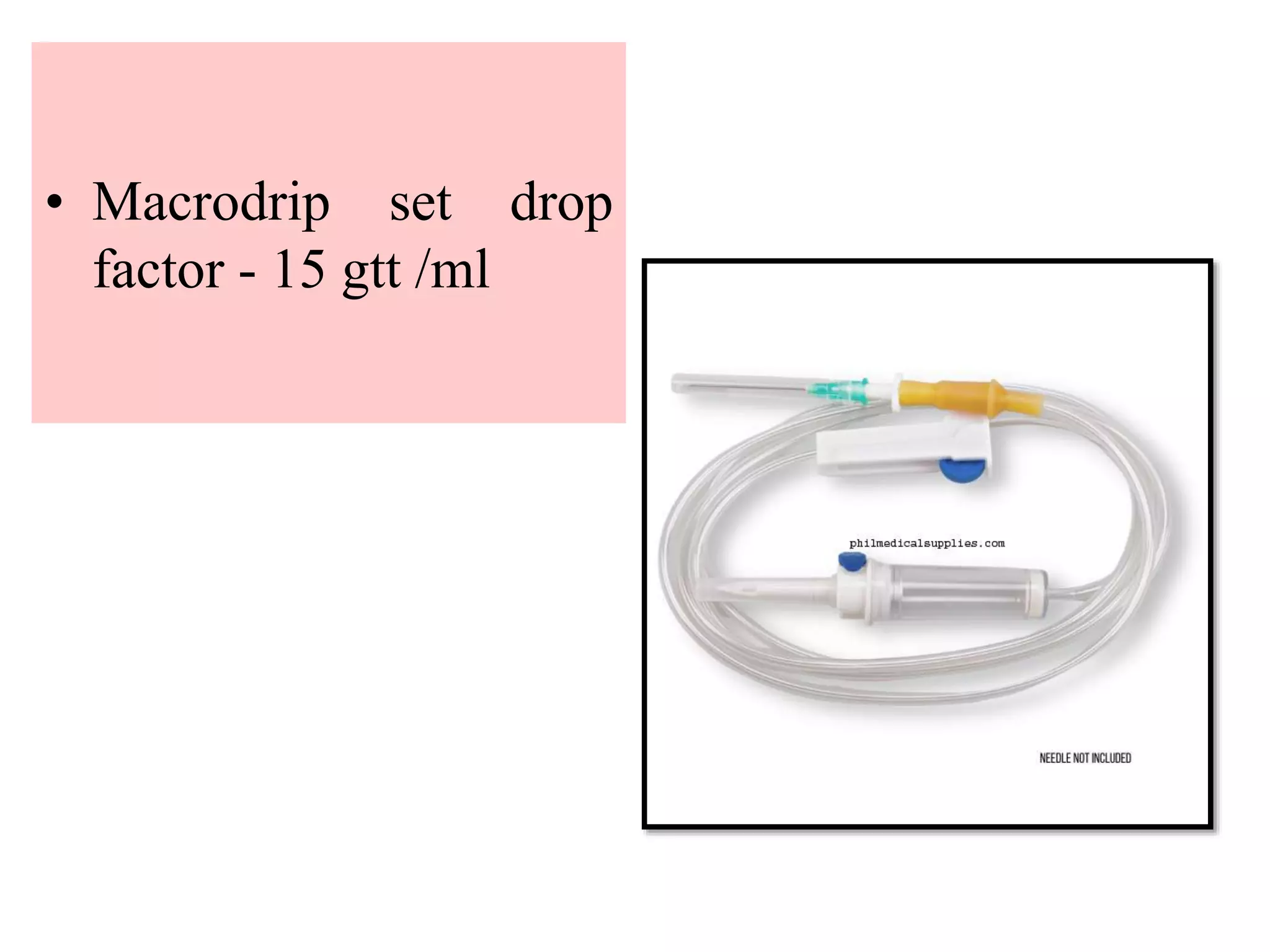
DROP FACTOR - AMOUNT OF DROP IN 1 ML
Drop factor for Microdrip
set - 60 gtt / ml
• Macrodrip set drop
factor - 15 gtt /ml
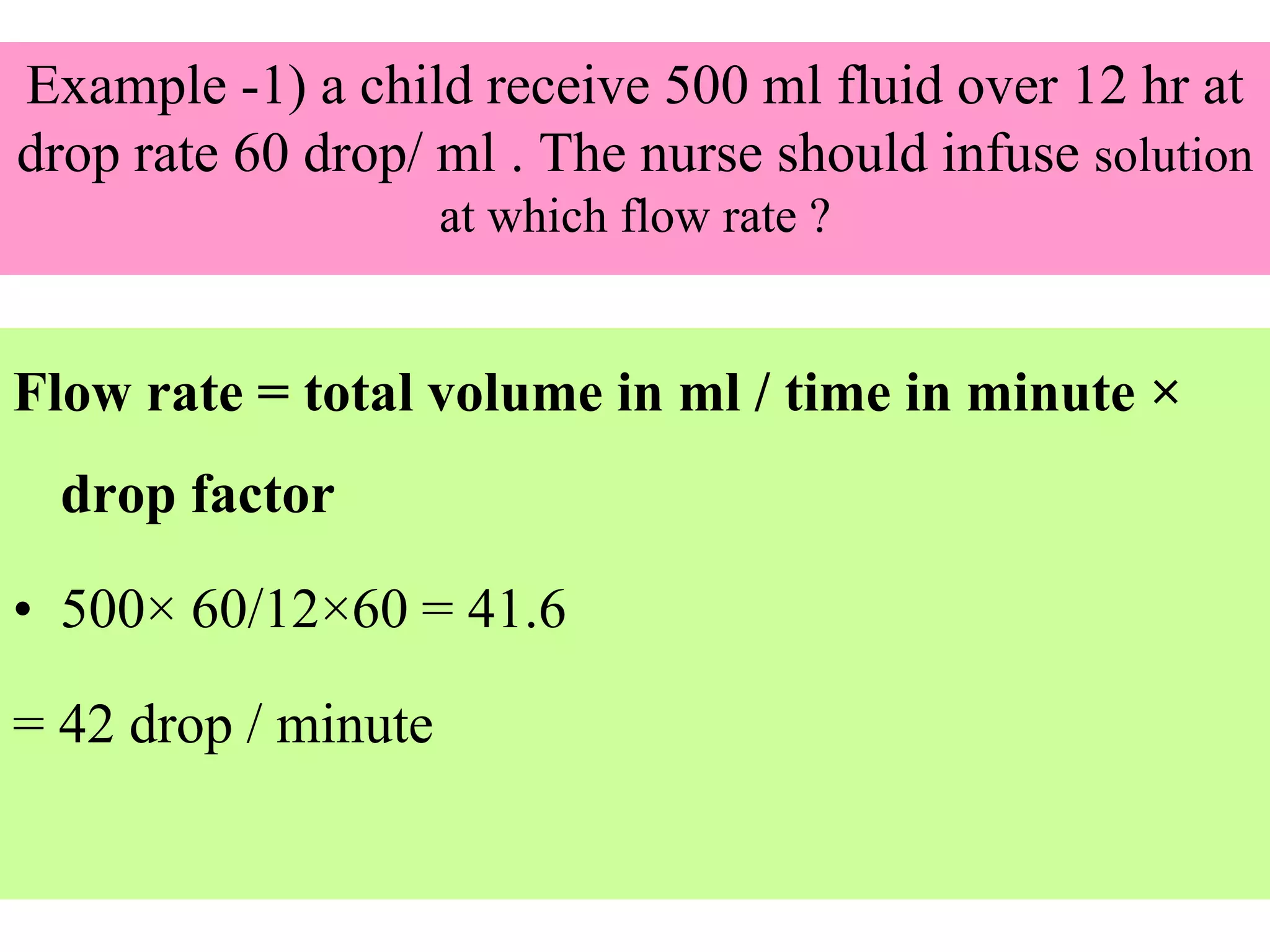
Example -1) a child receive 500 ml fluid over 12 hr at
drop rate 60 drop/ ml . The nurse should infuse solution
at which flow rate ?
Flow rate = total volume in ml / time in minute ×
drop factor
• 500× 60/12×60 = 41.6
= 42 drop / minute
 500 ml iv fluid administer 5 hr at drop factor 20
drop / ml calculate flow rate ?
 500 ml RL introduce over 4hr 10 minute at drop
factor 20gtt/ml . What is flow rate ?
 1200 ml NS introduce over 125 ml / hr at drop factor
20 gtt /ml . What is flow rate?
SUMMARY
Today I discussed intravenous fluid , type of iv fluid ,
indication , fluid calculation and method of fluid
calculation with example.
CONCLUSION
Fluid balance can alter with disease and illness so it is
important to be aware of how much fluid is in the
body , taking steps such as measuring urea and
electrolyte level and how to balance fluid in the
body
BIBLIOGRAPHY
• Nancy sister," textbook of principles
and practice of nursing , 6 edition,jrp
publication ,page no 129.
• Perry potter,”text book of
fundamentals of nursing ,9
edition,page no-316-318.
Net referneces:
• www.medscape.com/calculator/52
6/maintenance-fluid-calculations.

fluid calculation mamta.pptx

  • 2.
    INTRA VENOUS FLUID Intravenousfluid is the giving or administration of liquid substance directly into a vein .it is a invasive procedure and it can be intermittent and continuous administration
  • 3.
    TYPES OF IVFLUID Crystalloid colloid
  • 4.
    CRYSTALLOID It is aclear solution fluid made up of water and electrolyte solution .it contain small molecule which easily cross cell membrane. Crystalloid also are three types Hypotonic  Isotonic  hypertonic
  • 5.
    HYPOTONIC it has lessosmolarity . The solute are less than in solvant . The diffusion of water molecule from less concentration to higher concentration
  • 6.
    ISOTONIC FLUID In thissolute and solvent both are equal . Isotonic crystalloid do not cause a significant shift of water between blood vessels and cell . Example- Normal saline 0.9 % Ringer lactate
  • 7.
    HYPERTONIC • In thissolute concentration. Higher than solvent . These have higher osmolarity Example -Dextrose 5% Normal saline 3%Dextrose 10%
  • 8.
    COLLOID Colloid are largemolecular weight solution . These solute are macromolecule or substance made of gelatinous solution which have particle suspended in solution and do not cross semi permeable membrane Example -Albumin , dextran , hexastarch
  • 10.
    IV FLUID INDICATION Dehydration Fluidand electrolyte imbalance  Burn Injury Blood loss Trauma
  • 11.
    FLUID CALCULATION To calculateamount of fluid require for replacement with in 24 hour period Method Flow rate = total volume in ml / time in minute × drop factor
  • 12.
    DROP FACTOR -AMOUNT OF DROP IN 1 ML Drop factor for Microdrip set - 60 gtt / ml
  • 13.
    • Macrodrip setdrop factor - 15 gtt /ml
  • 15.
    Example -1) achild receive 500 ml fluid over 12 hr at drop rate 60 drop/ ml . The nurse should infuse solution at which flow rate ? Flow rate = total volume in ml / time in minute × drop factor • 500× 60/12×60 = 41.6 = 42 drop / minute
  • 16.
     500 mliv fluid administer 5 hr at drop factor 20 drop / ml calculate flow rate ?  500 ml RL introduce over 4hr 10 minute at drop factor 20gtt/ml . What is flow rate ?  1200 ml NS introduce over 125 ml / hr at drop factor 20 gtt /ml . What is flow rate?
  • 17.
    SUMMARY Today I discussedintravenous fluid , type of iv fluid , indication , fluid calculation and method of fluid calculation with example.
  • 18.
    CONCLUSION Fluid balance canalter with disease and illness so it is important to be aware of how much fluid is in the body , taking steps such as measuring urea and electrolyte level and how to balance fluid in the body
  • 19.
    BIBLIOGRAPHY • Nancy sister,"textbook of principles and practice of nursing , 6 edition,jrp publication ,page no 129. • Perry potter,”text book of fundamentals of nursing ,9 edition,page no-316-318. Net referneces: • www.medscape.com/calculator/52 6/maintenance-fluid-calculations.