Implementing Electronic
Portfolios through Social Media:
Steps and Recommendations
for Sustainable Portfolio Use

By David W. Denton
Seattle Pacific University
Abstract
Over the last two decades, students and teachers, across educational levels and
disciplines, have been subject to a variety of school reform efforts. Nevertheless, some
instructional practices, such as portfolio assessment, persist and grow in popularity even
in the midst of changing educational reform goals and shifting priorities. Teacher education
programs have used paper-based portfolios for more than three decades. Recently,
institutions have migrated to electronic portfolios since these provide several advantages.
Early models of these systems required special technical skills, hardware, or fee-based
contracts with service providers. The newest iteration of portfolio platforms are based on
social media applications, which are easy to use, free, and more sustainable. However,
the accelerated adoption of social media applications as repositories for student portfolio
content has produced several gaps in the literature. Two of these include steps for
implementing electronic portfolios in social media platforms and instructional methods for
soliciting quality entries from students through questions and prompts. Basic instructions
for implementing social media portfolios and for promoting quality entries are discussed. In
this paper, new lines of inquiry involving social media portfolios are proposed.
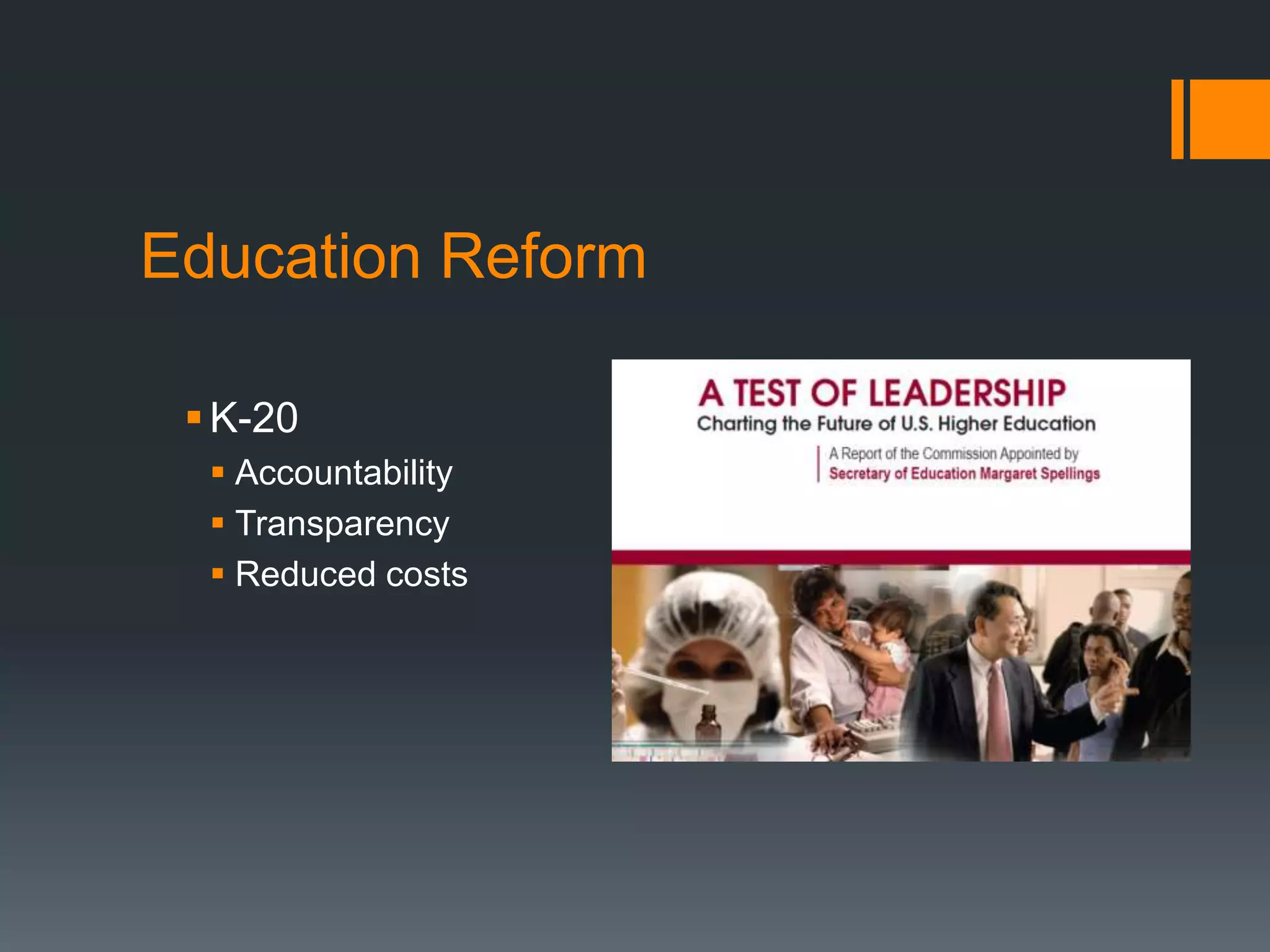
Education Reform

  K-20
   Accountability
   Transparency
   Reduced costs
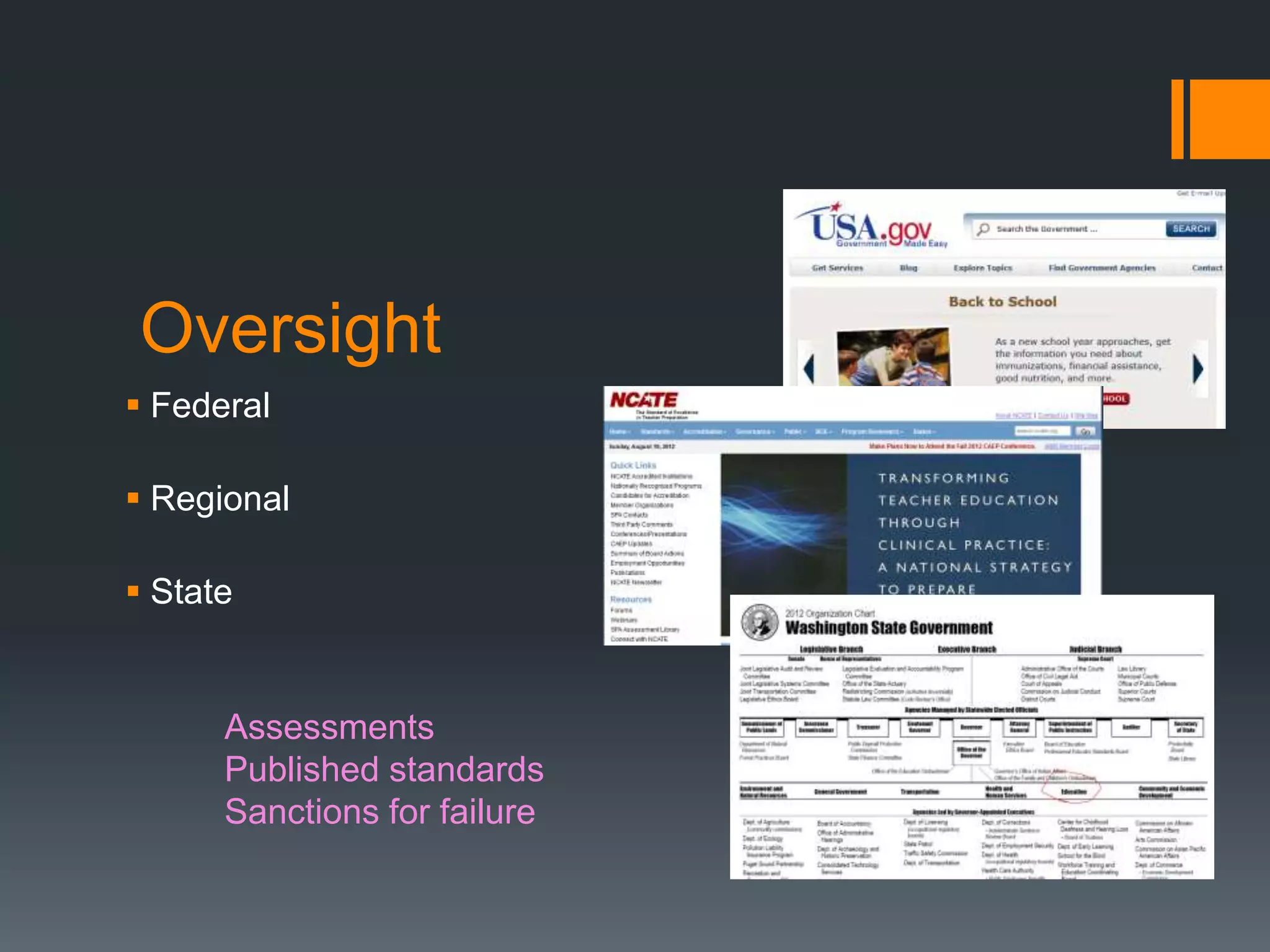
Oversight
 Federal

 Regional

 State


      Assessments
      Published standards
      Sanctions for failure
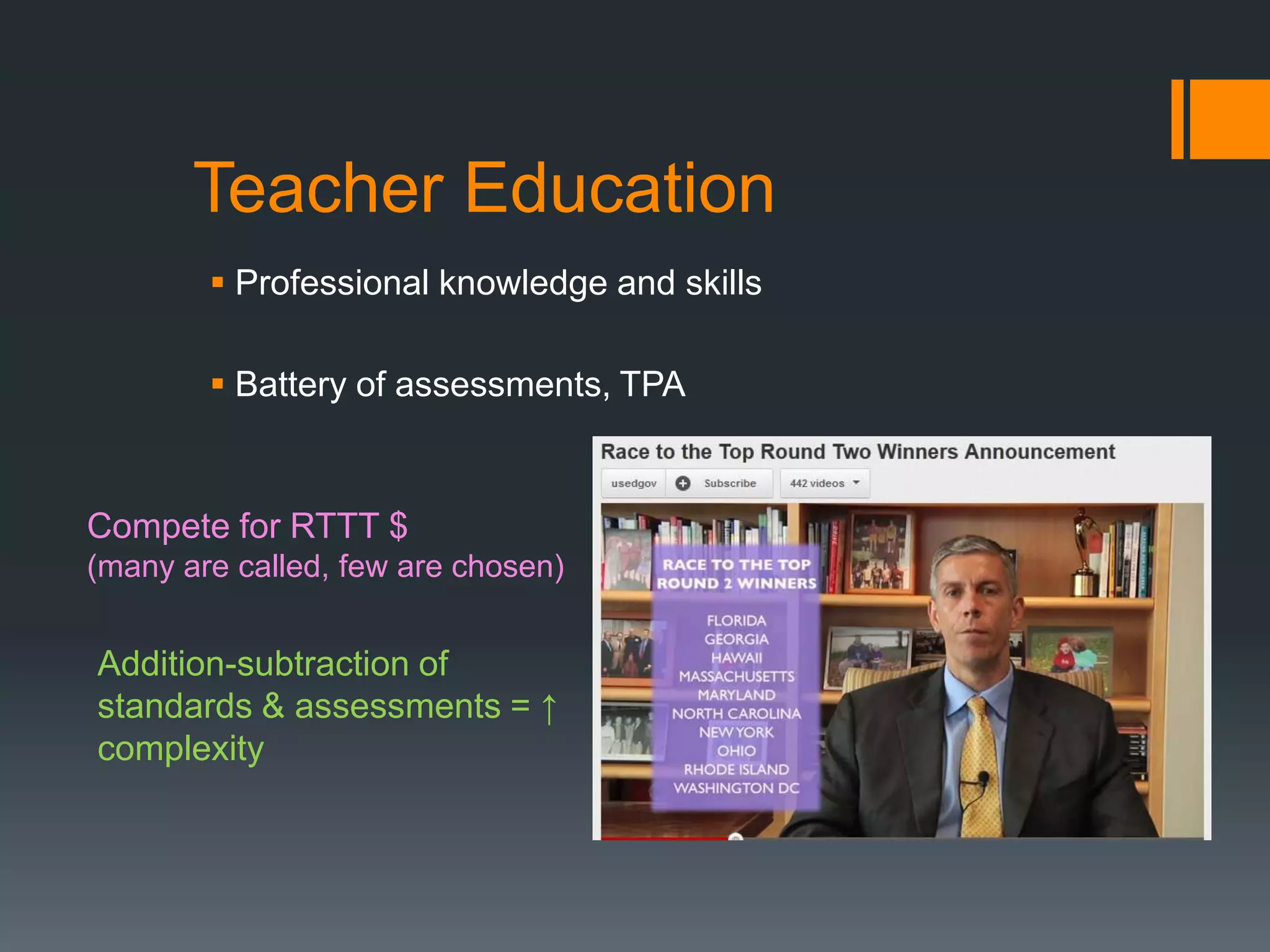
Teacher Education
         Professional knowledge and skills

         Battery of assessments, TPA


Compete for RTTT $
(many are called, few are chosen)


Addition-subtraction of
standards & assessments = ↑
complexity
Portfolio Assessment
Portfolio assessment involves the collection and presentation
of different types of student work samples, gathered over time,
to show depth and breadth of learning. Work samples are
collected systematically to validate accomplishments relative to
specific instructional objectives. Portfolios contain written
entries, often accompanying work samples, which are
characterized by self-assessment through reflection.

                                          (Shermis & DiVesta, 2011)
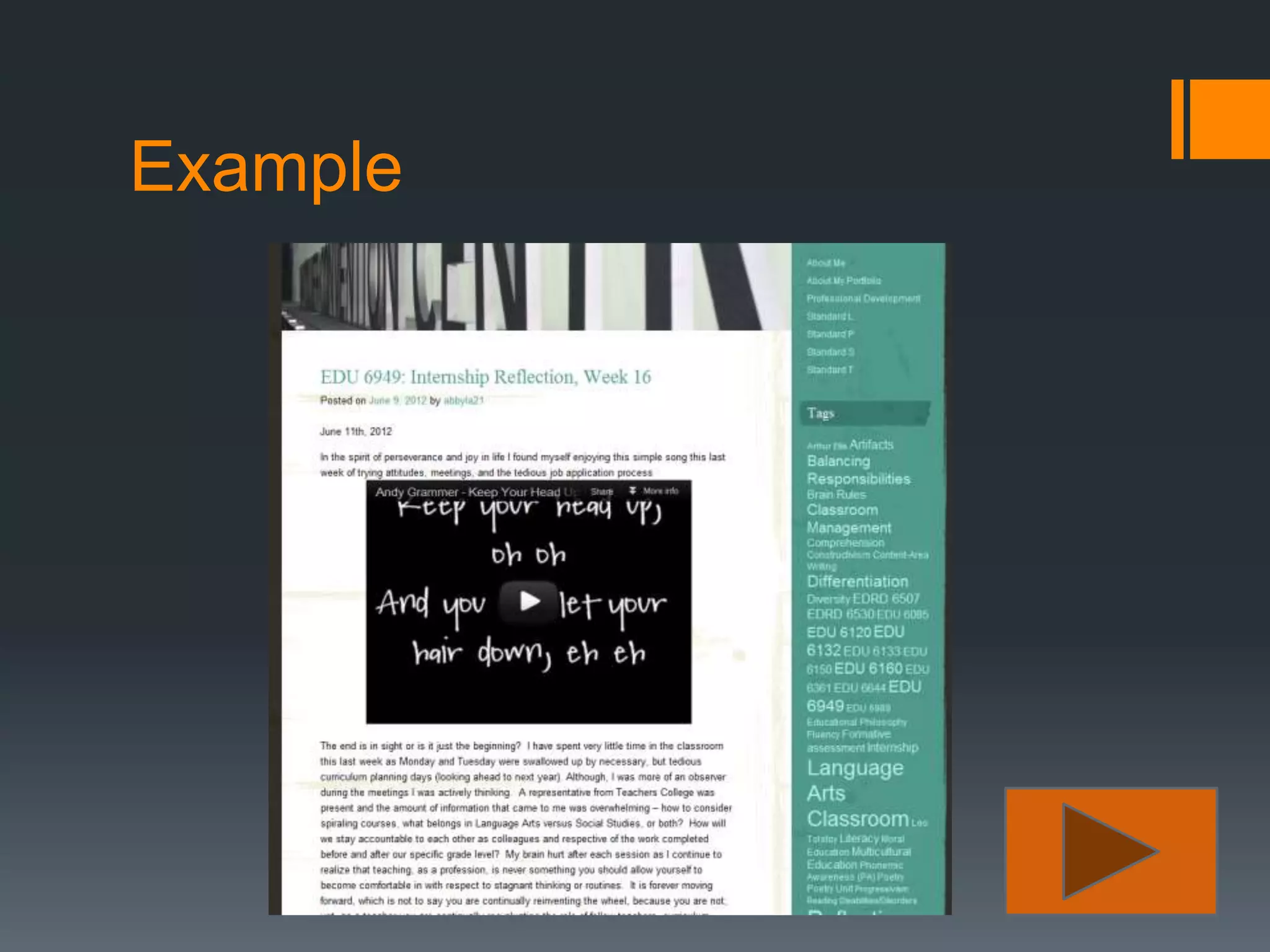
Example
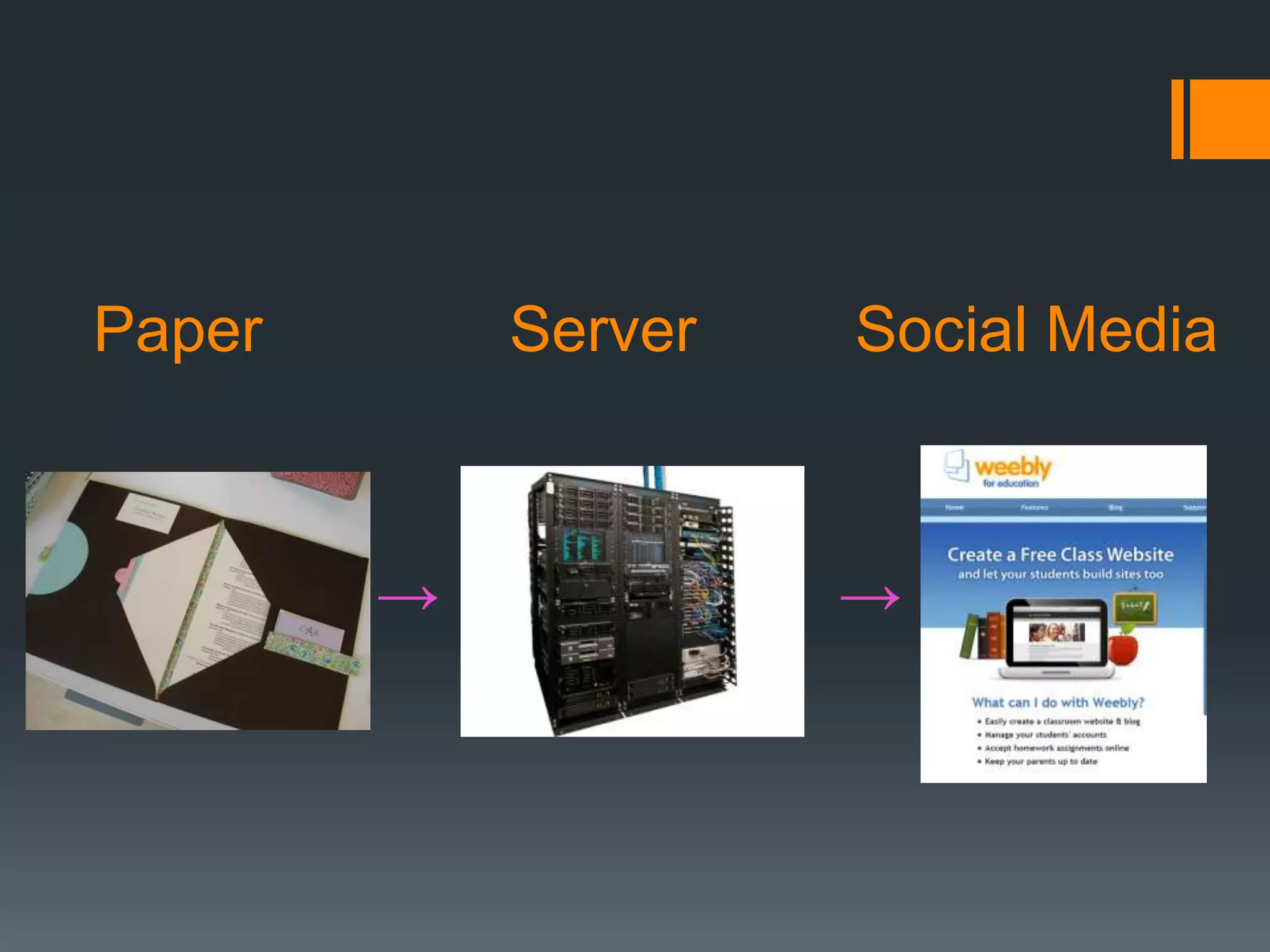
Paper       Server   Social Media


        →            →
Electronic portfolio
A digital container capable of storing visual and auditory content
including text, images, video and sound

                                                 (Abrami & Barrett, 2005)

              Advantages
                  Search
                  Retrieve
                  Change
                  Link
                  Organize
                  Show
Types

 Add-on
  ePortfolio + Blackboard


 Independent
  Live Text


 Social media
  Wordpress
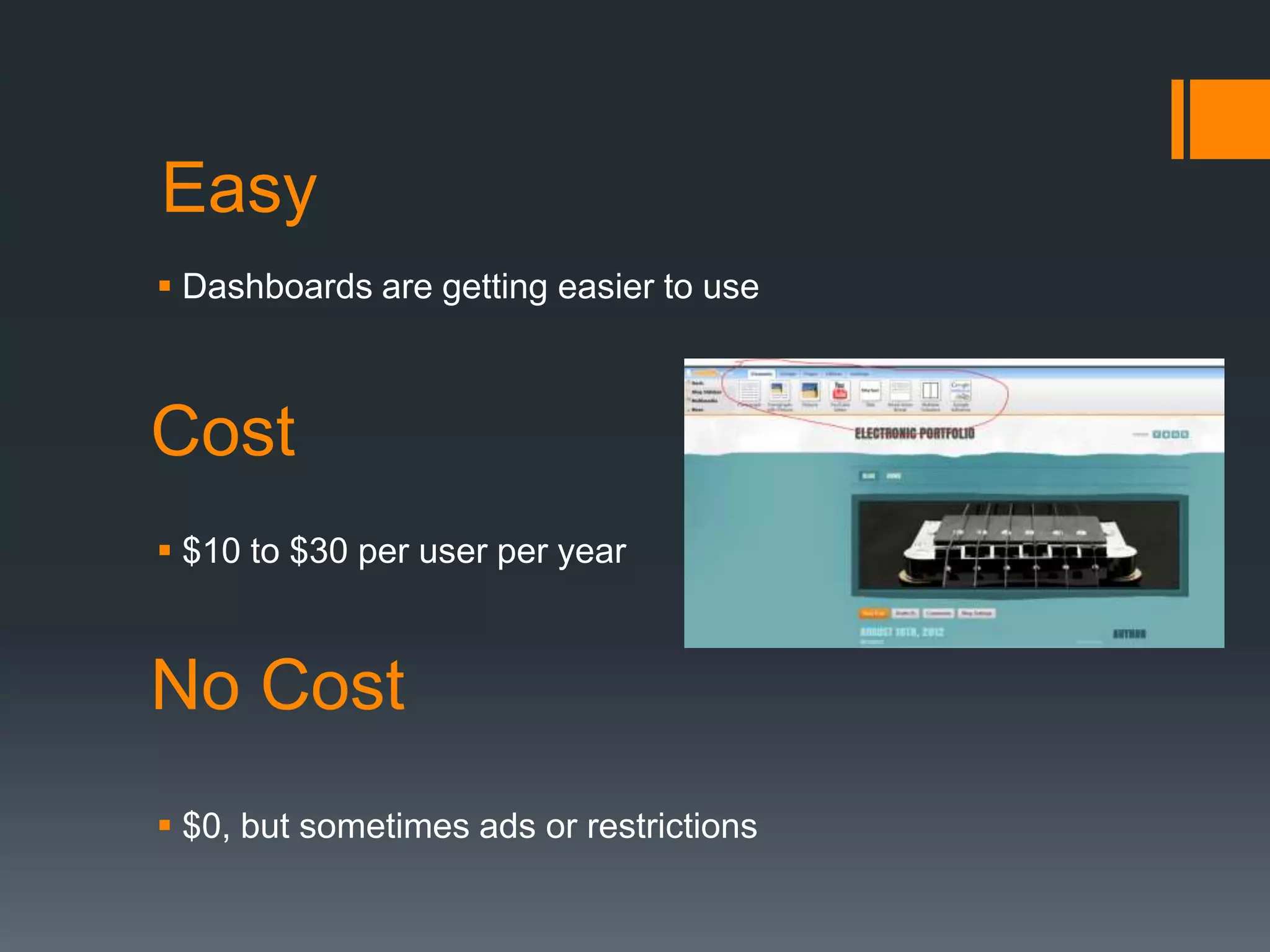
Easy
 Dashboards are getting easier to use


Cost
 $10 to $30 per user per year


No Cost
 $0, but sometimes ads or restrictions
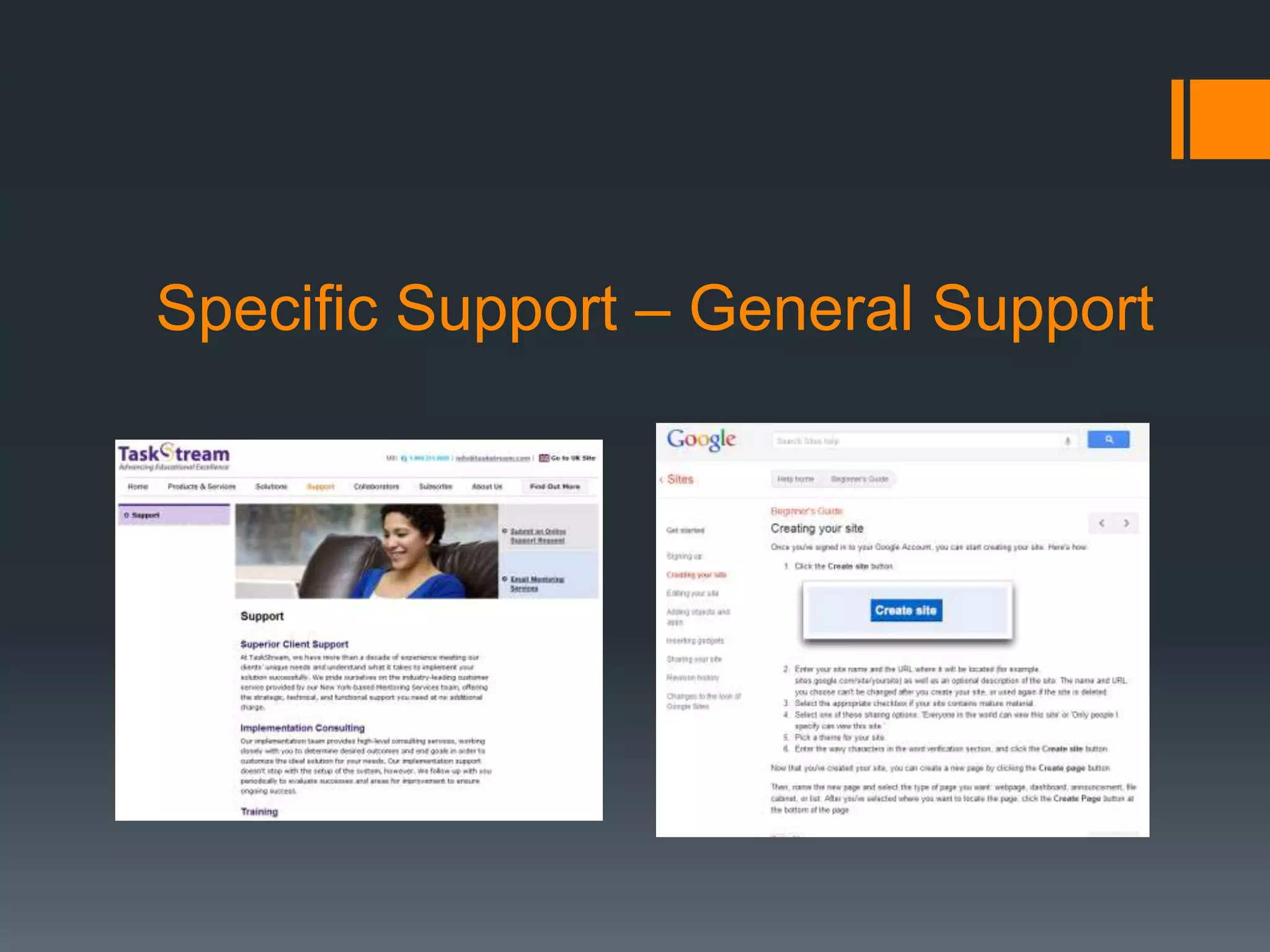
Specific Support – General Support
Literature on Social Media Platforms

Surplus                                 Shortage
 Efficacy of portfolios for learning    Implementation
 Quality of portfolio entries           Promoting quality entries
Implementation: Defining Scope
and Purpose
 Class – program
 When and how to add content
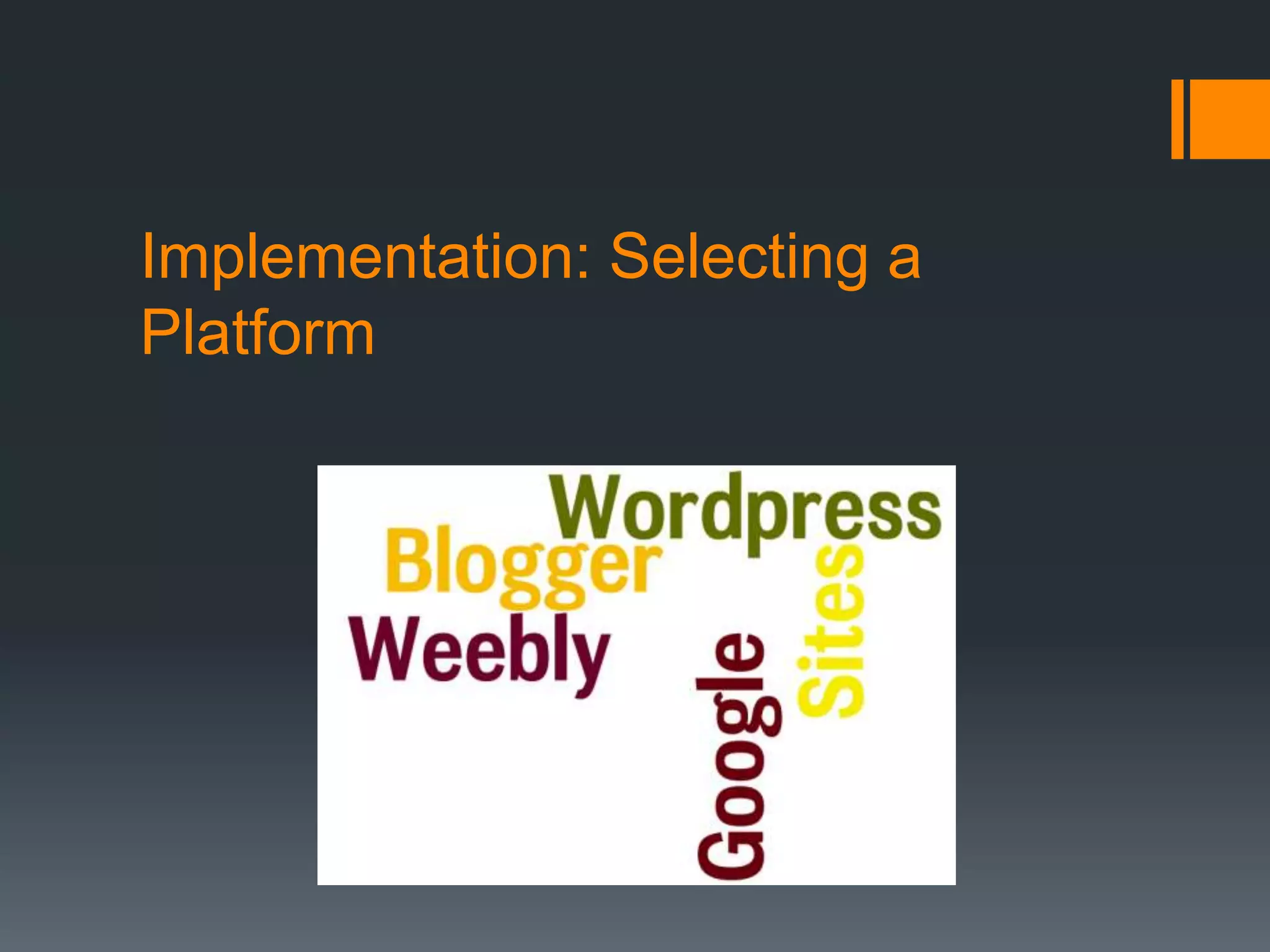
Implementation: Selecting a
Platform
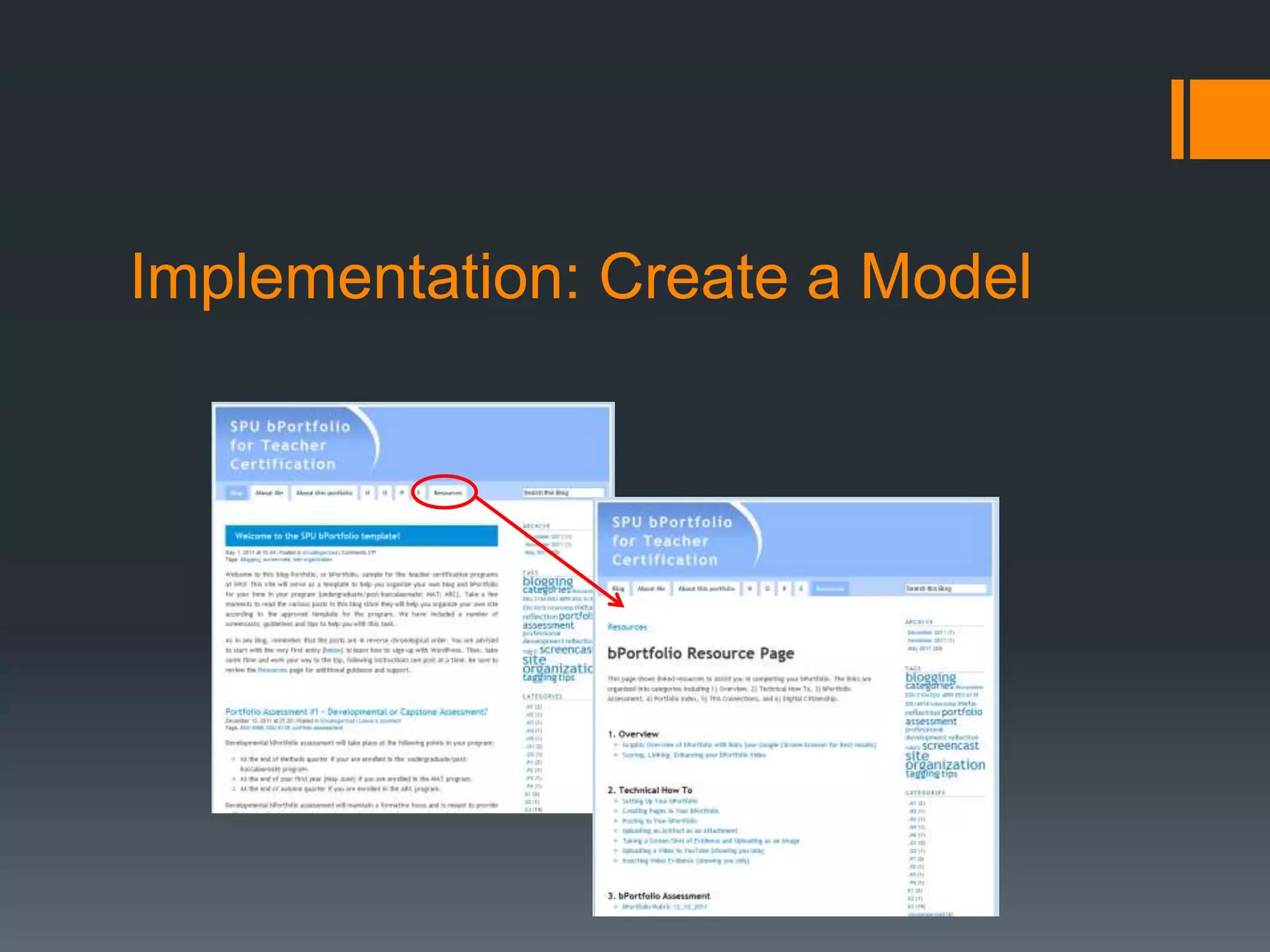
Implementation: Create a Model
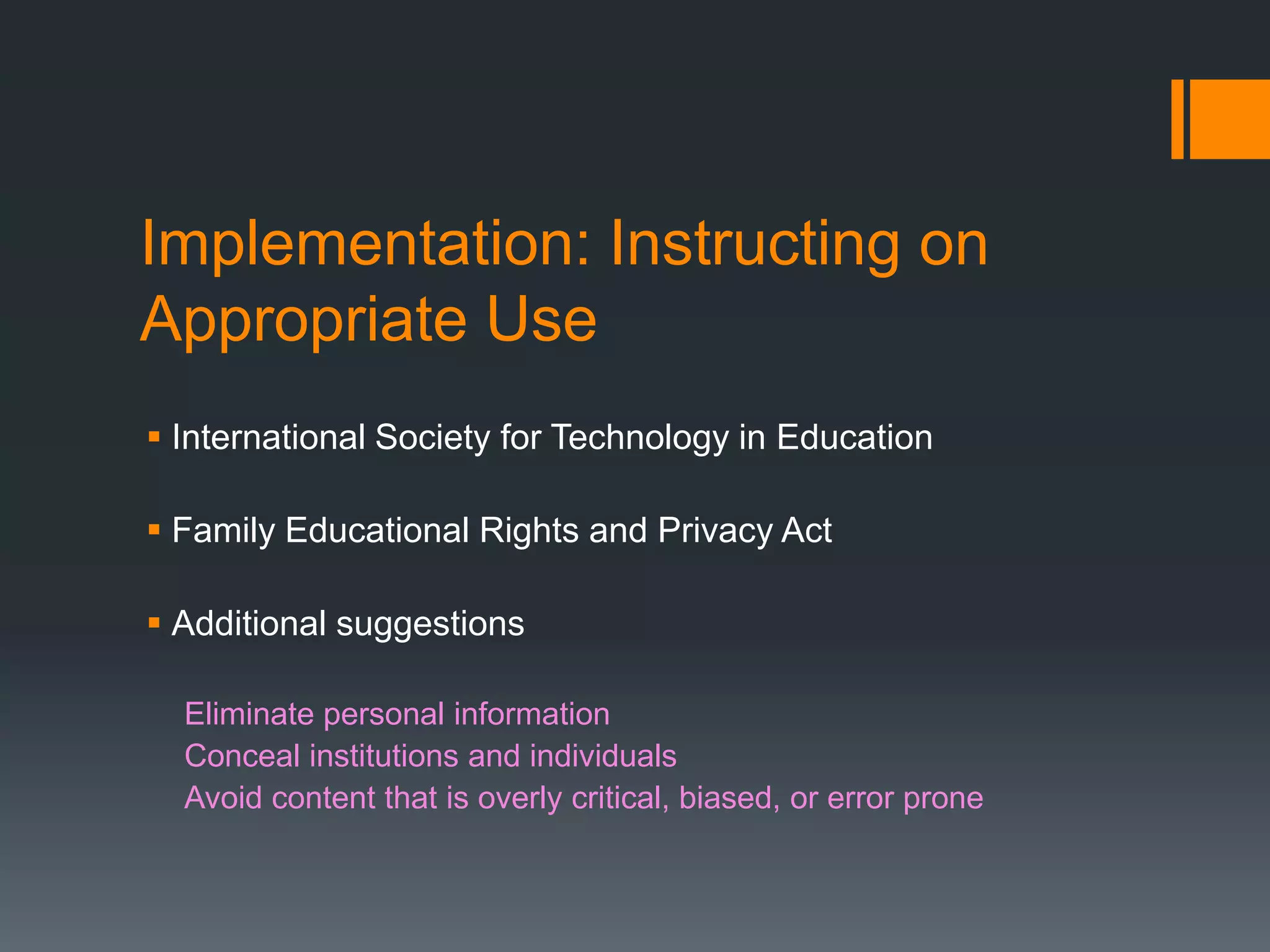
Implementation: Instructing on
Appropriate Use
 International Society for Technology in Education

 Family Educational Rights and Privacy Act

 Additional suggestions

  Eliminate personal information
  Conceal institutions and individuals
  Avoid content that is overly critical, biased, or error prone
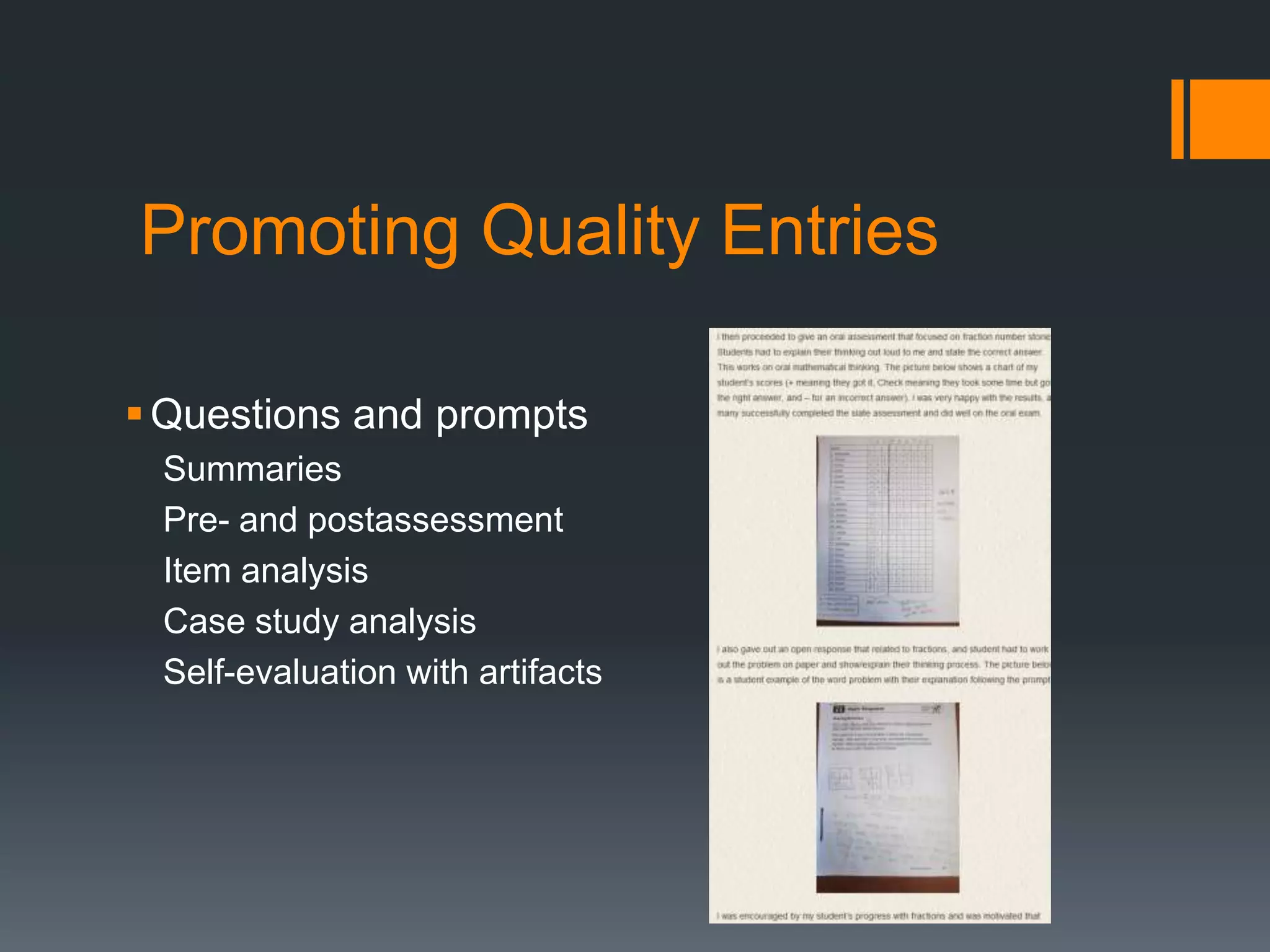
Promoting Quality Entries

 Questions and prompts
 Summaries
 Pre- and postassessment
 Item analysis
 Case study analysis
 Self-evaluation with artifacts
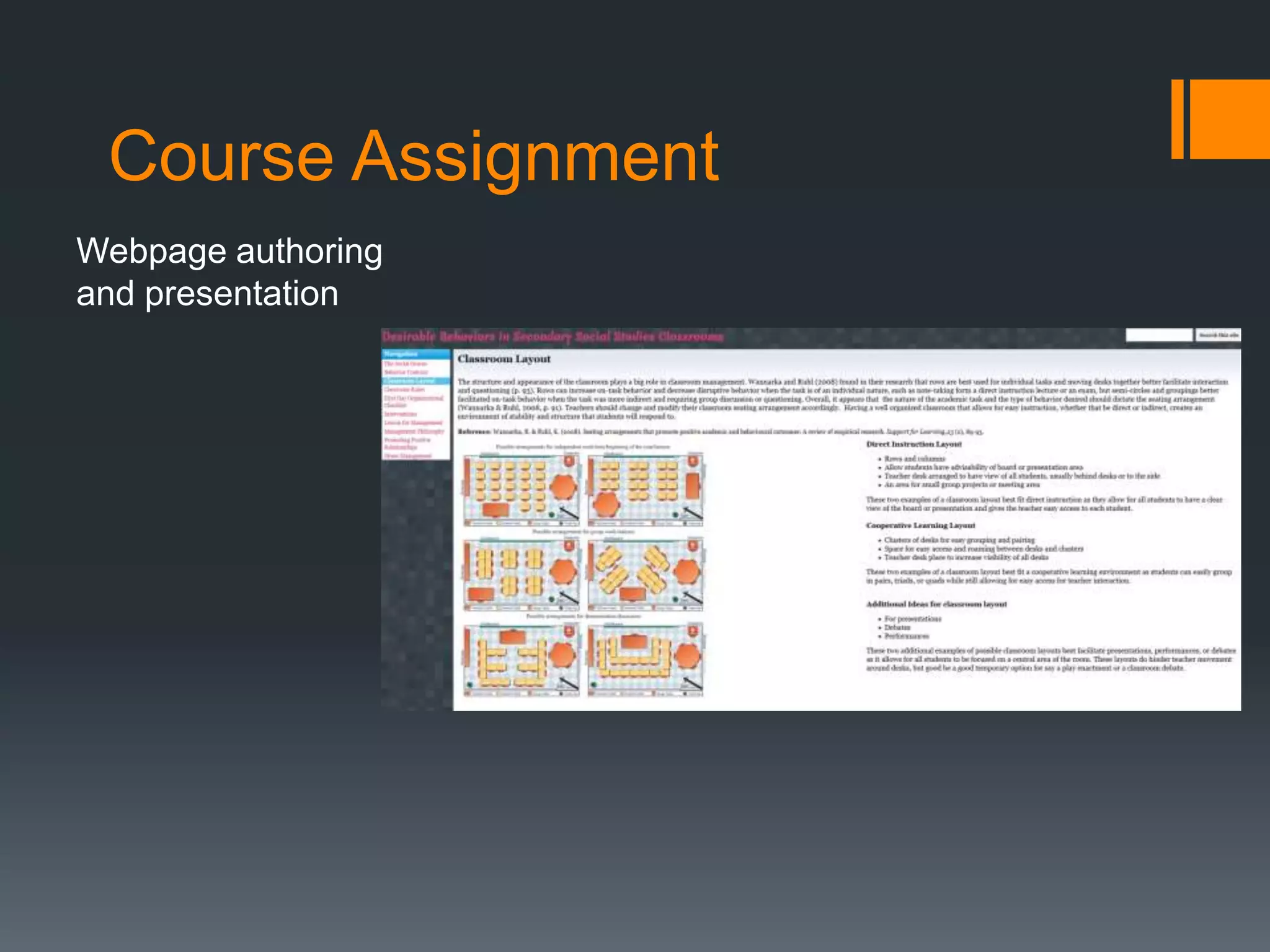
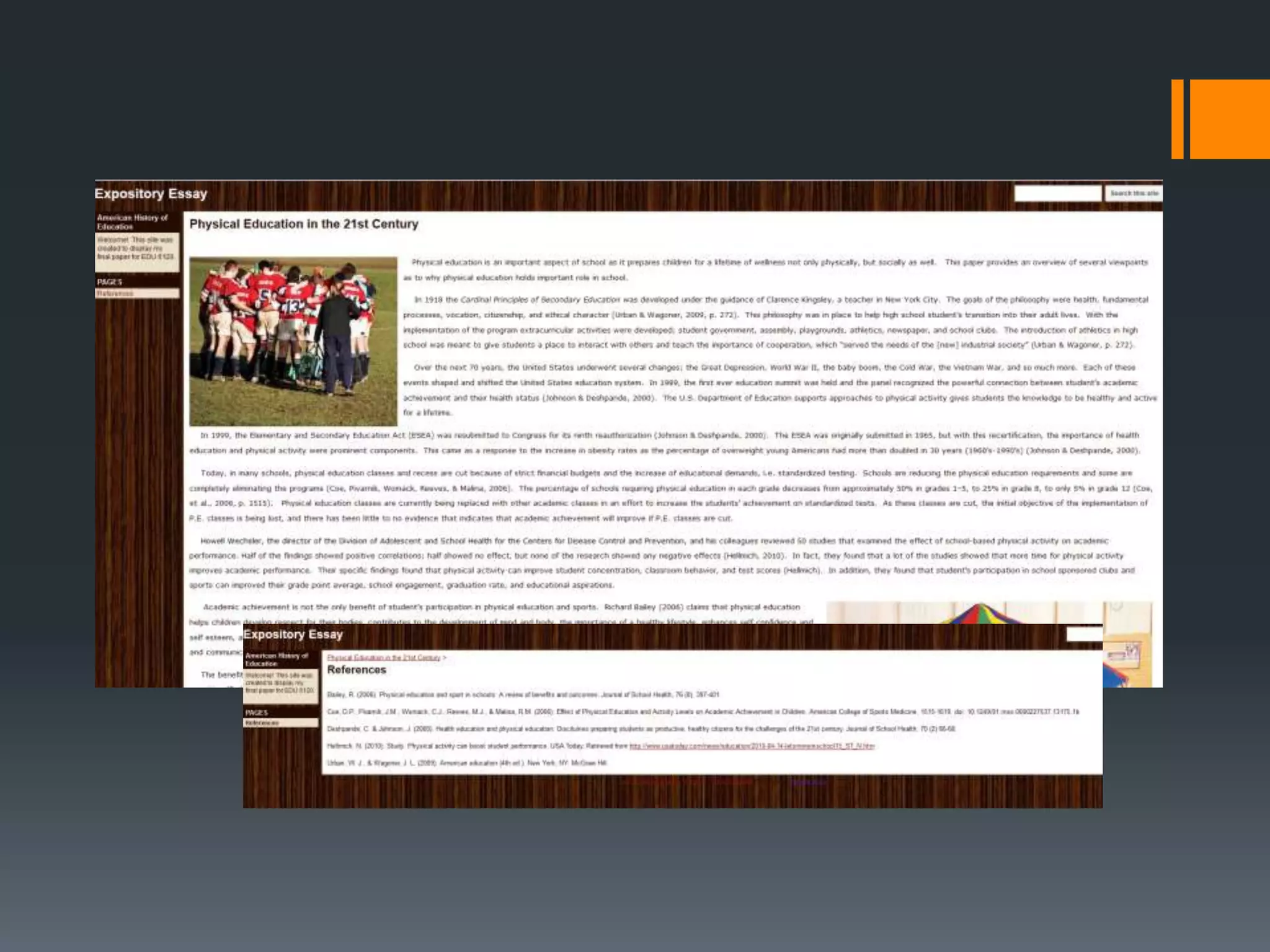
Course Assignment
Webpage authoring
and presentation
Paper Publishing
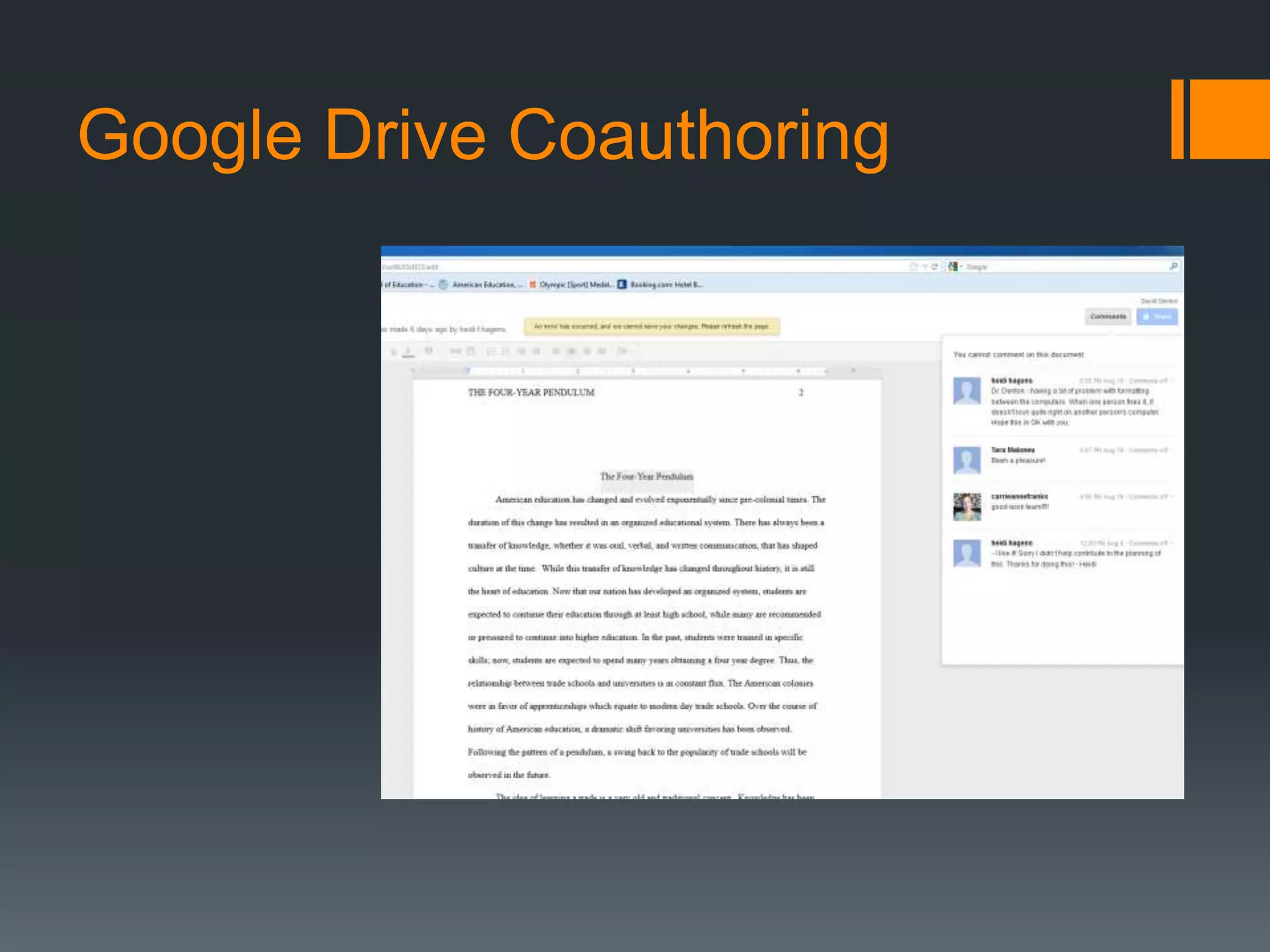
Google Drive Coauthoring
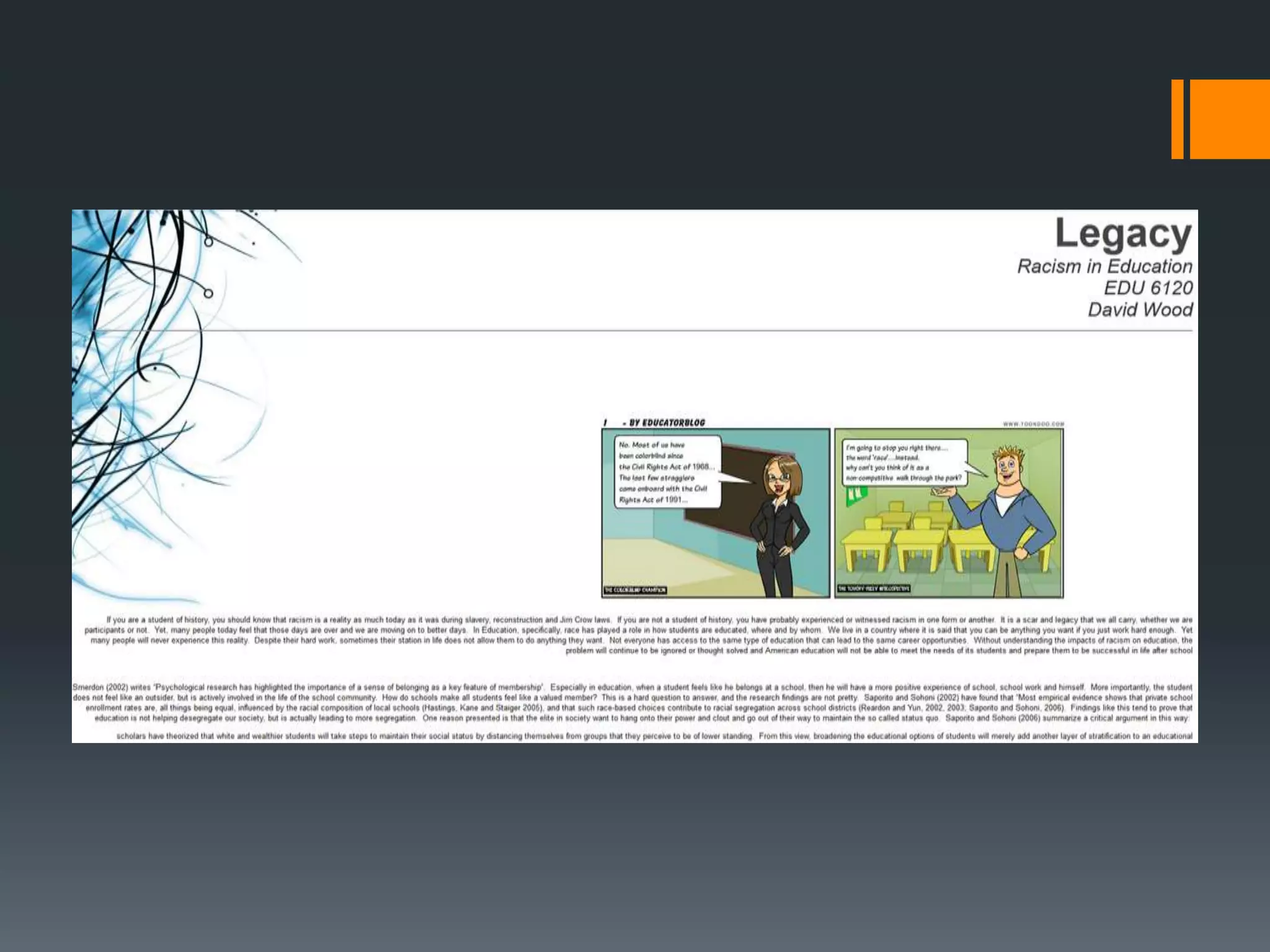
Paper Publishing
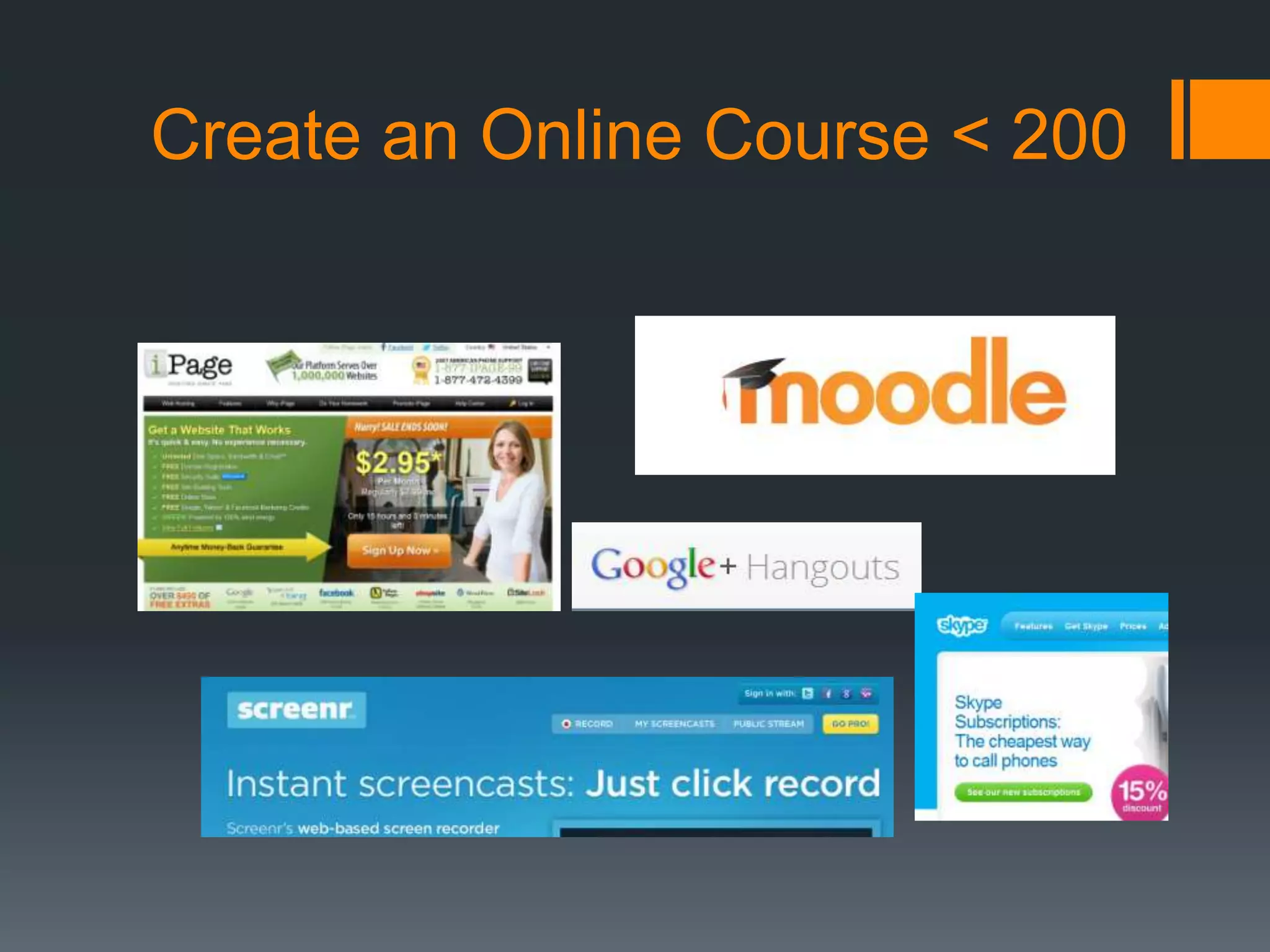
Create an Online Course < 200
New Lines of Inquiry
 Comparing social media platforms

 Assessing integration of online media applications

 Determining effects of digital citizenship instruction

 Evaluating student attitudes toward social media
Denton presentation implementing electronic portfolios through social media

Denton presentation implementing electronic portfolios through social media

  • 1.
    Implementing Electronic Portfolios throughSocial Media: Steps and Recommendations for Sustainable Portfolio Use By David W. Denton Seattle Pacific University
  • 2.
    Abstract Over the lasttwo decades, students and teachers, across educational levels and disciplines, have been subject to a variety of school reform efforts. Nevertheless, some instructional practices, such as portfolio assessment, persist and grow in popularity even in the midst of changing educational reform goals and shifting priorities. Teacher education programs have used paper-based portfolios for more than three decades. Recently, institutions have migrated to electronic portfolios since these provide several advantages. Early models of these systems required special technical skills, hardware, or fee-based contracts with service providers. The newest iteration of portfolio platforms are based on social media applications, which are easy to use, free, and more sustainable. However, the accelerated adoption of social media applications as repositories for student portfolio content has produced several gaps in the literature. Two of these include steps for implementing electronic portfolios in social media platforms and instructional methods for soliciting quality entries from students through questions and prompts. Basic instructions for implementing social media portfolios and for promoting quality entries are discussed. In this paper, new lines of inquiry involving social media portfolios are proposed.
  • 3.
    Education Reform K-20  Accountability  Transparency  Reduced costs
  • 4.
    Oversight  Federal  Regional State Assessments Published standards Sanctions for failure
  • 5.
    Teacher Education  Professional knowledge and skills  Battery of assessments, TPA Compete for RTTT $ (many are called, few are chosen) Addition-subtraction of standards & assessments = ↑ complexity
  • 6.
    Portfolio Assessment Portfolio assessmentinvolves the collection and presentation of different types of student work samples, gathered over time, to show depth and breadth of learning. Work samples are collected systematically to validate accomplishments relative to specific instructional objectives. Portfolios contain written entries, often accompanying work samples, which are characterized by self-assessment through reflection. (Shermis & DiVesta, 2011)
  • 7.
  • 8.
    Paper Server Social Media → →
  • 10.
    Electronic portfolio A digitalcontainer capable of storing visual and auditory content including text, images, video and sound (Abrami & Barrett, 2005) Advantages Search Retrieve Change Link Organize Show
  • 11.
    Types  Add-on ePortfolio + Blackboard  Independent  Live Text  Social media  Wordpress
  • 12.
    Easy  Dashboards aregetting easier to use Cost  $10 to $30 per user per year No Cost  $0, but sometimes ads or restrictions
  • 13.
    Specific Support –General Support
  • 14.
    Literature on SocialMedia Platforms Surplus Shortage  Efficacy of portfolios for learning  Implementation  Quality of portfolio entries  Promoting quality entries
  • 15.
    Implementation: Defining Scope andPurpose  Class – program  When and how to add content
  • 16.
  • 17.
  • 18.
    Implementation: Instructing on AppropriateUse  International Society for Technology in Education  Family Educational Rights and Privacy Act  Additional suggestions Eliminate personal information Conceal institutions and individuals Avoid content that is overly critical, biased, or error prone
  • 19.
    Promoting Quality Entries Questions and prompts Summaries Pre- and postassessment Item analysis Case study analysis Self-evaluation with artifacts
  • 20.
  • 21.
  • 22.
  • 23.
  • 24.
    Create an OnlineCourse < 200
  • 25.
    New Lines ofInquiry  Comparing social media platforms  Assessing integration of online media applications  Determining effects of digital citizenship instruction  Evaluating student attitudes toward social media