Internet Marketing for NonprofitsA look at the relationships between SEO, PPC, and Social Media.
In this introductory presentation, we will examine and discuss how SEO, PPC, and Social Media interrelate as more and more brands try to compete for attention online.
Goal for TodayProvide an introduction toInternet marketing as a way to connect your mission with an increasingly receptive audience.
 The Methods to Success:Establish credibility, which leads to …Increased search engine authority, which leads to … Improved search engine placement!
The Tools to Success:Search Engine Optimization (SEO)Paid Placement / PPC (Pay-Per-Click)Social Media
Search Engine OptimizationLike brand building, SEO is a long-term strategic process that requires persistence and dedication.
Two Components of SEOOn-page Off-page
On-Page SEO(1) Meta Tags:Page TitlePage DescriptionPage KeywordsImage ALT Tags
On-Page SEO(2) Page Contents CopyHeadingsFriendly URLs
On-Page SEOOn-page SEO sets the stage for (and reinforces) your off-page SEO!
Off-page SEO Off-page SEO has more influence on Google SERPs than anything else.
Off-page SEO Search engines rely on the quality AND quantity of links to your website pages as ‘votes’ of authority.
Off-page SEO Off-page SEO is the process of creating, publishing, and promoting relevant and valuable content (on a regular and ongoing basis) that other credible ‘authorities’ will link to.
Paid Placement / PPCPPC (Pay-Per-Click) is the process of buying ad space on search engines.  PPC Yields ‘instant’ results, but can be costly.
PPC Benefits Keyword researchImmediate / short term resultsSEO support *Short-term / time sensitive promotions*There is often a cost for this feature.
Social MediaSocial media can not only increase traffic to your website, but also potential client contacts.
Social MediaSocial media is an excellent (and inexpensive way) to promote content and establish authority with other industry experts – which can result in more inbound links.
Common ToolsBlogsFacebookTwitterLinkedInYouTube
Blogs – 126 millionThe number of blogs on the Internet (as tracked by BlogPulse in 2009).Facebook – 500 million+The number of active Facebook users as of July 2010. Twitter – 175 million+Current number of Twitter users.  LinkedIn – 21.4 million +Number of unique monthly visitors from the US (47.6 million globally). YouTube – 3rdAlexa ranks YouTube as the third most visited Website on the Internet, behind Google and Facebook. 
Nonprofit SpecificsJumoGoogle GrantsCausesRazoo
JumoCreated by the founders of FacebookAggregates news from your blog, website, and Facebook statuses to create a feed for your website. This data is mixed with the data of other like organizations. New to the scene!
Google Grants!AdWords is a popular and powerful web placement program that when finely tuned, can drive direct and relevant traffic to your site. Google Grants is a unique in-kind donation program awarding free AdWords advertising to select charitable organizations. Google Grants recipients receive upto $10,000 per month in free advertising, without having to pay any amount to Google.
CausesCauses provides the tools so that any Facebook user can leverage their network of real friends to effect positive change.Users can recruit members as well as fundraise.
RazooRazoois an innovative way to give and raise money online.Online fundraising tool providing, winner of MN Council of Nonprofits “innovation” award in 2009.
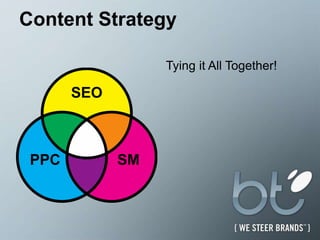
Content StrategyTying it All Together!
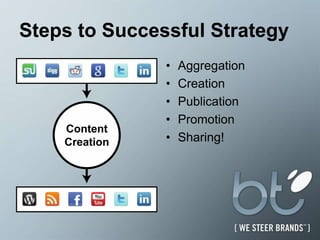
Steps to Successful StrategyAggregationCreationPublicationPromotionSharing!
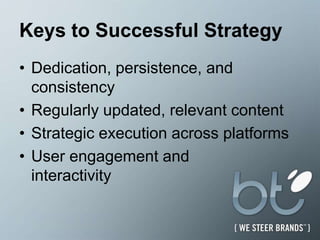
Keys to Successful StrategyDedication, persistence, and consistencyRegularly updated, relevant contentStrategic execution across platformsUser engagement and interactivity
FearsTime and resource consumingComplicated
BenefitsMore effective fulfillment of a missionReduced costs for nonprofitsTransparency!Engage with yourconstituencyReal-time feedback
SummaryA successful content strategy aligns all channels (SEO + PPC + Social Media) to keep consistency in content and targeted keywords.  This will help you establish authority, which will connect more of the right people to your mission!
Thank You!Thoughts? Questions?

Internet Marketing for Nonprofits

  • 1.
    Internet Marketing forNonprofitsA look at the relationships between SEO, PPC, and Social Media.
  • 2.
    In this introductorypresentation, we will examine and discuss how SEO, PPC, and Social Media interrelate as more and more brands try to compete for attention online.
  • 3.
    Goal for TodayProvidean introduction toInternet marketing as a way to connect your mission with an increasingly receptive audience.
  • 4.
    The Methodsto Success:Establish credibility, which leads to …Increased search engine authority, which leads to … Improved search engine placement!
  • 5.
    The Tools toSuccess:Search Engine Optimization (SEO)Paid Placement / PPC (Pay-Per-Click)Social Media
  • 6.
    Search Engine OptimizationLikebrand building, SEO is a long-term strategic process that requires persistence and dedication.
  • 7.
    Two Components ofSEOOn-page Off-page
  • 8.
    On-Page SEO(1) MetaTags:Page TitlePage DescriptionPage KeywordsImage ALT Tags
  • 9.
    On-Page SEO(2) PageContents CopyHeadingsFriendly URLs
  • 10.
    On-Page SEOOn-page SEOsets the stage for (and reinforces) your off-page SEO!
  • 11.
    Off-page SEO Off-pageSEO has more influence on Google SERPs than anything else.
  • 12.
    Off-page SEO Searchengines rely on the quality AND quantity of links to your website pages as ‘votes’ of authority.
  • 13.
    Off-page SEO Off-pageSEO is the process of creating, publishing, and promoting relevant and valuable content (on a regular and ongoing basis) that other credible ‘authorities’ will link to.
  • 14.
    Paid Placement /PPCPPC (Pay-Per-Click) is the process of buying ad space on search engines. PPC Yields ‘instant’ results, but can be costly.
  • 15.
    PPC Benefits KeywordresearchImmediate / short term resultsSEO support *Short-term / time sensitive promotions*There is often a cost for this feature.
  • 16.
    Social MediaSocial mediacan not only increase traffic to your website, but also potential client contacts.
  • 17.
    Social MediaSocial mediais an excellent (and inexpensive way) to promote content and establish authority with other industry experts – which can result in more inbound links.
  • 18.
  • 19.
    Blogs – 126millionThe number of blogs on the Internet (as tracked by BlogPulse in 2009).Facebook – 500 million+The number of active Facebook users as of July 2010. Twitter – 175 million+Current number of Twitter users.  LinkedIn – 21.4 million +Number of unique monthly visitors from the US (47.6 million globally). YouTube – 3rdAlexa ranks YouTube as the third most visited Website on the Internet, behind Google and Facebook. 
  • 20.
  • 21.
    JumoCreated by thefounders of FacebookAggregates news from your blog, website, and Facebook statuses to create a feed for your website. This data is mixed with the data of other like organizations. New to the scene!
  • 22.
    Google Grants!AdWords isa popular and powerful web placement program that when finely tuned, can drive direct and relevant traffic to your site. Google Grants is a unique in-kind donation program awarding free AdWords advertising to select charitable organizations. Google Grants recipients receive upto $10,000 per month in free advertising, without having to pay any amount to Google.
  • 23.
    CausesCauses provides thetools so that any Facebook user can leverage their network of real friends to effect positive change.Users can recruit members as well as fundraise.
  • 24.
    RazooRazoois an innovativeway to give and raise money online.Online fundraising tool providing, winner of MN Council of Nonprofits “innovation” award in 2009.
  • 25.
  • 26.
    Steps to SuccessfulStrategyAggregationCreationPublicationPromotionSharing!
  • 27.
    Keys to SuccessfulStrategyDedication, persistence, and consistencyRegularly updated, relevant contentStrategic execution across platformsUser engagement and interactivity
  • 28.
    FearsTime and resourceconsumingComplicated
  • 29.
    BenefitsMore effective fulfillmentof a missionReduced costs for nonprofitsTransparency!Engage with yourconstituencyReal-time feedback
  • 30.
    SummaryA successful contentstrategy aligns all channels (SEO + PPC + Social Media) to keep consistency in content and targeted keywords.  This will help you establish authority, which will connect more of the right people to your mission!
  • 31.