INTERNATIONAL ORGANIZATIONS
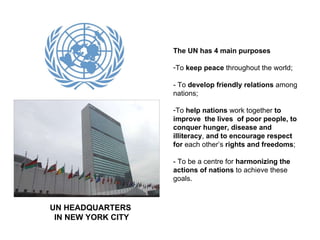
The UN has 4 main purposes To  keep peace  throughout the world; - To  develop friendly relations  among nations; To  help nations  work together  to improve  the lives  of poor people, to conquer hunger, disease and illiteracy ,  and   to encourage respect   for  each other’s  rights and freedoms ; - To be a centre for  harmonizing the actions of nations  to achieve these goals. UN HEADQUARTERS  IN NEW YORK CITY
UNITED NATIONS MEMBER COUNTRIES
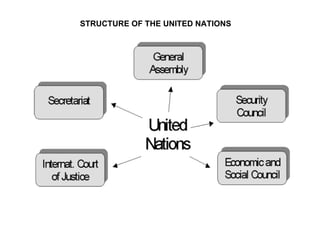
STRUCTURE OF THE UNITED NATIONS
BAN KI – MOON (South Korea), present Secretary General of the United Nations)
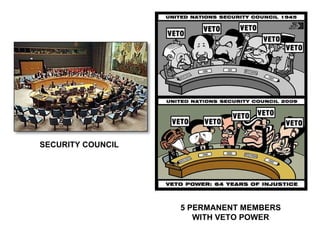
SECURITY COUNCIL 5 PERMANENT MEMBERS WITH VETO POWER
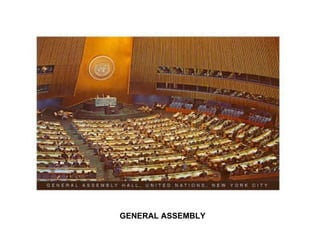
GENERAL ASSEMBLY
ECONOMIC AND SOCIAL COUNCIL
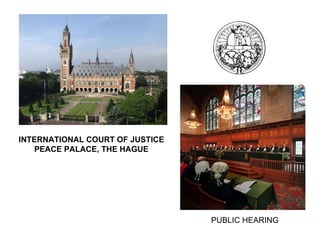
INTERNATIONAL COURT OF JUSTICE PEACE PALACE, THE HAGUE PUBLIC HEARING
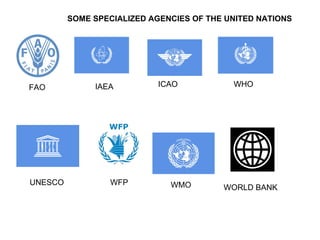
SOME SPECIALIZED AGENCIES OF THE UNITED NATIONS IAEA ICAO FAO WHO UNESCO WFP WMO WORLD BANK
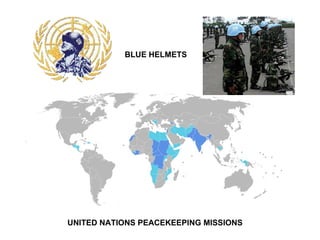
UNITED NATIONS PEACEKEEPING MISSIONS BLUE HELMETS
 
 
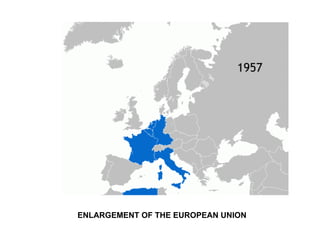
ENLARGEMENT OF THE EUROPEAN UNION
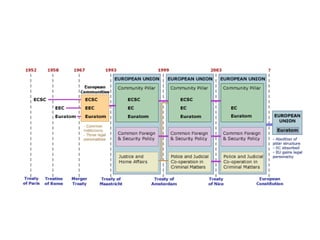
EUROPEAN UNION TIMELINE
 
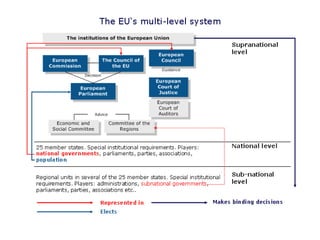
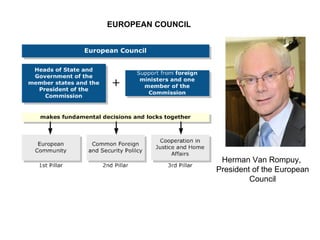
THE THREE PILLARS OF THE EUROPEAN UNION
 
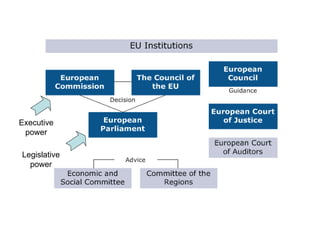
Executive power Legislative power
Herman Van Rompuy,  President of the European Council EUROPEAN COUNCIL
http:// ec.europa.eu / commission _2010-2014/ index_en.htm   Catherine Ashton, High Representative for Foreign Affairs and Security Policy of the EU José Manuel Durao Barroso,  President of the European Commission EUROPEAN COMMISSION The EU Commission members:
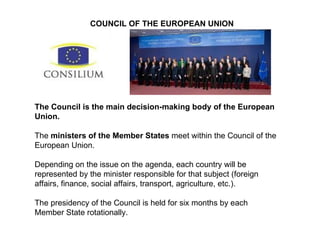
The Council is the main decision-making body of the European Union. The  ministers of the Member States  meet within the Council of the European Union.  Depending on the issue on the agenda, each country will be represented by the minister responsible for that subject (foreign affairs, finance, social affairs, transport, agriculture, etc.). The presidency of the Council is held for six months by each Member State rotationally. COUNCIL OF THE EUROPEAN UNION
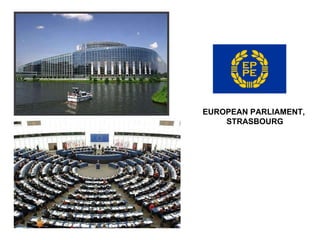
EUROPEAN PARLIAMENT,  STRASBOURG
EUROPEAN COURT OF JUSTICE

International organizations