Downloaded 125 times
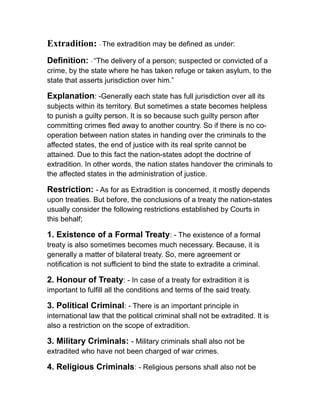


Extradition refers to the delivery of a person suspected or convicted of a crime by the state they have fled to, to the state that has jurisdiction over them. Generally, states have jurisdiction over people within their territory, but sometimes criminals flee to other countries, preventing justice. To address this, states adopt extradition agreements to hand suspected criminals back to the affected state. However, extradition is subject to several restrictions, including requiring a formal extradition treaty between the states, not extraditing people for political or religious crimes, requiring sufficient evidence of criminal acts, and only prosecuting extradited individuals for the crimes specified in the extradition request. In conclusion, while extradition is important for administering justice, it is


![Intentional law. [ NEUTRALITY OF STATE]](https://cdn.slidesharecdn.com/ss_thumbnails/interntionallaw-161104153118-thumbnail.jpg?width=640&height=640&fit=bounds)


