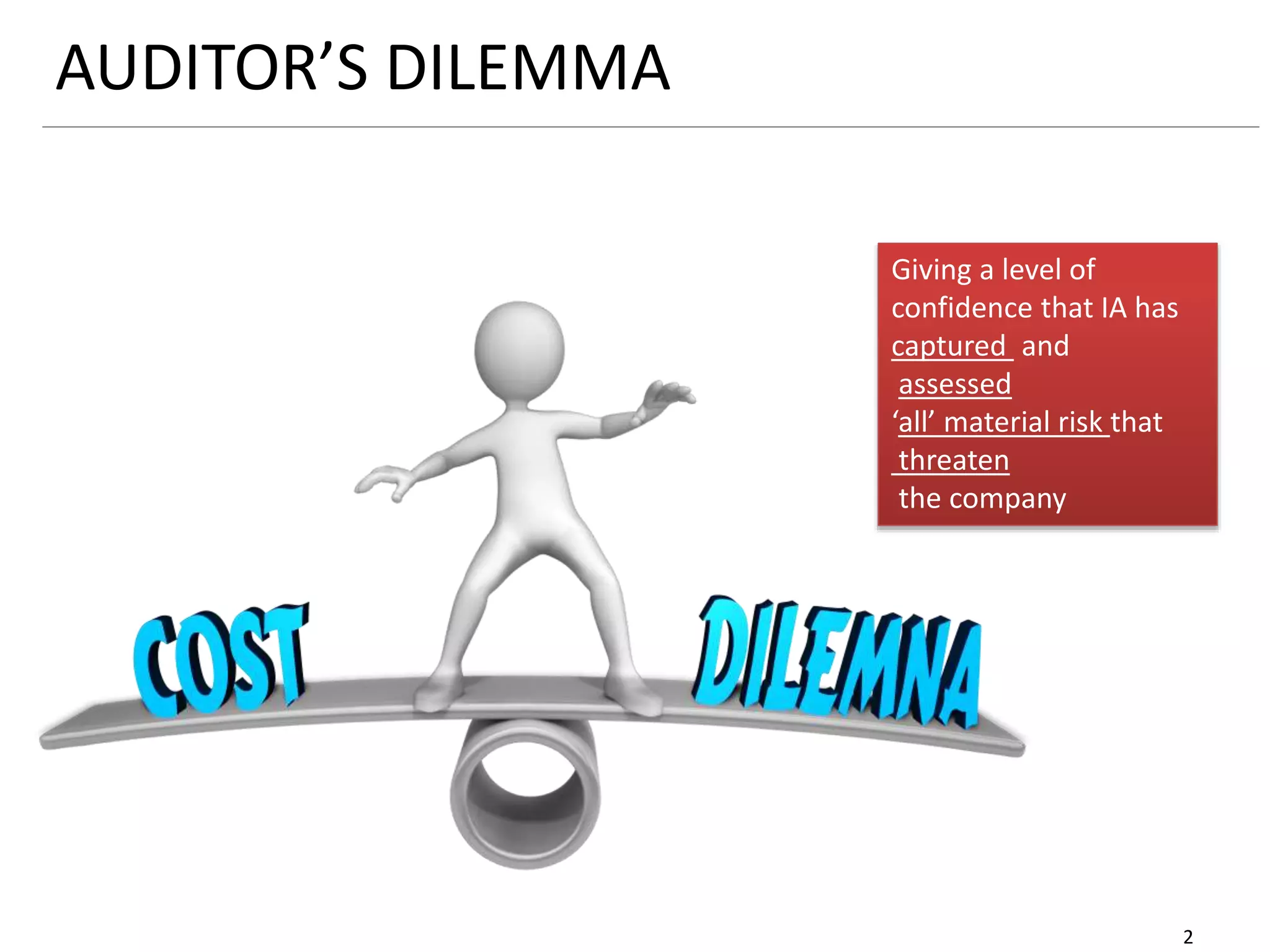
AUDITOR’S DILEMMA 
2 
Giving a level of 
confidence that IA has 
captured and 
assessed 
‘all’ material risk that 
threaten 
the company
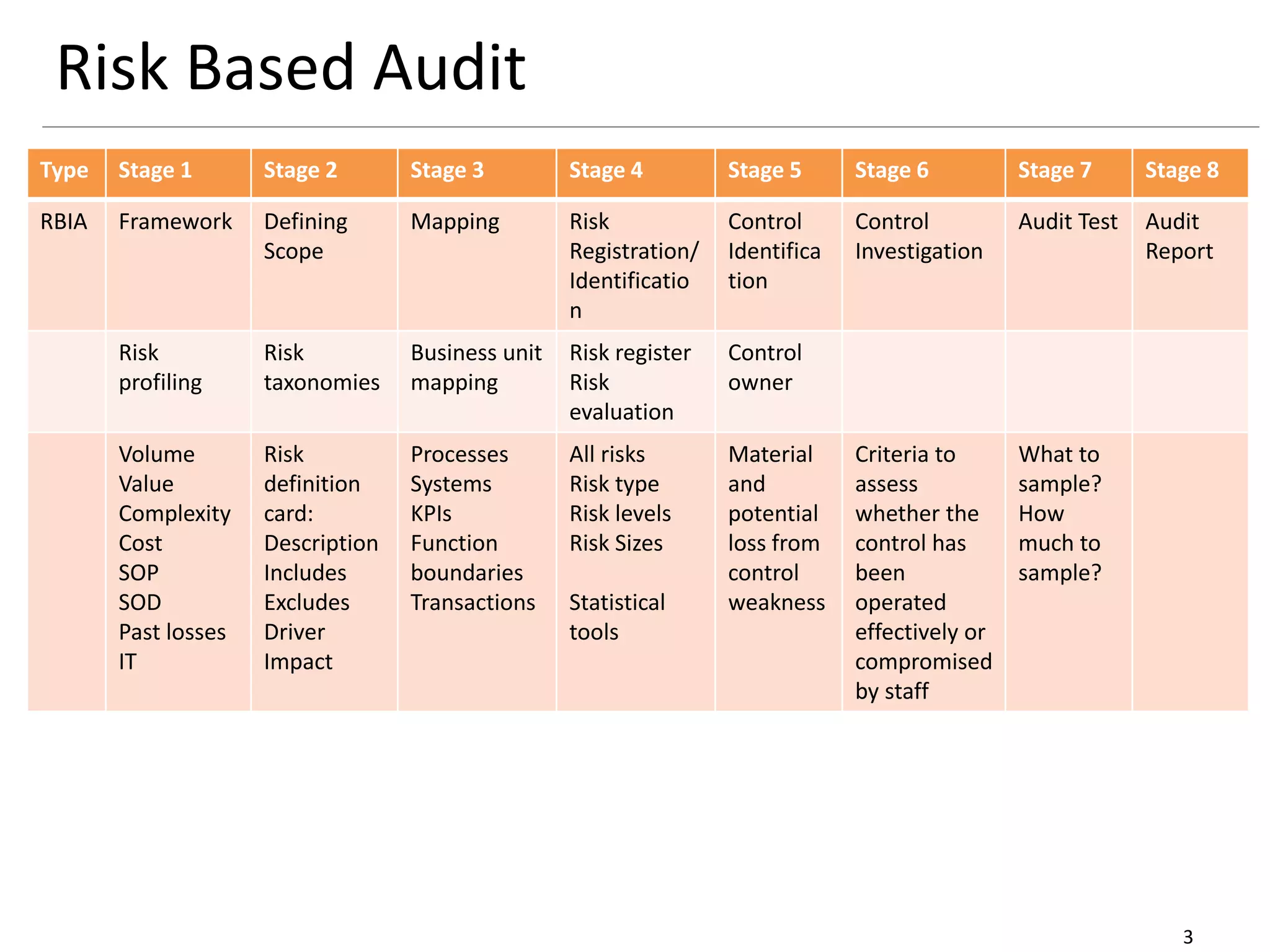
Risk Based Audit 
Type Stage 1 Stage 2 Stage 3 Stage 4 Stage 5 Stage 6 Stage 7 Stage 8 
3 
RBIA Framework Defining 
Scope 
Mapping Risk 
Registration/ 
Identificatio 
n 
Control 
Identifica 
tion 
Control 
Investigation 
Audit Test Audit 
Report 
Risk 
profiling 
Risk 
taxonomies 
Business unit 
mapping 
Risk register 
Risk 
evaluation 
Control 
owner 
Volume 
Value 
Complexity 
Cost 
SOP 
SOD 
Past losses 
IT 
Risk 
definition 
card: 
Description 
Includes 
Excludes 
Driver 
Impact 
Processes 
Systems 
KPIs 
Function 
boundaries 
Transactions 
All risks 
Risk type 
Risk levels 
Risk Sizes 
Statistical 
tools 
Material 
and 
potential 
loss from 
control 
weakness 
Criteria to 
assess 
whether the 
control has 
been 
operated 
effectively or 
compromised 
by staff 
What to 
sample? 
How 
much to 
sample?
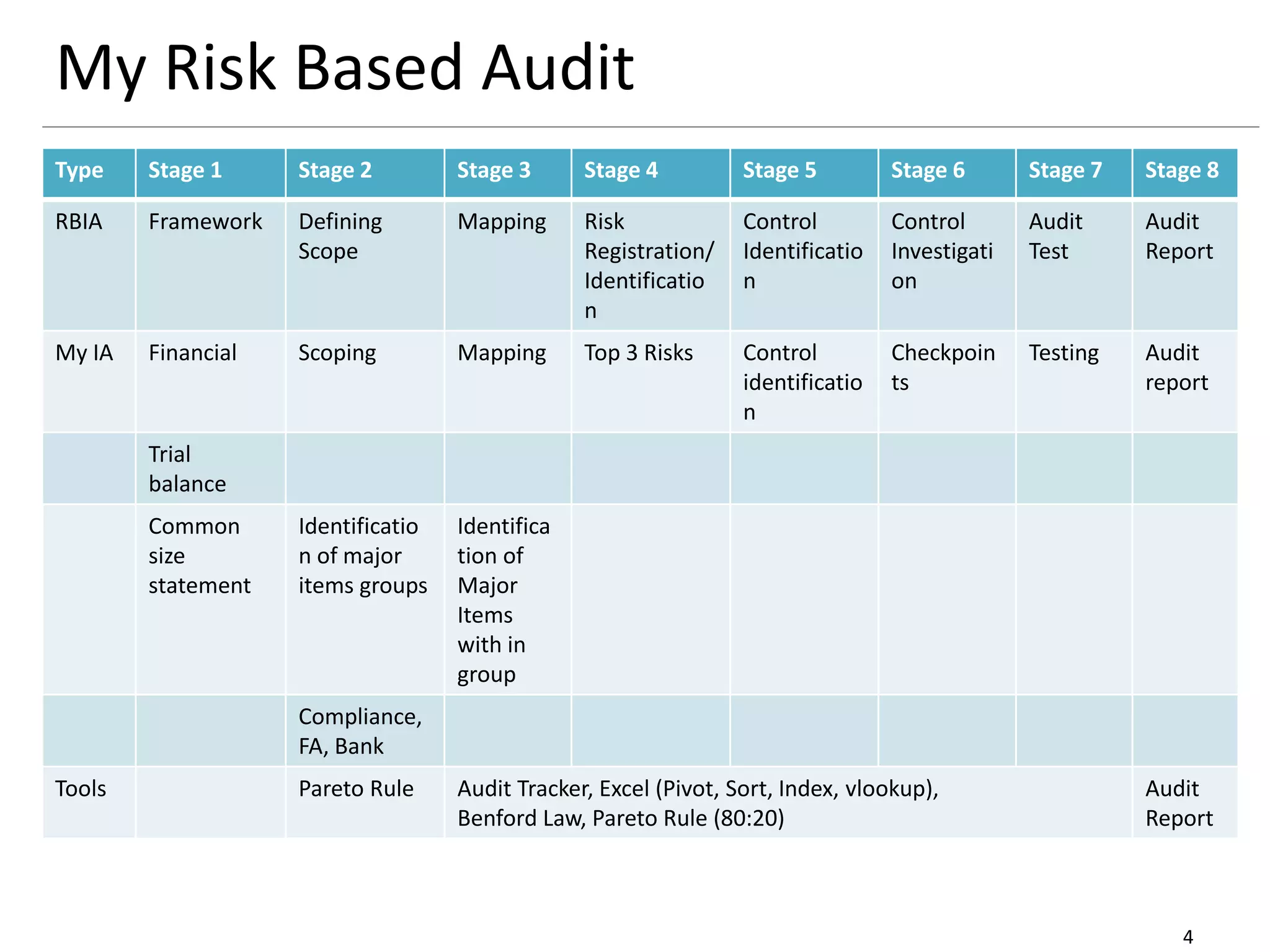
My Risk Based Audit 
Type Stage 1 Stage 2 Stage 3 Stage 4 Stage 5 Stage 6 Stage 7 Stage 8 
4 
RBIA Framework Defining 
Scope 
Mapping Risk 
Registration/ 
Identificatio 
n 
Control 
Identificatio 
n 
Control 
Investigati 
on 
Audit 
Test 
Audit 
Report 
My IA Financial Scoping Mapping Top 3 Risks Control 
identificatio 
n 
Checkpoin 
ts 
Testing Audit 
report 
Trial 
balance 
Common 
size 
statement 
Identificatio 
n of major 
items groups 
Identifica 
tion of 
Major 
Items 
with in 
group 
Compliance, 
FA, Bank 
Tools Pareto Rule Audit Tracker, Excel (Pivot, Sort, Index, vlookup), 
Benford Law, Pareto Rule (80:20) 
Audit 
Report
Tools 
Audit 
Tracker 
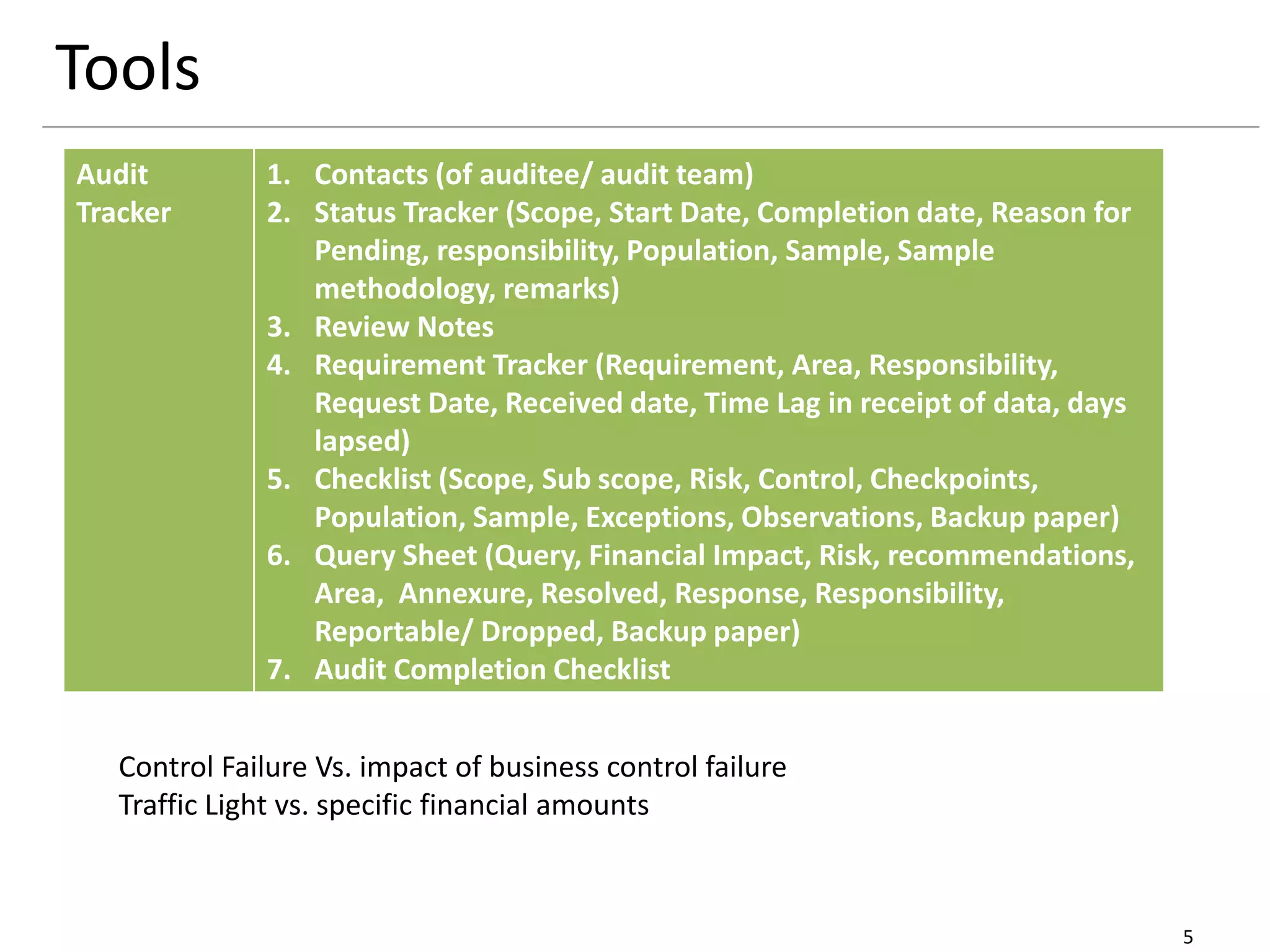
1. Contacts (of auditee/ audit team) 
2. Status Tracker (Scope, Start Date, Completion date, Reason for 
Pending, responsibility, Population, Sample, Sample 
methodology, remarks) 
3. Review Notes 
4. Requirement Tracker (Requirement, Area, Responsibility, 
Request Date, Received date, Time Lag in receipt of data, days 
lapsed) 
5. Checklist (Scope, Sub scope, Risk, Control, Checkpoints, 
Population, Sample, Exceptions, Observations, Backup paper) 
6. Query Sheet (Query, Financial Impact, Risk, recommendations, 
Area, Annexure, Resolved, Response, Responsibility, 
Reportable/ Dropped, Backup paper) 
7. Audit Completion Checklist 
5 
Control Failure Vs. impact of business control failure 
Traffic Light vs. specific financial amounts
Tools 
Audit 
Report 
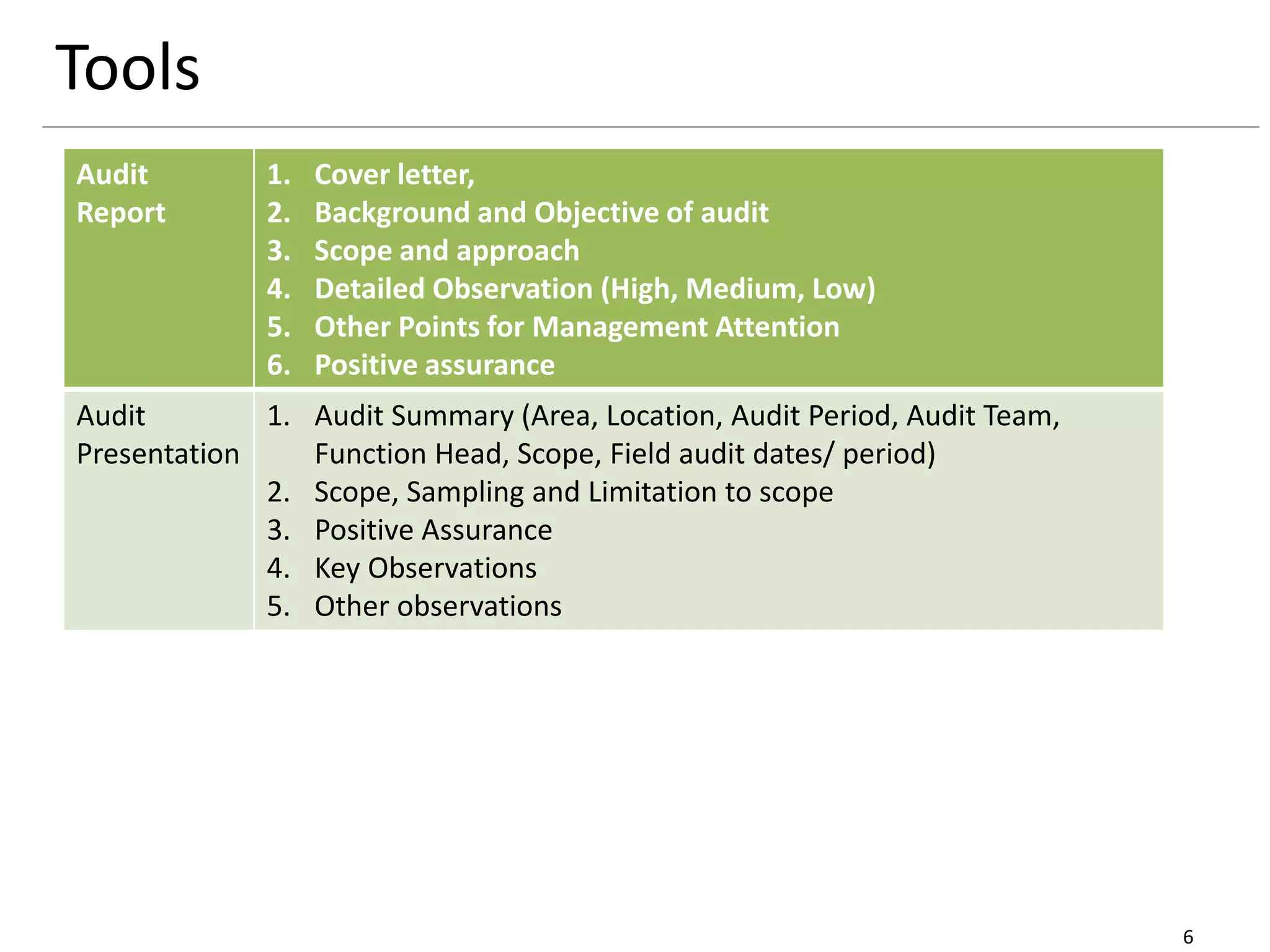
1. Cover letter, 
2. Background and Objective of audit 
3. Scope and approach 
4. Detailed Observation (High, Medium, Low) 
5. Other Points for Management Attention 
6. Positive assurance 
Audit 
Presentation 
1. Audit Summary (Area, Location, Audit Period, Audit Team, 
Function Head, Scope, Field audit dates/ period) 
2. Scope, Sampling and Limitation to scope 
3. Positive Assurance 
4. Key Observations 
5. Other observations 
6

Internal Audit Methodology

  • 2.
    AUDITOR’S DILEMMA 2 Giving a level of confidence that IA has captured and assessed ‘all’ material risk that threaten the company
  • 3.
    Risk Based Audit Type Stage 1 Stage 2 Stage 3 Stage 4 Stage 5 Stage 6 Stage 7 Stage 8 3 RBIA Framework Defining Scope Mapping Risk Registration/ Identificatio n Control Identifica tion Control Investigation Audit Test Audit Report Risk profiling Risk taxonomies Business unit mapping Risk register Risk evaluation Control owner Volume Value Complexity Cost SOP SOD Past losses IT Risk definition card: Description Includes Excludes Driver Impact Processes Systems KPIs Function boundaries Transactions All risks Risk type Risk levels Risk Sizes Statistical tools Material and potential loss from control weakness Criteria to assess whether the control has been operated effectively or compromised by staff What to sample? How much to sample?
  • 4.
    My Risk BasedAudit Type Stage 1 Stage 2 Stage 3 Stage 4 Stage 5 Stage 6 Stage 7 Stage 8 4 RBIA Framework Defining Scope Mapping Risk Registration/ Identificatio n Control Identificatio n Control Investigati on Audit Test Audit Report My IA Financial Scoping Mapping Top 3 Risks Control identificatio n Checkpoin ts Testing Audit report Trial balance Common size statement Identificatio n of major items groups Identifica tion of Major Items with in group Compliance, FA, Bank Tools Pareto Rule Audit Tracker, Excel (Pivot, Sort, Index, vlookup), Benford Law, Pareto Rule (80:20) Audit Report
  • 5.
    Tools Audit Tracker 1. Contacts (of auditee/ audit team) 2. Status Tracker (Scope, Start Date, Completion date, Reason for Pending, responsibility, Population, Sample, Sample methodology, remarks) 3. Review Notes 4. Requirement Tracker (Requirement, Area, Responsibility, Request Date, Received date, Time Lag in receipt of data, days lapsed) 5. Checklist (Scope, Sub scope, Risk, Control, Checkpoints, Population, Sample, Exceptions, Observations, Backup paper) 6. Query Sheet (Query, Financial Impact, Risk, recommendations, Area, Annexure, Resolved, Response, Responsibility, Reportable/ Dropped, Backup paper) 7. Audit Completion Checklist 5 Control Failure Vs. impact of business control failure Traffic Light vs. specific financial amounts
  • 6.
    Tools Audit Report 1. Cover letter, 2. Background and Objective of audit 3. Scope and approach 4. Detailed Observation (High, Medium, Low) 5. Other Points for Management Attention 6. Positive assurance Audit Presentation 1. Audit Summary (Area, Location, Audit Period, Audit Team, Function Head, Scope, Field audit dates/ period) 2. Scope, Sampling and Limitation to scope 3. Positive Assurance 4. Key Observations 5. Other observations 6