Fraud Investigation: Dynamics of 
Corporate Fraud
Introduction 
• First and foremost fraud is a people problem. 
It is not an accounting dilemma. 
• The primary perspective here is internal fraud. 
4
Defining Occupational 
Fraud and Abuse 
 The use of one’s occupation for personal 
enrichment through the deliberate misuse 
or misapplication of the employing 
organisation’s resources or assets 
 At all levels of an organisation 
5
Fraud Definition 
• Fraud: criminal deception; the use of false 
representation 
6 
OED
Elements of Fraud 
 A material false statement 
 Knowledge that the statement was false 
when it was uttered 
 Reliance on the false statement by the 
victim 
 Damages resulting from the victim’s 
reliance on the false statement 
7
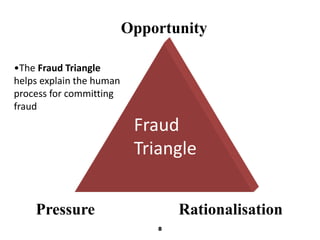
Opportunity 
Fraud 
Triangle 
Pressure Rationalisation 
8 
•The Fraud Triangle 
helps explain the human 
process for committing 
fraud
Fraud Triangle – Pressure 
• Pressure can be real or imagined 
– Compulsive behaviours 
• Gambling, alcohol, illegal drug use 
9 
– Financial debts 
• Credit cards, health care 
– Family problems 
• Divorce, extramarital affairs, problems with children 
– Pressure on employees can be reduced via 
Employee Assistance Plans, counselling and work 
assignments. EAPs are management’s tool to help 
control fraud.
Fraud Triangle - Rationalisation 
• Employees, vendor, others justify fraud: 
– “They owe me” or “I earned it” 
– “I need it more than they do” 
– “It’s only fair” 
– “God will forgive me” 
• Rationalisation is a form of denial. The person is not 
accepting reality. 
• Rationalisation is the hardest area for management 
to influence or control. 
10
Fraud Triangle - Opportunity 
• Opportunity is the perception by someone 
believing they can commit a fraud without 
getting caught. 
• Management controls and influences 
“opportunity” more than any other factor in 
the Fraud Triangle. 
• Management tools are employment checks, 
internal controls, internal and external audits 
and a host of other techniques. 
11
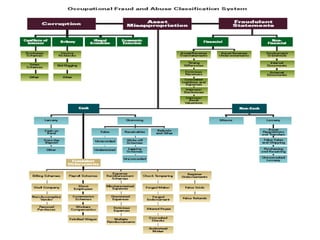
Major areas of exposure 
• corruption, which includes conflicts of interest, 
bribery (including kickbacks), illegal gifts, and 
economic extortion; 
• misappropriation of assets, which includes skimming, 
theft, and asset misuse; and 
• financial statement fraud, which can include financial 
(either asset or revenue over- or understatements) 
and non-financial components 
12
Prevention VS Detection 
• Prevention is better than treatment 
• In order to prevent fraud there is a need to 
make an organisation immune against fraud 
13
Reducing the risk of fraud 
• The means to reduce risk 
14 
– Prevention 
• Reduce the opportunity for 
• Deterrence (punishment) 
• Detection 
• Detection of fraud is much more costly
15 
Responsibility of Fraud Prevention 
• Management has the responsibility and means to 
implement measures to reduce the risk of fraud 
– Good corporate governance reduces the risk
Elements of prevention 
• Create and Maintain a culture of honesty and 
high ethics 
• Evaluate the risk and implement policies, 
procedures, and controls to mitigate the risk 
and reduce the opportunity 
• Develop appropriate oversight processes 
16
Setting the tone at the top 
• Lead by example (words and actions) 
• Management has to 
– Behave Ethically 
– Communicate it’s intolerance for dishonest and 
unethical behaviour 
• Employees must be treated equally with 
disregard to position 
17
Setting the tone at the top 
• Set achievable financial goals (not to create 
undue pressure) 
• Create a code of ethics and implement it 
The code of ethics should be clear, 
understandable and developed in a positive 
participatory manner 
18
Positive work place environment 
• wrongdoing occurs less frequently when employees 
have positive feelings about an entity than when 
they feel abused, threatened, or ignored 
• Without a positive workplace environment, there are 
more opportunities for poor employee morale, which 
can affect an employee’s attitude about committing 
fraud against an entity 
19
Factors that detract from a positive work 
environment 
• Top management that does not seem to care 
about or reward appropriate behaviour 
• Negative feedback and lack of recognition for 
job performance 
• Perceived inequities in the organisation 
• Autocratic rather than participative 
management 
20
Factors that detract from a positive work 
environment cont. 
• Low organisational loyalty or feelings of ownership 
• Unreasonable budget expectations or other financial targets 
• Fear of delivering “bad news” to supervisors and/or 
21 
management 
• Less-than-competitive compensation 
• Poor training and promotion opportunities 
• Lack of clear organisational responsibilities 
• Poor communication practices or methods within the 
organisation
Discipline 
• The way an entity reacts to incidents of 
alleged or suspected fraud will send a strong 
deterrent message throughout the entity, 
helping to reduce the number of future 
occurrences. 
• The consequences of committing fraud must 
be clearly communicated throughout the 
entity. 
22
Response to an alleged incident of fraud 
• A thorough investigation of the incident should be 
conducted. 
• Appropriate and consistent actions should be taken 
against violators. 
• Relevant controls should be assessed and improved. 
• Communication and training should occur to 
reinforce the entity’s values, code of conduct, and 
expectations. 
23
EVALUATING ANTIFRAUD PROCESSES AND 
CONTROLS 
• Fraud cannot occur without a perceived 
opportunity to commit and conceal the act. 
• Organisations should be proactive in reducing fraud 
opportunities by 
(1) Identifying and measuring fraud risks, 
(2) Taking steps to mitigate identified risks, and 
(3) Implementing and monitoring appropriate preventive 
and detective internal controls and other deterrent 
measures. 
24
Fraud Detection 
• The two most frequent methods of detecting 
fraud are: 
– Internal audits. Internal auditing for fraud is being 
encouraged as a “best practice” 
• About 24% of the time 
– Tips from employees or associates 
• Establish a “Whistle Blower” hotline for employees, 
vendors and others to call in suspected fraud. 
25 
– About 40% of time
Fraud Detection 
• Rules of thumb for frauds: 
– Frauds start small and continue to grow in time 
…they don’t stop themselves 
– Longer the fraud in time, the greater the loss 
• Two other ways to detect fraud: 
– By chance or accident – about 21% of time 
– Proactively searching for fraud by checking and 
investigating “red flags” – symptoms of fraud 
26
Symptoms of Fraud 
27 
• Symptoms of fraud 
– Accounting anomalies 
– Internal Control weaknesses 
– Analytical anomalies 
– Extravagant lifestyles 
– Unusual behaviours 
– Tips and complaints
References 
• Dreibeblis, D (2006) Dynamics of Fraud Ethical 
and Legal Issues, Clifton Gunderson. 
• Quiffa, H.C. (2007) Fraud Prevention 
28

Fraud Investigation

  • 2.
  • 4.
    Introduction • Firstand foremost fraud is a people problem. It is not an accounting dilemma. • The primary perspective here is internal fraud. 4
  • 5.
    Defining Occupational Fraudand Abuse  The use of one’s occupation for personal enrichment through the deliberate misuse or misapplication of the employing organisation’s resources or assets  At all levels of an organisation 5
  • 6.
    Fraud Definition •Fraud: criminal deception; the use of false representation 6 OED
  • 7.
    Elements of Fraud  A material false statement  Knowledge that the statement was false when it was uttered  Reliance on the false statement by the victim  Damages resulting from the victim’s reliance on the false statement 7
  • 8.
    Opportunity Fraud Triangle Pressure Rationalisation 8 •The Fraud Triangle helps explain the human process for committing fraud
  • 9.
    Fraud Triangle –Pressure • Pressure can be real or imagined – Compulsive behaviours • Gambling, alcohol, illegal drug use 9 – Financial debts • Credit cards, health care – Family problems • Divorce, extramarital affairs, problems with children – Pressure on employees can be reduced via Employee Assistance Plans, counselling and work assignments. EAPs are management’s tool to help control fraud.
  • 10.
    Fraud Triangle -Rationalisation • Employees, vendor, others justify fraud: – “They owe me” or “I earned it” – “I need it more than they do” – “It’s only fair” – “God will forgive me” • Rationalisation is a form of denial. The person is not accepting reality. • Rationalisation is the hardest area for management to influence or control. 10
  • 11.
    Fraud Triangle -Opportunity • Opportunity is the perception by someone believing they can commit a fraud without getting caught. • Management controls and influences “opportunity” more than any other factor in the Fraud Triangle. • Management tools are employment checks, internal controls, internal and external audits and a host of other techniques. 11
  • 12.
    Major areas ofexposure • corruption, which includes conflicts of interest, bribery (including kickbacks), illegal gifts, and economic extortion; • misappropriation of assets, which includes skimming, theft, and asset misuse; and • financial statement fraud, which can include financial (either asset or revenue over- or understatements) and non-financial components 12
  • 13.
    Prevention VS Detection • Prevention is better than treatment • In order to prevent fraud there is a need to make an organisation immune against fraud 13
  • 14.
    Reducing the riskof fraud • The means to reduce risk 14 – Prevention • Reduce the opportunity for • Deterrence (punishment) • Detection • Detection of fraud is much more costly
  • 15.
    15 Responsibility ofFraud Prevention • Management has the responsibility and means to implement measures to reduce the risk of fraud – Good corporate governance reduces the risk
  • 16.
    Elements of prevention • Create and Maintain a culture of honesty and high ethics • Evaluate the risk and implement policies, procedures, and controls to mitigate the risk and reduce the opportunity • Develop appropriate oversight processes 16
  • 17.
    Setting the toneat the top • Lead by example (words and actions) • Management has to – Behave Ethically – Communicate it’s intolerance for dishonest and unethical behaviour • Employees must be treated equally with disregard to position 17
  • 18.
    Setting the toneat the top • Set achievable financial goals (not to create undue pressure) • Create a code of ethics and implement it The code of ethics should be clear, understandable and developed in a positive participatory manner 18
  • 19.
    Positive work placeenvironment • wrongdoing occurs less frequently when employees have positive feelings about an entity than when they feel abused, threatened, or ignored • Without a positive workplace environment, there are more opportunities for poor employee morale, which can affect an employee’s attitude about committing fraud against an entity 19
  • 20.
    Factors that detractfrom a positive work environment • Top management that does not seem to care about or reward appropriate behaviour • Negative feedback and lack of recognition for job performance • Perceived inequities in the organisation • Autocratic rather than participative management 20
  • 21.
    Factors that detractfrom a positive work environment cont. • Low organisational loyalty or feelings of ownership • Unreasonable budget expectations or other financial targets • Fear of delivering “bad news” to supervisors and/or 21 management • Less-than-competitive compensation • Poor training and promotion opportunities • Lack of clear organisational responsibilities • Poor communication practices or methods within the organisation
  • 22.
    Discipline • Theway an entity reacts to incidents of alleged or suspected fraud will send a strong deterrent message throughout the entity, helping to reduce the number of future occurrences. • The consequences of committing fraud must be clearly communicated throughout the entity. 22
  • 23.
    Response to analleged incident of fraud • A thorough investigation of the incident should be conducted. • Appropriate and consistent actions should be taken against violators. • Relevant controls should be assessed and improved. • Communication and training should occur to reinforce the entity’s values, code of conduct, and expectations. 23
  • 24.
    EVALUATING ANTIFRAUD PROCESSESAND CONTROLS • Fraud cannot occur without a perceived opportunity to commit and conceal the act. • Organisations should be proactive in reducing fraud opportunities by (1) Identifying and measuring fraud risks, (2) Taking steps to mitigate identified risks, and (3) Implementing and monitoring appropriate preventive and detective internal controls and other deterrent measures. 24
  • 25.
    Fraud Detection •The two most frequent methods of detecting fraud are: – Internal audits. Internal auditing for fraud is being encouraged as a “best practice” • About 24% of the time – Tips from employees or associates • Establish a “Whistle Blower” hotline for employees, vendors and others to call in suspected fraud. 25 – About 40% of time
  • 26.
    Fraud Detection •Rules of thumb for frauds: – Frauds start small and continue to grow in time …they don’t stop themselves – Longer the fraud in time, the greater the loss • Two other ways to detect fraud: – By chance or accident – about 21% of time – Proactively searching for fraud by checking and investigating “red flags” – symptoms of fraud 26
  • 27.
    Symptoms of Fraud 27 • Symptoms of fraud – Accounting anomalies – Internal Control weaknesses – Analytical anomalies – Extravagant lifestyles – Unusual behaviours – Tips and complaints
  • 28.
    References • Dreibeblis,D (2006) Dynamics of Fraud Ethical and Legal Issues, Clifton Gunderson. • Quiffa, H.C. (2007) Fraud Prevention 28