

Bipin Bista
Resident
Ophthalmology
NMCTH
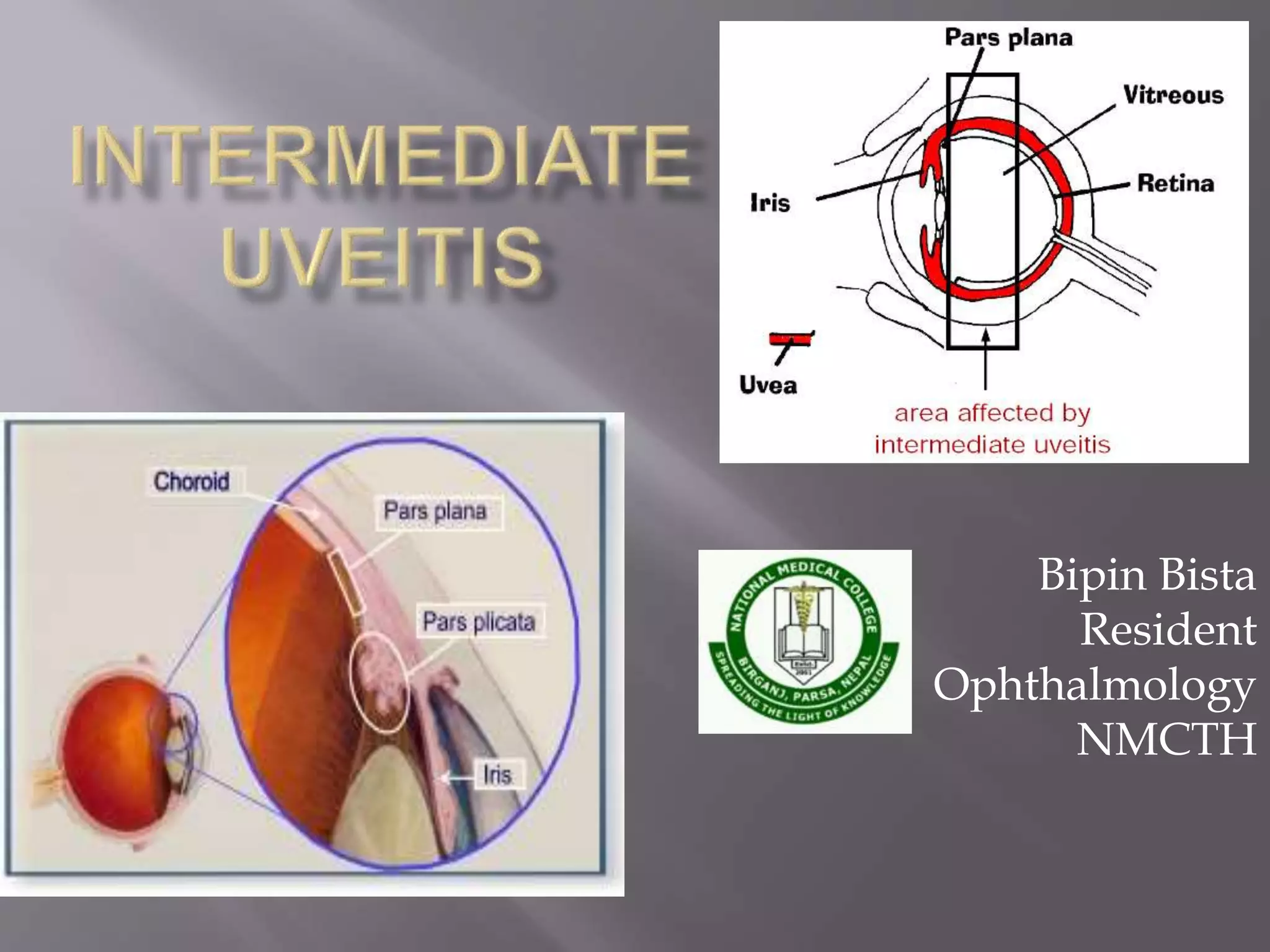
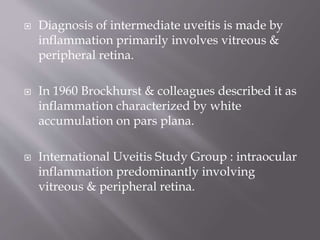
 Diagnosis of intermediate uveitis is made by
inflammation primarily involves vitreous &
peripheral retina.
 In 1960 Brockhurst & colleagues described it as
inflammation characterized by white
accumulation on pars plana.
 International Uveitis Study Group : intraocular
inflammation predominantly involving
vitreous & peripheral retina.
 National Institute of Health – 2.077 per 100000
persons.
 No gender or race predilection.
 Usually affects after the age of 40.
 HLA Association.
 Blurred vision
 Floaters
 Decreased visual acquity
 If inflammation persists , severe visual loss.
 Sudden loss of vision.
 Anterior segment involvement – minimal.
 AS involvement common in children.
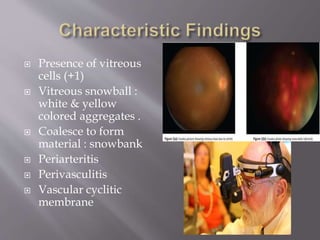
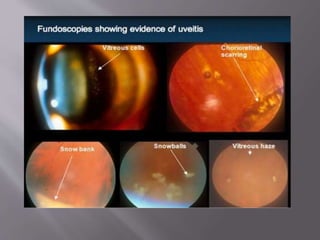
 Presence of vitreous
cells (+1)
 Vitreous snowball :
white & yellow
colored aggregates .
 Coalesce to form
material : snowbank
 Periarteritis
 Perivasculitis
 Vascular cyclitic
membrane
 Snowbank may be discontinuous, usually
located inferiorly but can extend upto 3600
 cystoid macular oedema – FA
 Rhegmatogenous RD.
 Chronic intermediate uveitis : long standing
macular oedema – development of retinal
pigment epithelial stippling in macula.
Disc oedema, optic atrophy & optic disc
neovascularization.
 BENIGN
 MILD
 CHRONIC
 SEVERELY CHRONIC
 Sarcoidosis
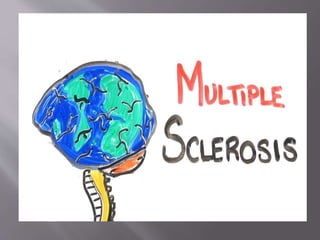
 Multiple sclerosis
 IBD
 Lyme disease
 Toxocariasis
 Intraocular
Lymphoma
 Retinoblastoma
 Whipple’s Disease
 Iridocyclitis
 Multifocal choroiditis
 Irvine-Gass syndrome
 Amyloidosis
 Interstitial nephritis &
uveitis syndrome
 Cat scratch disease
 Hepatitis C
 Crohn’s Disease
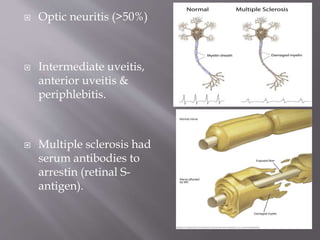
 Optic neuritis (>50%)
 Intermediate uveitis,
anterior uveitis &
periphlebitis.
 Multiple sclerosis had
serum antibodies to
arrestin (retinal S-
antigen).
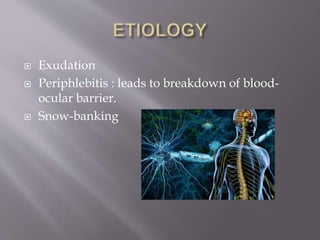
 Exudation
 Periphlebitis : leads to breakdown of blood-
ocular barrier.
 Snow-banking
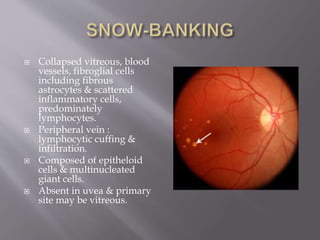
 Collapsed vitreous, blood
vessels, fibroglial cells
including fibrous
astrocytes & scattered
inflammatory cells,
predominately
lymphocytes.
 Peripheral vein :
lymphocytic cuffing &
infiltration.
 Composed of epitheloid
cells & multinucleated
giant cells.
 Absent in uvea & primary
site may be vitreous.
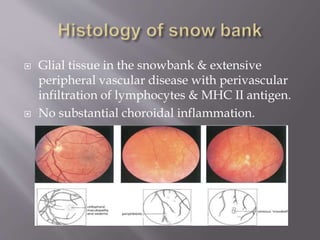
 Glial tissue in the snowbank & extensive
peripheral vascular disease with perivascular
infiltration of lymphocytes & MHC II antigen.
 No substantial choroidal inflammation.
 Increased level of immune markers :
• Interleukin-2
• Intercellular adhesion molecule-1
 Exclude the possibility of underlying infectious
disease or malignancy.
 Therapy
 Mainstay of therapy.
 Topical not much effective.
 Systemic or periocular.
 40mg triamcinolone – 2-3 times in 8 weeks.
 Systemic – bilateral IU.
 0.5-1 mg/kg/day – Prednisolone
 Steroid resistant cases.
 Cyclosporin – watch for toxicity.
 Azathioprine, methotrexate, cyclophospamide,
mycophenolate mofetil.
 Anti – TNF monoclonal antibodies :
Daclizumab.
 Cryotherapy
 Vitrectomy
 Destroys the vascular component of peripheral
retinitis or vitreitis & eliminates the entrance
site for inflammatory mediators into the eye.
 Combined with periocular steroid injections.
 Evident within several weeks & lasts for 3-6
months.
 Complication : transient increased vitreal
inflammation, reduced accomodation, cataract
& hyphaema.
 Chronic inflammation
 2/3rd improvement.
Reference:
- Nussenblatt and whitecup 4th edition
- Myron yanoff 4th edition

Intermediate uveitis

  • 1.
  • 2.
     Diagnosis ofintermediate uveitis is made by inflammation primarily involves vitreous & peripheral retina.  In 1960 Brockhurst & colleagues described it as inflammation characterized by white accumulation on pars plana.  International Uveitis Study Group : intraocular inflammation predominantly involving vitreous & peripheral retina.
  • 3.
     National Instituteof Health – 2.077 per 100000 persons.  No gender or race predilection.  Usually affects after the age of 40.  HLA Association.
  • 4.
     Blurred vision Floaters  Decreased visual acquity  If inflammation persists , severe visual loss.  Sudden loss of vision.  Anterior segment involvement – minimal.  AS involvement common in children.
  • 5.
     Presence ofvitreous cells (+1)  Vitreous snowball : white & yellow colored aggregates .  Coalesce to form material : snowbank  Periarteritis  Perivasculitis  Vascular cyclitic membrane
  • 7.
     Snowbank maybe discontinuous, usually located inferiorly but can extend upto 3600  cystoid macular oedema – FA  Rhegmatogenous RD.  Chronic intermediate uveitis : long standing macular oedema – development of retinal pigment epithelial stippling in macula. Disc oedema, optic atrophy & optic disc neovascularization.
  • 8.
     BENIGN  MILD CHRONIC  SEVERELY CHRONIC
  • 9.
     Sarcoidosis  Multiplesclerosis  IBD  Lyme disease  Toxocariasis  Intraocular Lymphoma  Retinoblastoma  Whipple’s Disease  Iridocyclitis  Multifocal choroiditis  Irvine-Gass syndrome  Amyloidosis  Interstitial nephritis & uveitis syndrome  Cat scratch disease  Hepatitis C  Crohn’s Disease
  • 11.
     Optic neuritis(>50%)  Intermediate uveitis, anterior uveitis & periphlebitis.  Multiple sclerosis had serum antibodies to arrestin (retinal S- antigen).
  • 12.
     Exudation  Periphlebitis: leads to breakdown of blood- ocular barrier.  Snow-banking
  • 13.
     Collapsed vitreous,blood vessels, fibroglial cells including fibrous astrocytes & scattered inflammatory cells, predominately lymphocytes.  Peripheral vein : lymphocytic cuffing & infiltration.  Composed of epitheloid cells & multinucleated giant cells.  Absent in uvea & primary site may be vitreous.
  • 14.
     Glial tissuein the snowbank & extensive peripheral vascular disease with perivascular infiltration of lymphocytes & MHC II antigen.  No substantial choroidal inflammation.
  • 15.
     Increased levelof immune markers : • Interleukin-2 • Intercellular adhesion molecule-1
  • 16.
     Exclude thepossibility of underlying infectious disease or malignancy.  Therapy
  • 17.
     Mainstay oftherapy.  Topical not much effective.  Systemic or periocular.  40mg triamcinolone – 2-3 times in 8 weeks.  Systemic – bilateral IU.  0.5-1 mg/kg/day – Prednisolone
  • 18.
     Steroid resistantcases.  Cyclosporin – watch for toxicity.  Azathioprine, methotrexate, cyclophospamide, mycophenolate mofetil.
  • 19.
     Anti –TNF monoclonal antibodies : Daclizumab.
  • 20.
  • 21.
     Destroys thevascular component of peripheral retinitis or vitreitis & eliminates the entrance site for inflammatory mediators into the eye.  Combined with periocular steroid injections.  Evident within several weeks & lasts for 3-6 months.  Complication : transient increased vitreal inflammation, reduced accomodation, cataract & hyphaema.
  • 22.
     Chronic inflammation 2/3rd improvement.
  • 23.
    Reference: - Nussenblatt andwhitecup 4th edition - Myron yanoff 4th edition