INTERGRATED RESPONSE
TO A MEAL- INTESTINAL
PHASE (II)
Nesh- EGERTON
UNIVERSITY, MBChB
PART 2. BILIARY SECRETION
PHYSIOLOGICAL ANATOMY OF THE LIVER AND BILIARY SYSTEM
General considerations:
Liver is a dual organ having both secretory and excretory functions.
It is the largest gland in the body, weighing about 1.5 kg in man.
It is located in the upper and right side of the abdominal cavity, immediately beneath
diaphragm.
Anatomically,
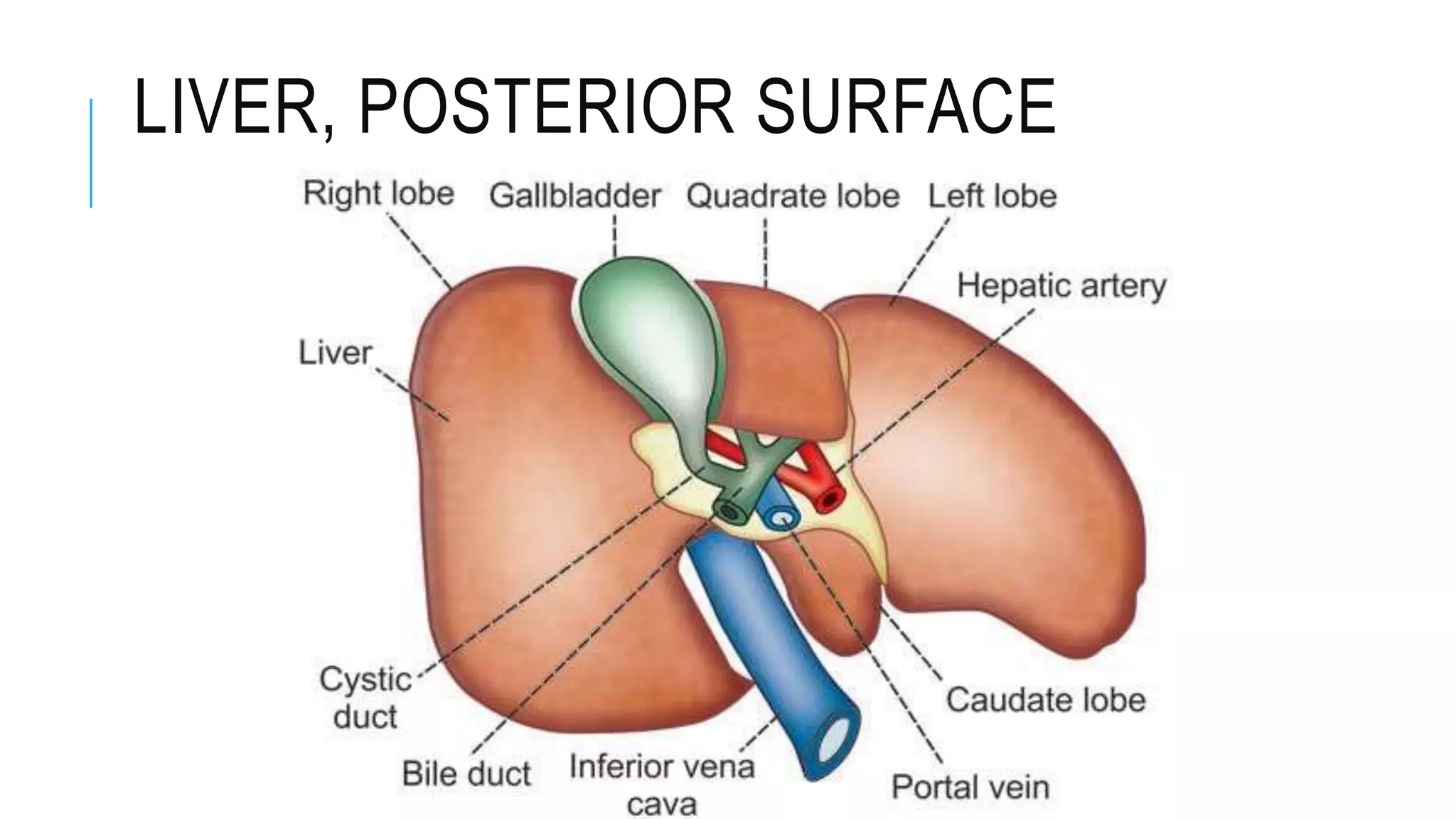
The liver has been divided into right and left lobes.
Right lobe is much larger and includes caudate lobe and quadrate lobe.
Left lobe is much smaller.
In current terminology,
The liver consists of right and left functionally independent parts called the portal lobes
that are approximately equal in size.
The right and left functional parts of the liver have their own blood supply from the
hepatic artery and portal vein and their own venous and biliary drainage.
CONT…
HEPATIC LOBES
Liver is made up of many lobes called hepatic lobes each consisting of many lobules
called hepatic lobules.
HEPATIC LOBULES
Hepatic lobule is the structural and functional unit of liver.
There are about 50,000 to 100,000 lobules in the liver.
The lobule is a honeycomb-like structure and it is made up of liver cells called
hepatocytes.
HEPATOCYTES AND HEPATIC PLATES
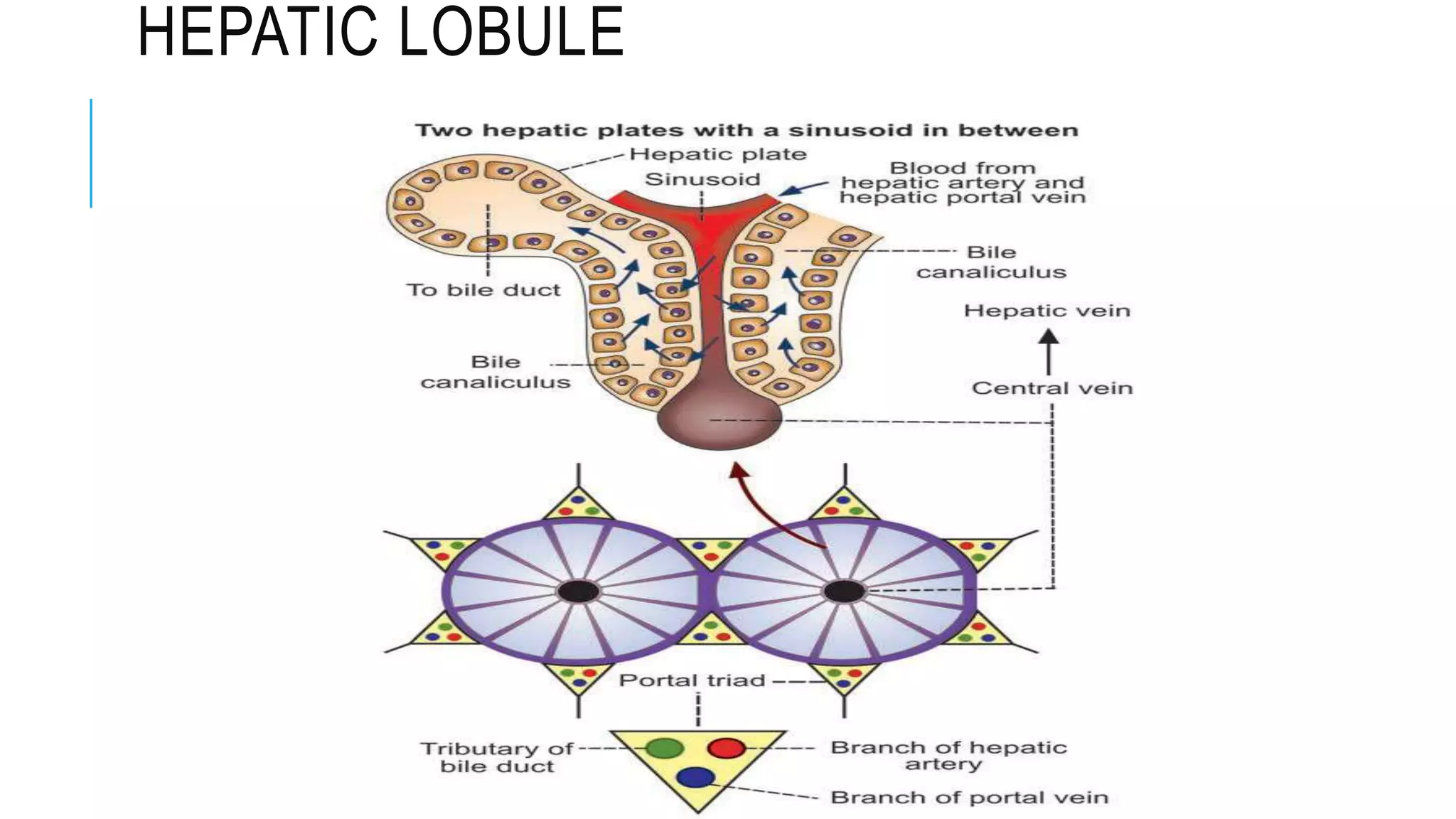
Hepatocytes are arranged in columns, which form the hepatic plates.
Each plate is made up of two columns of cells.
In between the two columns of each plate lies a bile canaliculus.
In between the neighboring plates, a blood space called sinusoid is present.
Sinusoid is lined by the endothelial cells.
CONT…
PORTAL TRIADS
Each lobule is surrounded by many portal triads.
Each portal triad consists of three vessels:
1. A branch of hepatic artery
2. A branch of portal vein
3. A tributary of bile duct.
Branches of hepatic artery and portal vein open into the sinusoid.
Sinusoid opens into the central vein.
Central vein empties into hepatic vein.
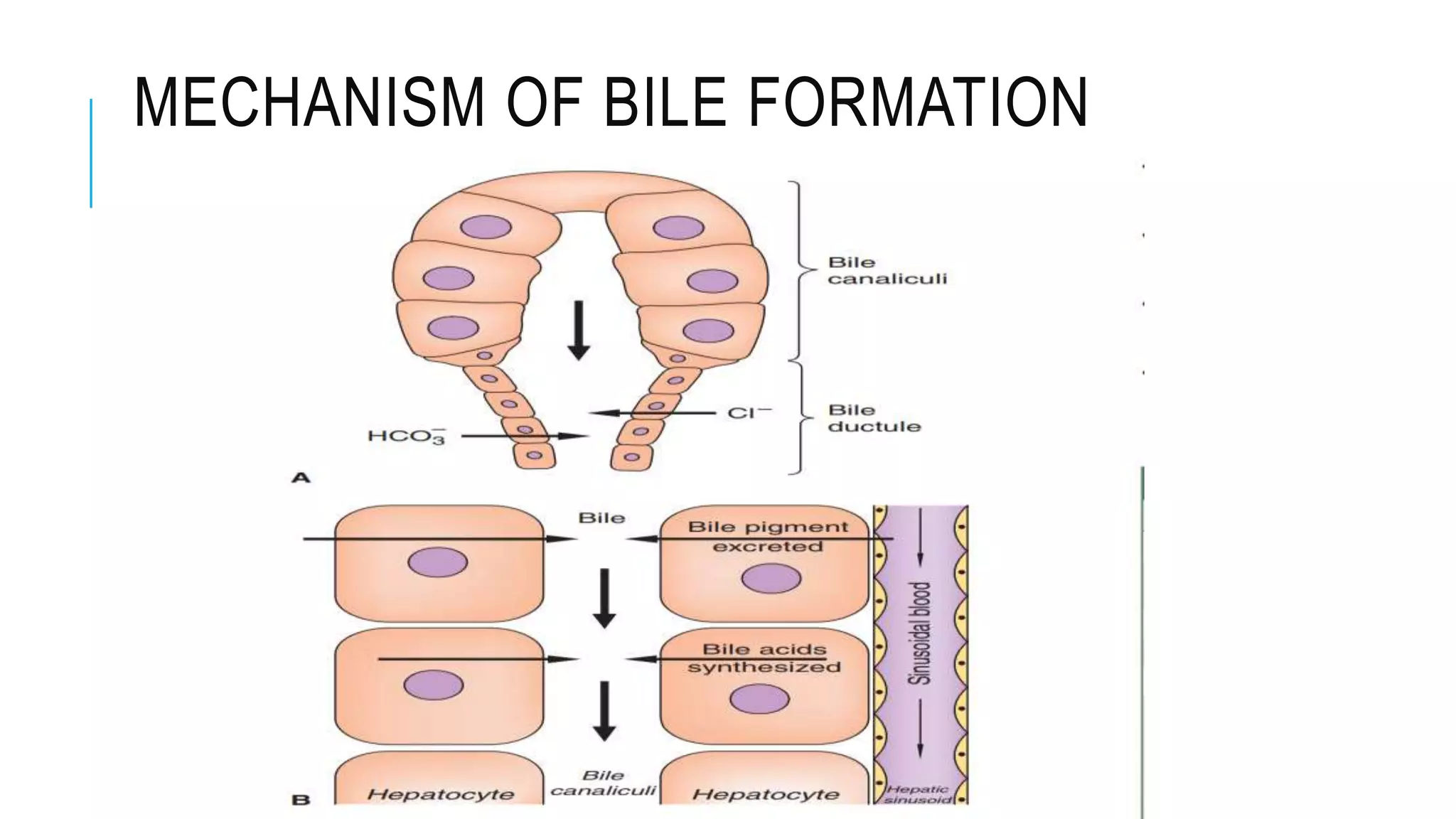
Bile is secreted by hepatic cells and emptied into bile canaliculus.
From canaliculus, the bile enters the tributary of bile duct.
Tributaries of bile duct from canaliculi of neighboring lobules unite to form
small bile ducts.
These small bile ducts join together and finally form left and right hepatic
LIVER, POSTERIOR SURFACE
HEPATIC LOBULE
BILIARY SYSTEM
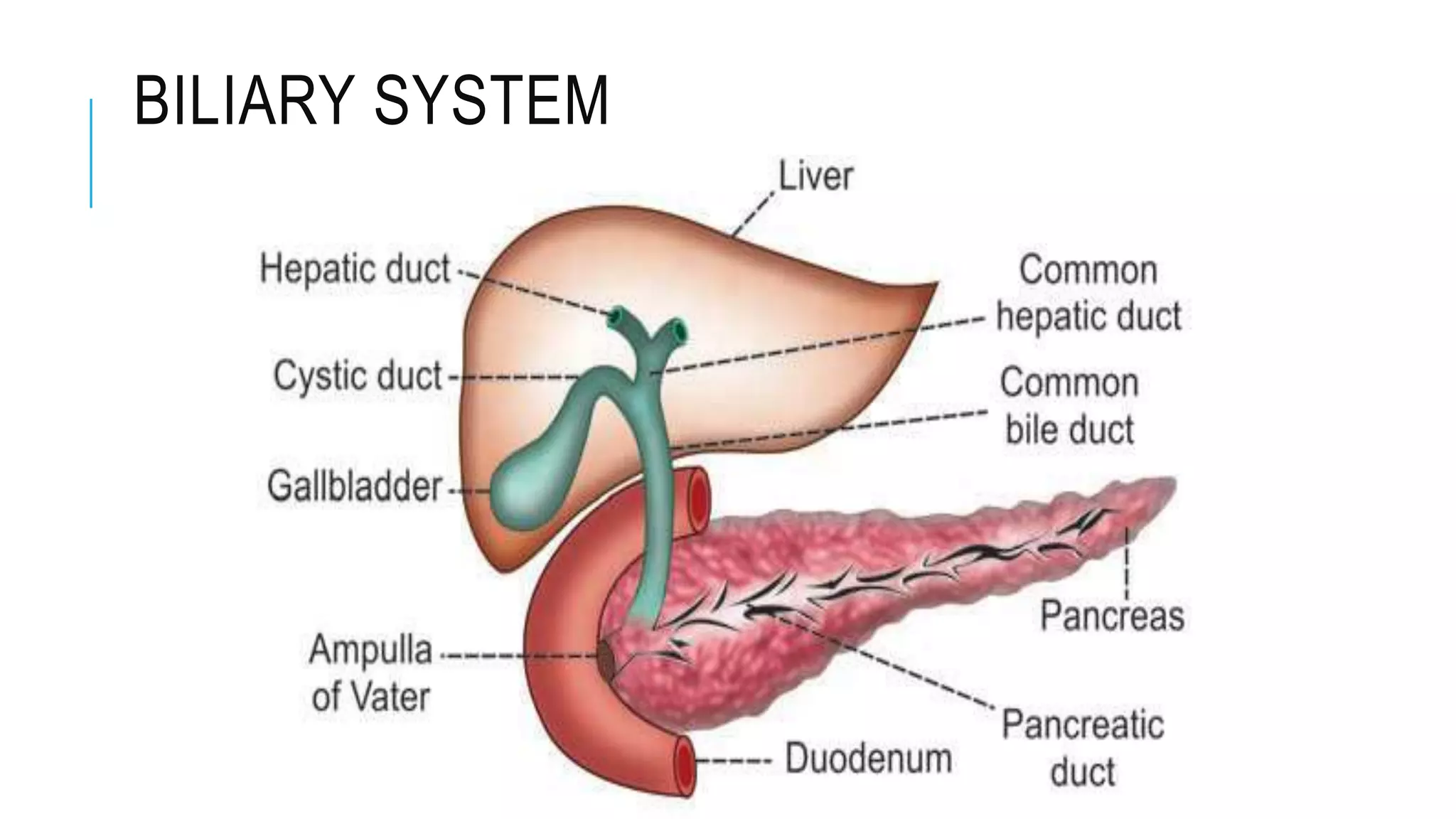
Biliary system or extrahepatic biliary apparatus is formed by gallbladder and
extrahepatic bile ducts (bile ducts outside the liver).
Right and left hepatic bile ducts which come out of liver join to form common
hepatic duct (CHD).
CHD unites with the cystic duct from gallbladder to form common bile duct.
All these ducts have similar structures.
Common bile duct unites with pancreatic duct to form the common
hepatopancreatic duct or ampulla of Vater, which opens into the duodenum.
The sphincter of Oddi is at the lower part of common bile duct, before it joins
the pancreatic duct. It is formed by smooth muscle fibers of common bile duct.
It is normally kept closed; so the bile secreted from liver enters gallbladder
where it is stored.
Upon appropriate stimulation, the sphincter opens and allows flow of bile from
gallbladder into the intestine.
BILIARY SYSTEM
BLOOD SUPPLY TO LIVER
Liver receives maximum blood supply of about 1,500 mL/minute.
It receives blood from two sources, namely the hepatic artery and portal vein.
HEPATIC ARTERY:
Arises directly from aorta and supplies oxygenated blood to liver.
After entering the liver, it divides into many branches.
Each branch enters a portal triad.
PORTAL VEIN:
Portal vein is formed by superior mesenteric vein and splenic vein.
It brings deoxygenated blood from stomach, intestine, spleen and pancreas.
Portal blood is rich in monosaccharides and amino acids.
It also contains bile salts, bilirubin, urobilinogen and GI hormones.
However, the oxygen content is less in portal blood.
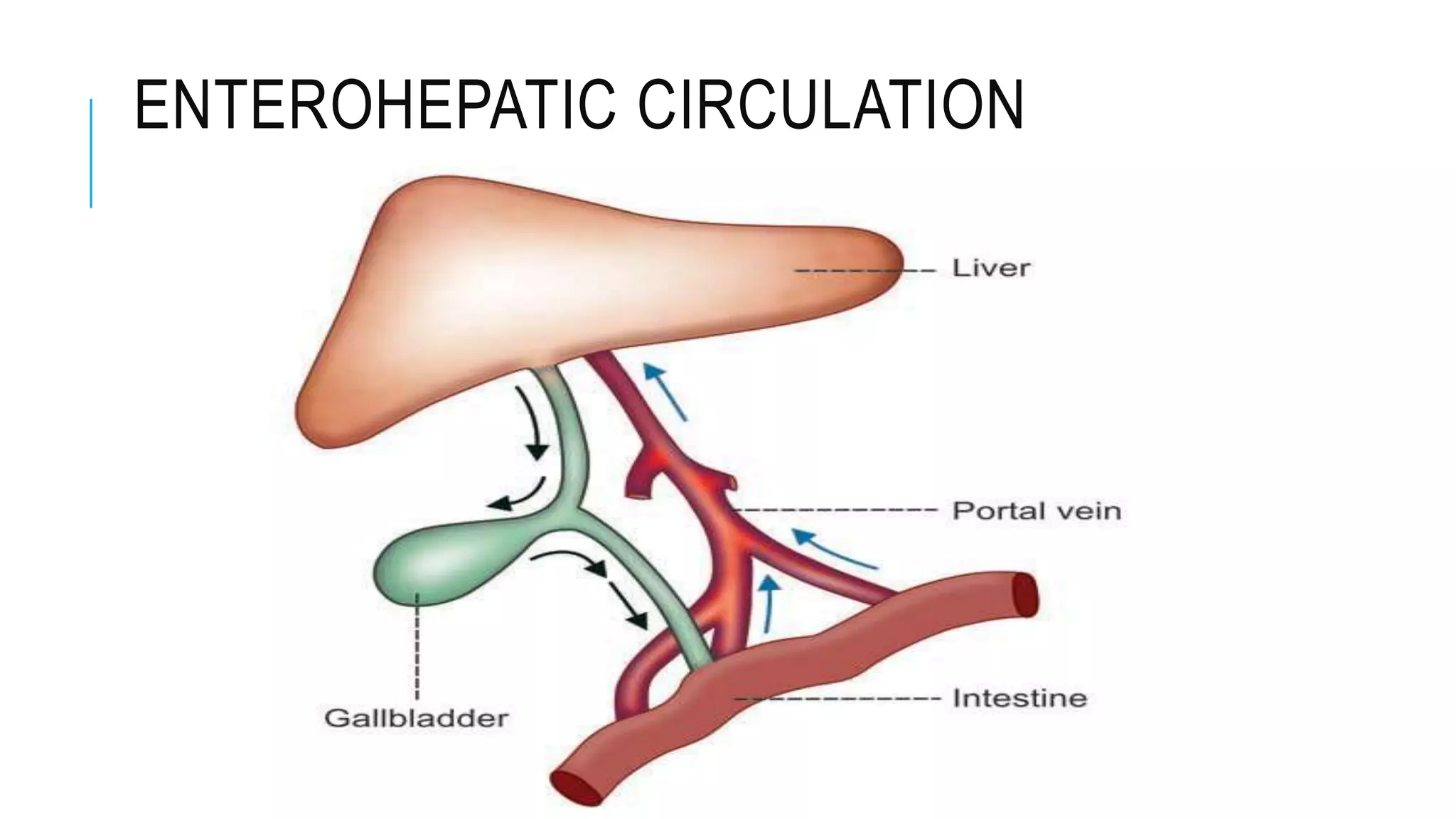
Flow of blood from intestine to liver through portal vein is known as enterohepatic
circulation.
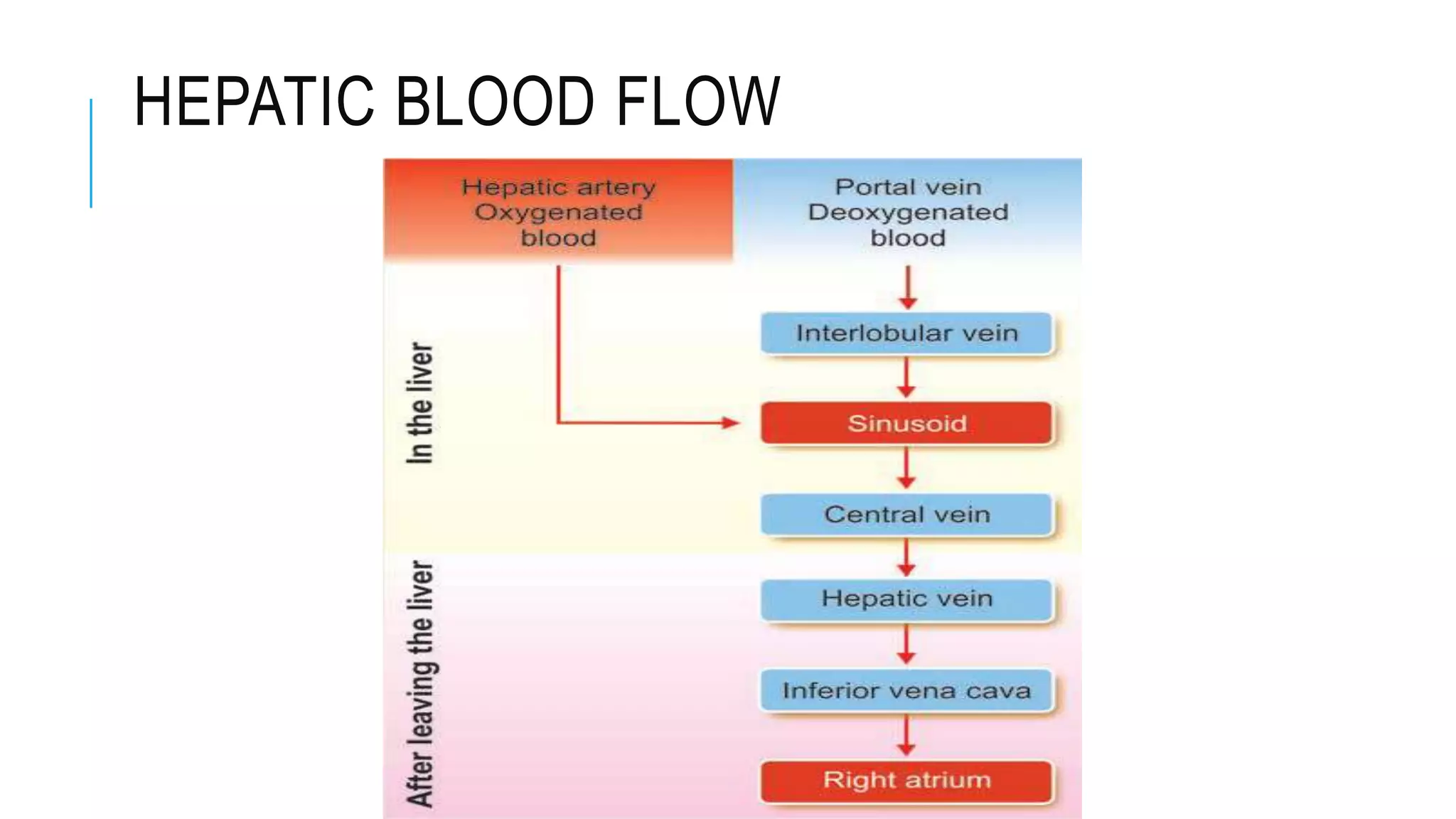
The blood from hepatic artery mixes with blood from portal vein in hepatic sinusoids.
Hepatic cells obtain oxygen and nutrients from the sinusoid.
CONT…
HEPATIC VEIN:
Substances synthesized by hepatic cells, waste products and carbon
dioxide are discharged into sinusoids.
Sinusoids drain them into central vein of the lobule.
Central veins from many lobules unite to form bigger veins, which
ultimately form hepatic veins (right and left) which open into inferior
vena cava.
HEPATIC BLOOD FLOW
ENTEROHEPATIC CIRCULATION
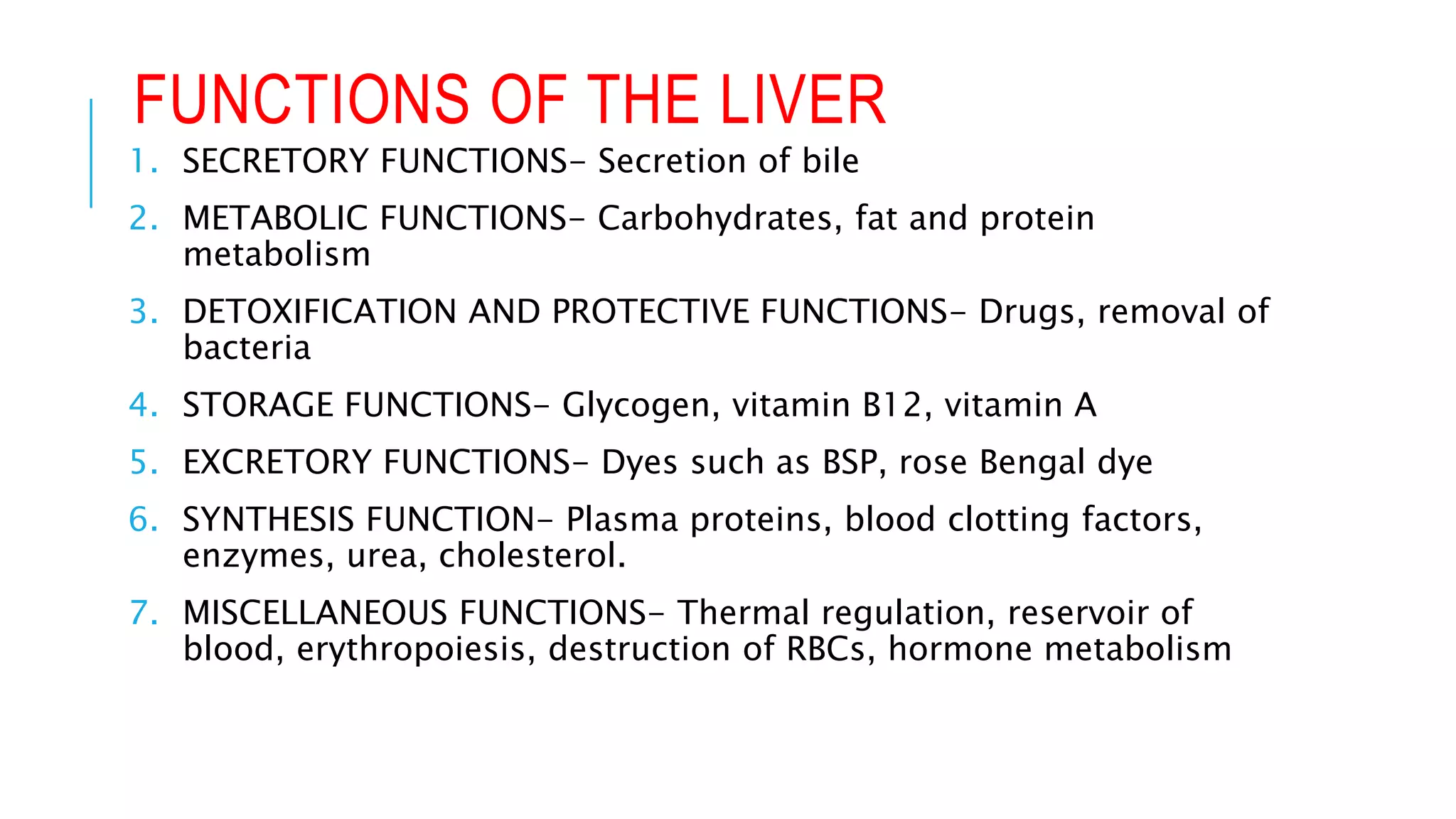
FUNCTIONS OF THE LIVER
1. SECRETORY FUNCTIONS- Secretion of bile
2. METABOLIC FUNCTIONS- Carbohydrates, fat and protein
metabolism
3. DETOXIFICATION AND PROTECTIVE FUNCTIONS- Drugs, removal of
bacteria
4. STORAGE FUNCTIONS- Glycogen, vitamin B12, vitamin A
5. EXCRETORY FUNCTIONS- Dyes such as BSP, rose Bengal dye
6. SYNTHESIS FUNCTION- Plasma proteins, blood clotting factors,
enzymes, urea, cholesterol.
7. MISCELLANEOUS FUNCTIONS- Thermal regulation, reservoir of
blood, erythropoiesis, destruction of RBCs, hormone metabolism
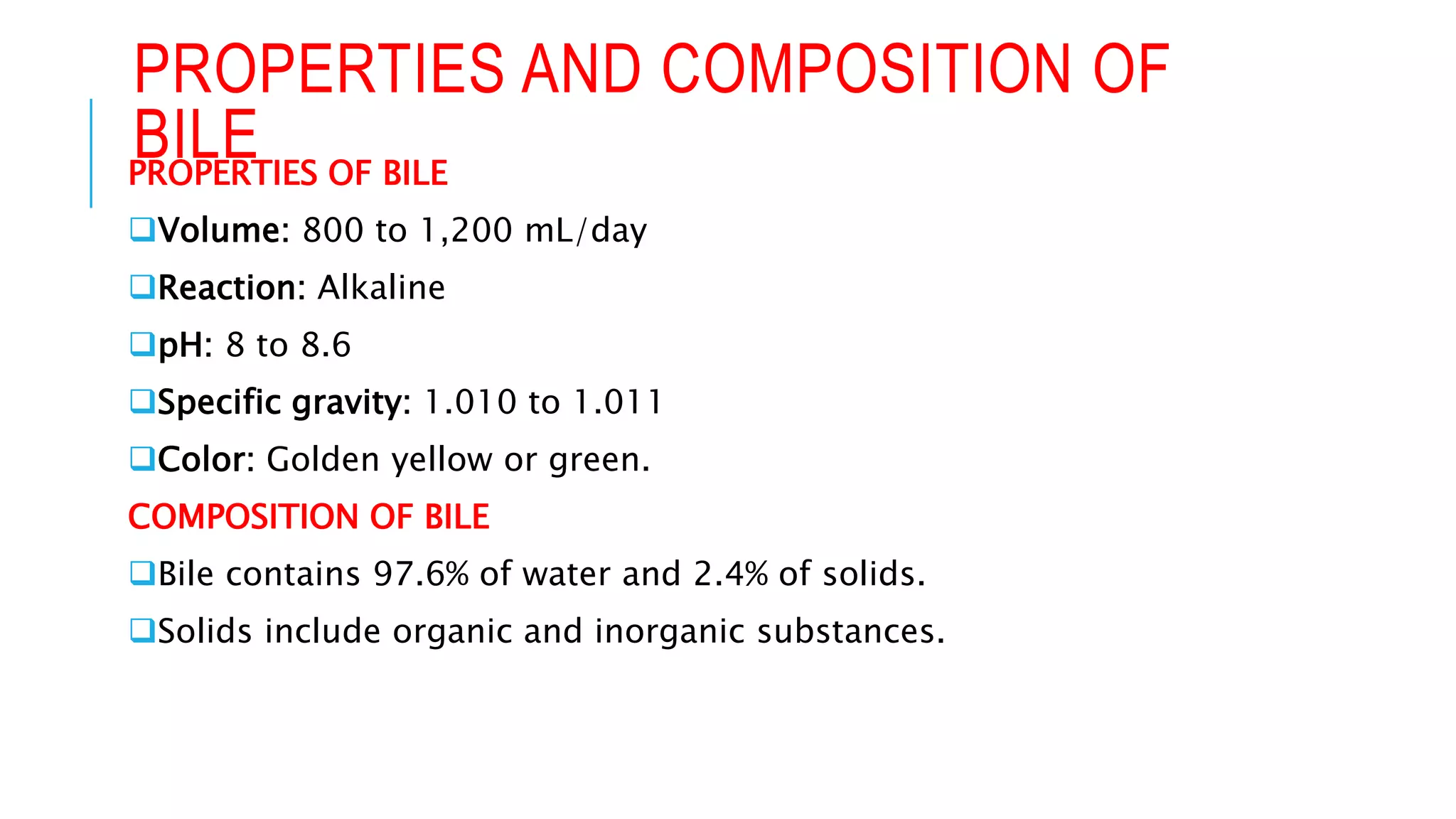
PROPERTIES AND COMPOSITION OF
BILE
PROPERTIES OF BILE
Volume: 800 to 1,200 mL/day
Reaction: Alkaline
pH: 8 to 8.6
Specific gravity: 1.010 to 1.011
Color: Golden yellow or green.
COMPOSITION OF BILE
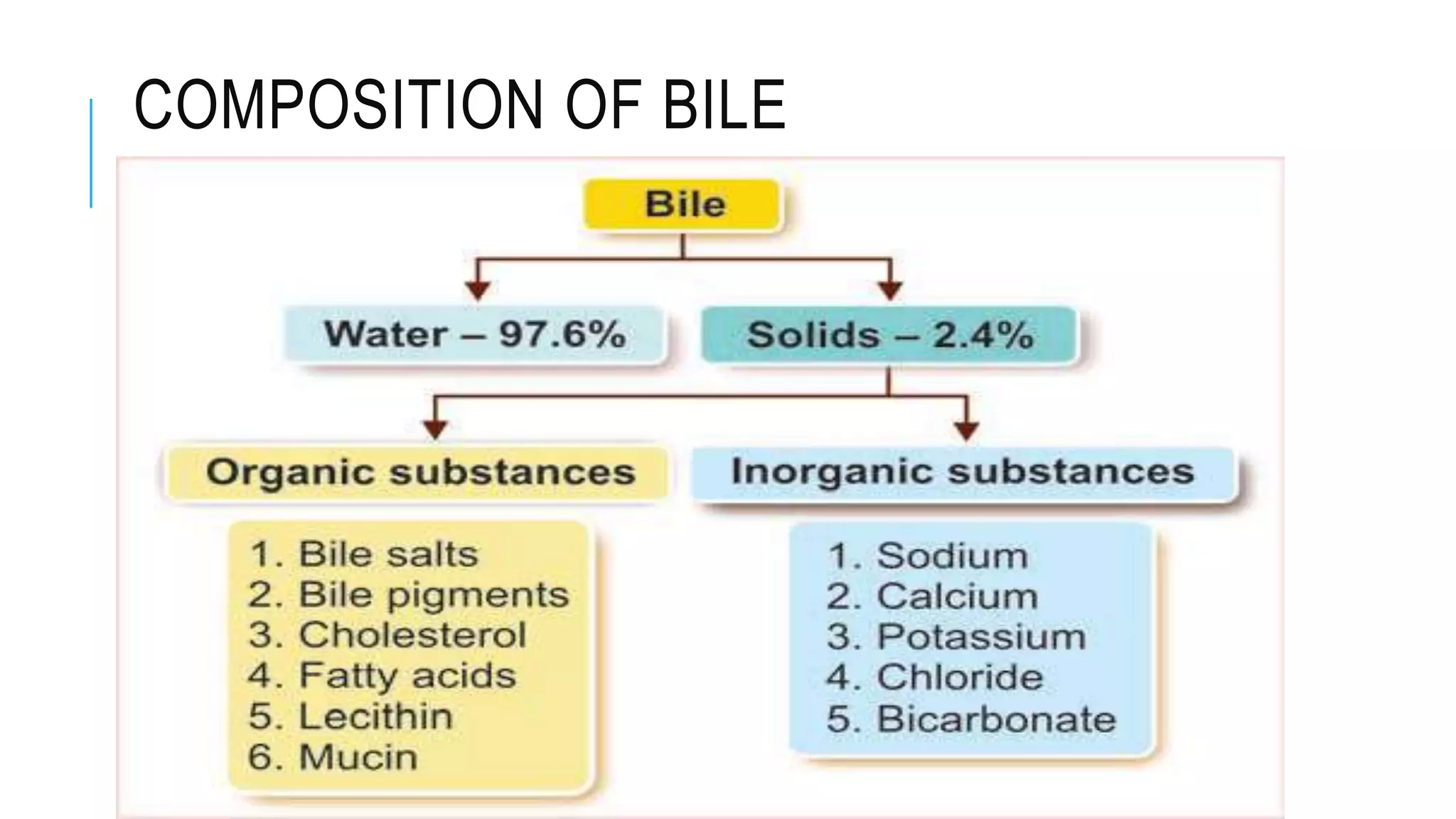
Bile contains 97.6% of water and 2.4% of solids.
Solids include organic and inorganic substances.
COMPOSITION OF BILE
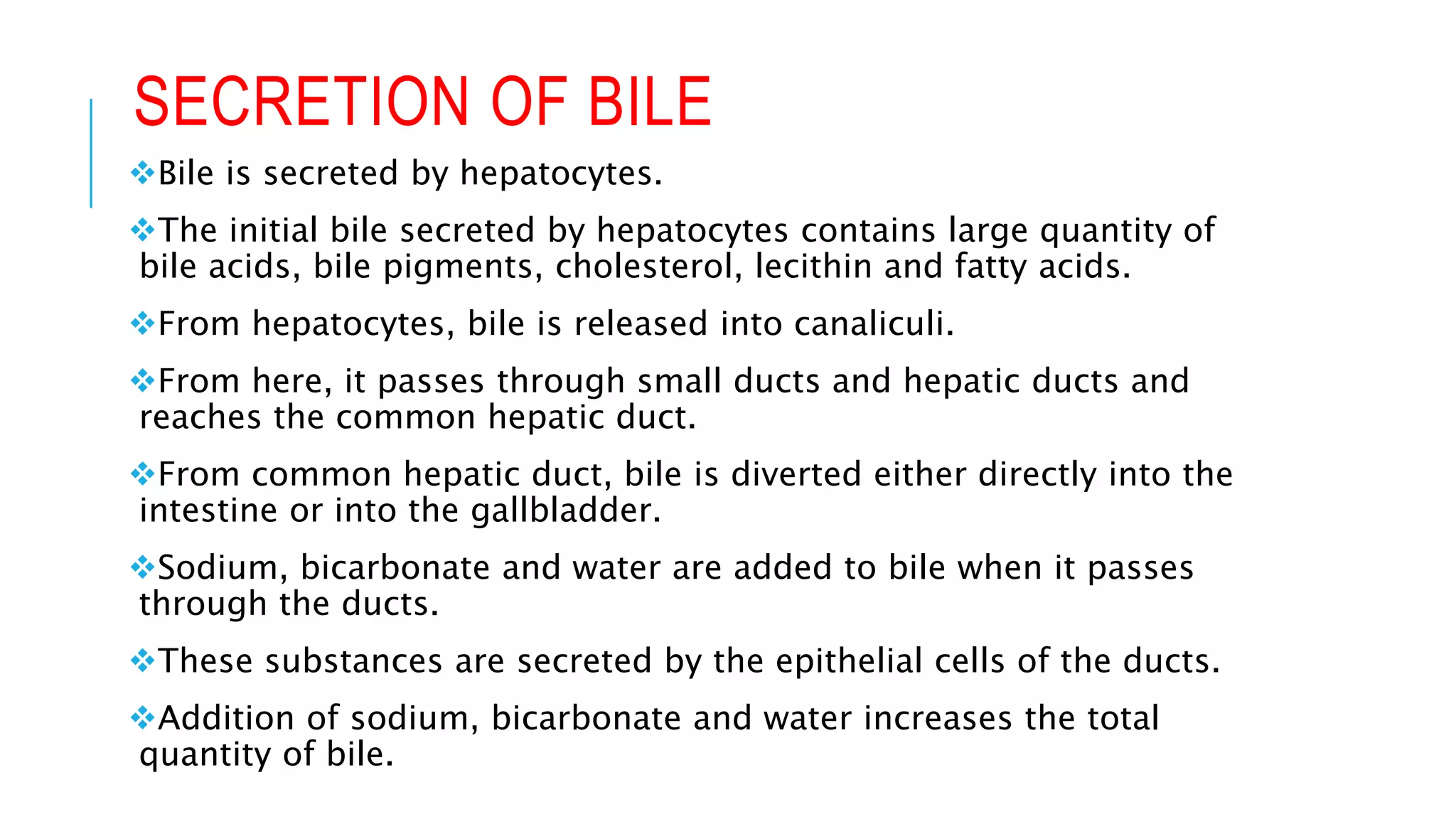
SECRETION OF BILE
Bile is secreted by hepatocytes.
The initial bile secreted by hepatocytes contains large quantity of
bile acids, bile pigments, cholesterol, lecithin and fatty acids.
From hepatocytes, bile is released into canaliculi.
From here, it passes through small ducts and hepatic ducts and
reaches the common hepatic duct.
From common hepatic duct, bile is diverted either directly into the
intestine or into the gallbladder.
Sodium, bicarbonate and water are added to bile when it passes
through the ducts.
These substances are secreted by the epithelial cells of the ducts.
Addition of sodium, bicarbonate and water increases the total
quantity of bile.
STORAGE OF BILE
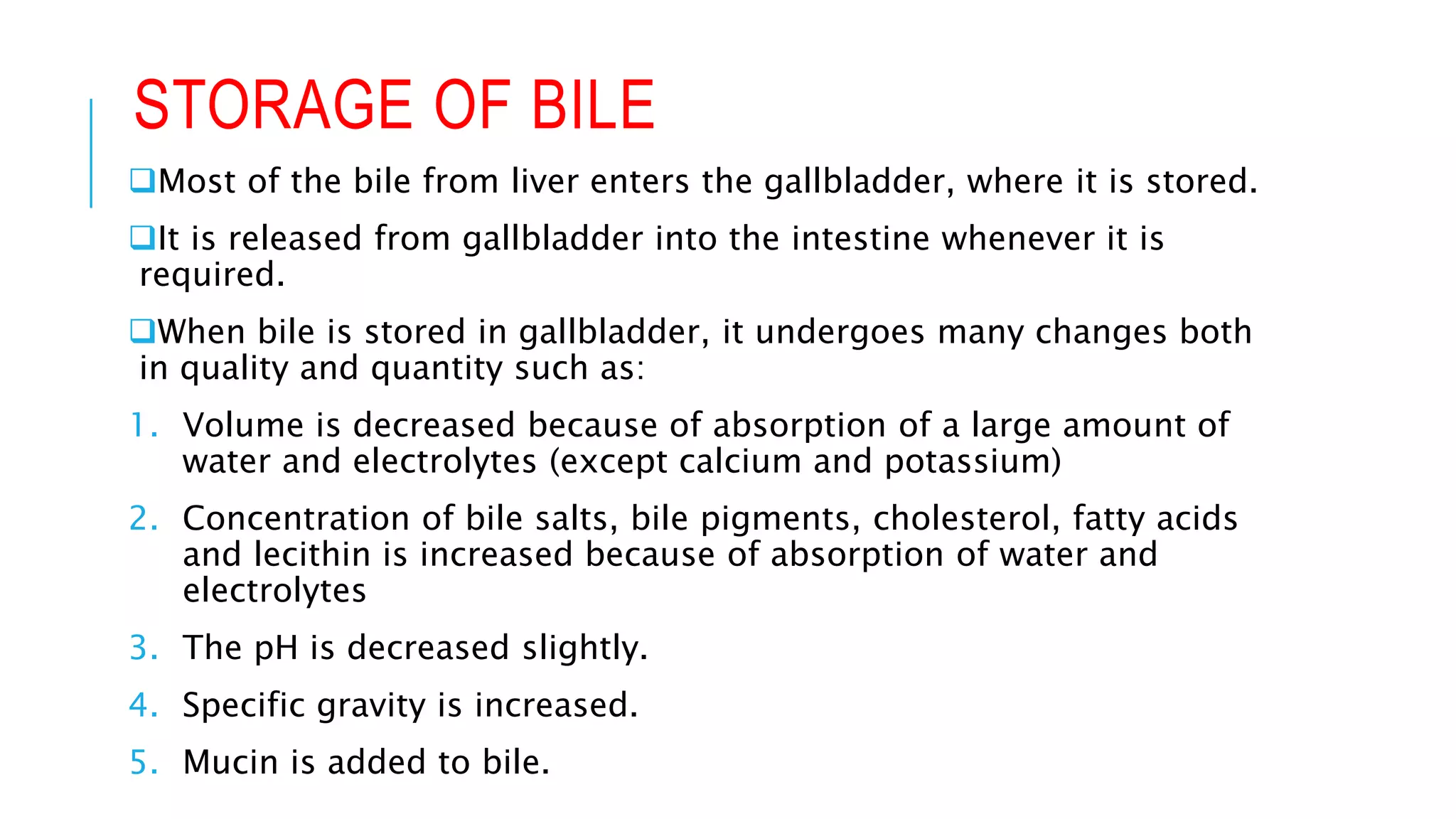
Most of the bile from liver enters the gallbladder, where it is stored.
It is released from gallbladder into the intestine whenever it is
required.
When bile is stored in gallbladder, it undergoes many changes both
in quality and quantity such as:
1. Volume is decreased because of absorption of a large amount of
water and electrolytes (except calcium and potassium)
2. Concentration of bile salts, bile pigments, cholesterol, fatty acids
and lecithin is increased because of absorption of water and
electrolytes
3. The pH is decreased slightly.
4. Specific gravity is increased.
5. Mucin is added to bile.
DIFFERENCES BTW LIVER BILE AND
GALLBLADDER BILE
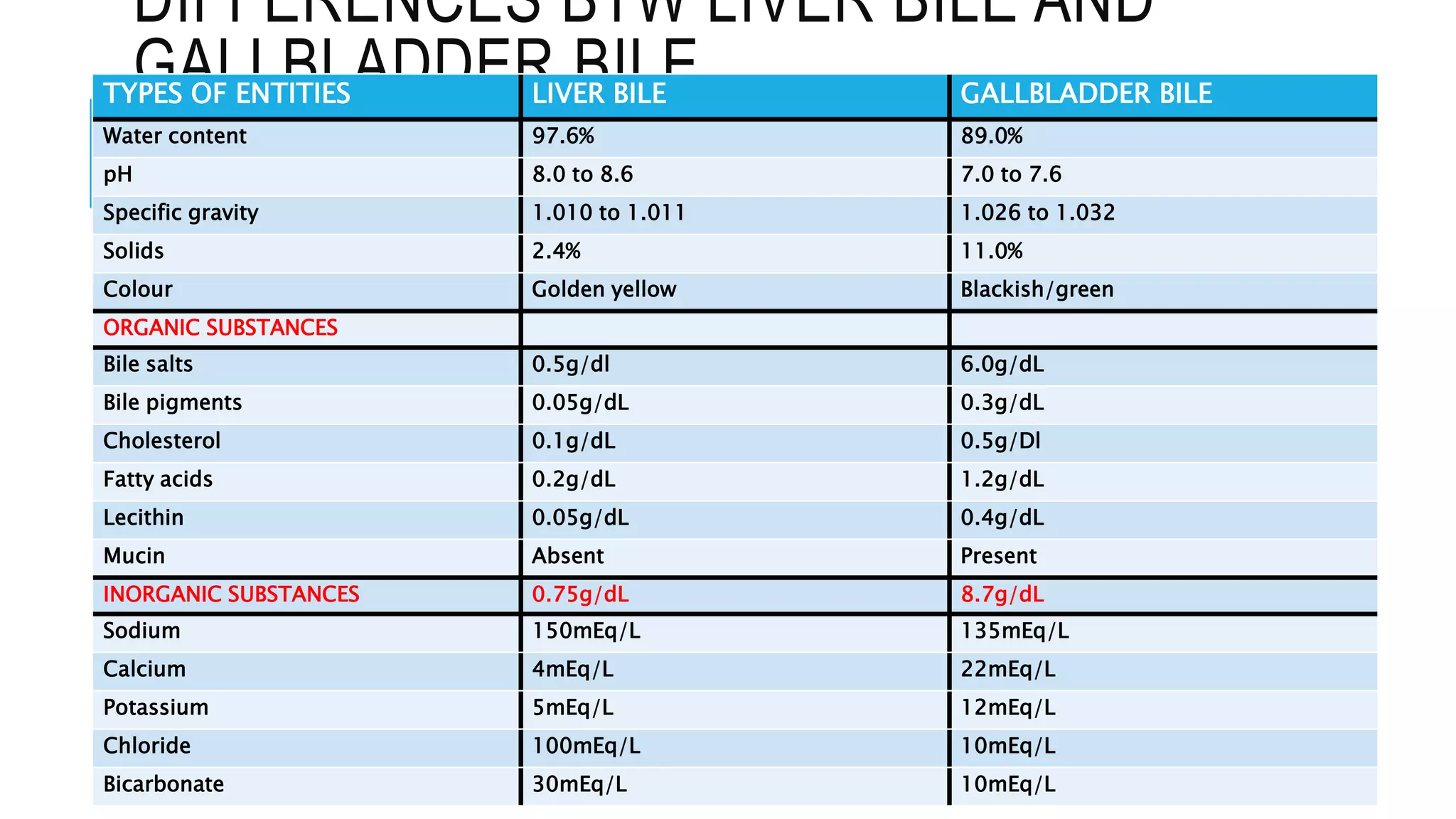
TYPES OF ENTITIES LIVER BILE GALLBLADDER BILE
Water content 97.6% 89.0%
pH 8.0 to 8.6 7.0 to 7.6
Specific gravity 1.010 to 1.011 1.026 to 1.032
Solids 2.4% 11.0%
Colour Golden yellow Blackish/green
ORGANIC SUBSTANCES
Bile salts 0.5g/dl 6.0g/dL
Bile pigments 0.05g/dL 0.3g/dL
Cholesterol 0.1g/dL 0.5g/Dl
Fatty acids 0.2g/dL 1.2g/dL
Lecithin 0.05g/dL 0.4g/dL
Mucin Absent Present
INORGANIC SUBSTANCES 0.75g/dL 8.7g/dL
Sodium 150mEq/L 135mEq/L
Calcium 4mEq/L 22mEq/L
Potassium 5mEq/L 12mEq/L
Chloride 100mEq/L 10mEq/L
Bicarbonate 30mEq/L 10mEq/L
BILE SALTS
Bile salts are the sodium and potassium salts of bile acids, which are
conjugated with glycine or taurine.
FORMATION OF BILE SALTS
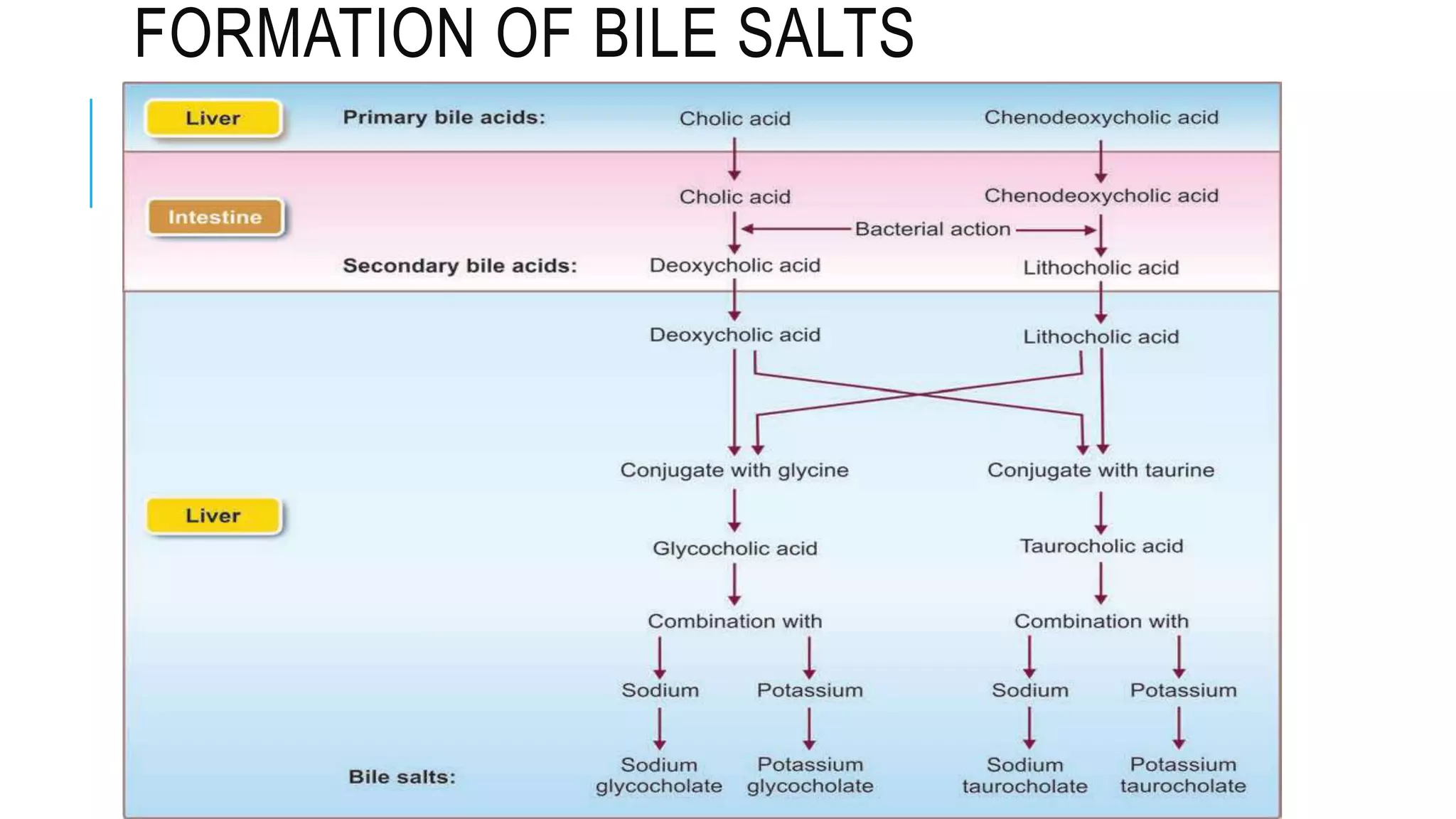
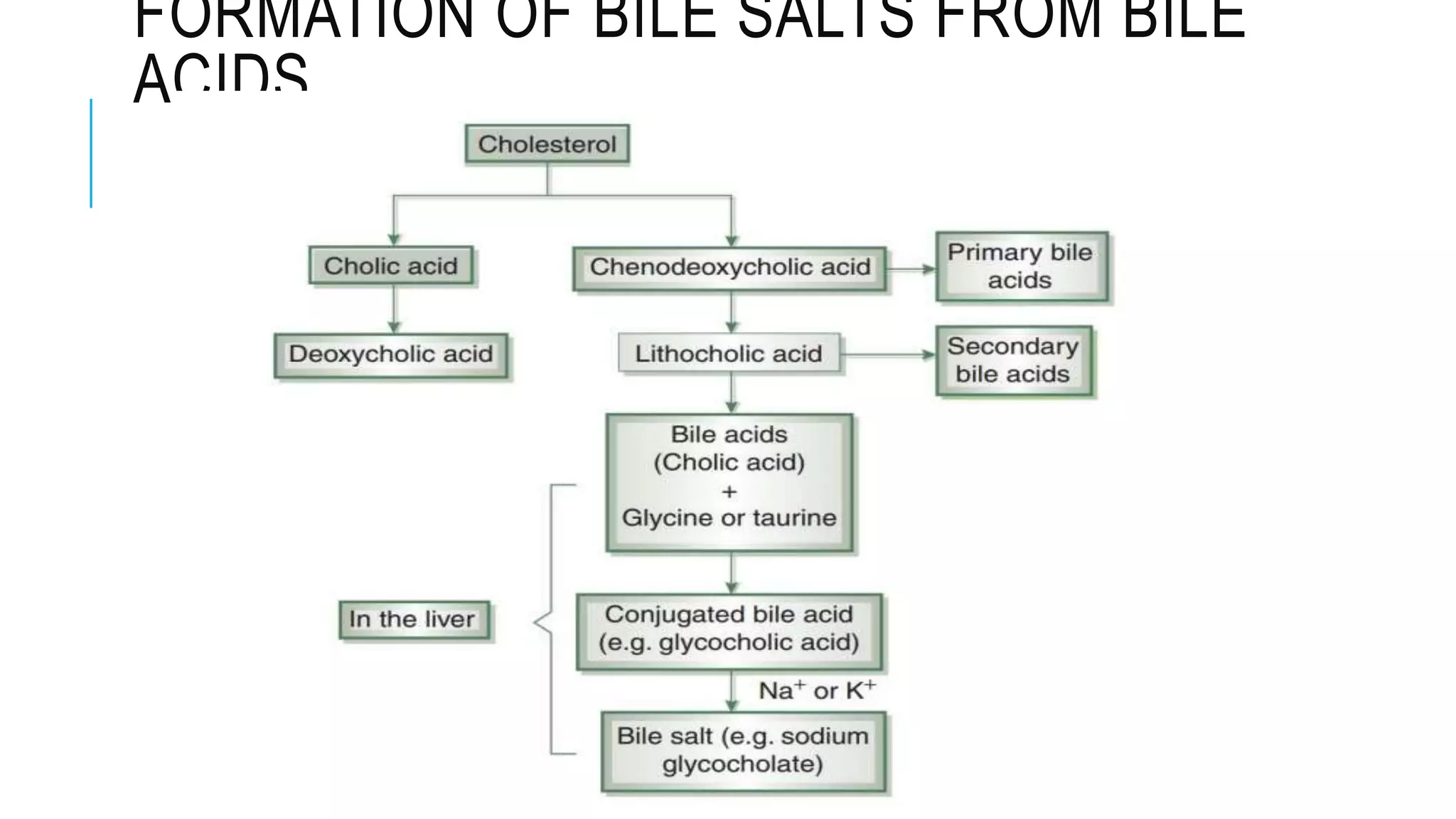
Bile salts are formed from bile acids.
There are two primary bile acids in human, namely cholic acid and
chenodeoxycholic acid, which are formed in liver and enter the intestine through
bile.
Due to the bacterial action in the intestine, the primary bile acids are converted
into secondary bile acids:
Cholic acid → deoxycholic acid
Chenodeoxycholic acid → lithocholic acid
Secondary bile acids from intestine are transported back to liver through
enterohepatic circulation.
In liver, the secondary bile acids are conjugated with glycine (amino acid) or
taurin (derivative of an amino acid) and form conjugated bile acids, namely
glycocholic acid and taurocholic acids.
These bile acids combine with sodium or potassium ions to form the salts,
FORMATION OF BILE SALTS FROM BILE
ACIDS
FORMATION OF BILE SALTS
MECHANISM OF BILE FORMATION
CONT…
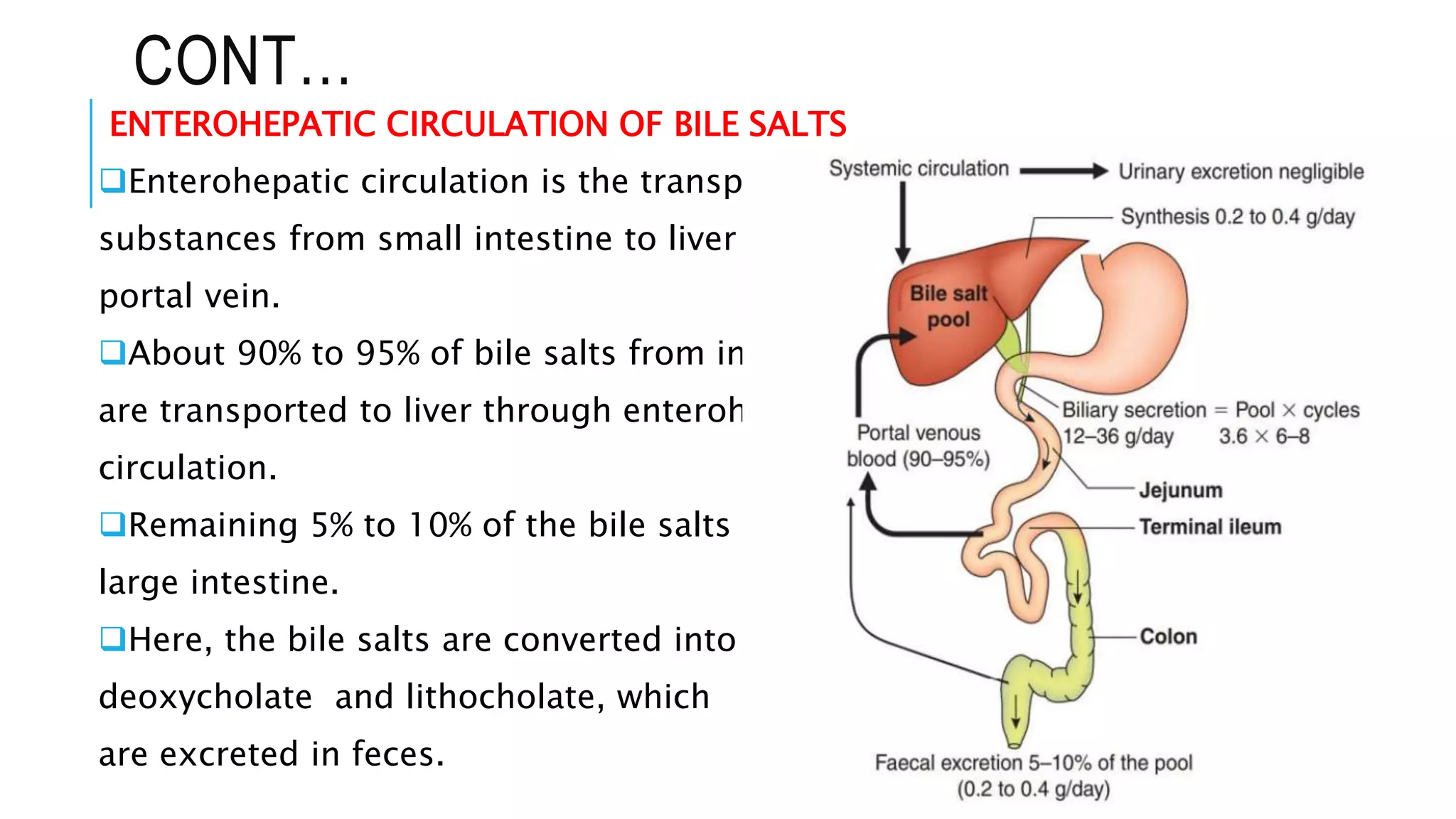
ENTEROHEPATIC CIRCULATION OF BILE SALTS
Enterohepatic circulation is the transport of
substances from small intestine to liver through
portal vein.
About 90% to 95% of bile salts from intestine
are transported to liver through enterohepatic
circulation.
Remaining 5% to 10% of the bile salts enter
large intestine.
Here, the bile salts are converted into
deoxycholate and lithocholate, which
are excreted in feces.
FUNCTIONS OF BILE SALTS
1. Emulsification of fats
2. Acceleration of action of pancreatic lipase
3. Micelle formation
4. Absorption of fat soluble vitamins
5. Choleretic action
6. Cholesterol is kept in soluble form in the gallbladder bile by the
bile salts
7. Intestinal motility is stimulated by bile salts
BILE PIGMENTS
Bile pigments are the excretory products in bile.
Bilirubin and biliverdin are the two bile pigments and bilirubin is the
major bile pigment in human beings.
Bile pigments are formed during the breakdown of hemoglobin,
which is released from the destroyed RBCs in the reticuloendothelial
system.
NORMAL PLASMA LEVELS OF BILIRUBIN
Normal bilirubin (Total bilirubin) content in plasma is 0.5 to 1.5
mg/dL.
When it exceeds 1mg/dL, the condition is called hyperbilirubinemia.
When it exceeds 2 mg/dL, jaundice occurs.
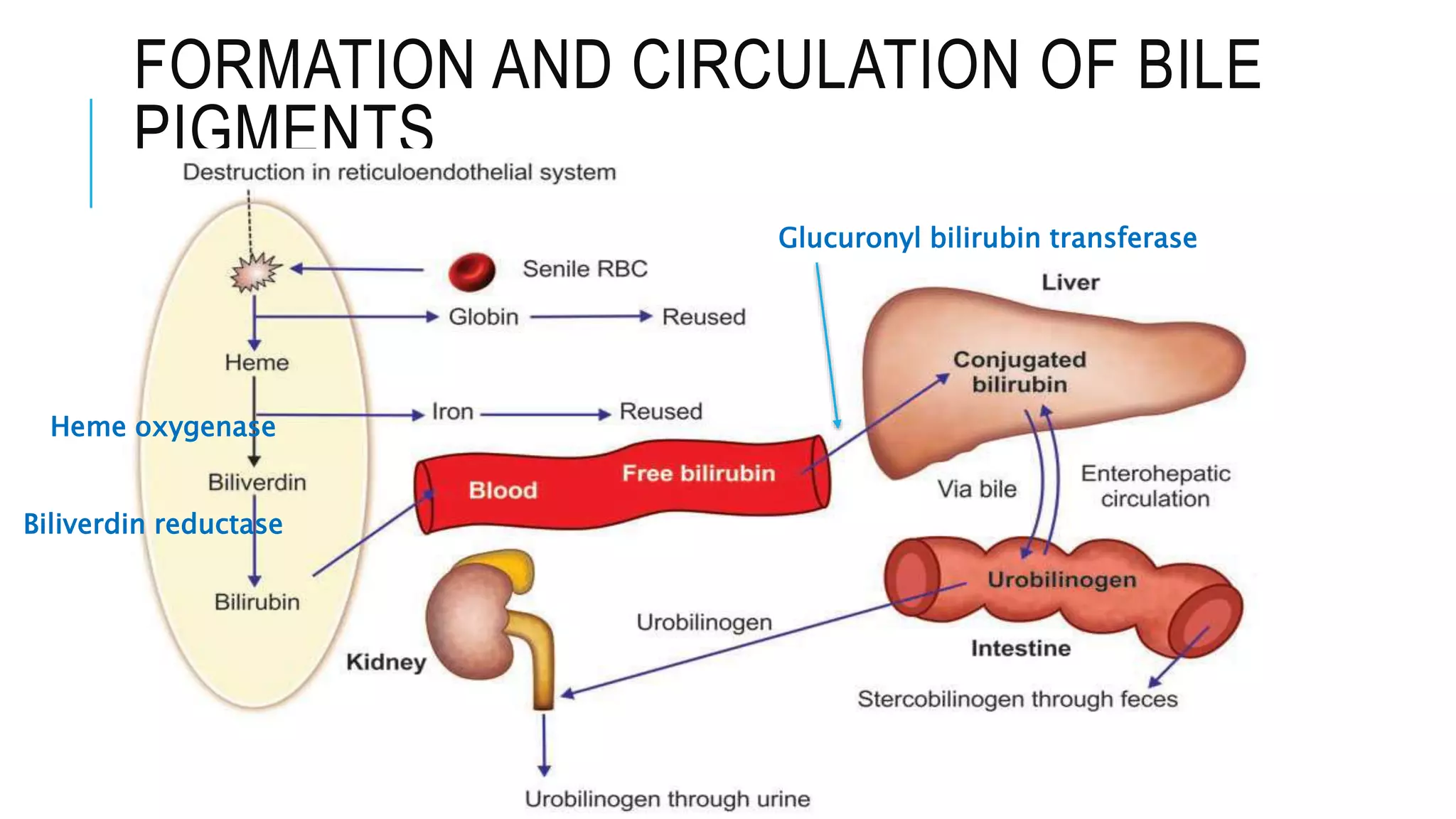
FORMATION AND EXCRETION OF BILE
PIGMENTS
Stages of formation and circulation of bile pigments:
1. Senile erythrocytes are destroyed in reticuloendothelial system and hemoglobin
is released from them
2. Hemoglobin is broken into globin and heme.
3. Heme is split into iron and the pigment biliverdin by heme oxygenase.
4. Iron goes to iron pool and is reused
5. First formed pigment biliverdin is reduced to bilirubin by biliverdin reductase.
6. Bilirubin is released into blood from the reticuloendothelial cells
7. In blood, the bilirubin is transported by the plasma protein, albumin. Bilirubin
circulating in the blood is called free bilirubin or unconjugated bilirubin
8. Within few hours after entering the circulation, the free bilirubin is taken up by
the liver cells
9. In the liver, it is conjugated with glucuronic acid to form conjugated bilirubin
by glucuronyl transferase.
10.Conjugated bilirubin is then excreted into intestine through bile.
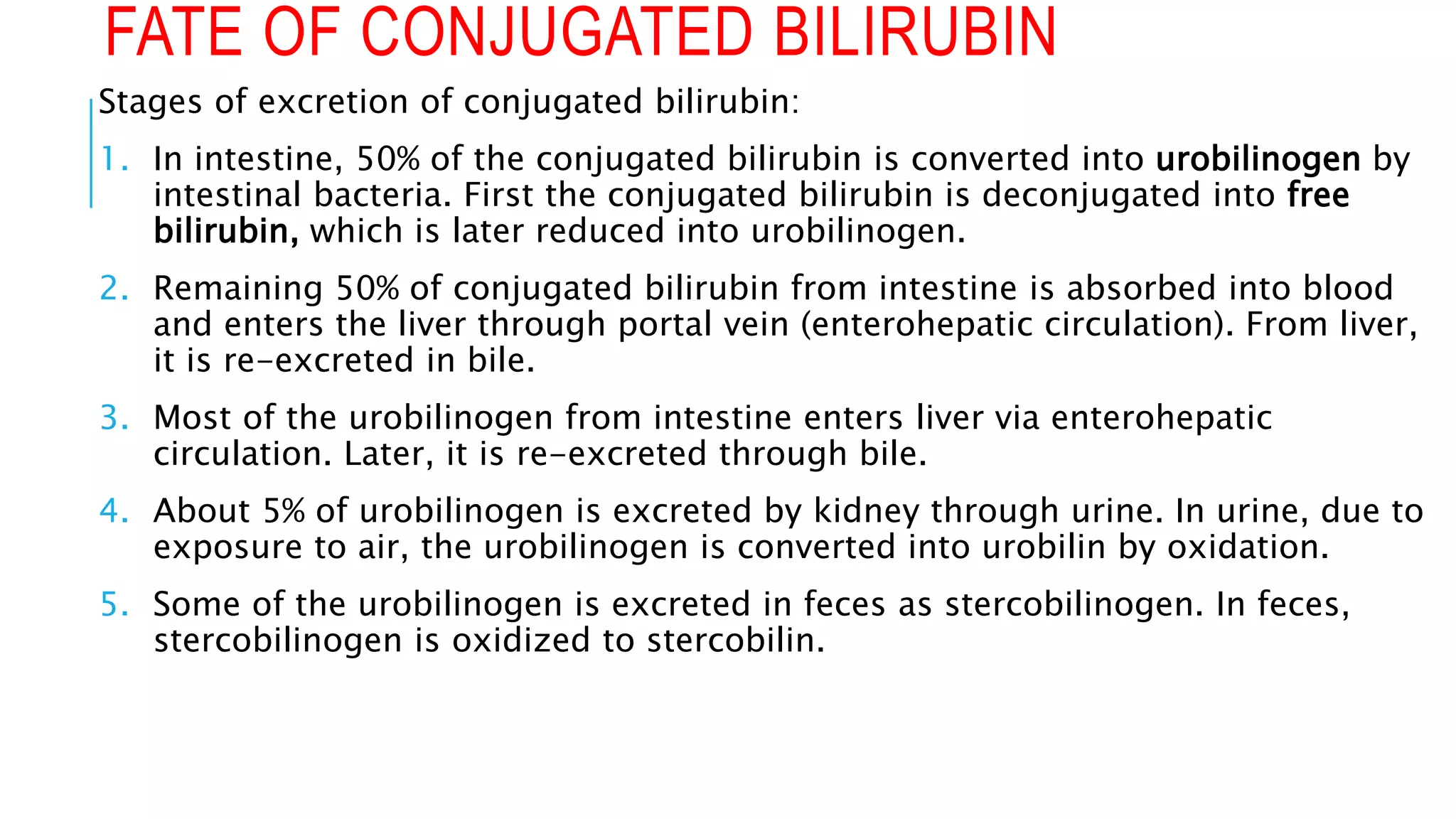
FATE OF CONJUGATED BILIRUBIN
Stages of excretion of conjugated bilirubin:
1. In intestine, 50% of the conjugated bilirubin is converted into urobilinogen by
intestinal bacteria. First the conjugated bilirubin is deconjugated into free
bilirubin, which is later reduced into urobilinogen.
2. Remaining 50% of conjugated bilirubin from intestine is absorbed into blood
and enters the liver through portal vein (enterohepatic circulation). From liver,
it is re-excreted in bile.
3. Most of the urobilinogen from intestine enters liver via enterohepatic
circulation. Later, it is re-excreted through bile.
4. About 5% of urobilinogen is excreted by kidney through urine. In urine, due to
exposure to air, the urobilinogen is converted into urobilin by oxidation.
5. Some of the urobilinogen is excreted in feces as stercobilinogen. In feces,
stercobilinogen is oxidized to stercobilin.
FORMATION AND CIRCULATION OF BILE
PIGMENTS
Heme oxygenase
Glucuronyl bilirubin transferase
Biliverdin reductase
FUNCTIONS OF BILE
a) Digestive function.
Bile salts help in the digestion of fats by emulsifying fat drops.
b) Absorptive functions.
Bile salts help in the absorption of fats (by micelle formation) and fat-soluble
vitamins.
c) Excretory function.
Bile pigments are the major excretory products of the bile.
The other substances excreted in bile are heavy metals (e.g. copper and iron),
some toxins, some
bacteria (e.g. typhoid bacteria), cholesterol, lecithin and alkaline phosphatase.
d) Laxative action.
Bile salts increase the gastrointestinal motility and act as a laxative.
e) Protective action.
CONT…
f) Choleretic action, i.e.
Bile salts stimulate the liver to secrete bile.
g) Maintenance of pH of gastrointestinal tract.
Being highly alkaline, the bile juice neutralizes the gastric HCI present in the chyme
entering the small intestine. Thus, an optimum pH is maintained for the action of
digestive enzymes.
h) Prevention of gall stone formation.
Bile salts keep the cholesterol and lecithin in solution and thus prevent the formation of
gall stones.
In the absence of bile salts, the cholesterol precipitates along with lecithin and may
form gall stones.
i) Lubricating function.
The mucin secreted by the gall bladder mucosa into the bile lubricates the chyme in the
intestine.
j) Cholagogue function. Cholagogue is an agent, which increases the release of bile from
GALLBLADDER
Bile secreted from liver is stored in gallbladder.
The capacity of gallbladder is approximately 50 mL.
Gallbladder is not essential for life and it is removed (cholecystectomy) in
patients suffering from gallbladder dysfunction.
After cholecystectomy, patients do not suffer from any major disadvantage.
In some species, gallbladder is absent.
FILLING AND EMPTYING OF GALLBLADDER
Usually, the sphincter of Oddi is closed during fasting and the pressure in the
biliary system is only 7 cm H2O.
Because of this pressure, the bile from liver enters the gallbladder.
While taking food or when chyme enters the intestine, gallbladder contracts
along with relaxation of sphincter of Oddi. Now, the pressure increases to about
20 cm H2O.
Because of the increase in pressure, the bile from gallbladder enters the
intestine. Contraction of gallbladder is influenced by neural and hormonal
FUNCTIONS OF GALLBLADDER
1. Storage of bile. The bile secreted during interdigestive period is stored in the
gall bladder. The gall bladder, typically stores 30–50 mL of bile. During meals,
the gall bladder contracts and releases its contents into the duodenum.
2. Concentration of bile. The mucosa of gall bladder is extensively folded and can
actively absorb fluid and electrolytes.
3. Alteration of pH of bile. In the gall bladder, due to rapid absorption of HCO3−
(mainly), Na+ and Cl−, the pH of bile is decreased from 8.0–8.6 to 7.0–7.6.
4. Secretion of mucous. Gall bladder secretes mucin, which is added to the bile
stored in it. The mucin acts as a lubricant in the intestine for the chyme.
5. Maintenance of pressure in biliary system. Due to continuous absorption of
water from the stored bile, the gall bladder regulates equalization of pressure
in the biliary system.
This fact can be understood by following observations:
 When both the bile duct and cystic duct are clamped, the pressure in the biliary
system rises to above 30 cm of bile in 30 min and bile secretion is stopped.
When the bile duct is clamped alone, water is continuously reabsorbed in the gall
bladder, and the pressure in the biliary system rises to only 10 cm of bile in
several hours.
REGULATION OF BILE
The regulation of bile juice released into the duodenum after the meals is
performed at two levels:
a) Regulation of biliary secretion and
b) Regulation of release of bile from the gall bladder.
REGULATION OF BILIARY SECRETION
The secretion of aqueous component (water and electrolytes) and the bile
(containing bile salts and other organic substances), though occur together but is
controlled separately by following mechanisms:
a) Regulation of bile-independent fraction of biliary secretion and,
b) Regulation of bile-dependent fraction of biliary secretion.
CONT…
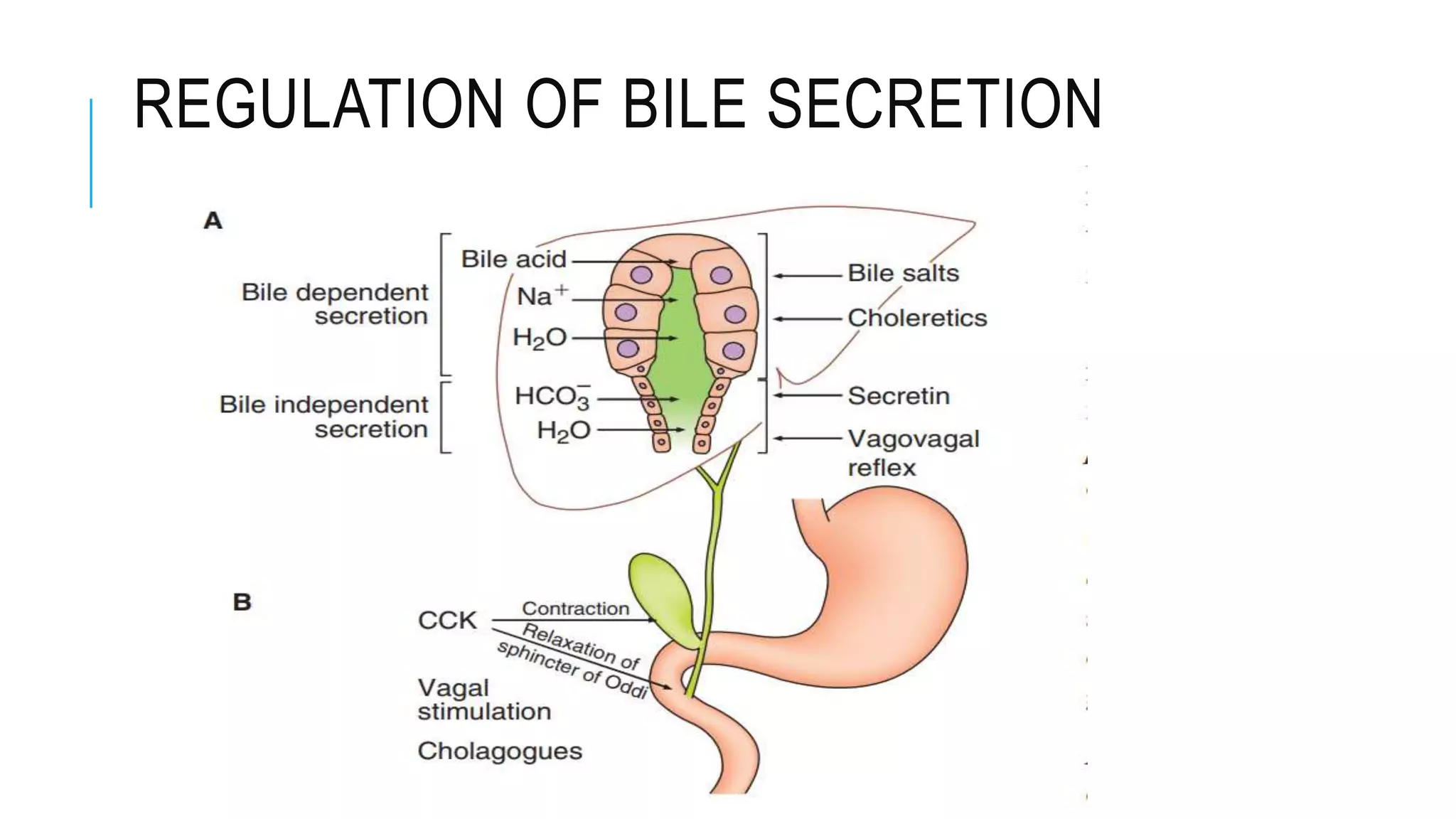
a) Regulation of bile-independent fraction of biliary secretion.
The bile-independent fraction of biliary secretion refers to the
amount of fluid-containing water and electrolytes.
Secretion of this fraction of the bile juice is controlled by secretin
and vagal stimulation.
Secretin.
It acts on the ductal cells of hepatic ducts via cyclic AMP, second
messenger and produces a large amount of watery fluid with high
concentration of HCO3–.
Vagovagal reflex
Potentiates the effects of secretion through the acetylcholine.
Note.
The agents (e.g. secretin and acetylcholine) which cause secretion of
CONT…
b) Regulation of release of bile juice from gall bladder
Filling of gall bladder by the bile is simply controlled by the pressure
gradient. During the interdigestive period the sphincter of Oddi
remains closed. As bile is secreted continuously, it gets accumulated
in the CBD. When pressure of bile in the CBD rises, it forces its way
through cystic duct into the gall bladder. During interdigestive
period, the pressure in CBD and gall bladder reaches to 7 cm of
water.
Emptying of gall bladder. When the chyme enters the duodenum, the
gall bladder is contracted along with relaxation of sphincter of Oddi,
raising the pressure to about 20 cm of water. Because of the increase
in pressure, the bile from the gall bladder enters the duodenum. The
contraction of gall bladder and relaxation of sphincter of Oddi are
regulated by following factors:
a) Hormonal control
b) Neural control
CONT…
Hormonal control.
The hormone CCK is the major stimulus for the gall bladder contraction and sphincter
of Oddi
relaxation.
When chyme enters the small intestine, fat and protein digestion products directly
stimulate the secretion of CCK.
Neural control.
Vagal stimulation also causes contraction of the gall bladder and relaxation of
sphincter of Oddi.
Vagal stimulation occurs directly during the cephalic phase of digestion and indirectly
via a vagovagal reflex during the gastric phase of digestion.
Note.
Substances that cause contraction of gall bladder are called cholagogues.
Thus CCK is well known cholagogue and acetylcholine released on the vagal stimulation
REGULATION OF BILE SECRETION
CLINICAL NOTES
HEPATITIS
Hepatitis is the liver damage caused by many agents. It is characterized by
swelling and inadequate functioning of liver. Hepatitis may be acute or chronic.
In severe conditions, it may lead to liver failure and death.
Causes and Types
1. Viral infection (viral hepatitis)
2. Bacterial infection like leptospirosis and Q fever
3. Excess consumption of alcohol
4. Excess administration of drugs like paracetamol
5. Poisons like carbon tetrachloride and aflatoxin
6. Wilson disease
7. Circulatory insufficiency
8. Inheritance from mother during parturition.
CONT…
Viral Hepatitis
Is the type of hepatitis caused by viruses. It is caused by two types of
viruses, hepatitis A and
hepatitis B.
Causes of viral hepatitis
1. Mainly by intake of water and food contaminated with hepatitis
virus
2. Sharing needles with infected persons
3. Accidental prick by infected needle
4. Having unprotected sex with infected persons
5. Inheritance from mother during parturition
6. Blood transfusion from infected donors.
Hepatitis caused by hepatitis B virus is more common and considered
more serious because it may lead to cirrhosis and cancer of liver.
CONT…
Features of Hepatitis
1. Fever
2. Nausea
3. Vomiting, diarrhea and loss of appetite
4. Headache and weakness
5. In addition, chronic hepatitis is characterized by:
 Stomach pain
 Paleness of skin
 Dark-colored urine and pale stool
 Jaundice
 Personality changes.
CONT…
CIRRHOSIS OF LIVER
Cirrhosis of liver refers to inflammation and damage of parenchyma
of liver. It results in degeneration of hepatic cells and dysfunction of
liver.
Causes
1. Infection
2. Retention of bile in liver due to obstruction of ducts
of biliary system
3. Enlargement of liver due to intoxication
4. Inflammation around liver (perihepatitis)
5. Infiltration of fat in hepatic cells.
CONT…
Features
1. Fever, nausea and vomiting
2. Jaundice
3. Increased heart rate and cardiac output
4. Portal hypertension
5. Muscular weakness and wasting of muscles
6. Drowsiness
7. Lack of concentration and confused state of mind
8. Coma in advanced stages
CONT…
GALLSTONES
Gallstone is a solid crystal deposit that is formed by cholesterol, calcium ions
and bile pigments in the gallbladder or bile duct.
Cholelithiasis is the presence of gallstones in gallbladder. Choledocholithiasis is
the presence of gallstones in the bile ducts.
Formation of Gallstones
Normally, cholesterol present in the bile combines with bile salts and lecithin,
which make the cholesterol soluble in water. Under some abnormal conditions,
this water-soluble cholesterol precipitates resulting in the formation of
gallstone.
Initially, small quantity of cholesterol begins to precipitate forming many small
crystals of cholesterol in the mucosa of gallbladder. This stimulates further
formation of crystals and the crystals grow larger and larger.
Later, bile pigments and calcium are attached to these crystals, resulting in
formation of gallstones.
CONT…
Causes for Gallstone Formation
1. Reduction in bile salts and/or lecithin
2. Excess of cholesterol
3. Disturbed cholesterol metabolism
4. Excess of calcium ions due to increased concentration of bile
5. Damage or infection of gallbladder epithelium. It alters the absorptive
function of the mucous membrane of the gallbladder. Sometimes, there is
excessive absorption of water or even bile salts, leading to increased
concentration of cholesterol, bile pigments and calcium ions
6. Obstruction of bile flow from the gallbladder.
Diagnosis of Gallstone
Presence of gallstone is diagnosed by ultrasound scanning and
cholangiography.
Cholangiography is the radiological study of biliary ducts after the
CONT…
Features
Common feature of gallstone is the pain in stomach area or in upper right part
of the belly under the ribs.
Other features include nausea, vomiting, abdominal bloating and indigestion.
Treatment for Gallstone
Simple cholesterol gallstones can be dissolved over a period of one or two
years by giving 1 to 1.5 gm of chemodeoxycholic acid daily.
This increases the concentration of bile acids. So, excessive concentration of
bile does not occur.
In severe conditions, the gallbladder has to be removed (cholecystectomy).
Laparoscopic surgery is the common method.
CONT…
JAUNDICE OR ICTERUS
Jaundice or icterus is the condition characterized by yellow coloration of the
skin, mucous membrane and deeper tissues due to increased bilirubin level in
blood.
The word jaundice is derived from the French word ‘jaune’ meaning yellow.
The normal serum bilirubin level is 0.5 to 1.5 mg/dL.
Jaundice occurs when bilirubin level exceeds 2 mg/dL.
Types of Jaundice
Jaundice is classified into three types:
1. Prehepatic or hemolytic jaundice
2. Hepatic or hepatocellular jaundice
3. Posthepatic or obstructive jaundice.
CONT…
Prehepatic or Hemolytic Jaundice
Hemolytic jaundice is the type of jaundice that occurs because of excessive
destruction of RBCs resulting in increased blood level of free (unconjugated)
bilirubin.
In this condition, the excretory function of liver is normal. But the quantity of
bilirubin increases enormously.
The liver cells cannot excrete that much excess bilirubin rapidly.
Unconjugated bilirubin is insoluble in water and is not excreted in urine. So, it
accumulates in the blood resulting in jaundice.
Formation of urobilinogen also increases resulting in the excretion of more
amount of urobilinogen in urine.
Causes
Any condition that causes hemolytic anemia can lead to hemolytic jaundice.
CONT…
Common causes of hemolytic jaundice are:
1. Renal disorder
2. Hypersplenism
3. Burns
4. Infections such as malaria
5. Hemoglobin abnormalities such as sickle cell anemia or
thalassemia
6. Drugs or chemical substances causing red cell damage
7. Autoimmune diseases.
CONT…
Hepatic or Hepatocellular or Cholestatic Jaundice
Hepatic jaundice is the type of jaundice that occurs due to the damage of
hepatic cells.
Because of the damage, the conjugated bilirubin from liver cannot be
excreted and it returns to blood.
Causes
1. Infection (infective jaundice) by virus, resulting in hepatitis (viral
hepatitis)
2. Alcoholic hepatitis
3. Cirrhosis of liver
4. Exposure to toxic materials.
CONT…
Posthepatic or Obstructive or Extrahepatic Jaundice
Posthepatic type of jaundice occurs because of the obstruction of bile
flow at any level of the biliary system.
The bile cannot be excreted into small intestine.
So, bile salts and bile pigments enter the circulation.
The blood contains more amount of conjugated bilirubin.
Causes
1. Gallstones
2. Cancer of biliary system or pancreas.

INTERGRATED RESPONSE TO A MEAL V. INTESTINAL PHASE (ii)

  • 1.
    INTERGRATED RESPONSE TO AMEAL- INTESTINAL PHASE (II) Nesh- EGERTON UNIVERSITY, MBChB
  • 2.
    PART 2. BILIARYSECRETION PHYSIOLOGICAL ANATOMY OF THE LIVER AND BILIARY SYSTEM General considerations: Liver is a dual organ having both secretory and excretory functions. It is the largest gland in the body, weighing about 1.5 kg in man. It is located in the upper and right side of the abdominal cavity, immediately beneath diaphragm. Anatomically, The liver has been divided into right and left lobes. Right lobe is much larger and includes caudate lobe and quadrate lobe. Left lobe is much smaller. In current terminology, The liver consists of right and left functionally independent parts called the portal lobes that are approximately equal in size. The right and left functional parts of the liver have their own blood supply from the hepatic artery and portal vein and their own venous and biliary drainage.
  • 3.
    CONT… HEPATIC LOBES Liver ismade up of many lobes called hepatic lobes each consisting of many lobules called hepatic lobules. HEPATIC LOBULES Hepatic lobule is the structural and functional unit of liver. There are about 50,000 to 100,000 lobules in the liver. The lobule is a honeycomb-like structure and it is made up of liver cells called hepatocytes. HEPATOCYTES AND HEPATIC PLATES Hepatocytes are arranged in columns, which form the hepatic plates. Each plate is made up of two columns of cells. In between the two columns of each plate lies a bile canaliculus. In between the neighboring plates, a blood space called sinusoid is present. Sinusoid is lined by the endothelial cells.
  • 4.
    CONT… PORTAL TRIADS Each lobuleis surrounded by many portal triads. Each portal triad consists of three vessels: 1. A branch of hepatic artery 2. A branch of portal vein 3. A tributary of bile duct. Branches of hepatic artery and portal vein open into the sinusoid. Sinusoid opens into the central vein. Central vein empties into hepatic vein. Bile is secreted by hepatic cells and emptied into bile canaliculus. From canaliculus, the bile enters the tributary of bile duct. Tributaries of bile duct from canaliculi of neighboring lobules unite to form small bile ducts. These small bile ducts join together and finally form left and right hepatic
  • 5.
  • 6.
  • 7.
    BILIARY SYSTEM Biliary systemor extrahepatic biliary apparatus is formed by gallbladder and extrahepatic bile ducts (bile ducts outside the liver). Right and left hepatic bile ducts which come out of liver join to form common hepatic duct (CHD). CHD unites with the cystic duct from gallbladder to form common bile duct. All these ducts have similar structures. Common bile duct unites with pancreatic duct to form the common hepatopancreatic duct or ampulla of Vater, which opens into the duodenum. The sphincter of Oddi is at the lower part of common bile duct, before it joins the pancreatic duct. It is formed by smooth muscle fibers of common bile duct. It is normally kept closed; so the bile secreted from liver enters gallbladder where it is stored. Upon appropriate stimulation, the sphincter opens and allows flow of bile from gallbladder into the intestine.
  • 8.
  • 9.
    BLOOD SUPPLY TOLIVER Liver receives maximum blood supply of about 1,500 mL/minute. It receives blood from two sources, namely the hepatic artery and portal vein. HEPATIC ARTERY: Arises directly from aorta and supplies oxygenated blood to liver. After entering the liver, it divides into many branches. Each branch enters a portal triad. PORTAL VEIN: Portal vein is formed by superior mesenteric vein and splenic vein. It brings deoxygenated blood from stomach, intestine, spleen and pancreas. Portal blood is rich in monosaccharides and amino acids. It also contains bile salts, bilirubin, urobilinogen and GI hormones. However, the oxygen content is less in portal blood. Flow of blood from intestine to liver through portal vein is known as enterohepatic circulation. The blood from hepatic artery mixes with blood from portal vein in hepatic sinusoids. Hepatic cells obtain oxygen and nutrients from the sinusoid.
  • 10.
    CONT… HEPATIC VEIN: Substances synthesizedby hepatic cells, waste products and carbon dioxide are discharged into sinusoids. Sinusoids drain them into central vein of the lobule. Central veins from many lobules unite to form bigger veins, which ultimately form hepatic veins (right and left) which open into inferior vena cava.
  • 11.
  • 12.
  • 13.
    FUNCTIONS OF THELIVER 1. SECRETORY FUNCTIONS- Secretion of bile 2. METABOLIC FUNCTIONS- Carbohydrates, fat and protein metabolism 3. DETOXIFICATION AND PROTECTIVE FUNCTIONS- Drugs, removal of bacteria 4. STORAGE FUNCTIONS- Glycogen, vitamin B12, vitamin A 5. EXCRETORY FUNCTIONS- Dyes such as BSP, rose Bengal dye 6. SYNTHESIS FUNCTION- Plasma proteins, blood clotting factors, enzymes, urea, cholesterol. 7. MISCELLANEOUS FUNCTIONS- Thermal regulation, reservoir of blood, erythropoiesis, destruction of RBCs, hormone metabolism
  • 14.
    PROPERTIES AND COMPOSITIONOF BILE PROPERTIES OF BILE Volume: 800 to 1,200 mL/day Reaction: Alkaline pH: 8 to 8.6 Specific gravity: 1.010 to 1.011 Color: Golden yellow or green. COMPOSITION OF BILE Bile contains 97.6% of water and 2.4% of solids. Solids include organic and inorganic substances.
  • 15.
  • 16.
    SECRETION OF BILE Bileis secreted by hepatocytes. The initial bile secreted by hepatocytes contains large quantity of bile acids, bile pigments, cholesterol, lecithin and fatty acids. From hepatocytes, bile is released into canaliculi. From here, it passes through small ducts and hepatic ducts and reaches the common hepatic duct. From common hepatic duct, bile is diverted either directly into the intestine or into the gallbladder. Sodium, bicarbonate and water are added to bile when it passes through the ducts. These substances are secreted by the epithelial cells of the ducts. Addition of sodium, bicarbonate and water increases the total quantity of bile.
  • 17.
    STORAGE OF BILE Mostof the bile from liver enters the gallbladder, where it is stored. It is released from gallbladder into the intestine whenever it is required. When bile is stored in gallbladder, it undergoes many changes both in quality and quantity such as: 1. Volume is decreased because of absorption of a large amount of water and electrolytes (except calcium and potassium) 2. Concentration of bile salts, bile pigments, cholesterol, fatty acids and lecithin is increased because of absorption of water and electrolytes 3. The pH is decreased slightly. 4. Specific gravity is increased. 5. Mucin is added to bile.
  • 18.
    DIFFERENCES BTW LIVERBILE AND GALLBLADDER BILE TYPES OF ENTITIES LIVER BILE GALLBLADDER BILE Water content 97.6% 89.0% pH 8.0 to 8.6 7.0 to 7.6 Specific gravity 1.010 to 1.011 1.026 to 1.032 Solids 2.4% 11.0% Colour Golden yellow Blackish/green ORGANIC SUBSTANCES Bile salts 0.5g/dl 6.0g/dL Bile pigments 0.05g/dL 0.3g/dL Cholesterol 0.1g/dL 0.5g/Dl Fatty acids 0.2g/dL 1.2g/dL Lecithin 0.05g/dL 0.4g/dL Mucin Absent Present INORGANIC SUBSTANCES 0.75g/dL 8.7g/dL Sodium 150mEq/L 135mEq/L Calcium 4mEq/L 22mEq/L Potassium 5mEq/L 12mEq/L Chloride 100mEq/L 10mEq/L Bicarbonate 30mEq/L 10mEq/L
  • 19.
    BILE SALTS Bile saltsare the sodium and potassium salts of bile acids, which are conjugated with glycine or taurine. FORMATION OF BILE SALTS Bile salts are formed from bile acids. There are two primary bile acids in human, namely cholic acid and chenodeoxycholic acid, which are formed in liver and enter the intestine through bile. Due to the bacterial action in the intestine, the primary bile acids are converted into secondary bile acids: Cholic acid → deoxycholic acid Chenodeoxycholic acid → lithocholic acid Secondary bile acids from intestine are transported back to liver through enterohepatic circulation. In liver, the secondary bile acids are conjugated with glycine (amino acid) or taurin (derivative of an amino acid) and form conjugated bile acids, namely glycocholic acid and taurocholic acids. These bile acids combine with sodium or potassium ions to form the salts,
  • 20.
    FORMATION OF BILESALTS FROM BILE ACIDS
  • 21.
  • 22.
  • 23.
    CONT… ENTEROHEPATIC CIRCULATION OFBILE SALTS Enterohepatic circulation is the transport of substances from small intestine to liver through portal vein. About 90% to 95% of bile salts from intestine are transported to liver through enterohepatic circulation. Remaining 5% to 10% of the bile salts enter large intestine. Here, the bile salts are converted into deoxycholate and lithocholate, which are excreted in feces.
  • 24.
    FUNCTIONS OF BILESALTS 1. Emulsification of fats 2. Acceleration of action of pancreatic lipase 3. Micelle formation 4. Absorption of fat soluble vitamins 5. Choleretic action 6. Cholesterol is kept in soluble form in the gallbladder bile by the bile salts 7. Intestinal motility is stimulated by bile salts
  • 25.
    BILE PIGMENTS Bile pigmentsare the excretory products in bile. Bilirubin and biliverdin are the two bile pigments and bilirubin is the major bile pigment in human beings. Bile pigments are formed during the breakdown of hemoglobin, which is released from the destroyed RBCs in the reticuloendothelial system. NORMAL PLASMA LEVELS OF BILIRUBIN Normal bilirubin (Total bilirubin) content in plasma is 0.5 to 1.5 mg/dL. When it exceeds 1mg/dL, the condition is called hyperbilirubinemia. When it exceeds 2 mg/dL, jaundice occurs.
  • 26.
    FORMATION AND EXCRETIONOF BILE PIGMENTS Stages of formation and circulation of bile pigments: 1. Senile erythrocytes are destroyed in reticuloendothelial system and hemoglobin is released from them 2. Hemoglobin is broken into globin and heme. 3. Heme is split into iron and the pigment biliverdin by heme oxygenase. 4. Iron goes to iron pool and is reused 5. First formed pigment biliverdin is reduced to bilirubin by biliverdin reductase. 6. Bilirubin is released into blood from the reticuloendothelial cells 7. In blood, the bilirubin is transported by the plasma protein, albumin. Bilirubin circulating in the blood is called free bilirubin or unconjugated bilirubin 8. Within few hours after entering the circulation, the free bilirubin is taken up by the liver cells 9. In the liver, it is conjugated with glucuronic acid to form conjugated bilirubin by glucuronyl transferase. 10.Conjugated bilirubin is then excreted into intestine through bile.
  • 27.
    FATE OF CONJUGATEDBILIRUBIN Stages of excretion of conjugated bilirubin: 1. In intestine, 50% of the conjugated bilirubin is converted into urobilinogen by intestinal bacteria. First the conjugated bilirubin is deconjugated into free bilirubin, which is later reduced into urobilinogen. 2. Remaining 50% of conjugated bilirubin from intestine is absorbed into blood and enters the liver through portal vein (enterohepatic circulation). From liver, it is re-excreted in bile. 3. Most of the urobilinogen from intestine enters liver via enterohepatic circulation. Later, it is re-excreted through bile. 4. About 5% of urobilinogen is excreted by kidney through urine. In urine, due to exposure to air, the urobilinogen is converted into urobilin by oxidation. 5. Some of the urobilinogen is excreted in feces as stercobilinogen. In feces, stercobilinogen is oxidized to stercobilin.
  • 28.
    FORMATION AND CIRCULATIONOF BILE PIGMENTS Heme oxygenase Glucuronyl bilirubin transferase Biliverdin reductase
  • 29.
    FUNCTIONS OF BILE a)Digestive function. Bile salts help in the digestion of fats by emulsifying fat drops. b) Absorptive functions. Bile salts help in the absorption of fats (by micelle formation) and fat-soluble vitamins. c) Excretory function. Bile pigments are the major excretory products of the bile. The other substances excreted in bile are heavy metals (e.g. copper and iron), some toxins, some bacteria (e.g. typhoid bacteria), cholesterol, lecithin and alkaline phosphatase. d) Laxative action. Bile salts increase the gastrointestinal motility and act as a laxative. e) Protective action.
  • 30.
    CONT… f) Choleretic action,i.e. Bile salts stimulate the liver to secrete bile. g) Maintenance of pH of gastrointestinal tract. Being highly alkaline, the bile juice neutralizes the gastric HCI present in the chyme entering the small intestine. Thus, an optimum pH is maintained for the action of digestive enzymes. h) Prevention of gall stone formation. Bile salts keep the cholesterol and lecithin in solution and thus prevent the formation of gall stones. In the absence of bile salts, the cholesterol precipitates along with lecithin and may form gall stones. i) Lubricating function. The mucin secreted by the gall bladder mucosa into the bile lubricates the chyme in the intestine. j) Cholagogue function. Cholagogue is an agent, which increases the release of bile from
  • 31.
    GALLBLADDER Bile secreted fromliver is stored in gallbladder. The capacity of gallbladder is approximately 50 mL. Gallbladder is not essential for life and it is removed (cholecystectomy) in patients suffering from gallbladder dysfunction. After cholecystectomy, patients do not suffer from any major disadvantage. In some species, gallbladder is absent. FILLING AND EMPTYING OF GALLBLADDER Usually, the sphincter of Oddi is closed during fasting and the pressure in the biliary system is only 7 cm H2O. Because of this pressure, the bile from liver enters the gallbladder. While taking food or when chyme enters the intestine, gallbladder contracts along with relaxation of sphincter of Oddi. Now, the pressure increases to about 20 cm H2O. Because of the increase in pressure, the bile from gallbladder enters the intestine. Contraction of gallbladder is influenced by neural and hormonal
  • 32.
    FUNCTIONS OF GALLBLADDER 1.Storage of bile. The bile secreted during interdigestive period is stored in the gall bladder. The gall bladder, typically stores 30–50 mL of bile. During meals, the gall bladder contracts and releases its contents into the duodenum. 2. Concentration of bile. The mucosa of gall bladder is extensively folded and can actively absorb fluid and electrolytes. 3. Alteration of pH of bile. In the gall bladder, due to rapid absorption of HCO3− (mainly), Na+ and Cl−, the pH of bile is decreased from 8.0–8.6 to 7.0–7.6. 4. Secretion of mucous. Gall bladder secretes mucin, which is added to the bile stored in it. The mucin acts as a lubricant in the intestine for the chyme. 5. Maintenance of pressure in biliary system. Due to continuous absorption of water from the stored bile, the gall bladder regulates equalization of pressure in the biliary system. This fact can be understood by following observations:  When both the bile duct and cystic duct are clamped, the pressure in the biliary system rises to above 30 cm of bile in 30 min and bile secretion is stopped. When the bile duct is clamped alone, water is continuously reabsorbed in the gall bladder, and the pressure in the biliary system rises to only 10 cm of bile in several hours.
  • 33.
    REGULATION OF BILE Theregulation of bile juice released into the duodenum after the meals is performed at two levels: a) Regulation of biliary secretion and b) Regulation of release of bile from the gall bladder. REGULATION OF BILIARY SECRETION The secretion of aqueous component (water and electrolytes) and the bile (containing bile salts and other organic substances), though occur together but is controlled separately by following mechanisms: a) Regulation of bile-independent fraction of biliary secretion and, b) Regulation of bile-dependent fraction of biliary secretion.
  • 34.
    CONT… a) Regulation ofbile-independent fraction of biliary secretion. The bile-independent fraction of biliary secretion refers to the amount of fluid-containing water and electrolytes. Secretion of this fraction of the bile juice is controlled by secretin and vagal stimulation. Secretin. It acts on the ductal cells of hepatic ducts via cyclic AMP, second messenger and produces a large amount of watery fluid with high concentration of HCO3–. Vagovagal reflex Potentiates the effects of secretion through the acetylcholine. Note. The agents (e.g. secretin and acetylcholine) which cause secretion of
  • 35.
    CONT… b) Regulation ofrelease of bile juice from gall bladder Filling of gall bladder by the bile is simply controlled by the pressure gradient. During the interdigestive period the sphincter of Oddi remains closed. As bile is secreted continuously, it gets accumulated in the CBD. When pressure of bile in the CBD rises, it forces its way through cystic duct into the gall bladder. During interdigestive period, the pressure in CBD and gall bladder reaches to 7 cm of water. Emptying of gall bladder. When the chyme enters the duodenum, the gall bladder is contracted along with relaxation of sphincter of Oddi, raising the pressure to about 20 cm of water. Because of the increase in pressure, the bile from the gall bladder enters the duodenum. The contraction of gall bladder and relaxation of sphincter of Oddi are regulated by following factors: a) Hormonal control b) Neural control
  • 36.
    CONT… Hormonal control. The hormoneCCK is the major stimulus for the gall bladder contraction and sphincter of Oddi relaxation. When chyme enters the small intestine, fat and protein digestion products directly stimulate the secretion of CCK. Neural control. Vagal stimulation also causes contraction of the gall bladder and relaxation of sphincter of Oddi. Vagal stimulation occurs directly during the cephalic phase of digestion and indirectly via a vagovagal reflex during the gastric phase of digestion. Note. Substances that cause contraction of gall bladder are called cholagogues. Thus CCK is well known cholagogue and acetylcholine released on the vagal stimulation
  • 37.
  • 38.
    CLINICAL NOTES HEPATITIS Hepatitis isthe liver damage caused by many agents. It is characterized by swelling and inadequate functioning of liver. Hepatitis may be acute or chronic. In severe conditions, it may lead to liver failure and death. Causes and Types 1. Viral infection (viral hepatitis) 2. Bacterial infection like leptospirosis and Q fever 3. Excess consumption of alcohol 4. Excess administration of drugs like paracetamol 5. Poisons like carbon tetrachloride and aflatoxin 6. Wilson disease 7. Circulatory insufficiency 8. Inheritance from mother during parturition.
  • 39.
    CONT… Viral Hepatitis Is thetype of hepatitis caused by viruses. It is caused by two types of viruses, hepatitis A and hepatitis B. Causes of viral hepatitis 1. Mainly by intake of water and food contaminated with hepatitis virus 2. Sharing needles with infected persons 3. Accidental prick by infected needle 4. Having unprotected sex with infected persons 5. Inheritance from mother during parturition 6. Blood transfusion from infected donors. Hepatitis caused by hepatitis B virus is more common and considered more serious because it may lead to cirrhosis and cancer of liver.
  • 40.
    CONT… Features of Hepatitis 1.Fever 2. Nausea 3. Vomiting, diarrhea and loss of appetite 4. Headache and weakness 5. In addition, chronic hepatitis is characterized by:  Stomach pain  Paleness of skin  Dark-colored urine and pale stool  Jaundice  Personality changes.
  • 41.
    CONT… CIRRHOSIS OF LIVER Cirrhosisof liver refers to inflammation and damage of parenchyma of liver. It results in degeneration of hepatic cells and dysfunction of liver. Causes 1. Infection 2. Retention of bile in liver due to obstruction of ducts of biliary system 3. Enlargement of liver due to intoxication 4. Inflammation around liver (perihepatitis) 5. Infiltration of fat in hepatic cells.
  • 42.
    CONT… Features 1. Fever, nauseaand vomiting 2. Jaundice 3. Increased heart rate and cardiac output 4. Portal hypertension 5. Muscular weakness and wasting of muscles 6. Drowsiness 7. Lack of concentration and confused state of mind 8. Coma in advanced stages
  • 43.
    CONT… GALLSTONES Gallstone is asolid crystal deposit that is formed by cholesterol, calcium ions and bile pigments in the gallbladder or bile duct. Cholelithiasis is the presence of gallstones in gallbladder. Choledocholithiasis is the presence of gallstones in the bile ducts. Formation of Gallstones Normally, cholesterol present in the bile combines with bile salts and lecithin, which make the cholesterol soluble in water. Under some abnormal conditions, this water-soluble cholesterol precipitates resulting in the formation of gallstone. Initially, small quantity of cholesterol begins to precipitate forming many small crystals of cholesterol in the mucosa of gallbladder. This stimulates further formation of crystals and the crystals grow larger and larger. Later, bile pigments and calcium are attached to these crystals, resulting in formation of gallstones.
  • 44.
    CONT… Causes for GallstoneFormation 1. Reduction in bile salts and/or lecithin 2. Excess of cholesterol 3. Disturbed cholesterol metabolism 4. Excess of calcium ions due to increased concentration of bile 5. Damage or infection of gallbladder epithelium. It alters the absorptive function of the mucous membrane of the gallbladder. Sometimes, there is excessive absorption of water or even bile salts, leading to increased concentration of cholesterol, bile pigments and calcium ions 6. Obstruction of bile flow from the gallbladder. Diagnosis of Gallstone Presence of gallstone is diagnosed by ultrasound scanning and cholangiography. Cholangiography is the radiological study of biliary ducts after the
  • 45.
    CONT… Features Common feature ofgallstone is the pain in stomach area or in upper right part of the belly under the ribs. Other features include nausea, vomiting, abdominal bloating and indigestion. Treatment for Gallstone Simple cholesterol gallstones can be dissolved over a period of one or two years by giving 1 to 1.5 gm of chemodeoxycholic acid daily. This increases the concentration of bile acids. So, excessive concentration of bile does not occur. In severe conditions, the gallbladder has to be removed (cholecystectomy). Laparoscopic surgery is the common method.
  • 46.
    CONT… JAUNDICE OR ICTERUS Jaundiceor icterus is the condition characterized by yellow coloration of the skin, mucous membrane and deeper tissues due to increased bilirubin level in blood. The word jaundice is derived from the French word ‘jaune’ meaning yellow. The normal serum bilirubin level is 0.5 to 1.5 mg/dL. Jaundice occurs when bilirubin level exceeds 2 mg/dL. Types of Jaundice Jaundice is classified into three types: 1. Prehepatic or hemolytic jaundice 2. Hepatic or hepatocellular jaundice 3. Posthepatic or obstructive jaundice.
  • 47.
    CONT… Prehepatic or HemolyticJaundice Hemolytic jaundice is the type of jaundice that occurs because of excessive destruction of RBCs resulting in increased blood level of free (unconjugated) bilirubin. In this condition, the excretory function of liver is normal. But the quantity of bilirubin increases enormously. The liver cells cannot excrete that much excess bilirubin rapidly. Unconjugated bilirubin is insoluble in water and is not excreted in urine. So, it accumulates in the blood resulting in jaundice. Formation of urobilinogen also increases resulting in the excretion of more amount of urobilinogen in urine. Causes Any condition that causes hemolytic anemia can lead to hemolytic jaundice.
  • 48.
    CONT… Common causes ofhemolytic jaundice are: 1. Renal disorder 2. Hypersplenism 3. Burns 4. Infections such as malaria 5. Hemoglobin abnormalities such as sickle cell anemia or thalassemia 6. Drugs or chemical substances causing red cell damage 7. Autoimmune diseases.
  • 49.
    CONT… Hepatic or Hepatocellularor Cholestatic Jaundice Hepatic jaundice is the type of jaundice that occurs due to the damage of hepatic cells. Because of the damage, the conjugated bilirubin from liver cannot be excreted and it returns to blood. Causes 1. Infection (infective jaundice) by virus, resulting in hepatitis (viral hepatitis) 2. Alcoholic hepatitis 3. Cirrhosis of liver 4. Exposure to toxic materials.
  • 50.
    CONT… Posthepatic or Obstructiveor Extrahepatic Jaundice Posthepatic type of jaundice occurs because of the obstruction of bile flow at any level of the biliary system. The bile cannot be excreted into small intestine. So, bile salts and bile pigments enter the circulation. The blood contains more amount of conjugated bilirubin. Causes 1. Gallstones 2. Cancer of biliary system or pancreas.