Meaning, Nature, Scope and
Significance of Public
Administration
Prof. Josefina B. Bitonio, DPA
FDM 201 Principles and Processes of
Development Management
Public Administration is a field with a rich
heritage.
Objective: To promote superior
understanding of government and its
relationship with the society it governs as
well as to encourage public policies more
responsive to social needs and institute
managerial practice attuned to
effectiveness, efficiency, and the deeper
human requisites of the citizenry
www.ginandjar.com
PRAXIS. From its beginning, the
discipline has also enjoyed
extensive interaction between
those who practice it allowing
more intensive experimentation
than has been possible in some
social sciences.
www.ginandjar.com 3s
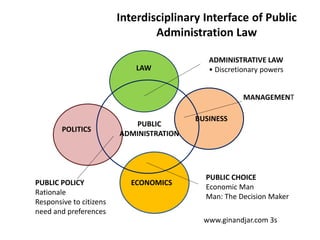
Interdisciplinary Interface of Public
Administration Law
LAW
POLITICS
BUSINESS
ECONOMICS
ADMINISTRATIVE LAW
• Discretionary powers
MANAGEMENT
PUBLIC POLICY
Rationale
Responsive to citizens
need and preferences
PUBLIC CHOICE
Economic Man
Man: The Decision Maker
PUBLIC
ADMINISTRATION
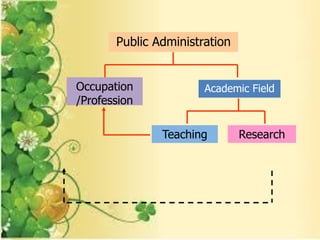
Occupation
/Profession
Academic Field
ResearchTeaching
Public Administration
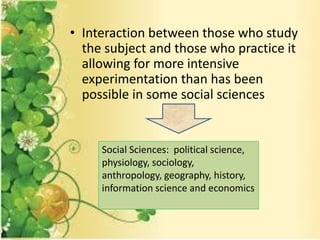
• Interaction between those who study
the subject and those who practice it
allowing for more intensive
experimentation than has been
possible in some social sciences
Social Sciences: political science,
physiology, sociology,
anthropology, geography, history,
information science and economics
• F.K. Medikus advocated
“cameralism” and claimed that it
should be treated as an
autonomous field of study of great
importance to the state. Cameral
science is designed to prepare
potential public officials for
government service.
Frank Goodnow (1900), the
“Father of American Public
Administration,” presented a
more meticulous examination of
politics-administration
dichotomy in his book, “Politics
and Administration” that
“supplanted the traditional
concern with the separation of
powers among the various
branches of the government.”
(Shafritz and Hyde 1997: 2)
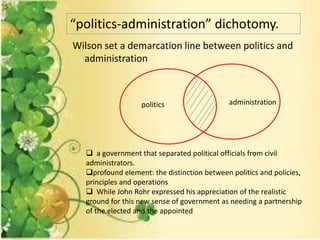
Wilson set a demarcation line between politics and
administration
“politics-administration” dichotomy.
 a government that separated political officials from civil
administrators.
profound element: the distinction between politics and policies,
principles and operations
 While John Rohr expressed his appreciation of the realistic
ground for this new sense of government as needing a partnership
of the elected and the appointed
politics administration
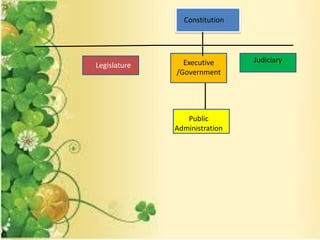
We have an executive branch with
the bureaucracy at its core.
We have a Philippine legislature.
We have a Philippine judiciary
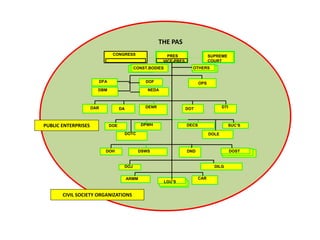
CONGRESS PRES
VICE-PRES
SUPREME
COURT
CONST.BODIES OTHERS
DOF
DBM NEDA
DFA OPS
DAR DA DENR DOT DTI
DOE DPWH
DOTC
DECS SUC’S
DOLE
DOH DSWS DND DOST
DOJ DILG
ARMM CAR
LGU’S
THE PAS
PUBLIC ENTERPRISES
CIVIL SOCIETY ORGANIZATIONS
Constitution
Executive
/Government
Legislature
Judiciary
Public
Administration
Leonard D. White. His book,
Introduction to the Study of Public
Administration, is one of the most
influential texts in public
administration to date. One of his
assumptions was that administration
is still an art. He, however,
recognized the ideal of transforming
it into a science. emphasizing the
managerial phase of administration.
1800s to 1950s. The roots of Public
Administration as a distinct field of study
can be traced from a classic essay, entitled
“The Study of Public Administration,”
which was written by Woodrow Wilson at
the height of Progressive Movement in the
US. It was in that essay with a serious
claim that public administration should be
a self-conscious, professional field.
Wilson suggested the distinction between
politics and administration i.e.
administration should be politics-free and
that “the field of administration is the
field of business
Woodrow Wilson’s 1887
“The Study of Administration”
Woodrow Wilson
Political Science Quarterly
July 1887
Wilson realizes that such a view of
administration is a hard sell to Americans,
who prefer democracy to “officialism.” Wilson
admonishes, need to rid themselves of “the
error of trying to do too much by vote. Self-
government does not consist in having a
hand in everything, any more than
housekeeping consists necessarily in
cooking dinner with one’s own hands”.
Wilson would replace amateur cooks
with professionals. Eventually the
entire household will be run by
professionals. The practice of self-
government through elected officials
will be lost as “considerate, paternal
government” fulfills all needs. The
master of the house will become
utterly dependent on his professional
followers.
The trained servants will tutor the people by
improving public opinion and thereby even
ultimately ruling them. The bureaucracy would
educate the electorate. Wilson modestly claims
that his ideal is “a civil service cultured and self-
sufficient enough to act with sense and vigor,
and yet so intimately connected with the
popular thought, by means of elections and
constant public counsel, as to find arbitrariness
of class spirit quite out of the question”.
Alex Brillantes, Jr. and Maricel Fernandez Is there a
Philippine Public Administration or Better Still, for
whom is Public Administration? UP NCPAG June,
2008
Reference
www.ginandjar.com

Integration of Module 1 FDM 201 PPDM Week 2

  • 1.
    Meaning, Nature, Scopeand Significance of Public Administration Prof. Josefina B. Bitonio, DPA FDM 201 Principles and Processes of Development Management
  • 2.
    Public Administration isa field with a rich heritage. Objective: To promote superior understanding of government and its relationship with the society it governs as well as to encourage public policies more responsive to social needs and institute managerial practice attuned to effectiveness, efficiency, and the deeper human requisites of the citizenry www.ginandjar.com
  • 3.
    PRAXIS. From itsbeginning, the discipline has also enjoyed extensive interaction between those who practice it allowing more intensive experimentation than has been possible in some social sciences. www.ginandjar.com 3s
  • 4.
    www.ginandjar.com 3s Interdisciplinary Interfaceof Public Administration Law LAW POLITICS BUSINESS ECONOMICS ADMINISTRATIVE LAW • Discretionary powers MANAGEMENT PUBLIC POLICY Rationale Responsive to citizens need and preferences PUBLIC CHOICE Economic Man Man: The Decision Maker PUBLIC ADMINISTRATION
  • 5.
  • 6.
    • Interaction betweenthose who study the subject and those who practice it allowing for more intensive experimentation than has been possible in some social sciences Social Sciences: political science, physiology, sociology, anthropology, geography, history, information science and economics
  • 7.
    • F.K. Medikusadvocated “cameralism” and claimed that it should be treated as an autonomous field of study of great importance to the state. Cameral science is designed to prepare potential public officials for government service.
  • 8.
    Frank Goodnow (1900),the “Father of American Public Administration,” presented a more meticulous examination of politics-administration dichotomy in his book, “Politics and Administration” that “supplanted the traditional concern with the separation of powers among the various branches of the government.” (Shafritz and Hyde 1997: 2)
  • 9.
    Wilson set ademarcation line between politics and administration “politics-administration” dichotomy.  a government that separated political officials from civil administrators. profound element: the distinction between politics and policies, principles and operations  While John Rohr expressed his appreciation of the realistic ground for this new sense of government as needing a partnership of the elected and the appointed politics administration
  • 10.
    We have anexecutive branch with the bureaucracy at its core. We have a Philippine legislature. We have a Philippine judiciary
  • 11.
    CONGRESS PRES VICE-PRES SUPREME COURT CONST.BODIES OTHERS DOF DBMNEDA DFA OPS DAR DA DENR DOT DTI DOE DPWH DOTC DECS SUC’S DOLE DOH DSWS DND DOST DOJ DILG ARMM CAR LGU’S THE PAS PUBLIC ENTERPRISES CIVIL SOCIETY ORGANIZATIONS
  • 12.
  • 13.
    Leonard D. White.His book, Introduction to the Study of Public Administration, is one of the most influential texts in public administration to date. One of his assumptions was that administration is still an art. He, however, recognized the ideal of transforming it into a science. emphasizing the managerial phase of administration.
  • 14.
    1800s to 1950s.The roots of Public Administration as a distinct field of study can be traced from a classic essay, entitled “The Study of Public Administration,” which was written by Woodrow Wilson at the height of Progressive Movement in the US. It was in that essay with a serious claim that public administration should be a self-conscious, professional field. Wilson suggested the distinction between politics and administration i.e. administration should be politics-free and that “the field of administration is the field of business Woodrow Wilson’s 1887
  • 15.
    “The Study ofAdministration” Woodrow Wilson Political Science Quarterly July 1887 Wilson realizes that such a view of administration is a hard sell to Americans, who prefer democracy to “officialism.” Wilson admonishes, need to rid themselves of “the error of trying to do too much by vote. Self- government does not consist in having a hand in everything, any more than housekeeping consists necessarily in cooking dinner with one’s own hands”.
  • 16.
    Wilson would replaceamateur cooks with professionals. Eventually the entire household will be run by professionals. The practice of self- government through elected officials will be lost as “considerate, paternal government” fulfills all needs. The master of the house will become utterly dependent on his professional followers.
  • 17.
    The trained servantswill tutor the people by improving public opinion and thereby even ultimately ruling them. The bureaucracy would educate the electorate. Wilson modestly claims that his ideal is “a civil service cultured and self- sufficient enough to act with sense and vigor, and yet so intimately connected with the popular thought, by means of elections and constant public counsel, as to find arbitrariness of class spirit quite out of the question”.
  • 18.
    Alex Brillantes, Jr.and Maricel Fernandez Is there a Philippine Public Administration or Better Still, for whom is Public Administration? UP NCPAG June, 2008 Reference www.ginandjar.com