The Highs and Lows of Integrating
Simulation into an Educational
Program
Luke Wainwright – Simulation Coordinator
Jesse Spurr – Simulation Educator
How we evolved
•
•
•
•
•
•

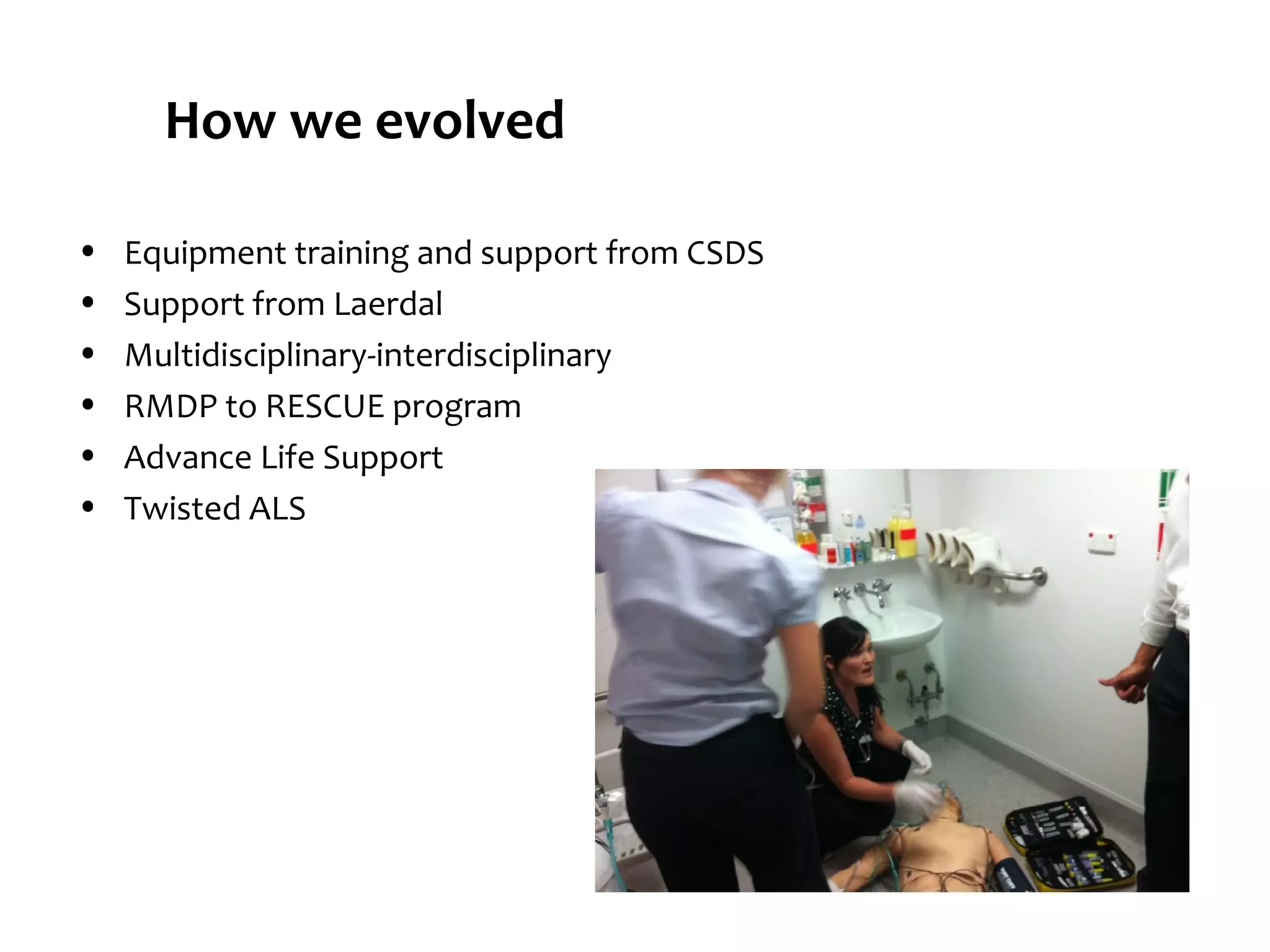
Equipment training and support from CSDS
Support from Laerdal
Multidisciplinary-interdisciplinary
RMDP to RESCUE program
Advance Life Support
Twisted ALS
Brief History of Simulation
in Healthcare
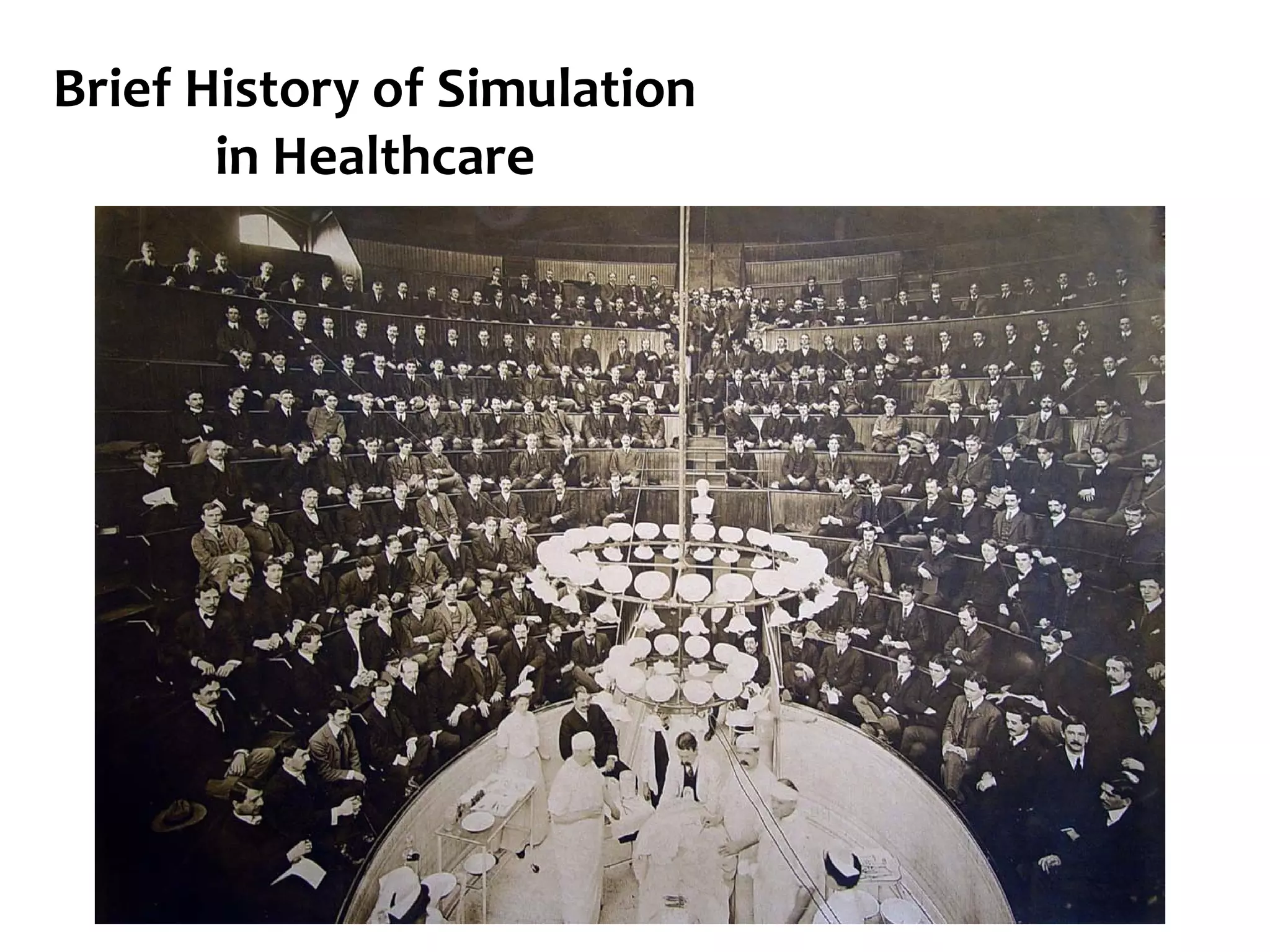
Brief History of Simulation
in Healthcare
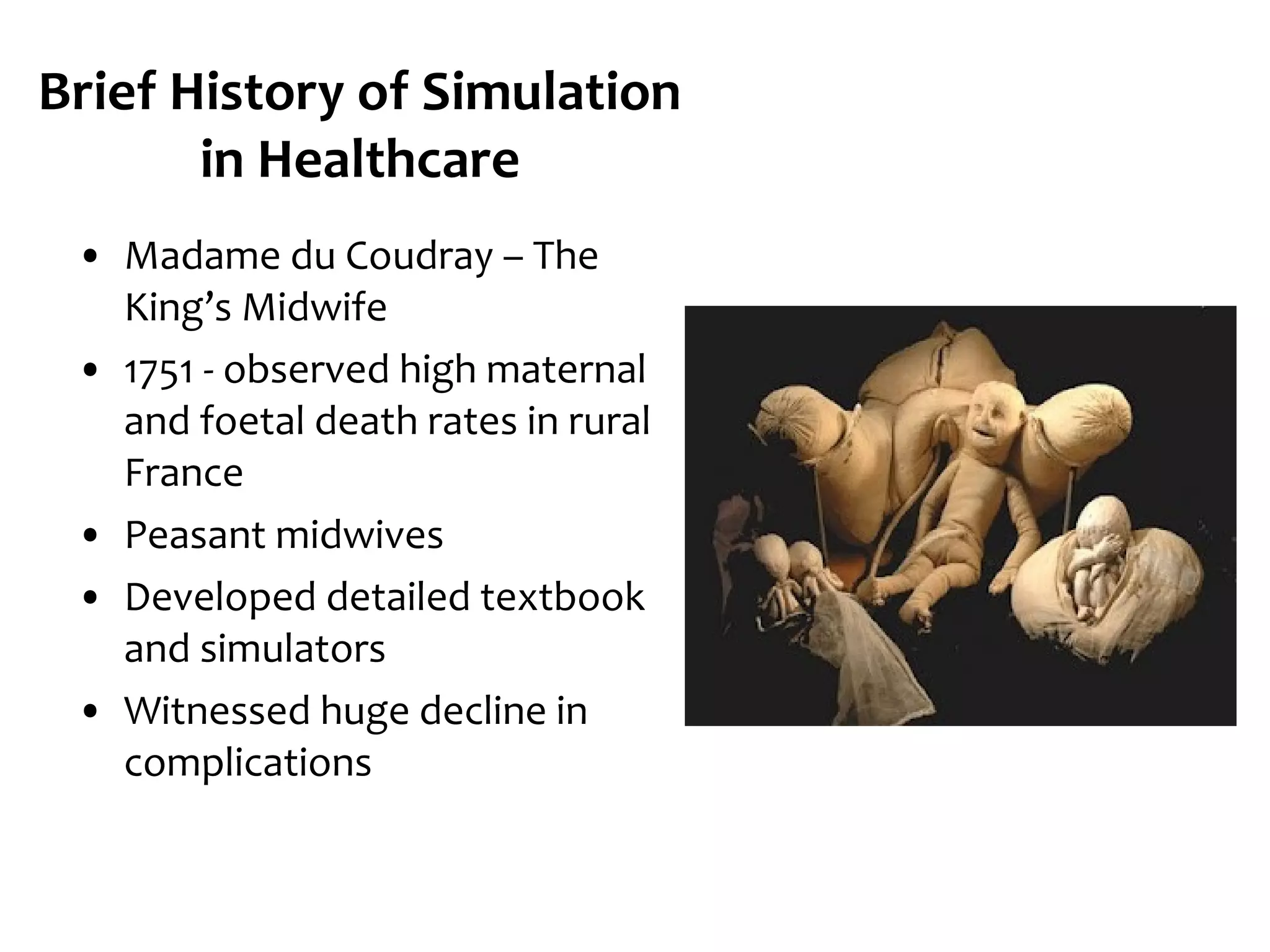
• Madame du Coudray – The
King’s Midwife
• 1751 - observed high maternal
and foetal death rates in rural
France
• Peasant midwives
• Developed detailed textbook
and simulators
• Witnessed huge decline in
complications
Negative Experiences
with Simulation

• “I hate role play”
• “We’re too busy”
• “That wasn’t realistic”
• “It’s just a dummy”
• “I wouldn’t normally do
that with a real patient”
More reasons not to…
• Lack of management buy in
• Concerns for other patients witnessing
training
How we have started to
overcome these issues
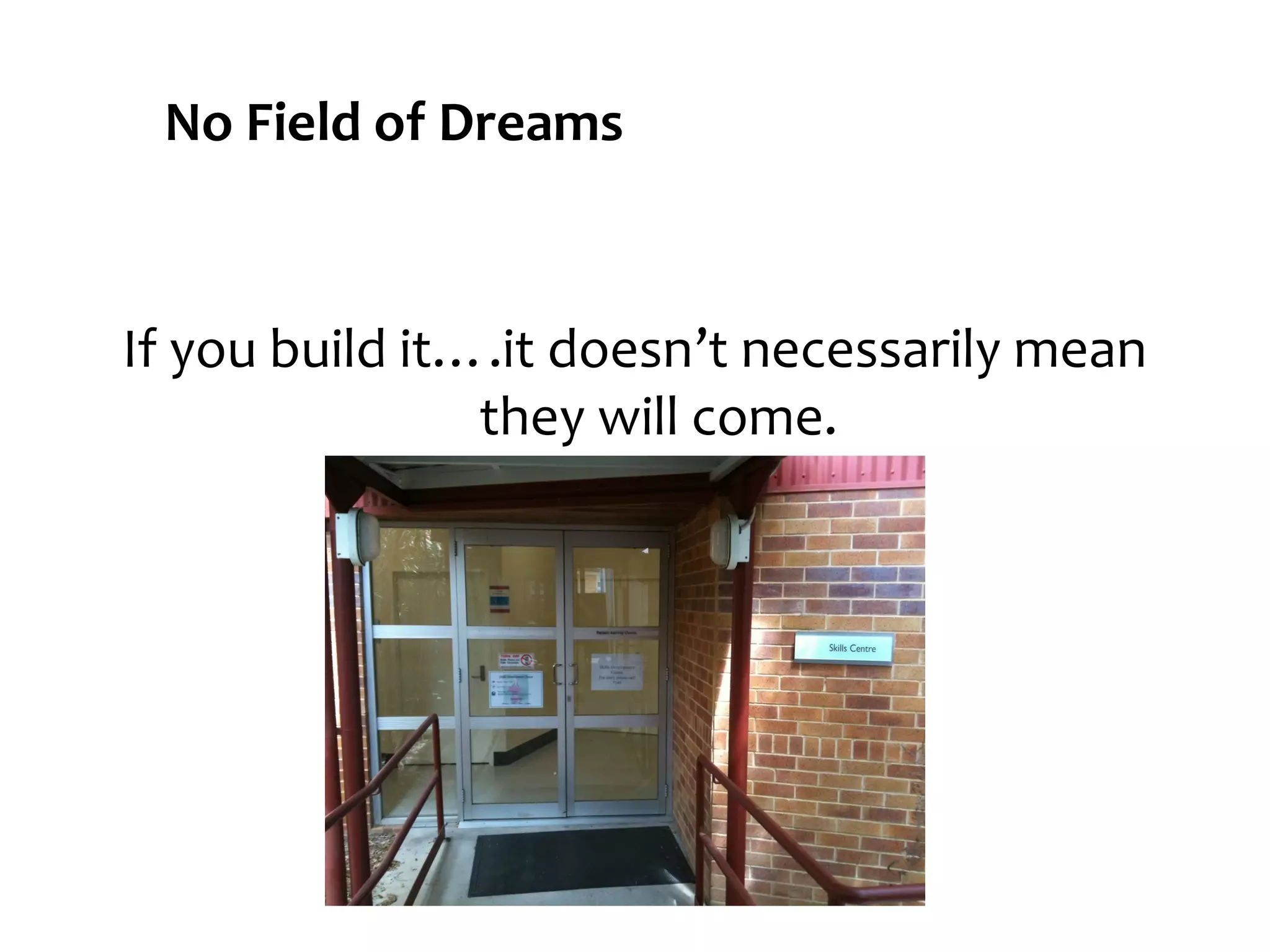
No Field of Dreams

If you build it….it doesn’t necessarily mean
they will come.
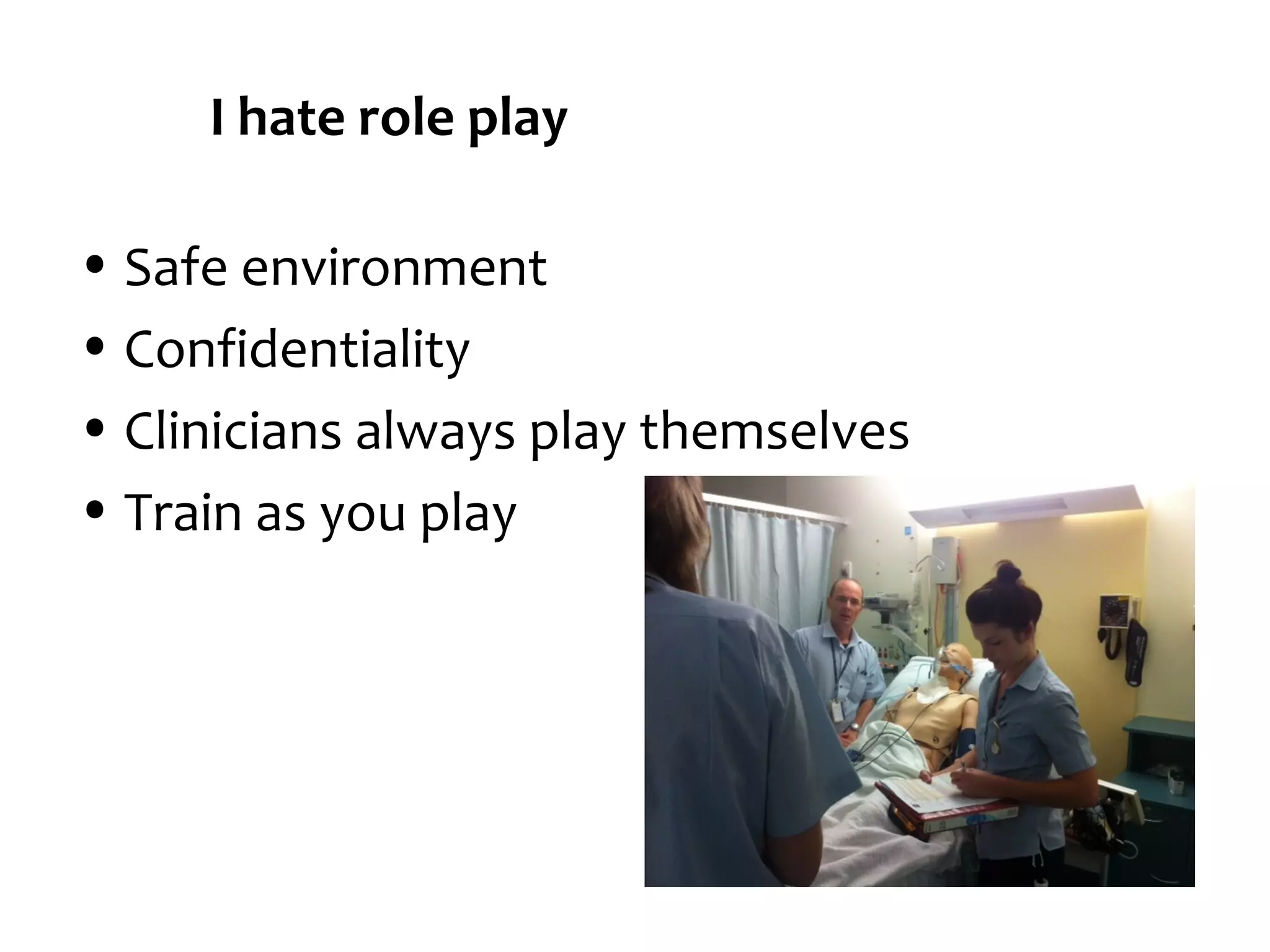
I hate role play
• Safe environment
• Confidentiality
• Clinicians always play themselves
• Train as you play
We’re too busy
• In situ scenarios done at handover time,
cross over of staff and a traditional time for
education
• Own time if they are enthusiastic
• Using professional development leave
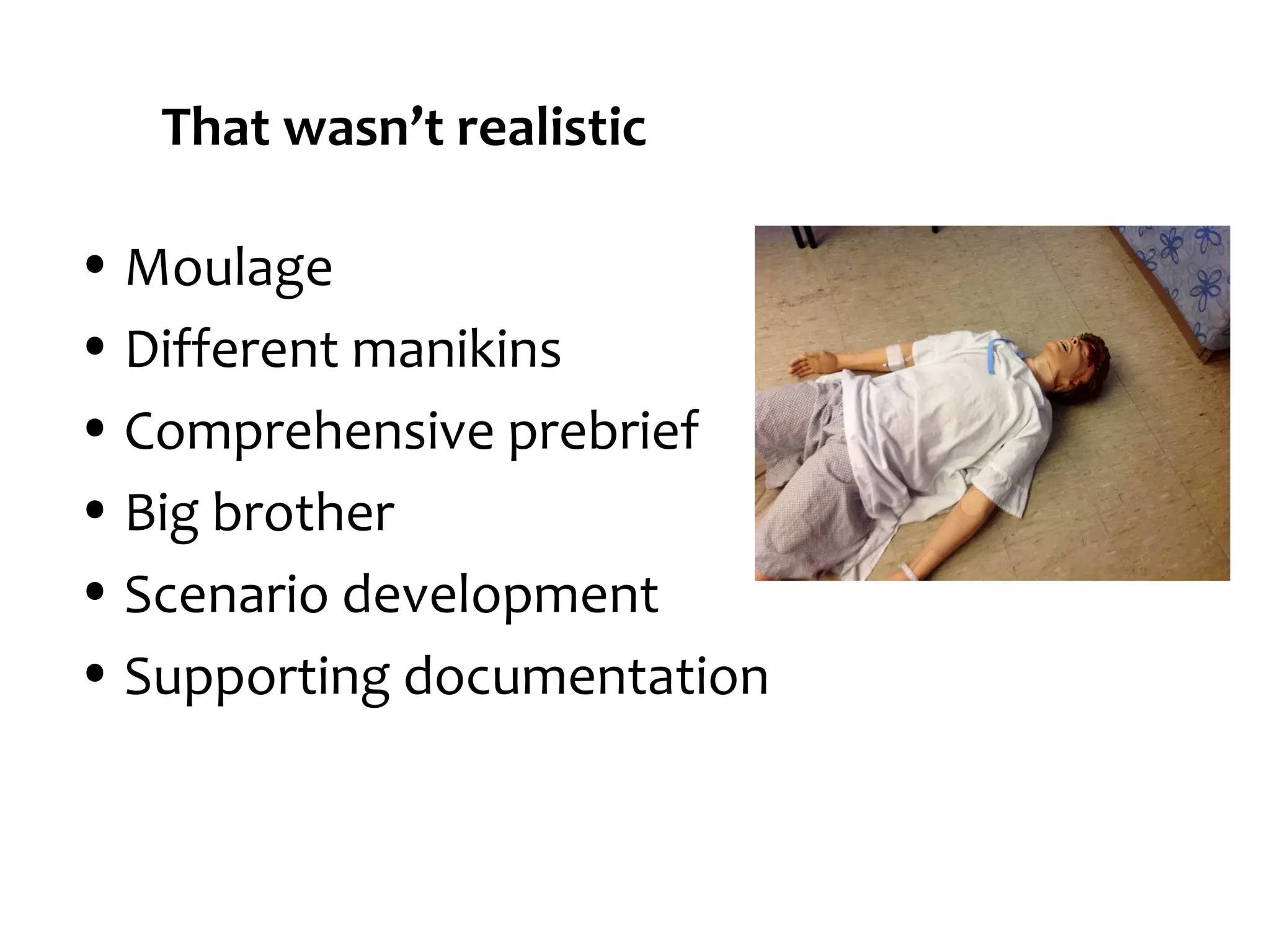
That wasn’t realistic
• Moulage
• Different manikins
• Comprehensive prebrief
• Big brother
• Scenario development
• Supporting documentation
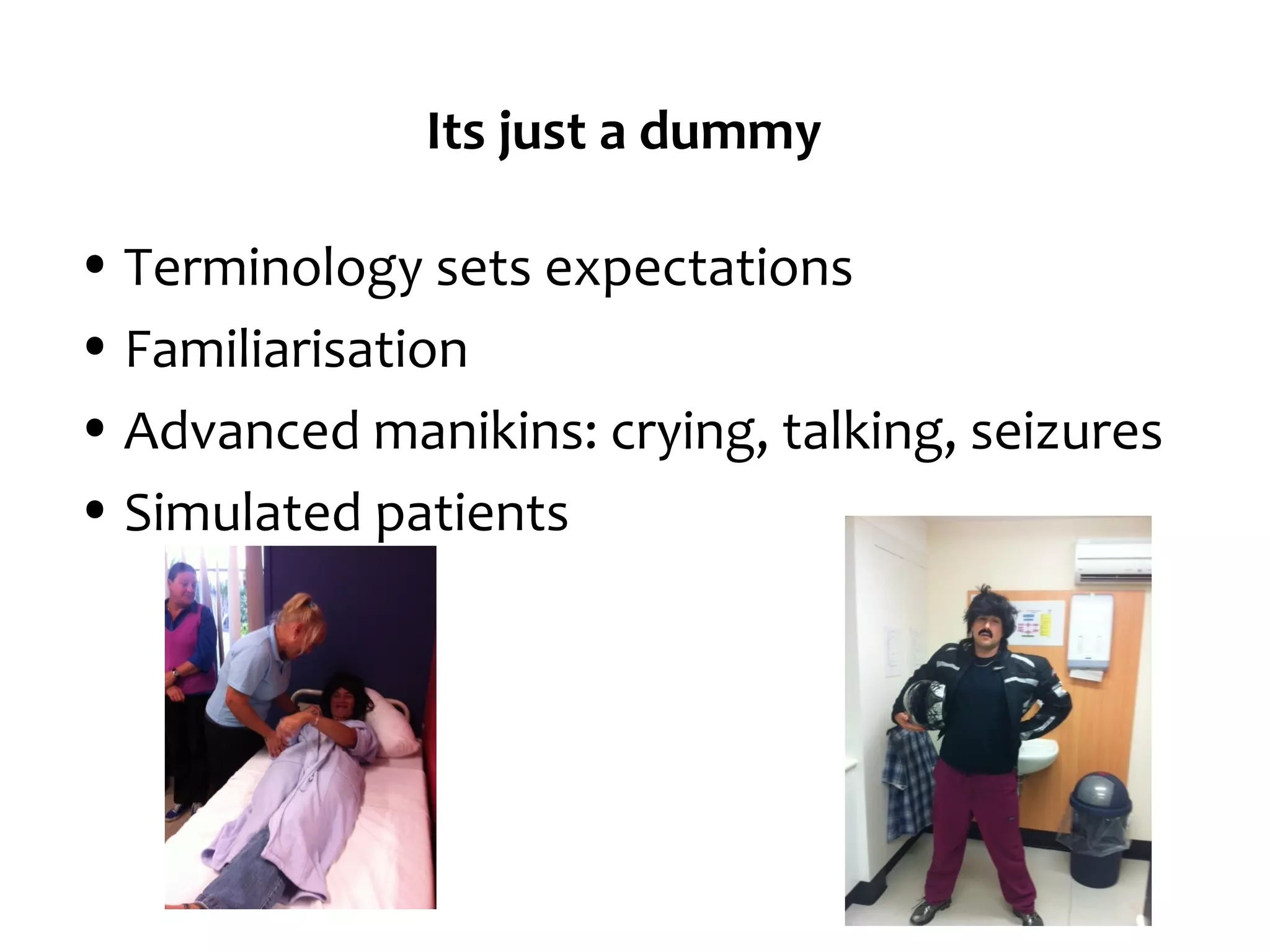
Its just a dummy
• Terminology sets expectations
• Familiarisation
• Advanced manikins: crying, talking, seizures
• Simulated patients
I wouldn’t do that in real life
• Scenario development – vital
• Know your evidence!
• Discuss own experiences in debrief
• Encourage reflection of participants and
faculty
• Debrief
Lack of management buy in
•
•
•
•

Develop a community of practice
Do it for free (the drug dealer business model)
Minimise impact to department
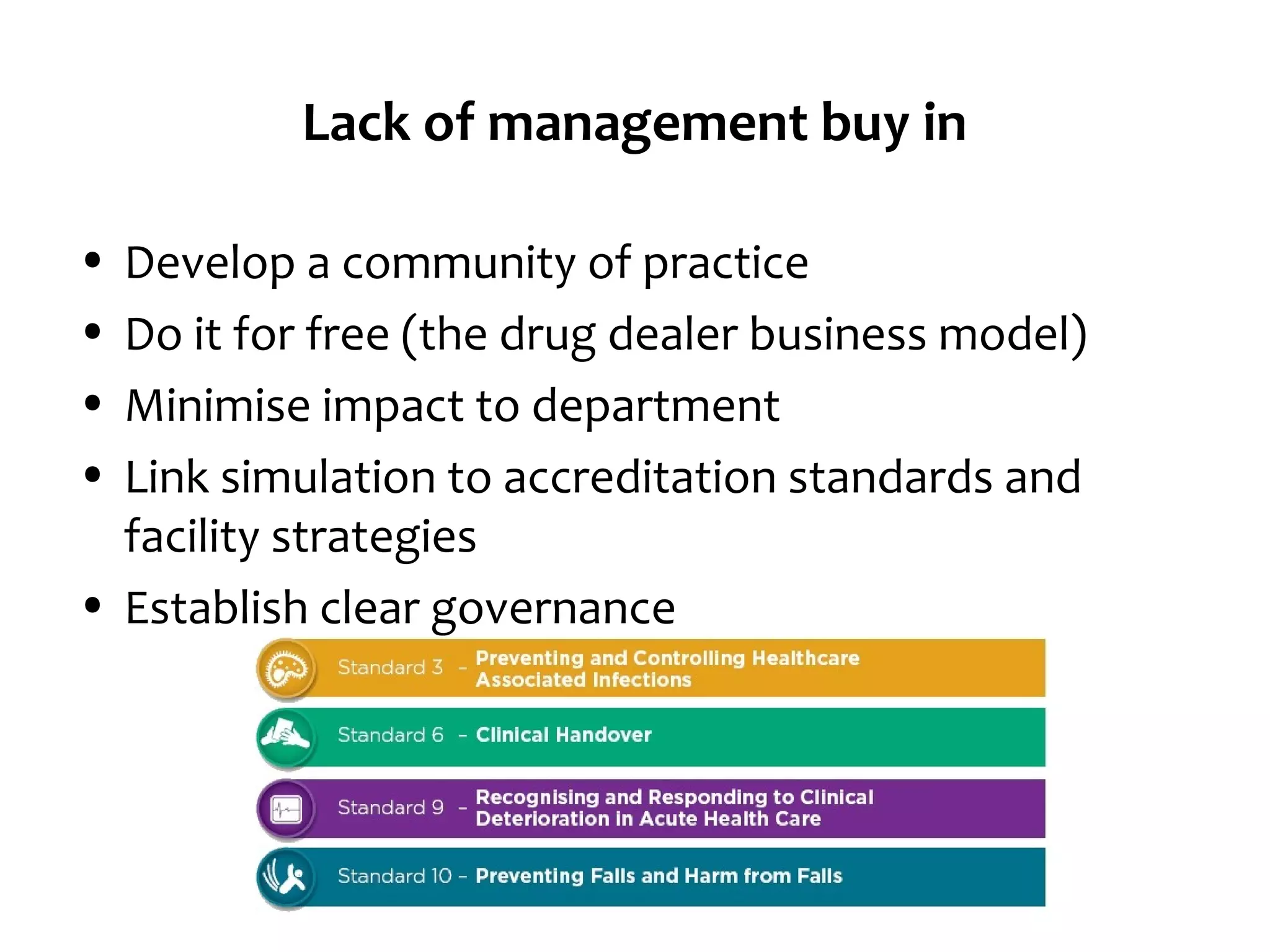
Link simulation to accreditation standards and
facility strategies
• Establish clear governance
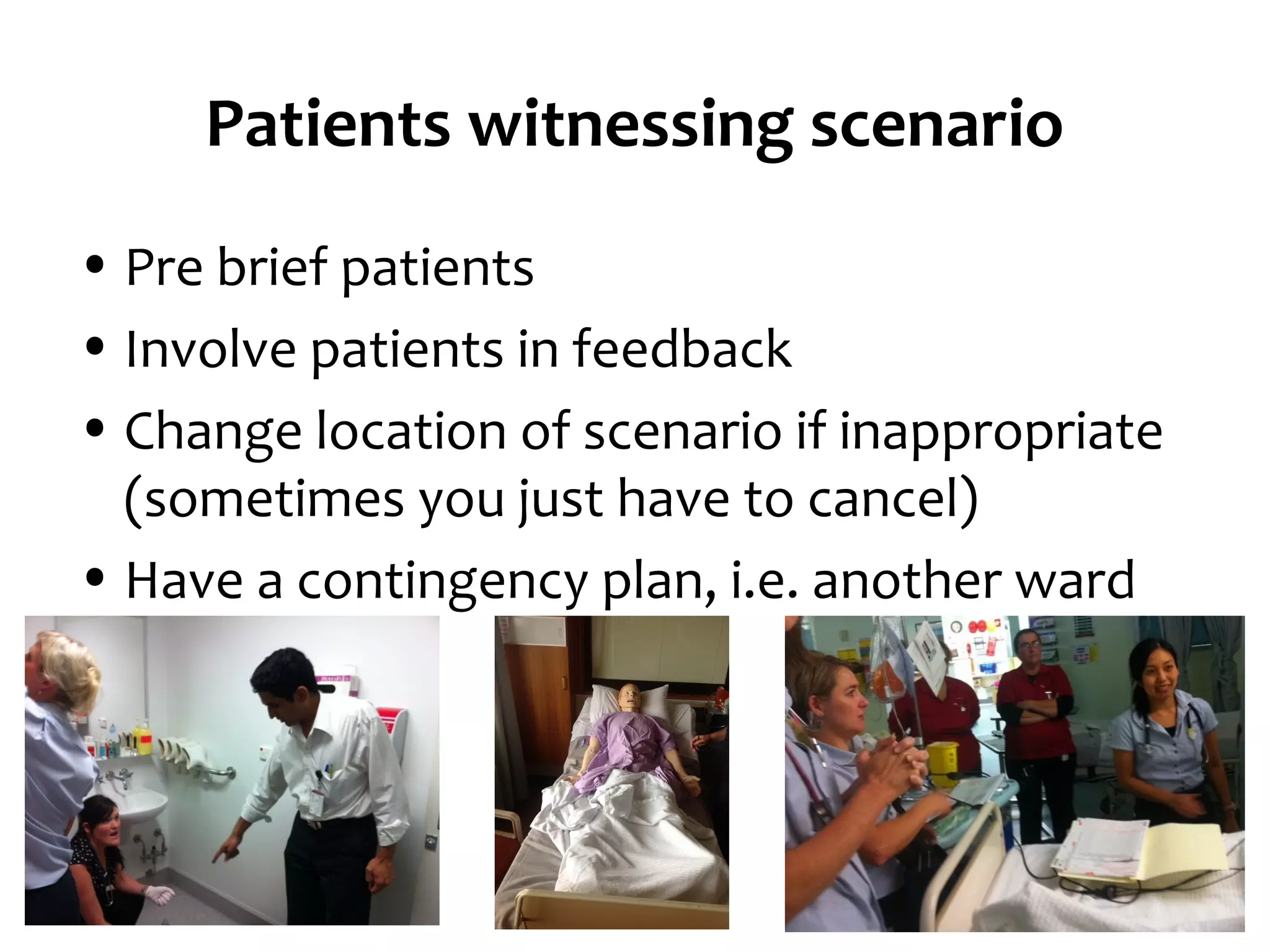
Patients witnessing scenario
• Pre brief patients
• Involve patients in feedback
• Change location of scenario if inappropriate
(sometimes you just have to cancel)
• Have a contingency plan, i.e. another ward
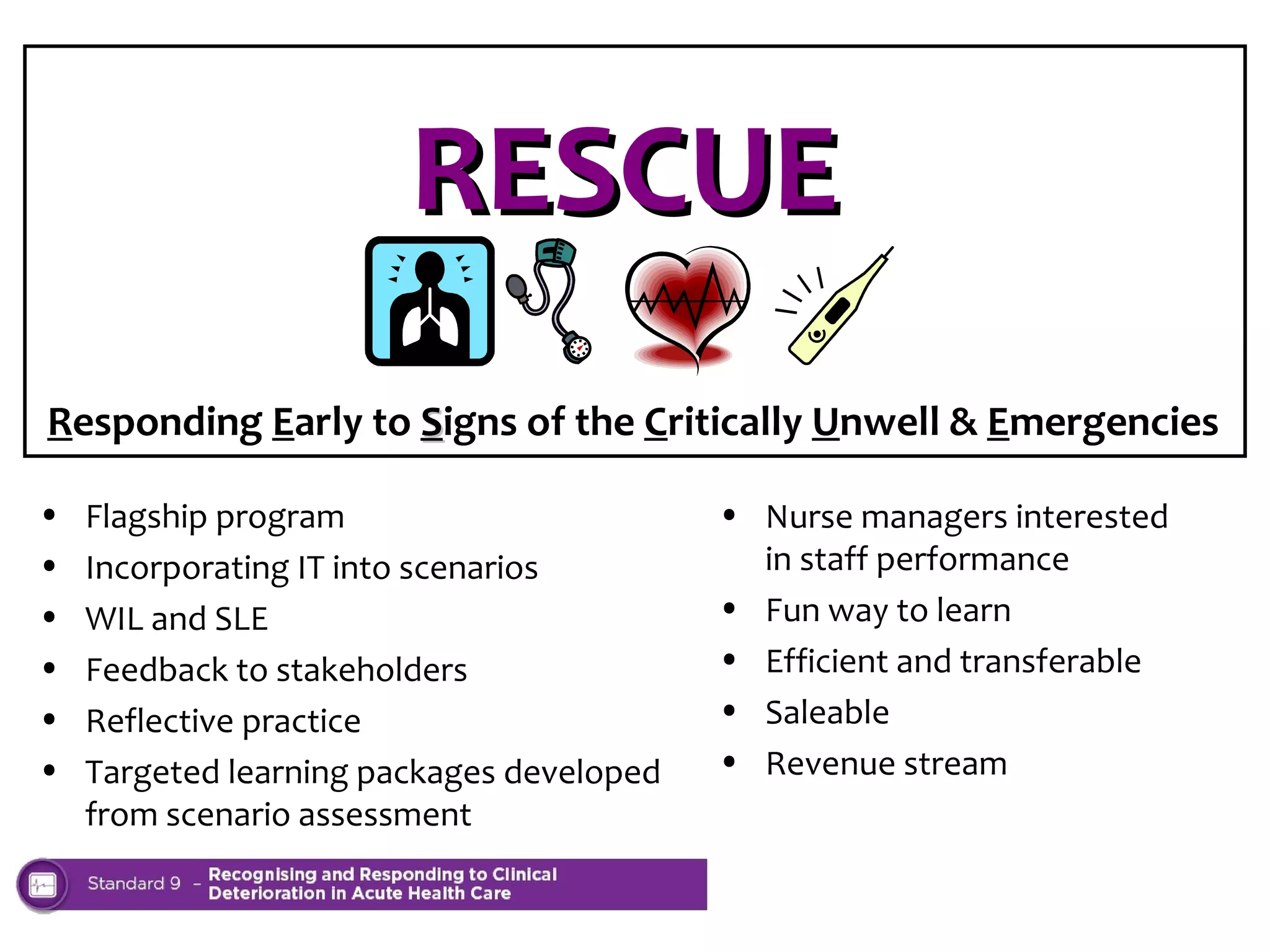
RESCUE
Responding Early to Signs of the Critically Unwell & Emergencies
•
•
•
•
•
•

Flagship program
Incorporating IT into scenarios
WIL and SLE
Feedback to stakeholders
Reflective practice
Targeted learning packages developed
from scenario assessment

• Nurse managers interested
in staff performance
• Fun way to learn
• Efficient and transferable
• Saleable
• Revenue stream
The future
• “Simulation sans
frontieres”
• Improved fidelity,
moulage and scenarios
• Technology
• Creativity
• Education methodology
• Research and evidence
based practice
Top 5
1. Leave egos at the door and be prepared to
fail, recognise failure and learn from it
2. Start with learning outcomes and build
your scenarios around these
3. Create the highest fidelity possible
4. Give participants positive experiences in
simulated learning
5. The learning happens in the debrief
Questions, comments, feedback
(How did it feel? What went well? What would
you do different next time?)

Integrating In Situ Simulation

  • 1.
    The Highs andLows of Integrating Simulation into an Educational Program Luke Wainwright – Simulation Coordinator Jesse Spurr – Simulation Educator
  • 3.
    How we evolved • • • • • • Equipmenttraining and support from CSDS Support from Laerdal Multidisciplinary-interdisciplinary RMDP to RESCUE program Advance Life Support Twisted ALS
  • 4.
    Brief History ofSimulation in Healthcare
  • 5.
    Brief History ofSimulation in Healthcare • Madame du Coudray – The King’s Midwife • 1751 - observed high maternal and foetal death rates in rural France • Peasant midwives • Developed detailed textbook and simulators • Witnessed huge decline in complications
  • 6.
    Negative Experiences with Simulation •“I hate role play” • “We’re too busy” • “That wasn’t realistic” • “It’s just a dummy” • “I wouldn’t normally do that with a real patient”
  • 7.
    More reasons notto… • Lack of management buy in • Concerns for other patients witnessing training
  • 8.
    How we havestarted to overcome these issues
  • 9.
    No Field ofDreams If you build it….it doesn’t necessarily mean they will come.
  • 10.
    I hate roleplay • Safe environment • Confidentiality • Clinicians always play themselves • Train as you play
  • 11.
    We’re too busy •In situ scenarios done at handover time, cross over of staff and a traditional time for education • Own time if they are enthusiastic • Using professional development leave
  • 12.
    That wasn’t realistic •Moulage • Different manikins • Comprehensive prebrief • Big brother • Scenario development • Supporting documentation
  • 13.
    Its just adummy • Terminology sets expectations • Familiarisation • Advanced manikins: crying, talking, seizures • Simulated patients
  • 14.
    I wouldn’t dothat in real life • Scenario development – vital • Know your evidence! • Discuss own experiences in debrief • Encourage reflection of participants and faculty • Debrief
  • 15.
    Lack of managementbuy in • • • • Develop a community of practice Do it for free (the drug dealer business model) Minimise impact to department Link simulation to accreditation standards and facility strategies • Establish clear governance
  • 16.
    Patients witnessing scenario •Pre brief patients • Involve patients in feedback • Change location of scenario if inappropriate (sometimes you just have to cancel) • Have a contingency plan, i.e. another ward
  • 17.
    RESCUE Responding Early toSigns of the Critically Unwell & Emergencies • • • • • • Flagship program Incorporating IT into scenarios WIL and SLE Feedback to stakeholders Reflective practice Targeted learning packages developed from scenario assessment • Nurse managers interested in staff performance • Fun way to learn • Efficient and transferable • Saleable • Revenue stream
  • 18.
    The future • “Simulationsans frontieres” • Improved fidelity, moulage and scenarios • Technology • Creativity • Education methodology • Research and evidence based practice
  • 19.
    Top 5 1. Leaveegos at the door and be prepared to fail, recognise failure and learn from it 2. Start with learning outcomes and build your scenarios around these 3. Create the highest fidelity possible 4. Give participants positive experiences in simulated learning 5. The learning happens in the debrief
  • 20.
    Questions, comments, feedback (Howdid it feel? What went well? What would you do different next time?)

Editor's Notes

  • #8 Buy in – some managers give impression that they are doing us a favour by letting us put on a simulation Link program There ’s no time – working with what we have got Concerns for patients – pre-brief patients and they are quite excited