Deirdre Murphy SMACC DUB
–“Bad Blood “ Taylor Swift
“Now we got problems, and I don't think we can
solve them.”
Limulus amoebocyte lysate
Inflammation Coagulation
In the ICU there is a 32 y.o.
man…
Type 1 DM
Septic shock, pneumonia
hypotensive, lactate 5.5 mmol/l
High dose vasopressor and inotrope
Progressive symmetrical duskiness of all limbs-
necrosis of fingers and distal feet
Labs..
‘flu A
Pneumococcal urine antigen
FBE
Hb 138
WCC 1.07
Plats 7
Marked red cell crenation,
L shifted toxic neutrophils
Severe thombocytopenia
Thrombocytopenia
severity of illness
marker
multifactorial
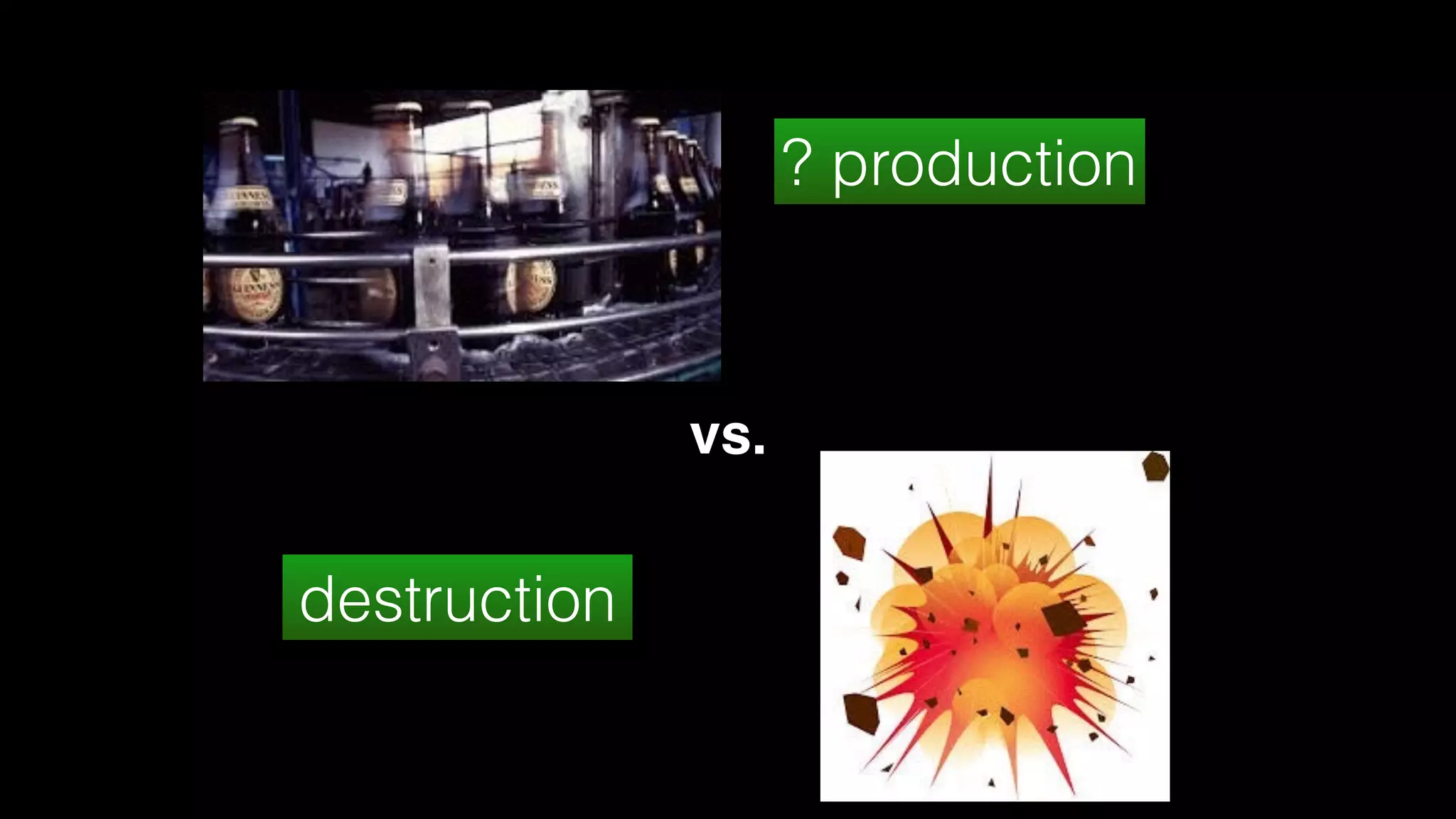
vs.
destruction
? production
Production
13-60%
Of prognostic significance
Destruction
Marrow failure
primary or secondary
(suppression)
Idiopathic aplastic anemia
Malnutrition
Sepsis
Drugs
Mechanical
IABP, ECMO, CRRT
Microangiopathic
TTP, DIC, SBE, vasculitis
Drugs
splenic pooling
Passive
Splenomegaly
Cell mediated
Haemophagocytosis
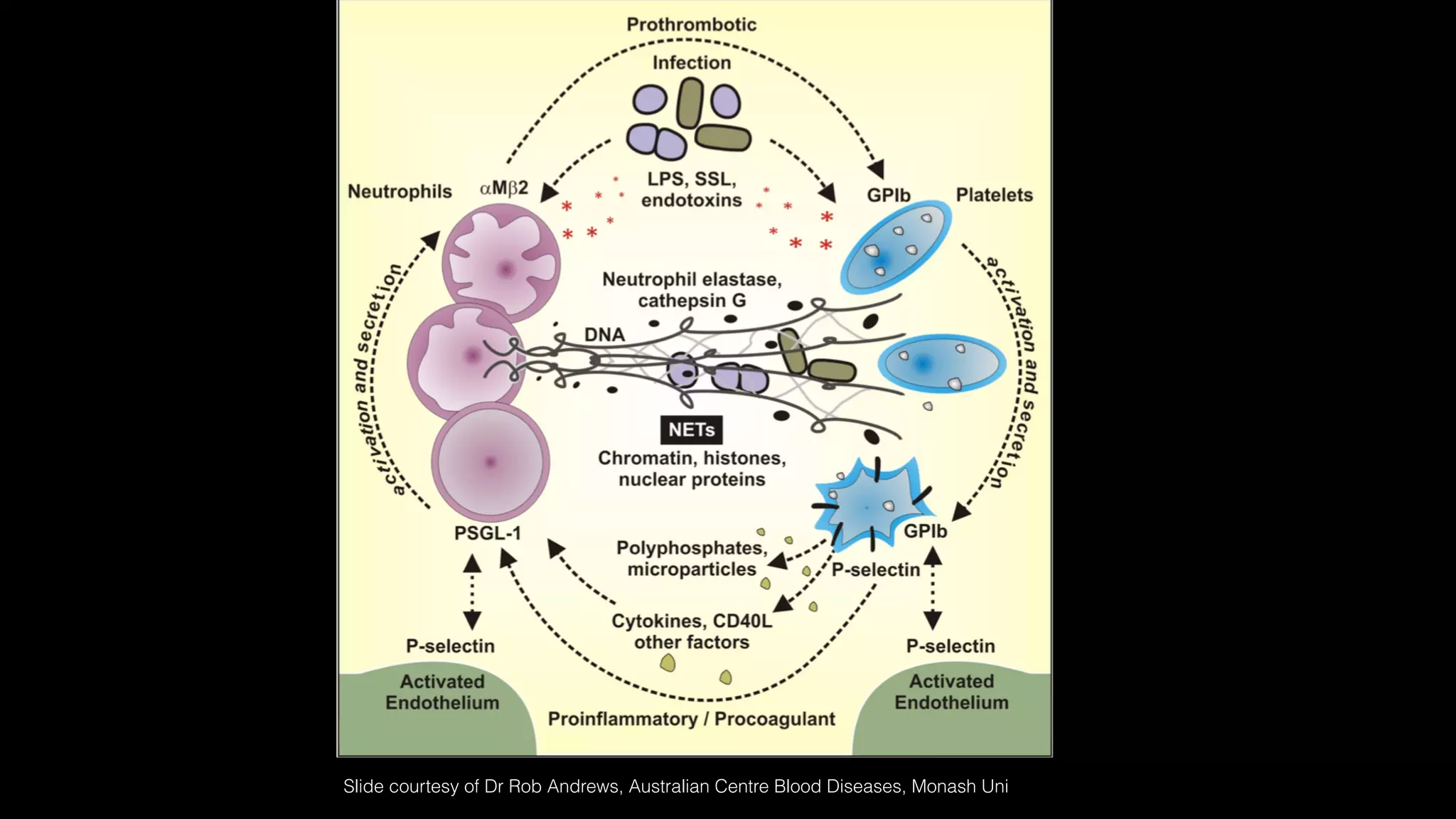
Platelets in sepsis
Rapidly localise to site of infection,
and migrate to liver, lungs
Cell-cell contact- adhesion
molecules
Antimicrobial proteins bind bateria
and viruses
Toll like receptors - PAMPS
NET(osis)
Many mechanisms by which platelets in sepsis
contribute to inflammation
NETs
Neutrophil Extracellular Traps
Novel pathway by which bacteria trapped in the
vasculature
Slide courtesy of Dr Rob Andrews, Australian Centre Blood Diseases, Monash Uni
COAGs..
INR 4.2
PT 40
aPTT 80
Fib 3.8
D Dimers 16.97
TCT normal (= no heparin)
INR 4.2
PT 40
aPTT 80
Fib 3.8
D Dimers 16.97
INR 4.2
PT 40
aPTT 80
Fib 3.8
D Dimers 16.97
Fibrinogen is an acute phase protein-
high fibrinogen does not rule out
fibrinolysis
D.I.C.
Death Is Coming
DIC
Clinico-pathological diagnosis (like sepsis- not a
distinct entity)
Fibrin deposition in organs- organ failure
Coagulopathy
Several scoring systems
Levi et al BJH 2009 145:24-33. Guidelines for the diagnosis and management of DIC
ISTH
D.I.C.
Presence of DIC associated with mortality
Increasing score
Repeated score clinically useful
Wada et al J Intensive Care 2014
NETS can
cause this
DIC
Treat the cause
Treatment
?Activated protein C
?Tissue factor pathway inhibitor
Avoid prothrombotics- tranexamic acid, prothrombinex
-FFP safe- balanced
? heparin
Other? ? AT replacement
No reduction in
death
inc bleeding
A 52 y.o. female presents to
the Emergency Deparment..
presented with confusion, nausea, abdominal
pain and vomiting
in ED found to have renal impairment and
abnormal labs
Labs
Hb 100
Hct 0.29
WCC 11.6
Plats 9
INR 1.1
PT 14.3
aPTT 29.2
Fib 4.4
haptoglobin <0.08
urea 27.8
creat 246
LDH 1635 u/l (n 120-250)
fragments
thrombocytopenia
keratocyte
helmet
cell
schistocyte
microspherocytes
Fragmentation-schistocytes ++- helmet
cells, triangular cells . Polychromasia.
Nucleated red cells
MAHA
microangiopathic haemolytic anaemia
Thrombotic
microangiopathies
Thrombocytopaenia Microangiopathic haemolysis
(MAHA)+
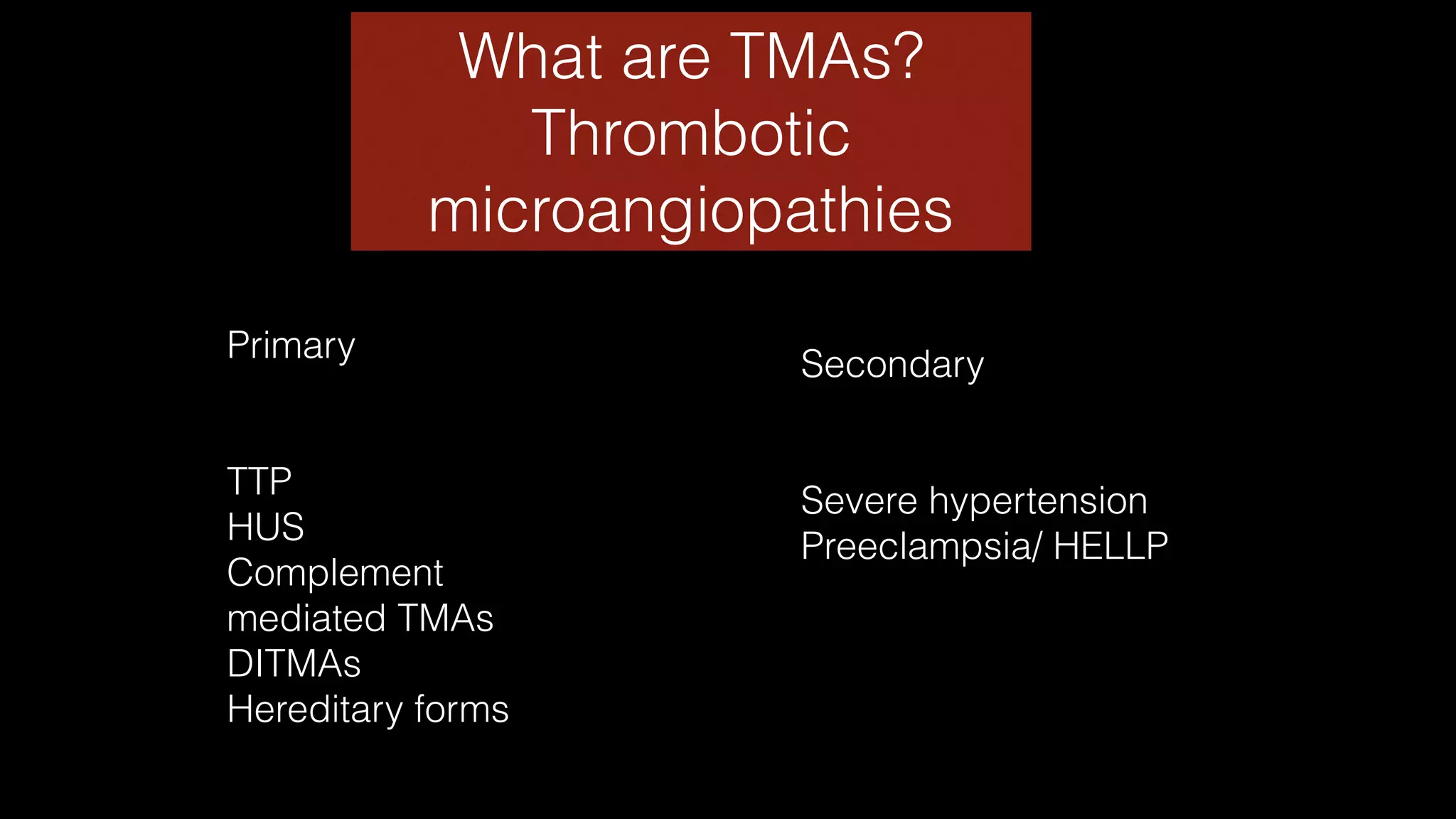
What are TMAs?
Thrombotic
microangiopathies
Primary
TTP
HUS
Complement
mediated TMAs
DITMAs
Hereditary forms
Secondary
Severe hypertension
Preeclampsia/ HELLP
DITMAS
Drug induced
thrombotic micro-
angiopathies
e.g.
CNIs
Cocaine
CTZ
Quinine (may be
abrupt onset)
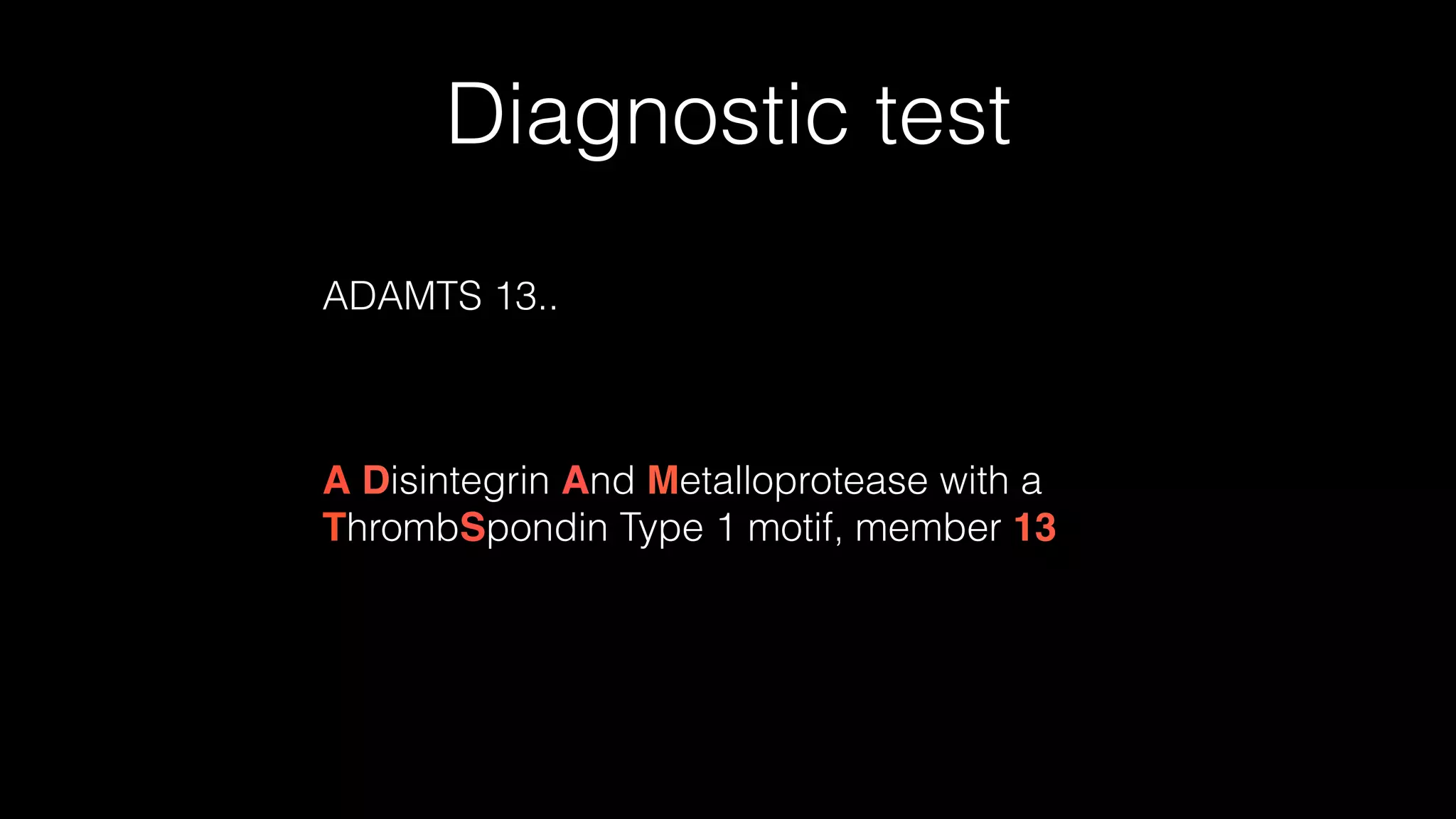
Diagnostic test
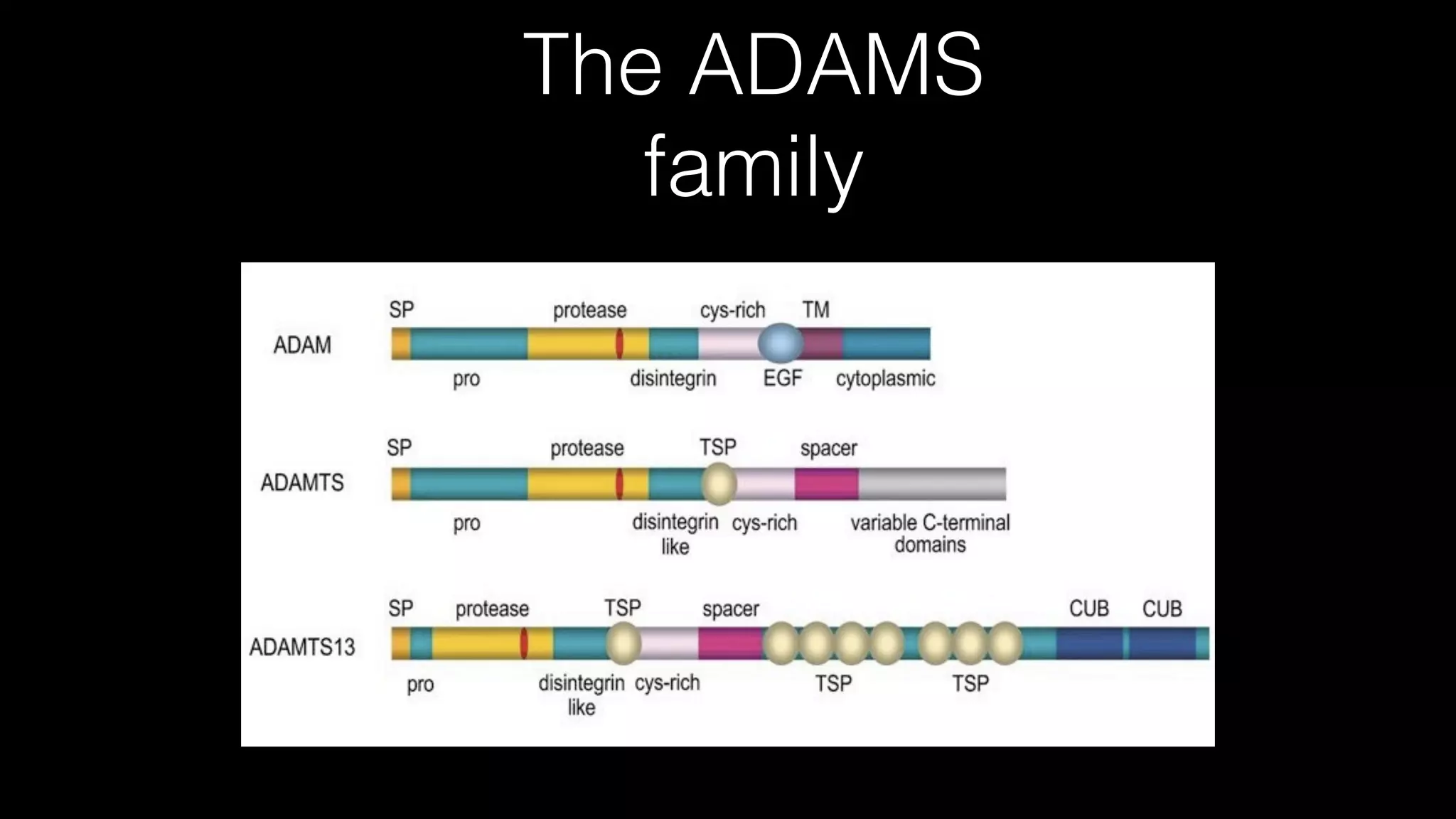
ADAMTS 13..
A Disintegrin And Metalloprotease with a
ThrombSpondin Type 1 motif, member 13
The ADAMS
family
Moake, Sem in Hematol, 2004
additional tests..
Stool microscopy : no EHEC
Shiga toxin negative
No recent drugs
Dx TTP
Urgent Plasma Exchange
(mortality 90% untreated)
Rationale for treatment
Steroids
Meanwhile in ICU…
The intensivist on duty is worried about a patient
on VA ECMO for acute myocarditis
The patient has just clotted their ECMO pump..
Pump Thrombosis
Noisy pump
intravascular haemolysis… renal failure
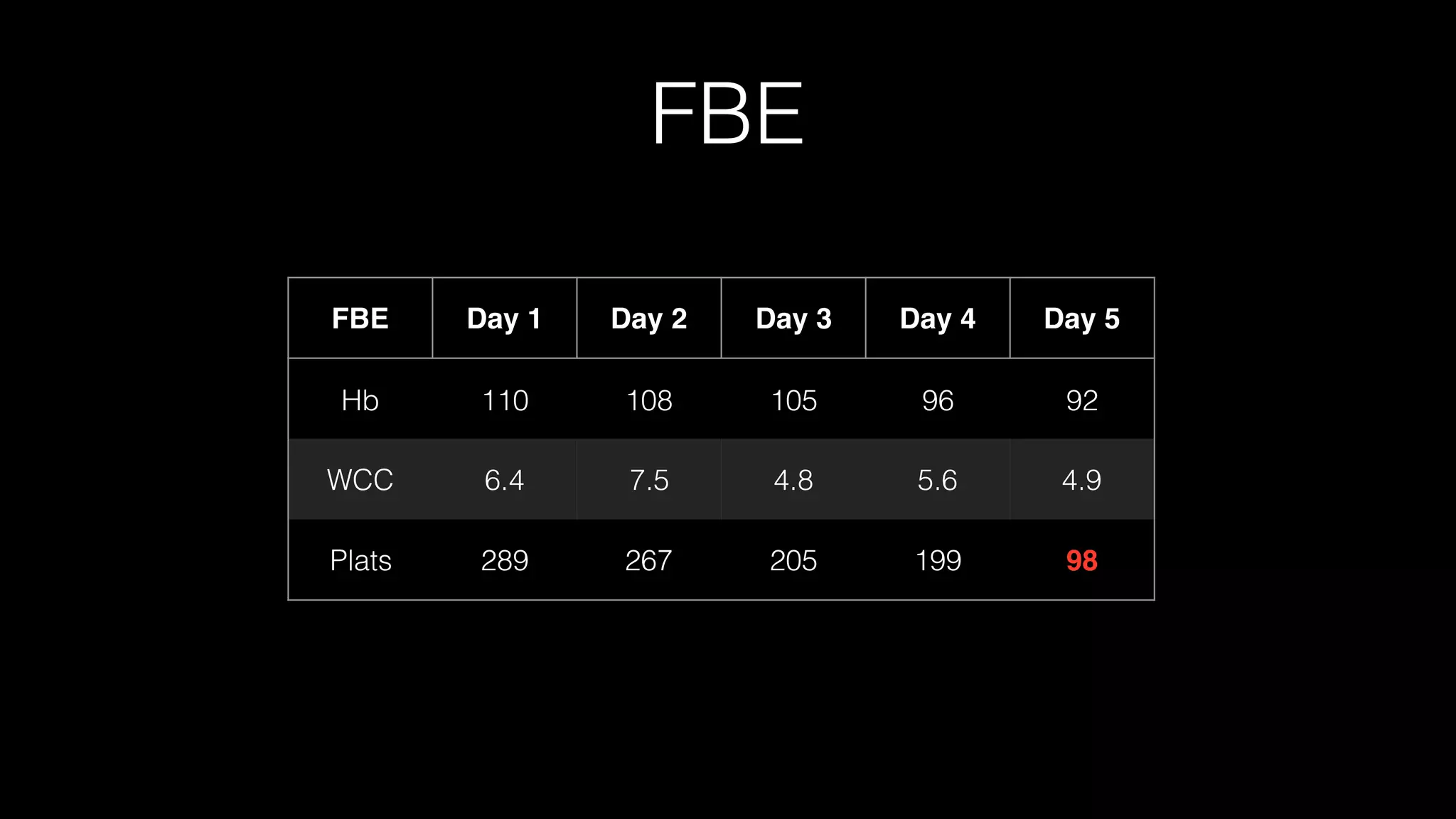
FBE
FBE Day 1 Day 2 Day 3 Day 4 Day 5
Hb 110 108 105 96 92
WCC 6.4 7.5 4.8 5.6 4.9
Plats 289 267 205 199 98
HIT
Rare, difficult to diagnose, heparin dependant pro-
thrombotic disorder
Antibody to platelet factor 4
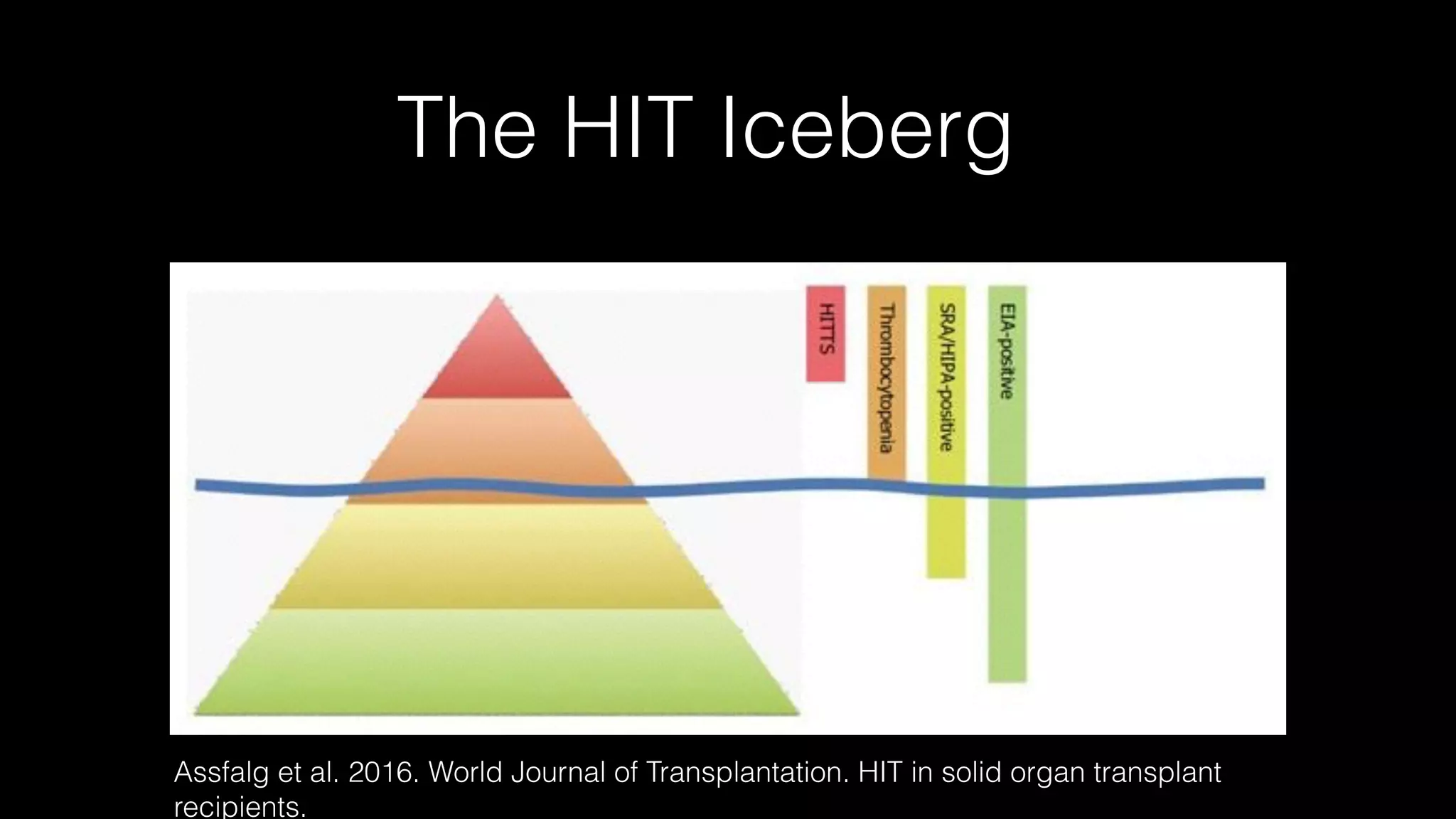
The HIT Iceberg
Assfalg et al. 2016. World Journal of Transplantation. HIT in solid organ transplant
recipients.
Pre-test probability
4T score 6- intermediate probability
Heparin stopped and bivalirudin commenced
Shortly after commencement of bivalirudin patient
complained of severe abdo pain and lactic
acidosis.
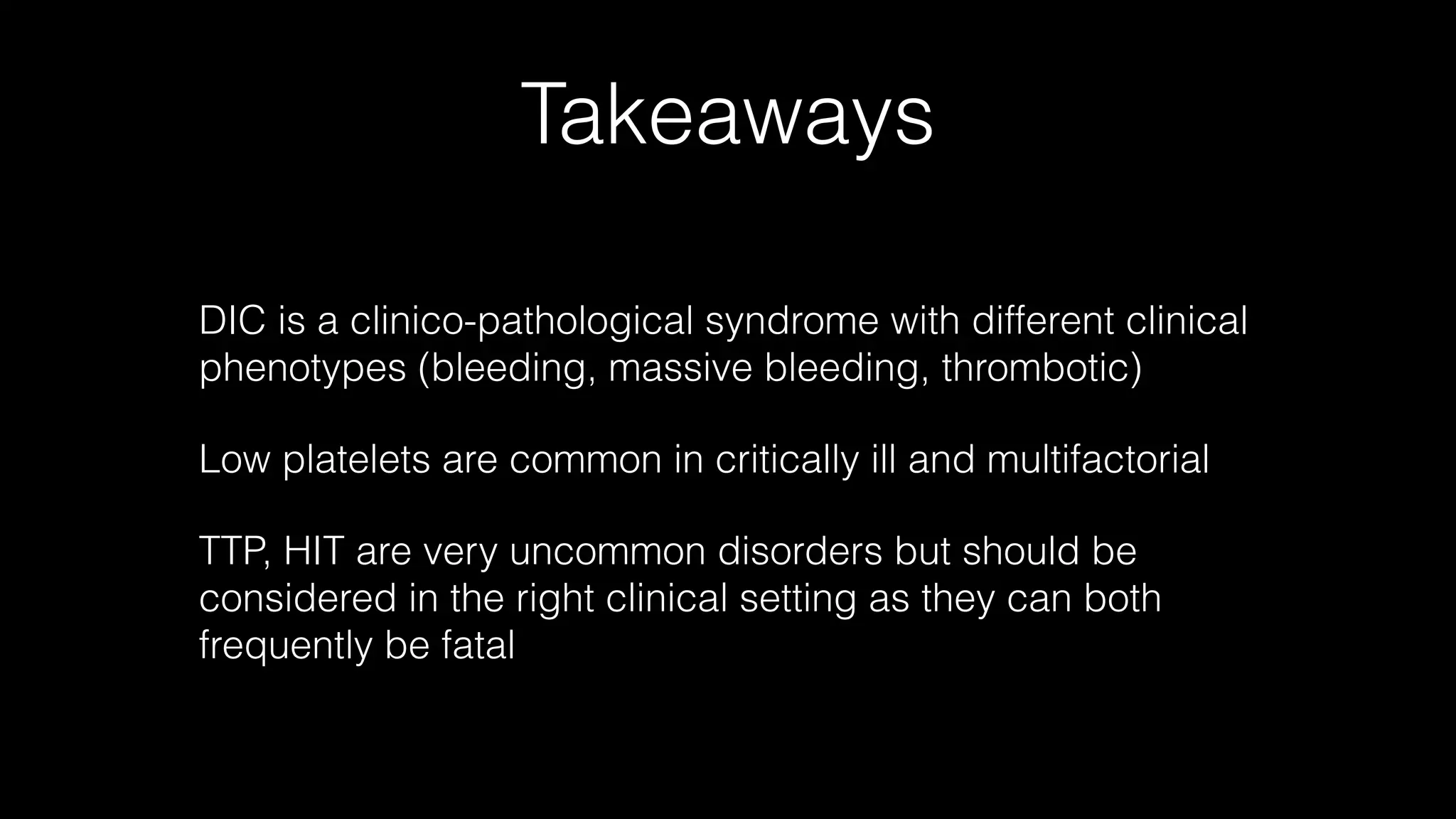
Takeaways
DIC is a clinico-pathological syndrome with different clinical
phenotypes (bleeding, massive bleeding, thrombotic)
Low platelets are common in critically ill and multifactorial
TTP, HIT are very uncommon disorders but should be
considered in the right clinical setting as they can both
frequently be fatal
Critical Care Haematology

Critical Care Haematology