Pilot Project for the Development of a Simulation Laboratory

                     Jill Van Der Like
Introduction
Purpose


The purpose of this project was to initiate the development of a simulation laboratory
that could improve the instruction of quality and safety among undergraduate senior-year
nursing students.
Quality and Safety


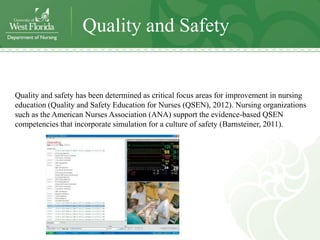
Quality and safety has been determined as critical focus areas for improvement in nursing
education (Quality and Safety Education for Nurses (QSEN), 2012). Nursing organizations
such as the American Nurses Association (ANA) support the evidence-based QSEN
competencies that incorporate simulation for a culture of safety (Barnsteiner, 2011).
Evidence-based practice (EBP) in Simulation


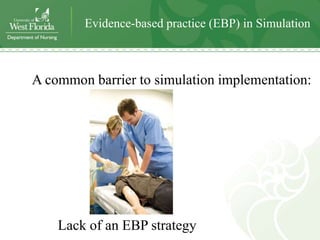
A common barrier to simulation implementation:


    Lack of an EBP strategy
EBP Strategy


  Evidence-Based Practice Implementation Guide:
Create awareness and interest
Build knowledge and commitment
Promote action and adoption
Pursue integration and sustained use
                     (Cullen and Adams, 2012)
Rationale

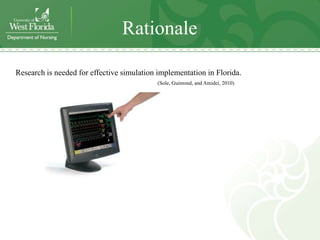
Research is needed for effective simulation implementation in Florida.
                                            (Sole, Guimond, and Amidei, 2010)
Framework: Experiential Learning


              • Kolb (1984)                              • Tanner (2006)

           Reflective Observation (RO)                  Clinical Judgment Model


Experiential evidence contributes to the application of critical thinking (Newhouse, 2007).
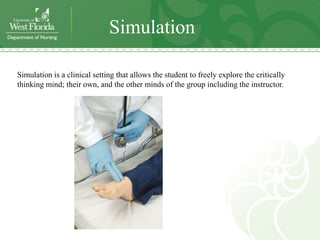
Simulation

Simulation is a clinical setting that allows the student to freely explore the critically
thinking mind; their own, and the other minds of the group including the instructor.
Implementation


1. An introduction to simulation scenario was created for
instruction.
2. An evidence-based scenario was created using the American
Heart Association guidelines for cardiopulmonary resuscitation
and emergency cardiovascular care science.
(American Heart Association, 2012)
Application

Participants:
• 2 Faculty members
• 37 undergraduate senior-year nursing students

Scenarios:
• Introduction to Simulation (2 hours)
• Student Skills Evaluation (2 hours)

Procedure:
• Introduce faculty and students to simulation
• Instruct faculty and students on simulation objectives of briefing, scenario, and
   debriefing
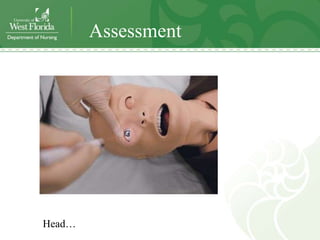
Assessment


Head…
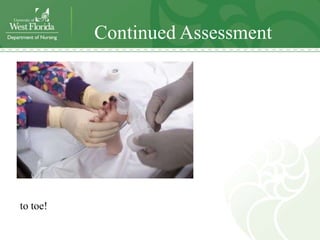
Continued Assessment


to toe!
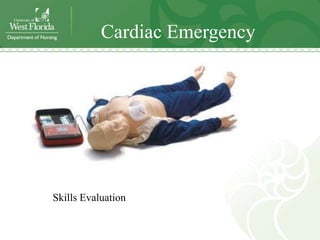
Cardiac Emergency


Skills Evaluation
Tools

1. Tanner’s Clinical Judgment Model (2006)
• Noticing
• Interpreting
• Responding
• Reflecting
   2. Lasater Clinical Judgment Rubric (LCJR) (2007)
   • Defined dimensions of effective noticing, interpreting, responding, and reflecting

     3. Reflective debriefing phases
     • Reactions phase (initial reaction)
     • Analysis phase (simulation assessment)
     • Summary phase (lessons learned)
                          (Rudolph, Simon, Raemer, and Eppich, 2008)
Scenario Links


Introduction to Simulation   Student Skills Evaluation
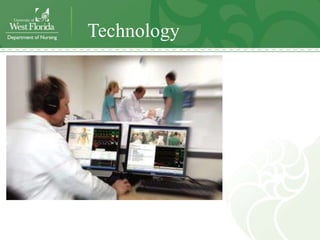
Technology
Laerdal Medical


http://www.facebook.com/LaerdalMedical?ref=ts&fref=ts
Implications


This quality improvement (QI) project provides a framework
for evidence-based implementation of simulation. A template
was created for faculty to follow during integration of simulation
into the curriculum. This project can also be used as guidance
for other academic institutions integrating evidence-based
simulation scenarios into the curriculum.
Dissemination


Collaboration with appreciation…
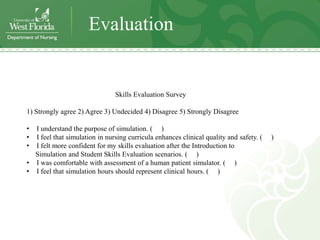
Evaluation


                               Skills Evaluation Survey

1) Strongly agree 2) Agree 3) Undecided 4) Disagree 5) Strongly Disagree

• I understand the purpose of simulation. ( )
• I feel that simulation in nursing curricula enhances clinical quality and safety. (   )
• I felt more confident for my skills evaluation after the Introduction to
  Simulation and Student Skills Evaluation scenarios. ( )
• I was comfortable with assessment of a human patient simulator. ( )
• I feel that simulation hours should represent clinical hours. ( )
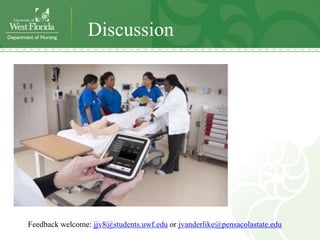
Discussion


Feedback welcome: jjv8@students.uwf.edu or jvanderlike@pensacolastate.edu
References

American Heart Association. (2012). 2010 American Heart Association guidelines for cardiopulmonary resuscitation and emergency care science.
   Doi:10.1161/CIRCULATIONAHA.110.970939. Retrieved October 12, 2012 from
   http://circ.ahajournals.org/content/122/18_suppl_3/S685.full#sec-2
Barnsteiner, J. (2011). Teaching the culture of safety. The Online Journal of Issues in Nursing, 16(3). Doi:10.3912/OJIN.Vol16No03Man05
Cullen, L., & Adams, C.L. (2012). Planning for implementation of evidence-based practice. The Journal of Nursing Administration,
   42(4), 222-230.
Florida Center for Nursing (2012, September 14). Qualitative research component for the Florida Center for Nursing project entitled
   “Promoting the Use of Simulation Technology in Florida Nurse Education”. Executive summary. Retrieved September 14, 2012,
   from http://www.flcenterfornursing.org/files/Simulation_Project_Qualitative_Data_Exec_Summary.pdf
Kolb, D.A. (1984). Experiential learning: Experience as the source of learning and development. Retrieved September 29, 2012
   from http://academic.regis.edu/ed205/Kolb.pdf
Lasater, K. (2007). Clinical judgment development: Using simulation to create an assessment rubric. Journal of Nursing Education,
   46(11), 496-503.
Newhouse, R.P. (2007). Diffusing confusion among evidence-based practice, quality improvement, and research. The Journal of
   Nursing Administration, 37(10), 432-435.
Newhouse, R.P., & Pettit, J.C. (2006). The slippery slope. Differentiating between quality improvement and research. The Journal
   of Nursing Administration, 36(4), 211-219.
Quality and Safety Education for Nurses . (2012). About QSEN. Retrieved September 7, 2012 from http://www.qsen.org/about_qsen.php
Rudolph, J.W., Simon, R., Raemer, D.B., & Eppich, W.J. (2008). Debriefing as a formative assessment: Closing performance gaps in
   medical education. Society for Academic Emergency Medicine, 15(11), 1010-1016. Doi:10.1111/j.1553-2712.2008.00248.x
Sole, M.L., Guimond, M.E., & Amidei, C. (2010). Quantitative research component for the Florida Center for Nursing project entitled
   “Promoting the Use of Simulation Technology in Florida Nurse Education”. A partners investing in nursing’s future project. Retrieved
   September 14, 2012 from http://www.flcenterfornursing.org/files/SimulationProjectQuantitativeDataExecSummary.pdf
Tanner, C.A. (2006). Thinking like a nurse: A research-based model of clinical judgment in nursing. Journal of Nursing
   Education, 45(6), 204-211.

Uwfpp

  • 1.
    Pilot Project forthe Development of a Simulation Laboratory Jill Van Der Like
  • 2.
  • 3.
    Purpose The purpose ofthis project was to initiate the development of a simulation laboratory that could improve the instruction of quality and safety among undergraduate senior-year nursing students.
  • 4.
    Quality and Safety Qualityand safety has been determined as critical focus areas for improvement in nursing education (Quality and Safety Education for Nurses (QSEN), 2012). Nursing organizations such as the American Nurses Association (ANA) support the evidence-based QSEN competencies that incorporate simulation for a culture of safety (Barnsteiner, 2011).
  • 5.
    Evidence-based practice (EBP)in Simulation A common barrier to simulation implementation: Lack of an EBP strategy
  • 6.
    EBP Strategy Evidence-Based Practice Implementation Guide: Create awareness and interest Build knowledge and commitment Promote action and adoption Pursue integration and sustained use (Cullen and Adams, 2012)
  • 7.
    Rationale Research is neededfor effective simulation implementation in Florida. (Sole, Guimond, and Amidei, 2010)
  • 8.
    Framework: Experiential Learning • Kolb (1984) • Tanner (2006) Reflective Observation (RO) Clinical Judgment Model Experiential evidence contributes to the application of critical thinking (Newhouse, 2007).
  • 9.
    Simulation Simulation is aclinical setting that allows the student to freely explore the critically thinking mind; their own, and the other minds of the group including the instructor.
  • 10.
    Implementation 1. An introductionto simulation scenario was created for instruction. 2. An evidence-based scenario was created using the American Heart Association guidelines for cardiopulmonary resuscitation and emergency cardiovascular care science. (American Heart Association, 2012)
  • 11.
    Application Participants: • 2 Facultymembers • 37 undergraduate senior-year nursing students Scenarios: • Introduction to Simulation (2 hours) • Student Skills Evaluation (2 hours) Procedure: • Introduce faculty and students to simulation • Instruct faculty and students on simulation objectives of briefing, scenario, and debriefing
  • 12.
  • 13.
  • 14.
  • 15.
    Tools 1. Tanner’s ClinicalJudgment Model (2006) • Noticing • Interpreting • Responding • Reflecting 2. Lasater Clinical Judgment Rubric (LCJR) (2007) • Defined dimensions of effective noticing, interpreting, responding, and reflecting 3. Reflective debriefing phases • Reactions phase (initial reaction) • Analysis phase (simulation assessment) • Summary phase (lessons learned) (Rudolph, Simon, Raemer, and Eppich, 2008)
  • 16.
    Scenario Links Introduction toSimulation Student Skills Evaluation
  • 17.
  • 18.
  • 19.
    Implications This quality improvement(QI) project provides a framework for evidence-based implementation of simulation. A template was created for faculty to follow during integration of simulation into the curriculum. This project can also be used as guidance for other academic institutions integrating evidence-based simulation scenarios into the curriculum.
  • 20.
  • 21.
    Evaluation Skills Evaluation Survey 1) Strongly agree 2) Agree 3) Undecided 4) Disagree 5) Strongly Disagree • I understand the purpose of simulation. ( ) • I feel that simulation in nursing curricula enhances clinical quality and safety. ( ) • I felt more confident for my skills evaluation after the Introduction to Simulation and Student Skills Evaluation scenarios. ( ) • I was comfortable with assessment of a human patient simulator. ( ) • I feel that simulation hours should represent clinical hours. ( )
  • 22.
    Discussion Feedback welcome: jjv8@students.uwf.eduor jvanderlike@pensacolastate.edu
  • 23.
    References American Heart Association.(2012). 2010 American Heart Association guidelines for cardiopulmonary resuscitation and emergency care science. Doi:10.1161/CIRCULATIONAHA.110.970939. Retrieved October 12, 2012 from http://circ.ahajournals.org/content/122/18_suppl_3/S685.full#sec-2 Barnsteiner, J. (2011). Teaching the culture of safety. The Online Journal of Issues in Nursing, 16(3). Doi:10.3912/OJIN.Vol16No03Man05 Cullen, L., & Adams, C.L. (2012). Planning for implementation of evidence-based practice. The Journal of Nursing Administration, 42(4), 222-230. Florida Center for Nursing (2012, September 14). Qualitative research component for the Florida Center for Nursing project entitled “Promoting the Use of Simulation Technology in Florida Nurse Education”. Executive summary. Retrieved September 14, 2012, from http://www.flcenterfornursing.org/files/Simulation_Project_Qualitative_Data_Exec_Summary.pdf Kolb, D.A. (1984). Experiential learning: Experience as the source of learning and development. Retrieved September 29, 2012 from http://academic.regis.edu/ed205/Kolb.pdf Lasater, K. (2007). Clinical judgment development: Using simulation to create an assessment rubric. Journal of Nursing Education, 46(11), 496-503. Newhouse, R.P. (2007). Diffusing confusion among evidence-based practice, quality improvement, and research. The Journal of Nursing Administration, 37(10), 432-435. Newhouse, R.P., & Pettit, J.C. (2006). The slippery slope. Differentiating between quality improvement and research. The Journal of Nursing Administration, 36(4), 211-219. Quality and Safety Education for Nurses . (2012). About QSEN. Retrieved September 7, 2012 from http://www.qsen.org/about_qsen.php Rudolph, J.W., Simon, R., Raemer, D.B., & Eppich, W.J. (2008). Debriefing as a formative assessment: Closing performance gaps in medical education. Society for Academic Emergency Medicine, 15(11), 1010-1016. Doi:10.1111/j.1553-2712.2008.00248.x Sole, M.L., Guimond, M.E., & Amidei, C. (2010). Quantitative research component for the Florida Center for Nursing project entitled “Promoting the Use of Simulation Technology in Florida Nurse Education”. A partners investing in nursing’s future project. Retrieved September 14, 2012 from http://www.flcenterfornursing.org/files/SimulationProjectQuantitativeDataExecSummary.pdf Tanner, C.A. (2006). Thinking like a nurse: A research-based model of clinical judgment in nursing. Journal of Nursing Education, 45(6), 204-211.

Editor's Notes

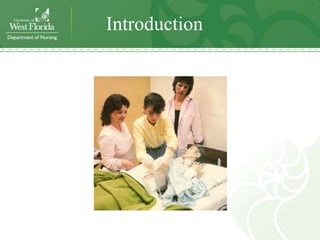
  • #3 1985 Pensacola Junior College (currently Pensacola State College) advertisement for the associate of science degree in nursing (ASN) registered nurse (RN) program. Jill Van Der Like’s (center) introduction to the use of low-fidelity simulation.
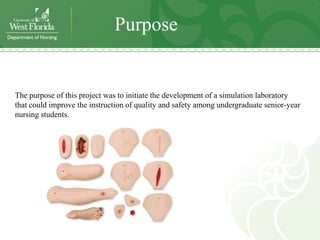
  • #4 Florida Center for Nursing (FCN) (2012) found that simulation benefited the monitoring and development of critical thinking skills.Practice parts for simulation. Photo courtesy of Laerdal Medical.
  • #5 Photo courtesy of Laerdal Medical.
  • #6 Photo courtesy of Laerdal Medical
  • #7 “Survey Monkey” assessment of awareness and interest.
  • #8 Photo courtesy of Laerdal Medical
  • #10 Knowledge of simulation and commitment was accomplished.Photo courtesy of Laerdal Medical
  • #12 Action and adoption accomplished.
  • #13 Instruction of human patient simulator assessment differences.Photo courtesy of Laerdal Medical
  • #14 Photo courtesy of Laerdal Medical
  • #15 Photo courtesy of Laerdal Medical
  • #16 2. Permission was granted for use of the LCJR (Lasater, 2007) by K. Lasater (personal email communication October 25, 2012).
  • #17 Sustained use through student skills evaluation the following Spring term.
  • #18 Photo courtesy of Laerdal Medical
  • #19 Permission granted for use by Jeff Chandler, Art Director (personal phone/email communication, November 12, 2012).
  • #20 One QI distinction is to improve outcomes (Newhouse and Pettit, 2006).
  • #21 Thank you faculty and students…
  • #22 Upcoming survey of instruction from faculty and students.
  • #23 Photo courtesy of Laerdal Medical.