WELCOME
ACTIVITY: EEW(PRESENTATION)
BRANCH: COMPUTER ENGINEERING (B.E.)
SEM: FIRST SEM
YEAR: F.Y. (2017-18)
PANCHAL DHRUMIL 17BECEG104
Contains
 Introduction about Insulators
 Material of Insulators
 Designing Consideration of Electrical Insulator
 Types of insulators
 Class 1 and Class 2 Insulation
 Application of Insulators
 Reference
Insulators
 An electrical insulator is a material whose
internal electric charges do not flow freely; very
little electric current will flow through it under the
influence of an electric field. This contrasts with other
materials, semiconductors and conductors, which
conduct electric current more easily.
 The property that distinguishes an insulator is
its resistivity; insulators have higher resistivity than
semiconductors or conductors.
Ceramic Insulators
Insulators
 The insulation or dielectric should be highly resistive to
the flow of current, thus ensuring minimum risk of shock
and fire. The insulating material used must have
following properties:
i. High resistivity
ii. High flexibility
iii. High dielectric strength
iv. High resistance to moisture, acids etc.
v. Non inflammability
vi. Withstand capability for high rupturing voltages
without deterioration
Insulators
 Some of the widely used dielectric are rubber,
vulcanized rubber, impregnated paper, varnished
cambric, PVC, vulcanized bitumen, gutta perch, silk and
cotton, enamel etc.
 The material used depends upon the service for which
cable is being used.
Material
 Insulators used for high-voltage power transmission are made
from glass, porcelain or composite polymer materials.
 Porcelain insulators are made
from clay, quartz or alumina and feldspar, and are covered with
a smooth glaze to shed water.
 Insulators made from porcelain rich in alumina are used where
high mechanical strength is a criterion.
 Porcelain has a dielectric strength of about 4–10 kV/mm.
 Glass has a higher dielectric strength, but it attracts
condensation and the thick irregular shapes needed for
insulators are difficult to cast without internal strains.
 Some insulator manufacturers stopped making glass insulators
in the late 1960s, switching to ceramic materials.
Material
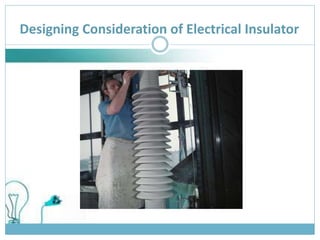
Designing Consideration of Electrical Insulator
 The electrical breakdown of an insulator due to excessive voltage
can occur in one of two ways:
1. A puncture arc is a breakdown and conduction of the material of
the insulator, causing an electric arc through the interior of the
insulator. The heat resulting from the arc usually damages the
insulator irreparably. Puncture voltage is the voltage across the
insulator (when installed in its normal manner) that causes a
puncture arc.
2. A flashover arc is a breakdown and conduction of the air around
or along the surface of the insulator, causing an arc along the
outside of the insulator. Insulators are usually designed to
withstand flashover without damage. Flashover voltage is the
voltage that causes a flash-over arc.
Designing Consideration of Electrical Insulator
Types of insulators
 There are mainly three types of insulator used
as overhead insulator like wise
1. Pin Insulator
2. Post Insulator
3. Suspension Insulator
4. Strain Insulator
 In addition to that there are other two types of
electrical insulator available mainly for
low voltage application:-
1. Stay Insulator
2. Shackle Insulator.
Class 1 insulation
 All portable or hand-held electrical devices are
insulated to protect their user from harmful shock.
 Class 1 insulation requires that the metal body and
other exposed metal parts of the device be
connected to earth via a grounding wire that
is earthed at the main service panel—but only
needs basic insulation on the conductors.
 This equipment needs an extra pin on the power
plug for the grounding connection.
Class 2 insulation
 Class 2 insulation means that the device is double
insulated.
 This is used on some appliances such as electric shavers,
hair dryers and portable power tools.
 Double insulation requires that the devices have both
basic and supplementary insulation, each of which is
sufficient to prevent electric shock.
 All internal electrically energized components are totally
enclosed within an insulated body that prevents any
contact with "live" parts.
 In the EU, double insulated appliances all are marked
with a symbol of two squares, one inside the other.
Applications of insulators
 Insulators work as protectors. They may protect
heat, sound and the passage of electricity.
 Thermal insulators, sound insulators and electrical
insulators are used for various reasons, from
keeping houses warm to protecting electrical wires
and soundproofing rooms.
 Depending on what you plan to use an insulator for
will depend on which type of insulator to use.
Applications of insulators
 An electrical insulator, also known as a non-conductor, is
used to prevent the flow of electric currents.
 Materials that work as nonconductors lack movable
electric charges.
 Highly resistant electrical insulators include mica
(crystalline silicate minerals), glass, quartz and solid ionic
substances.
 These materials work by tightly binding electrons so there
is no electron flow between them and therefore no
conduction.
 Electrical insulators may be used for circuit boards, high
voltage systems and as coating on electric wire and cable.
Conclusion
 Thus, we have studied and concluded about
insulators, materials, design, types of insulators and
it’s details, class 1 and class 2 insulation and
application of insulators.
Reference
 Inspiration from Ami Ma’am
 Wikipedia
 Google Images
Thank you very much Everyone

Insulators

  • 1.
    WELCOME ACTIVITY: EEW(PRESENTATION) BRANCH: COMPUTERENGINEERING (B.E.) SEM: FIRST SEM YEAR: F.Y. (2017-18) PANCHAL DHRUMIL 17BECEG104
  • 2.
    Contains  Introduction aboutInsulators  Material of Insulators  Designing Consideration of Electrical Insulator  Types of insulators  Class 1 and Class 2 Insulation  Application of Insulators  Reference
  • 3.
    Insulators  An electricalinsulator is a material whose internal electric charges do not flow freely; very little electric current will flow through it under the influence of an electric field. This contrasts with other materials, semiconductors and conductors, which conduct electric current more easily.  The property that distinguishes an insulator is its resistivity; insulators have higher resistivity than semiconductors or conductors.
  • 4.
  • 5.
    Insulators  The insulationor dielectric should be highly resistive to the flow of current, thus ensuring minimum risk of shock and fire. The insulating material used must have following properties: i. High resistivity ii. High flexibility iii. High dielectric strength iv. High resistance to moisture, acids etc. v. Non inflammability vi. Withstand capability for high rupturing voltages without deterioration
  • 6.
    Insulators  Some ofthe widely used dielectric are rubber, vulcanized rubber, impregnated paper, varnished cambric, PVC, vulcanized bitumen, gutta perch, silk and cotton, enamel etc.  The material used depends upon the service for which cable is being used.
  • 7.
    Material  Insulators usedfor high-voltage power transmission are made from glass, porcelain or composite polymer materials.  Porcelain insulators are made from clay, quartz or alumina and feldspar, and are covered with a smooth glaze to shed water.  Insulators made from porcelain rich in alumina are used where high mechanical strength is a criterion.  Porcelain has a dielectric strength of about 4–10 kV/mm.  Glass has a higher dielectric strength, but it attracts condensation and the thick irregular shapes needed for insulators are difficult to cast without internal strains.  Some insulator manufacturers stopped making glass insulators in the late 1960s, switching to ceramic materials.
  • 8.
  • 9.
    Designing Consideration ofElectrical Insulator  The electrical breakdown of an insulator due to excessive voltage can occur in one of two ways: 1. A puncture arc is a breakdown and conduction of the material of the insulator, causing an electric arc through the interior of the insulator. The heat resulting from the arc usually damages the insulator irreparably. Puncture voltage is the voltage across the insulator (when installed in its normal manner) that causes a puncture arc. 2. A flashover arc is a breakdown and conduction of the air around or along the surface of the insulator, causing an arc along the outside of the insulator. Insulators are usually designed to withstand flashover without damage. Flashover voltage is the voltage that causes a flash-over arc.
  • 10.
    Designing Consideration ofElectrical Insulator
  • 11.
    Types of insulators There are mainly three types of insulator used as overhead insulator like wise 1. Pin Insulator 2. Post Insulator 3. Suspension Insulator 4. Strain Insulator  In addition to that there are other two types of electrical insulator available mainly for low voltage application:- 1. Stay Insulator 2. Shackle Insulator.
  • 12.
    Class 1 insulation All portable or hand-held electrical devices are insulated to protect their user from harmful shock.  Class 1 insulation requires that the metal body and other exposed metal parts of the device be connected to earth via a grounding wire that is earthed at the main service panel—but only needs basic insulation on the conductors.  This equipment needs an extra pin on the power plug for the grounding connection.
  • 13.
    Class 2 insulation Class 2 insulation means that the device is double insulated.  This is used on some appliances such as electric shavers, hair dryers and portable power tools.  Double insulation requires that the devices have both basic and supplementary insulation, each of which is sufficient to prevent electric shock.  All internal electrically energized components are totally enclosed within an insulated body that prevents any contact with "live" parts.  In the EU, double insulated appliances all are marked with a symbol of two squares, one inside the other.
  • 14.
    Applications of insulators Insulators work as protectors. They may protect heat, sound and the passage of electricity.  Thermal insulators, sound insulators and electrical insulators are used for various reasons, from keeping houses warm to protecting electrical wires and soundproofing rooms.  Depending on what you plan to use an insulator for will depend on which type of insulator to use.
  • 15.
    Applications of insulators An electrical insulator, also known as a non-conductor, is used to prevent the flow of electric currents.  Materials that work as nonconductors lack movable electric charges.  Highly resistant electrical insulators include mica (crystalline silicate minerals), glass, quartz and solid ionic substances.  These materials work by tightly binding electrons so there is no electron flow between them and therefore no conduction.  Electrical insulators may be used for circuit boards, high voltage systems and as coating on electric wire and cable.
  • 16.
    Conclusion  Thus, wehave studied and concluded about insulators, materials, design, types of insulators and it’s details, class 1 and class 2 insulation and application of insulators.
  • 17.
    Reference  Inspiration fromAmi Ma’am  Wikipedia  Google Images
  • 18.
    Thank you verymuch Everyone