MirmadanMohanlal Govt. Polytechnic
(mmgp)
Presentation of Electrical fuse
Roll no Name
1 Biswajitsaha
2 Prasantasarkar
3 Subir Das
4 Sarojkanrar
6 AnirbanDutta
7 Arup Mondal
Group members of EEE 3rd year
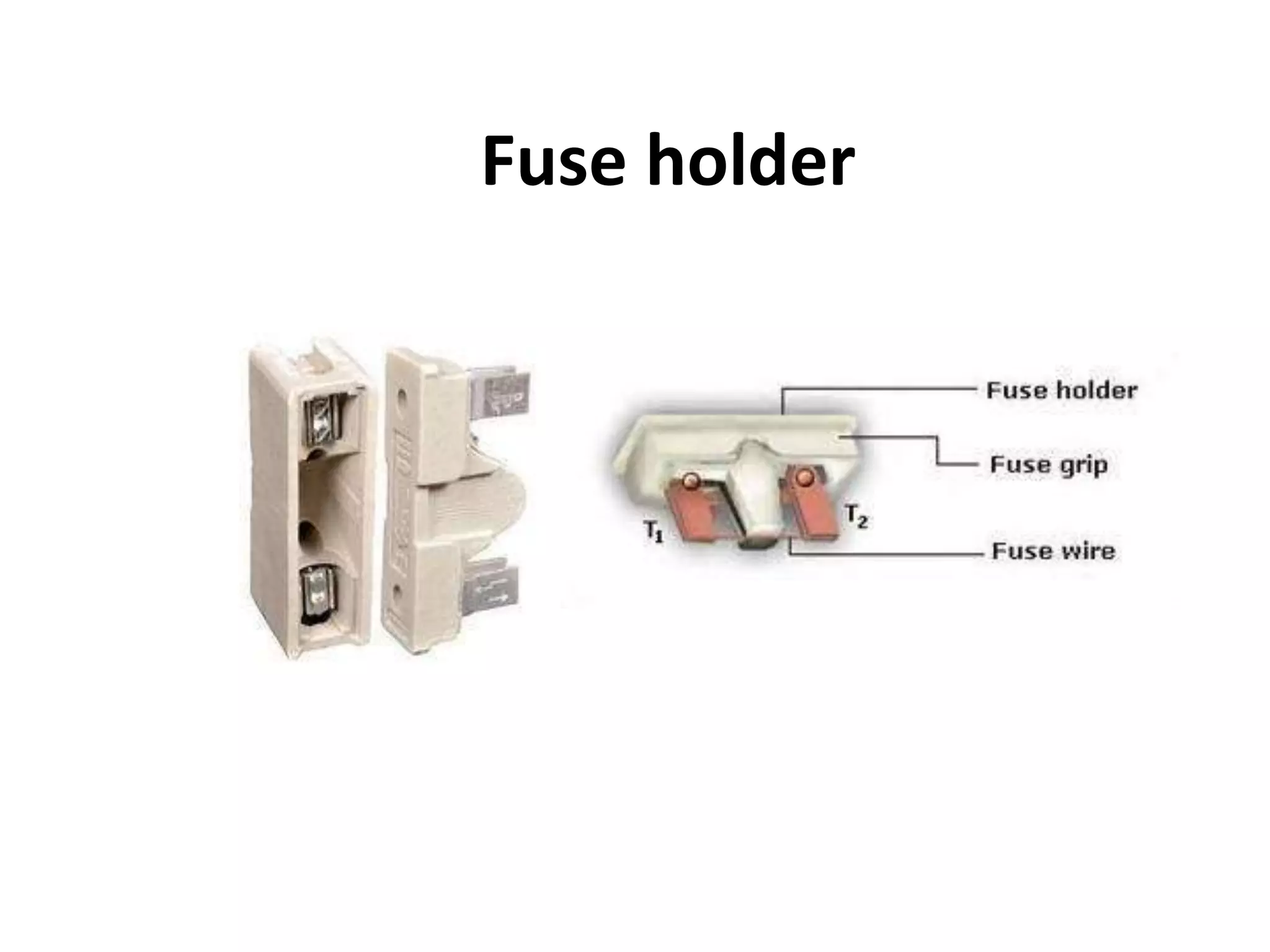
Fuse holder
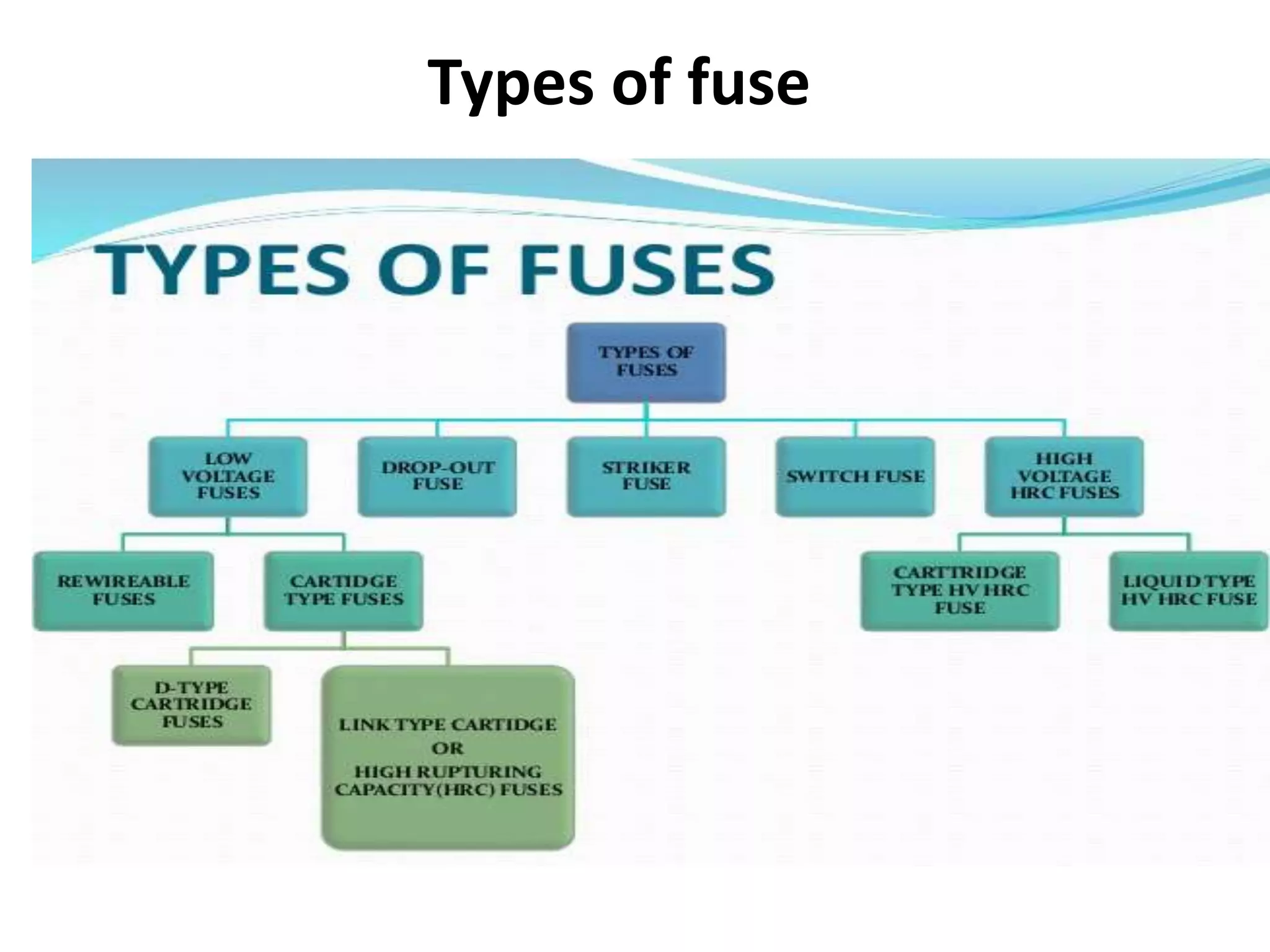
Types of fuse
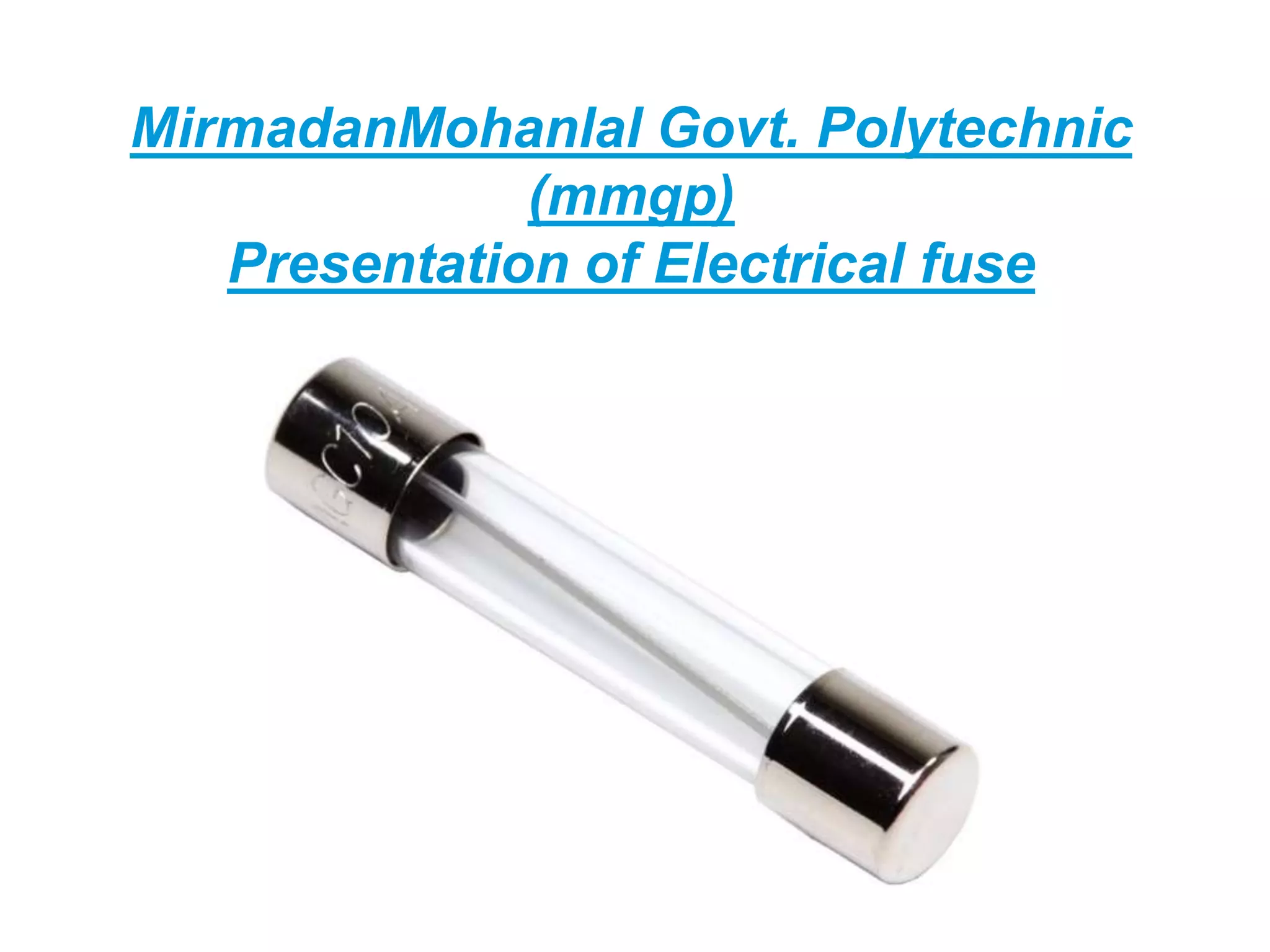
Electrical Fuse
In normal working condition of electrical network, the current
flows through the network is within the rated limit. If a fault occurs
in the network mainly phase to phase short circuit fault or phase
to ground fault, the network current crosses the rated limits. This
high current may have a very high thermal effect which will cause
permanent damage to the valuable pieces of equipment
connected to the electrical network. So this high fault current
should be interrupted as fast as possible. This is what an electrical
fuse does. A fuse is a part of the circuit which consists of a
conductor which melts easily and breaks the connection when
current exceeds the predetermined value. An electrical fuse is the
weakest part of an electrical circuit which breaks when more than
predetermined current flows through it.
Fuse Wire
The function of fuse wire is to carry the normal current without
excessive heating but more than normal current when passes
through fuse wire, it rapidly heats up and melts.
Materials used for Fuse Wires
The materials used for fuse wires are mainly tin, lead, zinc, silver,
antimony, copper, aluminum etc.
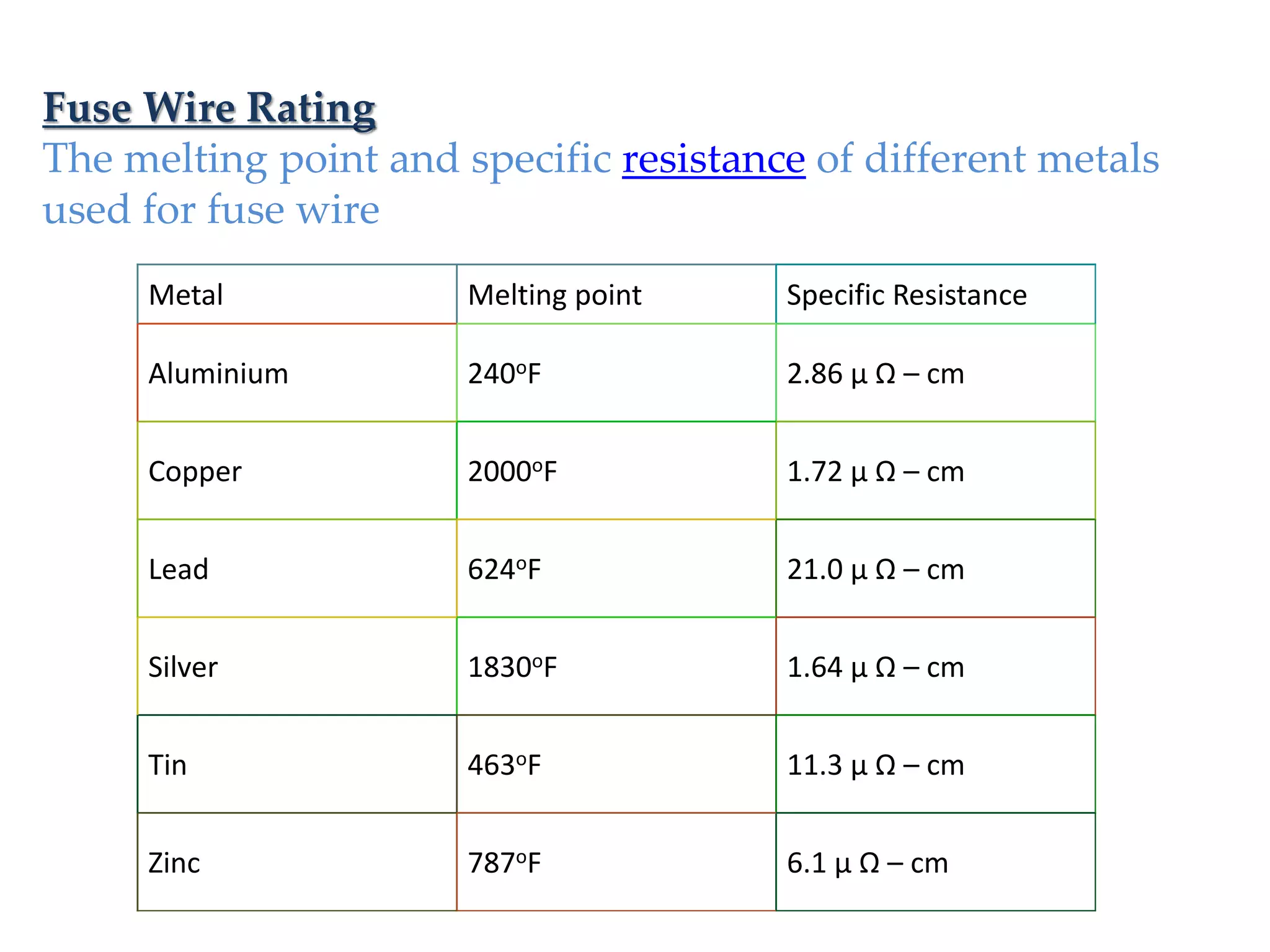
Metal Melting point Specific Resistance
Aluminium 240oF 2.86 μ Ω – cm
Copper 2000oF 1.72 μ Ω – cm
Lead 624oF 21.0 μ Ω – cm
Silver 1830oF 1.64 μ Ω – cm
Tin 463oF 11.3 μ Ω – cm
Zinc 787oF 6.1 μ Ω – cm
Fuse Wire Rating
The melting point and specific resistance of different metals
used for fuse wire
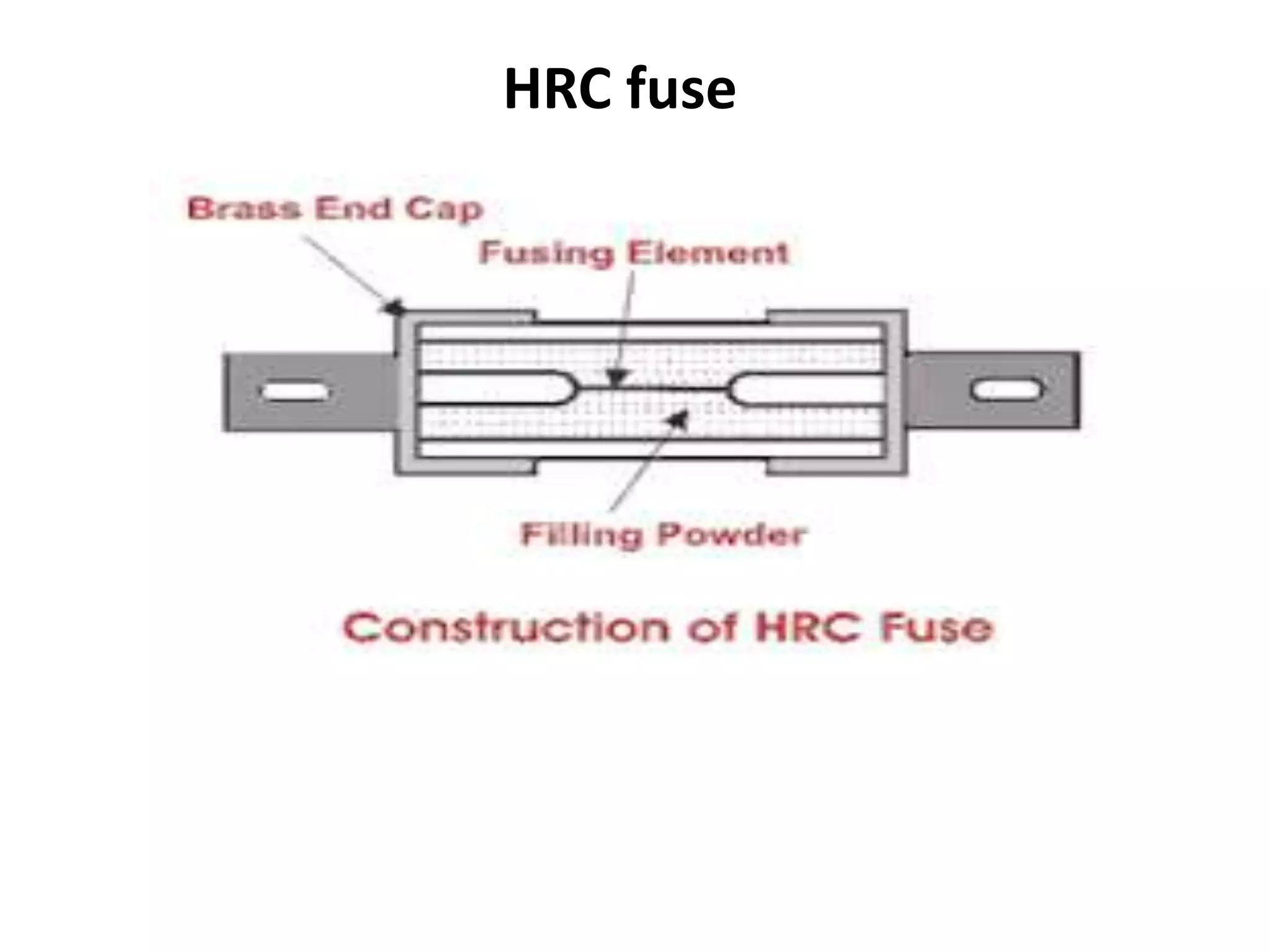
HRC fuse
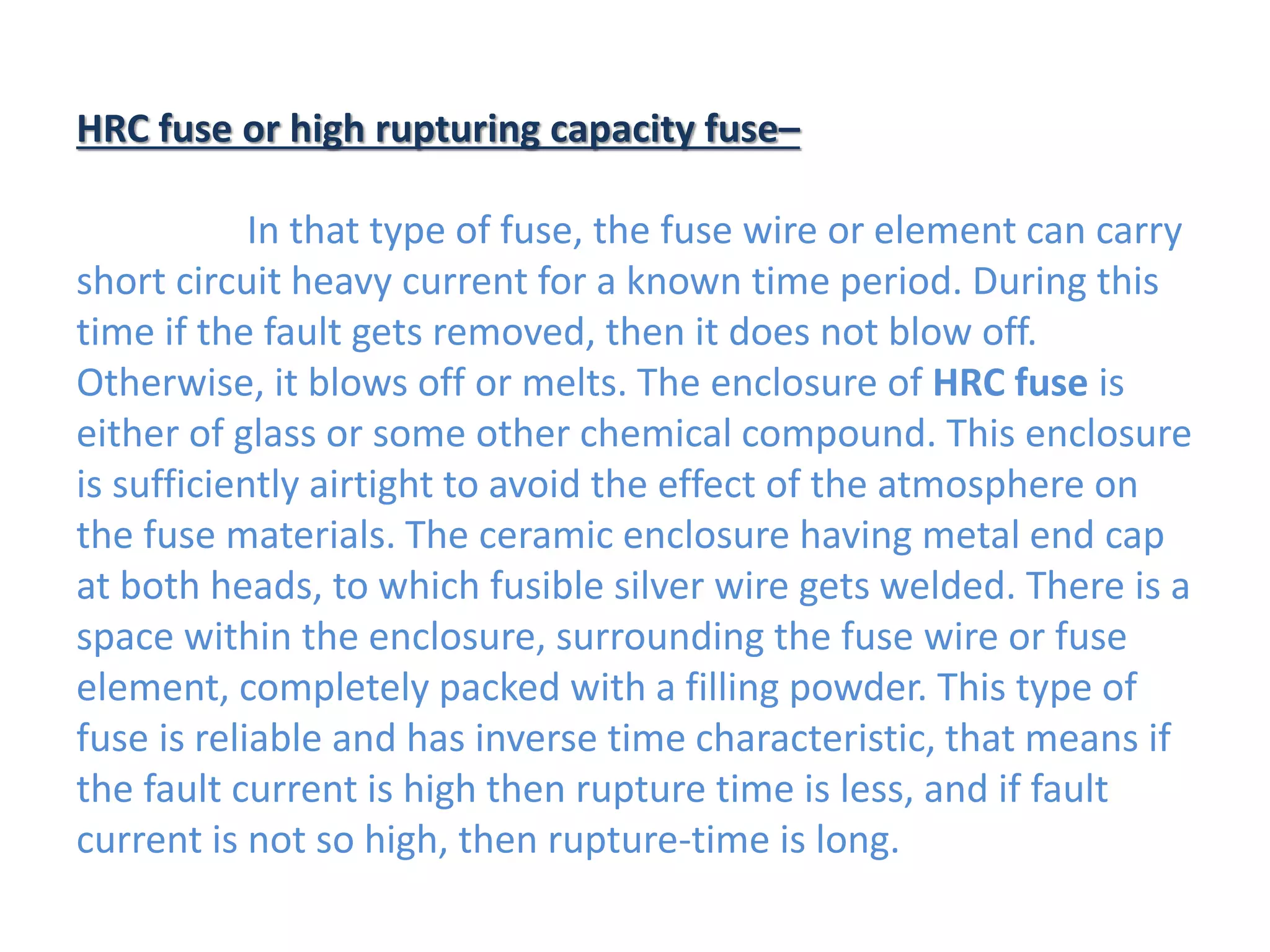
HRC fuse or high rupturing capacity fuse–
In that type of fuse, the fuse wire or element can carry
short circuit heavy current for a known time period. During this
time if the fault gets removed, then it does not blow off.
Otherwise, it blows off or melts. The enclosure of HRC fuse is
either of glass or some other chemical compound. This enclosure
is sufficiently airtight to avoid the effect of the atmosphere on
the fuse materials. The ceramic enclosure having metal end cap
at both heads, to which fusible silver wire gets welded. There is a
space within the enclosure, surrounding the fuse wire or fuse
element, completely packed with a filling powder. This type of
fuse is reliable and has inverse time characteristic, that means if
the fault current is high then rupture time is less, and if fault
current is not so high, then rupture-time is long.
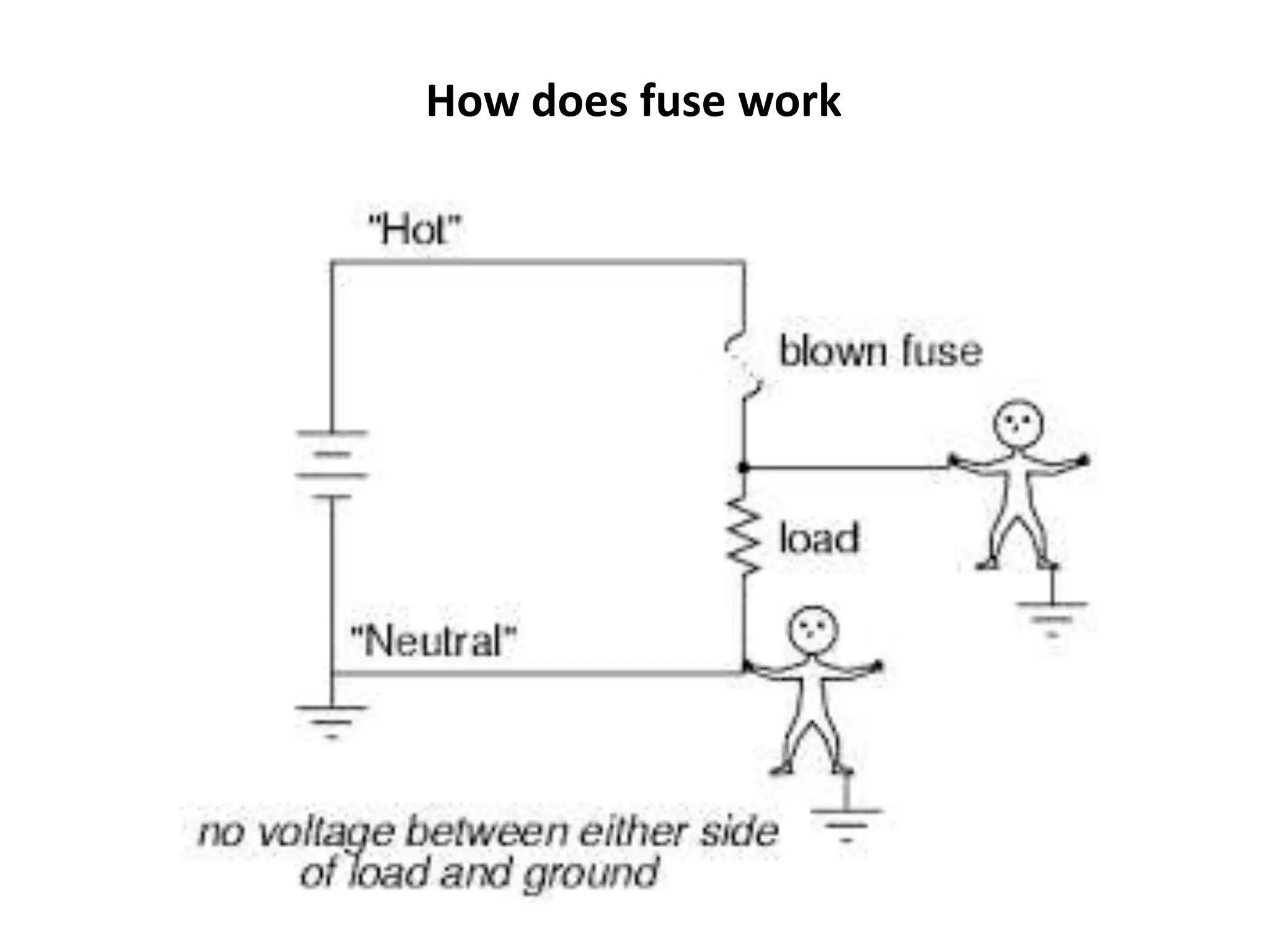
How does fuse work
Thank you

Electrical fuse power point presentation

  • 1.
  • 2.
    Roll no Name 1Biswajitsaha 2 Prasantasarkar 3 Subir Das 4 Sarojkanrar 6 AnirbanDutta 7 Arup Mondal Group members of EEE 3rd year
  • 4.
  • 5.
  • 6.
    Electrical Fuse In normalworking condition of electrical network, the current flows through the network is within the rated limit. If a fault occurs in the network mainly phase to phase short circuit fault or phase to ground fault, the network current crosses the rated limits. This high current may have a very high thermal effect which will cause permanent damage to the valuable pieces of equipment connected to the electrical network. So this high fault current should be interrupted as fast as possible. This is what an electrical fuse does. A fuse is a part of the circuit which consists of a conductor which melts easily and breaks the connection when current exceeds the predetermined value. An electrical fuse is the weakest part of an electrical circuit which breaks when more than predetermined current flows through it.
  • 7.
    Fuse Wire The functionof fuse wire is to carry the normal current without excessive heating but more than normal current when passes through fuse wire, it rapidly heats up and melts. Materials used for Fuse Wires The materials used for fuse wires are mainly tin, lead, zinc, silver, antimony, copper, aluminum etc.
  • 8.
    Metal Melting pointSpecific Resistance Aluminium 240oF 2.86 μ Ω – cm Copper 2000oF 1.72 μ Ω – cm Lead 624oF 21.0 μ Ω – cm Silver 1830oF 1.64 μ Ω – cm Tin 463oF 11.3 μ Ω – cm Zinc 787oF 6.1 μ Ω – cm Fuse Wire Rating The melting point and specific resistance of different metals used for fuse wire
  • 9.
  • 10.
    HRC fuse orhigh rupturing capacity fuse– In that type of fuse, the fuse wire or element can carry short circuit heavy current for a known time period. During this time if the fault gets removed, then it does not blow off. Otherwise, it blows off or melts. The enclosure of HRC fuse is either of glass or some other chemical compound. This enclosure is sufficiently airtight to avoid the effect of the atmosphere on the fuse materials. The ceramic enclosure having metal end cap at both heads, to which fusible silver wire gets welded. There is a space within the enclosure, surrounding the fuse wire or fuse element, completely packed with a filling powder. This type of fuse is reliable and has inverse time characteristic, that means if the fault current is high then rupture time is less, and if fault current is not so high, then rupture-time is long.
  • 11.
  • 12.