Teaching experimental
design
Year 7 Integrated Curriculum
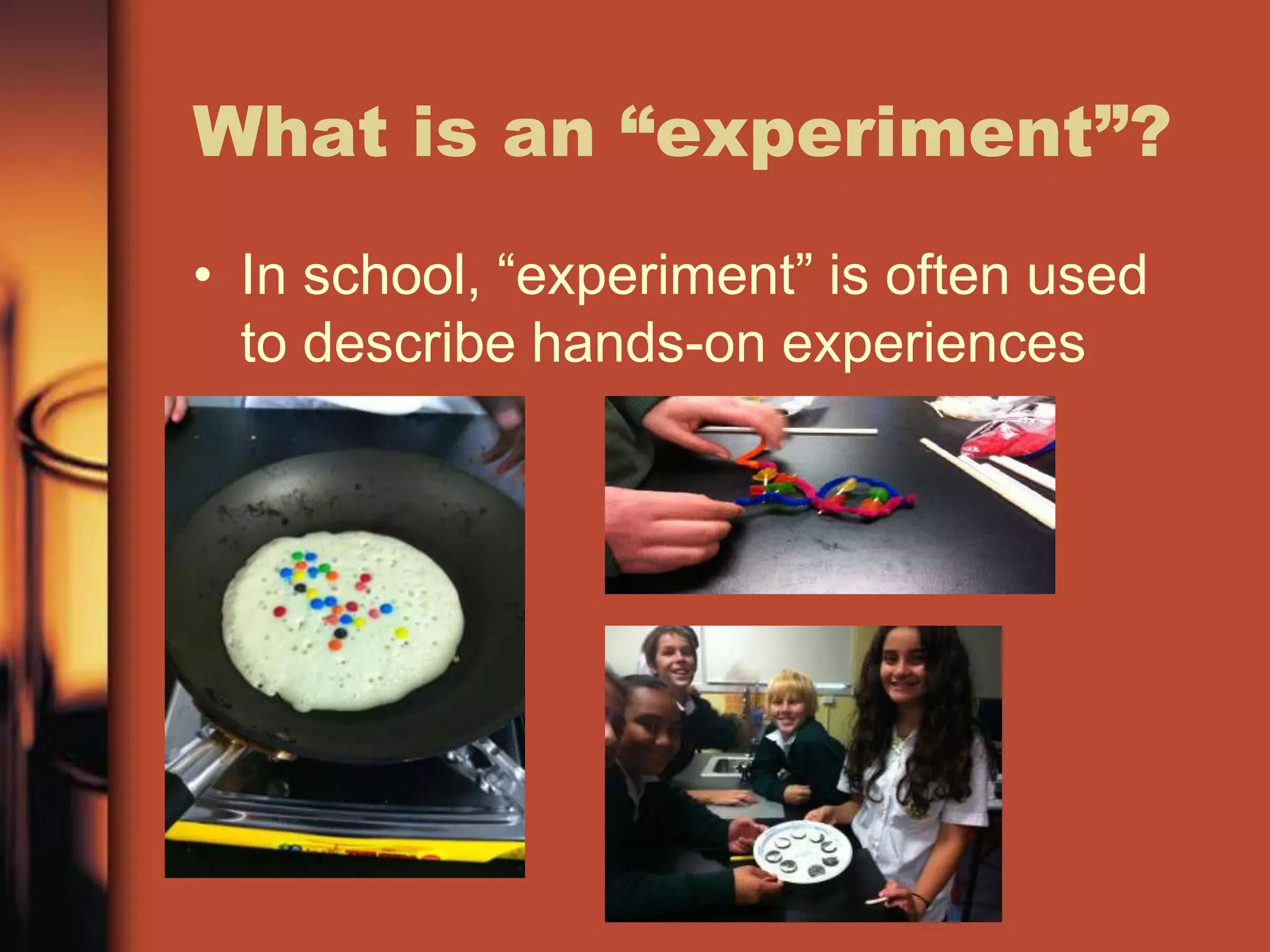
What is an “experiment”?
• In school, “experiment” is often used
  to describe hands-on experiences
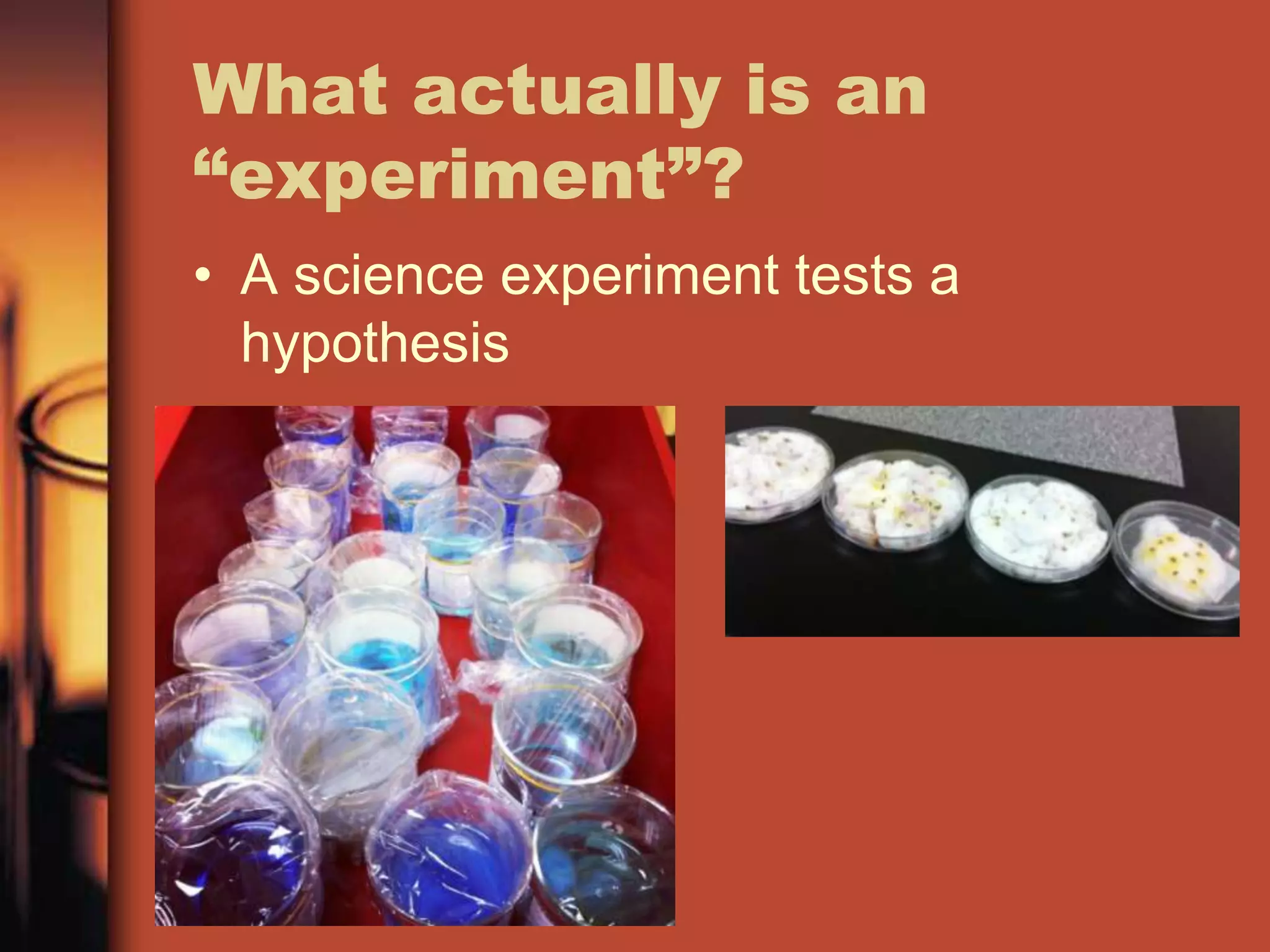
What actually is an
“experiment”?
• A science experiment tests a
  hypothesis
Components of an
experiment
•   Background research
•   Aim
•   Hypothesis
•   Equipment
•   Types of variables
•   Results
•   Discussion
•   Conclusion
Background research
• Every experiment starts with a topic
  of interest (Eg. What are the effects
  of ocean acidification on living
  things?)
• Background research finds out what
  we already know about the topic
Aim
• Always starts with “To”
• Tells the reader what the
  experiment aims to do
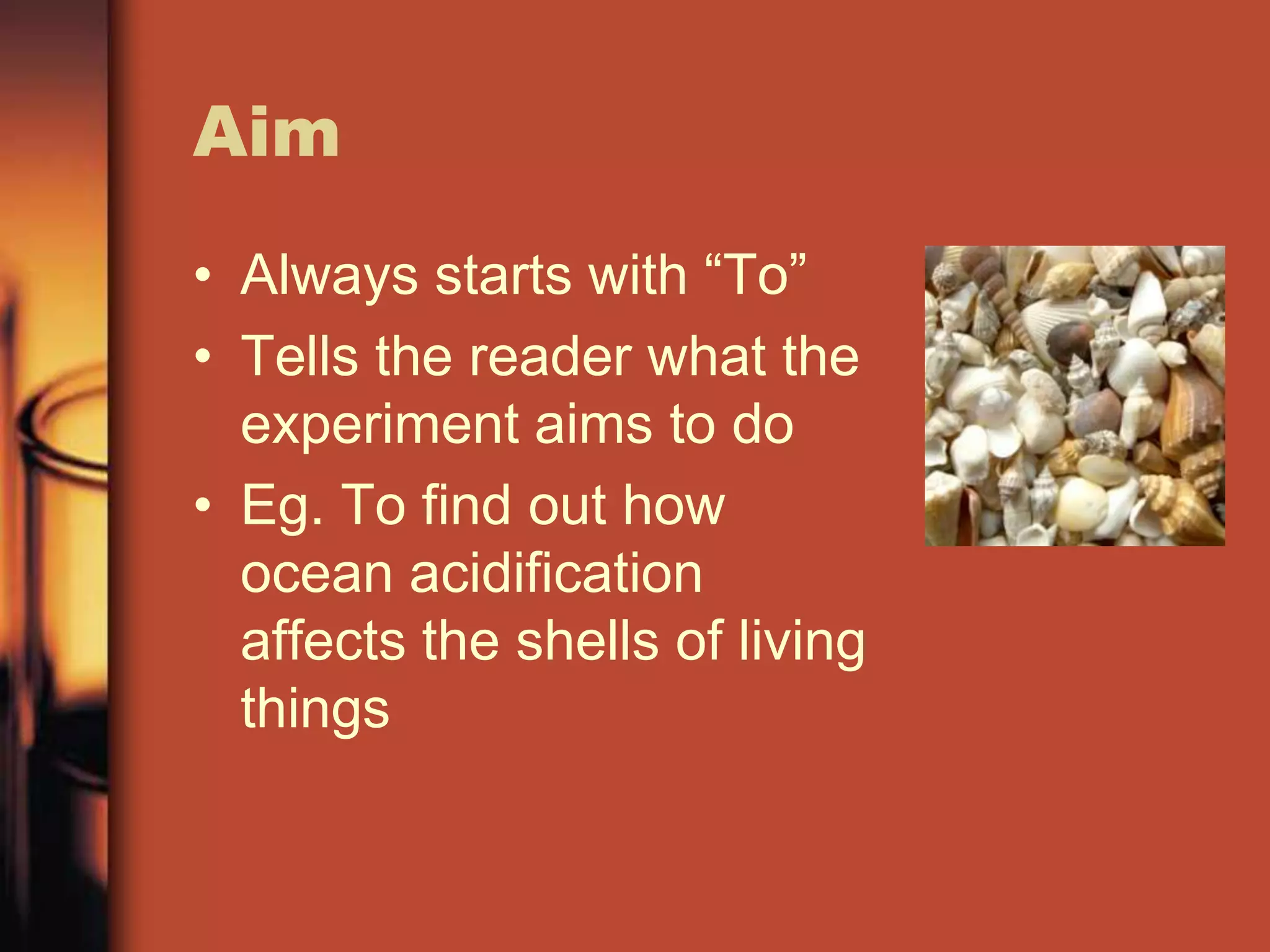
• Eg. To find out how
  ocean acidification
  affects the shells of living
  things
Hypothesis
• A prediction of the results based on
  the background research
• Example – The more acidic the
  ocean is, the quicker the shells of
  ocean invertebrates will dissolve

If A happens then B will happen
Equipment and Method
• List the equipment used in
  the experiment
• Method lists how to do the
  experiment in steps
• Always starts with a verb
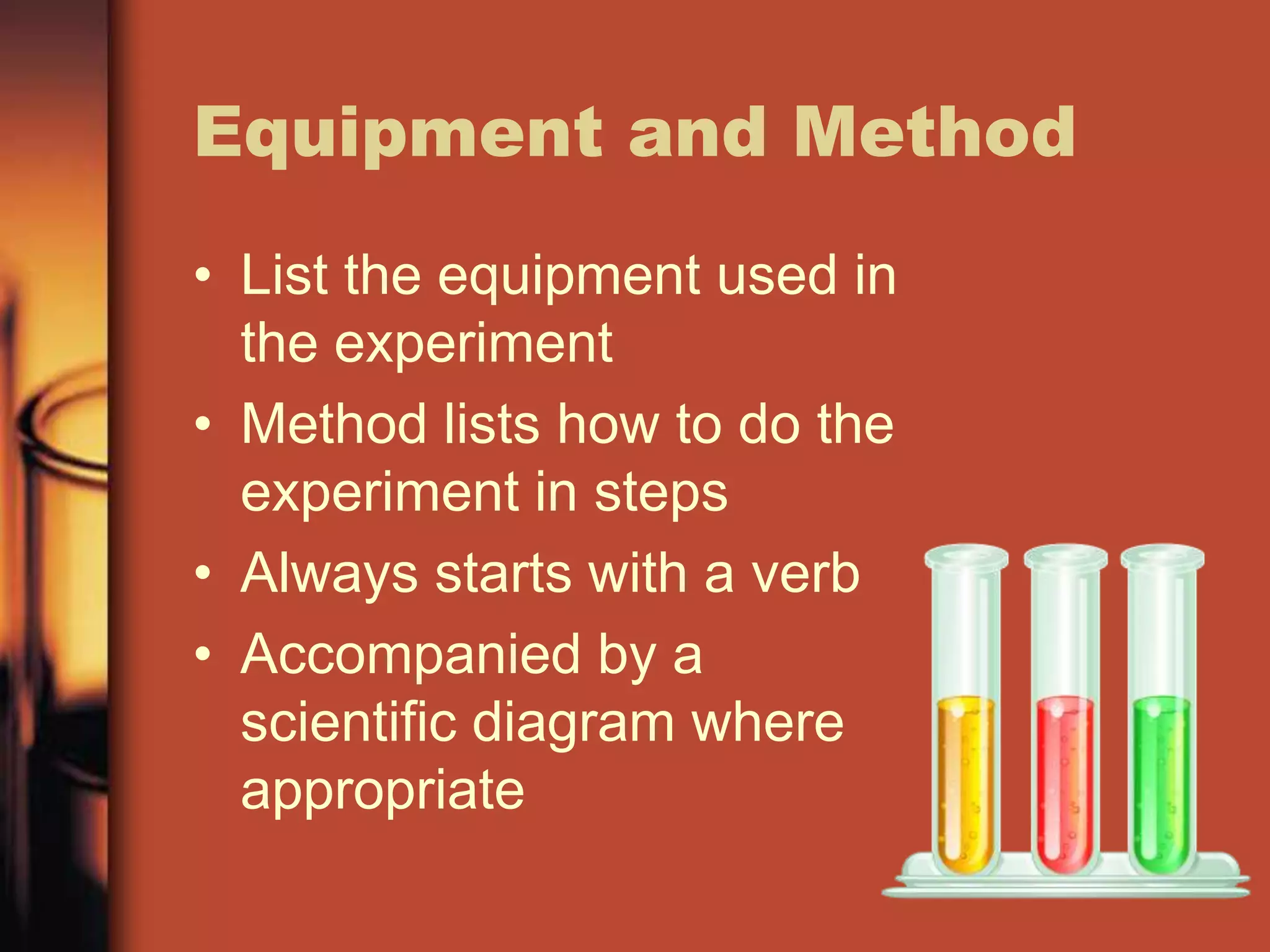
• Accompanied by a
  scientific diagram where
  appropriate
Types of variables
• Independent variable – What we change on purpose (Eg.
  how acidic the water is)

• Dependent variable – What we measure as the result
  (Eg. How much shells have dissolved after 3 days)

• Controlled variables – What we keep the same to keep
  the experiment fair (Eg. The amount of acids and water;
  the type of shell; the temperature of the environment)

• In most experiments there is ONE independent
  variable, ONE dependent variable and many controlled
  variables
Types of variables -
Strategies
• Cows Moo Softly
  – Change one thing
  – Measure one thing
  – Keep everything else the same
Controlled variables vs
  control


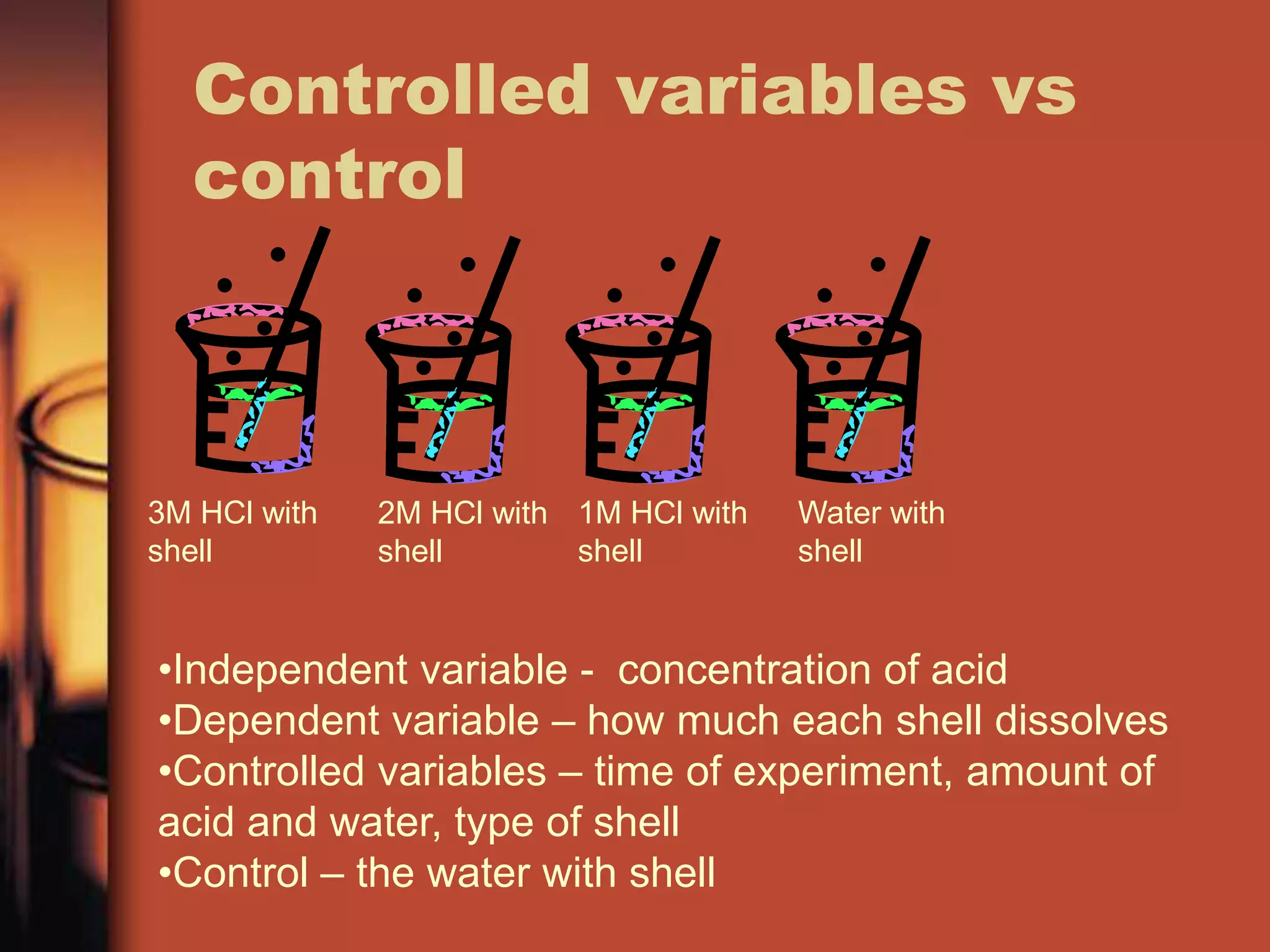
3M HCl with   2M HCl with 1M HCl with   Water with
shell         shell       shell         shell


•Independent variable - concentration of acid
•Dependent variable – how much each shell dissolves
•Controlled variables – time of experiment, amount of
acid and water, type of shell
•Control – the water with shell
Validity and reliability
• Validity – Is the experiment testing
  what you intend to test?

• Reliability – Are these results a
  fluke? If I repeated the experiment
  again, will I get the same results?
Replication
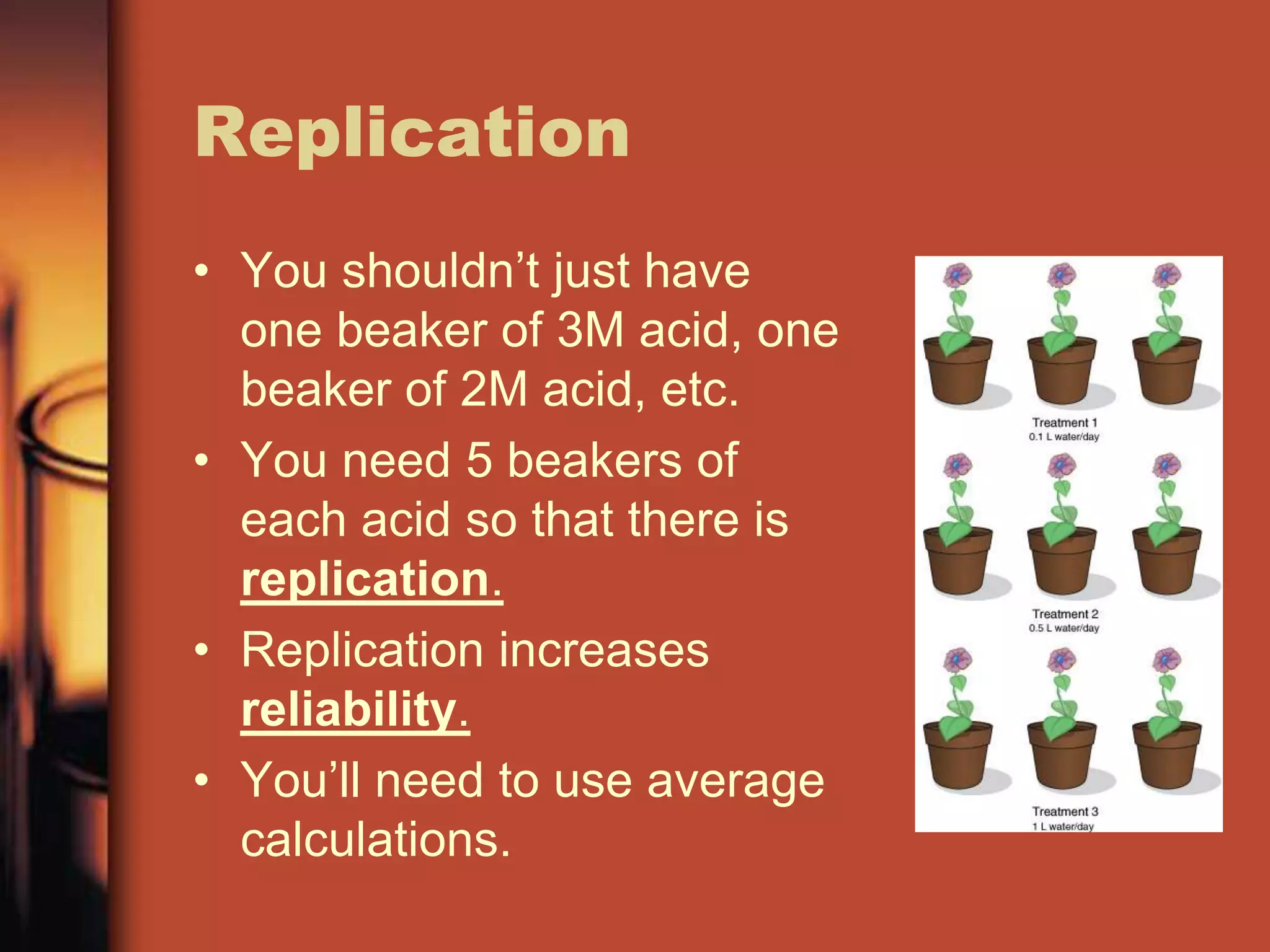
• You shouldn’t just have
  one beaker of 3M acid, one
  beaker of 2M acid, etc.
• You need 5 beakers of
  each acid so that there is
  replication.
• Replication increases
  reliability.
• You’ll need to use average
  calculations.
Results
• A table and graph must be
  done
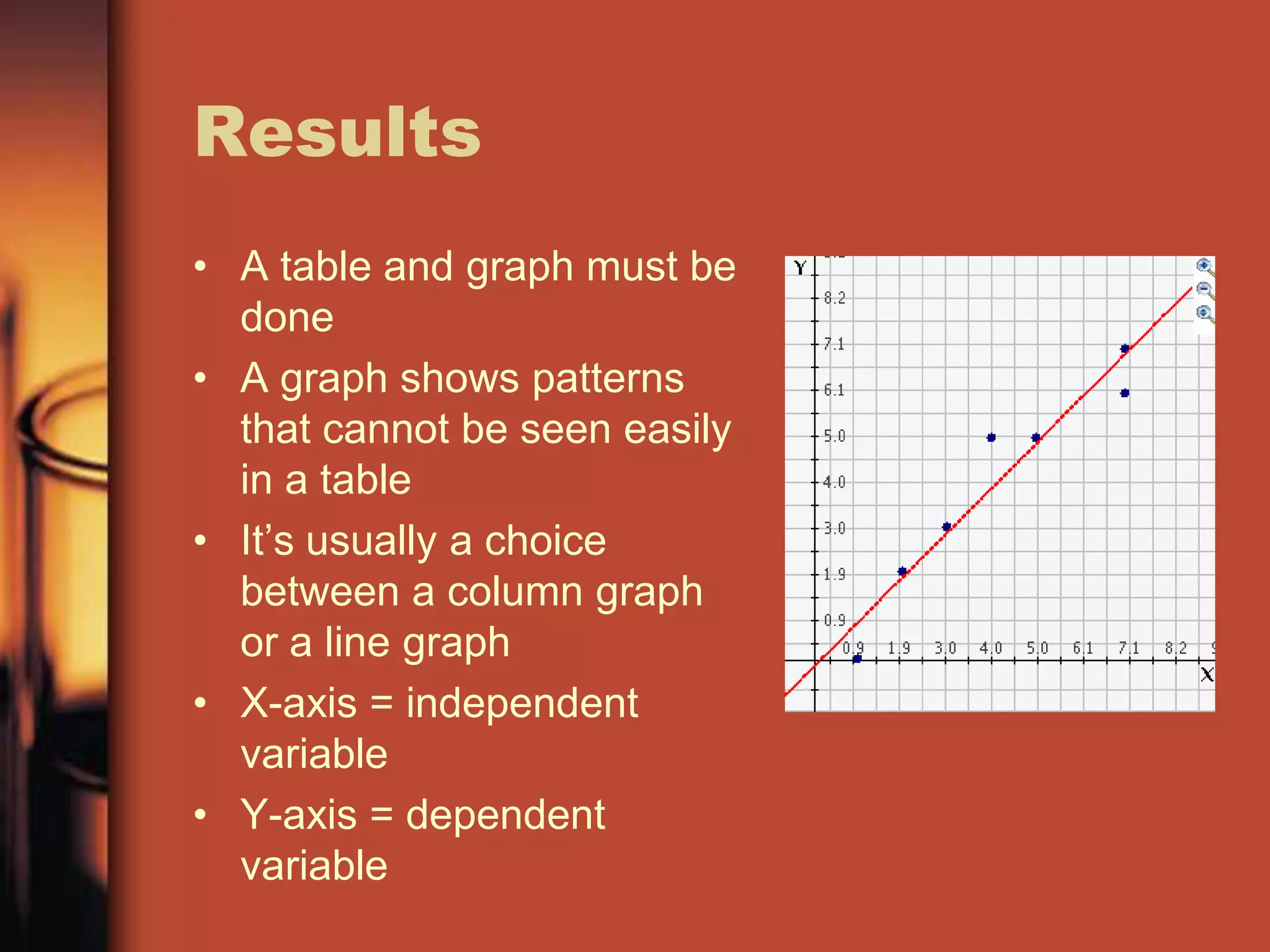
• A graph shows patterns
  that cannot be seen easily
  in a table
• It’s usually a choice
  between a column graph
  or a line graph
• X-axis = independent
  variable
• Y-axis = dependent
  variable
Discussion – analysis of
results
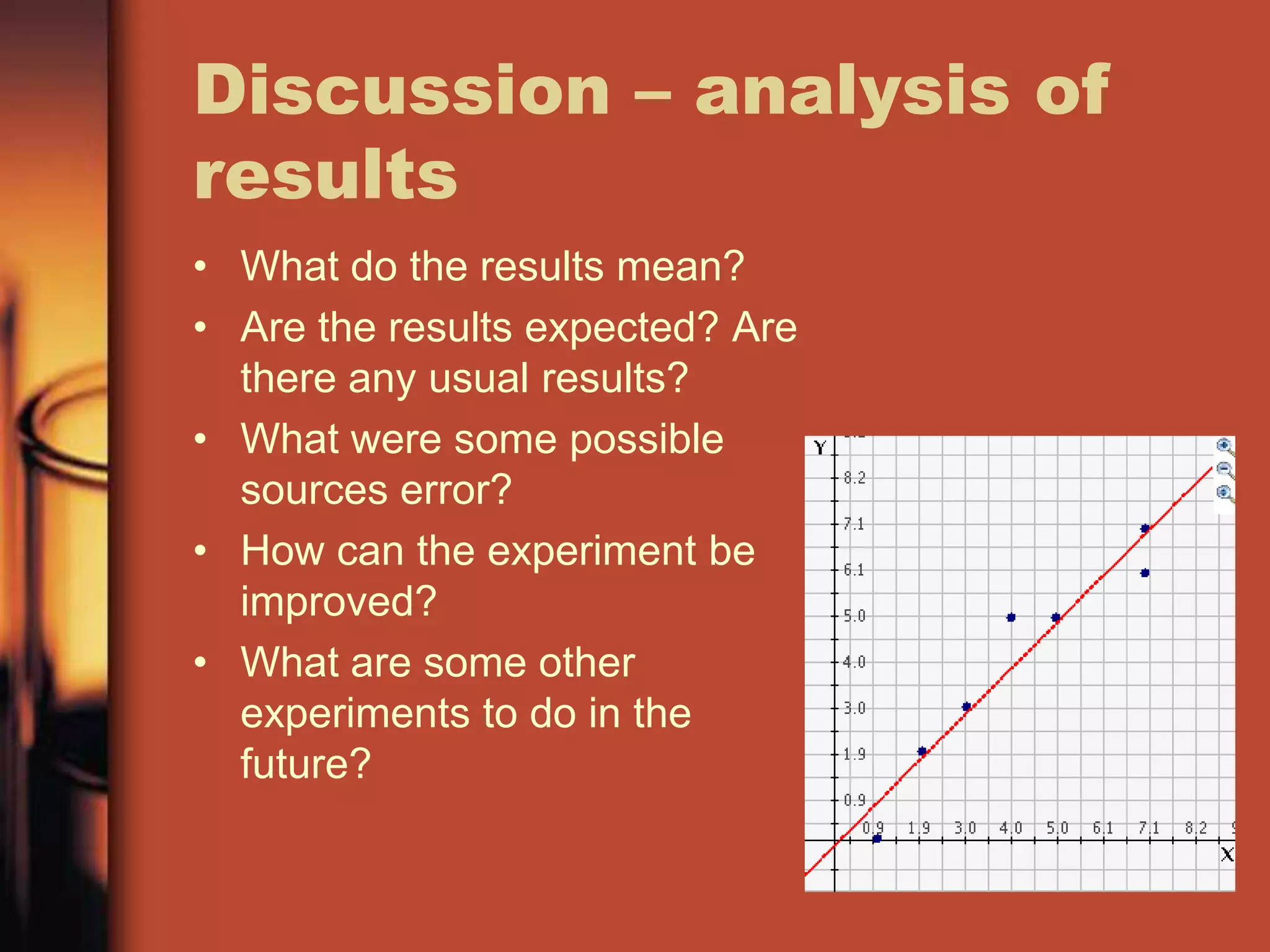
• What do the results mean?
• Are the results expected? Are
  there any usual results?
• What were some possible
  sources error?
• How can the experiment be
  improved?
• What are some other
  experiments to do in the
  future?
Conclusion
• The aim written in past tense and
  says whether the hypothesis is
  correct
• Eg. The effects of ocean acidification
  on shells were determined. The
  more acidic the water, the faster
  shells dissolve. The hypothesis was
  correct.

Teaching experimental design

  • 1.
  • 2.
    What is an“experiment”? • In school, “experiment” is often used to describe hands-on experiences
  • 3.
    What actually isan “experiment”? • A science experiment tests a hypothesis
  • 4.
    Components of an experiment • Background research • Aim • Hypothesis • Equipment • Types of variables • Results • Discussion • Conclusion
  • 5.
    Background research • Everyexperiment starts with a topic of interest (Eg. What are the effects of ocean acidification on living things?) • Background research finds out what we already know about the topic
  • 6.
    Aim • Always startswith “To” • Tells the reader what the experiment aims to do • Eg. To find out how ocean acidification affects the shells of living things
  • 7.
    Hypothesis • A predictionof the results based on the background research • Example – The more acidic the ocean is, the quicker the shells of ocean invertebrates will dissolve If A happens then B will happen
  • 8.
    Equipment and Method •List the equipment used in the experiment • Method lists how to do the experiment in steps • Always starts with a verb • Accompanied by a scientific diagram where appropriate
  • 9.
    Types of variables •Independent variable – What we change on purpose (Eg. how acidic the water is) • Dependent variable – What we measure as the result (Eg. How much shells have dissolved after 3 days) • Controlled variables – What we keep the same to keep the experiment fair (Eg. The amount of acids and water; the type of shell; the temperature of the environment) • In most experiments there is ONE independent variable, ONE dependent variable and many controlled variables
  • 10.
    Types of variables- Strategies • Cows Moo Softly – Change one thing – Measure one thing – Keep everything else the same
  • 11.
    Controlled variables vs control 3M HCl with 2M HCl with 1M HCl with Water with shell shell shell shell •Independent variable - concentration of acid •Dependent variable – how much each shell dissolves •Controlled variables – time of experiment, amount of acid and water, type of shell •Control – the water with shell
  • 12.
    Validity and reliability •Validity – Is the experiment testing what you intend to test? • Reliability – Are these results a fluke? If I repeated the experiment again, will I get the same results?
  • 13.
    Replication • You shouldn’tjust have one beaker of 3M acid, one beaker of 2M acid, etc. • You need 5 beakers of each acid so that there is replication. • Replication increases reliability. • You’ll need to use average calculations.
  • 14.
    Results • A tableand graph must be done • A graph shows patterns that cannot be seen easily in a table • It’s usually a choice between a column graph or a line graph • X-axis = independent variable • Y-axis = dependent variable
  • 15.
    Discussion – analysisof results • What do the results mean? • Are the results expected? Are there any usual results? • What were some possible sources error? • How can the experiment be improved? • What are some other experiments to do in the future?
  • 16.
    Conclusion • The aimwritten in past tense and says whether the hypothesis is correct • Eg. The effects of ocean acidification on shells were determined. The more acidic the water, the faster shells dissolve. The hypothesis was correct.