‘In the Name of Kind ALLAH’ 
Information 
Systems 
Fereshte Shabany Moghadam 
f_sh_moghadam@yahoo.com 
Amir-Kabir University of Technology 
Tehran, Iran 
Department of Industrial Engineering
Introduction 
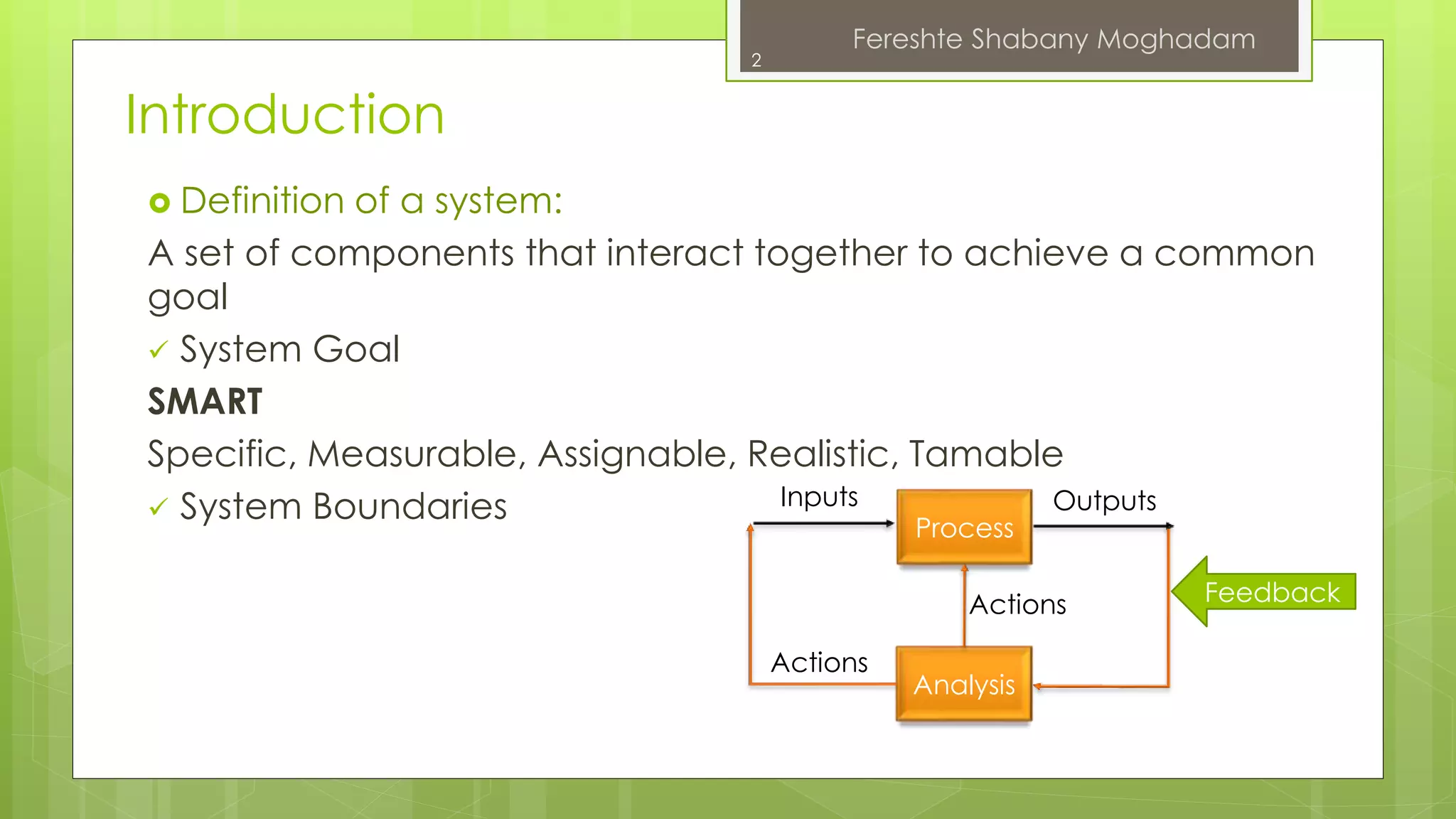
 Definition of a system: 
A set of components that interact together to achieve a common 
goal 
 System Goal 
SMART 
Specific, Measurable, Assignable, Realistic, Tamable 
 System Boundaries 
Inputs Outputs 
Process 
Actions 
Analysis 
Actions 
Feedback 
2 
Fereshte Shabany Moghadam
Introduction 
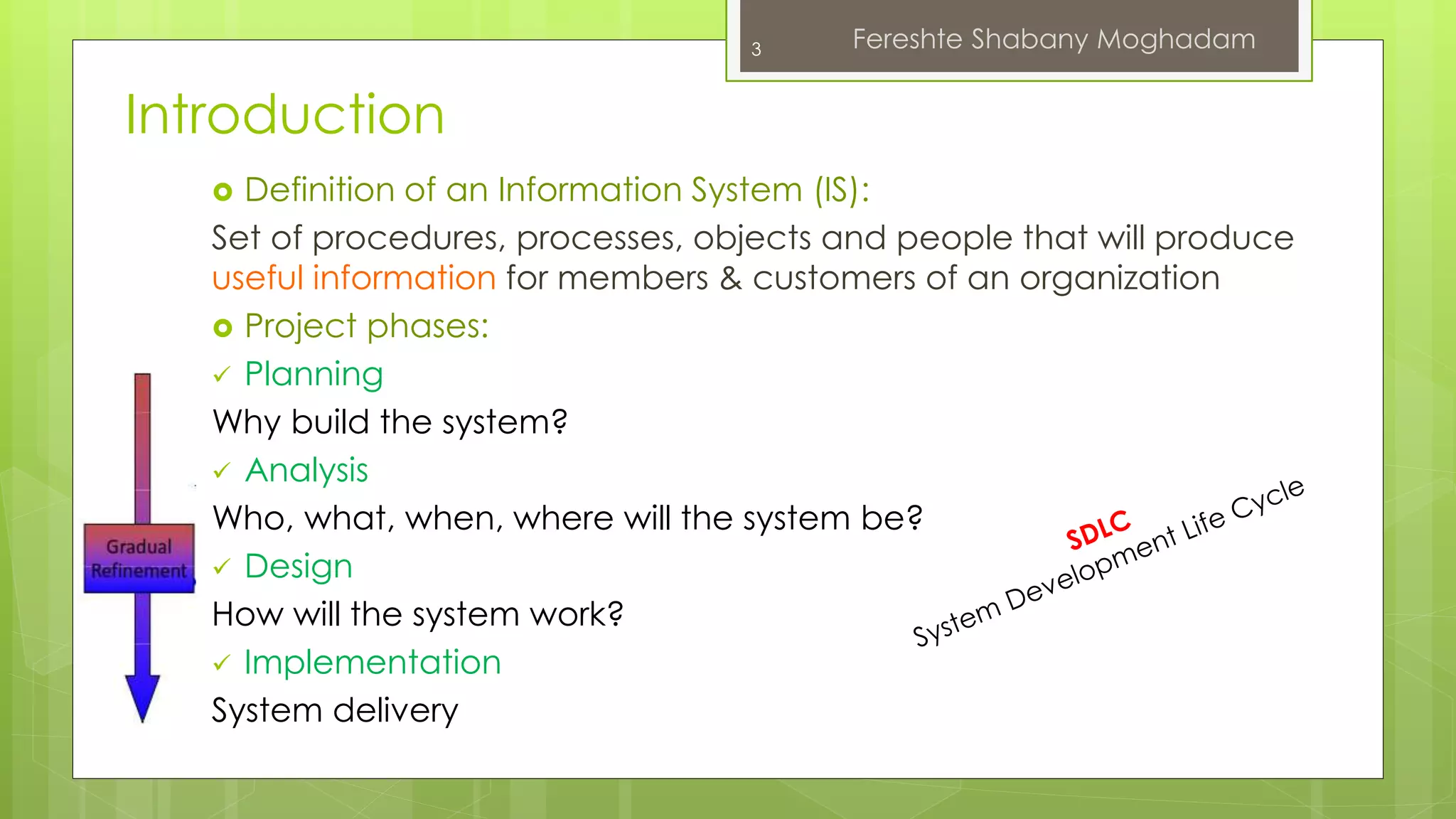
 Definition of an Information System (IS): 
Set of procedures, processes, objects and people that will produce 
useful information for members & customers of an organization 
 Project phases: 
 Planning 
Why build the system? 
 Analysis 
Who, what, when, where will the system be? 
 Design 
How will the system work? 
 Implementation 
System delivery 
3 Fereshte Shabany Moghadam
Introduction 
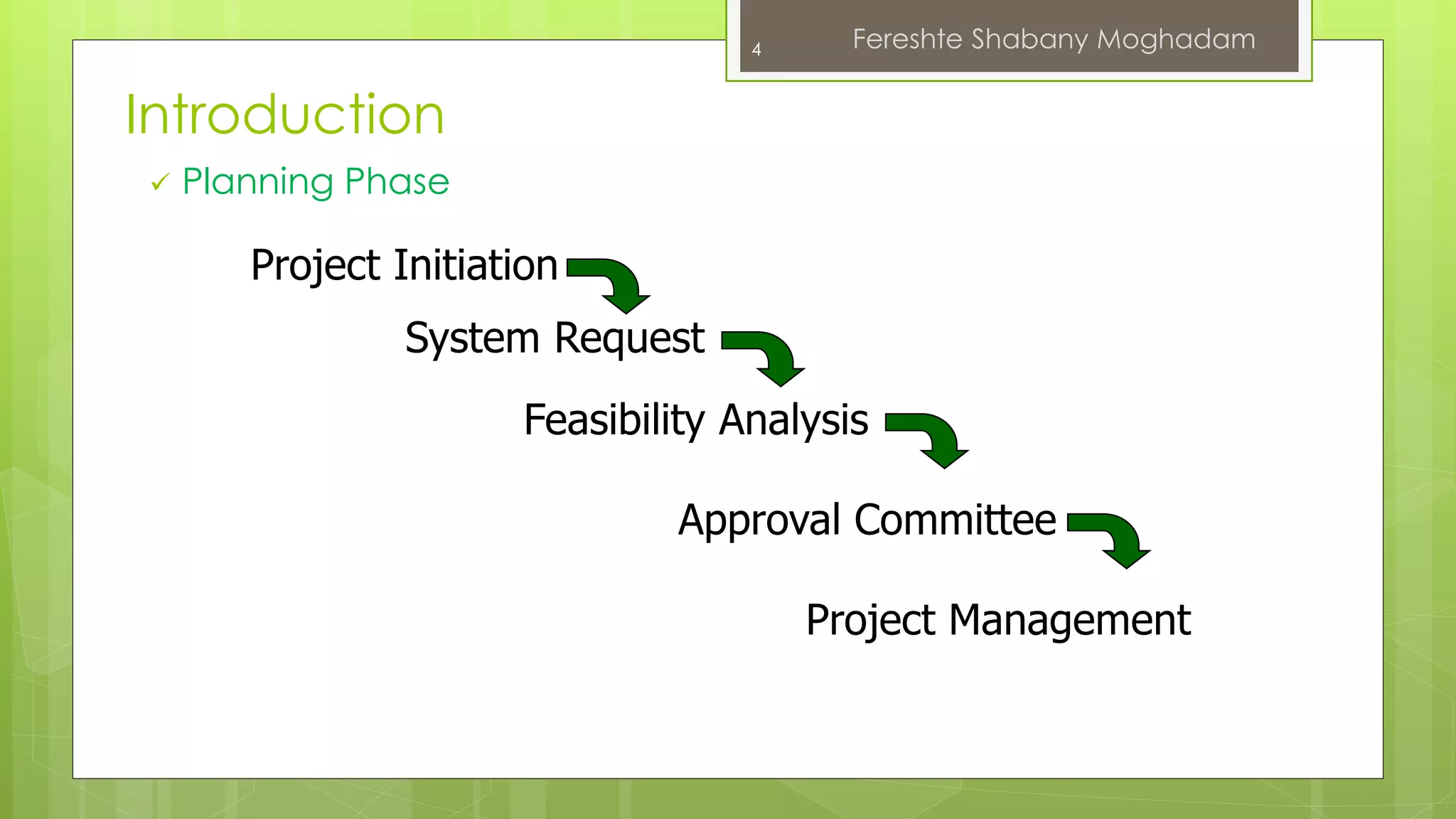
 Planning Phase 
Project Initiation 
System Request 
4 Fereshte Shabany Moghadam 
Feasibility Analysis 
Approval Committee 
Project Management
Introduction 
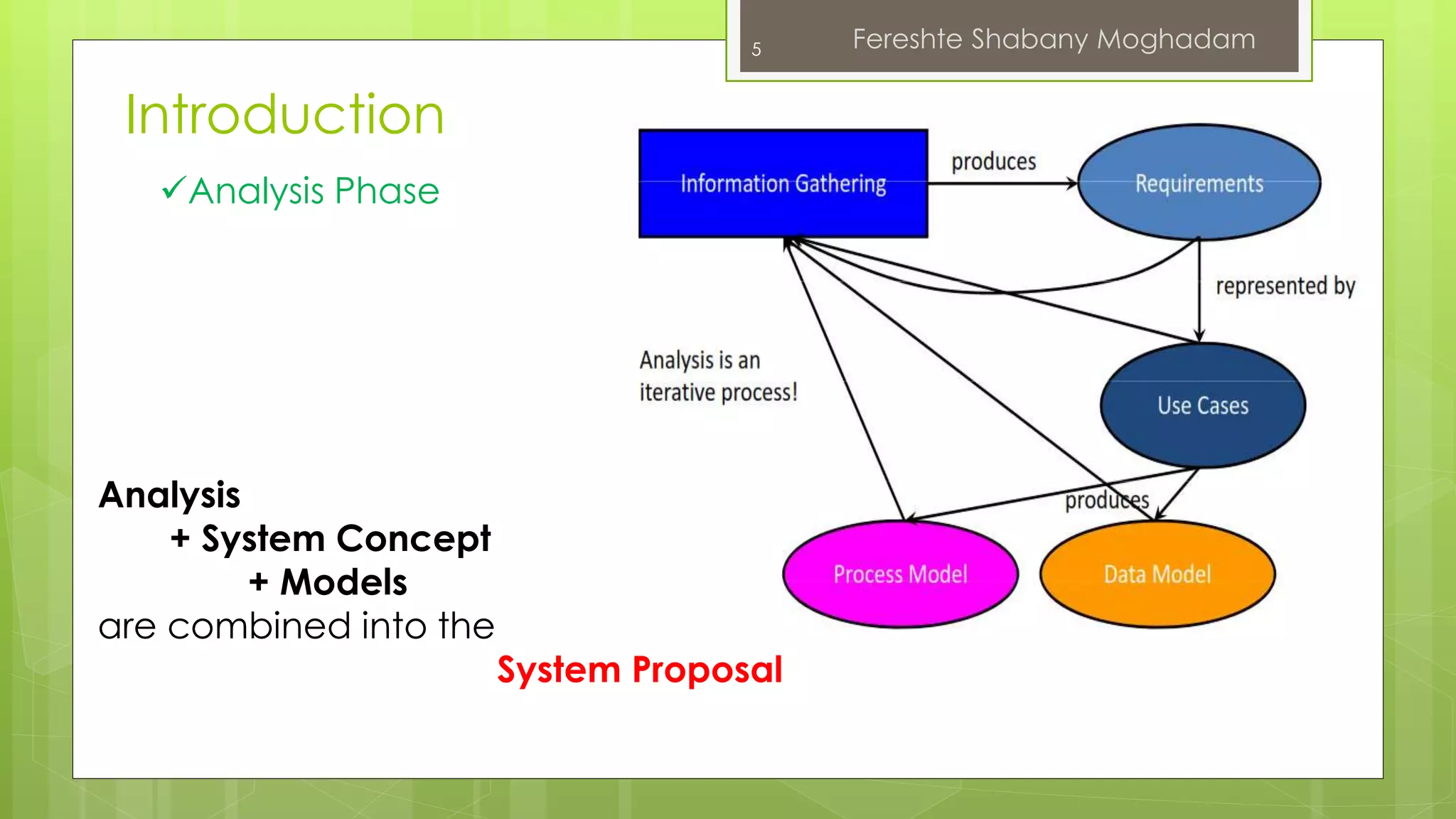
Analysis Phase 
Analysis 
+ System Concept 
+ Models 
are combined into the 
5 Fereshte Shabany Moghadam 
System Proposal
Introduction 
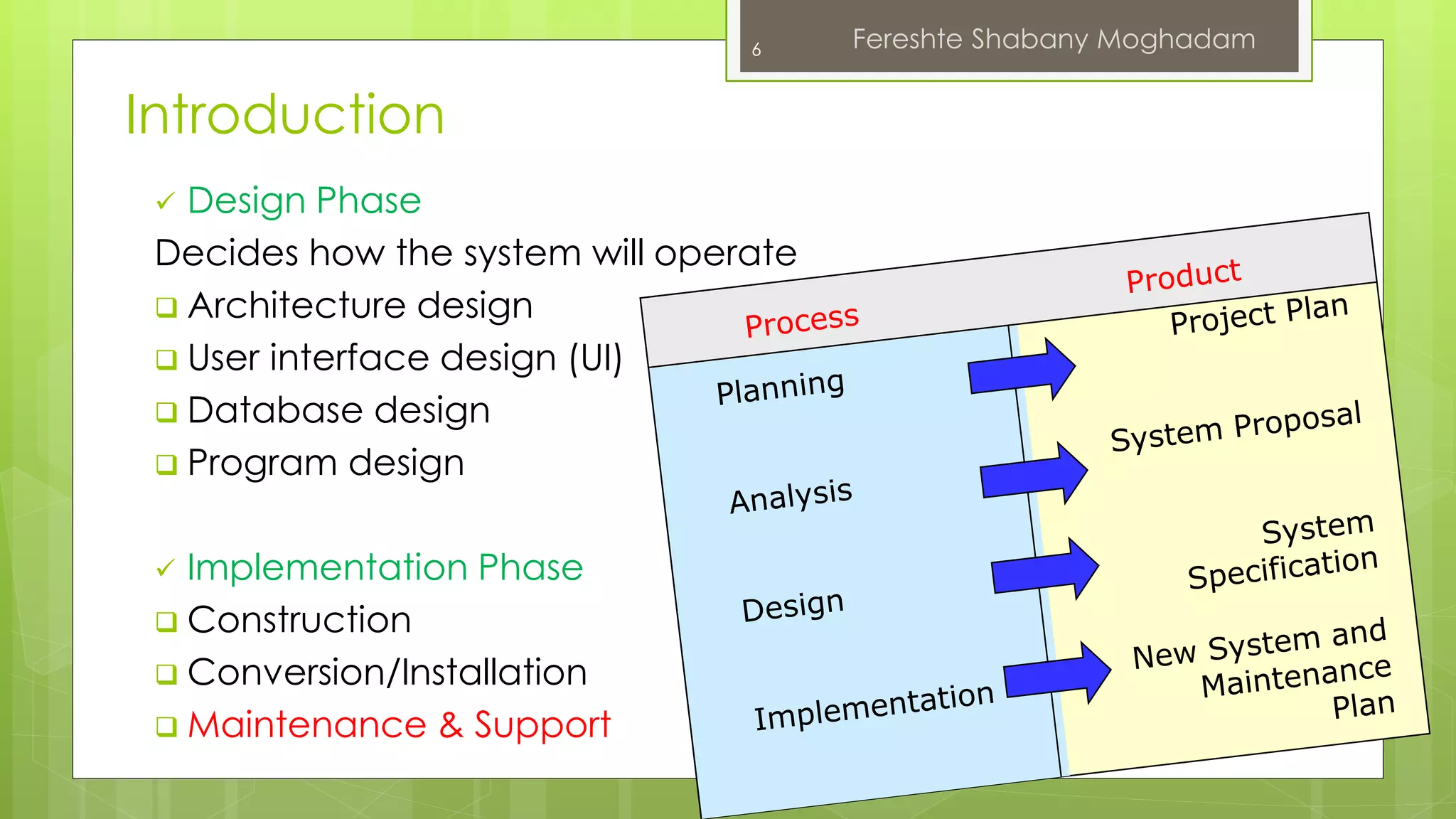
 Design Phase 
Decides how the system will operate 
 Architecture design 
 User interface design (UI) 
 Database design 
 Program design 
 Implementation Phase 
 Construction 
 Conversion/Installation 
 Maintenance & Support 
6 Fereshte Shabany Moghadam
IS Development Methodologies 
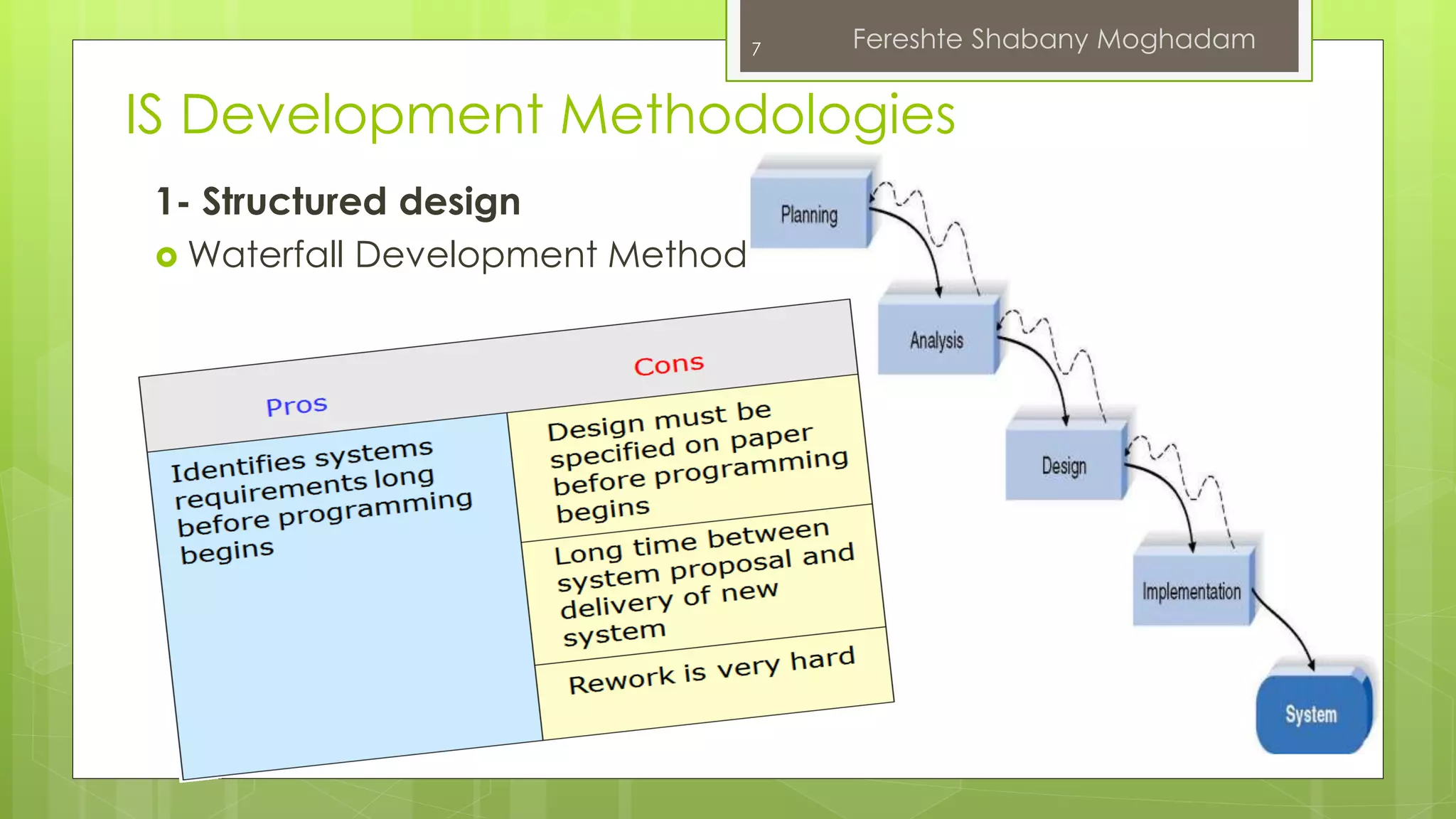
1- Structured design 
Waterfall Development Method 
7 Fereshte Shabany Moghadam
IS Development Methodologies 
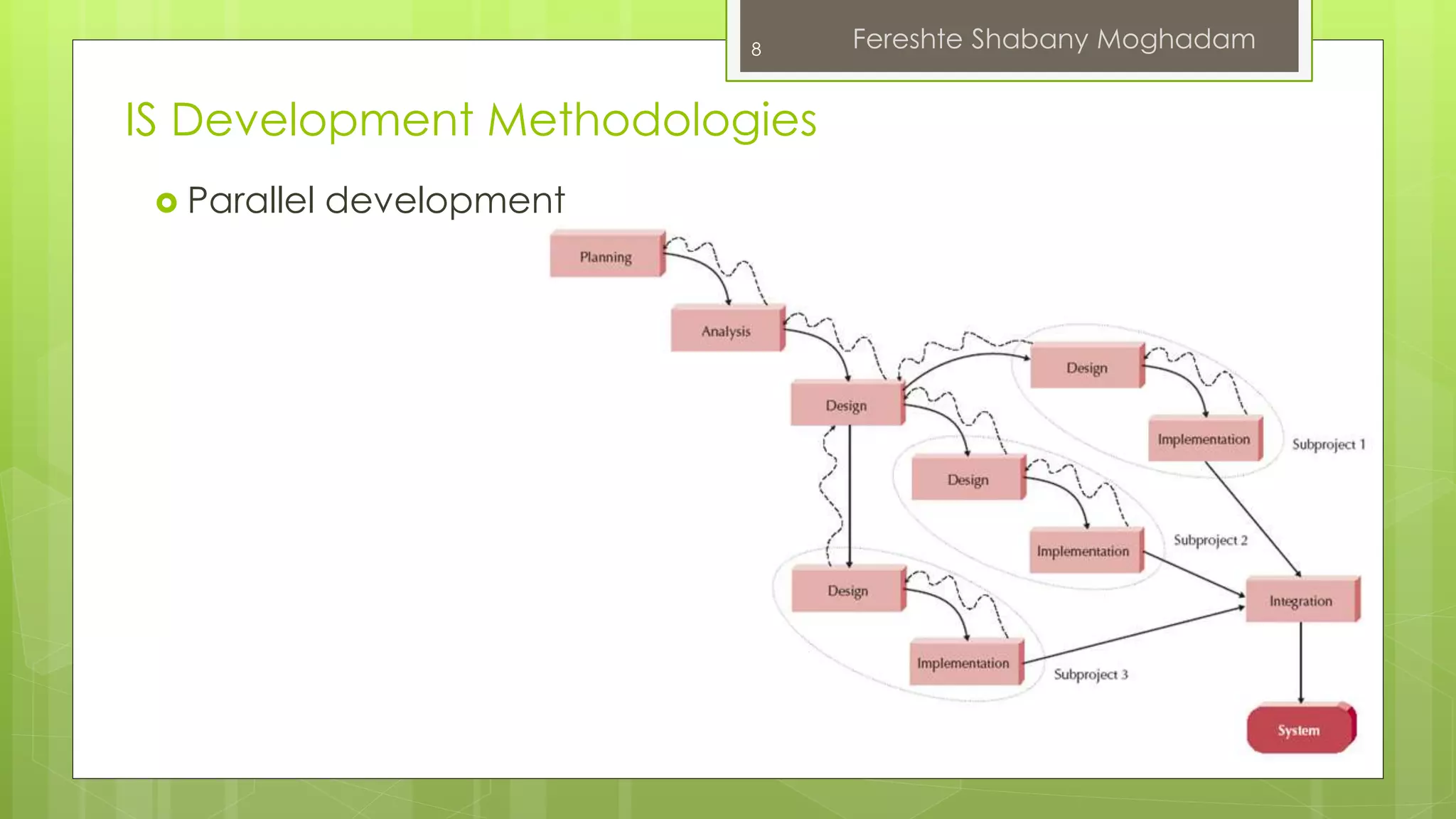
 Parallel development 
8 Fereshte Shabany Moghadam
IS Development Methodologies 
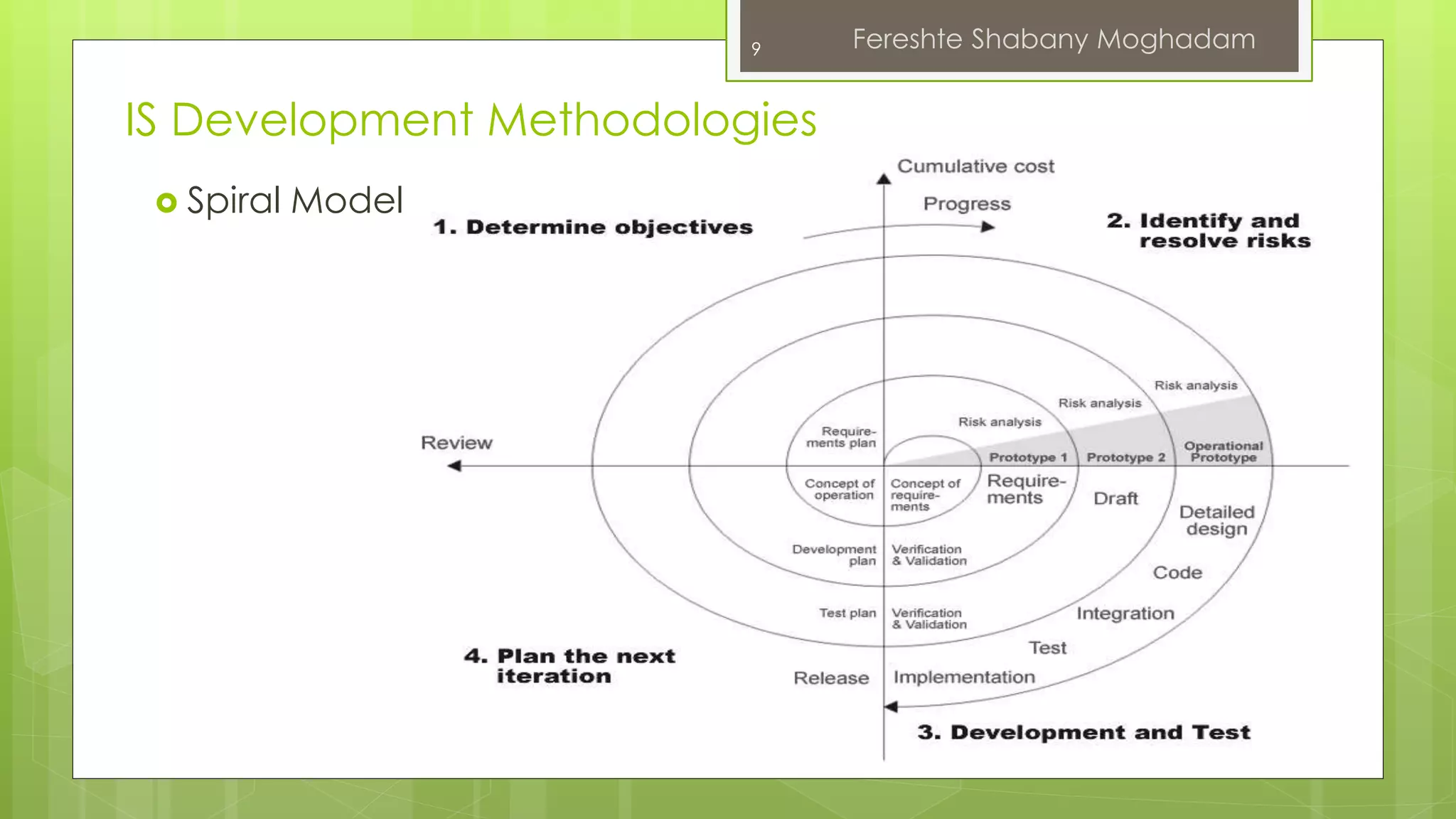
 Spiral Model 
9 Fereshte Shabany Moghadam
10 Fereshte Shabany Moghadam 
IS Development Methodologies 
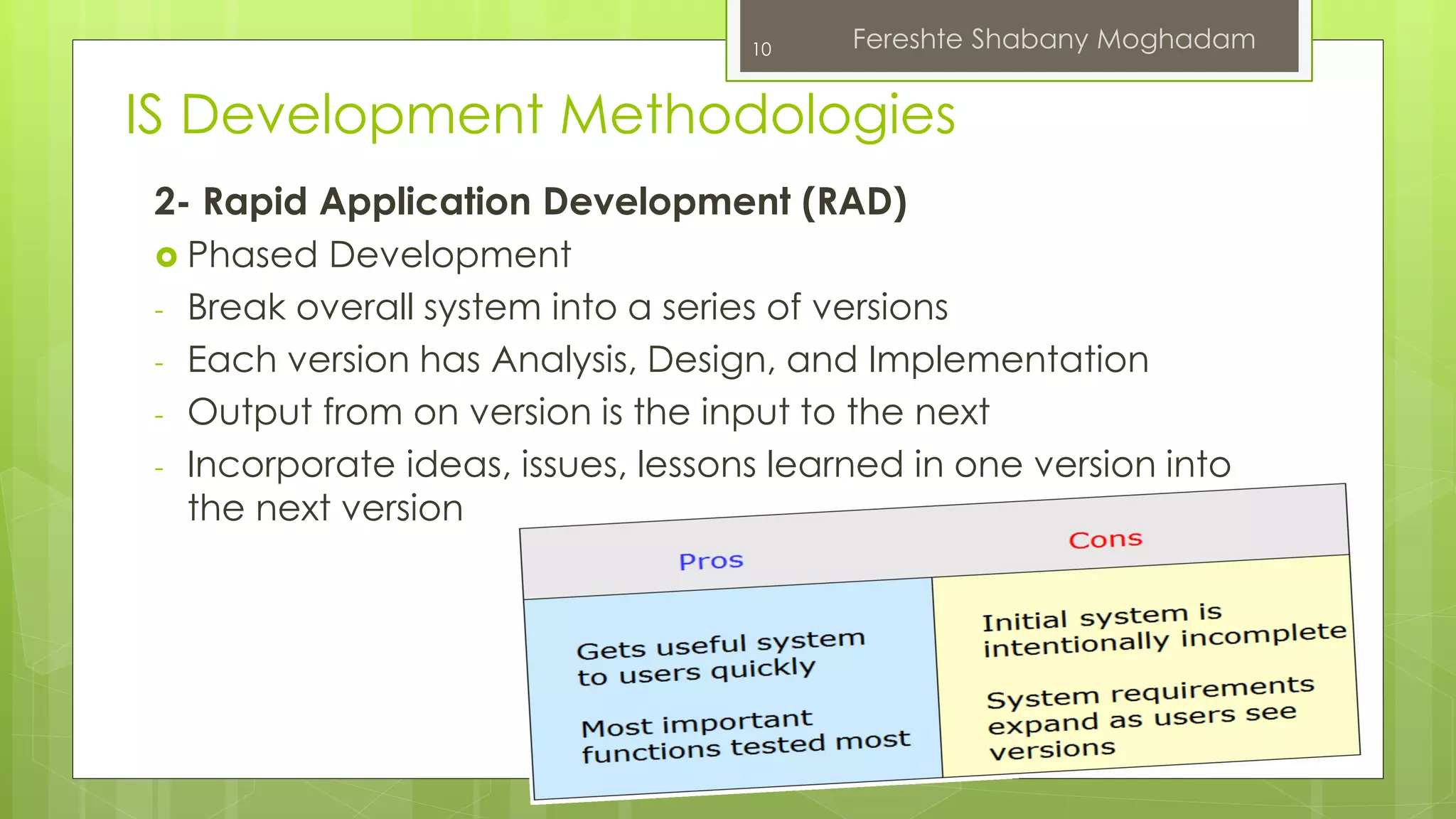
2- Rapid Application Development (RAD) 
 Phased Development 
- Break overall system into a series of versions 
- Each version has Analysis, Design, and Implementation 
- Output from on version is the input to the next 
- Incorporate ideas, issues, lessons learned in one version into 
the next version
IS Development Methodologies 
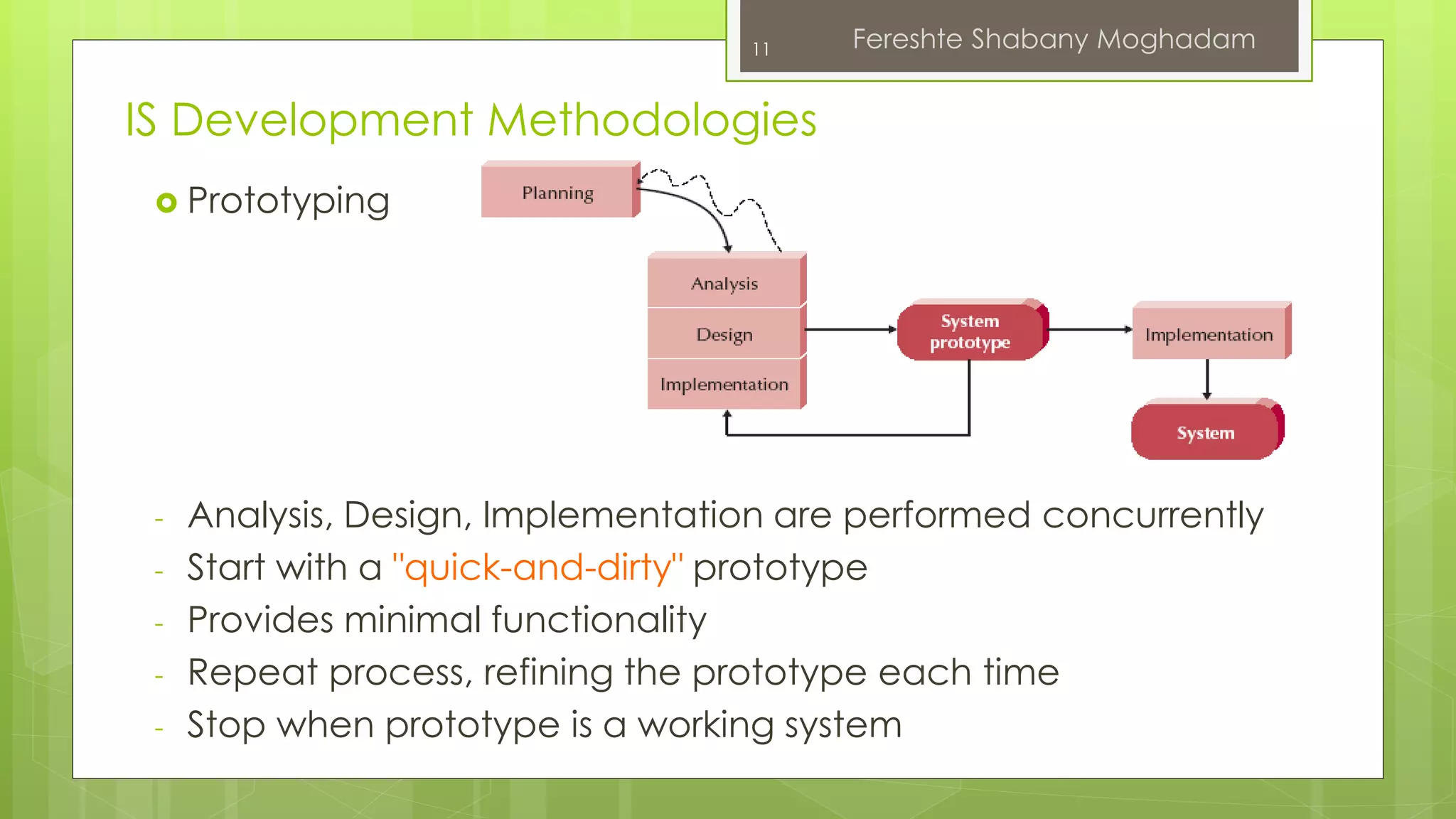
 Prototyping 
11 Fereshte Shabany Moghadam 
- Analysis, Design, Implementation are performed concurrently 
- Start with a "quick-and-dirty" prototype 
- Provides minimal functionality 
- Repeat process, refining the prototype each time 
- Stop when prototype is a working system
12 
IS Development Methodologies 
Fereshte Shabany Moghadam
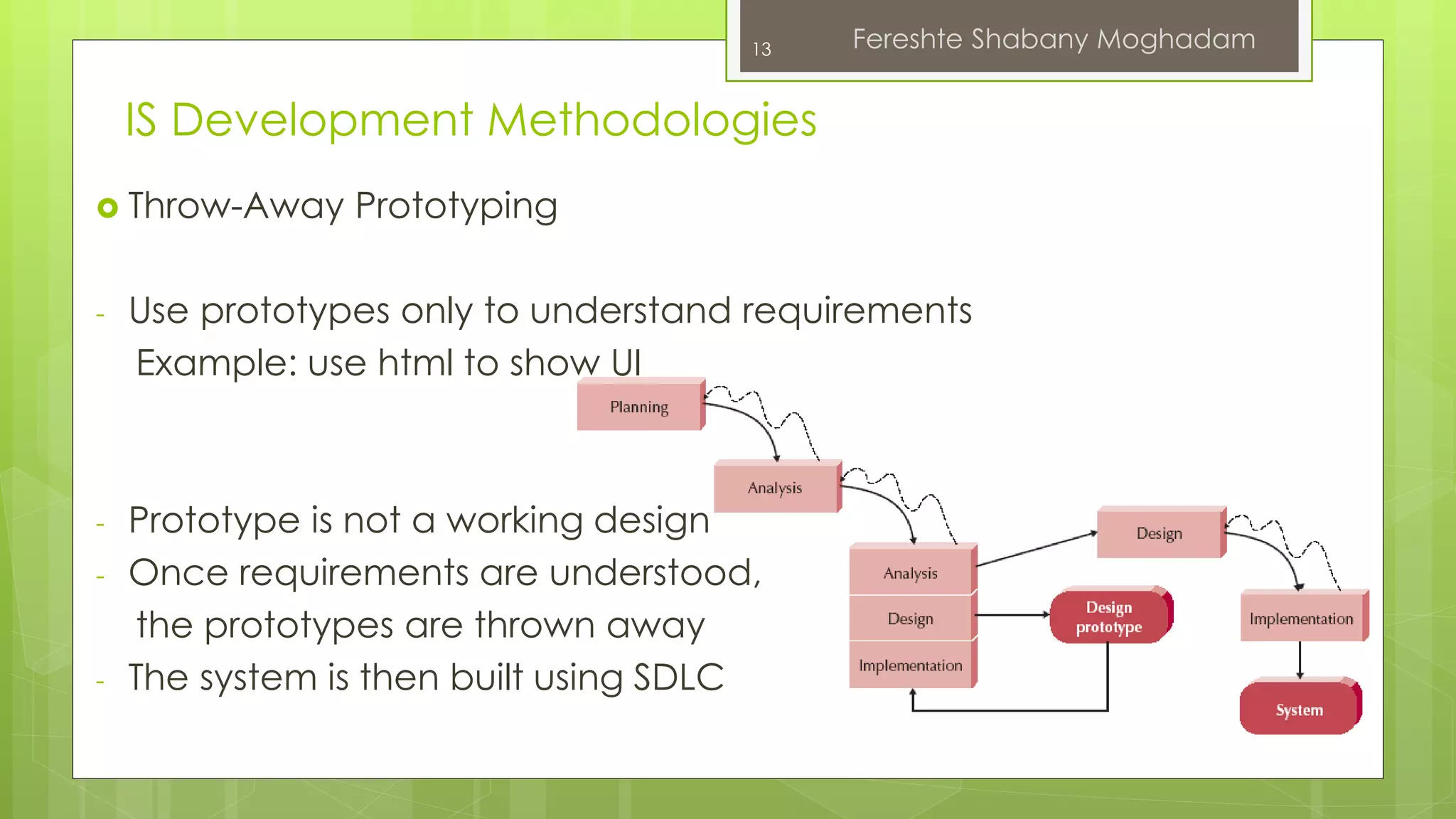
 Throw-Away Prototyping 
- Use prototypes only to understand requirements 
Example: use html to show UI 
- Prototype is not a working design 
- Once requirements are understood, 
the prototypes are thrown away 
- The system is then built using SDLC 
13 Fereshte Shabany Moghadam 
IS Development Methodologies
14 
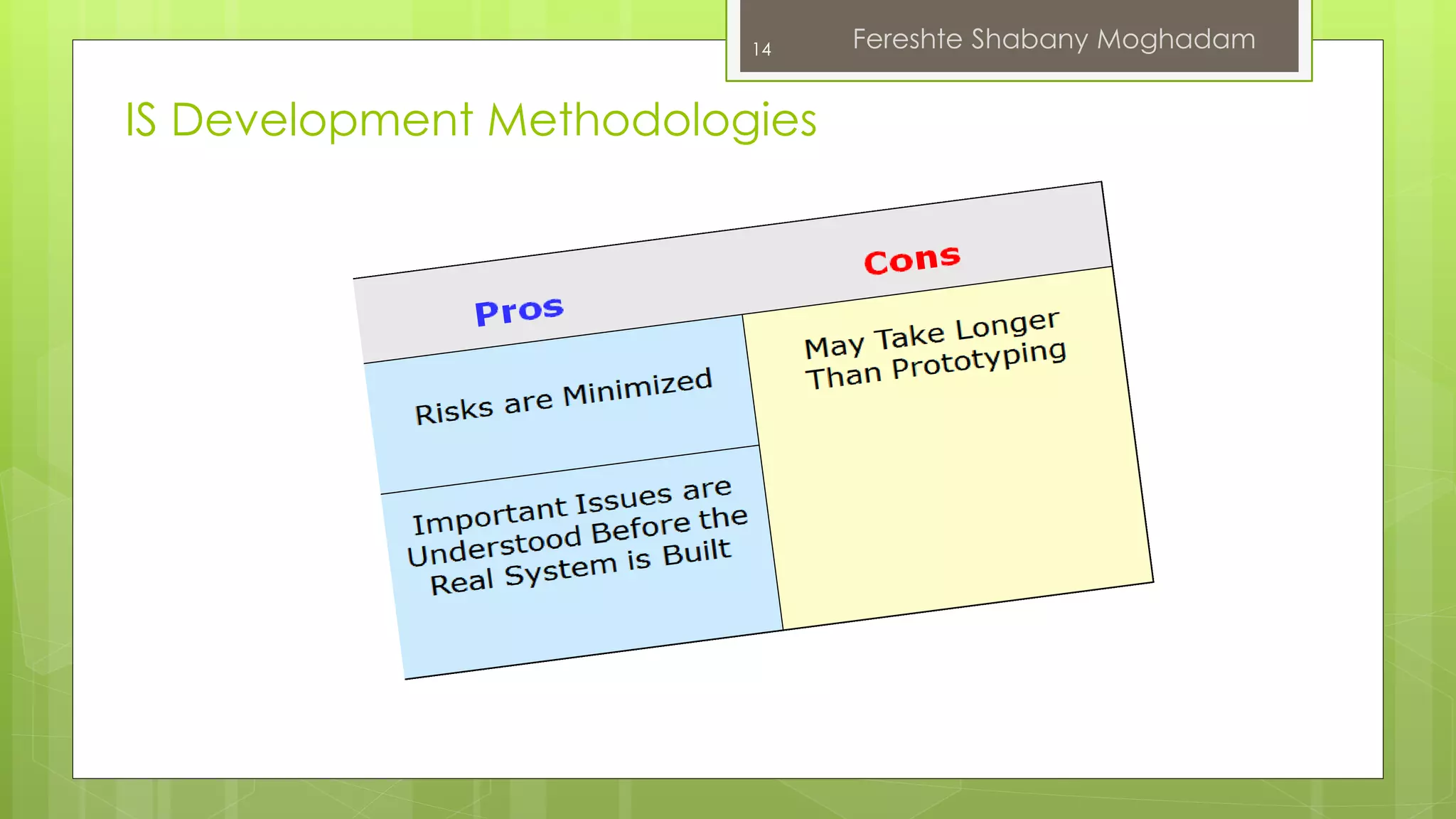
IS Development Methodologies 
Fereshte Shabany Moghadam
15 Fereshte Shabany Moghadam 
IS Development Methodologies 
3- Agile development 
 XP streamline SDLC 
- Just a few rules that are easy to learn and follow Streamline 
the SDLC 
- Eliminate much of the modeling and documentation 
- Emphasize simple, iterative application development
16 
Fereshte Shabany Moghadam 
IS Development Methodologies
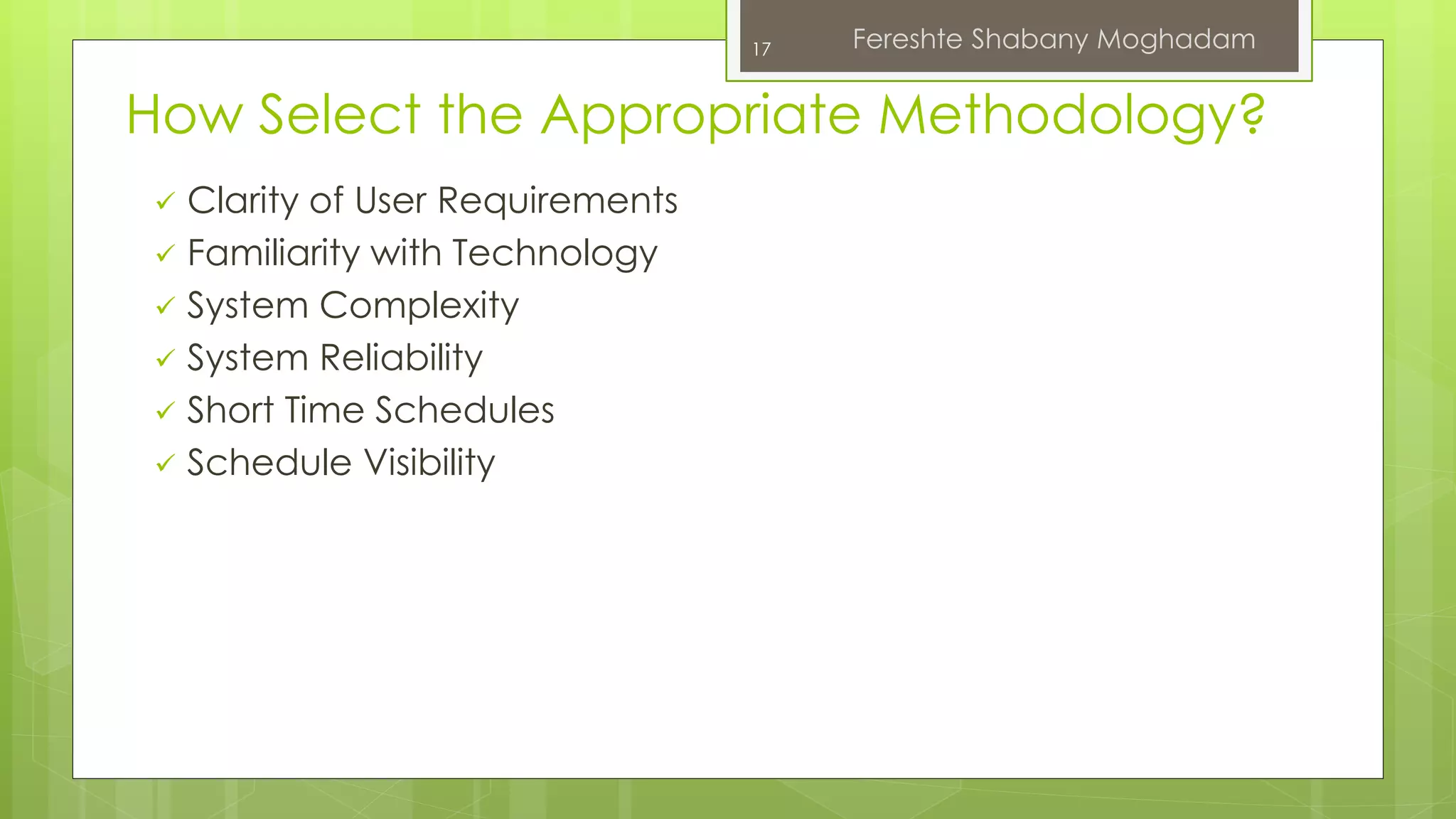
How Select the Appropriate Methodology? 
 Clarity of User Requirements 
 Familiarity with Technology 
 System Complexity 
 System Reliability 
 Short Time Schedules 
 Schedule Visibility 
17 Fereshte Shabany Moghadam
18 Fereshte Shabany Moghadam 
Criteria for Selecting a Methodology
19 Fereshte Shabany Moghadam 
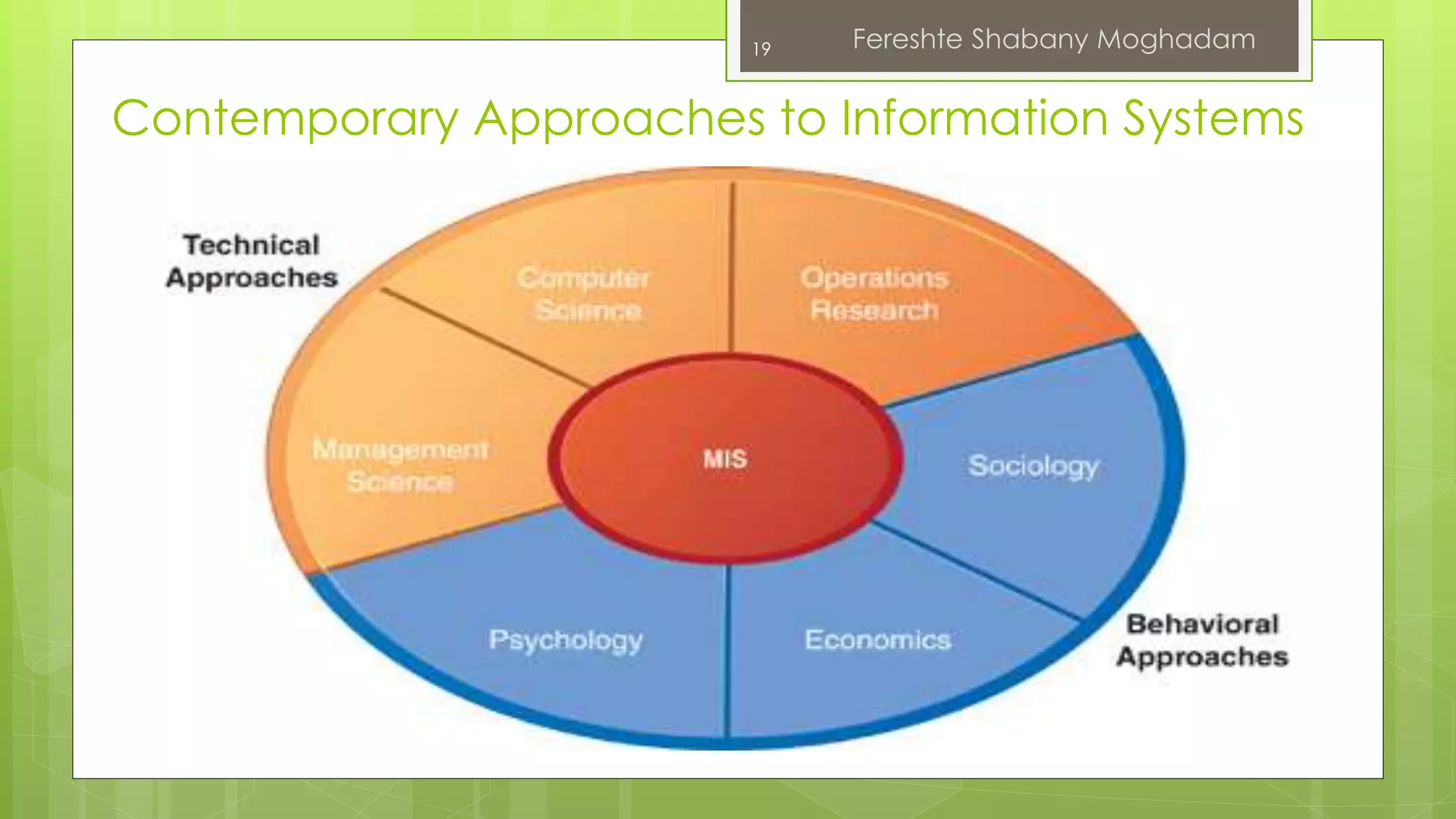
Contemporary Approaches to Information Systems
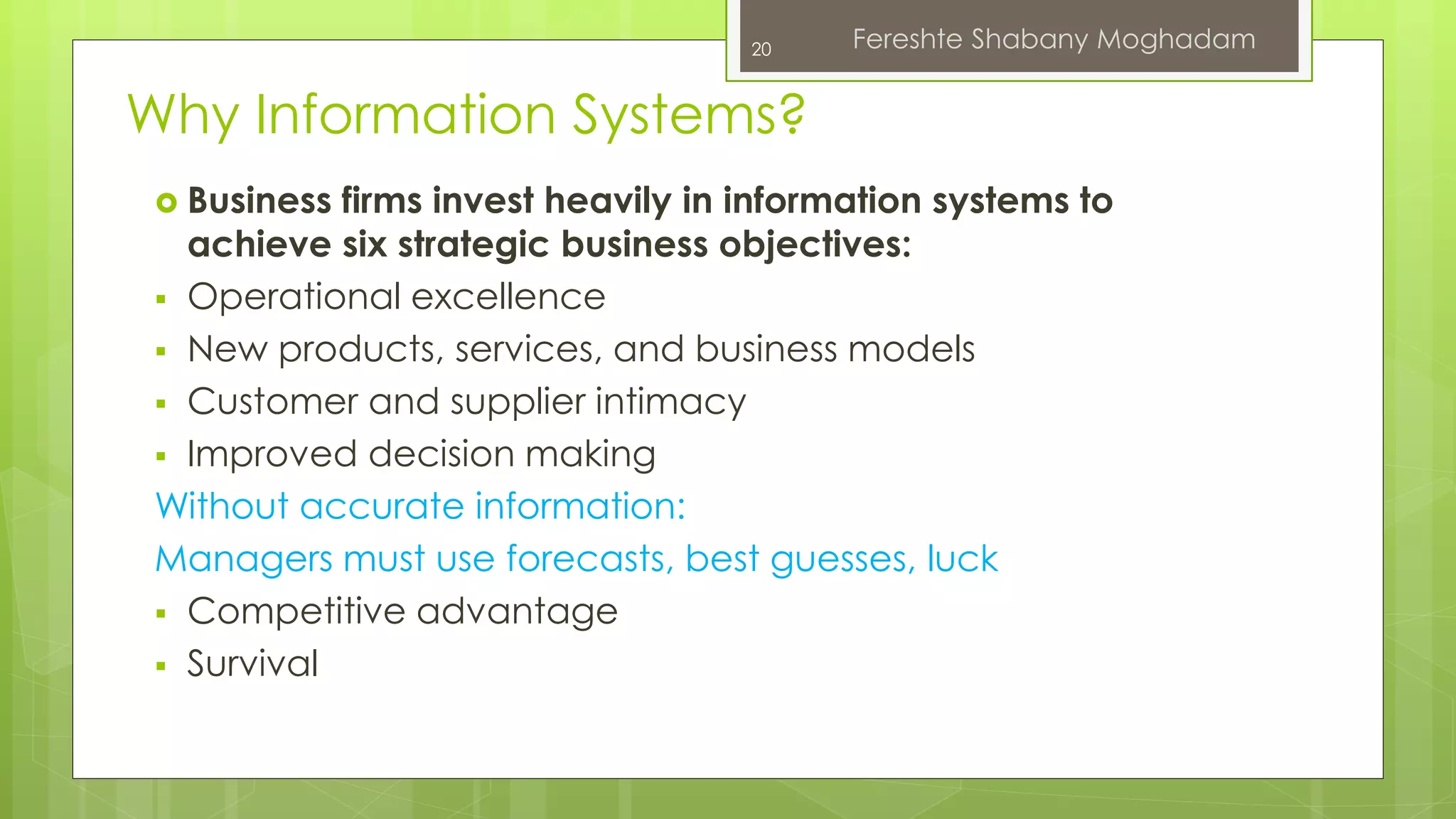
Why Information Systems? 
 Business firms invest heavily in information systems to 
achieve six strategic business objectives: 
 Operational excellence 
 New products, services, and business models 
 Customer and supplier intimacy 
 Improved decision making 
Without accurate information: 
Managers must use forecasts, best guesses, luck 
 Competitive advantage 
 Survival 
20 Fereshte Shabany Moghadam
21 Fereshte Shabany Moghadam 
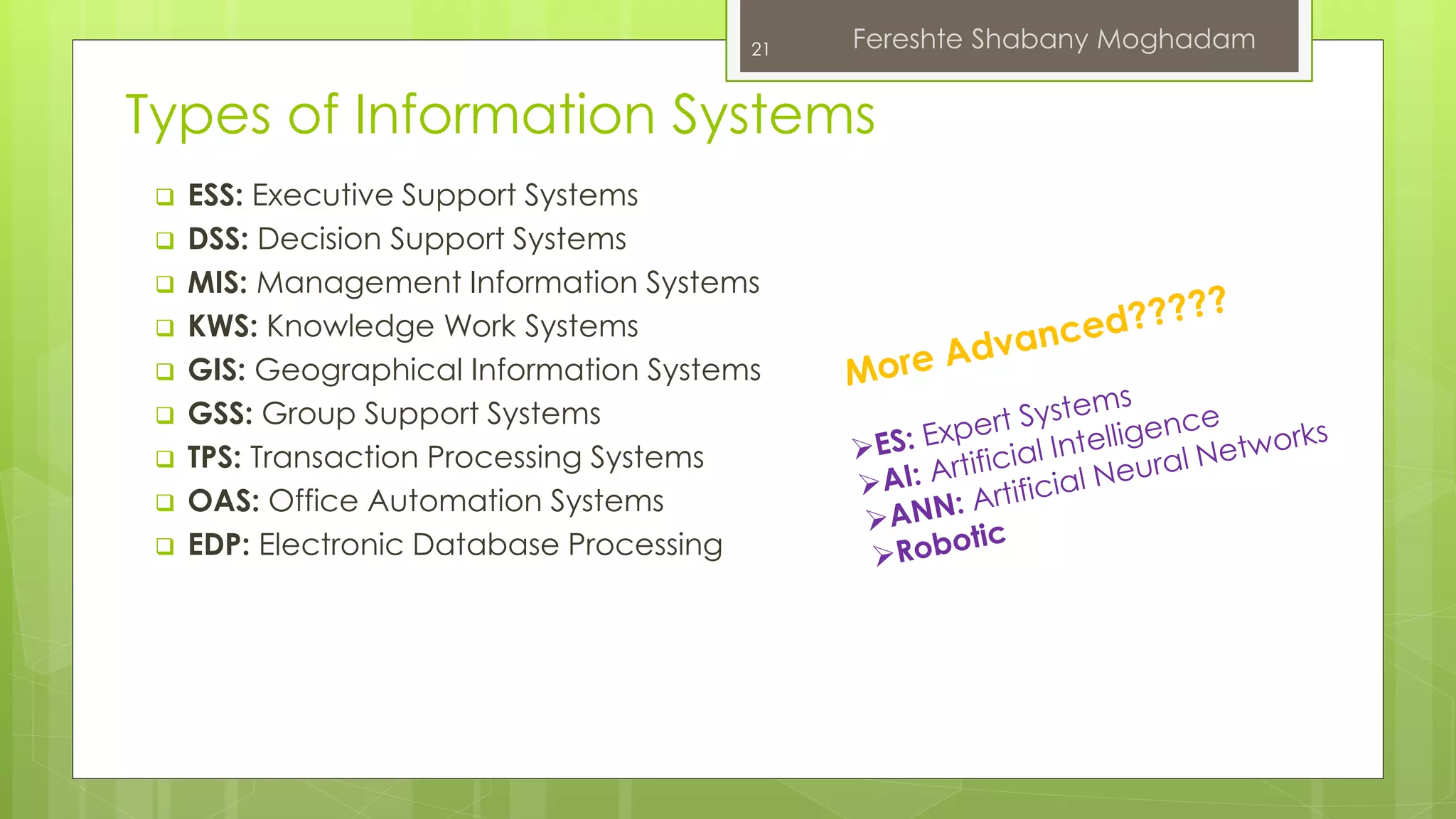
Types of Information Systems 
 ESS: Executive Support Systems 
 DSS: Decision Support Systems 
 MIS: Management Information Systems 
 KWS: Knowledge Work Systems 
 GIS: Geographical Information Systems 
 GSS: Group Support Systems 
 TPS: Transaction Processing Systems 
 OAS: Office Automation Systems 
 EDP: Electronic Database Processing
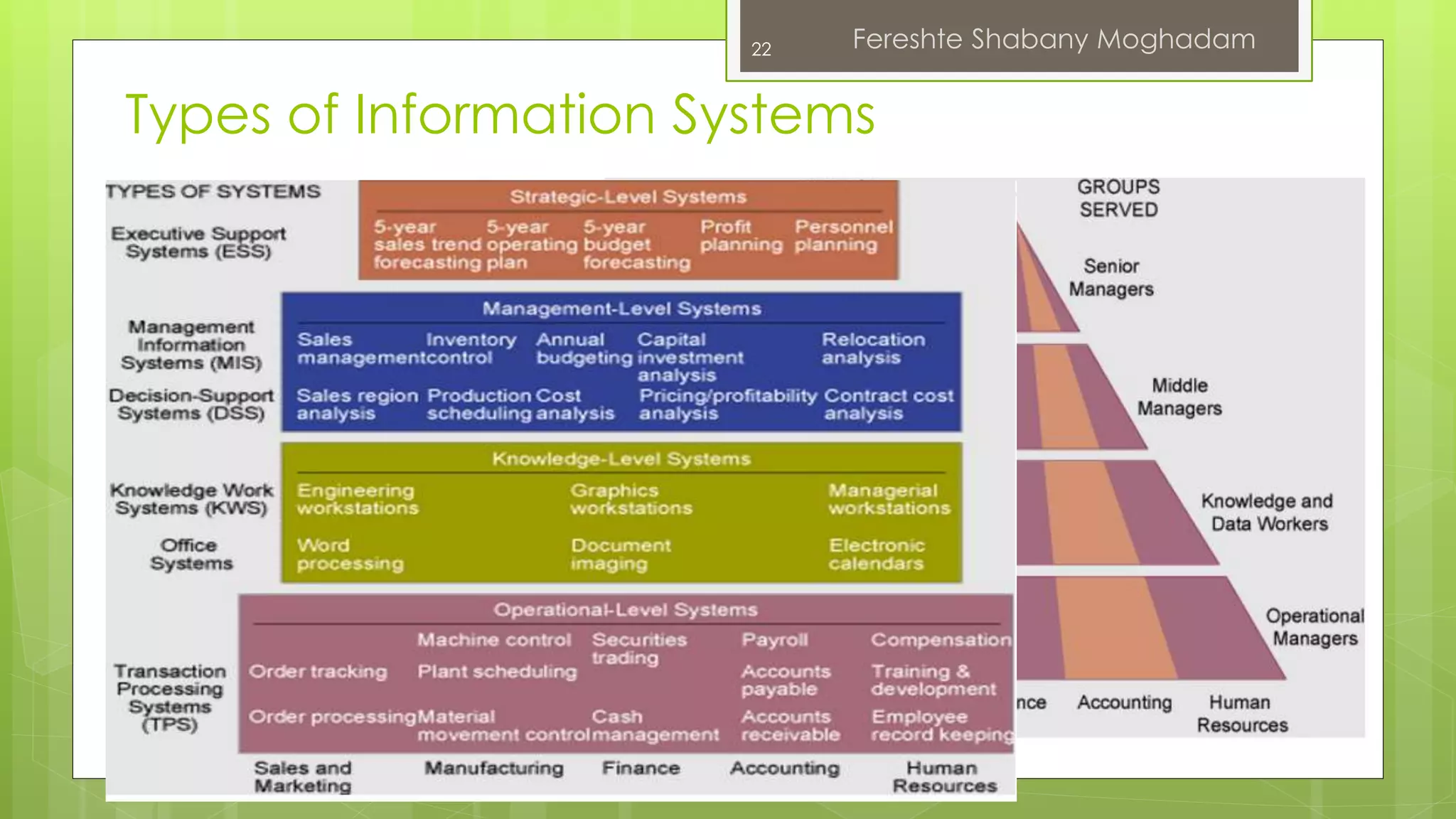
22 Fereshte Shabany Moghadam 
Types of Information Systems
23 Fereshte Shabany Moghadam 
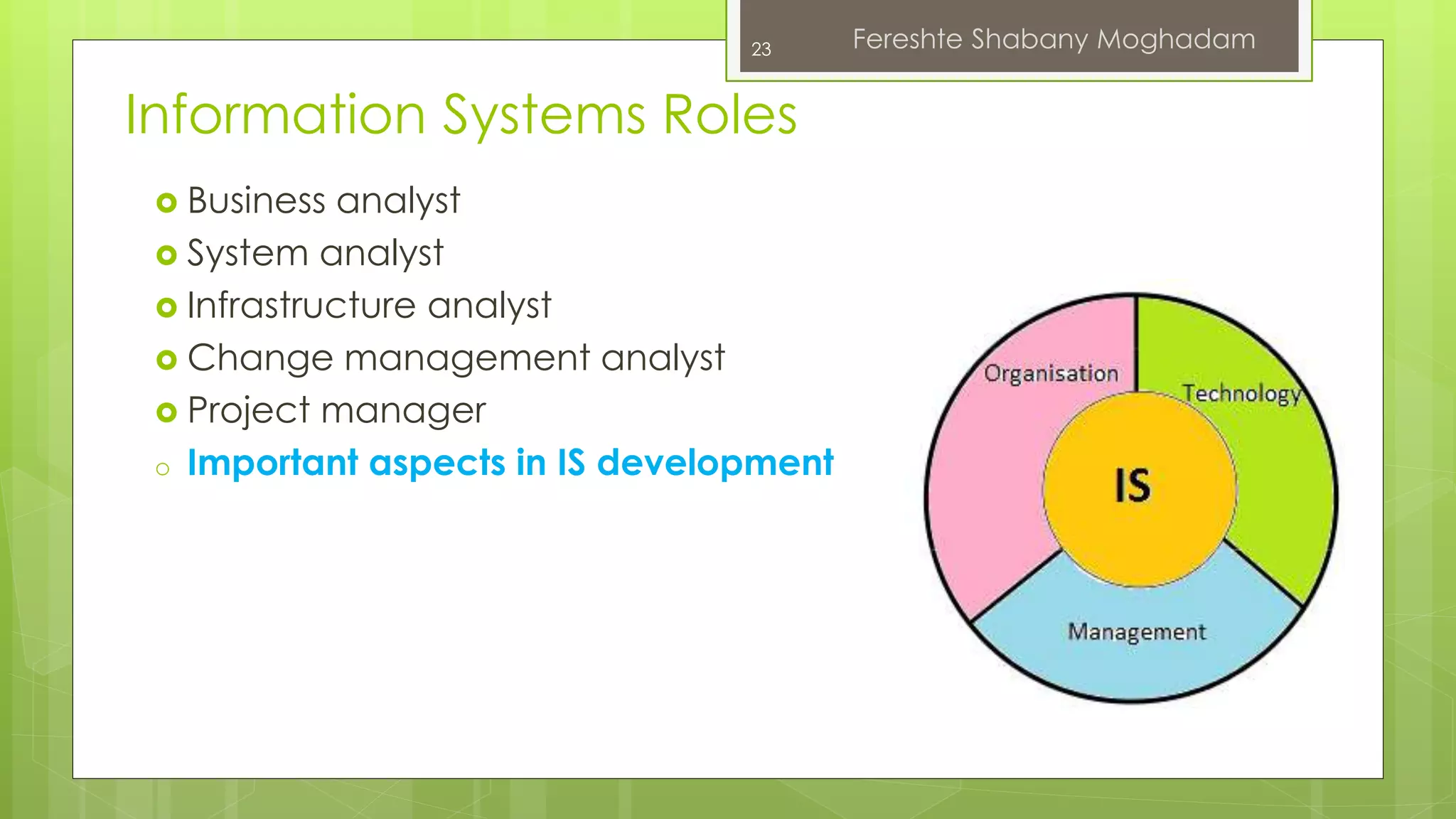
Information Systems Roles 
 Business analyst 
 System analyst 
 Infrastructure analyst 
 Change management analyst 
 Project manager 
o Important aspects in IS development
24 Fereshte Shabany Moghadam 
Infrastructures needed for IS implementation 
 Organizational structures 
 Management willing and support, Cooperative staff, 
Distributed and decentralized organization ,Proper data 
management, Staff learning courses 
 Information technology 
 Knowledge discovery and acquisition, Data mining, Data 
warehousing 
 Human resources 
 Expert teams; System analysts, IT engineers, Data mining 
experts, Market analysts, …
Thanks 
Finished 
25 Fereshte Shabany Moghadam

Information systems development methodologies

  • 1.
    ‘In the Nameof Kind ALLAH’ Information Systems Fereshte Shabany Moghadam f_sh_moghadam@yahoo.com Amir-Kabir University of Technology Tehran, Iran Department of Industrial Engineering
  • 2.
    Introduction  Definitionof a system: A set of components that interact together to achieve a common goal  System Goal SMART Specific, Measurable, Assignable, Realistic, Tamable  System Boundaries Inputs Outputs Process Actions Analysis Actions Feedback 2 Fereshte Shabany Moghadam
  • 3.
    Introduction  Definitionof an Information System (IS): Set of procedures, processes, objects and people that will produce useful information for members & customers of an organization  Project phases:  Planning Why build the system?  Analysis Who, what, when, where will the system be?  Design How will the system work?  Implementation System delivery 3 Fereshte Shabany Moghadam
  • 4.
    Introduction  PlanningPhase Project Initiation System Request 4 Fereshte Shabany Moghadam Feasibility Analysis Approval Committee Project Management
  • 5.
    Introduction Analysis Phase Analysis + System Concept + Models are combined into the 5 Fereshte Shabany Moghadam System Proposal
  • 6.
    Introduction  DesignPhase Decides how the system will operate  Architecture design  User interface design (UI)  Database design  Program design  Implementation Phase  Construction  Conversion/Installation  Maintenance & Support 6 Fereshte Shabany Moghadam
  • 7.
    IS Development Methodologies 1- Structured design Waterfall Development Method 7 Fereshte Shabany Moghadam
  • 8.
    IS Development Methodologies  Parallel development 8 Fereshte Shabany Moghadam
  • 9.
    IS Development Methodologies  Spiral Model 9 Fereshte Shabany Moghadam
  • 10.
    10 Fereshte ShabanyMoghadam IS Development Methodologies 2- Rapid Application Development (RAD)  Phased Development - Break overall system into a series of versions - Each version has Analysis, Design, and Implementation - Output from on version is the input to the next - Incorporate ideas, issues, lessons learned in one version into the next version
  • 11.
    IS Development Methodologies  Prototyping 11 Fereshte Shabany Moghadam - Analysis, Design, Implementation are performed concurrently - Start with a "quick-and-dirty" prototype - Provides minimal functionality - Repeat process, refining the prototype each time - Stop when prototype is a working system
  • 12.
    12 IS DevelopmentMethodologies Fereshte Shabany Moghadam
  • 13.
     Throw-Away Prototyping - Use prototypes only to understand requirements Example: use html to show UI - Prototype is not a working design - Once requirements are understood, the prototypes are thrown away - The system is then built using SDLC 13 Fereshte Shabany Moghadam IS Development Methodologies
  • 14.
    14 IS DevelopmentMethodologies Fereshte Shabany Moghadam
  • 15.
    15 Fereshte ShabanyMoghadam IS Development Methodologies 3- Agile development  XP streamline SDLC - Just a few rules that are easy to learn and follow Streamline the SDLC - Eliminate much of the modeling and documentation - Emphasize simple, iterative application development
  • 16.
    16 Fereshte ShabanyMoghadam IS Development Methodologies
  • 17.
    How Select theAppropriate Methodology?  Clarity of User Requirements  Familiarity with Technology  System Complexity  System Reliability  Short Time Schedules  Schedule Visibility 17 Fereshte Shabany Moghadam
  • 18.
    18 Fereshte ShabanyMoghadam Criteria for Selecting a Methodology
  • 19.
    19 Fereshte ShabanyMoghadam Contemporary Approaches to Information Systems
  • 20.
    Why Information Systems?  Business firms invest heavily in information systems to achieve six strategic business objectives:  Operational excellence  New products, services, and business models  Customer and supplier intimacy  Improved decision making Without accurate information: Managers must use forecasts, best guesses, luck  Competitive advantage  Survival 20 Fereshte Shabany Moghadam
  • 21.
    21 Fereshte ShabanyMoghadam Types of Information Systems  ESS: Executive Support Systems  DSS: Decision Support Systems  MIS: Management Information Systems  KWS: Knowledge Work Systems  GIS: Geographical Information Systems  GSS: Group Support Systems  TPS: Transaction Processing Systems  OAS: Office Automation Systems  EDP: Electronic Database Processing
  • 22.
    22 Fereshte ShabanyMoghadam Types of Information Systems
  • 23.
    23 Fereshte ShabanyMoghadam Information Systems Roles  Business analyst  System analyst  Infrastructure analyst  Change management analyst  Project manager o Important aspects in IS development
  • 24.
    24 Fereshte ShabanyMoghadam Infrastructures needed for IS implementation  Organizational structures  Management willing and support, Cooperative staff, Distributed and decentralized organization ,Proper data management, Staff learning courses  Information technology  Knowledge discovery and acquisition, Data mining, Data warehousing  Human resources  Expert teams; System analysts, IT engineers, Data mining experts, Market analysts, …
  • 25.
    Thanks Finished 25Fereshte Shabany Moghadam