Infection Control in Modern Hospitals
definitions, surveillance and practice
Dr.T.V.Rao MD
5/31/2018 Dr.T.V.Rao MD 1
WHAT IS
Process of
Care
• Process of care refers to an
evidence based action or
intervention performed during
the delivery of patient care.
Process of care measures reflect
a healthcare facilities' ability to
execute and comply with
recommended best patient care
practices.
5/31/2018 Dr.T.V.Rao MD 2
WHAT IS
Infection control
process
• Infection control process
measures provide
actionable and
measurable indicators
for performance
improvement, and
provide opportunities to
reduce risk healthcare
associated infections
(HAIs).
5/31/2018 Dr.T.V.Rao MD 3
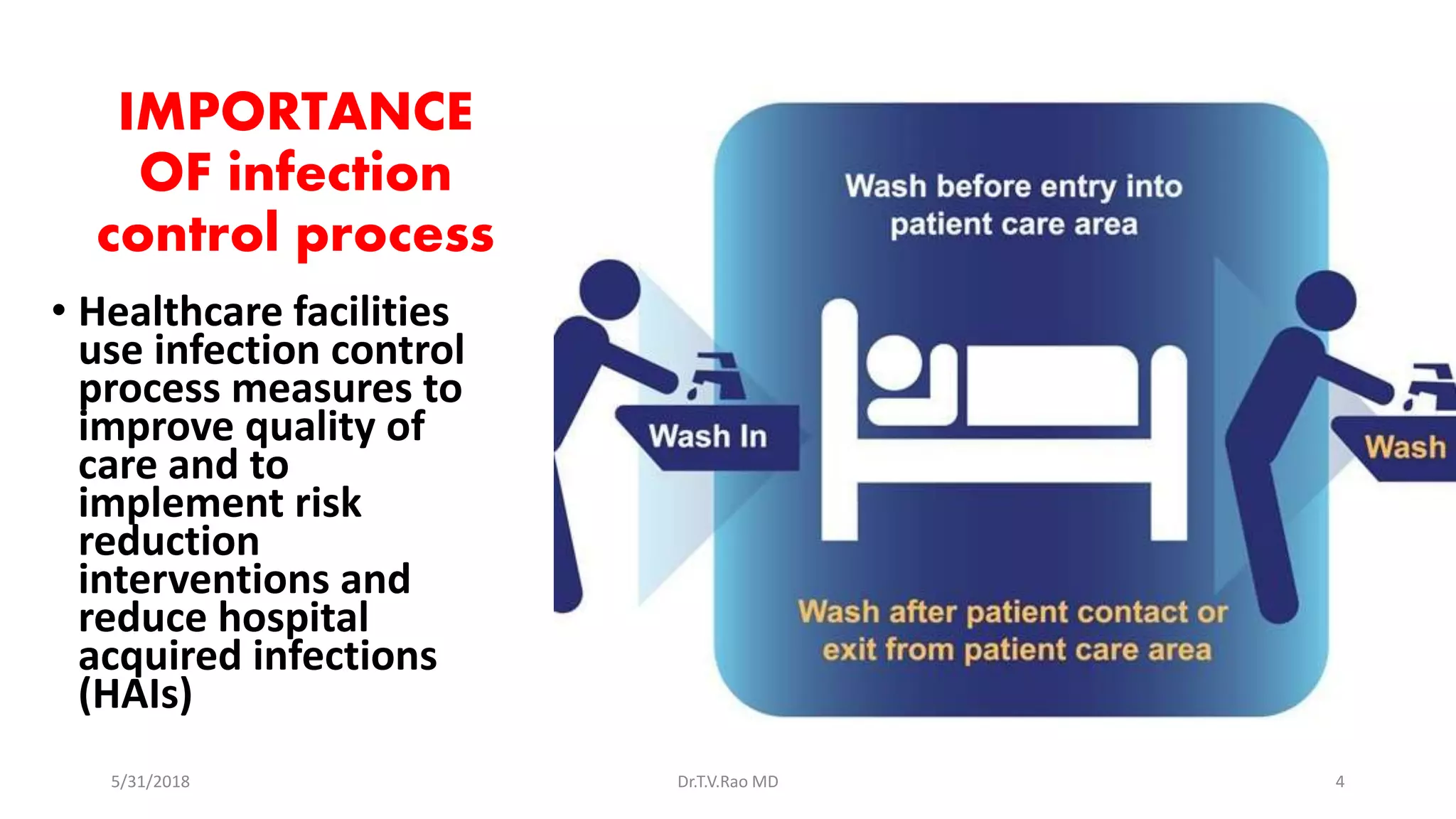
IMPORTANCE
OF infection
control process
• Healthcare facilities
use infection control
process measures to
improve quality of
care and to
implement risk
reduction
interventions and
reduce hospital
acquired infections
(HAIs)
5/31/2018 Dr.T.V.Rao MD 4
5/31/2018 Dr.T.V.Rao MD 5
5/31/2018 Dr.T.V.Rao MD 6
Key principles
related to process of
care measures are:
• Measurement and
feedback impact
compliance
•Active
interventions are
required to
produce a change
in compliance5/31/2018 Dr.T.V.Rao MD 7
5/31/2018 Dr.T.V.Rao MD 8
What process of care
principles are necessary for
effective infection control?
• Key principles related to
process of care measures
are:
• Measurement and
feedback impact
compliance
• Active interventions are
required to produce a
change in compliance
5/31/2018 Dr.T.V.Rao MD 9
Key principles related to
process of care
measures are:
•Different feedback strategies
may lead to distinctively
different outcomes
•Measuring the benefit seen
by the improvement in the
process can result in
improved HAI rates
5/31/2018 Dr.T.V.Rao MD 10
Need for feed back
on Infection matters
• Different feedback
strategies may lead
to distinctively
different outcomes
• Measuring the
benefit seen by the
improvement in the
process can result in
improved HAI rates
5/31/2018 Dr.T.V.Rao MD 11
What are the consequences of
ignoring key process of care
principles regarding infection
control?
• Noncompliance with
nationally recognized
guidelines (e.g., CDC's NHSN
Guidelines, AORN Standards,
etc.) with evidence based
recommended for infection
control practices (e.g., hand
hygiene, surgical antibiotic
prophylaxis, central venous
and urinary catheter
insertion and maintenance)
results in suboptimal patient
safety and clinical care.
5/31/2018 Dr.T.V.Rao MD 12
Current
Controversies
on Surveillance
• Controversy exists as to
whether meticulous
surveillance and feedback
of process of care measures
will fully increase
adherence to recommended
best practices and result in
a concomitant reduction or
eliminating HAIs.
5/31/2018 Dr.T.V.Rao MD 13
Applications of
Interventions
•Application
interventions from
observational
studies remain
controversial.
Potential biases in
the original clinical
outcome studies
are a concern.
5/31/2018 Dr.T.V.Rao MD 14
• Owing to the diversity
of both process of care
study designs and
populations, definitive
conclusions are
problematic and results
may not be generalized
to all patient
populations.
5/31/2018 Dr.T.V.Rao MD 15
What national and international guidelines exist for
process of care measures and infection control?
•The most significant International Guidelines that
include process of care measures for infection
control are written by the World Health
Organization (e.g., Practical Guidelines for
Infection Control in Health Care Facilities and
Hand Hygiene, etc.) and nationally the Centers for
Disease Control and Prevention (CDC)'s Hospital
Infection Control Practices Advisory Committee
(HICPAC)
5/31/2018 Dr.T.V.Rao MD 16
Regulation on Hand Hygiene
• Guidelines for Hand Hygiene in Healthcare Facilities).
Professional organizations that have contributed
guidelines or position papers include: the Association of
Professional in Infection Control and Epidemiology (APIC),
the Society of Healthcare Epidemiology of America
(SHEA), the Surgical Infection Society (SIC), the Infectious
Disease Socity of America (IDSA), the Pediatric Infectious
Disease Society (PIDS), as well as governmental and
regulatory agencies including: the Centers for Medicare
and Medicaid (CMS),
5/31/2018 Dr.T.V.Rao MD 17
SAFETY
RECOMMENDATION BY
OSHA
• The Joint Commission (TJC),
and the Occupational Safety
and Health Organization
(OSHA) all with a focus on HAI
control and prevention use the
expertise of their members and
staff to develop and publish a
wide variety of useful
recommendations and
guidelines containing process
measures for infection control.
5/31/2018 Dr.T.V.Rao MD 18
WHY THE WORLD SWITICHING TO CDC
GUIDELINES ON HEALTH CARE SAFETY
• The CDC Guidelines and
Professional Societies' consensus
papers are developed from review
of the evidence-based literature,
and provide the basis on which
standards process of care
measures are used for developing
institutional healthcare policies
and procedures. The use of
process measures as performance
indicators has been proposed in
HICPAC CDC Guidelines.
5/31/2018 Dr.T.V.Rao MD 19
What are the consequences of ignoring
key process of care principles regarding
infection control?
• Noncompliance with
nationally recognized
guidelines (e.g., CDC's
NHSN Guidelines,
AORN Standards, etc.)
with evidence based
recommended for
infection control
practices (e.g., hand
hygiene, surgical
antibiotic prophylaxis,
central venous and
urinary catheter
insertion and
maintenance) results in
suboptimal patient
safety and clinical care.
5/31/2018 Dr.T.V.Rao MD 20
CLEAN HANDS SAVE THE LIVES
HAND WASHING THE BEST CHOICE TO SAVE
LIVES
5/31/2018 Dr.T.V.Rao MD 21
Infection
control
Role for
everyone
5/31/2018 Dr.T.V.Rao MD 22
References
• Hospital Infection Control Process of care measures and infection
control By Karen Hoffman
• Resources on Infection control CDC and WHO
5/31/2018 Dr.T.V.Rao MD 23
•Program File Created by Dr.T.V.Rao MD
as Educational Source on Health Care
related Infections
• Email.
•doctortvrao@gmail.com
5/31/2018 Dr.T.V.Rao MD 24

Infection control in modern hospitals

  • 1.
    Infection Control inModern Hospitals definitions, surveillance and practice Dr.T.V.Rao MD 5/31/2018 Dr.T.V.Rao MD 1
  • 2.
    WHAT IS Process of Care •Process of care refers to an evidence based action or intervention performed during the delivery of patient care. Process of care measures reflect a healthcare facilities' ability to execute and comply with recommended best patient care practices. 5/31/2018 Dr.T.V.Rao MD 2
  • 3.
    WHAT IS Infection control process •Infection control process measures provide actionable and measurable indicators for performance improvement, and provide opportunities to reduce risk healthcare associated infections (HAIs). 5/31/2018 Dr.T.V.Rao MD 3
  • 4.
    IMPORTANCE OF infection control process •Healthcare facilities use infection control process measures to improve quality of care and to implement risk reduction interventions and reduce hospital acquired infections (HAIs) 5/31/2018 Dr.T.V.Rao MD 4
  • 5.
  • 6.
  • 7.
    Key principles related toprocess of care measures are: • Measurement and feedback impact compliance •Active interventions are required to produce a change in compliance5/31/2018 Dr.T.V.Rao MD 7
  • 8.
  • 9.
    What process ofcare principles are necessary for effective infection control? • Key principles related to process of care measures are: • Measurement and feedback impact compliance • Active interventions are required to produce a change in compliance 5/31/2018 Dr.T.V.Rao MD 9
  • 10.
    Key principles relatedto process of care measures are: •Different feedback strategies may lead to distinctively different outcomes •Measuring the benefit seen by the improvement in the process can result in improved HAI rates 5/31/2018 Dr.T.V.Rao MD 10
  • 11.
    Need for feedback on Infection matters • Different feedback strategies may lead to distinctively different outcomes • Measuring the benefit seen by the improvement in the process can result in improved HAI rates 5/31/2018 Dr.T.V.Rao MD 11
  • 12.
    What are theconsequences of ignoring key process of care principles regarding infection control? • Noncompliance with nationally recognized guidelines (e.g., CDC's NHSN Guidelines, AORN Standards, etc.) with evidence based recommended for infection control practices (e.g., hand hygiene, surgical antibiotic prophylaxis, central venous and urinary catheter insertion and maintenance) results in suboptimal patient safety and clinical care. 5/31/2018 Dr.T.V.Rao MD 12
  • 13.
    Current Controversies on Surveillance • Controversyexists as to whether meticulous surveillance and feedback of process of care measures will fully increase adherence to recommended best practices and result in a concomitant reduction or eliminating HAIs. 5/31/2018 Dr.T.V.Rao MD 13
  • 14.
    Applications of Interventions •Application interventions from observational studiesremain controversial. Potential biases in the original clinical outcome studies are a concern. 5/31/2018 Dr.T.V.Rao MD 14
  • 15.
    • Owing tothe diversity of both process of care study designs and populations, definitive conclusions are problematic and results may not be generalized to all patient populations. 5/31/2018 Dr.T.V.Rao MD 15
  • 16.
    What national andinternational guidelines exist for process of care measures and infection control? •The most significant International Guidelines that include process of care measures for infection control are written by the World Health Organization (e.g., Practical Guidelines for Infection Control in Health Care Facilities and Hand Hygiene, etc.) and nationally the Centers for Disease Control and Prevention (CDC)'s Hospital Infection Control Practices Advisory Committee (HICPAC) 5/31/2018 Dr.T.V.Rao MD 16
  • 17.
    Regulation on HandHygiene • Guidelines for Hand Hygiene in Healthcare Facilities). Professional organizations that have contributed guidelines or position papers include: the Association of Professional in Infection Control and Epidemiology (APIC), the Society of Healthcare Epidemiology of America (SHEA), the Surgical Infection Society (SIC), the Infectious Disease Socity of America (IDSA), the Pediatric Infectious Disease Society (PIDS), as well as governmental and regulatory agencies including: the Centers for Medicare and Medicaid (CMS), 5/31/2018 Dr.T.V.Rao MD 17
  • 18.
    SAFETY RECOMMENDATION BY OSHA • TheJoint Commission (TJC), and the Occupational Safety and Health Organization (OSHA) all with a focus on HAI control and prevention use the expertise of their members and staff to develop and publish a wide variety of useful recommendations and guidelines containing process measures for infection control. 5/31/2018 Dr.T.V.Rao MD 18
  • 19.
    WHY THE WORLDSWITICHING TO CDC GUIDELINES ON HEALTH CARE SAFETY • The CDC Guidelines and Professional Societies' consensus papers are developed from review of the evidence-based literature, and provide the basis on which standards process of care measures are used for developing institutional healthcare policies and procedures. The use of process measures as performance indicators has been proposed in HICPAC CDC Guidelines. 5/31/2018 Dr.T.V.Rao MD 19
  • 20.
    What are theconsequences of ignoring key process of care principles regarding infection control? • Noncompliance with nationally recognized guidelines (e.g., CDC's NHSN Guidelines, AORN Standards, etc.) with evidence based recommended for infection control practices (e.g., hand hygiene, surgical antibiotic prophylaxis, central venous and urinary catheter insertion and maintenance) results in suboptimal patient safety and clinical care. 5/31/2018 Dr.T.V.Rao MD 20
  • 21.
    CLEAN HANDS SAVETHE LIVES HAND WASHING THE BEST CHOICE TO SAVE LIVES 5/31/2018 Dr.T.V.Rao MD 21
  • 22.
  • 23.
    References • Hospital InfectionControl Process of care measures and infection control By Karen Hoffman • Resources on Infection control CDC and WHO 5/31/2018 Dr.T.V.Rao MD 23
  • 24.
    •Program File Createdby Dr.T.V.Rao MD as Educational Source on Health Care related Infections • Email. •doctortvrao@gmail.com 5/31/2018 Dr.T.V.Rao MD 24