١
Healthcare Associated
Infections Due to SSI
290,485 infections
8,205 deaths

SSI
17%

Other
22%

PNEU
14%
BSI
14%

250,205 infections
35,967 deaths

UTI
33%
248,678 infections
30,655 deaths

561,667 infections
13,088 deaths

Klevens RM, et al. Public Health Reports. 2007

BSI
PNEU
SSI
UTI

Bloodstream Infection
Pneumonia
Surgical Site Infection
Urinary Tract Infection
٢
Impact of SSI
SSI are associated with:
Increased length of stay by 7-10 days
 Increased cost per episode of up to
$30,000
30,
 Increased readmission rate of up to
40%
40%
 Up to ~ 10 times increased risk of
death compared to surgical patients
without SSI
 77% attributable mortality
77%
 $10 billion in annual US healthcare
expenditure


٣
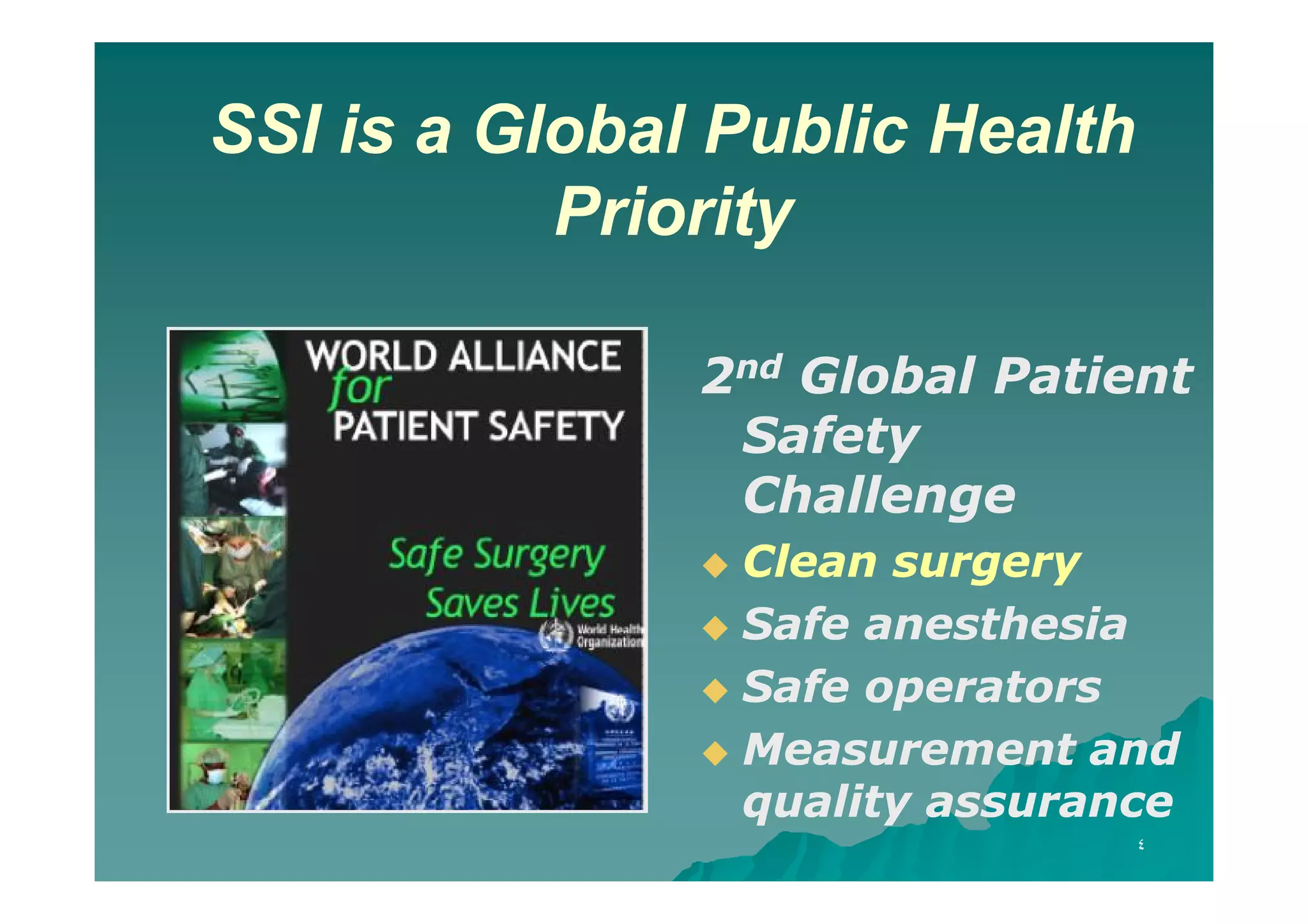
SSI is a Global Public Health
Priority
2nd Global Patient
Safety
Challenge
Clean surgery
 Safe anesthesia
 Safe operators
 Measurement and
quality assurance


٤
Surgical Site Classification

• No inflammation
• No involvement of pulmonary, GIT or
GU systems
• Primarily closed and when drain is
involved it is closed drainage
• Only blunt trauma are included in this
category

٥
Surgical Site Classification
cont……

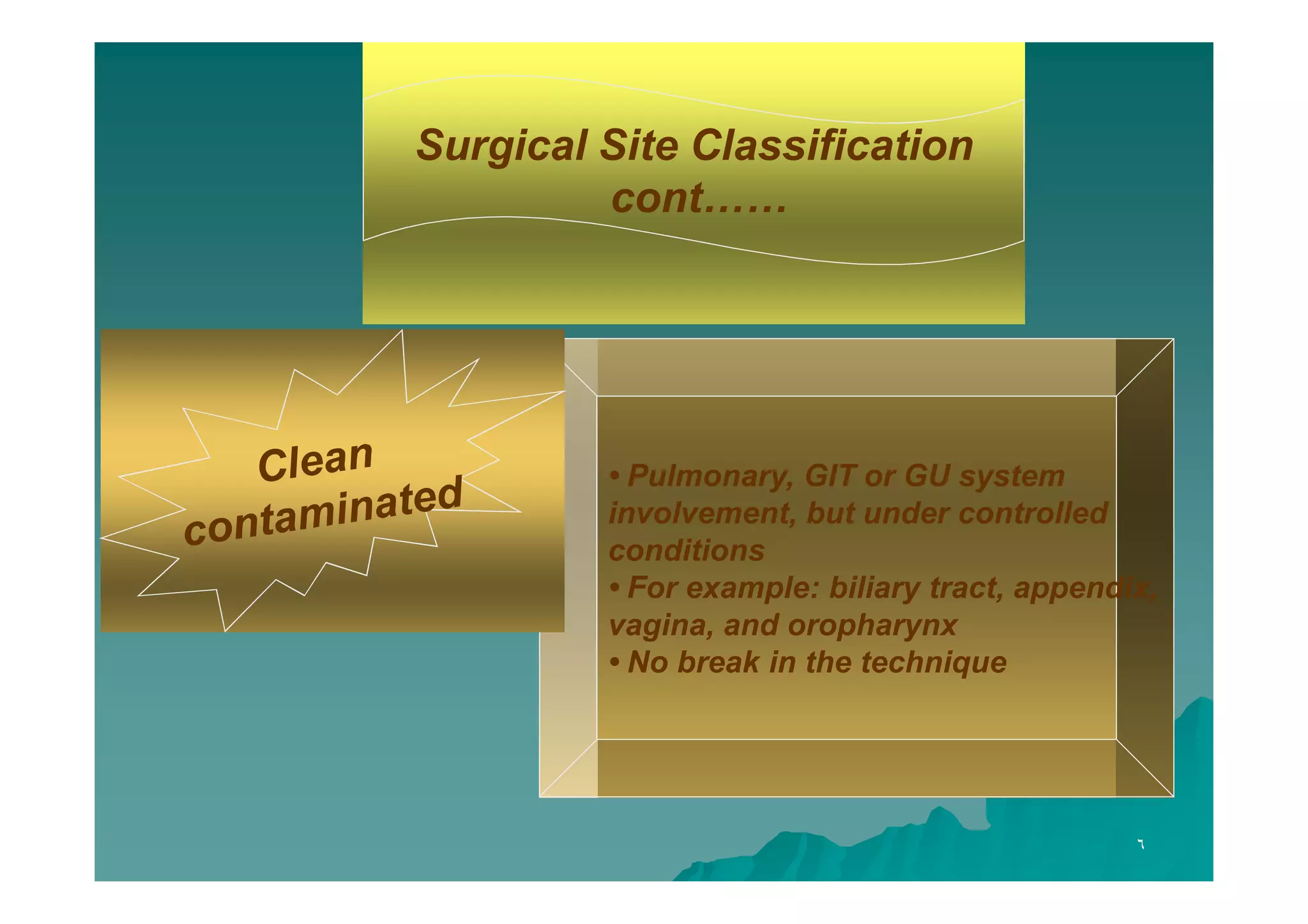
• Pulmonary, GIT or GU system
involvement, but under controlled
conditions
• For example: biliary tract, appendix,
vagina, and oropharynx
• No break in the technique

٦
Surgical Site Classification
cont…

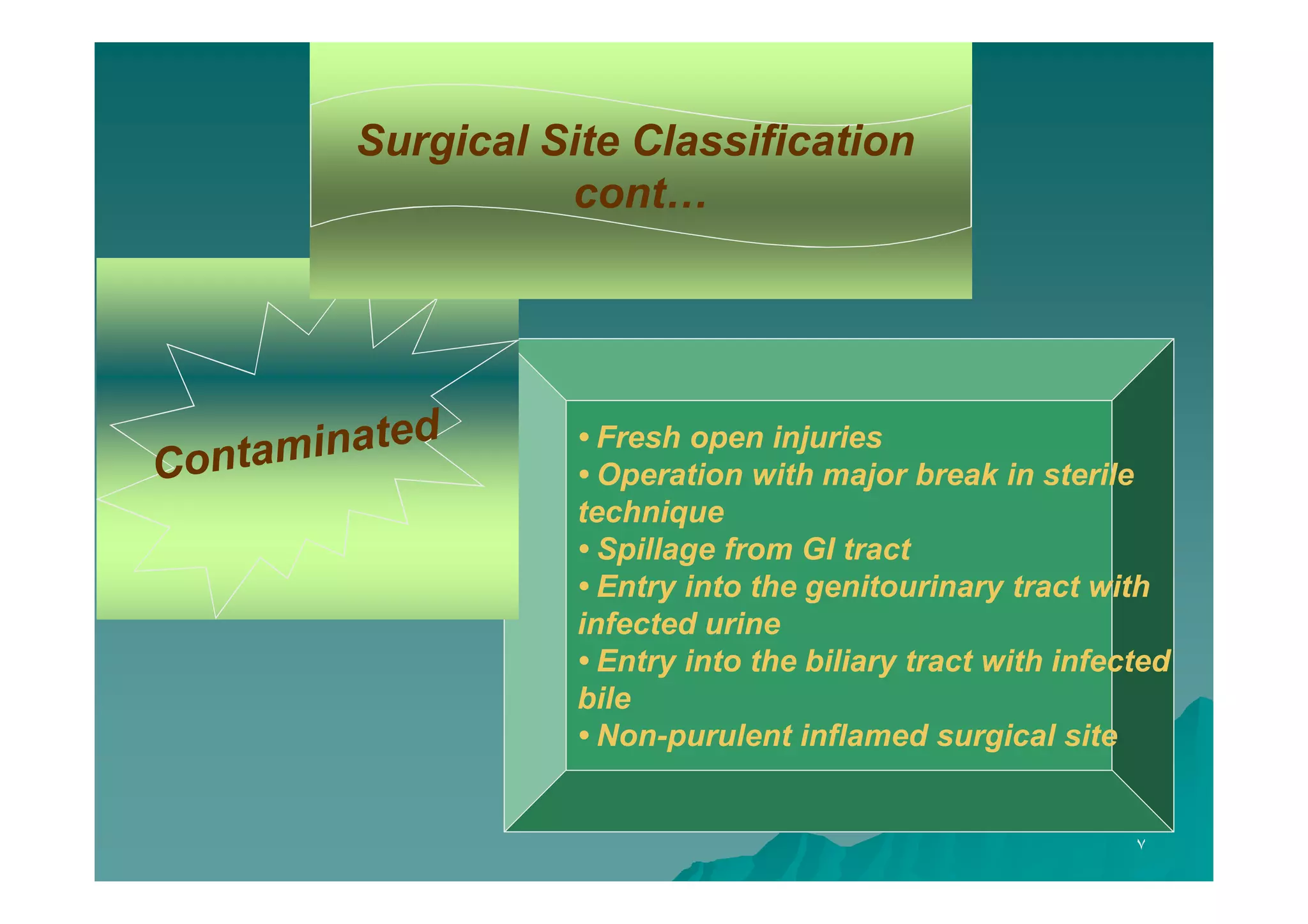
• Fresh open injuries
• Operation with major break in sterile
technique
• Spillage from GI tract
• Entry into the genitourinary tract with
infected urine
• Entry into the biliary tract with infected
bile
• Non-purulent inflamed surgical site

٧
Surgical Site Classification cont…

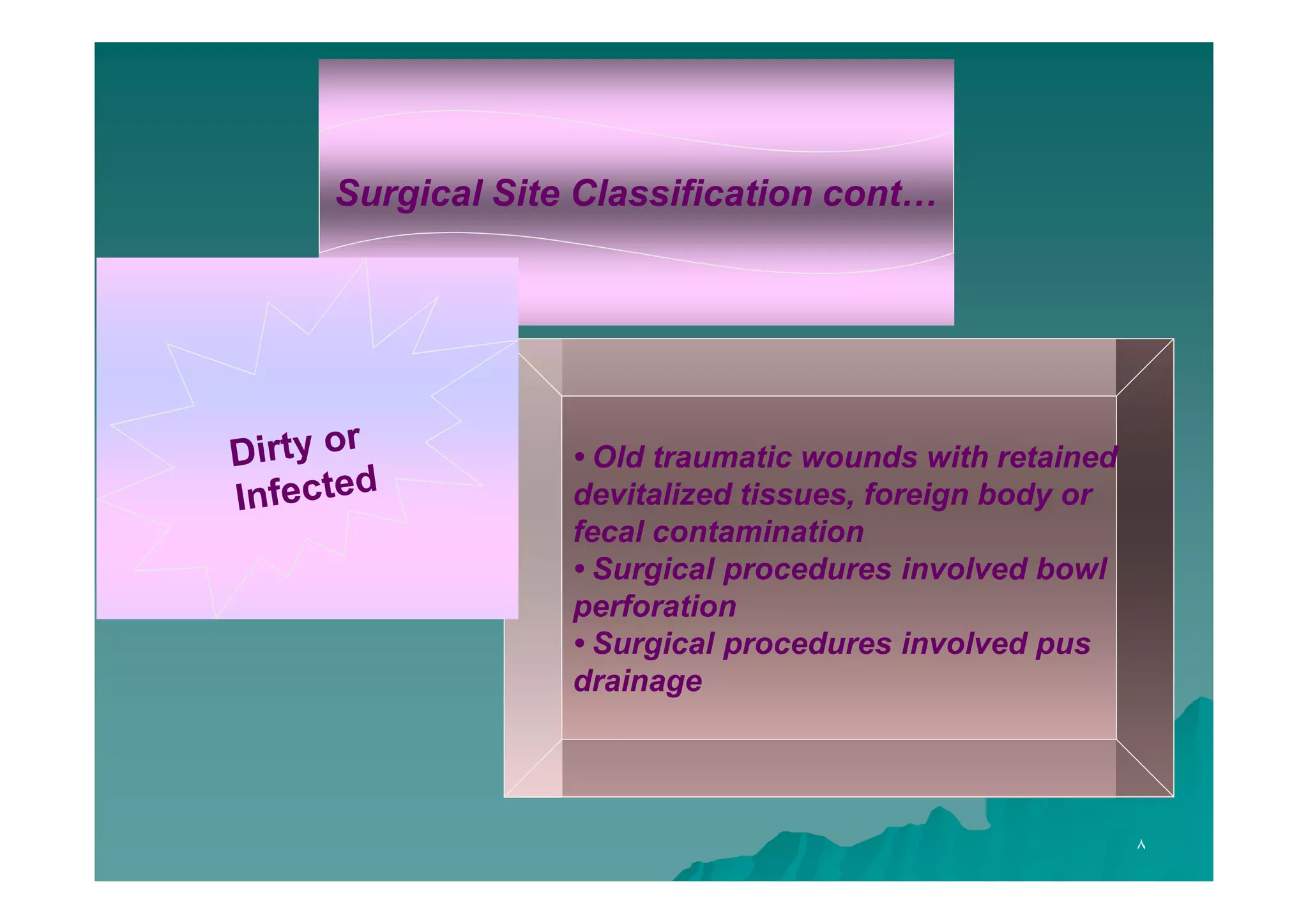
• Old traumatic wounds with retained
devitalized tissues, foreign body or
fecal contamination
• Surgical procedures involved bowl
perforation
• Surgical procedures involved pus
drainage

٨
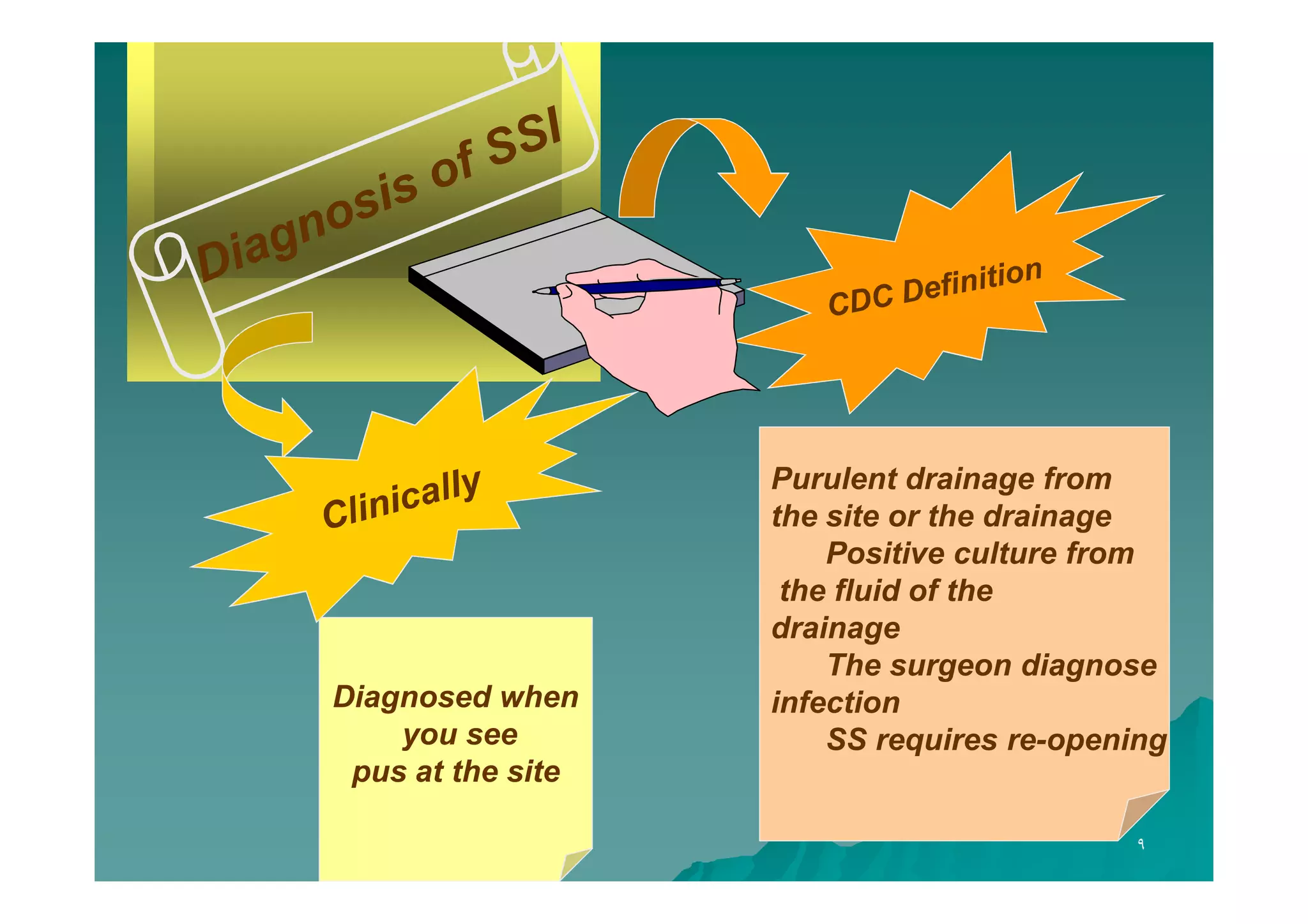
Diagnosed when
you see
pus at the site

Purulent drainage from
the site or the drainage
Positive culture from
the fluid of the
drainage
The surgeon diagnose
infection
SS requires re-opening

٩
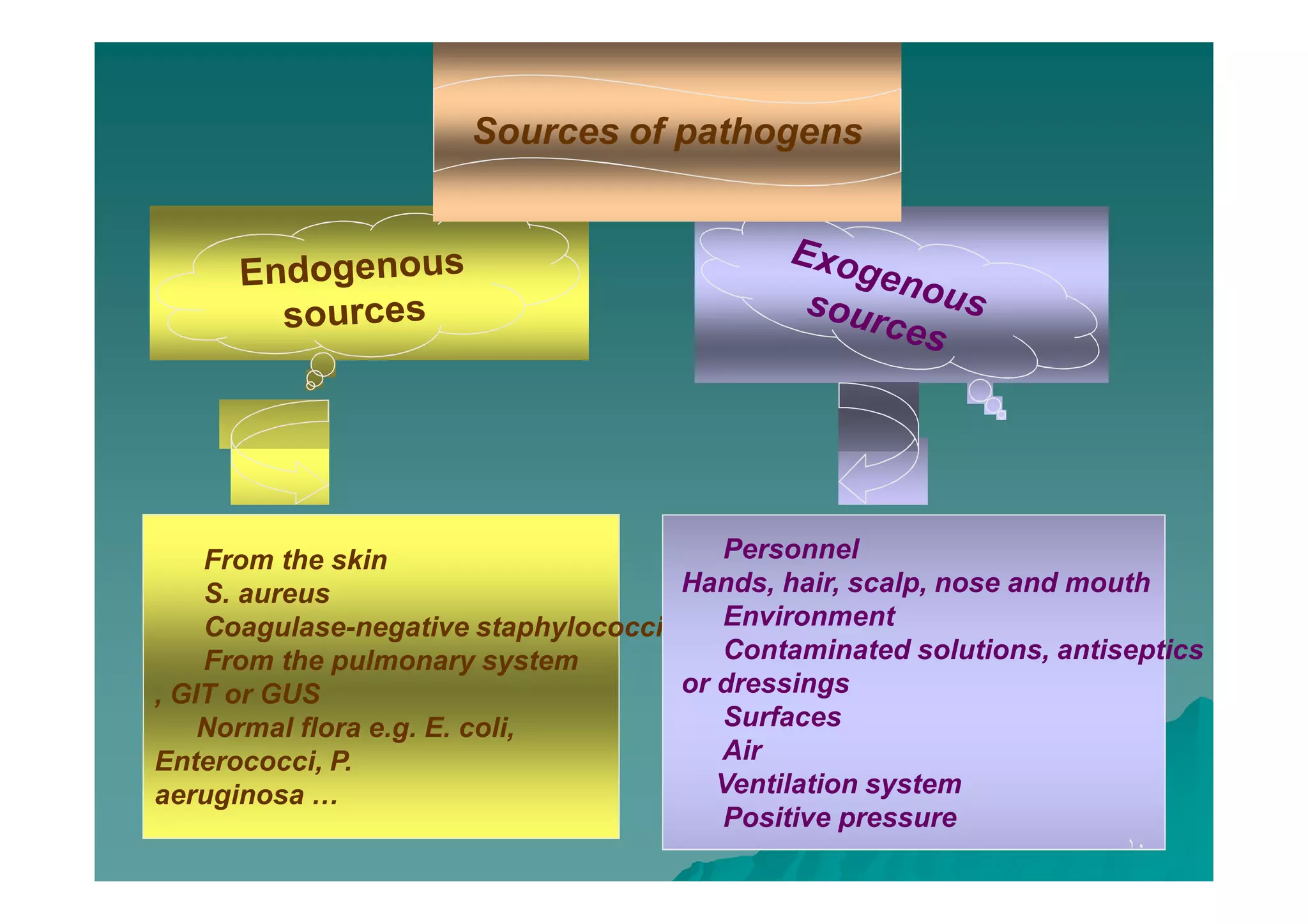
Sources of pathogens

Personnel
From the skin
Hands, hair, scalp, nose and mouth
S. aureus
Environment
Coagulase-negative staphylococci
Contaminated solutions, antiseptics
From the pulmonary system
or dressings
, GIT or GUS
Surfaces
Normal flora e.g. E. coli,
Air
Enterococci, P.
Ventilation system
aeruginosa …
Positive pressure
١٠
Staphylococcus
aureus
Coagulase-negative
staphylococci

Enterobacter spp.

Etiological Agent
Pseudomonas
aeruginosa

Enterococci
Escherichia coli
١١
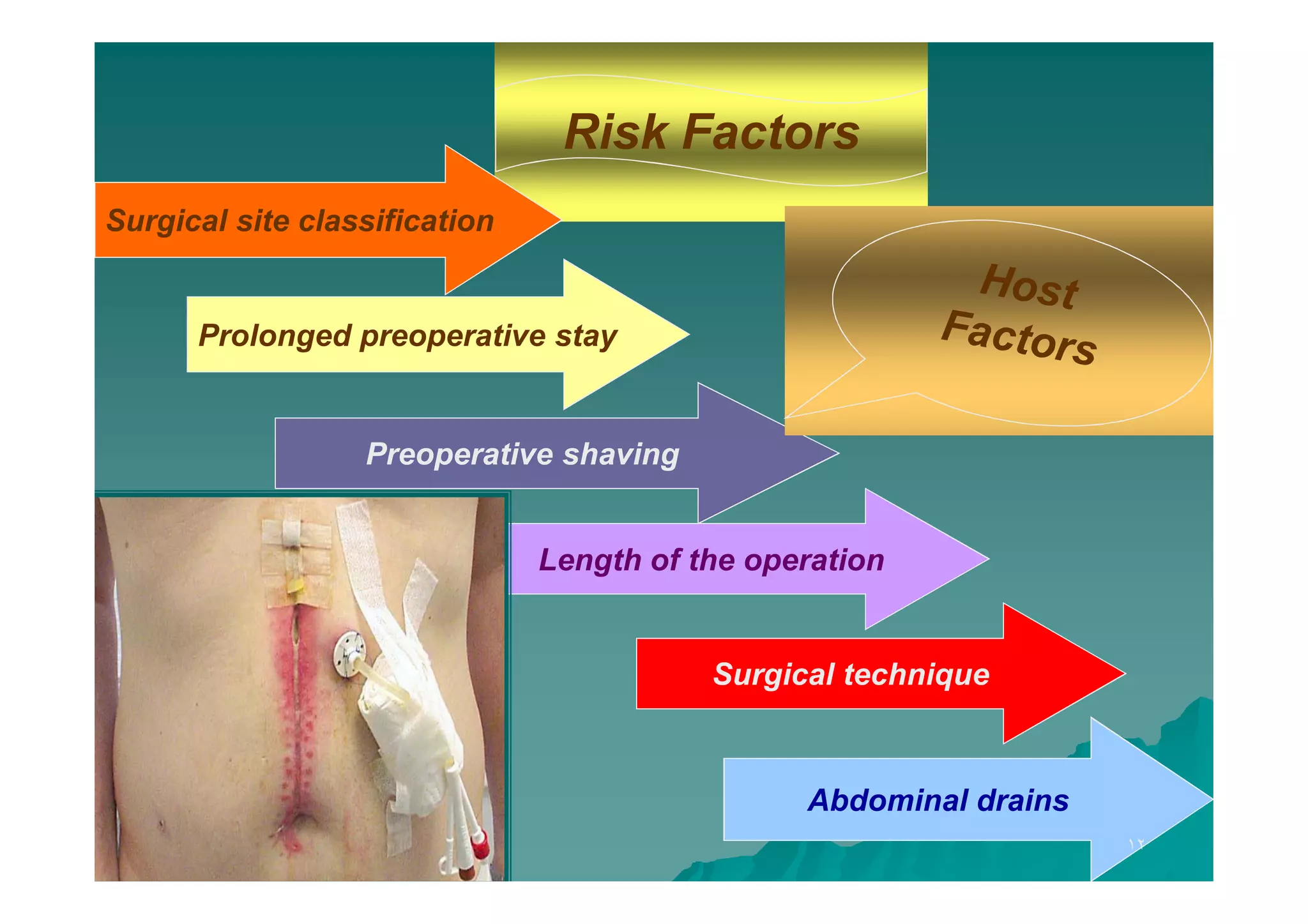
Risk Factors
Surgical site classification

Prolonged preoperative stay

Preoperative shaving
Length of the operation

Surgical technique

Abdominal drains
١٢
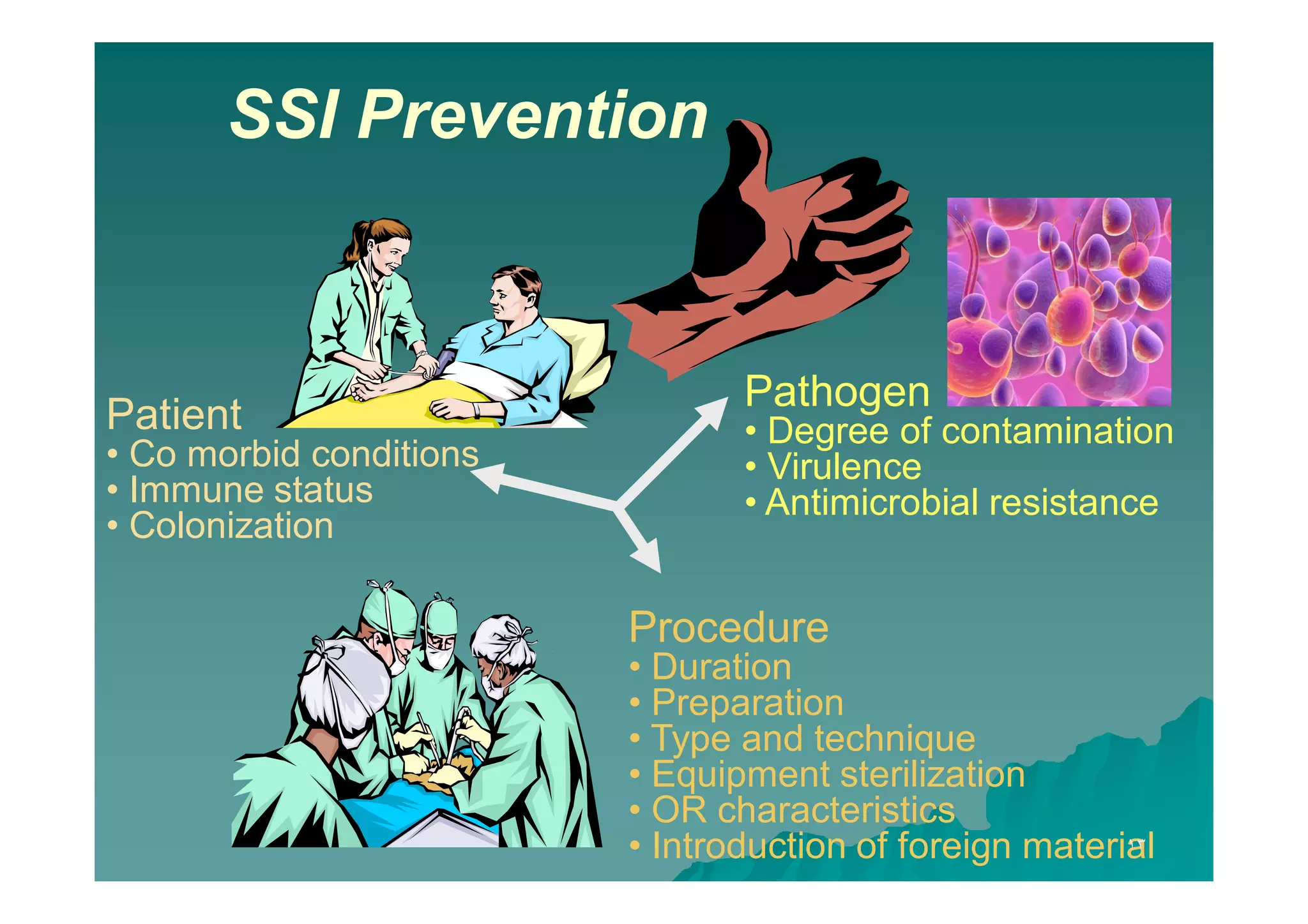
SSI Prevention

Patient
• Co morbid conditions
• Immune status
• Colonization

Pathogen
• Degree of contamination
• Virulence
• Antimicrobial resistance

Procedure
• Duration
• Preparation
• Type and technique
• Equipment sterilization
• OR characteristics
١٣
• Introduction of foreign material
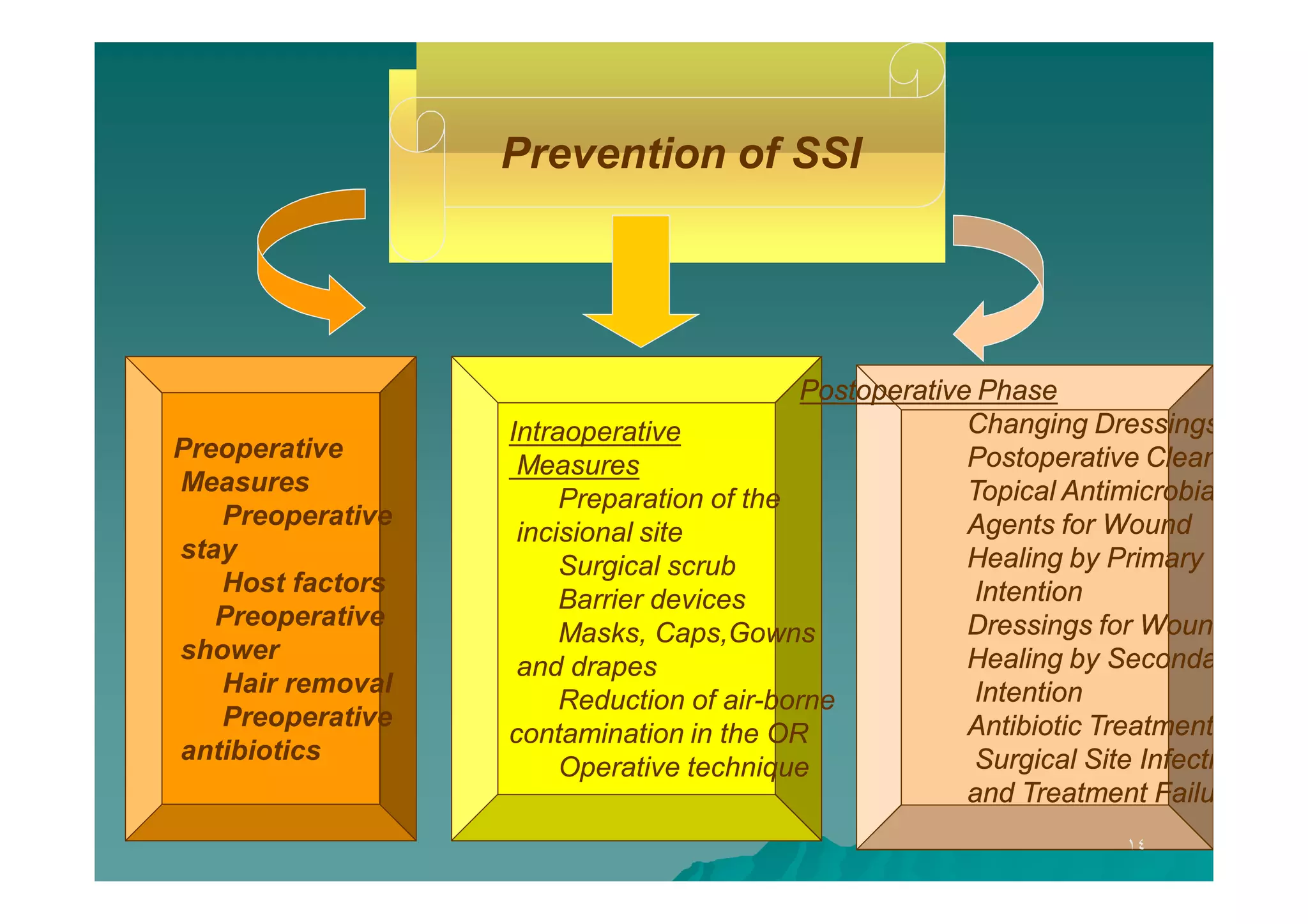
Prevention of SSI

Preoperative
Measures
Preoperative
stay
Host factors
Preoperative
shower
Hair removal
Preoperative
antibiotics

Postoperative Phase
Changing Dressings
Intraoperative
Postoperative Cleansing
Measures
Topical Antimicrobial
Preparation of the
Agents for Wound
incisional site
Healing by Primary
Surgical scrub
Intention
Barrier devices
Dressings for Wound
Masks, Caps,Gowns
Healing by Secondary
and drapes
Intention
Reduction of air-borne
Antibiotic Treatment of
contamination in the OR
Surgical Site Infection
Operative technique
and Treatment Failure
١٤
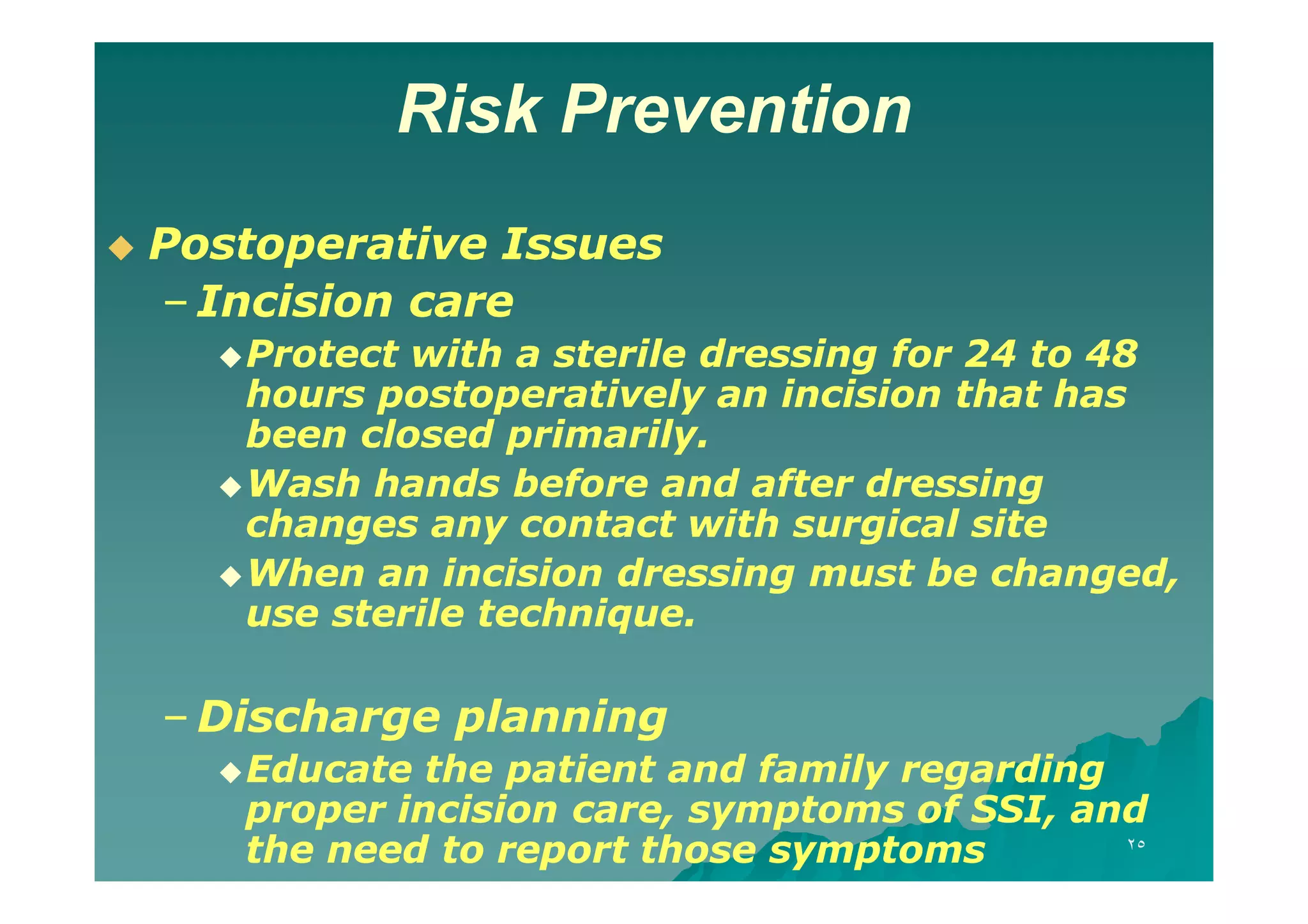
Risk Prevention


Patient Characteristics
–
–
–
–
–
–

Diabetes
Nicotine use
Steroid Use
Malnutrition
Prolonged Hospital Stay
PrePre-operative nares colonization with
Staph aureus
– Peri-operative Transfusions
Peri-

١٥
Risk Prevention


Operative Characteristics:
Preoperative Issues
–
–
–
–
–

Preoperative antiseptic showering
Preoperative hair removal
Patient skin prep in the OR
Preoperative hand/forearm antisepsis
Management of infected or colonized
surgical personnel
– Antimicrobial prophylaxis

١٦
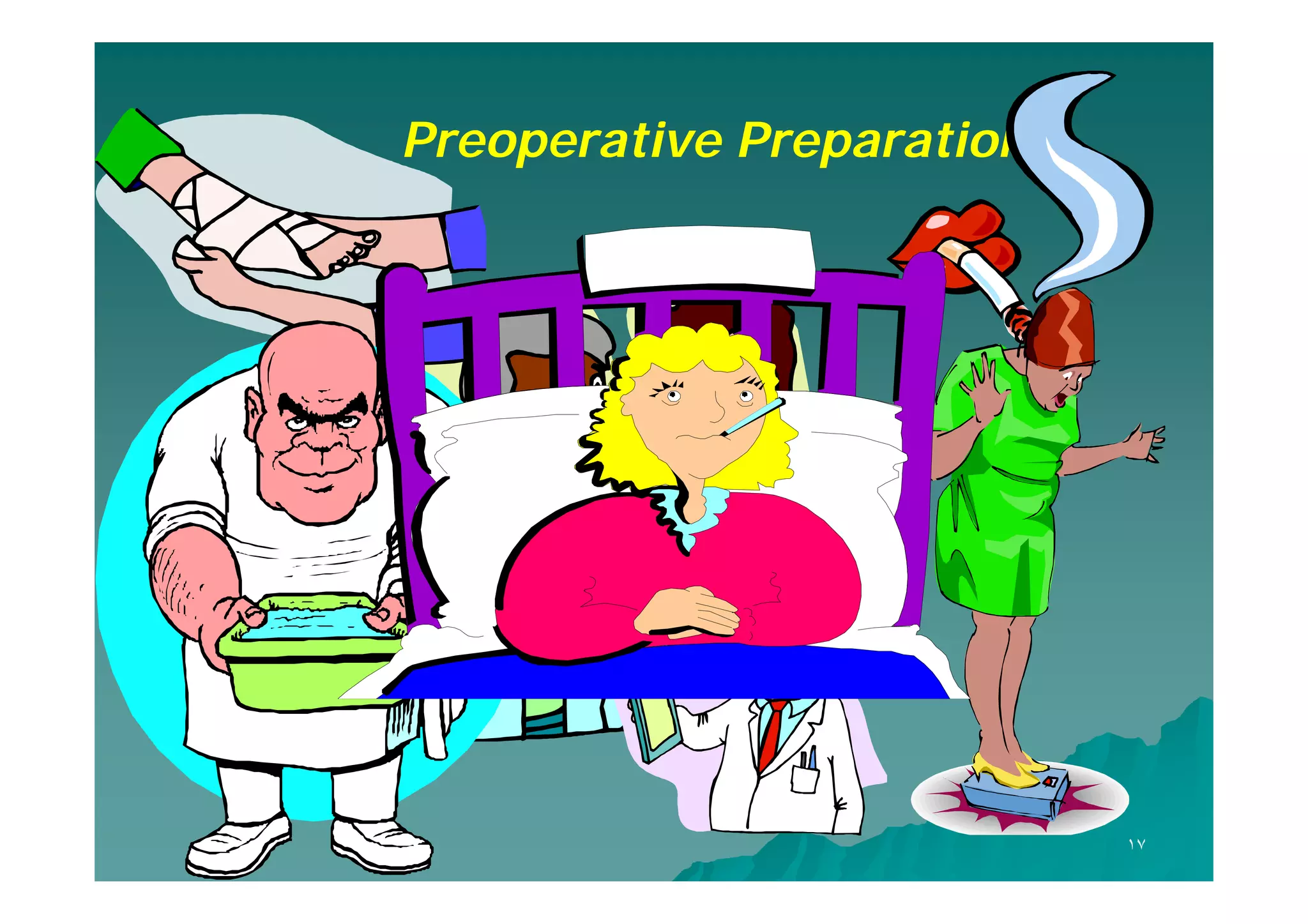
Preoperative Preparation

١٧
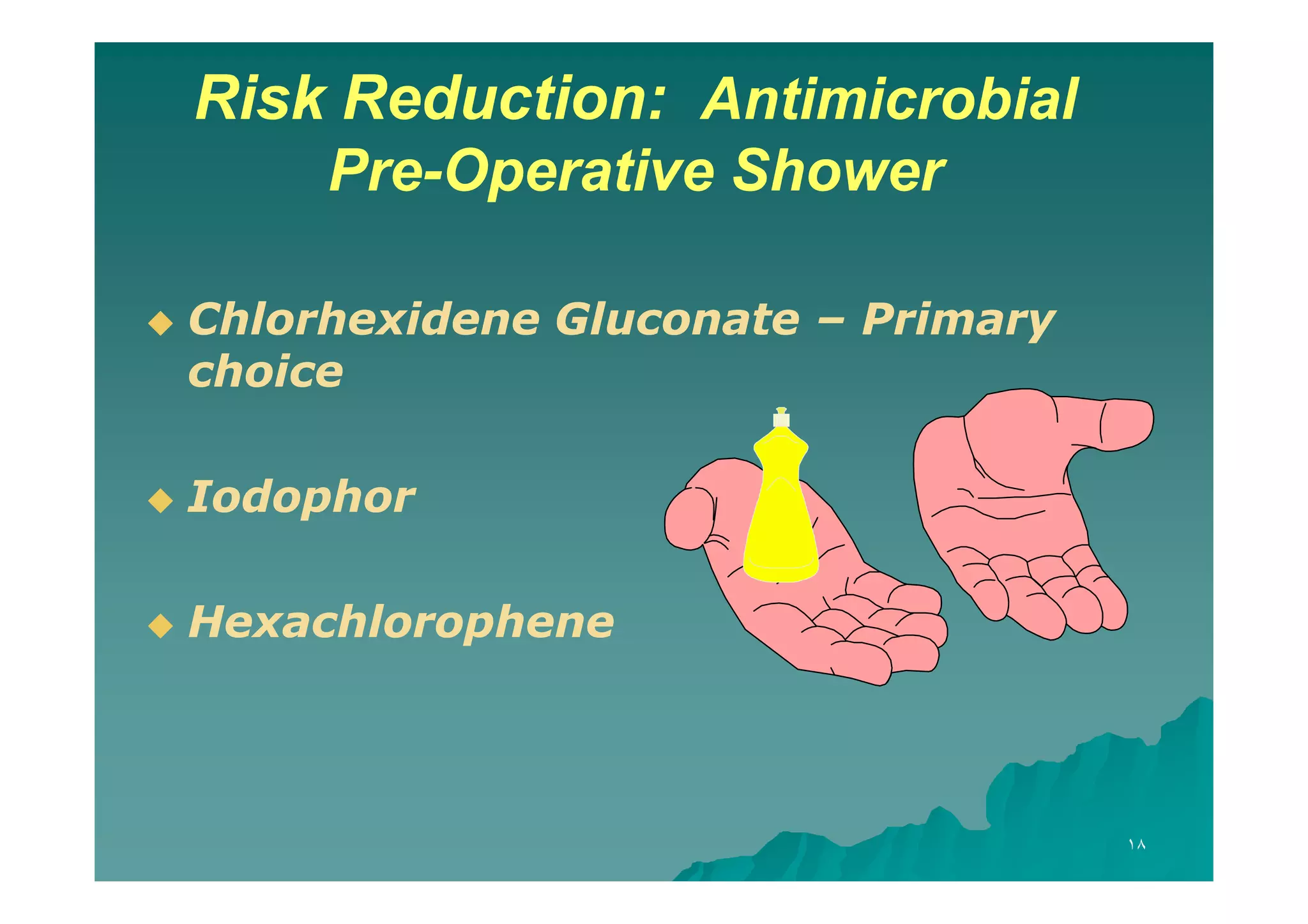
Risk Reduction: Antimicrobial
PrePre-Operative Shower


Chlorhexidene Gluconate – Primary
choice



Iodophor



Hexachlorophene

١٨
Risk Prevention


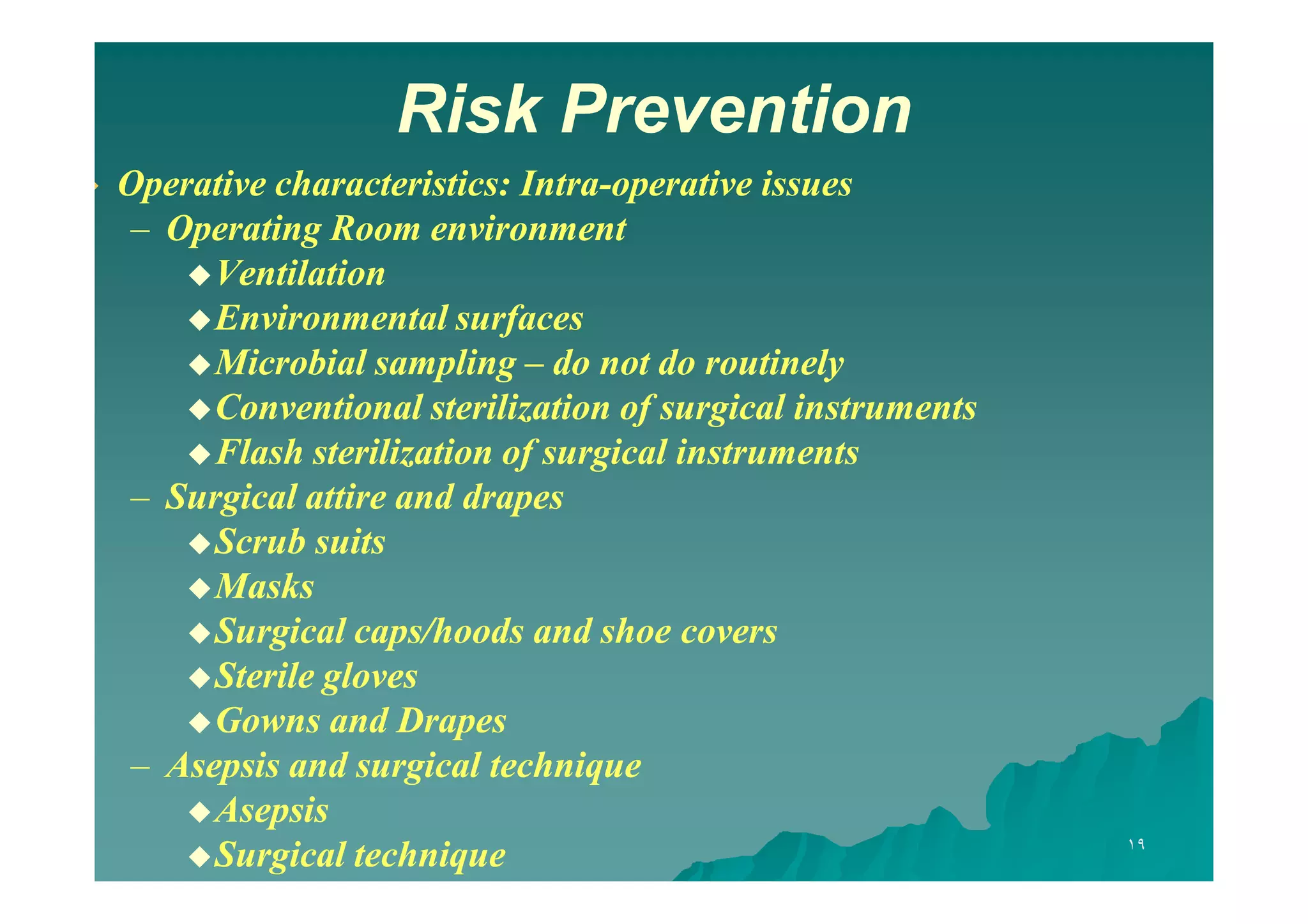
Operative characteristics: Intra-operative issues
Intra– Operating Room environment
 Ventilation
 Environmental surfaces
 Microbial sampling – do not do routinely
 Conventional sterilization of surgical instruments
 Flash sterilization of surgical instruments
– Surgical attire and drapes
 Scrub suits
 Masks
 Surgical caps/hoods and shoe covers
 Sterile gloves
 Gowns and Drapes
– Asepsis and surgical technique
 Asepsis
 Surgical technique

١٩
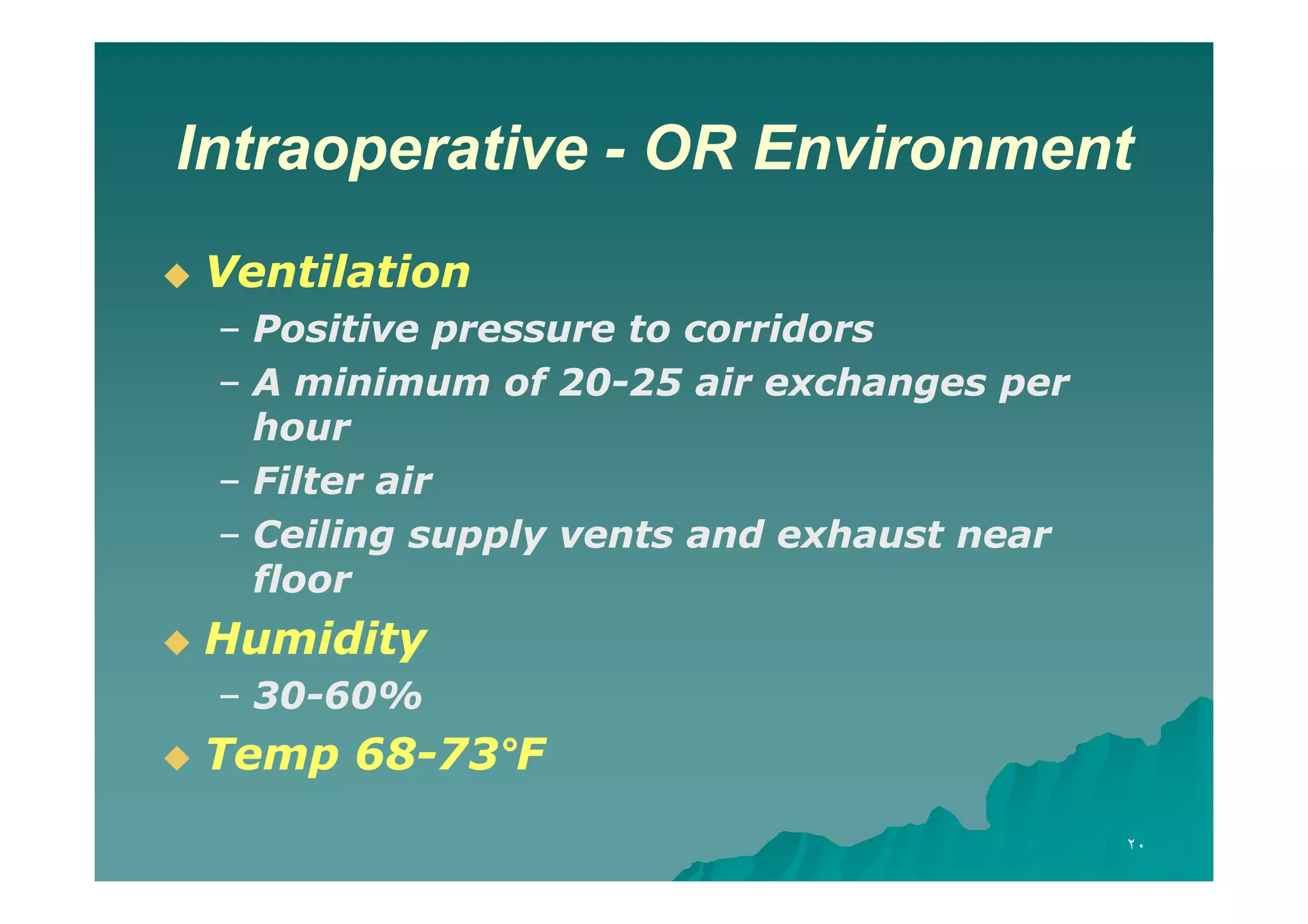
Intraoperative - OR Environment


Ventilation
– Positive pressure to corridors
– A minimum of 20-25 air exchanges per
20hour
– Filter air
– Ceiling supply vents and exhaust near
floor



Humidity
– 30-60%
30-60%



Temp 68-73°F
68-73°
٢٠
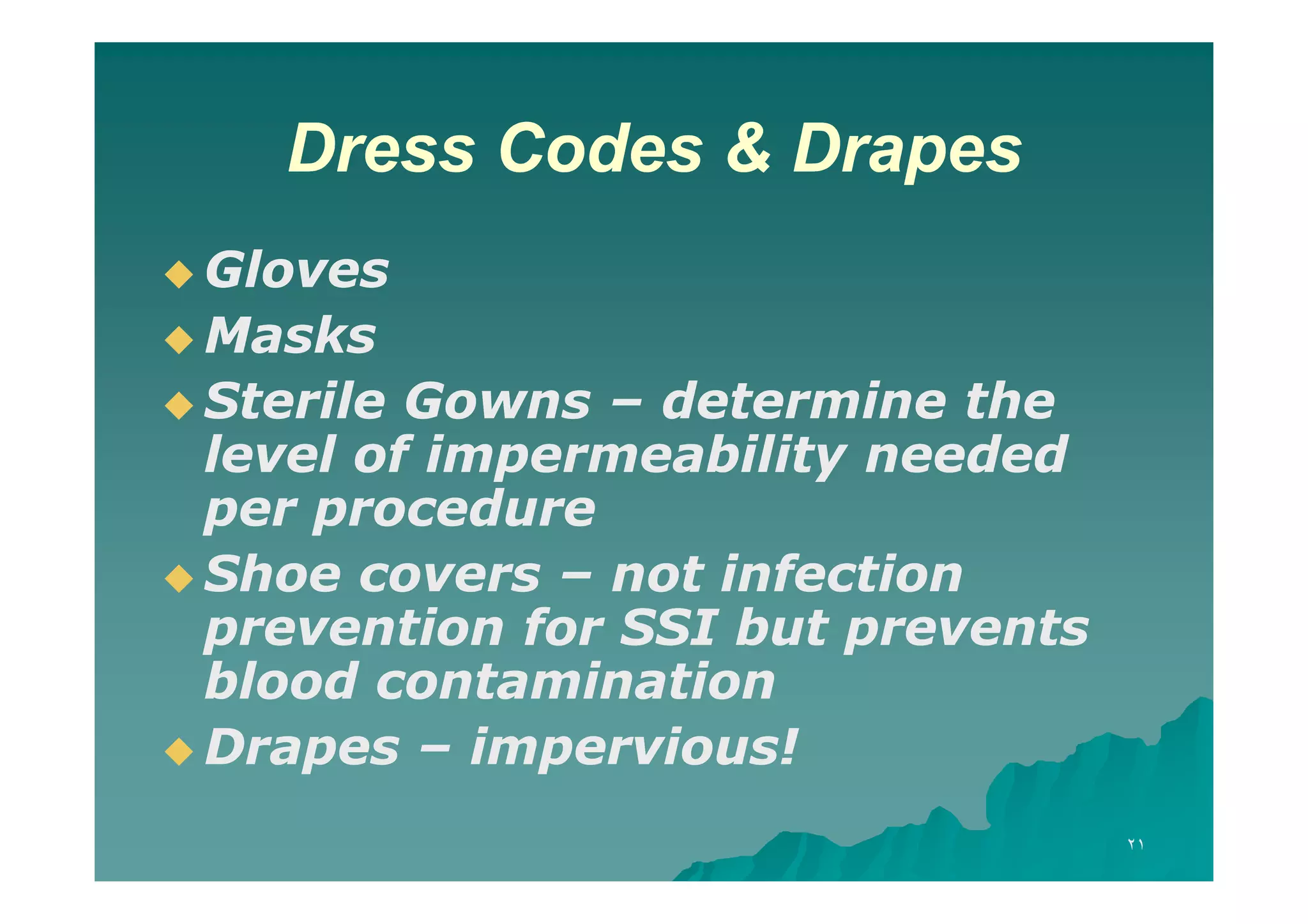
Dress Codes & Drapes
 Gloves
 Masks
 Sterile

Gowns – determine the
level of impermeability needed
per procedure
 Shoe covers – not infection
prevention for SSI but prevents
blood contamination
 Drapes – impervious!
٢١
Cleaning, Disinfection &
Sterilization


Environmental cleaning
– EPA approved hospital disinfectant




Patient care equipment and instruments
Sterilization
– Sterilize all surgical instruments according to
published guidelines
– Perform flash sterilization only for patient care
items that will be used immediately
 Do not use flash sterilization for convenience
or for inventory control



Biological monitoring for sterilizers
– Rapid readouts
– 48 hour test
– Steris
٢٢
Gloving Aspects of Hand Hygiene




Wear gloves when
contact with blood or
other potentially
infectious materials,
mucous membranes,
& nonintact skin
could occur.
Change gloves during
patient care if
moving from a
contaminated body
site to a clean body
site.



Remove gloves after
caring for a patient.
– Do not wear the
same pair of gloves
for the care of more
than one patient,
– Do not wash gloves
between uses with
different patients.

٢٣
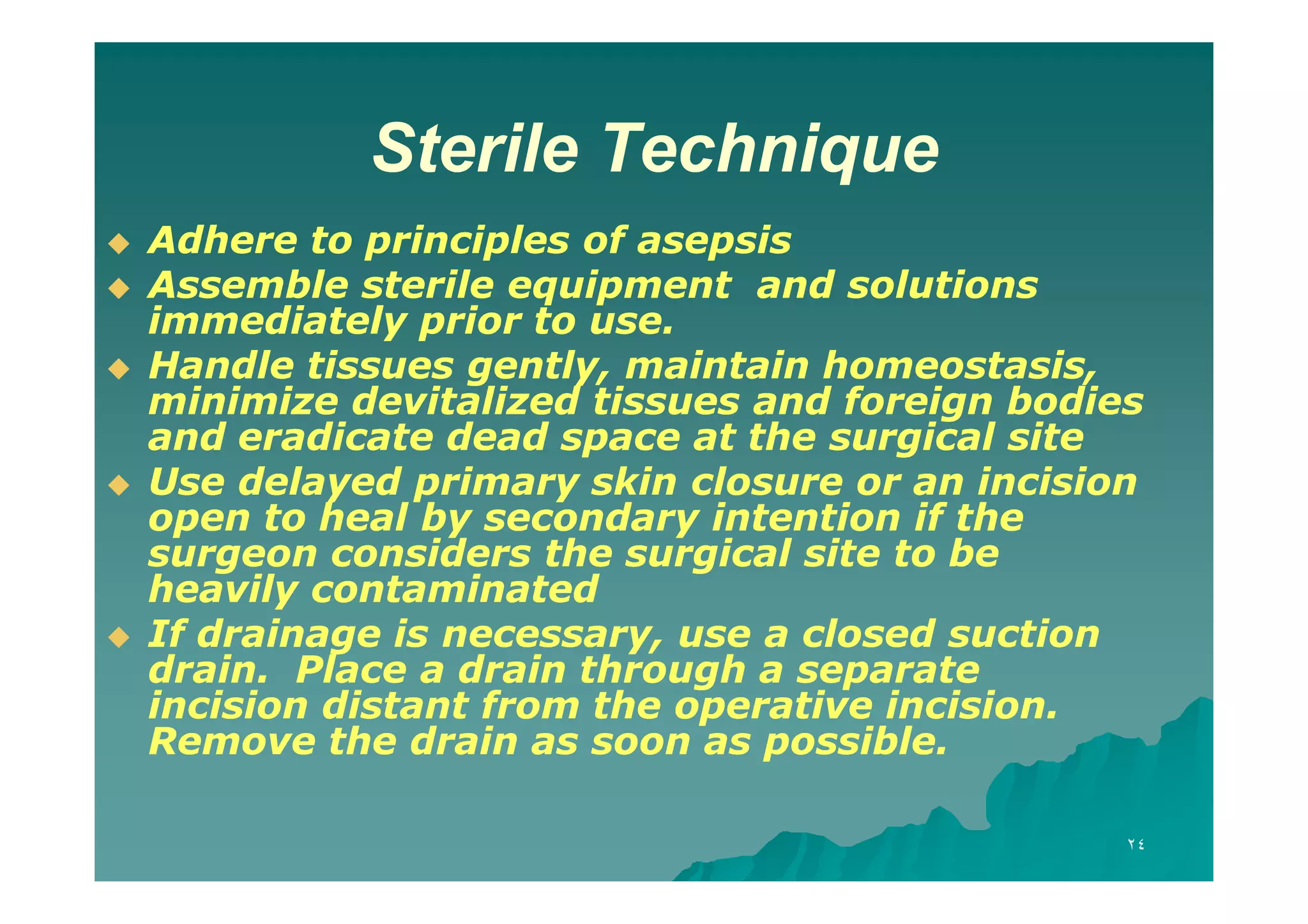
Sterile Technique








Adhere to principles of asepsis
Assemble sterile equipment and solutions
immediately prior to use.
Handle tissues gently, maintain homeostasis,
minimize devitalized tissues and foreign bodies
and eradicate dead space at the surgical site
Use delayed primary skin closure or an incision
open to heal by secondary intention if the
surgeon considers the surgical site to be
heavily contaminated
If drainage is necessary, use a closed suction
drain. Place a drain through a separate
incision distant from the operative incision.
Remove the drain as soon as possible.
٢٤
Risk Prevention


Postoperative Issues
– Incision care
 Protect

with a sterile dressing for 24 to 48
hours postoperatively an incision that has
been closed primarily.
 Wash hands before and after dressing
changes any contact with surgical site
 When an incision dressing must be changed,
use sterile technique.

– Discharge planning
 Educate

the patient and family regarding
proper incision care, symptoms of SSI, and
٢٥
the need to report those symptoms
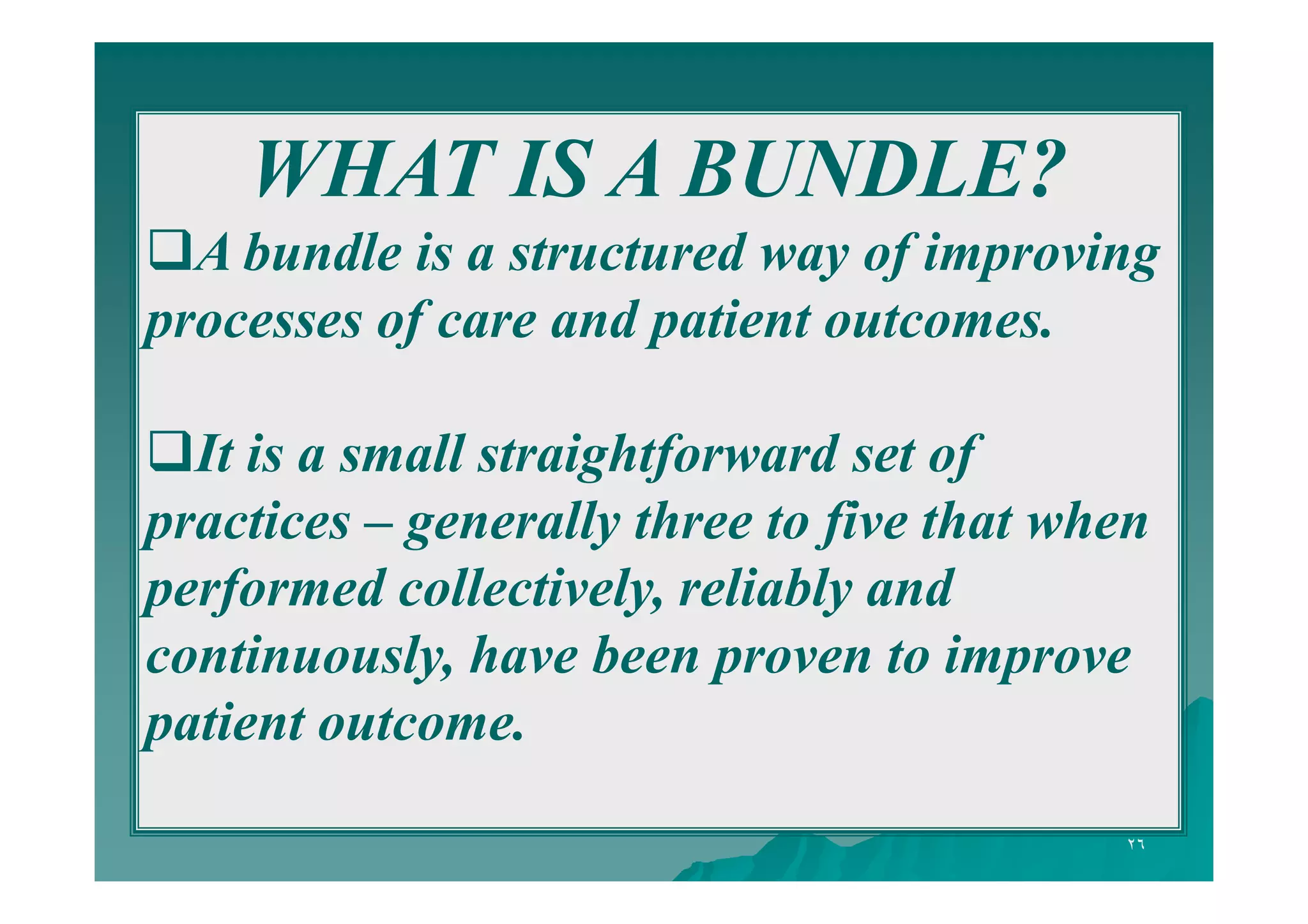
WHAT IS A BUNDLE?
A bundle is a structured way of improving
processes of care and patient outcomes.
It is a small straightforward set of
practices – generally three to five that when
performed collectively, reliably and
continuously, have been proven to improve
patient outcome.
٢٦
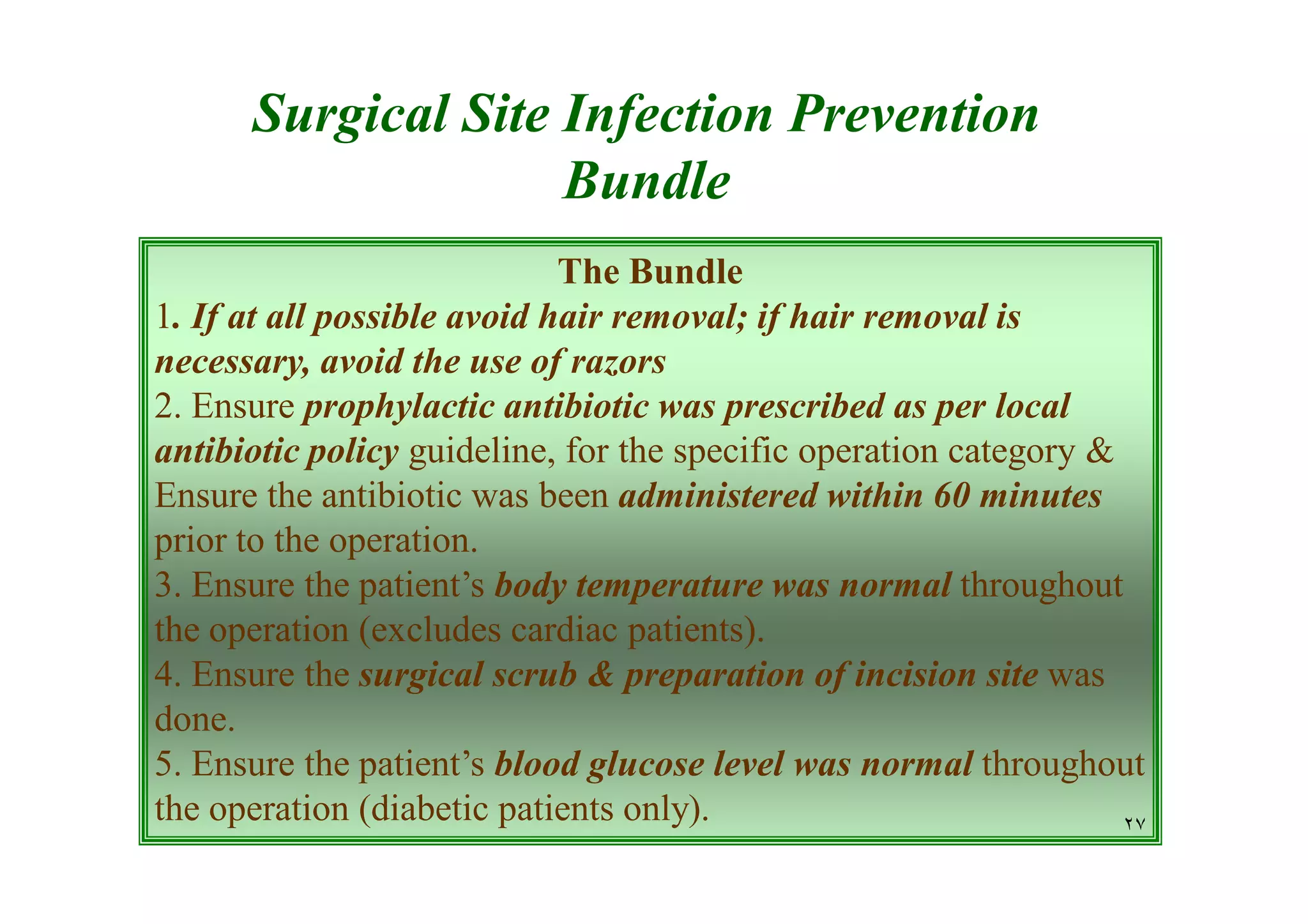
Surgical Site Infection Prevention
Bundle
The Bundle
1. If at all possible avoid hair removal; if hair removal is
necessary, avoid the use of razors
2. Ensure prophylactic antibiotic was prescribed as per local
antibiotic policy guideline, for the specific operation category &
Ensure the antibiotic was been administered within 60 minutes
prior to the operation.
3. Ensure the patient’s body temperature was normal throughout
the operation (excludes cardiac patients).
4. Ensure the surgical scrub & preparation of incision site was
done.
5. Ensure the patient’s blood glucose level was normal throughout
the operation (diabetic patients only).
٢٧
Surgical Site Infection Prevention Bundle –Standard Operating Procedure
Statement

Surgical site infections arise when the host’s defences are overwhelmed by micro-organisms
that come from the patient, disseminated from staff in the operating theatre or from
inadequately decontaminated instruments.
Procedures undertaken in the ward pre and post operatively, and in the theatre perioperatively must be designed to negate, or minimise as far as is possible, the risk of surgical
site infection.

Objectives

Objectives:
1.To optimise peri-operative care minimising the risk of surgical site infections.
2.To be able to demonstrate quality peri-operative care in OUR clinical area

Requirement
s

Before the SSI prevention bundle is performed.
Signed commitment from the clinical team: consultants; junior doctors, ward manager and
nurse team to optimising SSI prevention care.
The data required for this bundle should be collected and documented on every patient.
Analysis of compliance can be through the analysis of data (if there is ongoing surveillance),
or via a weekly analysis of a selection of patients’ peri-operative records

Procedure

For weekly analysis review of notes
1.Perform hand hygiene.
2.On each ward select notes from 7 patients who underwent operations.
3.Check to see if the appropriate bundle criteria were recorded in the patients’ notes.
4.Record findings on the SSI bundle prevention data collection sheet.

After care

Complete form.
Give it to:
٢٨
Discuss and display the data when it has been returned.(Keep bundle forms for xx time).
Date:
Location:
Observer:
(See overleaf for qualifying information)

Patient
1

Patient
2

Patient
3

Patient
4

Patient
5

Patient
6

Patient
7

1.If at all possible avoid hair removal; if hair removal is necessary,
avoid the use of razors $

Yes
No
N/A

Yes
No
N/A

Yes
No
N/A

Yes
No
N/A

Yes
No
N/A

Yes
No
N/A

Yes
No
N/A

1.Prophylactic antibiotics were prescribed as per the local antibiotic
policy/SIGN guideline for the operation category.

Yes
No

Yes
No

Yes
No

Yes
No

Yes
No

Yes
No

Yes
No

1.The antibiotic was administered 60 minutes prior to the start of the
operation.

Yes
No

Yes
No

Yes
No

Yes
No

Yes
No

Yes
No

Yes
No

1.The patient’s body temperature was normal (36-37C) throughout
the operation. $$

Yes
No
N/A

Yes
No
N/A

Yes
No
N/A

Yes
No
N/A

Yes
No
N/A

Yes
No
N/A

Yes
No
N/A

1.If diabetic, the patient remained normoglycaemic during the
operation. $$$

Yes
No
N/A

Yes
No
N/A

Yes
No
N/A

Yes
No
N/A

Yes
No
N/A

Yes
No
N/A

Yes
No
N/A

1.The surgical scrub & preparation of incision site were done

Yes
No
N/A

Yes
No
N/A

Yes
No
N/A

Yes
No
N/A

Yes
No
N/A

Yes
No
N/A

Yes
No
٢٩ N/A
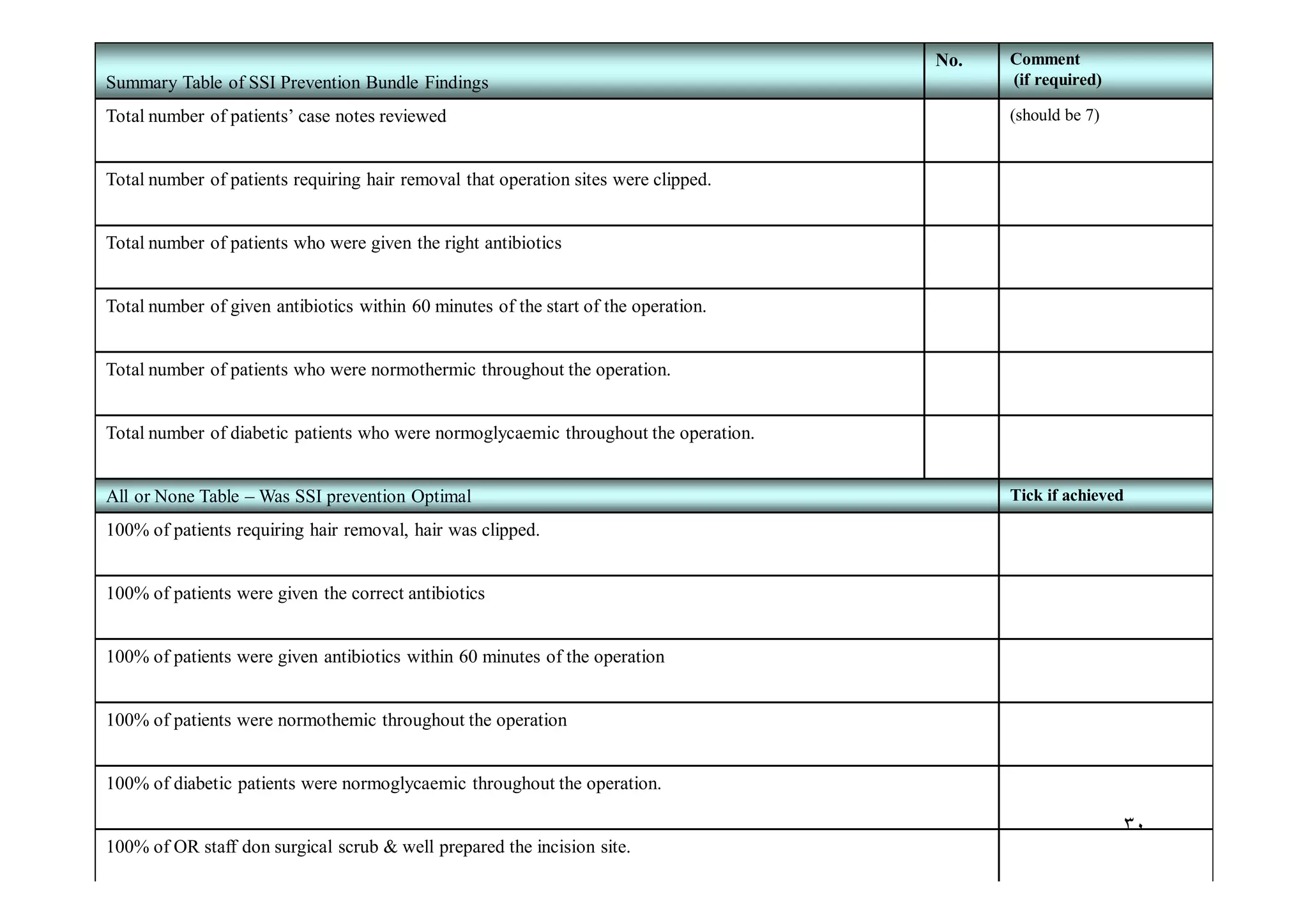
Summary Table of SSI Prevention Bundle Findings

Comment
(if required)

Total number of patients’ case notes reviewed

(should be 7)

No.

Total number of patients requiring hair removal that operation sites were clipped.

Total number of patients who were given the right antibiotics
Total number of given antibiotics within 60 minutes of the start of the operation.
Total number of patients who were normothermic throughout the operation.
Total number of diabetic patients who were normoglycaemic throughout the operation.
All or None Table – Was SSI prevention Optimal

Tick if achieved

100% of patients requiring hair removal, hair was clipped.

100% of patients were given the correct antibiotics
100% of patients were given antibiotics within 60 minutes of the operation
100% of patients were normothemic throughout the operation
100% of diabetic patients were normoglycaemic throughout the operation.

٣٠
100% of OR staff don surgical scrub & well prepared the incision site.
٣١

Prevention of Surgical Site Infection- SSI [compatibility mode]

  • 1.
  • 2.
    Healthcare Associated Infections Dueto SSI 290,485 infections 8,205 deaths SSI 17% Other 22% PNEU 14% BSI 14% 250,205 infections 35,967 deaths UTI 33% 248,678 infections 30,655 deaths 561,667 infections 13,088 deaths Klevens RM, et al. Public Health Reports. 2007 BSI PNEU SSI UTI Bloodstream Infection Pneumonia Surgical Site Infection Urinary Tract Infection ٢
  • 3.
    Impact of SSI SSIare associated with: Increased length of stay by 7-10 days  Increased cost per episode of up to $30,000 30,  Increased readmission rate of up to 40% 40%  Up to ~ 10 times increased risk of death compared to surgical patients without SSI  77% attributable mortality 77%  $10 billion in annual US healthcare expenditure  ٣
  • 4.
    SSI is aGlobal Public Health Priority 2nd Global Patient Safety Challenge Clean surgery  Safe anesthesia  Safe operators  Measurement and quality assurance  ٤
  • 5.
    Surgical Site Classification •No inflammation • No involvement of pulmonary, GIT or GU systems • Primarily closed and when drain is involved it is closed drainage • Only blunt trauma are included in this category ٥
  • 6.
    Surgical Site Classification cont…… •Pulmonary, GIT or GU system involvement, but under controlled conditions • For example: biliary tract, appendix, vagina, and oropharynx • No break in the technique ٦
  • 7.
    Surgical Site Classification cont… •Fresh open injuries • Operation with major break in sterile technique • Spillage from GI tract • Entry into the genitourinary tract with infected urine • Entry into the biliary tract with infected bile • Non-purulent inflamed surgical site ٧
  • 8.
    Surgical Site Classificationcont… • Old traumatic wounds with retained devitalized tissues, foreign body or fecal contamination • Surgical procedures involved bowl perforation • Surgical procedures involved pus drainage ٨
  • 9.
    Diagnosed when you see pusat the site Purulent drainage from the site or the drainage Positive culture from the fluid of the drainage The surgeon diagnose infection SS requires re-opening ٩
  • 10.
    Sources of pathogens Personnel Fromthe skin Hands, hair, scalp, nose and mouth S. aureus Environment Coagulase-negative staphylococci Contaminated solutions, antiseptics From the pulmonary system or dressings , GIT or GUS Surfaces Normal flora e.g. E. coli, Air Enterococci, P. Ventilation system aeruginosa … Positive pressure ١٠
  • 11.
  • 12.
    Risk Factors Surgical siteclassification Prolonged preoperative stay Preoperative shaving Length of the operation Surgical technique Abdominal drains ١٢
  • 13.
    SSI Prevention Patient • Comorbid conditions • Immune status • Colonization Pathogen • Degree of contamination • Virulence • Antimicrobial resistance Procedure • Duration • Preparation • Type and technique • Equipment sterilization • OR characteristics ١٣ • Introduction of foreign material
  • 14.
    Prevention of SSI Preoperative Measures Preoperative stay Hostfactors Preoperative shower Hair removal Preoperative antibiotics Postoperative Phase Changing Dressings Intraoperative Postoperative Cleansing Measures Topical Antimicrobial Preparation of the Agents for Wound incisional site Healing by Primary Surgical scrub Intention Barrier devices Dressings for Wound Masks, Caps,Gowns Healing by Secondary and drapes Intention Reduction of air-borne Antibiotic Treatment of contamination in the OR Surgical Site Infection Operative technique and Treatment Failure ١٤
  • 15.
    Risk Prevention  Patient Characteristics – – – – – – Diabetes Nicotineuse Steroid Use Malnutrition Prolonged Hospital Stay PrePre-operative nares colonization with Staph aureus – Peri-operative Transfusions Peri- ١٥
  • 16.
    Risk Prevention  Operative Characteristics: PreoperativeIssues – – – – – Preoperative antiseptic showering Preoperative hair removal Patient skin prep in the OR Preoperative hand/forearm antisepsis Management of infected or colonized surgical personnel – Antimicrobial prophylaxis ١٦
  • 17.
  • 18.
    Risk Reduction: Antimicrobial PrePre-OperativeShower  Chlorhexidene Gluconate – Primary choice  Iodophor  Hexachlorophene ١٨
  • 19.
    Risk Prevention  Operative characteristics:Intra-operative issues Intra– Operating Room environment  Ventilation  Environmental surfaces  Microbial sampling – do not do routinely  Conventional sterilization of surgical instruments  Flash sterilization of surgical instruments – Surgical attire and drapes  Scrub suits  Masks  Surgical caps/hoods and shoe covers  Sterile gloves  Gowns and Drapes – Asepsis and surgical technique  Asepsis  Surgical technique ١٩
  • 20.
    Intraoperative - OREnvironment  Ventilation – Positive pressure to corridors – A minimum of 20-25 air exchanges per 20hour – Filter air – Ceiling supply vents and exhaust near floor  Humidity – 30-60% 30-60%  Temp 68-73°F 68-73° ٢٠
  • 21.
    Dress Codes &Drapes  Gloves  Masks  Sterile Gowns – determine the level of impermeability needed per procedure  Shoe covers – not infection prevention for SSI but prevents blood contamination  Drapes – impervious! ٢١
  • 22.
    Cleaning, Disinfection & Sterilization  Environmentalcleaning – EPA approved hospital disinfectant   Patient care equipment and instruments Sterilization – Sterilize all surgical instruments according to published guidelines – Perform flash sterilization only for patient care items that will be used immediately  Do not use flash sterilization for convenience or for inventory control  Biological monitoring for sterilizers – Rapid readouts – 48 hour test – Steris ٢٢
  • 23.
    Gloving Aspects ofHand Hygiene   Wear gloves when contact with blood or other potentially infectious materials, mucous membranes, & nonintact skin could occur. Change gloves during patient care if moving from a contaminated body site to a clean body site.  Remove gloves after caring for a patient. – Do not wear the same pair of gloves for the care of more than one patient, – Do not wash gloves between uses with different patients. ٢٣
  • 24.
    Sterile Technique      Adhere toprinciples of asepsis Assemble sterile equipment and solutions immediately prior to use. Handle tissues gently, maintain homeostasis, minimize devitalized tissues and foreign bodies and eradicate dead space at the surgical site Use delayed primary skin closure or an incision open to heal by secondary intention if the surgeon considers the surgical site to be heavily contaminated If drainage is necessary, use a closed suction drain. Place a drain through a separate incision distant from the operative incision. Remove the drain as soon as possible. ٢٤
  • 25.
    Risk Prevention  Postoperative Issues –Incision care  Protect with a sterile dressing for 24 to 48 hours postoperatively an incision that has been closed primarily.  Wash hands before and after dressing changes any contact with surgical site  When an incision dressing must be changed, use sterile technique. – Discharge planning  Educate the patient and family regarding proper incision care, symptoms of SSI, and ٢٥ the need to report those symptoms
  • 26.
    WHAT IS ABUNDLE? A bundle is a structured way of improving processes of care and patient outcomes. It is a small straightforward set of practices – generally three to five that when performed collectively, reliably and continuously, have been proven to improve patient outcome. ٢٦
  • 27.
    Surgical Site InfectionPrevention Bundle The Bundle 1. If at all possible avoid hair removal; if hair removal is necessary, avoid the use of razors 2. Ensure prophylactic antibiotic was prescribed as per local antibiotic policy guideline, for the specific operation category & Ensure the antibiotic was been administered within 60 minutes prior to the operation. 3. Ensure the patient’s body temperature was normal throughout the operation (excludes cardiac patients). 4. Ensure the surgical scrub & preparation of incision site was done. 5. Ensure the patient’s blood glucose level was normal throughout the operation (diabetic patients only). ٢٧
  • 28.
    Surgical Site InfectionPrevention Bundle –Standard Operating Procedure Statement Surgical site infections arise when the host’s defences are overwhelmed by micro-organisms that come from the patient, disseminated from staff in the operating theatre or from inadequately decontaminated instruments. Procedures undertaken in the ward pre and post operatively, and in the theatre perioperatively must be designed to negate, or minimise as far as is possible, the risk of surgical site infection. Objectives Objectives: 1.To optimise peri-operative care minimising the risk of surgical site infections. 2.To be able to demonstrate quality peri-operative care in OUR clinical area Requirement s Before the SSI prevention bundle is performed. Signed commitment from the clinical team: consultants; junior doctors, ward manager and nurse team to optimising SSI prevention care. The data required for this bundle should be collected and documented on every patient. Analysis of compliance can be through the analysis of data (if there is ongoing surveillance), or via a weekly analysis of a selection of patients’ peri-operative records Procedure For weekly analysis review of notes 1.Perform hand hygiene. 2.On each ward select notes from 7 patients who underwent operations. 3.Check to see if the appropriate bundle criteria were recorded in the patients’ notes. 4.Record findings on the SSI bundle prevention data collection sheet. After care Complete form. Give it to: ٢٨ Discuss and display the data when it has been returned.(Keep bundle forms for xx time).
  • 29.
    Date: Location: Observer: (See overleaf forqualifying information) Patient 1 Patient 2 Patient 3 Patient 4 Patient 5 Patient 6 Patient 7 1.If at all possible avoid hair removal; if hair removal is necessary, avoid the use of razors $ Yes No N/A Yes No N/A Yes No N/A Yes No N/A Yes No N/A Yes No N/A Yes No N/A 1.Prophylactic antibiotics were prescribed as per the local antibiotic policy/SIGN guideline for the operation category. Yes No Yes No Yes No Yes No Yes No Yes No Yes No 1.The antibiotic was administered 60 minutes prior to the start of the operation. Yes No Yes No Yes No Yes No Yes No Yes No Yes No 1.The patient’s body temperature was normal (36-37C) throughout the operation. $$ Yes No N/A Yes No N/A Yes No N/A Yes No N/A Yes No N/A Yes No N/A Yes No N/A 1.If diabetic, the patient remained normoglycaemic during the operation. $$$ Yes No N/A Yes No N/A Yes No N/A Yes No N/A Yes No N/A Yes No N/A Yes No N/A 1.The surgical scrub & preparation of incision site were done Yes No N/A Yes No N/A Yes No N/A Yes No N/A Yes No N/A Yes No N/A Yes No ٢٩ N/A
  • 30.
    Summary Table ofSSI Prevention Bundle Findings Comment (if required) Total number of patients’ case notes reviewed (should be 7) No. Total number of patients requiring hair removal that operation sites were clipped. Total number of patients who were given the right antibiotics Total number of given antibiotics within 60 minutes of the start of the operation. Total number of patients who were normothermic throughout the operation. Total number of diabetic patients who were normoglycaemic throughout the operation. All or None Table – Was SSI prevention Optimal Tick if achieved 100% of patients requiring hair removal, hair was clipped. 100% of patients were given the correct antibiotics 100% of patients were given antibiotics within 60 minutes of the operation 100% of patients were normothemic throughout the operation 100% of diabetic patients were normoglycaemic throughout the operation. ٣٠ 100% of OR staff don surgical scrub & well prepared the incision site.
  • 31.