Influenza is an infection caused
by a virus. There are many
types of influenza viruses.
How is it spread?
 When an infected person talks, coughs, or sneezes the

virus is expelled into the air.
 If you’re within 3 feet of that infected person, you
have been exposed. Unfortunately if you have the flu,
you may not show symptoms for 2 days after you’re
infected—so you’re spreading the flu virus to those
around you, and you don’t even realize you’re infected!
Why is there a different flu
vaccine every year?
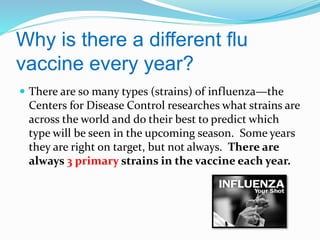
 There are so many types (strains) of influenza—the

Centers for Disease Control researches what strains are
across the world and do their best to predict which
type will be seen in the upcoming season. Some years
they are right on target, but not always. There are
always 3 primary strains in the vaccine each year.
Should I get a flu vaccine?
 A flu vaccine remains your best protection against

influenza. Your immunity will last about 5-6 months,
so it’s important not to get it too early. Usually late
September or October are prime vaccination times.
Do we take care of tuberculosis
patients?
 If you suspect a patient has TB, notify the physician

immediately. If appropriate, the physician will transfer
the patient to SFMC or Glenwood for follow-up of
suspected tuberculosis.
 We are equipped to take care of tuberculosis patients if
needed.
What are the symptoms of
tuberculosis?
 Persistent coughing for more than 3 weeks
 Unexplained weight loss

 Night sweats
 Fever
 Coughing up blood
 Chest pain
 Fatigue
If I have a positive skin test, does
that mean I can infect others?
 Not necessarily: It means you’ve been exposed to the

TB germ. You have been around someone who had
active TB; and, as that person talked, coughed, or
sneezed, the bacteria went into the air and you inhaled
it. If you don’t have symptoms, then you are not
infectious.
 You will need to be seen by a physician in order to
determine appropriate therapy to ensure the “germs”
you have are killed—usually that therapy is taking a
medication called INH for 6-9 months.
Is it required that I be tested for
TB every year?
 Yes, at least annually according to state law if you

work in a facility licensed by the Dept. of Health and
Hospitals.
Should you clean your hands
before touching a patient?
 You should always clean your hands before touching a

patient.
Is it OK to use hand sanitizer
after removing bloody gloves?
 No, it is not OK. You need to wash your hands instead.
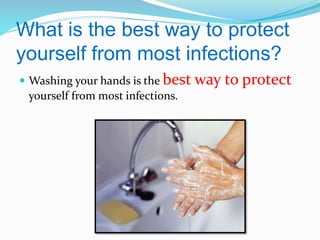
What is the best way to protect
yourself from most infections?
 Washing your hands is the best way

yourself from most infections.

to protect
 End of presentation.

Infection Control

  • 1.
    Influenza is aninfection caused by a virus. There are many types of influenza viruses.
  • 2.
    How is itspread?  When an infected person talks, coughs, or sneezes the virus is expelled into the air.  If you’re within 3 feet of that infected person, you have been exposed. Unfortunately if you have the flu, you may not show symptoms for 2 days after you’re infected—so you’re spreading the flu virus to those around you, and you don’t even realize you’re infected!
  • 3.
    Why is therea different flu vaccine every year?  There are so many types (strains) of influenza—the Centers for Disease Control researches what strains are across the world and do their best to predict which type will be seen in the upcoming season. Some years they are right on target, but not always. There are always 3 primary strains in the vaccine each year.
  • 4.
    Should I geta flu vaccine?  A flu vaccine remains your best protection against influenza. Your immunity will last about 5-6 months, so it’s important not to get it too early. Usually late September or October are prime vaccination times.
  • 5.
    Do we takecare of tuberculosis patients?  If you suspect a patient has TB, notify the physician immediately. If appropriate, the physician will transfer the patient to SFMC or Glenwood for follow-up of suspected tuberculosis.  We are equipped to take care of tuberculosis patients if needed.
  • 6.
    What are thesymptoms of tuberculosis?  Persistent coughing for more than 3 weeks  Unexplained weight loss  Night sweats  Fever  Coughing up blood  Chest pain  Fatigue
  • 7.
    If I havea positive skin test, does that mean I can infect others?  Not necessarily: It means you’ve been exposed to the TB germ. You have been around someone who had active TB; and, as that person talked, coughed, or sneezed, the bacteria went into the air and you inhaled it. If you don’t have symptoms, then you are not infectious.  You will need to be seen by a physician in order to determine appropriate therapy to ensure the “germs” you have are killed—usually that therapy is taking a medication called INH for 6-9 months.
  • 8.
    Is it requiredthat I be tested for TB every year?  Yes, at least annually according to state law if you work in a facility licensed by the Dept. of Health and Hospitals.
  • 9.
    Should you cleanyour hands before touching a patient?  You should always clean your hands before touching a patient.
  • 10.
    Is it OKto use hand sanitizer after removing bloody gloves?  No, it is not OK. You need to wash your hands instead.
  • 11.
    What is thebest way to protect yourself from most infections?  Washing your hands is the best way yourself from most infections. to protect
  • 12.
     End ofpresentation.