

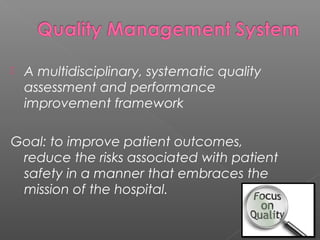
A multidisciplinary, systematic quality
assessment and performance
improvement framework

Goal: to improve patient outcomes,
reduce the risks associated with patient
safety in a manner that embraces the
mission of the hospital.
“Problems” are usually
due to PROCESS
failures, not PEOPLE
failures!






Identify an “opportunity” (problem)
Figure out what happened (the
process)
Explore why the process failed
Identify possible improvements;
implement those
Monitor the improvements









Antibiotic selection
Preop dosing time
Postop dosing
Therapy to prevent VTE (blood clots)
Temperature maintenance
Glucose control
Patient Experience: Nurse communication,
Room cleanliness, info about medications, etc.
National Healthcare Safety Network: hospitalassociated infections, employee flu vaccine
rates
There were 9 patient falls in 2010. A team began
working to reduce the number of falls, research
best practices, implemented improvements.
Results:
 2010 patient falls = 9 (79 per 100,000 patient days)
 2011 patient falls = 5 (44 per 100,000 patient days)
 2012 patient falls = 1 (9 per 100,000 patient days)
 2013 patient falls = 4 (38 per 100,000 patient days)
The improvement has not been sustained; therefore
this project will be revisited







Statistics are posted on HospitalCompare
website
Lots of media attention about hospital errors
Many states have laws requiring public
reporting of errors
Poor performance results in decreased
reimbursement
MOST IMPORTANT: Stellar patient outcomes,
doing the right thing the right way for every
patient


End of presentation.


End of presentation.

Quality management education

  • 2.
     A multidisciplinary, systematicquality assessment and performance improvement framework Goal: to improve patient outcomes, reduce the risks associated with patient safety in a manner that embraces the mission of the hospital.
  • 3.
    “Problems” are usually dueto PROCESS failures, not PEOPLE failures!
  • 4.
         Identify an “opportunity”(problem) Figure out what happened (the process) Explore why the process failed Identify possible improvements; implement those Monitor the improvements
  • 5.
            Antibiotic selection Preop dosingtime Postop dosing Therapy to prevent VTE (blood clots) Temperature maintenance Glucose control Patient Experience: Nurse communication, Room cleanliness, info about medications, etc. National Healthcare Safety Network: hospitalassociated infections, employee flu vaccine rates
  • 7.
    There were 9patient falls in 2010. A team began working to reduce the number of falls, research best practices, implemented improvements. Results:  2010 patient falls = 9 (79 per 100,000 patient days)  2011 patient falls = 5 (44 per 100,000 patient days)  2012 patient falls = 1 (9 per 100,000 patient days)  2013 patient falls = 4 (38 per 100,000 patient days) The improvement has not been sustained; therefore this project will be revisited
  • 8.
         Statistics are postedon HospitalCompare website Lots of media attention about hospital errors Many states have laws requiring public reporting of errors Poor performance results in decreased reimbursement MOST IMPORTANT: Stellar patient outcomes, doing the right thing the right way for every patient
  • 9.
  • 10.