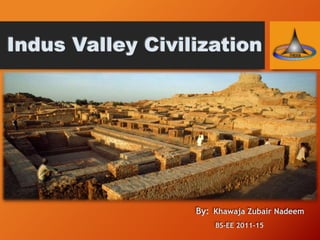
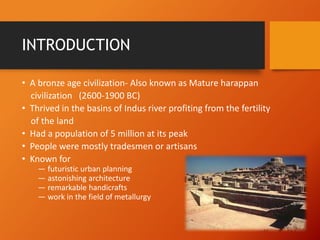
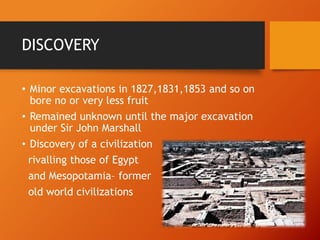
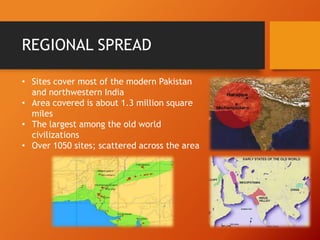
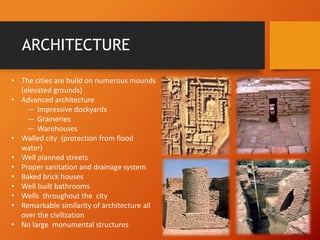
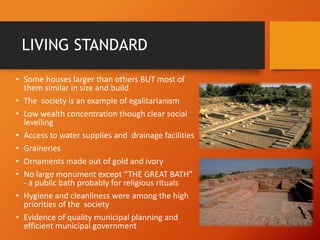
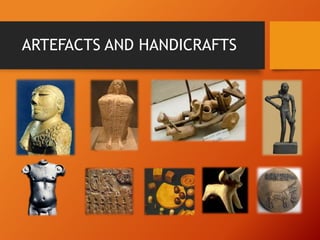
The Indus Valley Civilization, also known as the Mature Harappan Civilization, thrived between 2600-1900 BC in the fertile basins of the Indus River, with advanced urban planning and a population of around 5 million. Major archaeological discoveries revealed similarities to ancient Egyptian and Mesopotamian cultures, showcasing achievements in architecture, trade, and craftsmanship, as well as a social structure that likely emphasized equality. The civilization's decline is attributed to factors such as climatic changes, trade decline, and the immigration of new peoples, rather than warfare.