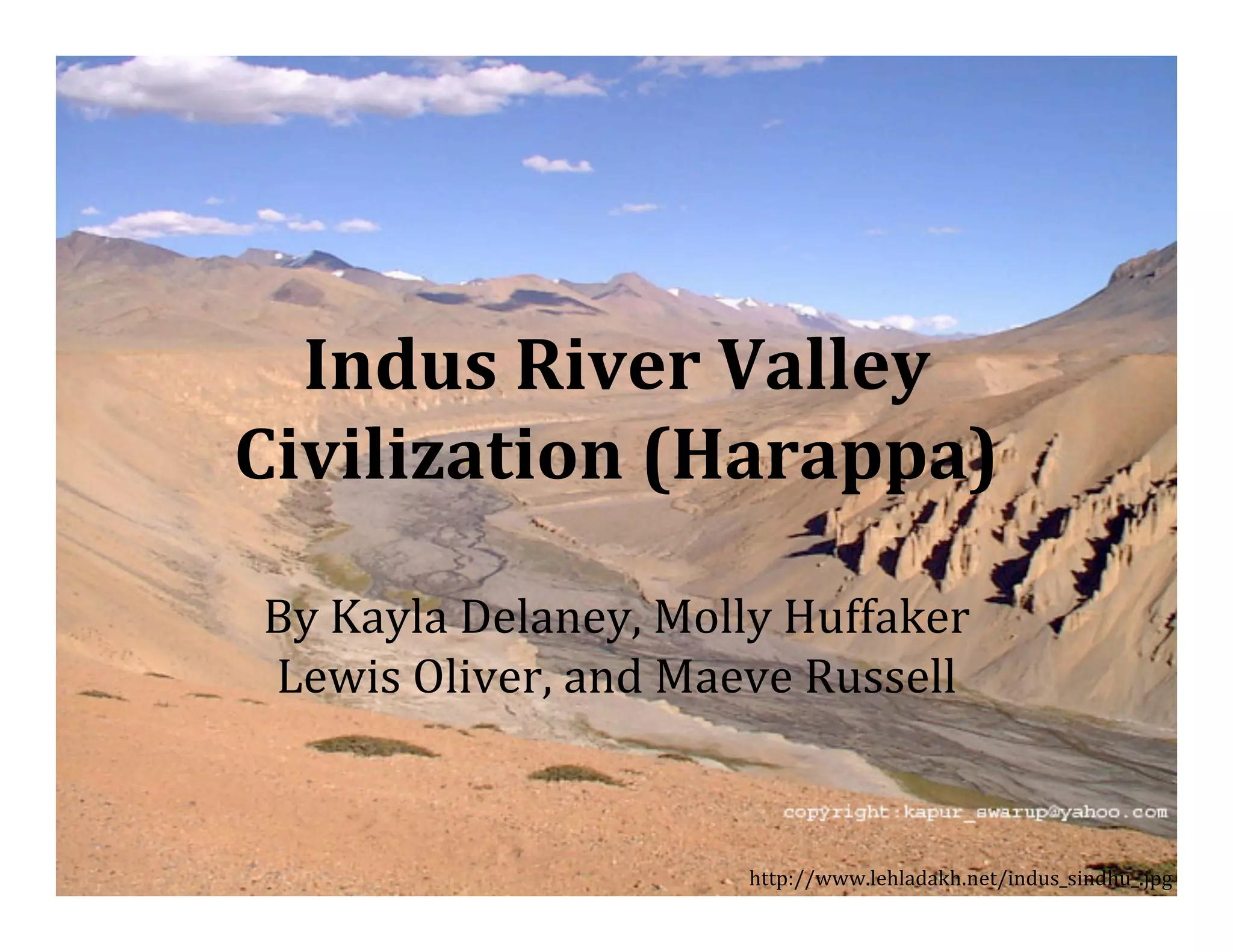
Indus River Valley
Civilization (Harappa)

By Kayla Delaney, Molly Huffaker
Lewis Oliver, and Maeve Russell


                      http://www.lehladakh.net/indus_sindhu_.jpg
Beginnings of Civilization
• Farming began around 6500 B.C. at
  Mehrgarh, a village settlement in the hills
  west of the Indus Valley
• Main crops (wheat and barley) grown
  initially to supplement hunting and
  gathering
• Already had extensive trade networks
  – Revealed by burial goods of turquoise and lapis
    lazuli from Central Asia and Afghanistan
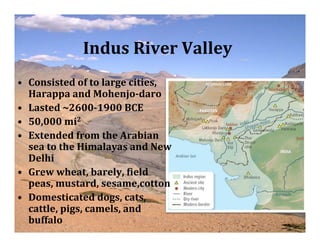
Indus River Valley
• Consisted of to large cities,
  Harappa and Mohenjo­daro
• Lasted ~2600­1900 BCE
• 50,000 mi2
• Extended from the Arabian
  sea to the Himalayas and New
  Delhi
• Grew wheat, barely, Vield
  peas, mustard, sesame,cotton
• Domesticated dogs, cats,
  cattle, pigs, camels, and
  buffalo
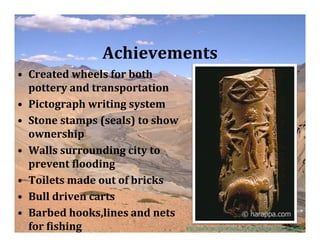
Achievements
• Created wheels for both
  pottery and transportation
• Pictograph writing system
• Stone stamps (seals) to show
  ownership
• Walls surrounding city to
  prevent Vlooding
• Toilets made out of bricks
• Bull driven carts
• Barbed hooks,lines and nets
  for Vishing                    http://www.exoticindiaart.com/artimages/indus_sm.jpg
Religion

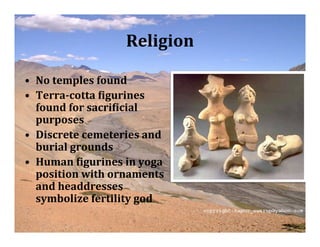
• No temples found
• Terra­cotta Vigurines
  found for sacriVicial
  purposes
• Discrete cemeteries and
  burial grounds
• Human Vigurines in yoga
  position with ornaments
  and headdresses
  symbolize fertility god
Religion continued
• Geometric symbols
  show beliefs in
  cosmology
• Narrative seals found
  on burials under sacred
  “bo tree”
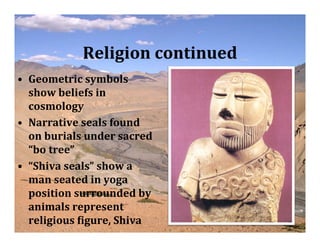
• “Shiva seals” show a
  man seated in yoga
  position surrounded by
  animals represent
  religious Vigure, Shiva
Art
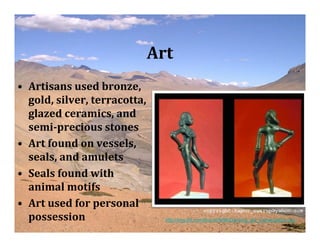
• Artisans used bronze,
  gold, silver, terracotta,
  glazed ceramics, and
  semi­precious stones
• Art found on vessels,
  seals, and amulets
• Seals found with
  animal motifs
• Art used for personal
  possession                    http://img.tfd.com/thumb/9/9d/Dancing_girl_mohenjodaro.jpg
Architecture
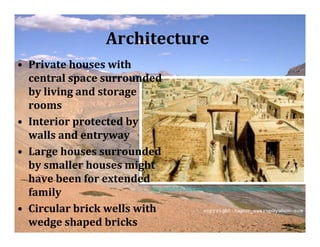
• Private houses with
  central space surrounded
  by living and storage
  rooms
• Interior protected by
  walls and entryway
• Large houses surrounded
  by smaller houses might
  have been for extended
  family                  http://spiffykiffy.files.wordpress.com/2009/02/gateway-at-harappa1.jpg


• Circular brick wells with
  wedge shaped bricks
Architecture continued
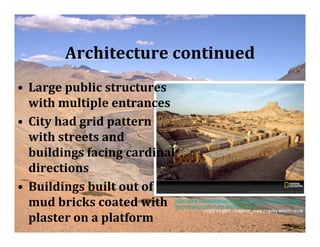
• Large public structures
  with multiple entrances
• City had grid pattern
  with streets and
  buildings facing cardinal
  directions
• Buildings built out of
  mud bricks coated with      http://www.nationalgeographic.com/history/ancient/images/
                              sw/mohenjo-daro-ruins-285685-sw.jpg

  plaster on a platform
Government
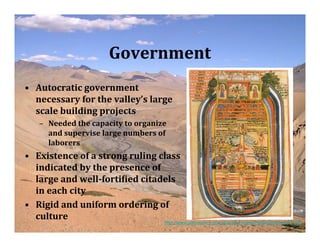
• Autocratic government
  necessary for the valley’s large
  scale building projects
    – Needed the capacity to organize
      and supervise large numbers of
      laborers
• Existence of a strong ruling class
  indicated by the presence of
  large and well­fortiVied citadels
  in each city
• Rigid and uniform ordering of
  culture                       http://www.astronomy.pomona.edu/archeo/india/temple.p61.GIF
Government continued
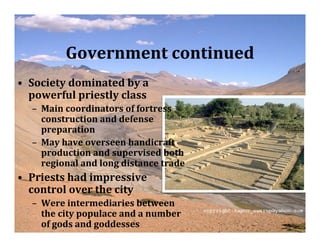
• Society dominated by a
  powerful priestly class
  – Main coordinators of fortress
    construction and defense
    preparation
  – May have overseen handicraft
    production and supervised both
    regional and long distance trade
• Priests had impressive
  control over the city
  – Were intermediaries between
    the city populace and a number
    of gods and goddesses
Economic Life
• Traded with
  Afghanistan, South
  India, and Iran
• Imported gold, silver,
  copper, turquoise and
  other semi­precious
  stones
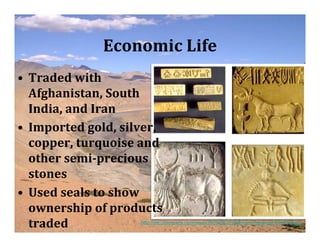
• Used seals to show
  ownership of products
  traded            http://dsc.discovery.com/news/2009/08/27/gallery/indus-script-540x540.jpg
Relationships with
       Surrounding Peoples
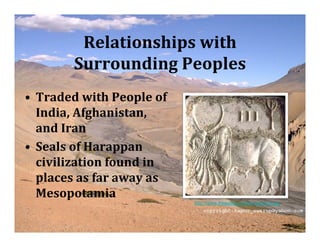
• Traded with People of
  India, Afghanistan,
  and Iran
• Seals of Harappan
  civilization found in
  places as far away as
  Mesopotamia
                          http://www.freewebs.com/a1sap/bull.jpg
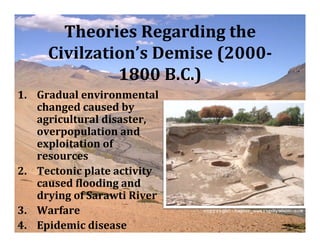
Theories Regarding the
     Civilzation’s Demise (2000­
              1800 B.C.)
1. Gradual environmental
   changed caused by
   agricultural disaster,
   overpopulation and
   exploitation of
   resources
2. Tectonic plate activity
   caused Vlooding and
   drying of Sarawti River
3. Warfare
4. Epidemic disease
After the Demise
• After 1800 B.C., people living in the region
  returned to dwelling in smaller, more
  scattered settlements
• No settlements on the scale of the Indus
  cities existed in South Asia for the next 1000
  years
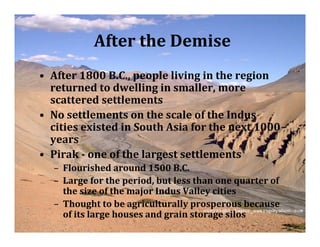
• Pirak ­ one of the largest settlements
  – Flourished around 1500 B.C.
  – Large for the period, but less than one quarter of
    the size of the major Indus Valley cities
  – Thought to be agriculturally prosperous because
    of its large houses and grain storage silos
Works Cited
Indus River Valley Government.  24 Feb. 2010.
         <http://www.kidsnewsroom.org/elmer/infoCentral/frameset/civilizations
         india/gov/index.html>.

Indus Valley.  24 Feb. 2010.
         <http://www.history‐world.org/indus_valley.htm>.

Indus Valley Civilization. 24 Feb. 2010.
         <http://en.wikipedia.org/wiki/Indus_Valley_Civilization>.

Scarre, Chris.  Timelines of the Ancient World: A Visual Chronology from the Origins of
         Life to A.D. 1500.  New York: Dorling Kindersley, 1993.  Print.

Indus River Valley

  • 1.
  • 2.
    Beginnings of Civilization • Farming began around 6500 B.C. at Mehrgarh, a village settlement in the hills west of the Indus Valley • Main crops (wheat and barley) grown initially to supplement hunting and gathering • Already had extensive trade networks – Revealed by burial goods of turquoise and lapis lazuli from Central Asia and Afghanistan
  • 3.
    Indus River Valley • Consisted of to large cities, Harappa and Mohenjo­daro • Lasted ~2600­1900 BCE • 50,000 mi2 • Extended from the Arabian sea to the Himalayas and New Delhi • Grew wheat, barely, Vield peas, mustard, sesame,cotton • Domesticated dogs, cats, cattle, pigs, camels, and buffalo
  • 4.
    Achievements • Created wheels for both pottery and transportation • Pictograph writing system • Stone stamps (seals) to show ownership • Walls surrounding city to prevent Vlooding • Toilets made out of bricks • Bull driven carts • Barbed hooks,lines and nets for Vishing http://www.exoticindiaart.com/artimages/indus_sm.jpg
  • 5.
    Religion • No temples found • Terra­cotta Vigurines found for sacriVicial purposes • Discrete cemeteries and burial grounds • Human Vigurines in yoga position with ornaments and headdresses symbolize fertility god
  • 6.
    Religion continued • Geometric symbols show beliefs in cosmology • Narrative seals found on burials under sacred “bo tree” • “Shiva seals” show a man seated in yoga position surrounded by animals represent religious Vigure, Shiva
  • 7.
    Art • Artisans used bronze, gold, silver, terracotta, glazed ceramics, and semi­precious stones • Art found on vessels, seals, and amulets • Seals found with animal motifs • Art used for personal possession http://img.tfd.com/thumb/9/9d/Dancing_girl_mohenjodaro.jpg
  • 8.
    Architecture • Private houses with central space surrounded by living and storage rooms • Interior protected by walls and entryway • Large houses surrounded by smaller houses might have been for extended family http://spiffykiffy.files.wordpress.com/2009/02/gateway-at-harappa1.jpg • Circular brick wells with wedge shaped bricks
  • 9.
    Architecture continued • Large public structures with multiple entrances • City had grid pattern with streets and buildings facing cardinal directions • Buildings built out of mud bricks coated with http://www.nationalgeographic.com/history/ancient/images/ sw/mohenjo-daro-ruins-285685-sw.jpg plaster on a platform
  • 10.
    Government • Autocratic government necessary for the valley’s large scale building projects – Needed the capacity to organize and supervise large numbers of laborers • Existence of a strong ruling class indicated by the presence of large and well­fortiVied citadels in each city • Rigid and uniform ordering of culture http://www.astronomy.pomona.edu/archeo/india/temple.p61.GIF
  • 11.
    Government continued • Society dominated by a powerful priestly class – Main coordinators of fortress construction and defense preparation – May have overseen handicraft production and supervised both regional and long distance trade • Priests had impressive control over the city – Were intermediaries between the city populace and a number of gods and goddesses
  • 12.
    Economic Life • Traded with Afghanistan, South India, and Iran • Imported gold, silver, copper, turquoise and other semi­precious stones • Used seals to show ownership of products traded http://dsc.discovery.com/news/2009/08/27/gallery/indus-script-540x540.jpg
  • 13.
    Relationships with Surrounding Peoples • Traded with People of India, Afghanistan, and Iran • Seals of Harappan civilization found in places as far away as Mesopotamia http://www.freewebs.com/a1sap/bull.jpg
  • 14.
    Theories Regarding the Civilzation’s Demise (2000­ 1800 B.C.) 1. Gradual environmental changed caused by agricultural disaster, overpopulation and exploitation of resources 2. Tectonic plate activity caused Vlooding and drying of Sarawti River 3. Warfare 4. Epidemic disease
  • 15.
    After the Demise • After 1800 B.C., people living in the region returned to dwelling in smaller, more scattered settlements • No settlements on the scale of the Indus cities existed in South Asia for the next 1000 years • Pirak ­ one of the largest settlements – Flourished around 1500 B.C. – Large for the period, but less than one quarter of the size of the major Indus Valley cities – Thought to be agriculturally prosperous because of its large houses and grain storage silos
  • 16.
    Works Cited Indus River Valley Government.  24 Feb. 2010. <http://www.kidsnewsroom.org/elmer/infoCentral/frameset/civilizations india/gov/index.html>. Indus Valley.  24 Feb. 2010. <http://www.history‐world.org/indus_valley.htm>. Indus Valley Civilization. 24 Feb. 2010. <http://en.wikipedia.org/wiki/Indus_Valley_Civilization>. Scarre, Chris.  Timelines of the Ancient World: A Visual Chronology from the Origins of Life to A.D. 1500.  New York: Dorling Kindersley, 1993.  Print.