Content:
• Time period
• Location
• Religion and Beliefs
• Society
• Art
• Economy
• Architecture
• Reason of flourishment
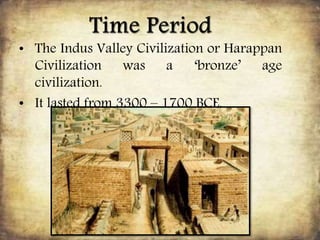
• The Indus Valley Civilization or Harappan
Civilization was a ‘bronze’ age
civilization.
• It lasted from 3300 – 1700 BCE.
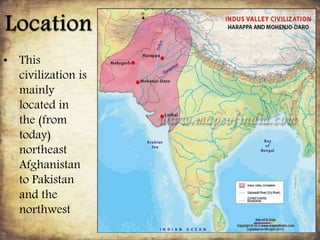
• This
civilization is
mainly
located in
the (from
today)
northeast
Afghanistan
to Pakistan
and the
northwest
part of India.
Religion and Beliefs
• They made clay figures of animals and women that
probably were used in special rituals.
• Small limestone was used to carve sculptures of
deities.
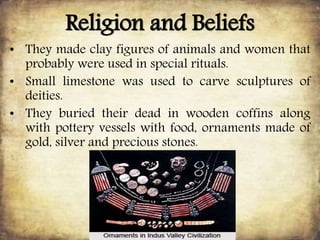
• They buried their dead in wooden coffins along
with pottery vessels with food, ornaments made of
gold, silver and precious stones.
Society
• Mostly peaceful
farmers.
• Built large cities with
ordered streets and
bricks made all the
same size.
• Strong central
government.
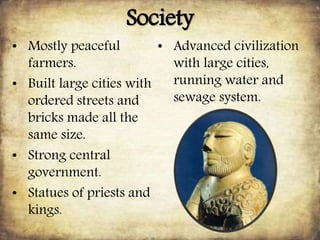
• Statues of priests and
kings.
• Advanced civilization
with large cities,
running water and
sewage system.
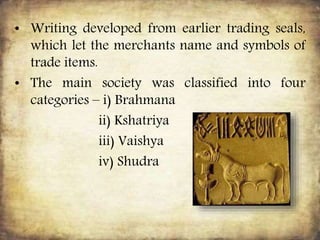
• Writing developed from earlier trading seals,
which let the merchants name and symbols of
trade items.
• The main society was classified into four
categories – i) Brahmana
ii) Kshatriya
iii) Vaishya
iv) Shudra
Art
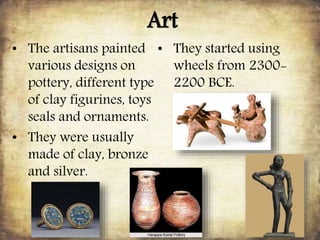
• The artisans painted
various designs on
pottery, different type
of clay figurines, toys
seals and ornaments.
• They were usually
made of clay, bronze
and silver.
• They started using
wheels from 2300-
2200 BCE.
Economy
• Indus valley farmers
planted winter crops
like wheat, barley,
peas, lentils, linseed
and mustard.
• In summer they grew
millet, sesame and
cotton.
• Evidence shows that
about half the animal
bones came from
cattle.
• The Indus cities were connected with rural
agriculture communities and distant resources
and mining areas through strong trading
system.
• The outsiders were attracted to India for its
ornaments, metal tools and pottery.
• Cotton, lumber, grain and other food stuffs
were the major commodities of this internal
trade.
• They traded with Iran and Persian gulf.
Architecture
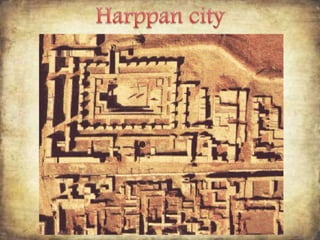
• There were well planned cities and towns
built on massive mud brick platforms.
• In larger cities the houses were made of
backed bricks.
• The houses were multi – storied.
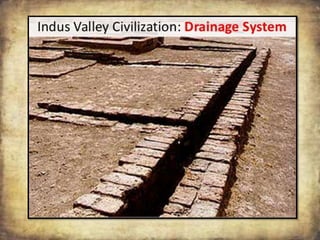
• The houses were connected to an elaborate
drainage system.
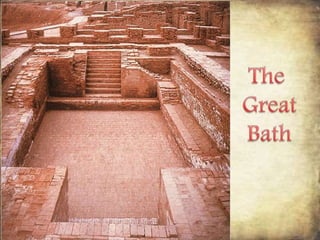
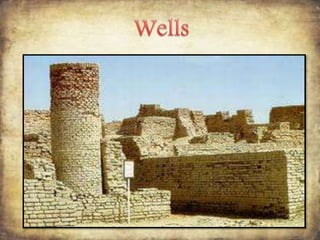
• They constructed wells, bathing areas and a
place for proper sanitation.
Reason for collapes
• Archeologists have offered four explanation
for the collapse of Harappan civilization.
• Three are based on ecological factors: intense
flooding, increase in population and the
desiccation of the Indus river.
• The fourth reason is that of the Aryan
invasion.
Indus valley civilization

Indus valley civilization

  • 2.
    Content: • Time period •Location • Religion and Beliefs • Society • Art • Economy • Architecture • Reason of flourishment
  • 3.
    • The IndusValley Civilization or Harappan Civilization was a ‘bronze’ age civilization. • It lasted from 3300 – 1700 BCE.
  • 4.
    • This civilization is mainly locatedin the (from today) northeast Afghanistan to Pakistan and the northwest part of India.
  • 5.
    Religion and Beliefs •They made clay figures of animals and women that probably were used in special rituals. • Small limestone was used to carve sculptures of deities. • They buried their dead in wooden coffins along with pottery vessels with food, ornaments made of gold, silver and precious stones.
  • 6.
    Society • Mostly peaceful farmers. •Built large cities with ordered streets and bricks made all the same size. • Strong central government. • Statues of priests and kings. • Advanced civilization with large cities, running water and sewage system.
  • 7.
    • Writing developedfrom earlier trading seals, which let the merchants name and symbols of trade items. • The main society was classified into four categories – i) Brahmana ii) Kshatriya iii) Vaishya iv) Shudra
  • 8.
    Art • The artisanspainted various designs on pottery, different type of clay figurines, toys seals and ornaments. • They were usually made of clay, bronze and silver. • They started using wheels from 2300- 2200 BCE.
  • 9.
    Economy • Indus valleyfarmers planted winter crops like wheat, barley, peas, lentils, linseed and mustard. • In summer they grew millet, sesame and cotton. • Evidence shows that about half the animal bones came from cattle.
  • 10.
    • The Induscities were connected with rural agriculture communities and distant resources and mining areas through strong trading system. • The outsiders were attracted to India for its ornaments, metal tools and pottery. • Cotton, lumber, grain and other food stuffs were the major commodities of this internal trade. • They traded with Iran and Persian gulf.
  • 11.
    Architecture • There werewell planned cities and towns built on massive mud brick platforms. • In larger cities the houses were made of backed bricks. • The houses were multi – storied. • The houses were connected to an elaborate drainage system. • They constructed wells, bathing areas and a place for proper sanitation.
  • 16.
    Reason for collapes •Archeologists have offered four explanation for the collapse of Harappan civilization. • Three are based on ecological factors: intense flooding, increase in population and the desiccation of the Indus river. • The fourth reason is that of the Aryan invasion.