Copyright © 2003 by The McGraw-Hill Companies, Inc. All rights reserved.
Chapter 
Indirect Compensation: 9 
Employee Benefit Plans 
Copyright © 2003 by The McGraw-Hill Companies, Inc. All rights reserved.
Strategic Considerations in the Design of 
Benefits Programs 
 The organization’s stage of development 
 Projected rate of employment, growth, or downsizing 
Copyright © 2003 by The McGraw-Hill Companies, Inc. All rights reserved. 
 Geographic redeployment 
 Acquisitions 
 Expected changes in profitability 
 Each of these conditions suggests a change in the optimum “mix” of 
benefits to be consistent with long-term business plans
Copyright © 2003 by The McGraw-Hill Companies, Inc. All rights reserved. 
Classifying Benefits 
 Three broad categories exist for classifying benefits 
 Security and health 
 Payments for time not worked 
 Employee services
Security & Health Benefits 
Copyright © 2003 by The McGraw-Hill Companies, Inc. All rights reserved. 
 Life Insurance 
 Workers’ compensation 
 Disability Insurance 
 Hospitalization, surgical, and maternity coverage 
 Health maintenance organizations (HMOs) 
 Other medical coverage (dental, mental health, substance abuse) 
 Sick leave 
 Pension plans 
 Social Security 
 Unemployment insurance & supplemental unemployment insurance 
 Severance pay
Payments for Time Not Worked 
Copyright © 2003 by The McGraw-Hill Companies, Inc. All rights reserved. 
 Vacations 
 Holidays 
 Reporting Time 
 Personal excused absences 
 Grievances and negotiations 
 Sabbatical leaves
Copyright © 2003 by The McGraw-Hill Companies, Inc. All rights reserved. 
Employee Services 
 Employee Services – a broad range of benefits that employees 
qualify for purely by virtue of their membership in the organization, 
and not because of merit 
 Some examples include tuition aid, credit unions, auto insurance, 
company car, food service, stock-purchase plans, parking, fitness and 
wellness programs
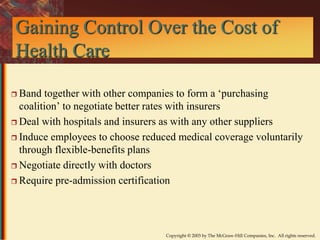
Gaining Control Over the Cost of 
Health Care 
 Band together with other companies to form a ‘purchasing 
coalition’ to negotiate better rates with insurers 
 Deal with hospitals and insurers as with any other suppliers 
 Induce employees to choose reduced medical coverage voluntarily 
through flexible-benefits plans 
Copyright © 2003 by The McGraw-Hill Companies, Inc. All rights reserved. 
 Negotiate directly with doctors 
 Require pre-admission certification
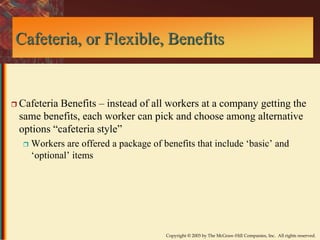
Cafeteria, or Flexible, Benefits 
 Cafeteria Benefits – instead of all workers at a company getting the 
same benefits, each worker can pick and choose among alternative 
options “cafeteria style” 
 Workers are offered a package of benefits that include ‘basic’ and 
‘optional’ items 
Copyright © 2003 by The McGraw-Hill Companies, Inc. All rights reserved.
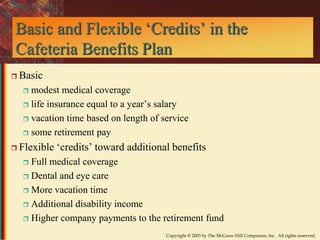
Basic and Flexible ‘Credits’ in the 
Cafeteria Benefits Plan 
Copyright © 2003 by The McGraw-Hill Companies, Inc. All rights reserved. 
 Basic 
 modest medical coverage 
 life insurance equal to a year’s salary 
 vacation time based on length of service 
 some retirement pay 
 Flexible ‘credits’ toward additional benefits 
 Full medical coverage 
 Dental and eye care 
 More vacation time 
 Additional disability income 
 Higher company payments to the retirement fund
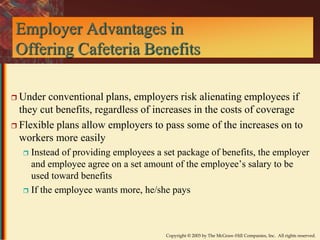
Employer Advantages in 
Offering Cafeteria Benefits 
 Under conventional plans, employers risk alienating employees if 
they cut benefits, regardless of increases in the costs of coverage 
 Flexible plans allow employers to pass some of the increases on to 
workers more easily 
 Instead of providing employees a set package of benefits, the employer 
and employee agree on a set amount of the employee’s salary to be 
used toward benefits 
 If the employee wants more, he/she pays 
Copyright © 2003 by The McGraw-Hill Companies, Inc. All rights reserved.
Communicating Benefits to Employees 
Copyright © 2003 by The McGraw-Hill Companies, Inc. All rights reserved. 
 Make employees aware of them 
 Help employees understand the benefits information they receive in 
order to take full advantage of the plans 
 Make employees confident that they can trust the information they 
receive 
 Convince present and future employees of the worth or value of the 
benefits package
Communicating the Value 
of Benefits Programs to Employees 
Copyright © 2003 by The McGraw-Hill Companies, Inc. All rights reserved. 
 Alternative metrics: 
 Annual cost of benefits for all employees 
 Cost per employee per year 
 Percentage of payroll 
 Cents per hour

indirect compensation & employee benefit plans

  • 1.
    Copyright © 2003by The McGraw-Hill Companies, Inc. All rights reserved.
  • 2.
    Chapter Indirect Compensation:9 Employee Benefit Plans Copyright © 2003 by The McGraw-Hill Companies, Inc. All rights reserved.
  • 3.
    Strategic Considerations inthe Design of Benefits Programs  The organization’s stage of development  Projected rate of employment, growth, or downsizing Copyright © 2003 by The McGraw-Hill Companies, Inc. All rights reserved.  Geographic redeployment  Acquisitions  Expected changes in profitability  Each of these conditions suggests a change in the optimum “mix” of benefits to be consistent with long-term business plans
  • 4.
    Copyright © 2003by The McGraw-Hill Companies, Inc. All rights reserved. Classifying Benefits  Three broad categories exist for classifying benefits  Security and health  Payments for time not worked  Employee services
  • 5.
    Security & HealthBenefits Copyright © 2003 by The McGraw-Hill Companies, Inc. All rights reserved.  Life Insurance  Workers’ compensation  Disability Insurance  Hospitalization, surgical, and maternity coverage  Health maintenance organizations (HMOs)  Other medical coverage (dental, mental health, substance abuse)  Sick leave  Pension plans  Social Security  Unemployment insurance & supplemental unemployment insurance  Severance pay
  • 6.
    Payments for TimeNot Worked Copyright © 2003 by The McGraw-Hill Companies, Inc. All rights reserved.  Vacations  Holidays  Reporting Time  Personal excused absences  Grievances and negotiations  Sabbatical leaves
  • 7.
    Copyright © 2003by The McGraw-Hill Companies, Inc. All rights reserved. Employee Services  Employee Services – a broad range of benefits that employees qualify for purely by virtue of their membership in the organization, and not because of merit  Some examples include tuition aid, credit unions, auto insurance, company car, food service, stock-purchase plans, parking, fitness and wellness programs
  • 8.
    Gaining Control Overthe Cost of Health Care  Band together with other companies to form a ‘purchasing coalition’ to negotiate better rates with insurers  Deal with hospitals and insurers as with any other suppliers  Induce employees to choose reduced medical coverage voluntarily through flexible-benefits plans Copyright © 2003 by The McGraw-Hill Companies, Inc. All rights reserved.  Negotiate directly with doctors  Require pre-admission certification
  • 9.
    Cafeteria, or Flexible,Benefits  Cafeteria Benefits – instead of all workers at a company getting the same benefits, each worker can pick and choose among alternative options “cafeteria style”  Workers are offered a package of benefits that include ‘basic’ and ‘optional’ items Copyright © 2003 by The McGraw-Hill Companies, Inc. All rights reserved.
  • 10.
    Basic and Flexible‘Credits’ in the Cafeteria Benefits Plan Copyright © 2003 by The McGraw-Hill Companies, Inc. All rights reserved.  Basic  modest medical coverage  life insurance equal to a year’s salary  vacation time based on length of service  some retirement pay  Flexible ‘credits’ toward additional benefits  Full medical coverage  Dental and eye care  More vacation time  Additional disability income  Higher company payments to the retirement fund
  • 11.
    Employer Advantages in Offering Cafeteria Benefits  Under conventional plans, employers risk alienating employees if they cut benefits, regardless of increases in the costs of coverage  Flexible plans allow employers to pass some of the increases on to workers more easily  Instead of providing employees a set package of benefits, the employer and employee agree on a set amount of the employee’s salary to be used toward benefits  If the employee wants more, he/she pays Copyright © 2003 by The McGraw-Hill Companies, Inc. All rights reserved.
  • 12.
    Communicating Benefits toEmployees Copyright © 2003 by The McGraw-Hill Companies, Inc. All rights reserved.  Make employees aware of them  Help employees understand the benefits information they receive in order to take full advantage of the plans  Make employees confident that they can trust the information they receive  Convince present and future employees of the worth or value of the benefits package
  • 13.
    Communicating the Value of Benefits Programs to Employees Copyright © 2003 by The McGraw-Hill Companies, Inc. All rights reserved.  Alternative metrics:  Annual cost of benefits for all employees  Cost per employee per year  Percentage of payroll  Cents per hour