COMPENSATION


     PRESENTED BY:- BIRENDERKUMAR
     PTM1001003
WHAT IS COMPENSATION
• Compensation is the remuneration received by
  an employee in return for his/her contribution
  to the organization
• Compensation is an integral part of human
  resource management which helps in
  motivating the employees and improving
  organizational effectiveness.
Con…….

• Compensation provided to employees can
  direct in the form of monetary benefits and/or
  indirect in the form of non-monetary benefits
  known as perks, time off, etc.
• Compensation does not include only salary but
  it is the sum total of all rewards and
  allowances provided to the employees in return
  for their services
Compensation Objectives
 To reward employees’ past performance fairly, in line
  with efforts, skills and competencies
 To attract and retain competitive high performing
   Employees
 To remain competitive in the labor market
 To align employees’ future performance with
   organizational goals
 To communicate the employees their worth to the
   organization
 To provide employee social status
Compensation Policy Issues
Pay for performance
Pay for seniority
Salary increases and promotions
Overtime and shift pay
Probationary pay
Paid and unpaid leaves
Paid holidays
Geographic costs of living differences
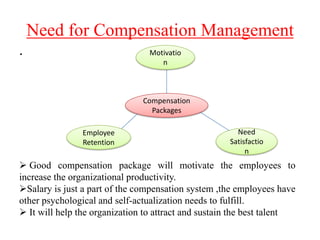
Need for Compensation Management
.                                Motivatio
                                    n


                               Compensation
                                 Packages

                Employee                               Need
                Retention                            Satisfactio
                                                          n
 Good compensation package will motivate the employees to
increase the organizational productivity.
Salary is just a part of the compensation system ,the employees have
other psychological and self-actualization needs to fulfill.
 It will help the organization to attract and sustain the best talent
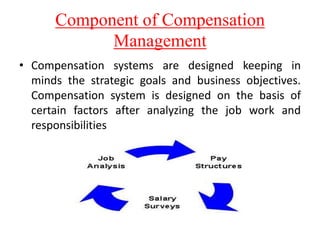
Component of Compensation
            Management
• Compensation systems are designed keeping in
  minds the strategic goals and business objectives.
  Compensation system is designed on the basis of
  certain factors after analyzing the job work and
  responsibilities
Goals of Compensation
• There are mainly 3 goal of compensation:-
  Attract
  Retain
  Motivate
Factors affecting Salaries and Wages

   Cost of living
   Supply and demand of labor
   Government requirements (minimum wage rates)
   Competitor wage scales
   Trade Union influences
   Labor productivity
Types of Compensation Management
• Direct compensation
• Indirect compensation
• Nonfinancial Compensation
Direct compensation
                                 Medical
.                             Reimbursemen
         Basic                      t                 Special
         Salary                                     Allowances

                                 Direct
       House                  Compensatio
        Rent                       n                      Bonus
    Allowances


                  Conveyanc                     Leave
                      e                         Travel
                                             Allowances
.
           Indirect Compensation
.                   Overtime
                     policy
           Leave                 Hospitalizatio
           Policy                      n

                      Indirect
    Flexible        Compensati
    Timing              on                  Insurance


          Holiday
                                   Leave
          Homes
                    Retiremen      travel
                    t Benefits
Nonfinancial Compensation
• Satisfaction that person receives from job
  itself or from psychological and/or physical
  environment in which person works.
BENEFITS OF COMPENSATION
• An ideal compensation system will have positive
  impact on the efficiency and results produced by
  employees
• Sound Compensation/Reward System brings peace in
  the relationship of employer and employees
• It will enhance the process of job evaluation. It will
  also help in setting up an ideal job evaluation and the
  set standards would be more realistic and achievable
• The system provides growth and advancement
  opportunities to the deserving employees
.


THANK YOU

Presentation on compensation

  • 1.
    COMPENSATION PRESENTED BY:- BIRENDERKUMAR PTM1001003
  • 2.
    WHAT IS COMPENSATION •Compensation is the remuneration received by an employee in return for his/her contribution to the organization • Compensation is an integral part of human resource management which helps in motivating the employees and improving organizational effectiveness.
  • 3.
    Con……. • Compensation providedto employees can direct in the form of monetary benefits and/or indirect in the form of non-monetary benefits known as perks, time off, etc. • Compensation does not include only salary but it is the sum total of all rewards and allowances provided to the employees in return for their services
  • 4.
    Compensation Objectives  Toreward employees’ past performance fairly, in line with efforts, skills and competencies  To attract and retain competitive high performing Employees  To remain competitive in the labor market  To align employees’ future performance with organizational goals  To communicate the employees their worth to the organization  To provide employee social status
  • 5.
    Compensation Policy Issues Payfor performance Pay for seniority Salary increases and promotions Overtime and shift pay Probationary pay Paid and unpaid leaves Paid holidays Geographic costs of living differences
  • 6.
    Need for CompensationManagement . Motivatio n Compensation Packages Employee Need Retention Satisfactio n  Good compensation package will motivate the employees to increase the organizational productivity. Salary is just a part of the compensation system ,the employees have other psychological and self-actualization needs to fulfill.  It will help the organization to attract and sustain the best talent
  • 7.
    Component of Compensation Management • Compensation systems are designed keeping in minds the strategic goals and business objectives. Compensation system is designed on the basis of certain factors after analyzing the job work and responsibilities
  • 8.
    Goals of Compensation •There are mainly 3 goal of compensation:- Attract Retain Motivate
  • 9.
    Factors affecting Salariesand Wages  Cost of living  Supply and demand of labor  Government requirements (minimum wage rates)  Competitor wage scales  Trade Union influences  Labor productivity
  • 10.
    Types of CompensationManagement • Direct compensation • Indirect compensation • Nonfinancial Compensation
  • 11.
    Direct compensation Medical . Reimbursemen Basic t Special Salary Allowances Direct House Compensatio Rent n Bonus Allowances Conveyanc Leave e Travel Allowances
  • 12.
    . Indirect Compensation . Overtime policy Leave Hospitalizatio Policy n Indirect Flexible Compensati Timing on Insurance Holiday Leave Homes Retiremen travel t Benefits
  • 13.
    Nonfinancial Compensation • Satisfactionthat person receives from job itself or from psychological and/or physical environment in which person works.
  • 14.
    BENEFITS OF COMPENSATION •An ideal compensation system will have positive impact on the efficiency and results produced by employees • Sound Compensation/Reward System brings peace in the relationship of employer and employees • It will enhance the process of job evaluation. It will also help in setting up an ideal job evaluation and the set standards would be more realistic and achievable • The system provides growth and advancement opportunities to the deserving employees
  • 15.