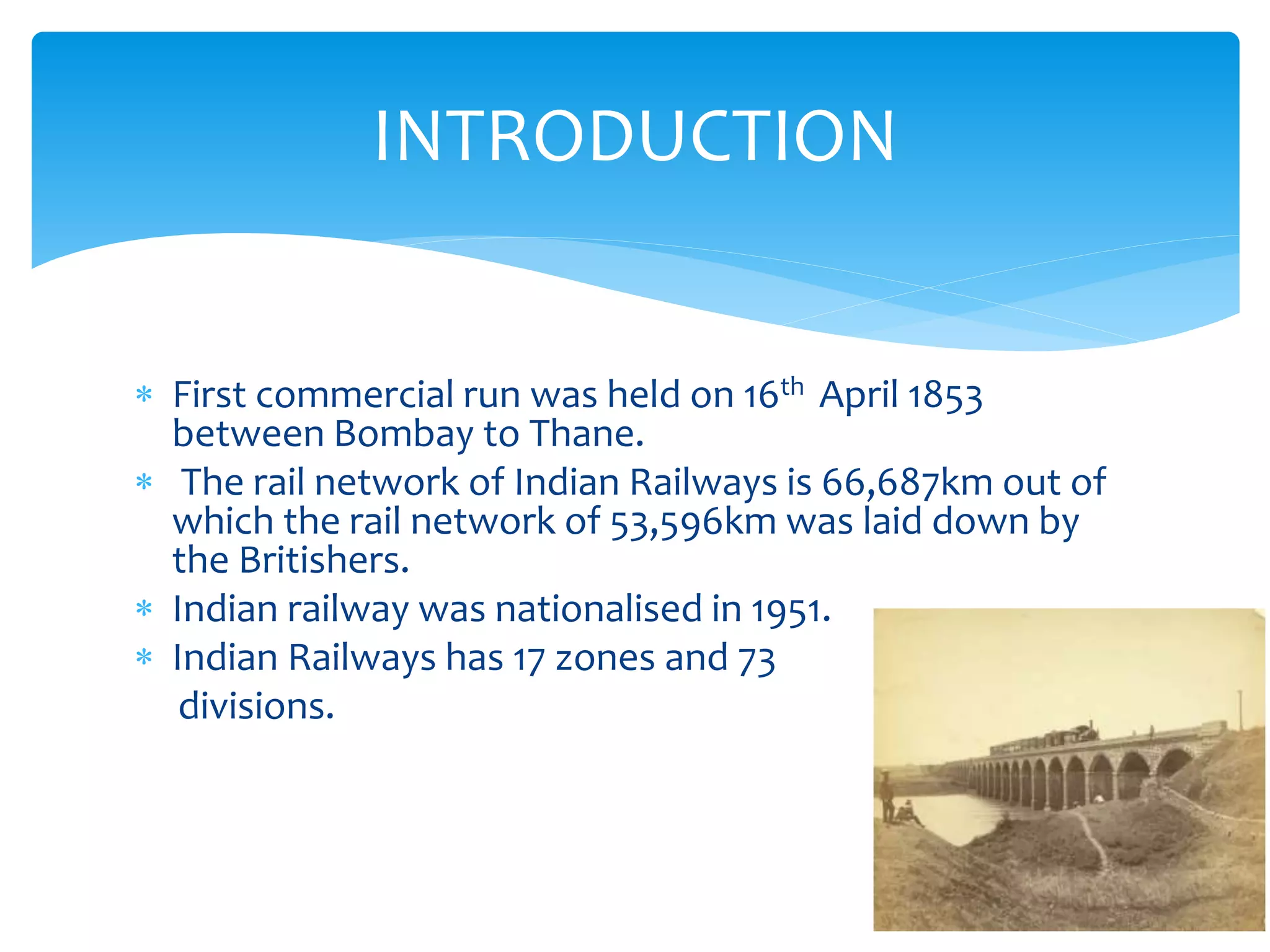
 First commercial run was held on 16th April 1853
between Bombay to Thane.
 The rail network of Indian Railways is 66,687km out of
which the rail network of 53,596km was laid down by
the Britishers.
 Indian railway was nationalised in 1951.
 Indian Railways has 17 zones and 73
divisions.
INTRODUCTION
 Indian Railways has the fourth largest rail network in the world.
 Indian Railways operates Asia’s most expensive luxury train.
 Daily number of trains running are over 13000 (passenger trains)
and over 7000 (freight trains).
 Daily number of passengers travelling are over 23 million.
 Number of Railway station are about 8000 classified into 7
categories.
 IR is the largest employer of India and eight largest in the world.
 Indian Railways has the largest rail network in the world under
one management.
FACTS OF INDIAN RAILWAYS
STRENGTH
1.Largest Employee.
2.Affordable travel.
3.Operates one of the most
luxurious trains in the world.
4.More carrying capacity of
goods.
WEAKNESS
1. Poor infrastructure.
2. Lack of safety, punctuality,
hygiene.
3. Lazy department.
4. Corruption in the department.
OPPORTUNITIES
1.Technology advancements.
2.Connecting cities with RRTS.
THREATS
1.Low cost airlines.
2.Fierce competition from road
transport.
 Without Ticket travellers
 Out-dated technologies
 Lack of innovations
 Lack of safety, punctuality, hygiene
 Rail accidents
 Lack of seat availability
 Concession on fares
 Personal benefits of
politicians.
 Offering Free travel.
REASONS FOR OCCURING LOSSES
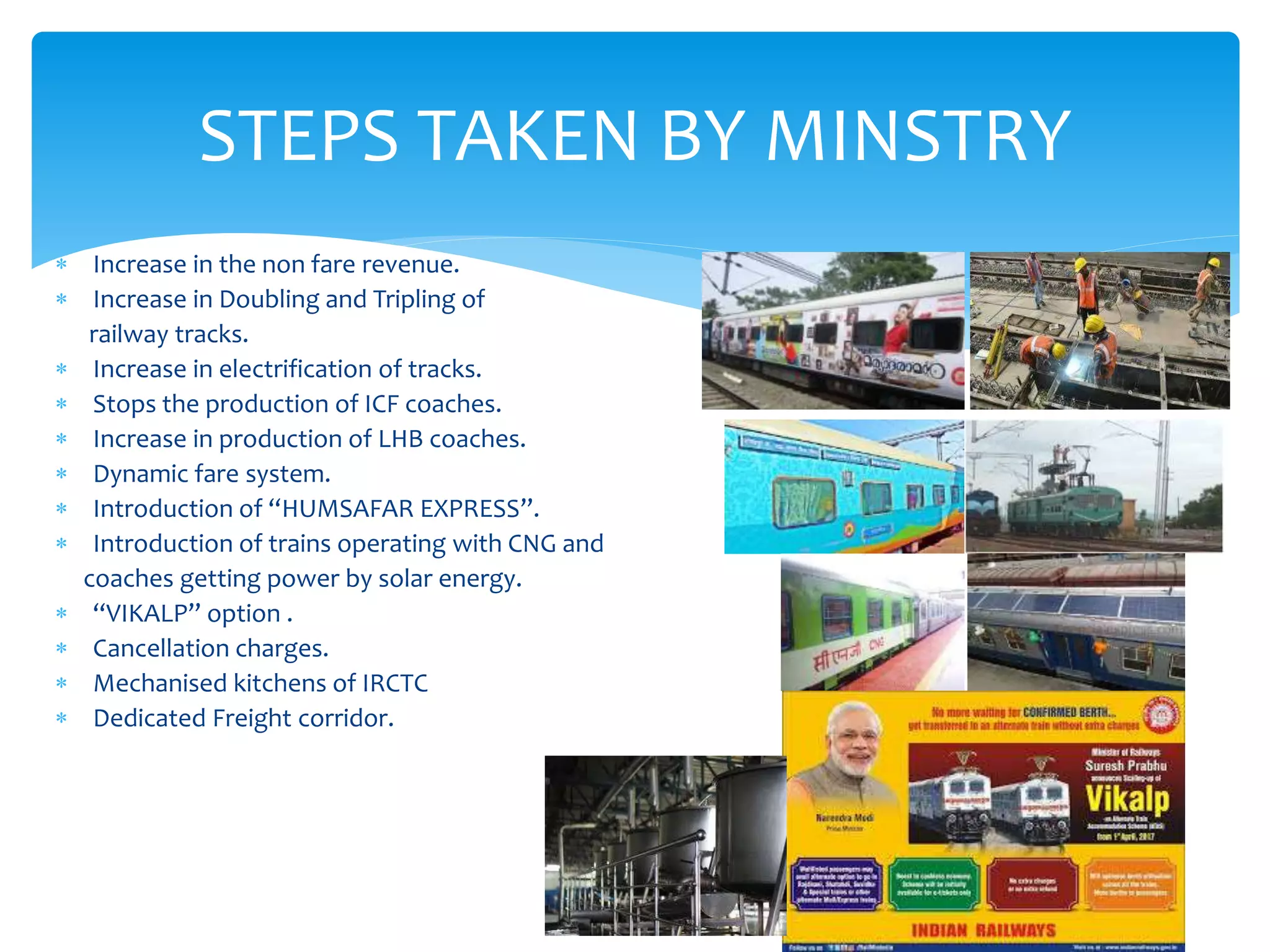
 Increase in the non fare revenue.
 Increase in Doubling and Tripling of
railway tracks.
 Increase in electrification of tracks.
 Stops the production of ICF coaches.
 Increase in production of LHB coaches.
 Dynamic fare system.
 Introduction of “HUMSAFAR EXPRESS”.
 Introduction of trains operating with CNG and
coaches getting power by solar energy.
 “VIKALP” option .
 Cancellation charges.
 Mechanised kitchens of IRCTC
 Dedicated Freight corridor.
STEPS TAKEN BY MINSTRY
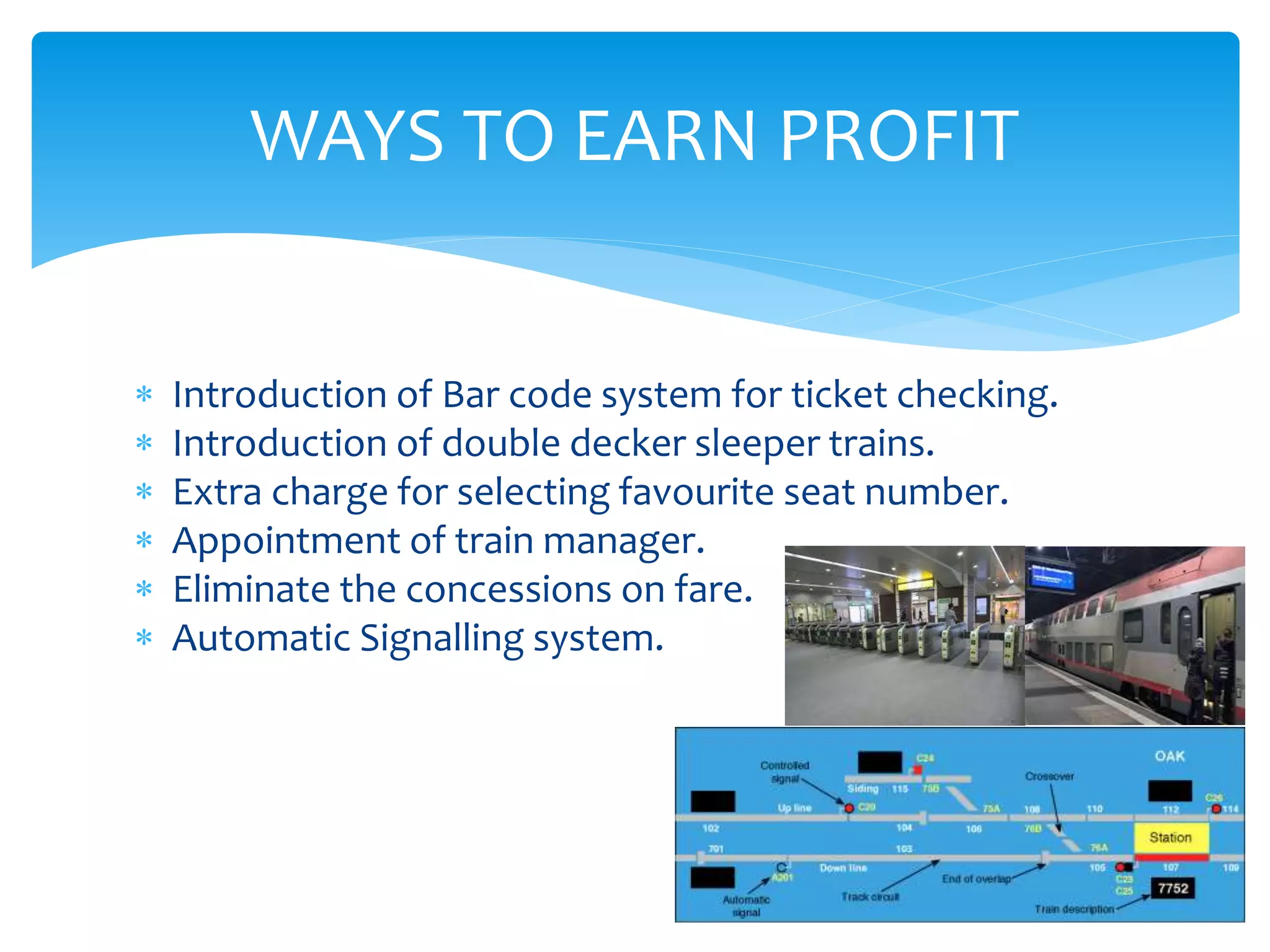
 Introduction of Bar code system for ticket checking.
 Introduction of double decker sleeper trains.
 Extra charge for selecting favourite seat number.
 Appointment of train manager.
 Eliminate the concessions on fare.
 Automatic Signalling system.
WAYS TO EARN PROFIT
 Usage of old coaches
 Over utilisation of railway tracks
 Old signalling system
 Carelessness by management
 Carelessness of people
 Terrorist Attacks
 Old infrastructure of railway stations.
REASONS FOR OCCURING
ACCIDENTS
 Production of only LHB coaches.
 Doubling and Tripling of tracks.
 Construction of new FOB, escalators and lifts.
 GM of zonal railways is allowed to do expenses related to the safety without any
limits.
 Construction of Dedicated Freight Corridor (DFC).
 Railway will spend 15000 CR in over 12 months.
 Collaboration with Indian Space Research Organisation.
 Indian Railways banned Whatsapp for railway staff.
 Installation of electronic interlocking signalling system.
 Indian railways to built 61 escalators in central Railways and 31 in western
Railways and 20 FOB to be constructed in Central Railways
and 10 FOB in western Railways.
STEPS TAKEN BY MINISTRY
 Introduction of Automatic signalling system.
 Proper training of traffic managing of employees and
trackman.
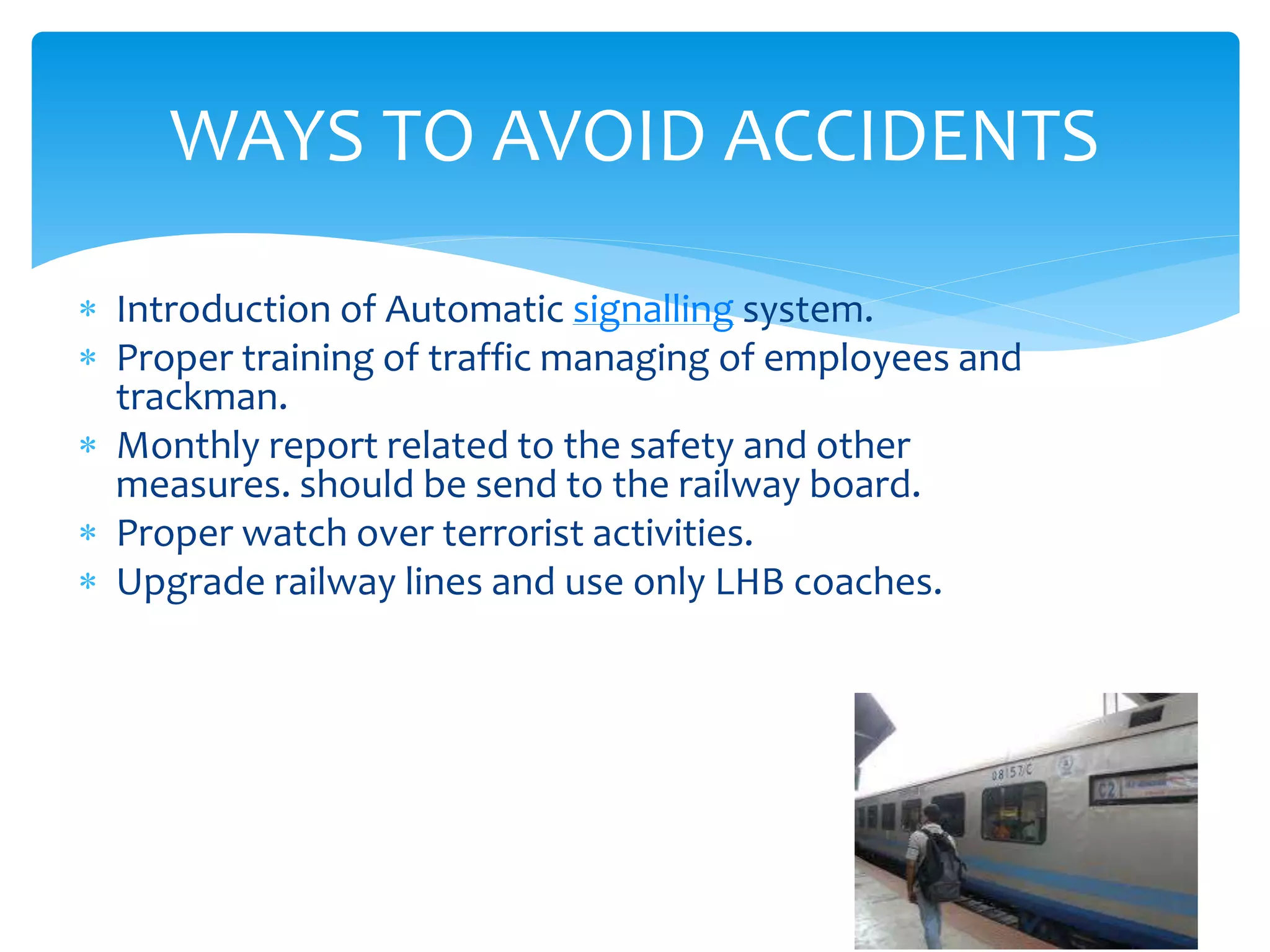
 Monthly report related to the safety and other
measures. should be send to the railway board.
 Proper watch over terrorist activities.
 Upgrade railway lines and use only LHB coaches.
WAYS TO AVOID ACCIDENTS
 First Indian semi high speed trains was launched on 5th April
2016.
 Ministry of Railways launched “Mission Raftaar” to launch
High Speed Trains and increase the speed of existing trains.
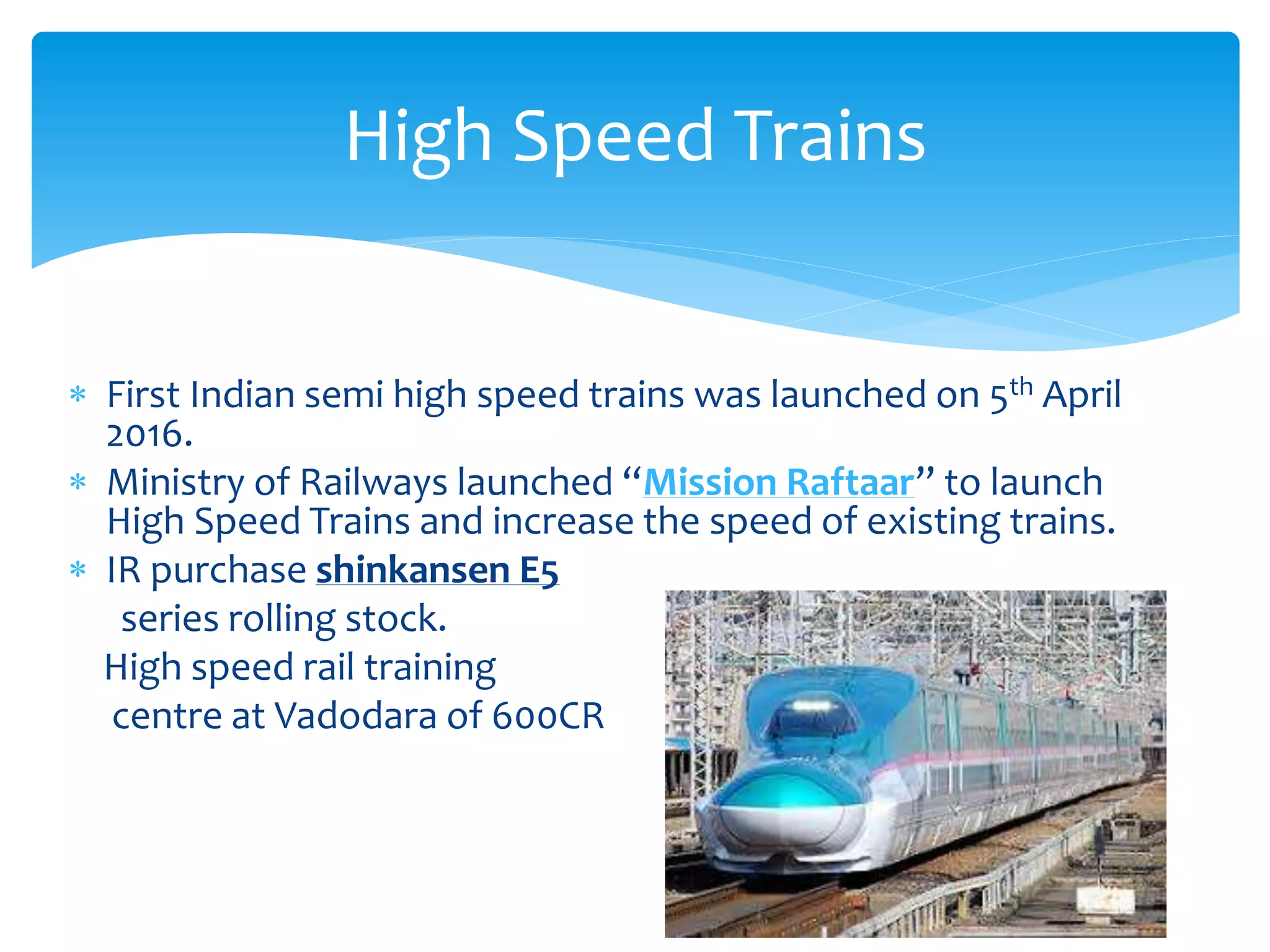
 IR purchase shinkansen E5
series rolling stock.
High speed rail training
centre at Vadodara of 600CR
High Speed Trains
 Mumbai to Ahemdabad.
 Delhi to Varanasi
 Delhi to Chandigarh
 Delhi to Amritsar
 Nagpur to Hyderabad
 Mysuru to Chennai
 Delhi to Agra
 Nagpur to Secunderabad
HIGH SPEED RAIL CORRIDORS
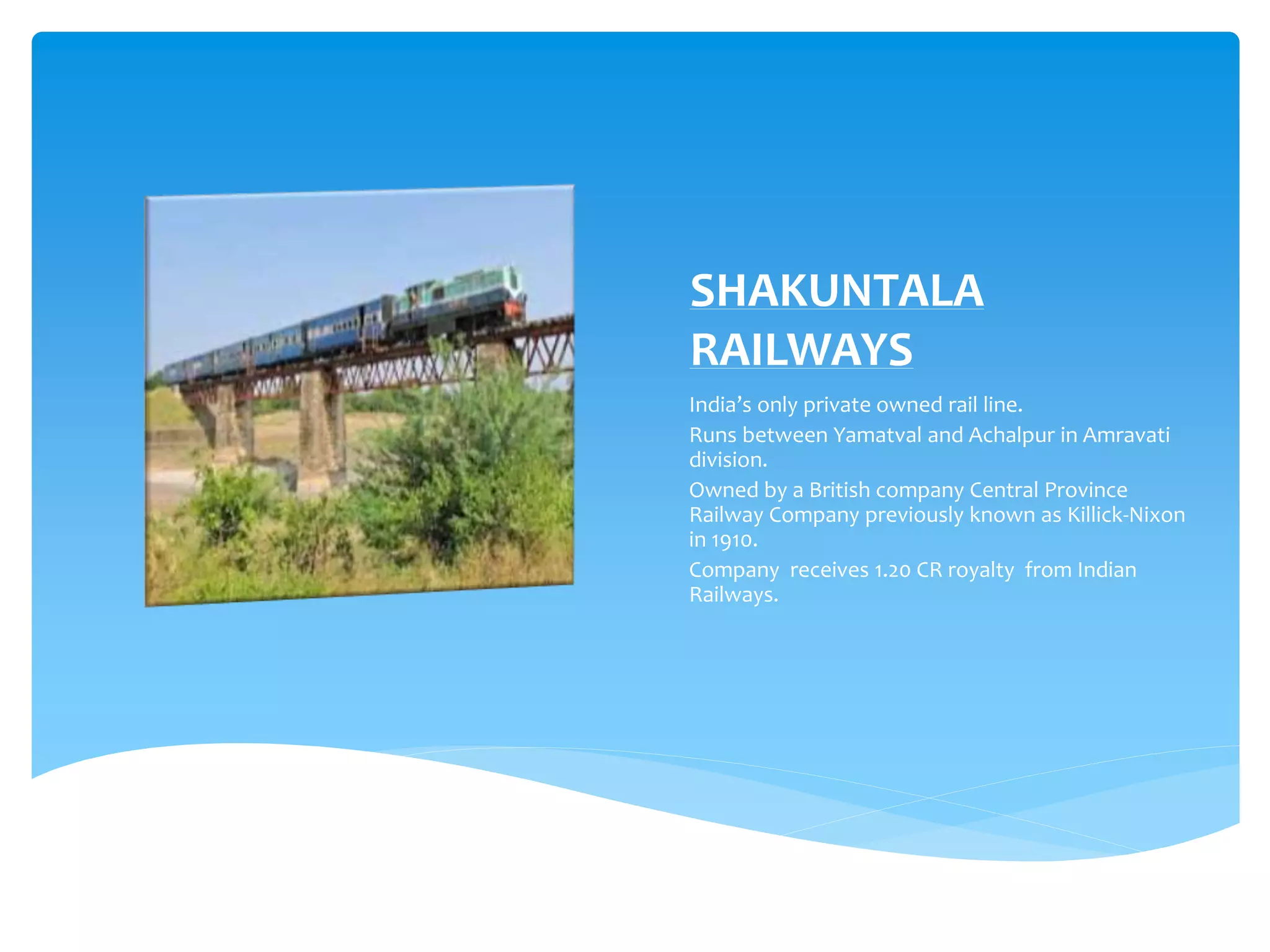
SHAKUNTALA
RAILWAYS
India’s only private owned rail line.
Runs between Yamatval and Achalpur in Amravati
division.
Owned by a British company Central Province
Railway Company previously known as Killick-Nixon
in 1910.
Company receives 1.20 CR royalty from Indian
Railways.
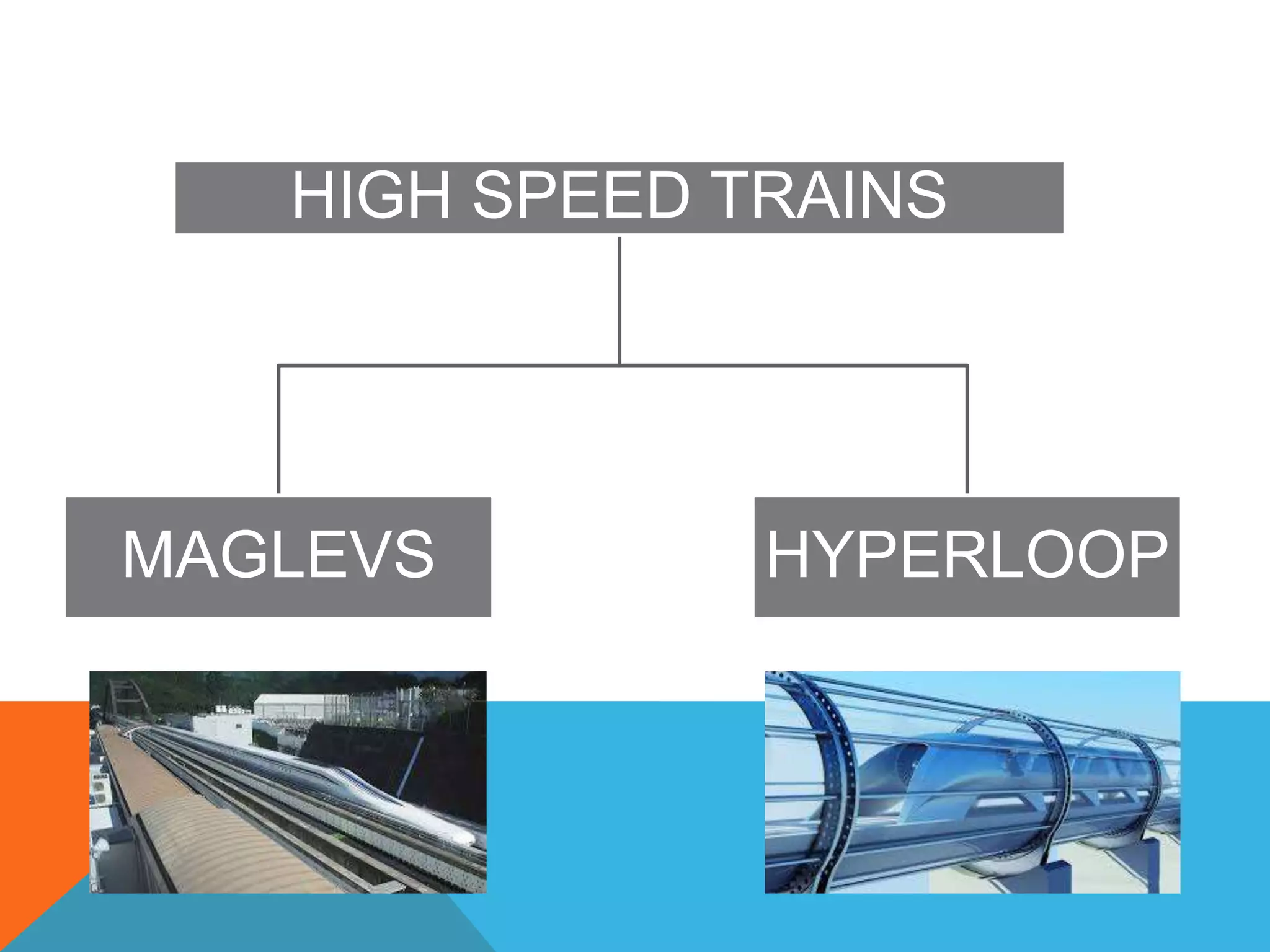
HIGH SPEED TRAINS
MAGLEVS HYPERLOOP

Indian railways ppt

  • 2.
     First commercialrun was held on 16th April 1853 between Bombay to Thane.  The rail network of Indian Railways is 66,687km out of which the rail network of 53,596km was laid down by the Britishers.  Indian railway was nationalised in 1951.  Indian Railways has 17 zones and 73 divisions. INTRODUCTION
  • 3.
     Indian Railwayshas the fourth largest rail network in the world.  Indian Railways operates Asia’s most expensive luxury train.  Daily number of trains running are over 13000 (passenger trains) and over 7000 (freight trains).  Daily number of passengers travelling are over 23 million.  Number of Railway station are about 8000 classified into 7 categories.  IR is the largest employer of India and eight largest in the world.  Indian Railways has the largest rail network in the world under one management. FACTS OF INDIAN RAILWAYS
  • 5.
    STRENGTH 1.Largest Employee. 2.Affordable travel. 3.Operatesone of the most luxurious trains in the world. 4.More carrying capacity of goods. WEAKNESS 1. Poor infrastructure. 2. Lack of safety, punctuality, hygiene. 3. Lazy department. 4. Corruption in the department. OPPORTUNITIES 1.Technology advancements. 2.Connecting cities with RRTS. THREATS 1.Low cost airlines. 2.Fierce competition from road transport.
  • 6.
     Without Tickettravellers  Out-dated technologies  Lack of innovations  Lack of safety, punctuality, hygiene  Rail accidents  Lack of seat availability  Concession on fares  Personal benefits of politicians.  Offering Free travel. REASONS FOR OCCURING LOSSES
  • 7.
     Increase inthe non fare revenue.  Increase in Doubling and Tripling of railway tracks.  Increase in electrification of tracks.  Stops the production of ICF coaches.  Increase in production of LHB coaches.  Dynamic fare system.  Introduction of “HUMSAFAR EXPRESS”.  Introduction of trains operating with CNG and coaches getting power by solar energy.  “VIKALP” option .  Cancellation charges.  Mechanised kitchens of IRCTC  Dedicated Freight corridor. STEPS TAKEN BY MINSTRY
  • 9.
     Introduction ofBar code system for ticket checking.  Introduction of double decker sleeper trains.  Extra charge for selecting favourite seat number.  Appointment of train manager.  Eliminate the concessions on fare.  Automatic Signalling system. WAYS TO EARN PROFIT
  • 10.
     Usage ofold coaches  Over utilisation of railway tracks  Old signalling system  Carelessness by management  Carelessness of people  Terrorist Attacks  Old infrastructure of railway stations. REASONS FOR OCCURING ACCIDENTS
  • 12.
     Production ofonly LHB coaches.  Doubling and Tripling of tracks.  Construction of new FOB, escalators and lifts.  GM of zonal railways is allowed to do expenses related to the safety without any limits.  Construction of Dedicated Freight Corridor (DFC).  Railway will spend 15000 CR in over 12 months.  Collaboration with Indian Space Research Organisation.  Indian Railways banned Whatsapp for railway staff.  Installation of electronic interlocking signalling system.  Indian railways to built 61 escalators in central Railways and 31 in western Railways and 20 FOB to be constructed in Central Railways and 10 FOB in western Railways. STEPS TAKEN BY MINISTRY
  • 13.
     Introduction ofAutomatic signalling system.  Proper training of traffic managing of employees and trackman.  Monthly report related to the safety and other measures. should be send to the railway board.  Proper watch over terrorist activities.  Upgrade railway lines and use only LHB coaches. WAYS TO AVOID ACCIDENTS
  • 14.
     First Indiansemi high speed trains was launched on 5th April 2016.  Ministry of Railways launched “Mission Raftaar” to launch High Speed Trains and increase the speed of existing trains.  IR purchase shinkansen E5 series rolling stock. High speed rail training centre at Vadodara of 600CR High Speed Trains
  • 15.
     Mumbai toAhemdabad.  Delhi to Varanasi  Delhi to Chandigarh  Delhi to Amritsar  Nagpur to Hyderabad  Mysuru to Chennai  Delhi to Agra  Nagpur to Secunderabad HIGH SPEED RAIL CORRIDORS
  • 18.
    SHAKUNTALA RAILWAYS India’s only privateowned rail line. Runs between Yamatval and Achalpur in Amravati division. Owned by a British company Central Province Railway Company previously known as Killick-Nixon in 1910. Company receives 1.20 CR royalty from Indian Railways.
  • 19.