NAME:KASHISH SHARMA
CLASS : X C
ROLL NO: 20
SUBJECT:GEOGRAPHY
SUBMITTED TO:MA’AM DEEPA
GARG
TOPIC
TRANSPORT IN INDIA
ROADWAYS,RAILWAYS,
AIRPORTS,WATERWAYS
INTRODUCTION:
transport in India consists of transport by land, water,
and air. Public transport remains the primary mode of
transport for most Indian citizens, and India's public
transport systems are among the most heavily used in
the world
ROADWAYS:
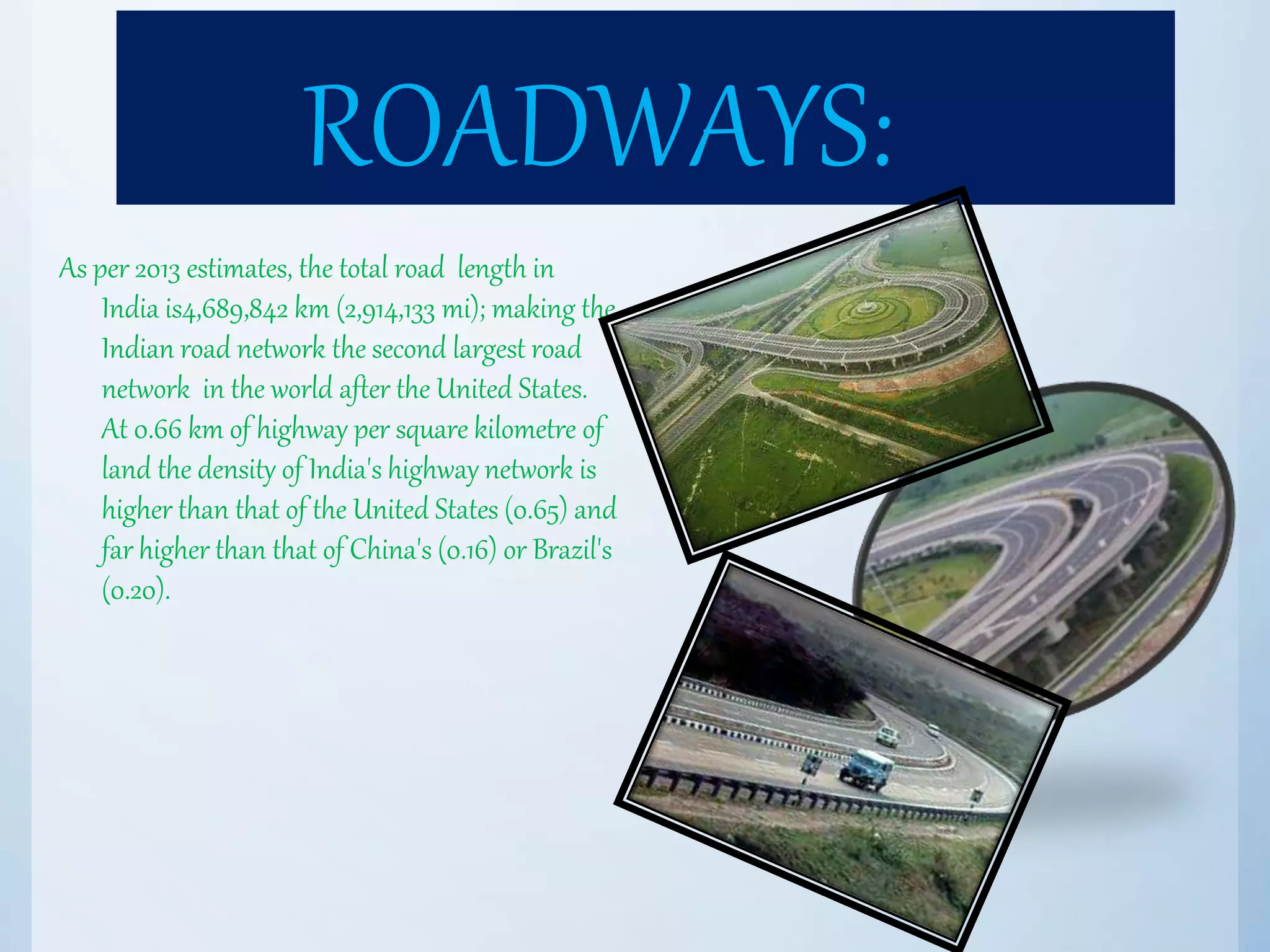
As per 2013 estimates, the total road length in
India is4,689,842 km (2,914,133 mi); making the
Indian road network the second largest road
network in the world after the United States.
At 0.66 km of highway per square kilometre of
land the density of India's highway network is
higher than that of the United States (0.65) and
far higher than that of China's (0.16) or Brazil's
(0.20).
MOTOR VEHICLES :-
TWO WHEELERS :
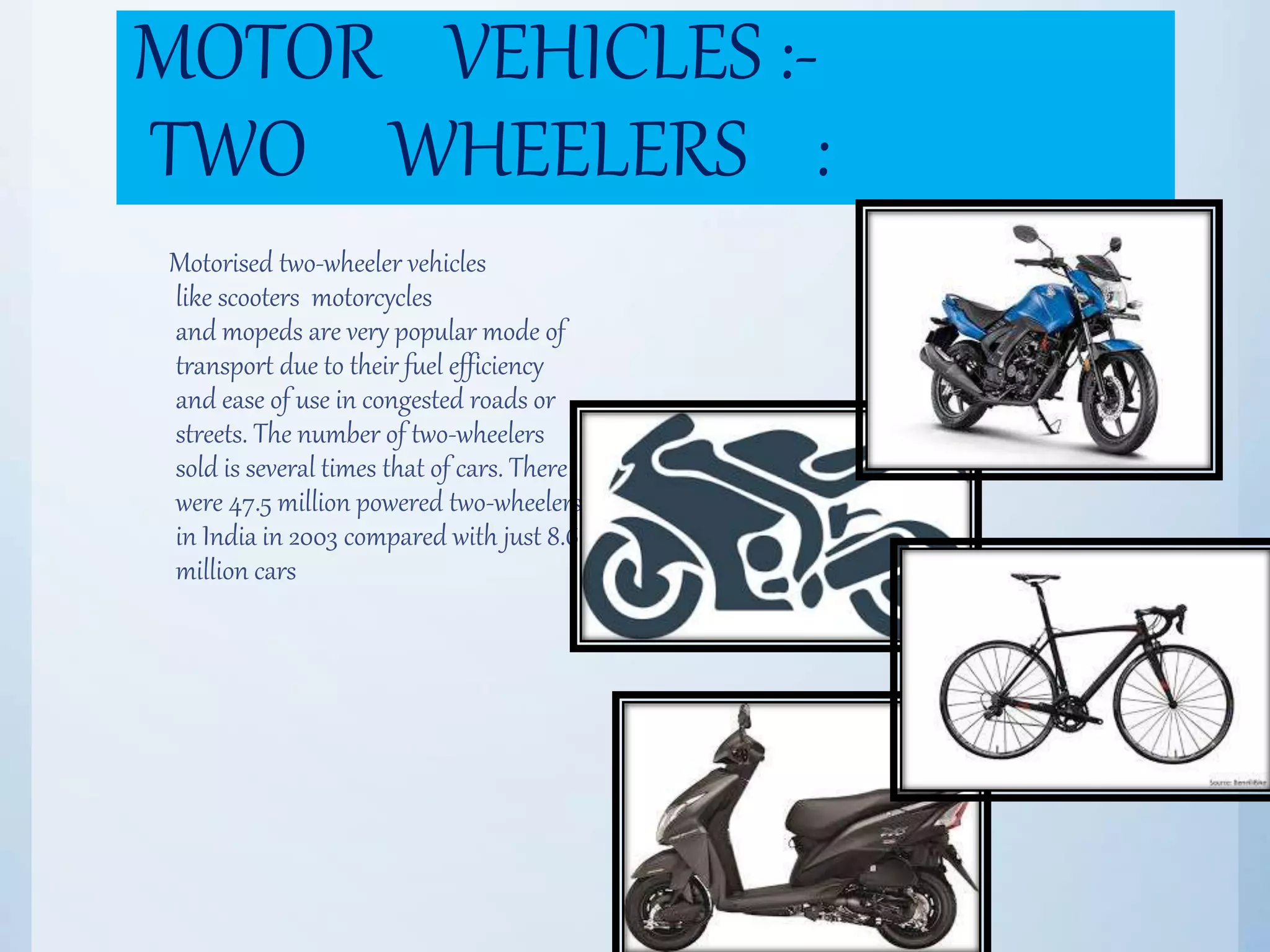
Motorised two-wheeler vehicles
like scooters motorcycles
and mopeds are very popular mode of
transport due to their fuel efficiency
and ease of use in congested roads or
streets. The number of two-wheelers
sold is several times that of cars. There
were 47.5 million powered two-wheelers
in India in 2003 compared with just 8.6
million cars
AUTOMOBILES:
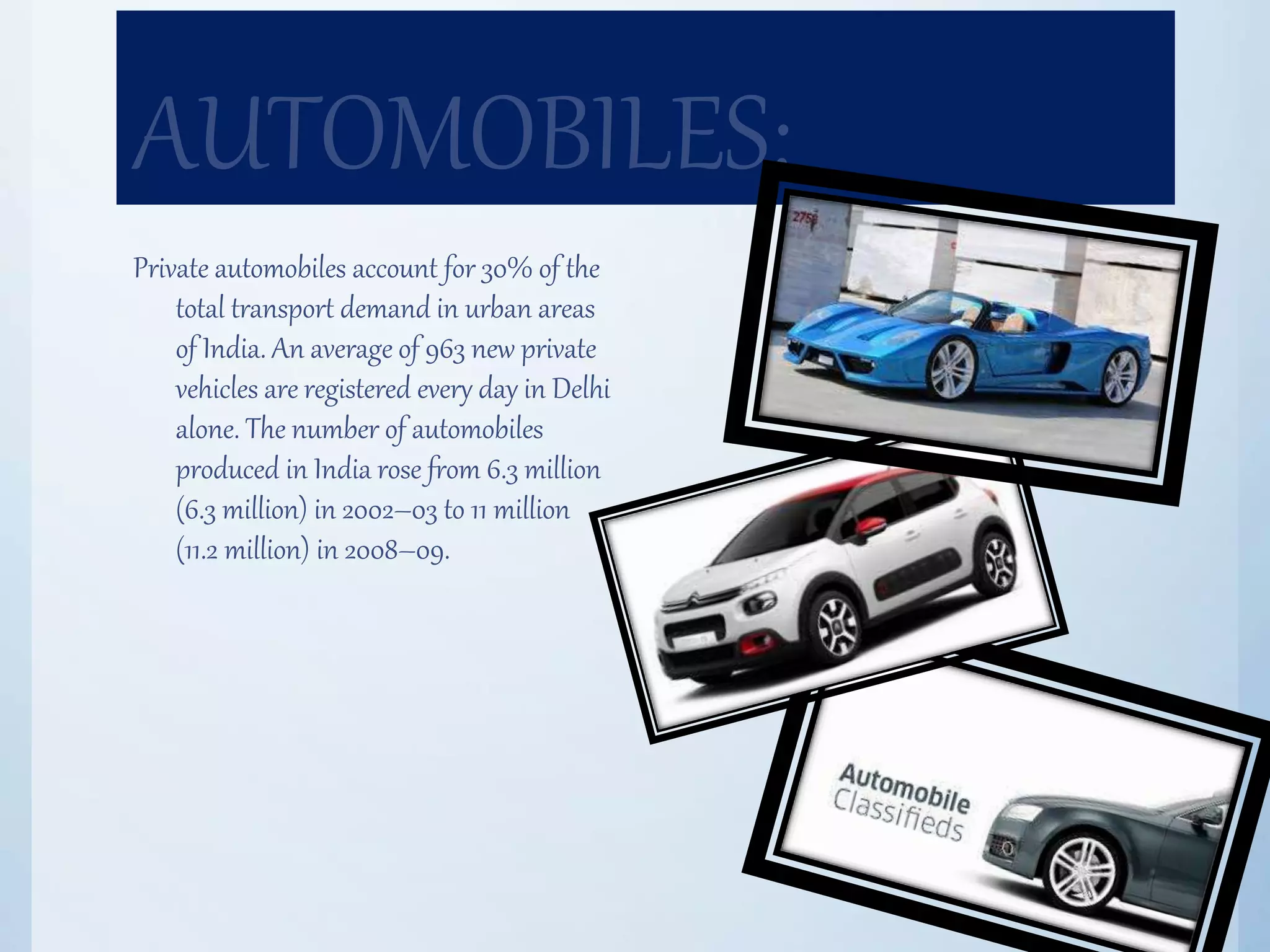
Private automobiles account for 30% of the
total transport demand in urban areas
of India. An average of 963 new private
vehicles are registered every day in Delhi
alone. The number of automobiles
produced in India rose from 6.3 million
(6.3 million) in 2002–03 to 11 million
(11.2 million) in 2008–09.
TAXIS:
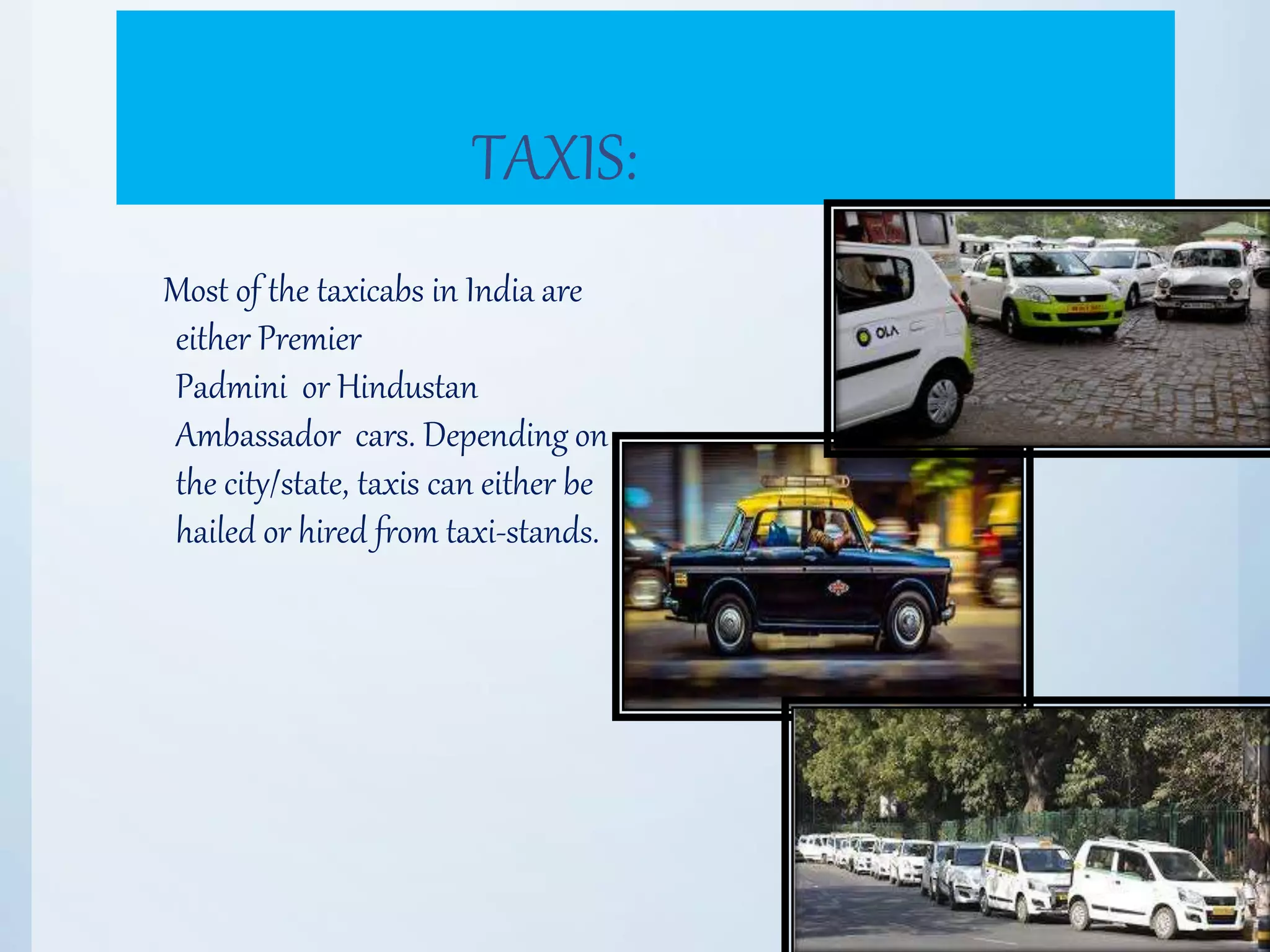
Most of the taxicabs in India are
either Premier
Padmini or Hindustan
Ambassador cars. Depending on
the city/state, taxis can either be
hailed or hired from taxi-stands.
AUTORICKSHAWS:
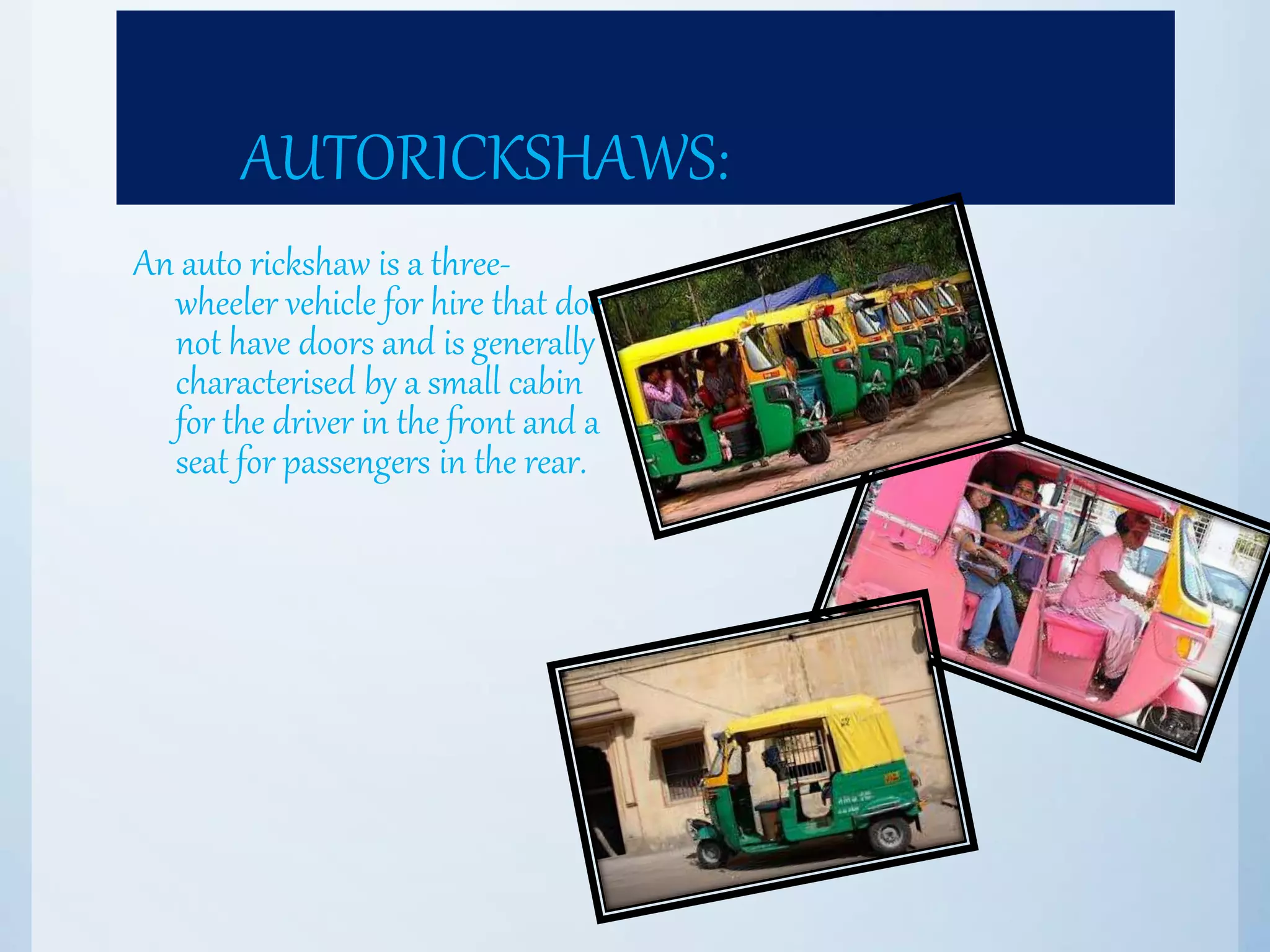
An auto rickshaw is a three-
wheeler vehicle for hire that does
not have doors and is generally
characterised by a small cabin
for the driver in the front and a
seat for passengers in the rear.
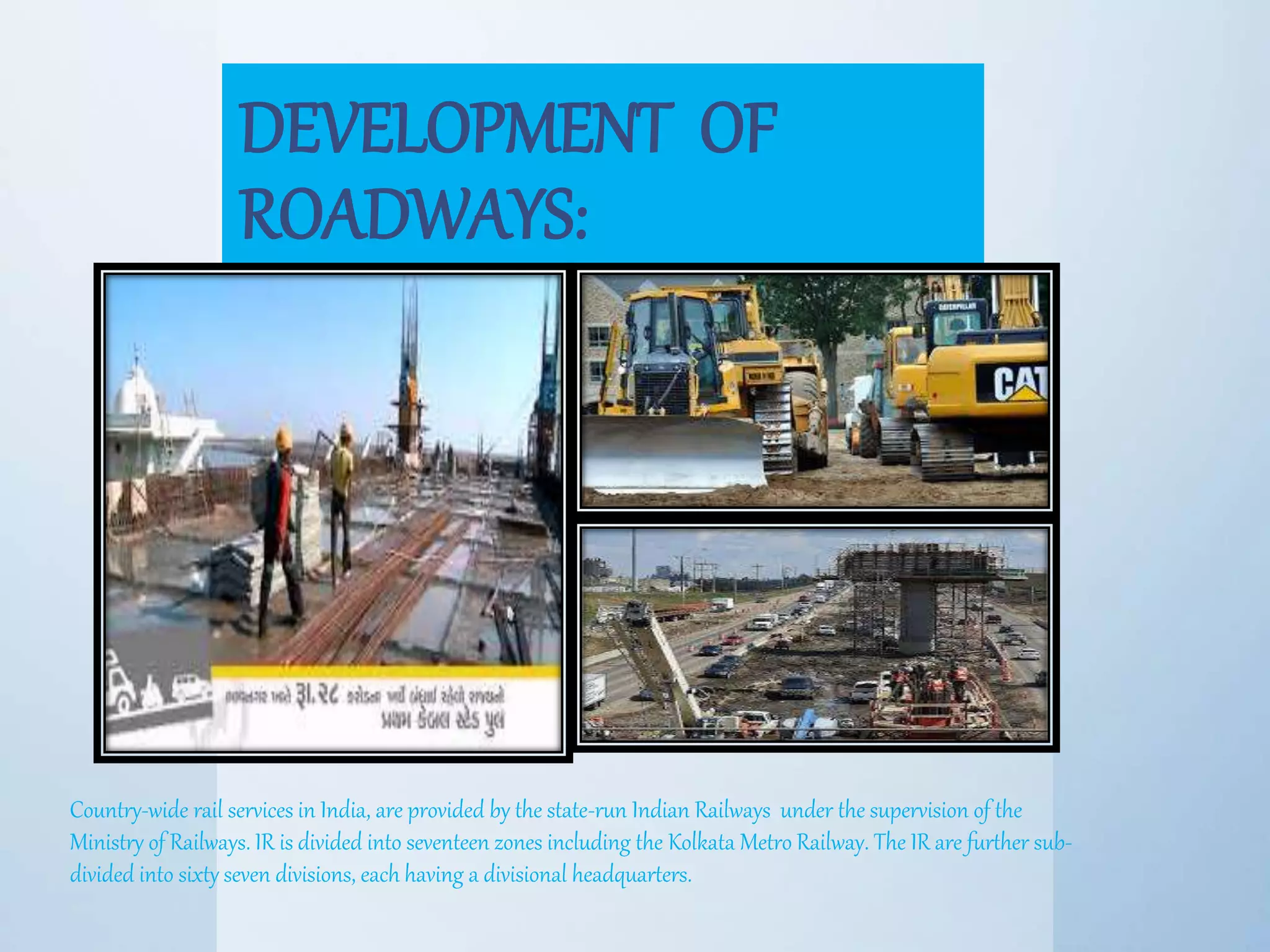
DEVELOPMENT OF
ROADWAYS:
Country-wide rail services in India, are provided by the state-run Indian Railways under the supervision of the
Ministry of Railways. IR is divided into seventeen zones including the Kolkata Metro Railway. The IR are further sub-
divided into sixty seven divisions, each having a divisional headquarters.
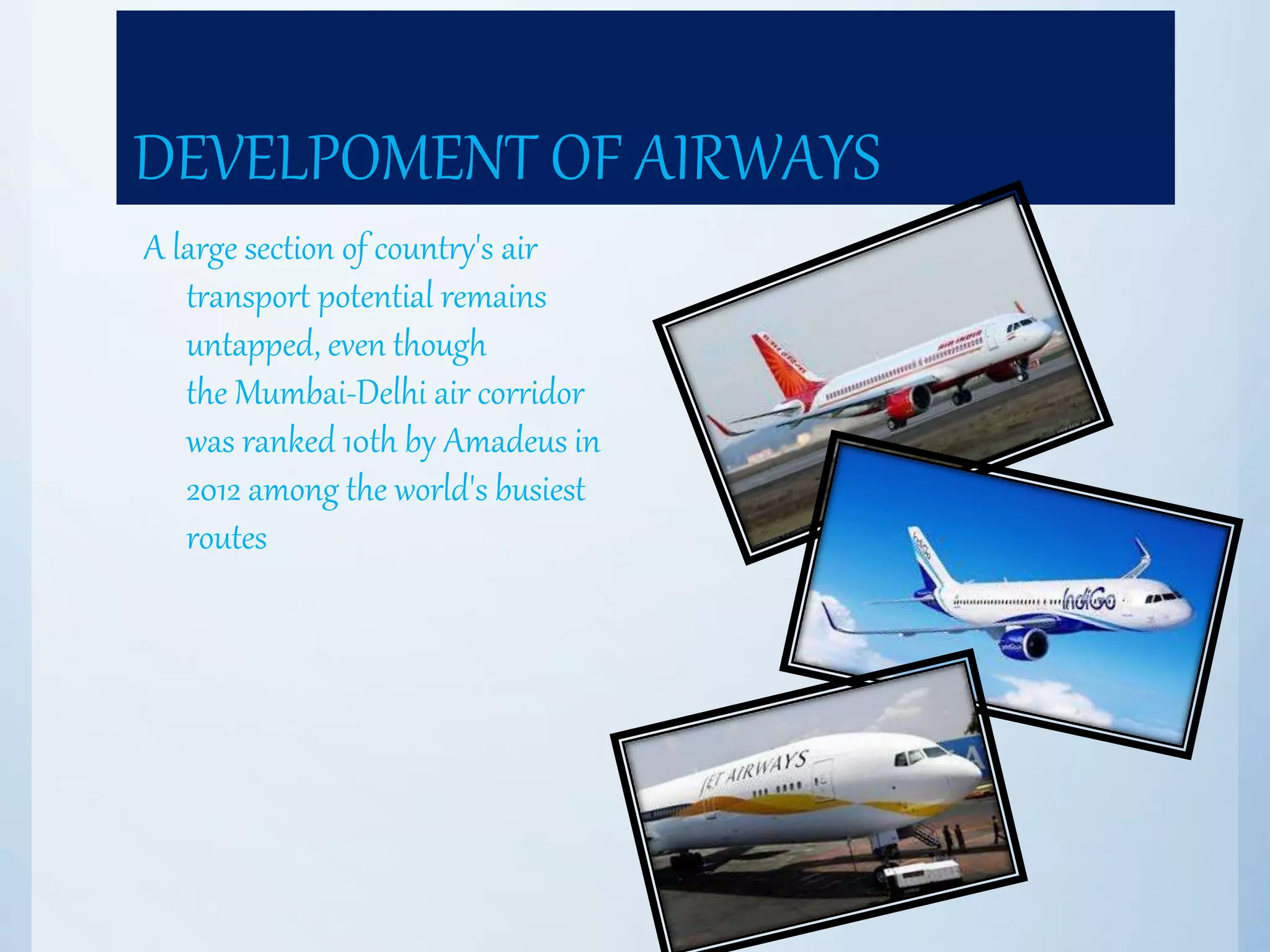
DEVELPOMENT OF AIRWAYS
A large section of country's air
transport potential remains
untapped, even though
the Mumbai-Delhi air corridor
was ranked 10th by Amadeus in
2012 among the world's busiest
routes
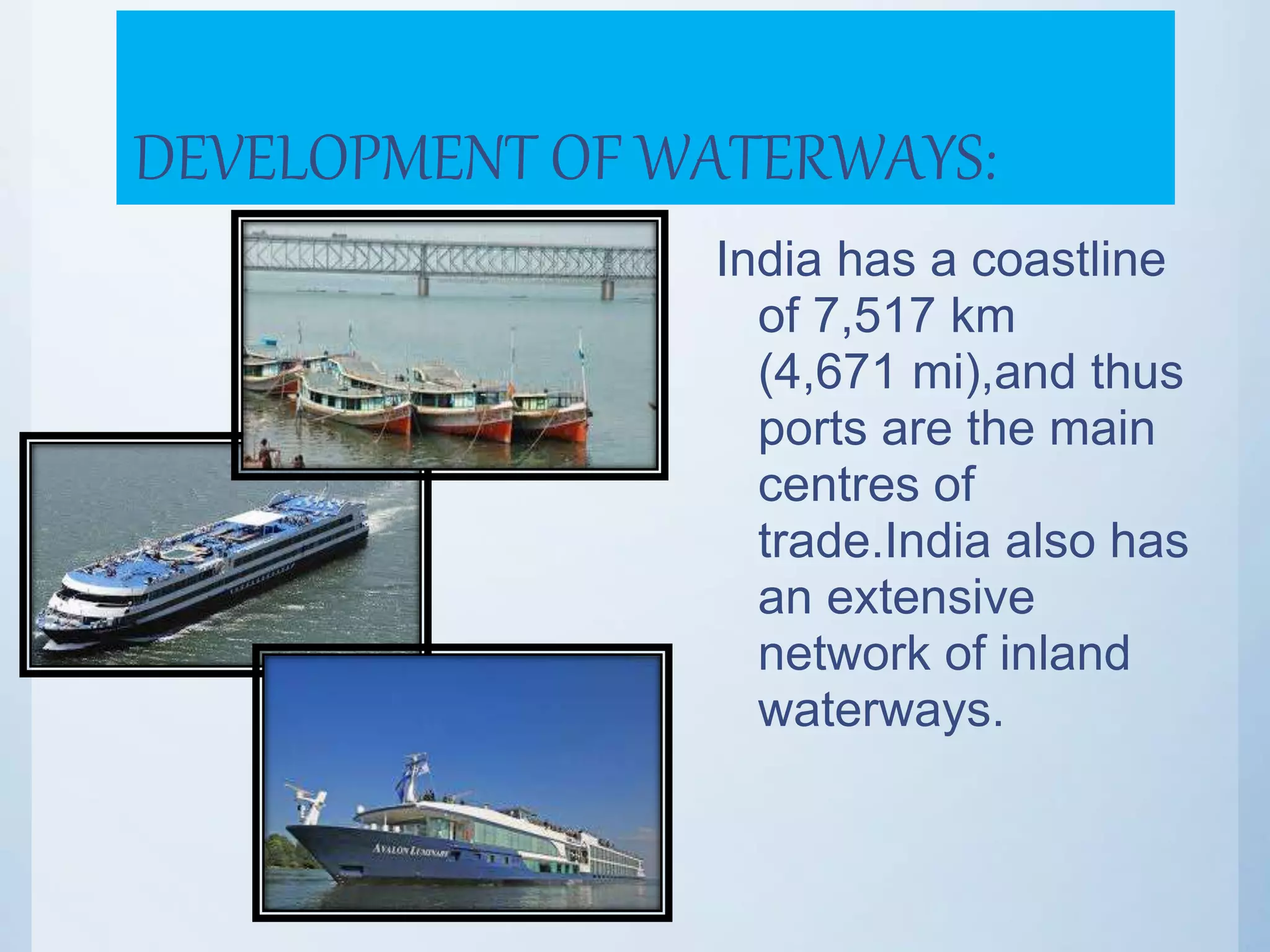
DEVELOPMENT OF WATERWAYS:
India has a coastline
of 7,517 km
(4,671 mi),and thus
ports are the main
centres of
trade.India also has
an extensive
network of inland
waterways.
Geography project ON TRANSPORTATION

Geography project ON TRANSPORTATION

  • 1.
    NAME:KASHISH SHARMA CLASS :X C ROLL NO: 20 SUBJECT:GEOGRAPHY SUBMITTED TO:MA’AM DEEPA GARG
  • 2.
  • 3.
    INTRODUCTION: transport in Indiaconsists of transport by land, water, and air. Public transport remains the primary mode of transport for most Indian citizens, and India's public transport systems are among the most heavily used in the world
  • 4.
    ROADWAYS: As per 2013estimates, the total road length in India is4,689,842 km (2,914,133 mi); making the Indian road network the second largest road network in the world after the United States. At 0.66 km of highway per square kilometre of land the density of India's highway network is higher than that of the United States (0.65) and far higher than that of China's (0.16) or Brazil's (0.20).
  • 5.
    MOTOR VEHICLES :- TWOWHEELERS : Motorised two-wheeler vehicles like scooters motorcycles and mopeds are very popular mode of transport due to their fuel efficiency and ease of use in congested roads or streets. The number of two-wheelers sold is several times that of cars. There were 47.5 million powered two-wheelers in India in 2003 compared with just 8.6 million cars
  • 6.
    AUTOMOBILES: Private automobiles accountfor 30% of the total transport demand in urban areas of India. An average of 963 new private vehicles are registered every day in Delhi alone. The number of automobiles produced in India rose from 6.3 million (6.3 million) in 2002–03 to 11 million (11.2 million) in 2008–09.
  • 7.
    TAXIS: Most of thetaxicabs in India are either Premier Padmini or Hindustan Ambassador cars. Depending on the city/state, taxis can either be hailed or hired from taxi-stands.
  • 8.
    AUTORICKSHAWS: An auto rickshawis a three- wheeler vehicle for hire that does not have doors and is generally characterised by a small cabin for the driver in the front and a seat for passengers in the rear.
  • 9.
    DEVELOPMENT OF ROADWAYS: Country-wide railservices in India, are provided by the state-run Indian Railways under the supervision of the Ministry of Railways. IR is divided into seventeen zones including the Kolkata Metro Railway. The IR are further sub- divided into sixty seven divisions, each having a divisional headquarters.
  • 10.
    DEVELPOMENT OF AIRWAYS Alarge section of country's air transport potential remains untapped, even though the Mumbai-Delhi air corridor was ranked 10th by Amadeus in 2012 among the world's busiest routes
  • 11.
    DEVELOPMENT OF WATERWAYS: Indiahas a coastline of 7,517 km (4,671 mi),and thus ports are the main centres of trade.India also has an extensive network of inland waterways.