Carl Linnaeus is most famous as the father of modern
taxonomy. What's not so well known is that in his effort to
manage vast amounts of data, he came up with a
revolutionary invention: the index card.
1. “A detailed alphabetical list or table of topics, names
of persons, places etc., treated or mentioned in a book
or series of books, pointing out their exact positions in
the volume, usually by page number (sometimes with
an additional symbol indicating a portion of a page) but
often by section, or entry, number.(Harrods's
Librarians’ Glossary)
2. An index as an indicator , more often an alphabetic
list that includes subjects and name of people and
places that are considered to be a special significant In a
graphic record.(Encyclopedia of library and information
Science)
1. An abbreviated and accurate representation of
significant substance of a documentary unit,(slide
share)
2. An abstract is a summary usually by a professional,
other than the author, of essential contents of a work,
usually an article in a periodical together with the
specification of its original”.(Ranganathan)
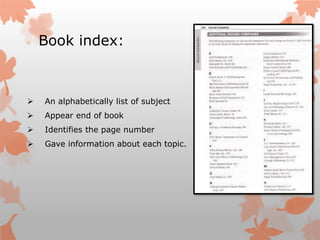
Book index:
 An alphabetically list of subject
 Appear end of book
 Identifies the page number
 Gave information about each topic.
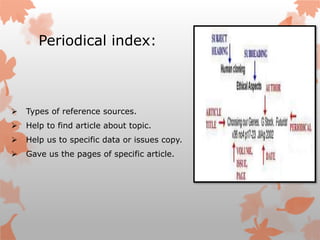
Periodical index:
 Types of reference sources.
 Help to find article about topic.
 Help us to specific data or issues copy.
 Gave us the pages of specific article.
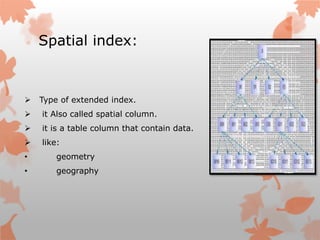
Spatial index:
 Type of extended index.
 it Also called spatial column.
 it is a table column that contain data.
 like:
• geometry
• geography
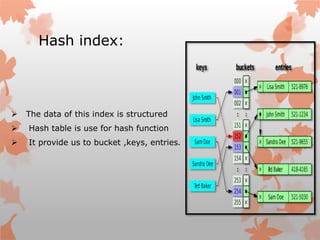
Hash index:
 The data of this index is structured
 Hash table is use for hash function
 It provide us to bucket ,keys, entries.
Structured abstracted:
 Description of published paper
 In which the information is
• systematic
• stylized
• broken down under the main heading
 All these things gave us whole article information.
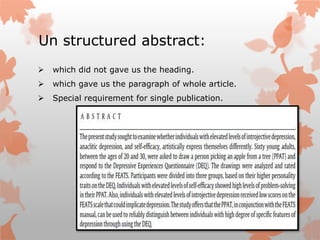
Un structured abstract:
 which did not gave us the heading.
 which gave us the paragraph of whole article.
 Special requirement for single publication.
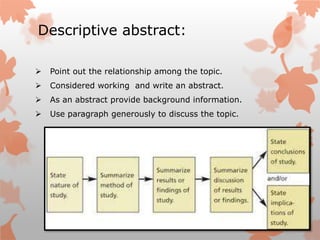
Descriptive abstract:
 Point out the relationship among the topic.
 Considered working and write an abstract.
 As an abstract provide background information.
 Use paragraph generously to discuss the topic.
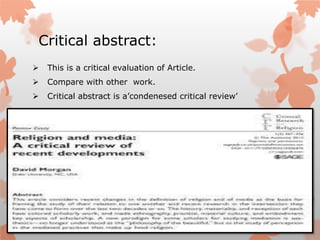
Critical abstract:
 This is a critical evaluation of Article.
 Compare with other work.
 Critical abstract is a’condenesed critical review’
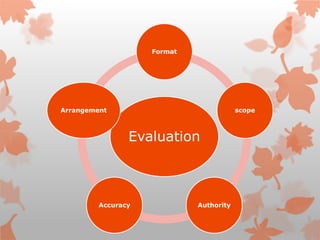
Evaluation
Format
scope
AuthorityAccuracy
Arrangement
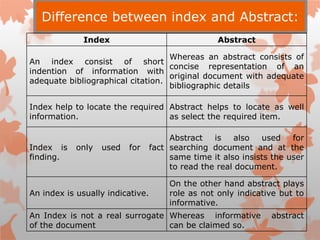
Difference between index and Abstract:
Index Abstract
An index consist of short
indention of information with
adequate bibliographical citation.
Whereas an abstract consists of
concise representation of an
original document with adequate
bibliographic details
Index help to locate the required
information.
Abstract helps to locate as well
as select the required item.
Index is only used for fact
finding.
Abstract is also used for
searching document and at the
same time it also insists the user
to read the real document.
An index is usually indicative.
On the other hand abstract plays
role as not only indicative but to
informative.
An Index is not a real surrogate
of the document
Whereas informative abstract
can be claimed so.
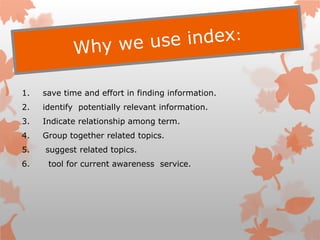
1. save time and effort in finding information.
2. identify potentially relevant information.
3. Indicate relationship among term.
4. Group together related topics.
5. suggest related topics.
6. tool for current awareness service.
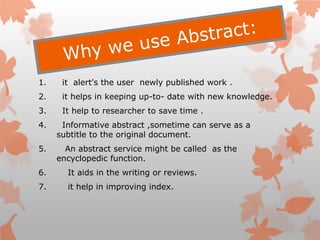
1. it alert's the user newly published work .
2. it helps in keeping up-to- date with new knowledge.
3. It help to researcher to save time .
4. Informative abstract ,sometime can serve as a
subtitle to the original document.
5. An abstract service might be called as the
encyclopedic function.
6. It aids in the writing or reviews.
7. it help in improving index.
 Coasts
 Seats limitation
 Information literacy instruction-Survival
it is difficult to know what new has been published even in
a small area of specialization as literature is being
published at a very fast alarming rate. These service s have
been found to be very helpful in deciding which article is to
access and use which are not.
Index and abstract (3)

Index and abstract (3)

  • 1.
    Carl Linnaeus ismost famous as the father of modern taxonomy. What's not so well known is that in his effort to manage vast amounts of data, he came up with a revolutionary invention: the index card.
  • 2.
    1. “A detailedalphabetical list or table of topics, names of persons, places etc., treated or mentioned in a book or series of books, pointing out their exact positions in the volume, usually by page number (sometimes with an additional symbol indicating a portion of a page) but often by section, or entry, number.(Harrods's Librarians’ Glossary) 2. An index as an indicator , more often an alphabetic list that includes subjects and name of people and places that are considered to be a special significant In a graphic record.(Encyclopedia of library and information Science)
  • 3.
    1. An abbreviatedand accurate representation of significant substance of a documentary unit,(slide share) 2. An abstract is a summary usually by a professional, other than the author, of essential contents of a work, usually an article in a periodical together with the specification of its original”.(Ranganathan)
  • 5.
    Book index:  Analphabetically list of subject  Appear end of book  Identifies the page number  Gave information about each topic.
  • 6.
    Periodical index:  Typesof reference sources.  Help to find article about topic.  Help us to specific data or issues copy.  Gave us the pages of specific article.
  • 7.
    Spatial index:  Typeof extended index.  it Also called spatial column.  it is a table column that contain data.  like: • geometry • geography
  • 8.
    Hash index:  Thedata of this index is structured  Hash table is use for hash function  It provide us to bucket ,keys, entries.
  • 10.
    Structured abstracted:  Descriptionof published paper  In which the information is • systematic • stylized • broken down under the main heading  All these things gave us whole article information.
  • 11.
    Un structured abstract: which did not gave us the heading.  which gave us the paragraph of whole article.  Special requirement for single publication.
  • 12.
    Descriptive abstract:  Pointout the relationship among the topic.  Considered working and write an abstract.  As an abstract provide background information.  Use paragraph generously to discuss the topic.
  • 13.
    Critical abstract:  Thisis a critical evaluation of Article.  Compare with other work.  Critical abstract is a’condenesed critical review’
  • 14.
  • 15.
    Difference between indexand Abstract: Index Abstract An index consist of short indention of information with adequate bibliographical citation. Whereas an abstract consists of concise representation of an original document with adequate bibliographic details Index help to locate the required information. Abstract helps to locate as well as select the required item. Index is only used for fact finding. Abstract is also used for searching document and at the same time it also insists the user to read the real document. An index is usually indicative. On the other hand abstract plays role as not only indicative but to informative. An Index is not a real surrogate of the document Whereas informative abstract can be claimed so.
  • 16.
    1. save timeand effort in finding information. 2. identify potentially relevant information. 3. Indicate relationship among term. 4. Group together related topics. 5. suggest related topics. 6. tool for current awareness service.
  • 17.
    1. it alert'sthe user newly published work . 2. it helps in keeping up-to- date with new knowledge. 3. It help to researcher to save time . 4. Informative abstract ,sometime can serve as a subtitle to the original document. 5. An abstract service might be called as the encyclopedic function. 6. It aids in the writing or reviews. 7. it help in improving index.
  • 18.
     Coasts  Seatslimitation  Information literacy instruction-Survival
  • 19.
    it is difficultto know what new has been published even in a small area of specialization as literature is being published at a very fast alarming rate. These service s have been found to be very helpful in deciding which article is to access and use which are not.