Inclusive Education Problems of
Learning Disabled in Regular Schools
Welcome
To
Edify School
Director
Dr.M.Sapthagiri BRS(MR), MSW & MHCM (Turkey)
Multi Rehabilitation Specialist
Rehabilitation Council of India No: A35445
Play to Learn Centre for Rehabilitation (SIR Society)
www.play2learninstitute.org
Definition of Inclusive
Education
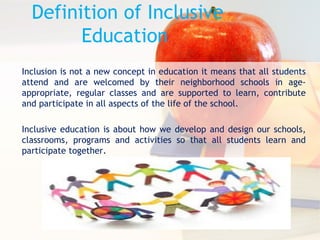
Inclusion is not a new concept in education it means that all students
attend and are welcomed by their neighborhood schools in age-
appropriate, regular classes and are supported to learn, contribute
and participate in all aspects of the life of the school.
Inclusive education is about how we develop and design our schools,
classrooms, programs and activities so that all students learn and
participate together.
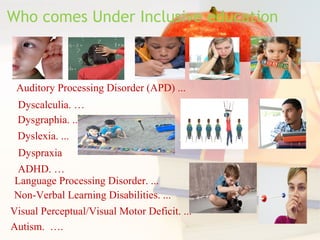
Who comes Under Inclusive education
Auditory Processing Disorder (APD) ...
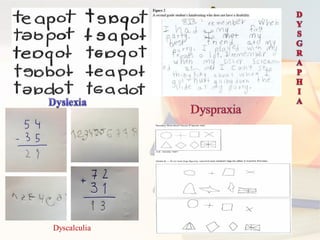
Dyscalculia. …
Dysgraphia. ...
Dyslexia. ...
Dyspraxia
Language Processing Disorder. ...
Non-Verbal Learning Disabilities. ...
Visual Perceptual/Visual Motor Deficit. ...
ADHD. …
Autism. ….
LearNINgDifficulTies
Learning difficulties is a neurological disorder and serious of
ongoing difficulty with one or more of the following areas of
learning – reading, spelling, writing and maths. A child with a
learning disability will have a low level of ability in these areas in
educational opportunities, age and other abilities.
Learning disability can't be cured or fixed; it is a lifelong issue.
With the right support and intervention, however, children with
learning disabilities can succeed in school and go on to successful,
often distinguished careers later in life.
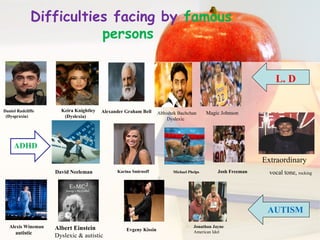
Difficulties facing by famous
persons
Daniel Radcliffe
(Dyspraxia)
Keira Knightley
(Dyslexia)
Albert Einstein
Dyslexic & autistic
Abhishek Bachchan
Dyslexic
Alexis Wineman
autistic
Evgeny Kissin
Jonathan Jayne
American Idol
vocal tone, rockingKarina Smirnoff Michael Phelps Josh FreemanDavid Neeleman
Magic JohnsonAlexander Graham Bell
ADHD
L. D
AUTISM
Extraordinary
• Autism is known as a complex developmental disability.
Experts believe that Autism presents itself during the
first three years of a person's life. The condition is the
result of a neurological disorder that has an effect on
normal brain function, affecting development of the
person's communication and social interaction skills.
• Impairments in reciprocal social interactions.
• Stereotyped behaviour, interests and activities.
• ASDs are any developmental disabilities that have been
caused by a brain abnormality. A person with an ASD
typically has difficulty with social and communication
skills.
Autism. …./ Autism Spectrum Disorder
ADHD
• Attention-deficit/hyperactivity disorder is a
neurobehavioral disorder characterized by a
combination of inattentiveness, distractibility,
hyperactivity, and impulsive behavior.
• AD/HD appears early in life. It is estimated that 3
percent to 7 percent of school-age children are
diagnosed with AD/HD; boys are diagnosed more
often than girls.
What are the Problems they face
• A-Z Health Problems
• Inadequate funding
• Physical Inaccessibility
• Accommodation Process
• Lack of Individualization
• Miss Guiding
• Negative Attitudes and Stereotypes
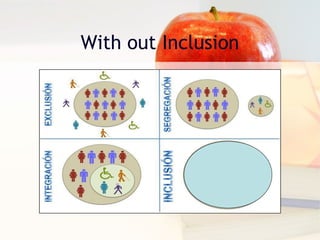
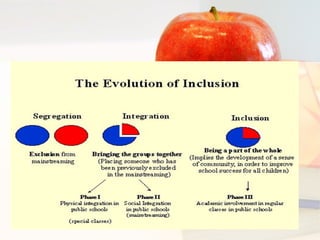
With out Inclusion
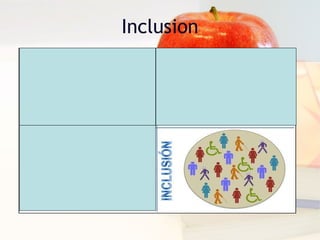
Inclusion
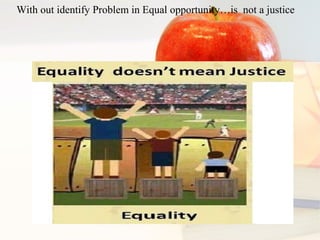
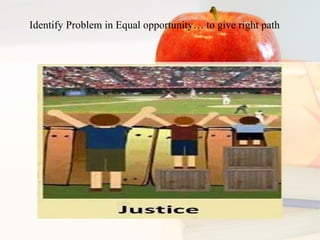
With out identify Problem in Equal opportunity…is not a justice
Identify Problem in Equal opportunity… to give right path
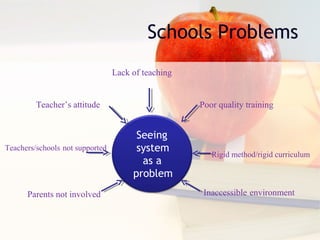
Schools Problems
Seeing
system
as a
problem
Poor quality training
Rigid method/rigid curriculum
Inaccessible environment
Lack of teaching
Teacher’s attitude
Teachers/schools not supported
Parents not involved
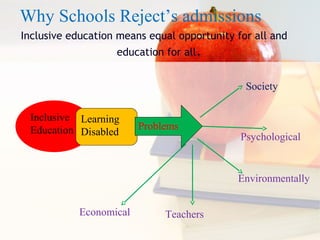
Inclusive education means equal opportunity for all and
education for all.
Why Schools Reject’s admissions
Inclusive
Education
Society
TeachersEconomical
Environmentally
Psychological
Learning
Disabled
Problems
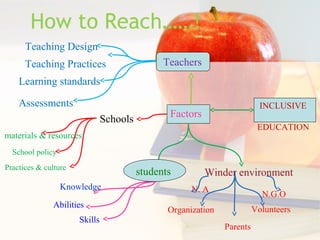
How to Reach……!
INCLUSIVE
EDUCATION
Factors
Teachers
Schools
Teaching Design
Teaching Practices
Learning standards
Assessments
Knowledge
Skills
Abilities
Winder environment
N. A
N.G.O
Organization Volunteers
Parents
materials & resources
School policy
Practices & culture
students
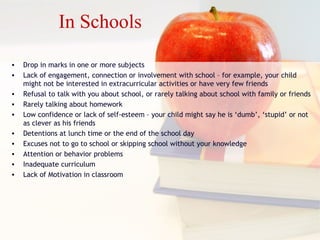
In Schools
• Drop in marks in one or more subjects
• Lack of engagement, connection or involvement with school – for example, your child
might not be interested in extracurricular activities or have very few friends
• Refusal to talk with you about school, or rarely talking about school with family or friends
• Rarely talking about homework
• Low confidence or lack of self-esteem – your child might say he is ‘dumb’, ‘stupid’ or not
as clever as his friends
• Detentions at lunch time or the end of the school day
• Excuses not to go to school or skipping school without your knowledge
• Attention or behavior problems
• Inadequate curriculum
• Lack of Motivation in classroom
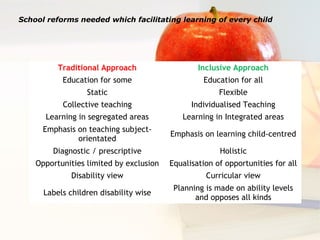
Traditional Approach Inclusive Approach
Education for some Education for all
Static Flexible
Collective teaching Individualised Teaching
Learning in segregated areas Learning in Integrated areas
Emphasis on teaching subject-
orientated
Emphasis on learning child-centred
Diagnostic / prescriptive Holistic
Opportunities limited by exclusion Equalisation of opportunities for all
Disability view Curricular view
Labels children disability wise
Planning is made on ability levels
and opposes all kinds
School reforms needed which facilitating learning of every child
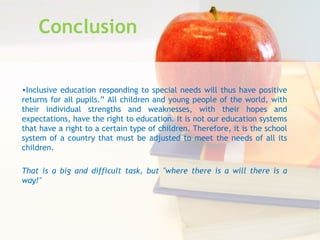
Conclusion
•Inclusive education responding to special needs will thus have positive
returns for all pupils.” All children and young people of the world, with
their individual strengths and weaknesses, with their hopes and
expectations, have the right to education. It is not our education systems
that have a right to a certain type of children. Therefore, it is the school
system of a country that must be adjusted to meet the needs of all its
children.
That is a big and difficult task, but "where there is a will there is a
way!"
Thank you

inclusive education

  • 1.
    Inclusive Education Problemsof Learning Disabled in Regular Schools Welcome To Edify School Director Dr.M.Sapthagiri BRS(MR), MSW & MHCM (Turkey) Multi Rehabilitation Specialist Rehabilitation Council of India No: A35445 Play to Learn Centre for Rehabilitation (SIR Society) www.play2learninstitute.org
  • 2.
    Definition of Inclusive Education Inclusionis not a new concept in education it means that all students attend and are welcomed by their neighborhood schools in age- appropriate, regular classes and are supported to learn, contribute and participate in all aspects of the life of the school. Inclusive education is about how we develop and design our schools, classrooms, programs and activities so that all students learn and participate together.
  • 3.
    Who comes UnderInclusive education Auditory Processing Disorder (APD) ... Dyscalculia. … Dysgraphia. ... Dyslexia. ... Dyspraxia Language Processing Disorder. ... Non-Verbal Learning Disabilities. ... Visual Perceptual/Visual Motor Deficit. ... ADHD. … Autism. ….
  • 4.
    LearNINgDifficulTies Learning difficulties isa neurological disorder and serious of ongoing difficulty with one or more of the following areas of learning – reading, spelling, writing and maths. A child with a learning disability will have a low level of ability in these areas in educational opportunities, age and other abilities. Learning disability can't be cured or fixed; it is a lifelong issue. With the right support and intervention, however, children with learning disabilities can succeed in school and go on to successful, often distinguished careers later in life.
  • 6.
    Difficulties facing byfamous persons Daniel Radcliffe (Dyspraxia) Keira Knightley (Dyslexia) Albert Einstein Dyslexic & autistic Abhishek Bachchan Dyslexic Alexis Wineman autistic Evgeny Kissin Jonathan Jayne American Idol vocal tone, rockingKarina Smirnoff Michael Phelps Josh FreemanDavid Neeleman Magic JohnsonAlexander Graham Bell ADHD L. D AUTISM Extraordinary
  • 7.
    • Autism isknown as a complex developmental disability. Experts believe that Autism presents itself during the first three years of a person's life. The condition is the result of a neurological disorder that has an effect on normal brain function, affecting development of the person's communication and social interaction skills. • Impairments in reciprocal social interactions. • Stereotyped behaviour, interests and activities. • ASDs are any developmental disabilities that have been caused by a brain abnormality. A person with an ASD typically has difficulty with social and communication skills. Autism. …./ Autism Spectrum Disorder
  • 8.
    ADHD • Attention-deficit/hyperactivity disorderis a neurobehavioral disorder characterized by a combination of inattentiveness, distractibility, hyperactivity, and impulsive behavior. • AD/HD appears early in life. It is estimated that 3 percent to 7 percent of school-age children are diagnosed with AD/HD; boys are diagnosed more often than girls.
  • 9.
    What are theProblems they face • A-Z Health Problems • Inadequate funding • Physical Inaccessibility • Accommodation Process • Lack of Individualization • Miss Guiding • Negative Attitudes and Stereotypes
  • 10.
  • 11.
  • 12.
    With out identifyProblem in Equal opportunity…is not a justice
  • 13.
    Identify Problem inEqual opportunity… to give right path
  • 15.
    Schools Problems Seeing system as a problem Poorquality training Rigid method/rigid curriculum Inaccessible environment Lack of teaching Teacher’s attitude Teachers/schools not supported Parents not involved
  • 16.
    Inclusive education meansequal opportunity for all and education for all. Why Schools Reject’s admissions Inclusive Education Society TeachersEconomical Environmentally Psychological Learning Disabled Problems
  • 17.
    How to Reach……! INCLUSIVE EDUCATION Factors Teachers Schools TeachingDesign Teaching Practices Learning standards Assessments Knowledge Skills Abilities Winder environment N. A N.G.O Organization Volunteers Parents materials & resources School policy Practices & culture students
  • 18.
    In Schools • Dropin marks in one or more subjects • Lack of engagement, connection or involvement with school – for example, your child might not be interested in extracurricular activities or have very few friends • Refusal to talk with you about school, or rarely talking about school with family or friends • Rarely talking about homework • Low confidence or lack of self-esteem – your child might say he is ‘dumb’, ‘stupid’ or not as clever as his friends • Detentions at lunch time or the end of the school day • Excuses not to go to school or skipping school without your knowledge • Attention or behavior problems • Inadequate curriculum • Lack of Motivation in classroom
  • 19.
    Traditional Approach InclusiveApproach Education for some Education for all Static Flexible Collective teaching Individualised Teaching Learning in segregated areas Learning in Integrated areas Emphasis on teaching subject- orientated Emphasis on learning child-centred Diagnostic / prescriptive Holistic Opportunities limited by exclusion Equalisation of opportunities for all Disability view Curricular view Labels children disability wise Planning is made on ability levels and opposes all kinds School reforms needed which facilitating learning of every child
  • 20.
    Conclusion •Inclusive education respondingto special needs will thus have positive returns for all pupils.” All children and young people of the world, with their individual strengths and weaknesses, with their hopes and expectations, have the right to education. It is not our education systems that have a right to a certain type of children. Therefore, it is the school system of a country that must be adjusted to meet the needs of all its children. That is a big and difficult task, but "where there is a will there is a way!"
  • 21.