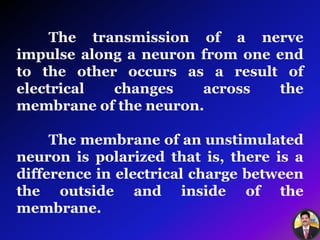
The transmission of a nerve
impulse along a neuron from one end
to the other occurs as a result of
electrical changes across the
membrane of the neuron.
The membrane of an unstimulated
neuron is polarized that is, there is a
difference in electrical charge between
the outside and inside of the
membrane.
1. Transmission of Nerve Impulses at
an Electrical Synapse
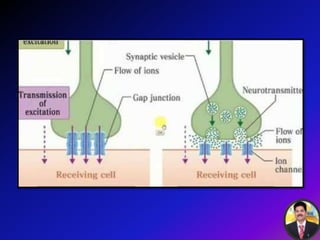
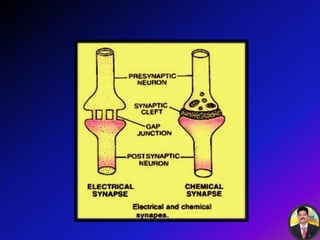
At electrical synapse there is
continuity between the presynaptic and
postsynaptic neurons.
The continuity is provided by the
gap junction between the two neurons.
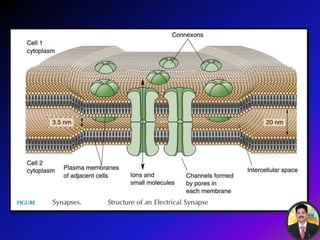
The gap junctions are small protein
tubular structures that allow free movement
of ions between the two neurons.
Because of this, the action potential
reaching the presynaptic terminal produces
potential change in the post-synaptic neuron.
In electrical synapse there is minimal
synaptic delay because of the direct flow of
electrical current from one neuron into the
other through gap junction.
Thus impulse transmission across an
electrical synapse is always faster than that
across a chemical synapse.
At an electrical synapse, the transfer of
an impulse occurs by purely electrical means
without involving any chemical
(neurotransmitter).
However, electrical synapses are
relatively rare.
It is found in the cardiac muscle fibers,
smooth muscle fibers of intestine and the
epithelial cells of lens.
Most impulse transmission across the
synapse between neurons takes place at the
chemical synapses.
2. Transmission of Nerve Impulse at a
Chemical Synapse
The process of chemical transmission
across synapses was discovered by Henry
Dale (1936).
The physiological importance of
synapse for the transmission of nerve
impulses was established by McLennan in
1963.
Description of the mechanism of
synaptic transmission
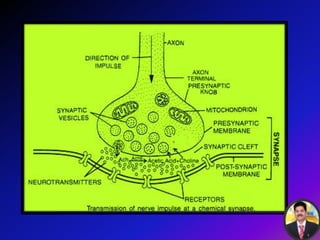
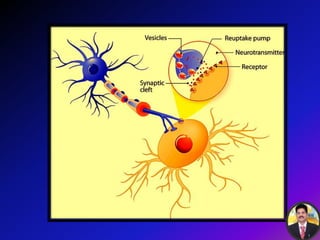
(i) When an impulse arrives at a presynaptic
knob, calcium ions from the synaptic cleft
enter the cytoplasm of the presynaptic
knob.
(ii) The calcium ions move on synaptic
vesicles to the surface of the knob.
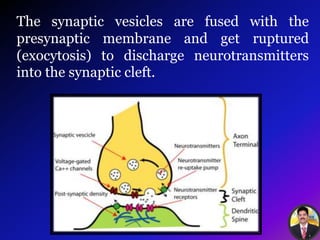
The synaptic vesicles are fused with the
presynaptic membrane and get ruptured
(exocytosis) to discharge neurotransmitters
into the synaptic cleft.
(iii) The synaptic vesicles then return to the
cytoplasm of the synaptic knob where they
are refilled with neurotransmitter.
(iv) The neurotransmitter of the synaptic
cleft binds with protein receptor molecules
on the post synaptic membrane. The
opening channels in the membrane and
allowing sodium ions to enter the cell.
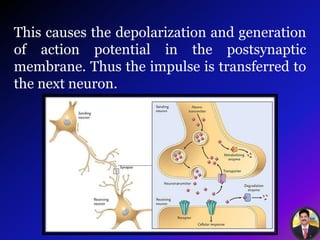
This causes the depolarization and generation
of action potential in the postsynaptic
membrane. Thus the impulse is transferred to
the next neuron.
(v) Having produced a change in the
permeability of the postsynaptic membrane
the neurotransmitter is immediately lost from
the synaptic cleft.
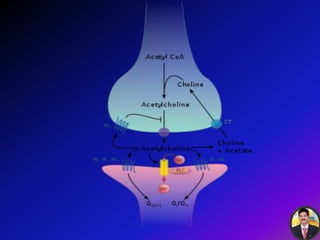
In the case of cholinergic synapses,
acetylcholine (ACh) is hydrolysed by an
enzyme acetyl cholinesterase (AChE) which is
present in high concentration at the synapse.
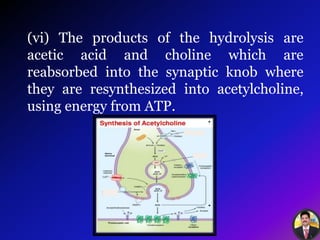
(vi) The products of the hydrolysis are
acetic acid and choline which are
reabsorbed into the synaptic knob where
they are resynthesized into acetylcholine,
using energy from ATP.
Neurotransmitters
Neurotransmitters are chemicals released
from a presynaptic neuron that interact with
specific receptor sites of a postsynaptic
neuron.
At least thirty chemicals thought to have the
capacity to act as neurotransmitters.
Acetylcholine
The neurotransmitter acetylcholine is
released at all neuromuscular junctions
between motor neurons and skeletal muscle
cells.
The enzyme acetyl cholinesterase is present
on the membrane of the muscle cell or the
postsynaptic neuron, where it breaks down
acetylcholine into acetate and choline and
terminates the action of the transmitter.
Norepinephrine
Another transmitter, norepinephrine
(formerly called noradrenalin) is secreted
by some neurons of the sympathetic neural
system and also by some neurons of the
central neural system.
Norepinephrine is usually inactivated by
the action of an enzyme monoamine
oxidase.
Gamma amino-butyric acid (GABA):
Gamma amino-butyric acid is released
by synaptic knobs of the fibres of some
intemeurons in central neural system. It
inhibits postsynaptic regeneration of action
potential, hence it is called inhibitory
neurotransmitter.
Other neurotransmitters are dopamine
(DA), serotonin, glycine, histamine, glutamic
acid, aspirate, substrate P and nitric oxide
(NO).

Nerve impulse transmission

  • 2.
    The transmission ofa nerve impulse along a neuron from one end to the other occurs as a result of electrical changes across the membrane of the neuron. The membrane of an unstimulated neuron is polarized that is, there is a difference in electrical charge between the outside and inside of the membrane.
  • 4.
    1. Transmission ofNerve Impulses at an Electrical Synapse At electrical synapse there is continuity between the presynaptic and postsynaptic neurons. The continuity is provided by the gap junction between the two neurons.
  • 6.
    The gap junctionsare small protein tubular structures that allow free movement of ions between the two neurons. Because of this, the action potential reaching the presynaptic terminal produces potential change in the post-synaptic neuron.
  • 8.
    In electrical synapsethere is minimal synaptic delay because of the direct flow of electrical current from one neuron into the other through gap junction. Thus impulse transmission across an electrical synapse is always faster than that across a chemical synapse.
  • 9.
    At an electricalsynapse, the transfer of an impulse occurs by purely electrical means without involving any chemical (neurotransmitter). However, electrical synapses are relatively rare. It is found in the cardiac muscle fibers, smooth muscle fibers of intestine and the epithelial cells of lens. Most impulse transmission across the synapse between neurons takes place at the chemical synapses.
  • 11.
    2. Transmission ofNerve Impulse at a Chemical Synapse The process of chemical transmission across synapses was discovered by Henry Dale (1936). The physiological importance of synapse for the transmission of nerve impulses was established by McLennan in 1963.
  • 13.
    Description of themechanism of synaptic transmission (i) When an impulse arrives at a presynaptic knob, calcium ions from the synaptic cleft enter the cytoplasm of the presynaptic knob. (ii) The calcium ions move on synaptic vesicles to the surface of the knob.
  • 14.
    The synaptic vesiclesare fused with the presynaptic membrane and get ruptured (exocytosis) to discharge neurotransmitters into the synaptic cleft.
  • 15.
    (iii) The synapticvesicles then return to the cytoplasm of the synaptic knob where they are refilled with neurotransmitter. (iv) The neurotransmitter of the synaptic cleft binds with protein receptor molecules on the post synaptic membrane. The opening channels in the membrane and allowing sodium ions to enter the cell.
  • 16.
    This causes thedepolarization and generation of action potential in the postsynaptic membrane. Thus the impulse is transferred to the next neuron.
  • 17.
    (v) Having produceda change in the permeability of the postsynaptic membrane the neurotransmitter is immediately lost from the synaptic cleft. In the case of cholinergic synapses, acetylcholine (ACh) is hydrolysed by an enzyme acetyl cholinesterase (AChE) which is present in high concentration at the synapse.
  • 18.
    (vi) The productsof the hydrolysis are acetic acid and choline which are reabsorbed into the synaptic knob where they are resynthesized into acetylcholine, using energy from ATP.
  • 19.
    Neurotransmitters Neurotransmitters are chemicalsreleased from a presynaptic neuron that interact with specific receptor sites of a postsynaptic neuron. At least thirty chemicals thought to have the capacity to act as neurotransmitters.
  • 21.
    Acetylcholine The neurotransmitter acetylcholineis released at all neuromuscular junctions between motor neurons and skeletal muscle cells. The enzyme acetyl cholinesterase is present on the membrane of the muscle cell or the postsynaptic neuron, where it breaks down acetylcholine into acetate and choline and terminates the action of the transmitter.
  • 23.
    Norepinephrine Another transmitter, norepinephrine (formerlycalled noradrenalin) is secreted by some neurons of the sympathetic neural system and also by some neurons of the central neural system. Norepinephrine is usually inactivated by the action of an enzyme monoamine oxidase.
  • 24.
    Gamma amino-butyric acid(GABA): Gamma amino-butyric acid is released by synaptic knobs of the fibres of some intemeurons in central neural system. It inhibits postsynaptic regeneration of action potential, hence it is called inhibitory neurotransmitter. Other neurotransmitters are dopamine (DA), serotonin, glycine, histamine, glutamic acid, aspirate, substrate P and nitric oxide (NO).