PROGRAM OBJECTIVES
To enhance the oral and written communication
skills of the participants
To develop the students’ self-confidence through
increased competency in the language and
improved accent and vocal personality
IMPORTANCE OF COMMUNICATION
• Expression of one’s thoughts, feelings, aspirations,
doubts, question and fears through verbal and non-verbal
means such as speech, writing or gestures.
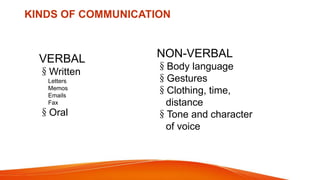
KINDS OF COMMUNICATION
VERBAL
§Written
Letters
Memos
Emails
Fax
§Oral
NON-VERBAL
§Body language
§Gestures
§Clothing, time,
distance
§Tone and character
of voice
Volume
- softness or loudness of voice
- emphasizes main ideas
- adds impact to verbal message
Rate
- fast or slow rate of voice
- depends on how you move/use your articulators
(lips, tongue, teeth, hard palate, soft palate)
- helps audience in comprehending
what you read
- shows excitement, danger, need for
sudden action (RAPID)
- shows sickness, calmness, tiredness
(SLOW)
Pitch
- highness or lowness of voice
- emphasizes meaning
- depends on environment
(funeral, party, street rally, classroom, etc.)
- shows emotion
(high – usually excited, low – usually serious)
Pause
- adds color, expression and feeling to your
speech.
- helps in verbal phrasing, as you move from
one thought to another
- gives audience time to absorb what you
are saying.
*Avoid excessive vocalized pauses such
as “uh”, “er”, “uhm”, “ok”, “you know”

Importance of communication (3)

  • 1.
    PROGRAM OBJECTIVES To enhancethe oral and written communication skills of the participants To develop the students’ self-confidence through increased competency in the language and improved accent and vocal personality
  • 2.
    IMPORTANCE OF COMMUNICATION •Expression of one’s thoughts, feelings, aspirations, doubts, question and fears through verbal and non-verbal means such as speech, writing or gestures.
  • 3.
    KINDS OF COMMUNICATION VERBAL §Written Letters Memos Emails Fax §Oral NON-VERBAL §Bodylanguage §Gestures §Clothing, time, distance §Tone and character of voice
  • 4.
    Volume - softness orloudness of voice - emphasizes main ideas - adds impact to verbal message
  • 5.
    Rate - fast orslow rate of voice - depends on how you move/use your articulators (lips, tongue, teeth, hard palate, soft palate) - helps audience in comprehending what you read - shows excitement, danger, need for sudden action (RAPID) - shows sickness, calmness, tiredness (SLOW)
  • 6.
    Pitch - highness orlowness of voice - emphasizes meaning - depends on environment (funeral, party, street rally, classroom, etc.) - shows emotion (high – usually excited, low – usually serious)
  • 7.
    Pause - adds color,expression and feeling to your speech. - helps in verbal phrasing, as you move from one thought to another - gives audience time to absorb what you are saying. *Avoid excessive vocalized pauses such as “uh”, “er”, “uhm”, “ok”, “you know”