TOPIC :
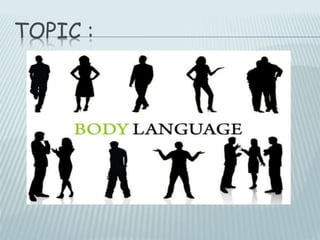
 Body language is the unique non-verbal channel of
communication, by which we convey information , or express
ourselves through conscious or subconscious gestures , bodily
movements or facial expressions
 Body language is a type of non-verbal communication in which
physical behavior, as opposed to words, are used to express or
convey information. Such behavior includes facial expressions,
body posture, gestures, eye movement, touch and the use of space
 The human face is extremely expressive, able to express
countless emotions without saying a word. And unlike some forms
of nonverbal communication, facial expressions are universal. The
facial expressions for happiness, sadness, anger, surprise, fear,
and disgust are the same across cultures.
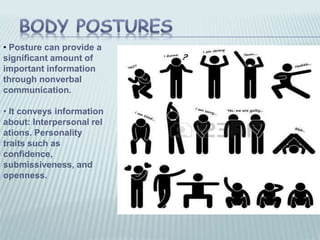
• Posture can provide a
significant amount of
important information
through nonverbal
communication.
• It conveys information
about: Interpersonal rel
ations. Personality
traits such as
confidence,
submissiveness, and
openness.
 A gesture is a form of non-verbal communication in which visible
bodily actions communicate particular messages, either in place
of, or in conjunction with, speech. Gestures include movement of
the hands, face, or other parts of the body.
 Eye contact is important form of non-verbal communication. The
way you look at someone can communicate many things ,
including interest, affection, hatred or attraction. Eye contact is
important in maintaining the flow of conversation.
 We communicate a great deal through touch. Think about the
messages given by he following: a firm hand-shake , a timid tap on
the shoulder, a warm hug, a pat on the back etc.
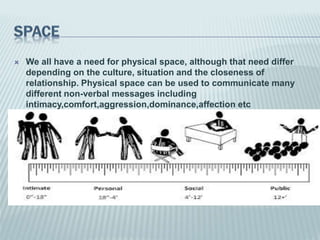
 We all have a need for physical space, although that need differ
depending on the culture, situation and the closeness of
relationship. Physical space can be used to communicate many
different non-verbal messages including
intimacy,comfort,aggression,dominance,affection etc
THANK YOUISHA
SHARMA

Body language

  • 1.
  • 2.
     Body languageis the unique non-verbal channel of communication, by which we convey information , or express ourselves through conscious or subconscious gestures , bodily movements or facial expressions  Body language is a type of non-verbal communication in which physical behavior, as opposed to words, are used to express or convey information. Such behavior includes facial expressions, body posture, gestures, eye movement, touch and the use of space
  • 4.
     The humanface is extremely expressive, able to express countless emotions without saying a word. And unlike some forms of nonverbal communication, facial expressions are universal. The facial expressions for happiness, sadness, anger, surprise, fear, and disgust are the same across cultures.
  • 5.
    • Posture canprovide a significant amount of important information through nonverbal communication. • It conveys information about: Interpersonal rel ations. Personality traits such as confidence, submissiveness, and openness.
  • 6.
     A gestureis a form of non-verbal communication in which visible bodily actions communicate particular messages, either in place of, or in conjunction with, speech. Gestures include movement of the hands, face, or other parts of the body.
  • 7.
     Eye contactis important form of non-verbal communication. The way you look at someone can communicate many things , including interest, affection, hatred or attraction. Eye contact is important in maintaining the flow of conversation.
  • 8.
     We communicatea great deal through touch. Think about the messages given by he following: a firm hand-shake , a timid tap on the shoulder, a warm hug, a pat on the back etc.
  • 9.
     We allhave a need for physical space, although that need differ depending on the culture, situation and the closeness of relationship. Physical space can be used to communicate many different non-verbal messages including intimacy,comfort,aggression,dominance,affection etc
  • 10.