Imunodeficiency states Primary  Caused by defined genetic defects Usually rare, but severe (exception: IgA deficiency)  Se condary Consequence of so m e other disease, treatment, environmental factors… Usually frequent, but usually clinically mild (ex c eptions: HI V  disease, secondary aganulocytosis).
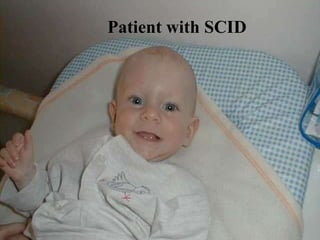
Severe combined immunodeficiency (SCID) Early clinical manifestation (weeks-months) Severe and complicated infections affecting respiratory and gastrointestinal tract and the skin Failure to thrive Frequent diarrhea Usually lymphocytopenia T-cell def i ciency, B cell present in some patients Decreased immunoglobulin levels
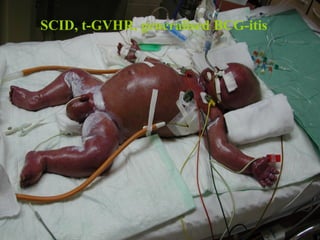
SCID, t-GVHR, generalised BCG-itis
SCID  infections caused by atypical patogens Pneumocystis pneumonia Cytomegalovirus pneumonitis Disseminated BCG-itis Infections caused by atypical mycobacteria Candidiasis of oropharynx, skin
Pa tient with SC ID
Immunoglobulin Deficiencies Clinical manifestations  begins  at 6-12 months  (or late).  Susceptibility to infection by encapsulated bacteria (Pneumococcus, Haemophilus) . Respiratory tract predominantly affected; patients suffer from recurrent otitis media,bronchitis, sinusitis, pneumonia . Some patients also suffer from meningitis or chronic diarrhea .
X-linked agammaglobulinemia Only boys affected Clinical manifestation usually begins at  6-12 months Severe and complicated respiratory tract infections. Very low levels of all immunoglobulin isotypes. B-cell not detected
Common variable immunodeficiency (CVID) Both sexes affected Clinical manifestation initiates at any age Frequent and severe respiratory tract infections P r oneness to autoimmune diseases Vari ab le decrea s e of immunoglobulin isotypes, usually markedly decreased  I gA and  I gG leves B-lymphocy t es usually present
Selective IgA deficiency Frequency: 1:400 Usually only mild manifestation Predominantly respiratory tract infections Patients are prone to autoimmune diseases Beware of anti-IgA antibodies that can cause a severe anaphylactic reaction after artificial IgA administration (by blood, immunoglobulin derivates)!
T-cell Deficiences Early onset of clinical manifestation . Extreme susceptibility to viral, fungal, mycobacterial, and protozoal infections . - Respiratory system most frequently affected, but also other systems can be involved .
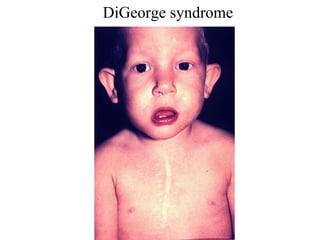
DiGeorge syndrome Defect in embryonic development of the 3rd and 4th pharyngeal pouches. Cardiovascular defects Hypoparathyroidism    hypocalcemia    seizures  Thymic hypoplasia    T cell def i ciency Typical facies: hypertelorism, micrognatia,  low-set, posterior rotated ears.
DiGeorge  syndrom e
DiGeorge syndrom e
Complement deficiencies Deficiency of C1-C4: autoimmune systemic disorders, susceptibility to bacterial infections Deficiency C5-C9: susceptibility to bacterial infections,  mainly  to meningococcal meningitis Defici e ncy of C1 INH: hereditary angioedema
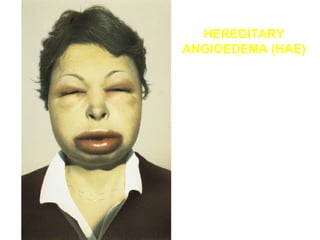
Hereditary angioedema Deficiency of C1 inhibitor (C1 INH) Uncontrolled activation of the complement system after trauma, infection, surgical operation.... Vasoactive peptides ( bradykinin,  C3a,C5a) cause increased vascular permeability Oedema of the skin, respiratory tract (dyspnoe), gastrointestinal tract (cramps, vomiting)
HEREDITARY ANGIOEDEMA (HAE)
Phagocytic dysfunction Early  onset  of clinical manifestation Susceptibility to bacterial and fungal infections A b scess formation,  mainly  of the skin, periproctal area, liver, but any area may be affected.
Chronic granulomatous disease Recurrent abscesses  mainly  of the liver, lungs, periproctal area, suppurative lymphadenitis, osteomyelitis Infections are caused  mainly  by catalase-positive organisms:  St. aureus, Candida  sp. , Serratia marcescens   Usually early onset of symptoms Production of reactive metabolites of oxygen is disturbed (defect of NADPH oxidase)
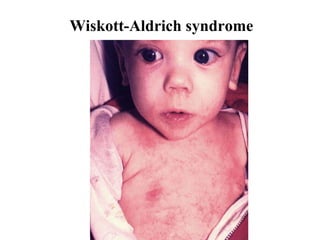
Wiskott-Aldrich syndrome X-linked disease Thrombocytopemia    bleeding tendency Severe eczema Immunodef i ciency Severe allergic and autoimmune manifestations B-cell lymphomas
Wiskott-Aldrich syndrom e
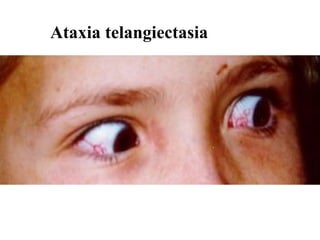
Ataxia telangiectasia Autosomal recessive Progressive ce r ebe llar  ataxia Tela n giectasis especially on ear lobes and conjunctival sclera Immunodeficiency Frequent tumors Cause:  m utation in ATM gene
A taxia telangiectasia
Treatment of primary immunodefciencies SCID and other severe immunodeficiencies: bone marrow transplantation, gene therapy in some cases. Antibody deficiencies: immunoglobulin replacement Antibiotic prohylaxis
Clinical use of non-specific immunoglobulin derivates Types of derivates:  „ Normal immunoglobulin“ - for intramuscular use . Used very rarely at present bcause only low dose can be given.. Intravenous immunoglobulins , subcutaneous immunoglobulins  - can be used in high doses Indications:  Replacement treatment in patients with antibody deficiencies Prophylaxis of infections against which there is no specific immunoglobulin derivate (hepatitis A) High doses of i.v. immunoglobulins are used in autoimmune diseases , systemic vasculitic diseases.
Causes of secondary immunodeficiency Metabolic - ur e mia, diabetes, malnutr it ion Iatrogenic – cytostatics,   immunosuppressants Malignat tumors Viral infections -  HIV , CMV ,  measles, infectious mononucleosis Splenectomy  Stres s Injuries, operations, general anestes ia
Imunodeficiency after splenectomy Disturbed phagocytosis, decreased production of antibodies. The most severe complication is hyperacute pneumococal sepsis. Prevention: vaccination against Pneumococcus, Haemophilus infl. B,  Meningococcus. PNC pro p hylaxis.
Secondary hypogammaglobulinemia Decreased production of immunoglobulins Chronic lymphatic leukemia Lymphoma Myeloma Loss of immunoglobulins Nephrotic syndrome Exudative enteropathy
 
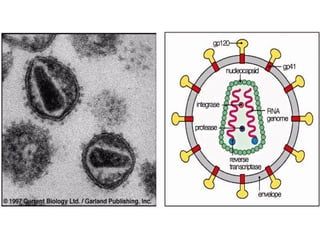
Ways of transmission Sexual   Parenteral  – intravenous drug addicts previously blood products 3.  Vertical  – mother to child –  transplacental, during delivery,  by brestfeeding
 
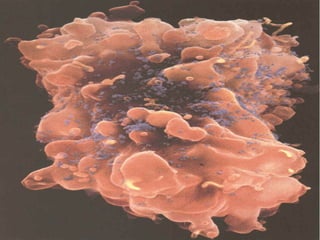
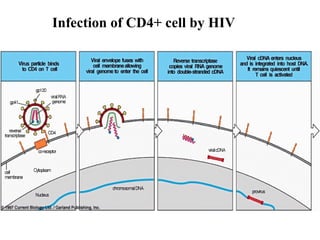
Infe ction of CD4+ cell by HIV
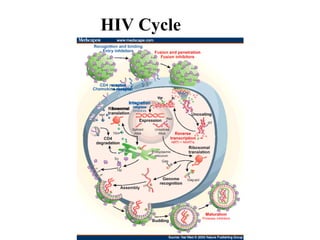
HIV Cy cle
 
Classification of HIV disease (CDC) 3 clinical categories A  Asymptomatic disese B  „small“ opportunistic infections C  „big“ opportunistic infections and  other states that define AIDS
Clinical category A Accute (primary) HIV infection  Asymptomatic HIV infection Persistent generalised lymphadenopathy (PGL)
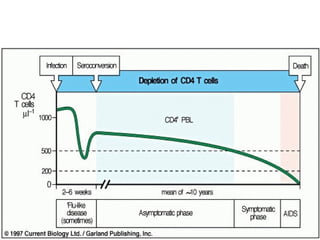
HIV PRIMOINFECTION Acute retroviral syndrome, („mononucleosis-like syndrome“) Present in 50-70% patients 2-6 weeks after infection
Clinical presentaioon of HIV primoinfection Fever, lympadenopathy, pharyngitis Rash Myalgia, arthralgia, diarrhoea, cephalea nausea, vomiting thrush Neurologic symptoms A phtous  stomatitis
Perzistent generalized lympadenopathy   - More than 3 months 1/3 HIV-infected persons Lymph nodes 0,5-2,0 cm,  painless
Clinical category B Fever >38,5 C more than 1 month  Diarrhoea more than 1 month Oropharyngea candidiasis Vulvovaginal candidiasis (chronic or difficult to treat) Recurrent herpes zoster
Clinical category C (AIDS) Pneumocystis pneumonia Brain abscess caused by toxoplasma Esofageal, tracheal, bronchial or lung candidiasis Chronic anal herpes, herpetic bronchitis, pneumonia CMV retinitis, generalized CMV infection  Progressive multifocal leukoecephalopathy Mycobacterial infections
Opportunistic Infections in AIDS Patients - Pneumonia due to Pneumocystis  jiroveci ( carinii ) - Toxoplasma brain abscess - Cytomegalovirus infection (retinitis, colitis) - Mycobacterial infections - Herpes virus and Varicella-Zoster infections
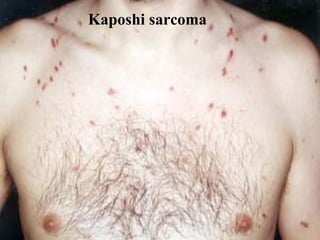
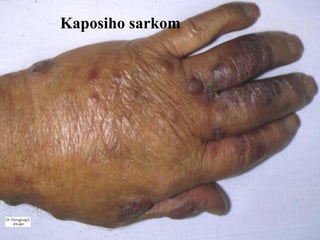
Clinical category C ( AIDS ) - tumors Kaposhi sarcoma Brain lymphoma
Kaposh i  sar coma
Kaposiho sarkom
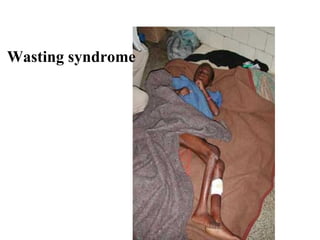
Wasting syndrome
Treatment of HIV-disease Antiretroviral Nucleoside inhibitors of reverse transcriptase : azidothymidin (syn. zidovudin), didanosin, zalcitabin, stavudin, lamivudin Nonnucleoside inhibitors of reverse  transcriptase :  Nevirapin, delavirdin, efavirenz HIV protease inhibitors : Saquinavir, ritonavir, indinavir Prophylaxis of  Pneumocystis carinii  pneumonia (co-trimoxazol), antiviral and antimycotic antibiotics
Strategy of treatment HAART - Highly Active Anti Retroviral Therapy Mega-HAART
Diagnos is   of HIV  infe ction Detection of anti-viral antibodies   ELISA Western blott Detection of antigen p 24

Immunology xi immunodeficiency

  • 1.
    Imunodeficiency states Primary Caused by defined genetic defects Usually rare, but severe (exception: IgA deficiency) Se condary Consequence of so m e other disease, treatment, environmental factors… Usually frequent, but usually clinically mild (ex c eptions: HI V disease, secondary aganulocytosis).
  • 2.
    Severe combined immunodeficiency(SCID) Early clinical manifestation (weeks-months) Severe and complicated infections affecting respiratory and gastrointestinal tract and the skin Failure to thrive Frequent diarrhea Usually lymphocytopenia T-cell def i ciency, B cell present in some patients Decreased immunoglobulin levels
  • 3.
  • 4.
    SCID infectionscaused by atypical patogens Pneumocystis pneumonia Cytomegalovirus pneumonitis Disseminated BCG-itis Infections caused by atypical mycobacteria Candidiasis of oropharynx, skin
  • 5.
  • 6.
    Immunoglobulin Deficiencies Clinicalmanifestations begins at 6-12 months (or late). Susceptibility to infection by encapsulated bacteria (Pneumococcus, Haemophilus) . Respiratory tract predominantly affected; patients suffer from recurrent otitis media,bronchitis, sinusitis, pneumonia . Some patients also suffer from meningitis or chronic diarrhea .
  • 7.
    X-linked agammaglobulinemia Onlyboys affected Clinical manifestation usually begins at 6-12 months Severe and complicated respiratory tract infections. Very low levels of all immunoglobulin isotypes. B-cell not detected
  • 8.
    Common variable immunodeficiency(CVID) Both sexes affected Clinical manifestation initiates at any age Frequent and severe respiratory tract infections P r oneness to autoimmune diseases Vari ab le decrea s e of immunoglobulin isotypes, usually markedly decreased I gA and I gG leves B-lymphocy t es usually present
  • 9.
    Selective IgA deficiencyFrequency: 1:400 Usually only mild manifestation Predominantly respiratory tract infections Patients are prone to autoimmune diseases Beware of anti-IgA antibodies that can cause a severe anaphylactic reaction after artificial IgA administration (by blood, immunoglobulin derivates)!
  • 10.
    T-cell Deficiences Earlyonset of clinical manifestation . Extreme susceptibility to viral, fungal, mycobacterial, and protozoal infections . - Respiratory system most frequently affected, but also other systems can be involved .
  • 11.
    DiGeorge syndrome Defectin embryonic development of the 3rd and 4th pharyngeal pouches. Cardiovascular defects Hypoparathyroidism  hypocalcemia  seizures Thymic hypoplasia  T cell def i ciency Typical facies: hypertelorism, micrognatia, low-set, posterior rotated ears.
  • 12.
  • 13.
  • 14.
    Complement deficiencies Deficiencyof C1-C4: autoimmune systemic disorders, susceptibility to bacterial infections Deficiency C5-C9: susceptibility to bacterial infections, mainly to meningococcal meningitis Defici e ncy of C1 INH: hereditary angioedema
  • 15.
    Hereditary angioedema Deficiencyof C1 inhibitor (C1 INH) Uncontrolled activation of the complement system after trauma, infection, surgical operation.... Vasoactive peptides ( bradykinin, C3a,C5a) cause increased vascular permeability Oedema of the skin, respiratory tract (dyspnoe), gastrointestinal tract (cramps, vomiting)
  • 16.
  • 17.
    Phagocytic dysfunction Early onset of clinical manifestation Susceptibility to bacterial and fungal infections A b scess formation, mainly of the skin, periproctal area, liver, but any area may be affected.
  • 18.
    Chronic granulomatous diseaseRecurrent abscesses mainly of the liver, lungs, periproctal area, suppurative lymphadenitis, osteomyelitis Infections are caused mainly by catalase-positive organisms: St. aureus, Candida sp. , Serratia marcescens Usually early onset of symptoms Production of reactive metabolites of oxygen is disturbed (defect of NADPH oxidase)
  • 19.
    Wiskott-Aldrich syndrome X-linkeddisease Thrombocytopemia  bleeding tendency Severe eczema Immunodef i ciency Severe allergic and autoimmune manifestations B-cell lymphomas
  • 20.
  • 21.
    Ataxia telangiectasia Autosomalrecessive Progressive ce r ebe llar ataxia Tela n giectasis especially on ear lobes and conjunctival sclera Immunodeficiency Frequent tumors Cause: m utation in ATM gene
  • 22.
  • 23.
    Treatment of primaryimmunodefciencies SCID and other severe immunodeficiencies: bone marrow transplantation, gene therapy in some cases. Antibody deficiencies: immunoglobulin replacement Antibiotic prohylaxis
  • 24.
    Clinical use ofnon-specific immunoglobulin derivates Types of derivates: „ Normal immunoglobulin“ - for intramuscular use . Used very rarely at present bcause only low dose can be given.. Intravenous immunoglobulins , subcutaneous immunoglobulins - can be used in high doses Indications: Replacement treatment in patients with antibody deficiencies Prophylaxis of infections against which there is no specific immunoglobulin derivate (hepatitis A) High doses of i.v. immunoglobulins are used in autoimmune diseases , systemic vasculitic diseases.
  • 25.
    Causes of secondaryimmunodeficiency Metabolic - ur e mia, diabetes, malnutr it ion Iatrogenic – cytostatics, immunosuppressants Malignat tumors Viral infections - HIV , CMV , measles, infectious mononucleosis Splenectomy Stres s Injuries, operations, general anestes ia
  • 26.
    Imunodeficiency after splenectomyDisturbed phagocytosis, decreased production of antibodies. The most severe complication is hyperacute pneumococal sepsis. Prevention: vaccination against Pneumococcus, Haemophilus infl. B, Meningococcus. PNC pro p hylaxis.
  • 27.
    Secondary hypogammaglobulinemia Decreasedproduction of immunoglobulins Chronic lymphatic leukemia Lymphoma Myeloma Loss of immunoglobulins Nephrotic syndrome Exudative enteropathy
  • 28.
  • 29.
    Ways of transmissionSexual Parenteral – intravenous drug addicts previously blood products 3. Vertical – mother to child – transplacental, during delivery, by brestfeeding
  • 30.
  • 31.
    Infe ction ofCD4+ cell by HIV
  • 32.
  • 33.
  • 34.
    Classification of HIVdisease (CDC) 3 clinical categories A Asymptomatic disese B „small“ opportunistic infections C „big“ opportunistic infections and other states that define AIDS
  • 35.
    Clinical category AAccute (primary) HIV infection Asymptomatic HIV infection Persistent generalised lymphadenopathy (PGL)
  • 36.
    HIV PRIMOINFECTION Acuteretroviral syndrome, („mononucleosis-like syndrome“) Present in 50-70% patients 2-6 weeks after infection
  • 37.
    Clinical presentaioon ofHIV primoinfection Fever, lympadenopathy, pharyngitis Rash Myalgia, arthralgia, diarrhoea, cephalea nausea, vomiting thrush Neurologic symptoms A phtous stomatitis
  • 38.
    Perzistent generalized lympadenopathy - More than 3 months 1/3 HIV-infected persons Lymph nodes 0,5-2,0 cm, painless
  • 39.
    Clinical category BFever >38,5 C more than 1 month Diarrhoea more than 1 month Oropharyngea candidiasis Vulvovaginal candidiasis (chronic or difficult to treat) Recurrent herpes zoster
  • 40.
    Clinical category C(AIDS) Pneumocystis pneumonia Brain abscess caused by toxoplasma Esofageal, tracheal, bronchial or lung candidiasis Chronic anal herpes, herpetic bronchitis, pneumonia CMV retinitis, generalized CMV infection Progressive multifocal leukoecephalopathy Mycobacterial infections
  • 41.
    Opportunistic Infections inAIDS Patients - Pneumonia due to Pneumocystis jiroveci ( carinii ) - Toxoplasma brain abscess - Cytomegalovirus infection (retinitis, colitis) - Mycobacterial infections - Herpes virus and Varicella-Zoster infections
  • 42.
    Clinical category C( AIDS ) - tumors Kaposhi sarcoma Brain lymphoma
  • 43.
    Kaposh i sar coma
  • 44.
  • 45.
  • 46.
    Treatment of HIV-diseaseAntiretroviral Nucleoside inhibitors of reverse transcriptase : azidothymidin (syn. zidovudin), didanosin, zalcitabin, stavudin, lamivudin Nonnucleoside inhibitors of reverse transcriptase : Nevirapin, delavirdin, efavirenz HIV protease inhibitors : Saquinavir, ritonavir, indinavir Prophylaxis of Pneumocystis carinii pneumonia (co-trimoxazol), antiviral and antimycotic antibiotics
  • 47.
    Strategy of treatmentHAART - Highly Active Anti Retroviral Therapy Mega-HAART
  • 48.
    Diagnos is of HIV infe ction Detection of anti-viral antibodies ELISA Western blott Detection of antigen p 24