 Introduction
 Definition of terms
 Immune System
 Immunodeficiency
 Signs & Symptoms
 Diagnosis
 Prevention & Treatment
 Recommendation
 Conclusion
PRIMARY
SECONDARY
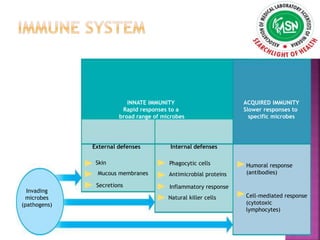
INNATE IMMUNITY
Rapid responses to a
broad range of microbes
ACQUIRED IMMUNITY
Slower responses to
specific microbes
External defenses Internal defenses
Skin
Mucous membranes
Secretions
Phagocytic cells
Antimicrobial proteins
Inflammatory response
Natural killer cells
Humoral response
(antibodies)
Cell-mediated response
(cytotoxic
lymphocytes)
Invading
microbes
(pathogens)
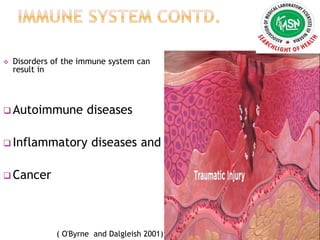
 Disorders of the immune system can
result in
 Autoimmune diseases
 Inflammatory diseases and
 Cancer
( O'Byrne and Dalgleish 2001)
Immunodeficiency(Immune deficiency):- Is a
state in which the immune system’s ability to
fight infectious disease is compromised or
entirely absent.
Failure to protect against disease
Categories of IMD
Primary immunodeficiency states
Secondary immunodeficiency states
 Over 180 genetic disorders
recognized.
 Mostly these are inherited
single-gene disorder .
 Present in infancy or early
childhood.
 Mutations/deletions of genes
governing stem cell
differentiation.
 70% occur in males due to X-
linked inheritance in many
syndromes.
(Notarangelo et al., 2009)
 B-cell defects account for 50%
 T-cell defects account for 30%,
 Phagocytic deficiencies 18%
 Complement deficiencies 2%.
(LeBien & Tedder, 2008)
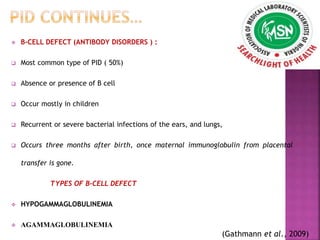
 B-CELL DEFECT (ANTIBODY DISORDERS ) :
 Most common type of PID ( 50%)
 Absence or presence of B cell
 Occur mostly in children
 Recurrent or severe bacterial infections of the ears, and lungs,
 Occurs three months after birth, once maternal immunoglobulin from placental
transfer is gone.
TYPES OF B-CELL DEFECT
 HYPOGAMMAGLOBULINEMIA
 AGAMMAGLOBULINEMIA
(Gathmann et al., 2009)
HYPOGAMMAGLOBULINEMIA
 Characterized by low or deficient levels of any of
the immunoglobulins (immunoglobulin A [IgA],
IgE, IgG and IgG subclasses, IgM),
 An abnormal response of immunoglobulins to
vaccinations
 Ear and pulmonary infections are common;
gastrointestinal problems such as diarrhea,
malabsorption, and symptoms of irritable bowel
syndrome also occur in children who have
common variable immunodeficiency.
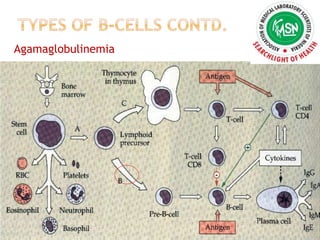
 AGAMMAGLOBULINEMIA
 Accounts for 13% of antibody disorders, with X
chromosome–linked Bruton tyrosine kinase
defect accounting for 84% of
agammaglobulinemias.
 Complete absence of B cells in children’s
peripheral blood and in their umbilical cord blood.
 Absence of tonsils or lymph nodes and Decrease
immunoglobulin subtypes.
(Gathmann et al., 2009)
Agamaglobulinemia
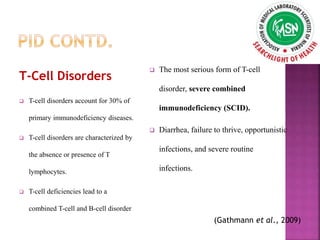
T-Cell Disorders
 T-cell disorders account for 30% of
primary immunodeficiency diseases.
 T-cell disorders are characterized by
the absence or presence of T
lymphocytes.
 T-cell deficiencies lead to a
combined T-cell and B-cell disorder
 The most serious form of T-cell
disorder, severe combined
immunodeficiency (SCID).
 Diarrhea, failure to thrive, opportunistic
infections, and severe routine
infections.
(Gathmann et al., 2009)
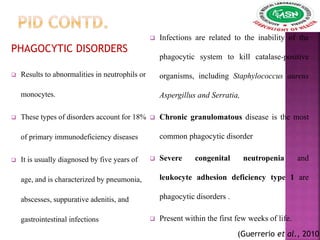
PHAGOCYTIC DISORDERS
 Results to abnormalities in neutrophils or
monocytes.
 These types of disorders account for 18%
of primary immunodeficiency diseases
 It is usually diagnosed by five years of
age, and is characterized by pneumonia,
abscesses, suppurative adenitis, and
gastrointestinal infections
 Infections are related to the inability of the
phagocytic system to kill catalase-positive
organisms, including Staphylococcus aureus
Aspergillus and Serratia,
 Chronic granulomatous disease is the most
common phagocytic disorder
 Severe congenital neutropenia and
leukocyte adhesion deficiency type 1 are
phagocytic disorders .
 Present within the first few weeks of life.
(Guerrerio et al., 2010)
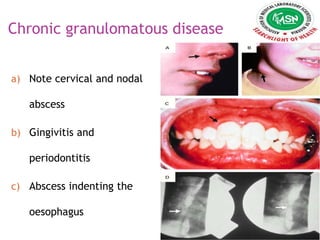
Chronic granulomatous disease
a) Note cervical and nodal
abscess
b) Gingivitis and
periodontitis
c) Abscess indenting the
oesophagus
COMPLEMENT DISORDERS
 Complement disorders account for 2% of
Primary Immunodeficiency Diseases
 More than 25 proteins are involved in the
complement pathway, which complements
the action of antibodies to destroy
bacteria.
 Complement promotes chemotaxis,
opsonization, and phagocytosis of invasive
pathogens, bacteriolysis, and anaphylactic
reactions
 Deficiency of C3 is associated with
recurrent pyogenic infections with S.
pneumoniae
 Deficiencies in C5 through C9 are
associated with Neisseria
meningitidis infections such as a)
meningitis,
b)sepsis, and
c) arthritis.
(Walport , 2001)
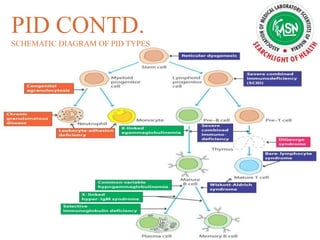
PID CONTD.
SCHEMATIC DIAGRAM OF PID TYPES
 Dysfunction of one or more
components of the Immune System
arising as a result of another
process.
 Much more common; accumulation
of defects leading to clinical
immunocompromise state
CAUSES OF SID
 Malnutrition
 Infections(Bacteria or Viral; AIDS etc)
 Cancer
 Renal disease
 Patients treated with immunosuppressive drugs
(Kaymakcalan et al., 2013)
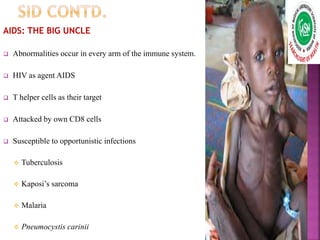
AIDS: THE BIG UNCLE
 Abnormalities occur in every arm of the immune system.
 HIV as agent AIDS
 T helper cells as their target
 Attacked by own CD8 cells
 Susceptible to opportunistic infections
 Tuberculosis
 Kaposi’s sarcoma
 Malaria
 Pneumocystis carinii
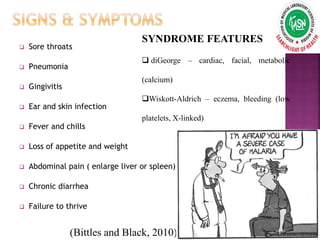
 Sore throats
 Pneumonia
 Gingivitis
 Ear and skin infection
 Fever and chills
 Loss of appetite and weight
 Abdominal pain ( enlarge liver or spleen)
 Chronic diarrhea
 Failure to thrive
SYNDROME FEATURES
 diGeorge – cardiac, facial, metabolic
(calcium)
Wiskott-Aldrich – eczema, bleeding (low
platelets, X-linked)
(Bittles and Black, 2010)
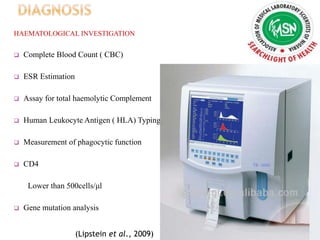
HAEMATOLOGICAL INVESTIGATION
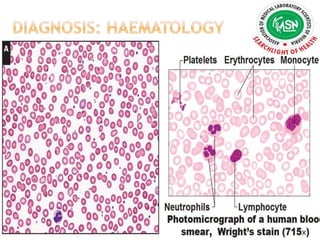
 Complete Blood Count ( CBC)
 ESR Estimation
 Assay for total haemolytic Complement
 Human Leukocyte Antigen ( HLA) Typing
 Measurement of phagocytic function
 CD4
Lower than 500cells/μl
 Gene mutation analysis
(Lipstein et al., 2009)
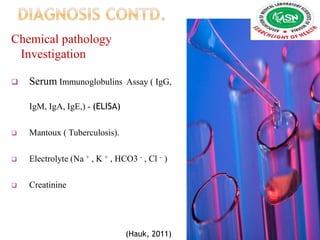
Chemical pathology
Investigation
 Serum Immunoglobulins Assay ( IgG,
IgM, IgA, IgE,) - (ELISA)
 Mantoux ( Tuberculosis).
 Electrolyte (Na + , K + , HCO3 - , Cl - )
 Creatinine
(Hauk, 2011)
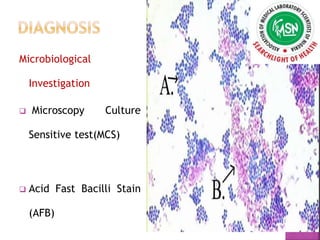
Microbiological
Investigation
 Microscopy Culture
Sensitive test(MCS)
 Acid Fast Bacilli Stain
(AFB)
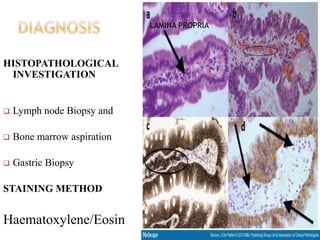
HISTOPATHOLOGICAL
INVESTIGATION
 Lymph node Biopsy and
 Bone marrow aspiration
 Gastric Biopsy
STAINING METHOD
Haematoxylene/Eosin
LAMINA PROPRIA
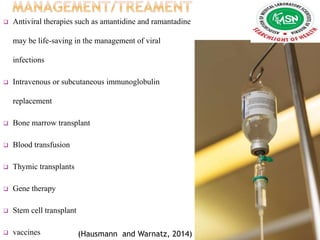
 Antiviral therapies such as amantidine and ramantadine
may be life-saving in the management of viral
infections
 Intravenous or subcutaneous immunoglobulin
replacement
 Bone marrow transplant
 Blood transfusion
 Thymic transplants
 Gene therapy
 Stem cell transplant
 vaccines (Hausmann and Warnatz, 2014)
 Genetic counseling.
 Practicing safer sex and avoiding the sharing of body fluids may help
prevent HIV infection and AIDS.
 Good nutrition may prevent acquired immunodeficiency caused by
malnutrition.
 Vigilance and Monitoring
 Limitation of Immune-suppressing Agent
 Medical Care Education
 Early diagnosis and treatment are important for patients with
immunodeficiency disorders.
 With appropriate treatment, many people with an immunodeficiency
disorder have a normal life span. However, some require intensive and
frequent treatments throughout life. Others, such as those with severe
combined immunodeficiency, die during infancy unless they are given a
bone marrow or stem cell transplant.
IMMUNODEFICIENCY IN HAEMATOLOGY

IMMUNODEFICIENCY IN HAEMATOLOGY

  • 2.
     Introduction  Definitionof terms  Immune System  Immunodeficiency  Signs & Symptoms  Diagnosis  Prevention & Treatment  Recommendation  Conclusion PRIMARY SECONDARY
  • 4.
    INNATE IMMUNITY Rapid responsesto a broad range of microbes ACQUIRED IMMUNITY Slower responses to specific microbes External defenses Internal defenses Skin Mucous membranes Secretions Phagocytic cells Antimicrobial proteins Inflammatory response Natural killer cells Humoral response (antibodies) Cell-mediated response (cytotoxic lymphocytes) Invading microbes (pathogens)
  • 5.
     Disorders ofthe immune system can result in  Autoimmune diseases  Inflammatory diseases and  Cancer ( O'Byrne and Dalgleish 2001)
  • 6.
    Immunodeficiency(Immune deficiency):- Isa state in which the immune system’s ability to fight infectious disease is compromised or entirely absent. Failure to protect against disease Categories of IMD Primary immunodeficiency states Secondary immunodeficiency states
  • 7.
     Over 180genetic disorders recognized.  Mostly these are inherited single-gene disorder .  Present in infancy or early childhood.  Mutations/deletions of genes governing stem cell differentiation.  70% occur in males due to X- linked inheritance in many syndromes. (Notarangelo et al., 2009)
  • 8.
     B-cell defectsaccount for 50%  T-cell defects account for 30%,  Phagocytic deficiencies 18%  Complement deficiencies 2%. (LeBien & Tedder, 2008)
  • 9.
     B-CELL DEFECT(ANTIBODY DISORDERS ) :  Most common type of PID ( 50%)  Absence or presence of B cell  Occur mostly in children  Recurrent or severe bacterial infections of the ears, and lungs,  Occurs three months after birth, once maternal immunoglobulin from placental transfer is gone. TYPES OF B-CELL DEFECT  HYPOGAMMAGLOBULINEMIA  AGAMMAGLOBULINEMIA (Gathmann et al., 2009)
  • 10.
    HYPOGAMMAGLOBULINEMIA  Characterized bylow or deficient levels of any of the immunoglobulins (immunoglobulin A [IgA], IgE, IgG and IgG subclasses, IgM),  An abnormal response of immunoglobulins to vaccinations  Ear and pulmonary infections are common; gastrointestinal problems such as diarrhea, malabsorption, and symptoms of irritable bowel syndrome also occur in children who have common variable immunodeficiency.  AGAMMAGLOBULINEMIA  Accounts for 13% of antibody disorders, with X chromosome–linked Bruton tyrosine kinase defect accounting for 84% of agammaglobulinemias.  Complete absence of B cells in children’s peripheral blood and in their umbilical cord blood.  Absence of tonsils or lymph nodes and Decrease immunoglobulin subtypes. (Gathmann et al., 2009)
  • 11.
  • 12.
    T-Cell Disorders  T-celldisorders account for 30% of primary immunodeficiency diseases.  T-cell disorders are characterized by the absence or presence of T lymphocytes.  T-cell deficiencies lead to a combined T-cell and B-cell disorder  The most serious form of T-cell disorder, severe combined immunodeficiency (SCID).  Diarrhea, failure to thrive, opportunistic infections, and severe routine infections. (Gathmann et al., 2009)
  • 13.
    PHAGOCYTIC DISORDERS  Resultsto abnormalities in neutrophils or monocytes.  These types of disorders account for 18% of primary immunodeficiency diseases  It is usually diagnosed by five years of age, and is characterized by pneumonia, abscesses, suppurative adenitis, and gastrointestinal infections  Infections are related to the inability of the phagocytic system to kill catalase-positive organisms, including Staphylococcus aureus Aspergillus and Serratia,  Chronic granulomatous disease is the most common phagocytic disorder  Severe congenital neutropenia and leukocyte adhesion deficiency type 1 are phagocytic disorders .  Present within the first few weeks of life. (Guerrerio et al., 2010)
  • 14.
    Chronic granulomatous disease a)Note cervical and nodal abscess b) Gingivitis and periodontitis c) Abscess indenting the oesophagus
  • 15.
    COMPLEMENT DISORDERS  Complementdisorders account for 2% of Primary Immunodeficiency Diseases  More than 25 proteins are involved in the complement pathway, which complements the action of antibodies to destroy bacteria.  Complement promotes chemotaxis, opsonization, and phagocytosis of invasive pathogens, bacteriolysis, and anaphylactic reactions  Deficiency of C3 is associated with recurrent pyogenic infections with S. pneumoniae  Deficiencies in C5 through C9 are associated with Neisseria meningitidis infections such as a) meningitis, b)sepsis, and c) arthritis. (Walport , 2001)
  • 16.
  • 17.
     Dysfunction ofone or more components of the Immune System arising as a result of another process.  Much more common; accumulation of defects leading to clinical immunocompromise state CAUSES OF SID  Malnutrition  Infections(Bacteria or Viral; AIDS etc)  Cancer  Renal disease  Patients treated with immunosuppressive drugs (Kaymakcalan et al., 2013)
  • 18.
    AIDS: THE BIGUNCLE  Abnormalities occur in every arm of the immune system.  HIV as agent AIDS  T helper cells as their target  Attacked by own CD8 cells  Susceptible to opportunistic infections  Tuberculosis  Kaposi’s sarcoma  Malaria  Pneumocystis carinii
  • 19.
     Sore throats Pneumonia  Gingivitis  Ear and skin infection  Fever and chills  Loss of appetite and weight  Abdominal pain ( enlarge liver or spleen)  Chronic diarrhea  Failure to thrive SYNDROME FEATURES  diGeorge – cardiac, facial, metabolic (calcium) Wiskott-Aldrich – eczema, bleeding (low platelets, X-linked) (Bittles and Black, 2010)
  • 20.
    HAEMATOLOGICAL INVESTIGATION  CompleteBlood Count ( CBC)  ESR Estimation  Assay for total haemolytic Complement  Human Leukocyte Antigen ( HLA) Typing  Measurement of phagocytic function  CD4 Lower than 500cells/μl  Gene mutation analysis (Lipstein et al., 2009)
  • 22.
    Chemical pathology Investigation  SerumImmunoglobulins Assay ( IgG, IgM, IgA, IgE,) - (ELISA)  Mantoux ( Tuberculosis).  Electrolyte (Na + , K + , HCO3 - , Cl - )  Creatinine (Hauk, 2011)
  • 23.
    Microbiological Investigation  Microscopy Culture Sensitivetest(MCS)  Acid Fast Bacilli Stain (AFB)
  • 24.
    HISTOPATHOLOGICAL INVESTIGATION  Lymph nodeBiopsy and  Bone marrow aspiration  Gastric Biopsy STAINING METHOD Haematoxylene/Eosin LAMINA PROPRIA
  • 25.
     Antiviral therapiessuch as amantidine and ramantadine may be life-saving in the management of viral infections  Intravenous or subcutaneous immunoglobulin replacement  Bone marrow transplant  Blood transfusion  Thymic transplants  Gene therapy  Stem cell transplant  vaccines (Hausmann and Warnatz, 2014)
  • 26.
     Genetic counseling. Practicing safer sex and avoiding the sharing of body fluids may help prevent HIV infection and AIDS.  Good nutrition may prevent acquired immunodeficiency caused by malnutrition.  Vigilance and Monitoring  Limitation of Immune-suppressing Agent  Medical Care Education
  • 27.
     Early diagnosisand treatment are important for patients with immunodeficiency disorders.  With appropriate treatment, many people with an immunodeficiency disorder have a normal life span. However, some require intensive and frequent treatments throughout life. Others, such as those with severe combined immunodeficiency, die during infancy unless they are given a bone marrow or stem cell transplant.