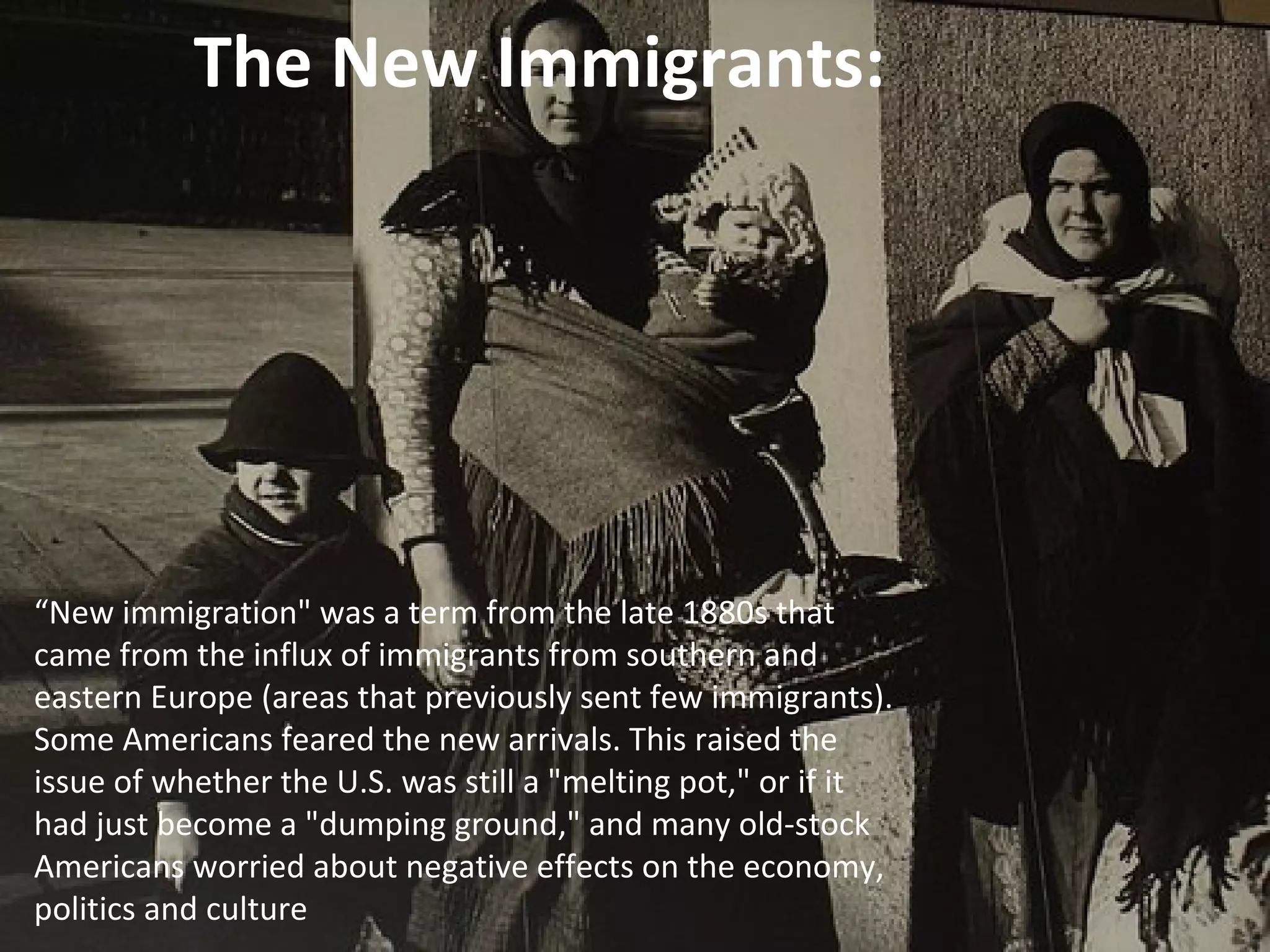
The New Immigrants:
“New immigration" was a term from the late 1880s that
came from the influx of immigrants from southern and
eastern Europe (areas that previously sent few immigrants).
Some Americans feared the new arrivals. This raised the
issue of whether the U.S. was still a "melting pot," or if it
had just become a "dumping ground," and many old-stock
Americans worried about negative effects on the economy,
politics and culture
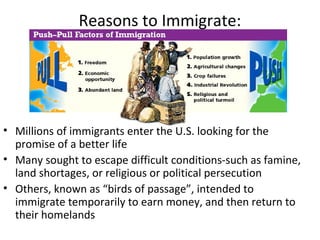
Reasons to Immigrate:
• Millions of immigrants enter the U.S. looking for the
promise of a better life
• Many sought to escape difficult conditions-such as famine,
land shortages, or religious or political persecution
• Others, known as “birds of passage”, intended to
immigrate temporarily to earn money, and then return to
their homelands
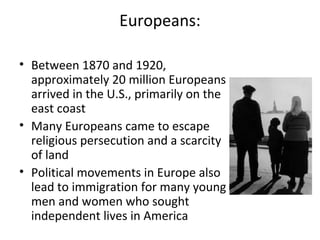
Europeans:
• Between 1870 and 1920,
approximately 20 million Europeans
arrived in the U.S., primarily on the
east coast
• Many Europeans came to escape
religious persecution and a scarcity
of land
• Political movements in Europe also
lead to immigration for many young
men and women who sought
independent lives in America
Chinese and Japanese:
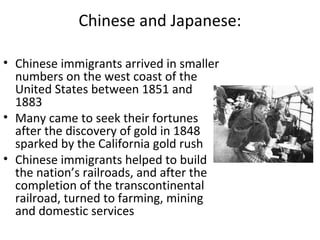
• Chinese immigrants arrived in smaller
numbers on the west coast of the
United States between 1851 and
1883
• Many came to seek their fortunes
after the discovery of gold in 1848
sparked by the California gold rush
• Chinese immigrants helped to build
the nation’s railroads, and after the
completion of the transcontinental
railroad, turned to farming, mining
and domestic services
Chinese and Japanese continued…
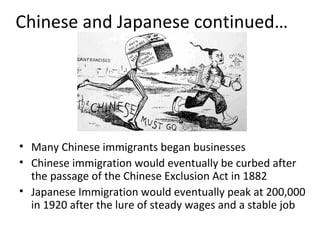
• Many Chinese immigrants began businesses
• Chinese immigration would eventually be curbed after
the passage of the Chinese Exclusion Act in 1882
• Japanese Immigration would eventually peak at 200,000
in 1920 after the lure of steady wages and a stable job
Life in a New Land:
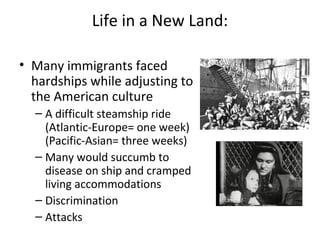
• Many immigrants faced
hardships while adjusting to
the American culture
– A difficult steamship ride
(Atlantic-Europe= one week)
(Pacific-Asian= three weeks)
– Many would succumb to
disease on ship and cramped
living accommodations
– Discrimination
– Attacks
Immigration Entry points:
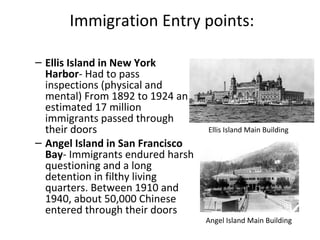
– Ellis Island in New York
Harbor- Had to pass
inspections (physical and
mental) From 1892 to 1924 an
estimated 17 million
immigrants passed through
their doors
– Angel Island in San Francisco
Bay- Immigrants endured harsh
questioning and a long
detention in filthy living
quarters. Between 1910 and
1940, about 50,000 Chinese
entered through their doors
Ellis Island Main Building
Angel Island Main Building
Cooperation for Survival:
• Once admitted in the country, immigrants faced
the challenges of finding a place to live, getting a
job, and getting along in daily life while trying to
understand an alien language and culture
• Many immigrants sought out people who spoke
their native language, practiced their religion,
and understood their cultural values
• Many grouped together in the form of ethnic
communities, social clubs and societies to cope
with the difficulties from immigrating
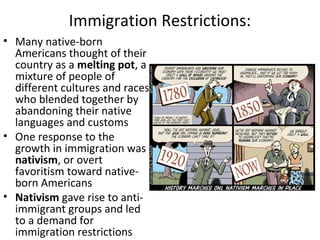
Immigration Restrictions:
• Many native-born
Americans thought of their
country as a melting pot, a
mixture of people of
different cultures and races
who blended together by
abandoning their native
languages and customs
• One response to the
growth in immigration was
nativism, or overt
favoritism toward native-
born Americans
• Nativism gave rise to anti-
immigrant groups and led
to a demand for
immigration restrictions
Immigration Restrictions continued…
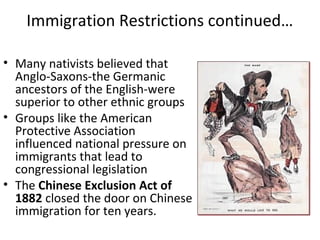
• Many nativists believed that
Anglo-Saxons-the Germanic
ancestors of the English-were
superior to other ethnic groups
• Groups like the American
Protective Association
influenced national pressure on
immigrants that lead to
congressional legislation
• The Chinese Exclusion Act of
1882 closed the door on Chinese
immigration for ten years.
Immigration Restrictions continued…
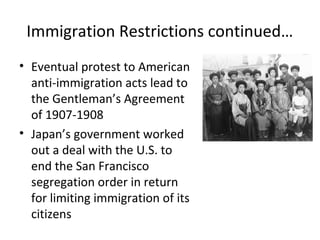
• Eventual protest to American
anti-immigration acts lead to
the Gentleman’s Agreement
of 1907-1908
• Japan’s government worked
out a deal with the U.S. to
end the San Francisco
segregation order in return
for limiting immigration of its
citizens

The new immigrants

  • 1.
    The New Immigrants: “Newimmigration" was a term from the late 1880s that came from the influx of immigrants from southern and eastern Europe (areas that previously sent few immigrants). Some Americans feared the new arrivals. This raised the issue of whether the U.S. was still a "melting pot," or if it had just become a "dumping ground," and many old-stock Americans worried about negative effects on the economy, politics and culture
  • 2.
    Reasons to Immigrate: •Millions of immigrants enter the U.S. looking for the promise of a better life • Many sought to escape difficult conditions-such as famine, land shortages, or religious or political persecution • Others, known as “birds of passage”, intended to immigrate temporarily to earn money, and then return to their homelands
  • 3.
    Europeans: • Between 1870and 1920, approximately 20 million Europeans arrived in the U.S., primarily on the east coast • Many Europeans came to escape religious persecution and a scarcity of land • Political movements in Europe also lead to immigration for many young men and women who sought independent lives in America
  • 4.
    Chinese and Japanese: •Chinese immigrants arrived in smaller numbers on the west coast of the United States between 1851 and 1883 • Many came to seek their fortunes after the discovery of gold in 1848 sparked by the California gold rush • Chinese immigrants helped to build the nation’s railroads, and after the completion of the transcontinental railroad, turned to farming, mining and domestic services
  • 5.
    Chinese and Japanesecontinued… • Many Chinese immigrants began businesses • Chinese immigration would eventually be curbed after the passage of the Chinese Exclusion Act in 1882 • Japanese Immigration would eventually peak at 200,000 in 1920 after the lure of steady wages and a stable job
  • 6.
    Life in aNew Land: • Many immigrants faced hardships while adjusting to the American culture – A difficult steamship ride (Atlantic-Europe= one week) (Pacific-Asian= three weeks) – Many would succumb to disease on ship and cramped living accommodations – Discrimination – Attacks
  • 7.
    Immigration Entry points: –Ellis Island in New York Harbor- Had to pass inspections (physical and mental) From 1892 to 1924 an estimated 17 million immigrants passed through their doors – Angel Island in San Francisco Bay- Immigrants endured harsh questioning and a long detention in filthy living quarters. Between 1910 and 1940, about 50,000 Chinese entered through their doors Ellis Island Main Building Angel Island Main Building
  • 8.
    Cooperation for Survival: •Once admitted in the country, immigrants faced the challenges of finding a place to live, getting a job, and getting along in daily life while trying to understand an alien language and culture • Many immigrants sought out people who spoke their native language, practiced their religion, and understood their cultural values • Many grouped together in the form of ethnic communities, social clubs and societies to cope with the difficulties from immigrating
  • 9.
    Immigration Restrictions: • Manynative-born Americans thought of their country as a melting pot, a mixture of people of different cultures and races who blended together by abandoning their native languages and customs • One response to the growth in immigration was nativism, or overt favoritism toward native- born Americans • Nativism gave rise to anti- immigrant groups and led to a demand for immigration restrictions
  • 10.
    Immigration Restrictions continued… •Many nativists believed that Anglo-Saxons-the Germanic ancestors of the English-were superior to other ethnic groups • Groups like the American Protective Association influenced national pressure on immigrants that lead to congressional legislation • The Chinese Exclusion Act of 1882 closed the door on Chinese immigration for ten years.
  • 11.
    Immigration Restrictions continued… •Eventual protest to American anti-immigration acts lead to the Gentleman’s Agreement of 1907-1908 • Japan’s government worked out a deal with the U.S. to end the San Francisco segregation order in return for limiting immigration of its citizens