DR.JVDPRASAD(PT)
INTERFERENTIAL THERAPY: MEDIUM FREQUENCY
CURRENTS
Introduction
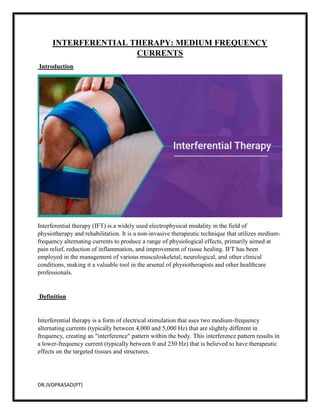
Interferential therapy (IFT) is a widely used electrophysical modality in the field of
physiotherapy and rehabilitation. It is a non-invasive therapeutic technique that utilizes medium-
frequency alternating currents to produce a range of physiological effects, primarily aimed at
pain relief, reduction of inflammation, and improvement of tissue healing. IFT has been
employed in the management of various musculoskeletal, neurological, and other clinical
conditions, making it a valuable tool in the arsenal of physiotherapists and other healthcare
professionals.
Definition
Interferential therapy is a form of electrical stimulation that uses two medium-frequency
alternating currents (typically between 4,000 and 5,000 Hz) that are slightly different in
frequency, creating an "interference" pattern within the body. This interference pattern results in
a lower-frequency current (typically between 0 and 250 Hz) that is believed to have therapeutic
effects on the targeted tissues and structures.
DR.JVDPRASAD(PT)
Principles of Interferential Therapy
The underlying principles of interferential therapy are based on the concept of "interference"
between two medium-frequency alternating currents. When these two currents, slightly different
in frequency, are applied to the body, they interact and create a lower-frequency current that is
believed to have specific physiological effects.
The key principles of interferential therapy are:
1. Interference Principle: The interaction between the two medium-frequency currents results in
the creation of a lower-frequency current, which is the therapeutic component of IFT.
2. Depth of Penetration: The medium-frequency currents used in IFT are able to penetrate deeper
into the body tissues compared to low-frequency currents, allowing for the treatment of deeper
structures.
DR.JVDPRASAD(PT)
3. Comfort and Tolerance: The medium-frequency currents used in IFT are generally more
comfortable for the patient and better tolerated compared to low-frequency currents, which can
be more painful.
4. Physiological Effects: The lower-frequency current produced by the interference of the two
medium-frequency currents is believed to have specific physiological effects, such as pain relief,
reduction of inflammation, and improvement of tissue healing.
Historical Development
The concept of interferential therapy has its roots in the early 20th century, with the development
of various forms of electrical stimulation in the field of physiotherapy. The specific technique of
interferential therapy was first introduced in the 1950s by Dr. Nemec, a Czechoslovakian
physiotherapist, who recognized the potential benefits of using medium-frequency currents to
create a lower-frequency therapeutic current.
Over the years, the technology and application of interferential therapy have evolved, with
advancements in equipment design, waveform characteristics, and clinical applications. Today,
IFT is widely used in physiotherapy clinics, rehabilitation centers, and various healthcare settings
around the world.
DR.JVDPRASAD(PT)
Apparatus and Parts
The interferential therapy apparatus typically consists of the following main components:
1. Control Unit: The control unit is the central component of the IFT device, responsible for
generating the two medium-frequency alternating currents and controlling the various parameters
of the therapy.
2. Electrodes: The electrodes are used to apply the medium-frequency currents to the patient's
body. Typically, four electrodes are used, with two pairs placed on the treatment area.
3. Cables: The cables connect the control unit to the electrodes, allowing the transfer of the
electrical currents to the patient.
4. Timer: The timer is used to control the duration of the interferential therapy session.
5. Intensity Control: The intensity control allows the therapist to adjust the strength of the
electrical currents applied to the patient.
DR.JVDPRASAD(PT)
6. Frequency Control: The frequency control allows the therapist to adjust the frequency
difference between the two medium-frequency currents, which determines the frequency of the
lower-frequency therapeutic current.
7. Waveform Selection: Some IFT devices may offer the ability to select different waveform
patterns, such as continuous, modulated, or pulsed, to suit the specific treatment needs.
8. Accessories: Depending on the manufacturer, the IFT apparatus may come with additional
accessories, such as electrode pads, conductive gels, or carrying cases.
Therapeutic Effects of Interferential Therapy
Interferential therapy is believed to produce a range of therapeutic effects, primarily aimed at
pain relief, reduction of inflammation, and improvement of tissue healing. The specific
therapeutic effects of IFT include:
1. Pain Relief: IFT is widely used for the management of various types of pain, including
musculoskeletal, neuropathic, and chronic pain conditions. The proposed mechanisms for pain
relief include the activation of the gate control theory, the release of endorphins, and the
reduction of muscle spasm.
2. Reduction of Inflammation: IFT is thought to have anti-inflammatory effects, which can be
beneficial in the management of conditions such as tendinitis, bursitis, and joint inflammation.
The proposed mechanisms include the improvement of blood circulation, the reduction of edema,
and the modulation of inflammatory mediators.
3. Tissue Healing: IFT is believed to enhance the healing process of various tissues, including
muscle, tendon, and bone. The proposed mechanisms include the stimulation of cellular
processes, the improvement of blood flow, and the modulation of the inflammatory response.
4. Muscle Stimulation: IFT can be used to stimulate muscle contractions, which can be beneficial
in the rehabilitation of patients with muscle weakness or disuse atrophy.
DR.JVDPRASAD(PT)
5. Edema Reduction: IFT may help reduce edema by improving lymphatic drainage and
increasing blood circulation in the affected area.
6. Nerve Stimulation: IFT can be used to stimulate peripheral nerves, which may be beneficial in
the management of conditions such as neuropathic pain and nerve injuries.
Physiological Effects of Interferential Therapy
The physiological effects of interferential therapy are believed to be mediated through the
interaction of the two medium-frequency currents and the resulting lower-frequency therapeutic
current. The proposed physiological effects of IFT include:
1. Increased Blood Flow: IFT is thought to increase local blood flow, which can enhance the
delivery of oxygen and nutrients to the targeted tissues and facilitate the removal of waste
products.
2. Reduction of Muscle Spasm: IFT may help reduce muscle spasm by inhibiting the activity of
motor neurons and promoting muscle relaxation.
3. Modulation of Pain Perception: IFT is believed to activate the gate control theory of pain,
whereby the low-frequency current stimulates large-diameter sensory nerve fibers, which can
inhibit the transmission of pain signals to the central nervous system.
4. Reduction of Edema: IFT may help reduce edema by improving lymphatic drainage and
increasing blood circulation in the affected area.
5. Stimulation of Tissue Repair: IFT is thought to stimulate various cellular processes involved
in tissue repair, such as the proliferation of fibroblasts and the synthesis of collagen.
6. Modulation of Inflammatory Response: IFT may have anti-inflammatory effects by
influencing the release and activity of various inflammatory mediators.
DR.JVDPRASAD(PT)
7. Nerve Stimulation: The lower-frequency current produced by IFT can stimulate peripheral
nerves, which may be beneficial in the management of neuropathic pain and nerve injuries.
Indications and Contraindications
Indications for Interferential Therapy
DR.JVDPRASAD(PT)
Interferential therapy is commonly used in the management of a wide range of conditions,
including:
1. Musculoskeletal disorders:
- Acute and chronic pain (e.g., low back pain, neck pain, joint pain)
- Muscle spasm and contractures
- Tendinitis and bursitis
- Osteoarthritis
- Fractures and post-operative rehabilitation
2. Neurological conditions:
- Neuropathic pain
- Nerve injuries
- Spasticity
- Phantom limb pain
3. Circulatory and edema-related conditions:
- Lymphedema
- Venous insufficiency
- Peripheral vascular disease
4. Wound healing and tissue repair:
- Chronic wounds
- Pressure ulcers
- Soft tissue injuries
5. Other conditions:
- Dysmenorrhea
- Headaches and migraines
DR.JVDPRASAD(PT)
- Pelvic pain
Contraindications
While interferential therapy is generally considered safe, there are certain contraindications and
precautions to be aware of:
Contraindications:
- Presence of a pacemaker or other implanted electronic devices
- Pregnancy (except for pelvic pain during pregnancy)
- Malignancy in the treatment area
- Acute inflammation or infection in the treatment area
- Impaired sensation or circulation in the treatment area
- Thrombosis or risk of thrombosis
. Precautions:
- Caution in patients with epilepsy or seizure disorders
- Caution in patients with impaired skin integrity or sensation
- Caution in patients with metal implants in the treatment area
- Caution in patients with cardiovascular or circulatory disorders
- Caution in patients with impaired cognitive function or communication abilities
It is important to carefully assess the patient's medical history and current condition before
applying interferential therapy, and to monitor the patient closely during the treatment session.
There are several methods and types of interferential therapy (IFT) applications:
Methods of Application
1. Bipolar Application: Two electrodes are placed on the skin, with the current flowing between
them. This is the most common method of IFT application.
DR.JVDPRASAD(PT)
2. Quadripolar Application: Four electrodes are used, with two pairs placed on the skin at an
angle of 90 degrees to each other. This method is believed to provide a more uniform current
distribution within the body.
DR.JVDPRASAD(PT)
3. Vector Application: The electrodes are moved in a circular pattern around the treatment area,
creating a rotating interference pattern. This method is used to treat larger areas or when the
exact location of the lesion is unknown.
Types of IFT
1. Conventional IFT: This is the most common type of IFT, where two medium-frequency
currents are applied to the skin using electrodes. The difference in frequency between the two
currents creates a low-frequency interference current within the body.
DR.JVDPRASAD(PT)
2. Premodulated IFT: In this type, the two medium-frequency currents are already modulated
before being applied to the skin. This allows for a more precise control of the interference
current frequency.
3. Multipath IFT: This type uses multiple pairs of electrodes to create multiple interference
patterns within the body. This can be useful for treating larger areas or multiple sites
simultaneously.
4. Interferential Muscle Stimulation: IFT is used to stimulate muscle contractions, which can be
beneficial in the rehabilitation of patients with muscle weakness or disuse atrophy.
5. Interferential Nerve Stimulation: IFT is used to stimulate peripheral nerves, which may be
beneficial in the management of conditions such as neuropathic pain and nerve injuries.
The choice of application method and type of IFT depends on the specific condition being
treated, the location of the lesion, and the desired therapeutic effects. It is important to follow the
manufacturer's instructions and guidelines for the specific IFT device being used, as well as to
consider the individual patient's needs and preferences when applying the technique.
Technique of Application
The application of interferential therapy typically involves the following steps:
1. Patient Positioning: The patient should be positioned comfortably, with the treatment area
exposed and accessible.
2. Electrode Placement: Four electrodes are typically used, with two pairs placed on the
treatment area. The electrodes should be placed in a cross-shaped pattern, with the two pairs
positioned at an angle of approximately 90 degrees to each other.
DR.JVDPRASAD(PT)
3. Frequency Selection: The therapist should select the appropriate frequency difference between
the two medium-frequency currents, typically between 0 and 250 Hz, depending on the desired
therapeutic effect.
4. Intensity Adjustment: The intensity of the electrical current should be gradually increased until
the patient feels a comfortable tingling sensation, without causing any discomfort or pain.
5. Treatment Duration: The duration of the interferential therapy session can vary, but is
typically between 15 to 30 minutes, depending on the condition being treated and the patient's
tolerance.
6. Waveform Selection: Some IFT devices offer the ability to select different waveform patterns,
such as continuous, modulated, or pulsed, which can be adjusted based on the specific treatment
goals.
7. Electrode Movement: During the treatment session, the therapist may gently move the
electrodes or change their position to target different areas or to maintain a comfortable sensation
for the patient.
8. Patient Monitoring: The patient should be monitored throughout the treatment session for any
adverse reactions or discomfort, and the intensity and duration of the therapy should be adjusted
accordingly.
It is important to follow the manufacturer's instructions and guidelines for the specific IFT
device being used, as well as to consider the individual patient's needs and preferences when
applying the technique.
Care of the Apparatus
Proper care and maintenance of the interferential therapy apparatus are essential to ensure its safe
and effective operation. The following guidelines should be followed:
DR.JVDPRASAD(PT)
1. Cleaning: After each use, the control unit, cables, and electrodes should be cleaned with a soft,
damp cloth and a mild, non-abrasive cleaning solution. Avoid immersing the control unit in
water or using excessive moisture.
2. Inspection: Regularly inspect the apparatus for any signs of damage, such as frayed cables,
cracked or broken electrodes, or malfunctioning controls. Replace any damaged components
immediately.
3. Storage: When not in use, the IFT apparatus should be stored in a clean, dry, and secure
location, away from direct sunlight, heat, and moisture.
4. Calibration: Periodic calibration of the IFT device may be necessary to ensure the accuracy of
the output parameters, such as frequency and intensity. Follow the manufacturer's
recommendations for the frequency of calibration.
5. Maintenance: Refer to the manufacturer's instructions for any specific maintenance
requirements, such as replacing batteries or performing software updates.
6. Electrical Safety: Ensure that the IFT apparatus is properly grounded and that the electrical
connections are secure and in good condition to prevent the risk of electrical shock.
7. Infection Control: Properly clean and disinfect the electrodes and any other reusable
components between patients to prevent the spread of infections.
Proper care and maintenance of the interferential therapy apparatus will help ensure its longevity,
reliability, and safe operation for both the patient and the healthcare provider.
DR.JVDPRASAD(PT)
DR.JVDPRASAD(PT)
DR.JVDPRASAD(PT)
Care of the Patient in Interferential Therapy
Ensuring the comfort and safety of the patient is of utmost importance when administering
interferential therapy. The following guidelines should be followed:
1. Patient Preparation:
- Explain the procedure to the patient and obtain informed consent.
- Ensure the patient is positioned comfortably, with the treatment area exposed and accessible.
- Inspect the skin for any signs of irritation, open wounds, or other contraindications.
- Apply a conductive gel or lotion to the skin to improve the electrical conductivity and
comfort.
2. Electrode Placement:
- Carefully place the electrodes on the patient's skin, ensuring good contact and even
distribution of the current.
- Avoid placing electrodes over bony prominences, areas of impaired sensation, or areas with
open wounds.
- Secure the electrodes in place to prevent them from moving during the treatment.
3. Intensity Adjustment:
- Gradually increase the intensity of the electrical current until the patient feels a comfortable
tingling sensation.
- Continuously monitor the patient's response and adjust the intensity as needed to maintain a
comfortable level.
- Avoid increasing the intensity to the point of causing discomfort or pain.
4. Patient Monitoring:
- Closely monitor the patient throughout the treatment session for any signs of discomfort,
adverse reactions, or changes in skin condition.
- Encourage the patient to communicate any concerns or sensations they experience during the
treatment.
DR.JVDPRASAD(PT)
- Be prepared to immediately stop the treatment if the patient experiences any adverse effects.
5. Post-Treatment Care:
- Gently remove the electrodes and clean the skin to remove any residual conductive gel or
lotion.
- Observe the treatment area for any signs of skin irritation or redness, and provide appropriate
care if necessary.
- Advise the patient to report any delayed or persistent adverse effects to the healthcare
provider.
6. Patient Education:
- Educate the patient on the purpose and expected effects of interferential therapy.
- Provide instructions on any home-based exercises or self-care activities that may complement
the treatment.
- Encourage the patient to actively participate in their own care and to communicate any
concerns or questions.
Textbook References
1. Kitchen, S. (2017). Electrotherapy: Evidence-Based Practice (12th ed.). Elsevier.
2. Cameron, M. H. (2018). Physical Agents in Rehabilitation: From Research to Practice (5th
ed.). Elsevier.
3. Kahn, J. (2014). Principles and Practice of Electrotherapy (5th ed.). Churchill Livingstone.
4. Prentice, W. E. (2017). Therapeutic Modalities in Rehabilitation (5th ed.). McGraw-Hill
Education.
5. Michlovitz, S. L., Bellew, J. W., & Nolan, T. P. (2016). Modalities for Therapeutic
Intervention (6th ed.). F.A. Davis Company.
Citations:
DR.JVDPRASAD(PT)
[1] https://www.ncbi.nlm.nih.gov/pmc/articles/PMC10204598/
[2] https://en.wikipedia.org/wiki/Therapeutic_effect
[3] https://www.britannica.com/science/therapeutics
[4] https://www.physio-pedia.com/Therapeutic_Modalities
[5] https://www.medscape.com/viewarticle/448250
THANKYOU

IFT -INTERFERENTIAL THERAPTY- MEDIUM FREQUENCY CURRENTS

  • 1.
    DR.JVDPRASAD(PT) INTERFERENTIAL THERAPY: MEDIUMFREQUENCY CURRENTS Introduction Interferential therapy (IFT) is a widely used electrophysical modality in the field of physiotherapy and rehabilitation. It is a non-invasive therapeutic technique that utilizes medium- frequency alternating currents to produce a range of physiological effects, primarily aimed at pain relief, reduction of inflammation, and improvement of tissue healing. IFT has been employed in the management of various musculoskeletal, neurological, and other clinical conditions, making it a valuable tool in the arsenal of physiotherapists and other healthcare professionals. Definition Interferential therapy is a form of electrical stimulation that uses two medium-frequency alternating currents (typically between 4,000 and 5,000 Hz) that are slightly different in frequency, creating an "interference" pattern within the body. This interference pattern results in a lower-frequency current (typically between 0 and 250 Hz) that is believed to have therapeutic effects on the targeted tissues and structures.
  • 2.
    DR.JVDPRASAD(PT) Principles of InterferentialTherapy The underlying principles of interferential therapy are based on the concept of "interference" between two medium-frequency alternating currents. When these two currents, slightly different in frequency, are applied to the body, they interact and create a lower-frequency current that is believed to have specific physiological effects. The key principles of interferential therapy are: 1. Interference Principle: The interaction between the two medium-frequency currents results in the creation of a lower-frequency current, which is the therapeutic component of IFT. 2. Depth of Penetration: The medium-frequency currents used in IFT are able to penetrate deeper into the body tissues compared to low-frequency currents, allowing for the treatment of deeper structures.
  • 3.
    DR.JVDPRASAD(PT) 3. Comfort andTolerance: The medium-frequency currents used in IFT are generally more comfortable for the patient and better tolerated compared to low-frequency currents, which can be more painful. 4. Physiological Effects: The lower-frequency current produced by the interference of the two medium-frequency currents is believed to have specific physiological effects, such as pain relief, reduction of inflammation, and improvement of tissue healing. Historical Development The concept of interferential therapy has its roots in the early 20th century, with the development of various forms of electrical stimulation in the field of physiotherapy. The specific technique of interferential therapy was first introduced in the 1950s by Dr. Nemec, a Czechoslovakian physiotherapist, who recognized the potential benefits of using medium-frequency currents to create a lower-frequency therapeutic current. Over the years, the technology and application of interferential therapy have evolved, with advancements in equipment design, waveform characteristics, and clinical applications. Today, IFT is widely used in physiotherapy clinics, rehabilitation centers, and various healthcare settings around the world.
  • 4.
    DR.JVDPRASAD(PT) Apparatus and Parts Theinterferential therapy apparatus typically consists of the following main components: 1. Control Unit: The control unit is the central component of the IFT device, responsible for generating the two medium-frequency alternating currents and controlling the various parameters of the therapy. 2. Electrodes: The electrodes are used to apply the medium-frequency currents to the patient's body. Typically, four electrodes are used, with two pairs placed on the treatment area. 3. Cables: The cables connect the control unit to the electrodes, allowing the transfer of the electrical currents to the patient. 4. Timer: The timer is used to control the duration of the interferential therapy session. 5. Intensity Control: The intensity control allows the therapist to adjust the strength of the electrical currents applied to the patient.
  • 5.
    DR.JVDPRASAD(PT) 6. Frequency Control:The frequency control allows the therapist to adjust the frequency difference between the two medium-frequency currents, which determines the frequency of the lower-frequency therapeutic current. 7. Waveform Selection: Some IFT devices may offer the ability to select different waveform patterns, such as continuous, modulated, or pulsed, to suit the specific treatment needs. 8. Accessories: Depending on the manufacturer, the IFT apparatus may come with additional accessories, such as electrode pads, conductive gels, or carrying cases. Therapeutic Effects of Interferential Therapy Interferential therapy is believed to produce a range of therapeutic effects, primarily aimed at pain relief, reduction of inflammation, and improvement of tissue healing. The specific therapeutic effects of IFT include: 1. Pain Relief: IFT is widely used for the management of various types of pain, including musculoskeletal, neuropathic, and chronic pain conditions. The proposed mechanisms for pain relief include the activation of the gate control theory, the release of endorphins, and the reduction of muscle spasm. 2. Reduction of Inflammation: IFT is thought to have anti-inflammatory effects, which can be beneficial in the management of conditions such as tendinitis, bursitis, and joint inflammation. The proposed mechanisms include the improvement of blood circulation, the reduction of edema, and the modulation of inflammatory mediators. 3. Tissue Healing: IFT is believed to enhance the healing process of various tissues, including muscle, tendon, and bone. The proposed mechanisms include the stimulation of cellular processes, the improvement of blood flow, and the modulation of the inflammatory response. 4. Muscle Stimulation: IFT can be used to stimulate muscle contractions, which can be beneficial in the rehabilitation of patients with muscle weakness or disuse atrophy.
  • 6.
    DR.JVDPRASAD(PT) 5. Edema Reduction:IFT may help reduce edema by improving lymphatic drainage and increasing blood circulation in the affected area. 6. Nerve Stimulation: IFT can be used to stimulate peripheral nerves, which may be beneficial in the management of conditions such as neuropathic pain and nerve injuries. Physiological Effects of Interferential Therapy The physiological effects of interferential therapy are believed to be mediated through the interaction of the two medium-frequency currents and the resulting lower-frequency therapeutic current. The proposed physiological effects of IFT include: 1. Increased Blood Flow: IFT is thought to increase local blood flow, which can enhance the delivery of oxygen and nutrients to the targeted tissues and facilitate the removal of waste products. 2. Reduction of Muscle Spasm: IFT may help reduce muscle spasm by inhibiting the activity of motor neurons and promoting muscle relaxation. 3. Modulation of Pain Perception: IFT is believed to activate the gate control theory of pain, whereby the low-frequency current stimulates large-diameter sensory nerve fibers, which can inhibit the transmission of pain signals to the central nervous system. 4. Reduction of Edema: IFT may help reduce edema by improving lymphatic drainage and increasing blood circulation in the affected area. 5. Stimulation of Tissue Repair: IFT is thought to stimulate various cellular processes involved in tissue repair, such as the proliferation of fibroblasts and the synthesis of collagen. 6. Modulation of Inflammatory Response: IFT may have anti-inflammatory effects by influencing the release and activity of various inflammatory mediators.
  • 7.
    DR.JVDPRASAD(PT) 7. Nerve Stimulation:The lower-frequency current produced by IFT can stimulate peripheral nerves, which may be beneficial in the management of neuropathic pain and nerve injuries. Indications and Contraindications Indications for Interferential Therapy
  • 8.
    DR.JVDPRASAD(PT) Interferential therapy iscommonly used in the management of a wide range of conditions, including: 1. Musculoskeletal disorders: - Acute and chronic pain (e.g., low back pain, neck pain, joint pain) - Muscle spasm and contractures - Tendinitis and bursitis - Osteoarthritis - Fractures and post-operative rehabilitation 2. Neurological conditions: - Neuropathic pain - Nerve injuries - Spasticity - Phantom limb pain 3. Circulatory and edema-related conditions: - Lymphedema - Venous insufficiency - Peripheral vascular disease 4. Wound healing and tissue repair: - Chronic wounds - Pressure ulcers - Soft tissue injuries 5. Other conditions: - Dysmenorrhea - Headaches and migraines
  • 9.
    DR.JVDPRASAD(PT) - Pelvic pain Contraindications Whileinterferential therapy is generally considered safe, there are certain contraindications and precautions to be aware of: Contraindications: - Presence of a pacemaker or other implanted electronic devices - Pregnancy (except for pelvic pain during pregnancy) - Malignancy in the treatment area - Acute inflammation or infection in the treatment area - Impaired sensation or circulation in the treatment area - Thrombosis or risk of thrombosis . Precautions: - Caution in patients with epilepsy or seizure disorders - Caution in patients with impaired skin integrity or sensation - Caution in patients with metal implants in the treatment area - Caution in patients with cardiovascular or circulatory disorders - Caution in patients with impaired cognitive function or communication abilities It is important to carefully assess the patient's medical history and current condition before applying interferential therapy, and to monitor the patient closely during the treatment session. There are several methods and types of interferential therapy (IFT) applications: Methods of Application 1. Bipolar Application: Two electrodes are placed on the skin, with the current flowing between them. This is the most common method of IFT application.
  • 10.
    DR.JVDPRASAD(PT) 2. Quadripolar Application:Four electrodes are used, with two pairs placed on the skin at an angle of 90 degrees to each other. This method is believed to provide a more uniform current distribution within the body.
  • 11.
    DR.JVDPRASAD(PT) 3. Vector Application:The electrodes are moved in a circular pattern around the treatment area, creating a rotating interference pattern. This method is used to treat larger areas or when the exact location of the lesion is unknown. Types of IFT 1. Conventional IFT: This is the most common type of IFT, where two medium-frequency currents are applied to the skin using electrodes. The difference in frequency between the two currents creates a low-frequency interference current within the body.
  • 12.
    DR.JVDPRASAD(PT) 2. Premodulated IFT:In this type, the two medium-frequency currents are already modulated before being applied to the skin. This allows for a more precise control of the interference current frequency. 3. Multipath IFT: This type uses multiple pairs of electrodes to create multiple interference patterns within the body. This can be useful for treating larger areas or multiple sites simultaneously. 4. Interferential Muscle Stimulation: IFT is used to stimulate muscle contractions, which can be beneficial in the rehabilitation of patients with muscle weakness or disuse atrophy. 5. Interferential Nerve Stimulation: IFT is used to stimulate peripheral nerves, which may be beneficial in the management of conditions such as neuropathic pain and nerve injuries. The choice of application method and type of IFT depends on the specific condition being treated, the location of the lesion, and the desired therapeutic effects. It is important to follow the manufacturer's instructions and guidelines for the specific IFT device being used, as well as to consider the individual patient's needs and preferences when applying the technique. Technique of Application The application of interferential therapy typically involves the following steps: 1. Patient Positioning: The patient should be positioned comfortably, with the treatment area exposed and accessible. 2. Electrode Placement: Four electrodes are typically used, with two pairs placed on the treatment area. The electrodes should be placed in a cross-shaped pattern, with the two pairs positioned at an angle of approximately 90 degrees to each other.
  • 13.
    DR.JVDPRASAD(PT) 3. Frequency Selection:The therapist should select the appropriate frequency difference between the two medium-frequency currents, typically between 0 and 250 Hz, depending on the desired therapeutic effect. 4. Intensity Adjustment: The intensity of the electrical current should be gradually increased until the patient feels a comfortable tingling sensation, without causing any discomfort or pain. 5. Treatment Duration: The duration of the interferential therapy session can vary, but is typically between 15 to 30 minutes, depending on the condition being treated and the patient's tolerance. 6. Waveform Selection: Some IFT devices offer the ability to select different waveform patterns, such as continuous, modulated, or pulsed, which can be adjusted based on the specific treatment goals. 7. Electrode Movement: During the treatment session, the therapist may gently move the electrodes or change their position to target different areas or to maintain a comfortable sensation for the patient. 8. Patient Monitoring: The patient should be monitored throughout the treatment session for any adverse reactions or discomfort, and the intensity and duration of the therapy should be adjusted accordingly. It is important to follow the manufacturer's instructions and guidelines for the specific IFT device being used, as well as to consider the individual patient's needs and preferences when applying the technique. Care of the Apparatus Proper care and maintenance of the interferential therapy apparatus are essential to ensure its safe and effective operation. The following guidelines should be followed:
  • 14.
    DR.JVDPRASAD(PT) 1. Cleaning: Aftereach use, the control unit, cables, and electrodes should be cleaned with a soft, damp cloth and a mild, non-abrasive cleaning solution. Avoid immersing the control unit in water or using excessive moisture. 2. Inspection: Regularly inspect the apparatus for any signs of damage, such as frayed cables, cracked or broken electrodes, or malfunctioning controls. Replace any damaged components immediately. 3. Storage: When not in use, the IFT apparatus should be stored in a clean, dry, and secure location, away from direct sunlight, heat, and moisture. 4. Calibration: Periodic calibration of the IFT device may be necessary to ensure the accuracy of the output parameters, such as frequency and intensity. Follow the manufacturer's recommendations for the frequency of calibration. 5. Maintenance: Refer to the manufacturer's instructions for any specific maintenance requirements, such as replacing batteries or performing software updates. 6. Electrical Safety: Ensure that the IFT apparatus is properly grounded and that the electrical connections are secure and in good condition to prevent the risk of electrical shock. 7. Infection Control: Properly clean and disinfect the electrodes and any other reusable components between patients to prevent the spread of infections. Proper care and maintenance of the interferential therapy apparatus will help ensure its longevity, reliability, and safe operation for both the patient and the healthcare provider.
  • 15.
  • 16.
  • 17.
    DR.JVDPRASAD(PT) Care of thePatient in Interferential Therapy Ensuring the comfort and safety of the patient is of utmost importance when administering interferential therapy. The following guidelines should be followed: 1. Patient Preparation: - Explain the procedure to the patient and obtain informed consent. - Ensure the patient is positioned comfortably, with the treatment area exposed and accessible. - Inspect the skin for any signs of irritation, open wounds, or other contraindications. - Apply a conductive gel or lotion to the skin to improve the electrical conductivity and comfort. 2. Electrode Placement: - Carefully place the electrodes on the patient's skin, ensuring good contact and even distribution of the current. - Avoid placing electrodes over bony prominences, areas of impaired sensation, or areas with open wounds. - Secure the electrodes in place to prevent them from moving during the treatment. 3. Intensity Adjustment: - Gradually increase the intensity of the electrical current until the patient feels a comfortable tingling sensation. - Continuously monitor the patient's response and adjust the intensity as needed to maintain a comfortable level. - Avoid increasing the intensity to the point of causing discomfort or pain. 4. Patient Monitoring: - Closely monitor the patient throughout the treatment session for any signs of discomfort, adverse reactions, or changes in skin condition. - Encourage the patient to communicate any concerns or sensations they experience during the treatment.
  • 18.
    DR.JVDPRASAD(PT) - Be preparedto immediately stop the treatment if the patient experiences any adverse effects. 5. Post-Treatment Care: - Gently remove the electrodes and clean the skin to remove any residual conductive gel or lotion. - Observe the treatment area for any signs of skin irritation or redness, and provide appropriate care if necessary. - Advise the patient to report any delayed or persistent adverse effects to the healthcare provider. 6. Patient Education: - Educate the patient on the purpose and expected effects of interferential therapy. - Provide instructions on any home-based exercises or self-care activities that may complement the treatment. - Encourage the patient to actively participate in their own care and to communicate any concerns or questions. Textbook References 1. Kitchen, S. (2017). Electrotherapy: Evidence-Based Practice (12th ed.). Elsevier. 2. Cameron, M. H. (2018). Physical Agents in Rehabilitation: From Research to Practice (5th ed.). Elsevier. 3. Kahn, J. (2014). Principles and Practice of Electrotherapy (5th ed.). Churchill Livingstone. 4. Prentice, W. E. (2017). Therapeutic Modalities in Rehabilitation (5th ed.). McGraw-Hill Education. 5. Michlovitz, S. L., Bellew, J. W., & Nolan, T. P. (2016). Modalities for Therapeutic Intervention (6th ed.). F.A. Davis Company. Citations:
  • 19.
    DR.JVDPRASAD(PT) [1] https://www.ncbi.nlm.nih.gov/pmc/articles/PMC10204598/ [2] https://en.wikipedia.org/wiki/Therapeutic_effect [3]https://www.britannica.com/science/therapeutics [4] https://www.physio-pedia.com/Therapeutic_Modalities [5] https://www.medscape.com/viewarticle/448250 THANKYOU