Here is a comprehensive overview on **Feeding, Weaning, and Balanced Diet** as per your request for a "Nutrition.docx" document, suitable for exam writing:
---
## **Feeding**
**Infant and young child feeding** is crucial for survival, healthy growth, and development. The World Health Organization (WHO) recommends:
- **Exclusive breastfeeding** for the first 6 months of life. Breast milk provides all the necessary nutrients, antibodies, and enzymes needed for optimal growth and immunity.
- **Frequent, on-demand breastfeeding** should continue until 2 years of age or beyond.
- **Responsive feeding**: Feed infants directly and assist older children. Feed slowly and patiently, encourage eating but do not force, and maintain eye contact to foster a positive feeding environment.
- **Good hygiene and food handling**: Essential to prevent infections and ensure food safety.
- **Feeding schedule**: For infants 6–8 months old, provide 2–3 meals per day; for 9–23 months, offer 3–4 meals per day with 1–2 snacks as needed.
- **Introduction of complementary foods**: Start at 6 months with small amounts, gradually increasing food consistency, variety, and quantity as the child grows[1].
**Feeding patterns** vary by age:
- **Newborns**: Feed every 2–3 hours (breast milk or formula), 1–2 ounces per feeding.
- **By 2 weeks**: 2–3 ounces per feeding, 8–12 feedings per day.
- **By 1 month**: 3–4 ounces per feeding, 8–10 feedings per day.
- **By 6–12 months**: 7–8 ounces per feeding, 4–6 feedings per day[2].
---
## **Weaning**
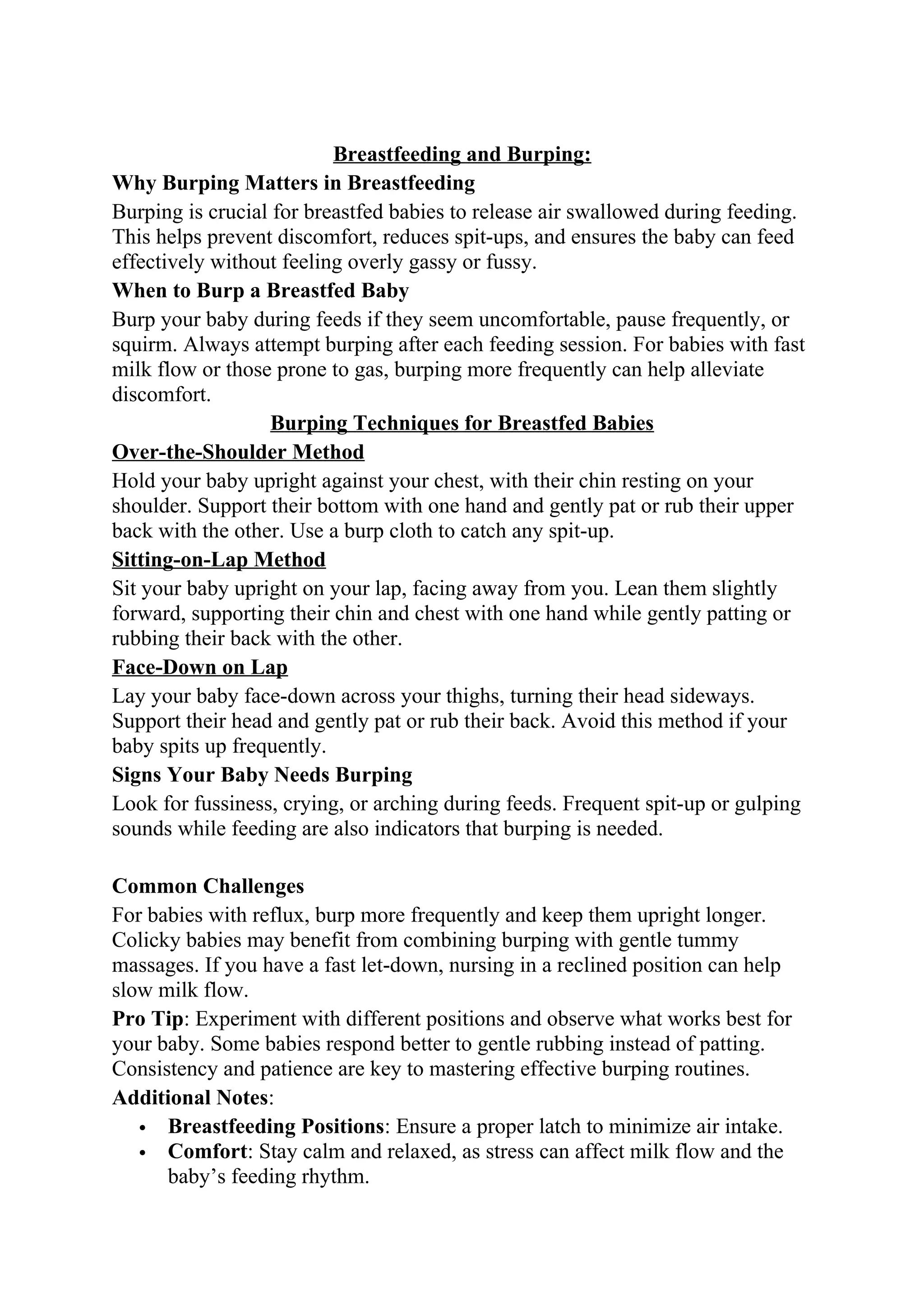
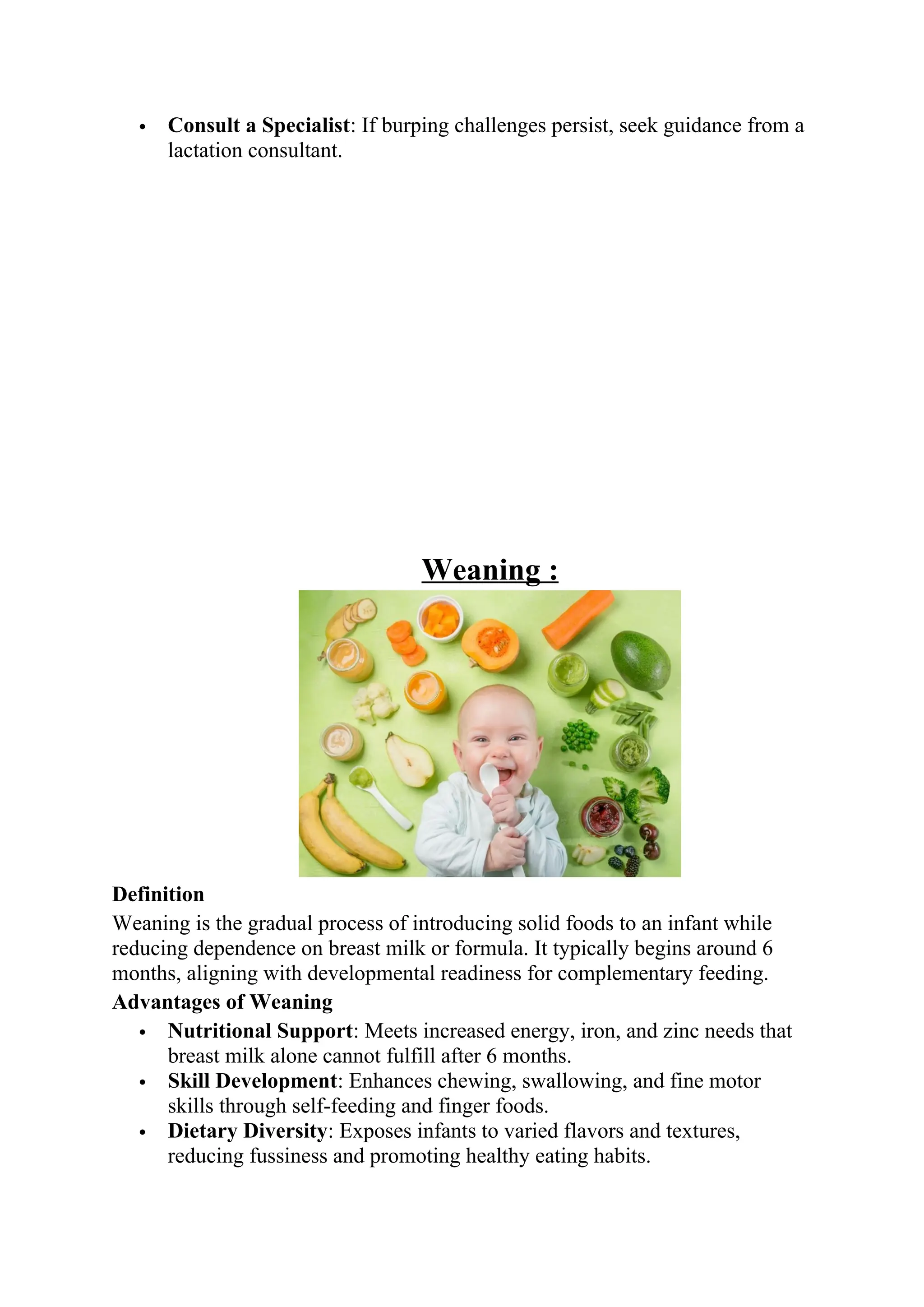
**Weaning** is the gradual process of transitioning an infant from breast milk or formula to other foods and fluids. Key points include:
- **Timing**: The American Academy of Pediatrics (AAP) recommends exclusive breastfeeding for the first 6 months, followed by the introduction of solid foods while continuing breast milk until at least 1 year of age[3].
- **Gradual transition**: Start with iron-fortified single-grain cereals, then pureed fruits, vegetables, and meats. Gradually introduce mashed, ground, or chopped foods as the baby grows[4].
- **Importance**:
- **Developmental skills**: Weaning helps babies learn to chew, swallow, and coordinate tongue, lip, and jaw movements, which are essential for speech and self-feeding.
- **Nutritional adequacy**: As babies grow, breast milk alone may not meet all nutritional needs, especially for iron and certain vitamins.
- **Social and cognitive development**: Eating with others promotes social skills and food preferences[4].
- **Self-dependence**: Encourages hand-mouth coordination and independence in eating.
- **Cultural and individual considerations**: Weaning practices may vary based on cultural norms, maternal choice, and infant readiness.
**Weaning stages**:
- **4–6 months**: Start with single-grain cereals mixed with breast milk.
- **4–8 months**: Introduce pureed vegetables, fruits, and meats.
- **6–8 months**: Begin soft finger foods.
- **9–12 months**: Offer mashed, ground,