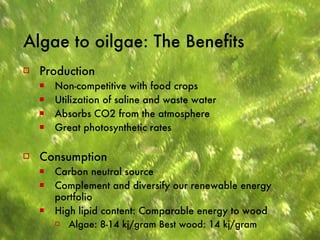
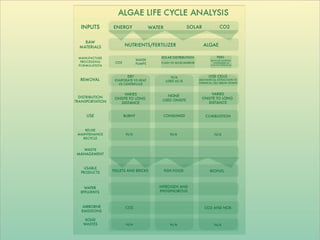
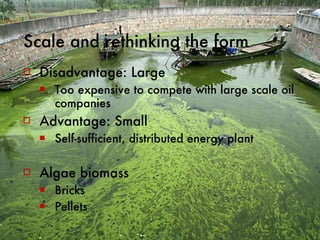
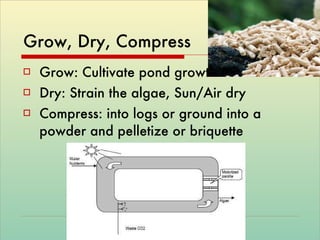
The document discusses using algae as a sustainable source of biomass and biofuels. It notes that algae can grow in saline and wastewater, absorbs CO2, and has high lipid content comparable to wood. While large-scale algae farms may be too expensive, small, distributed farms could be self-sufficient. Algae biomass can be used as fuel bricks or pellets. It also discusses using algae to replace wood fires which are inefficient and cause health issues. A project in Darfur aims to use algae stoves to provide sustainable cooking solutions. The document concludes by outlining next steps to field test backyard algae growing and drying.



![5G Explained! A High Level Overview [Introduction]](https://cdn.slidesharecdn.com/ss_thumbnails/5gexplainedahighleveloverview-260119165306-cc137a3e-thumbnail.jpg?width=640&height=640&fit=bounds)


