Climate change-related relocation in LDC 
cities: A review of existing guidelines for 
informal settlements 
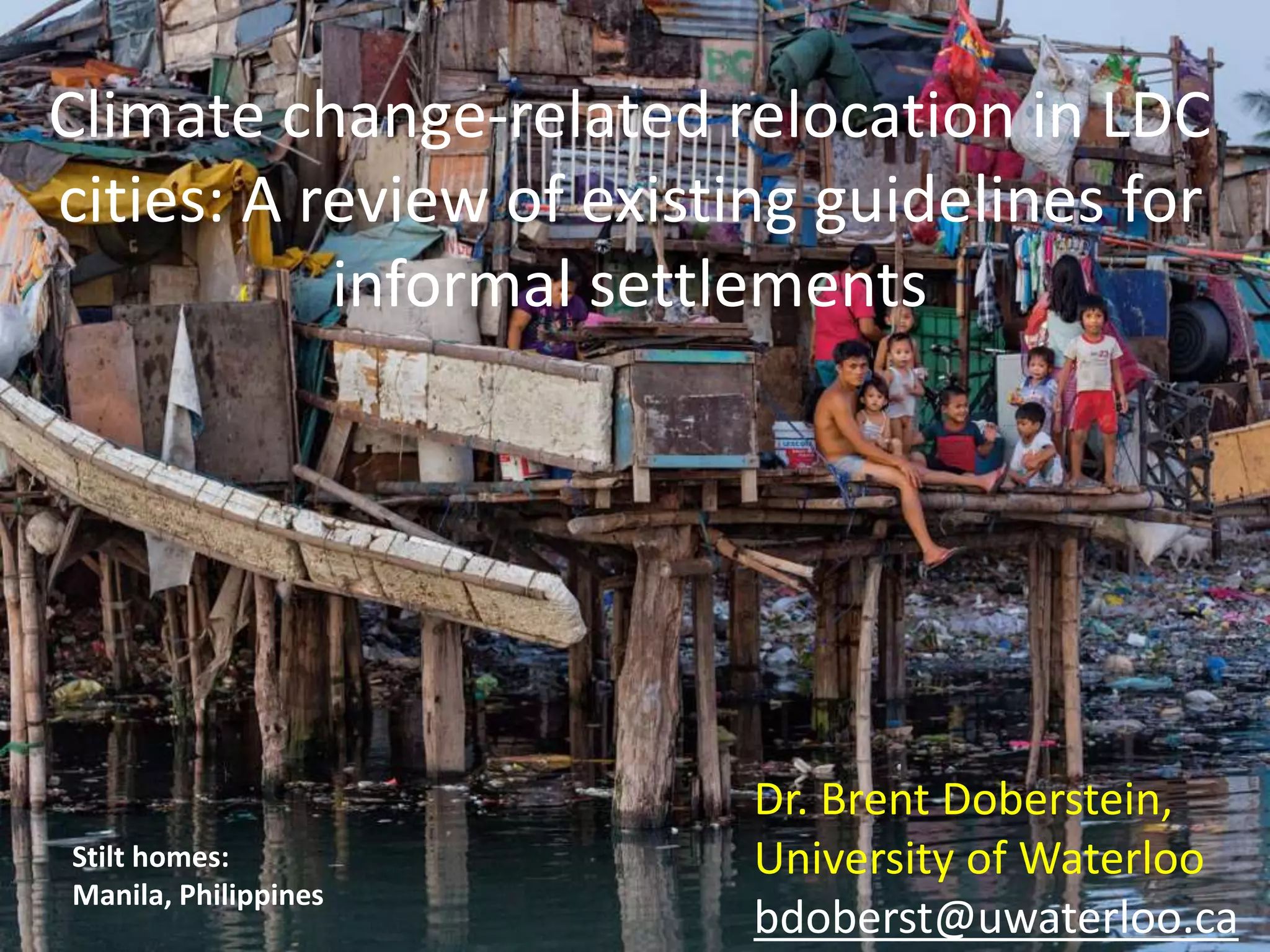
Stilt homes: 
Manila, Philippines 
1 
Dr. Brent Doberstein, 
University of Waterloo 
bdoberst@uwaterloo.ca
Next 13 minutes… 
• Origin of research/rationale 
• Methods 
• Results 
• Brief conclusions 
2
Rationale/‘Gap’ 
• Broad understanding: 
• Climate change-related displacement has/will 
continue to affect millions of people 
• Human displacement: a sorely neglected aspect of the 
current climate change debate (emphasis added, Displacement 
Solutions 2011) 
• Planned or assisted relocation increasingly seen as a 
logical and legitimate climate change (CC) adaptation 
strategy (IOM 2010, Black et. al. 2011). 
• Relocation planning as an adaptation strategy is virtually 
nonexistent in (CCA) policy design. (ADB 2012) 3
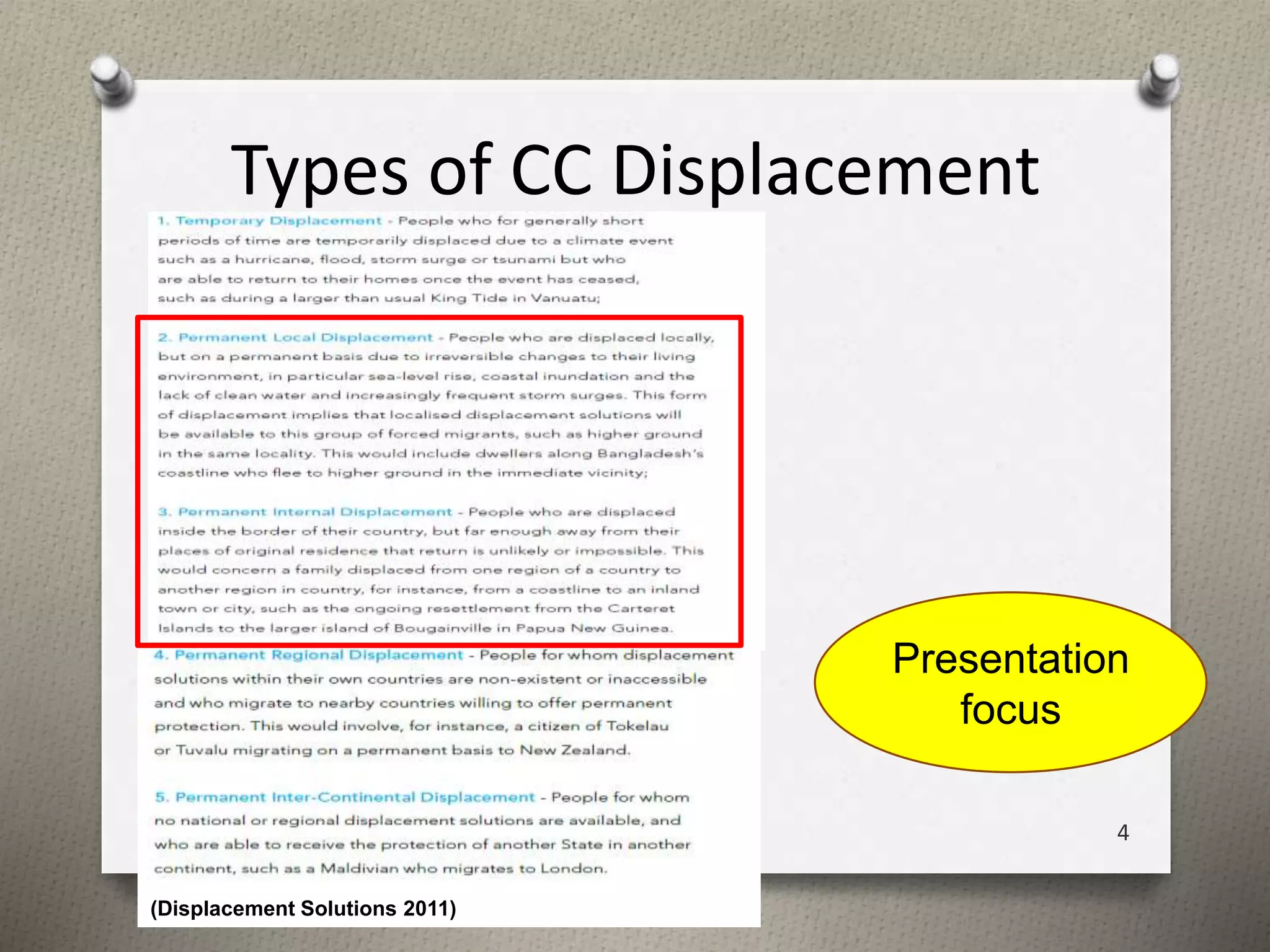
Types of CC Displacement 
Presentation 
focus 
(Displacement Solutions 2011) 
4
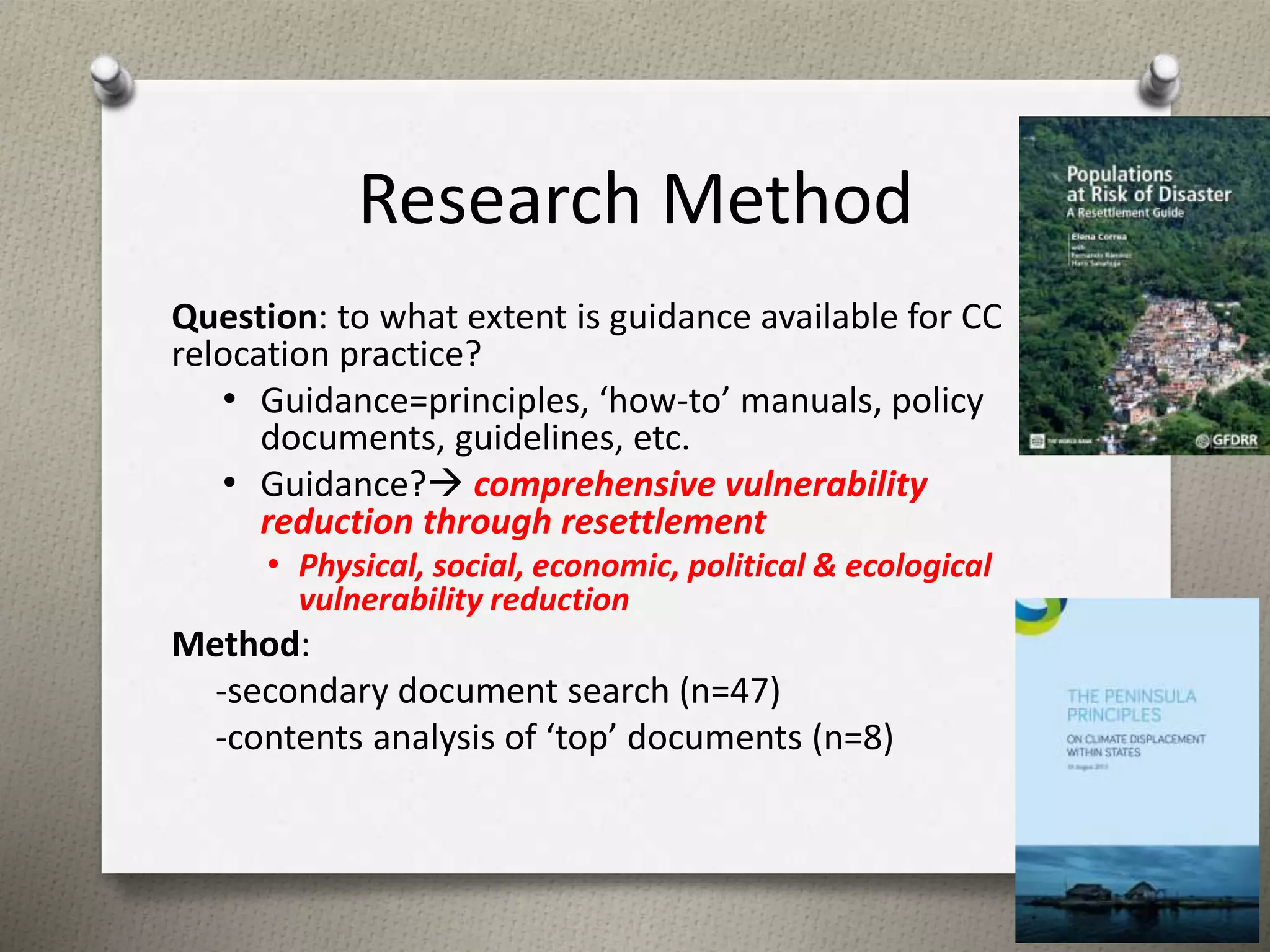
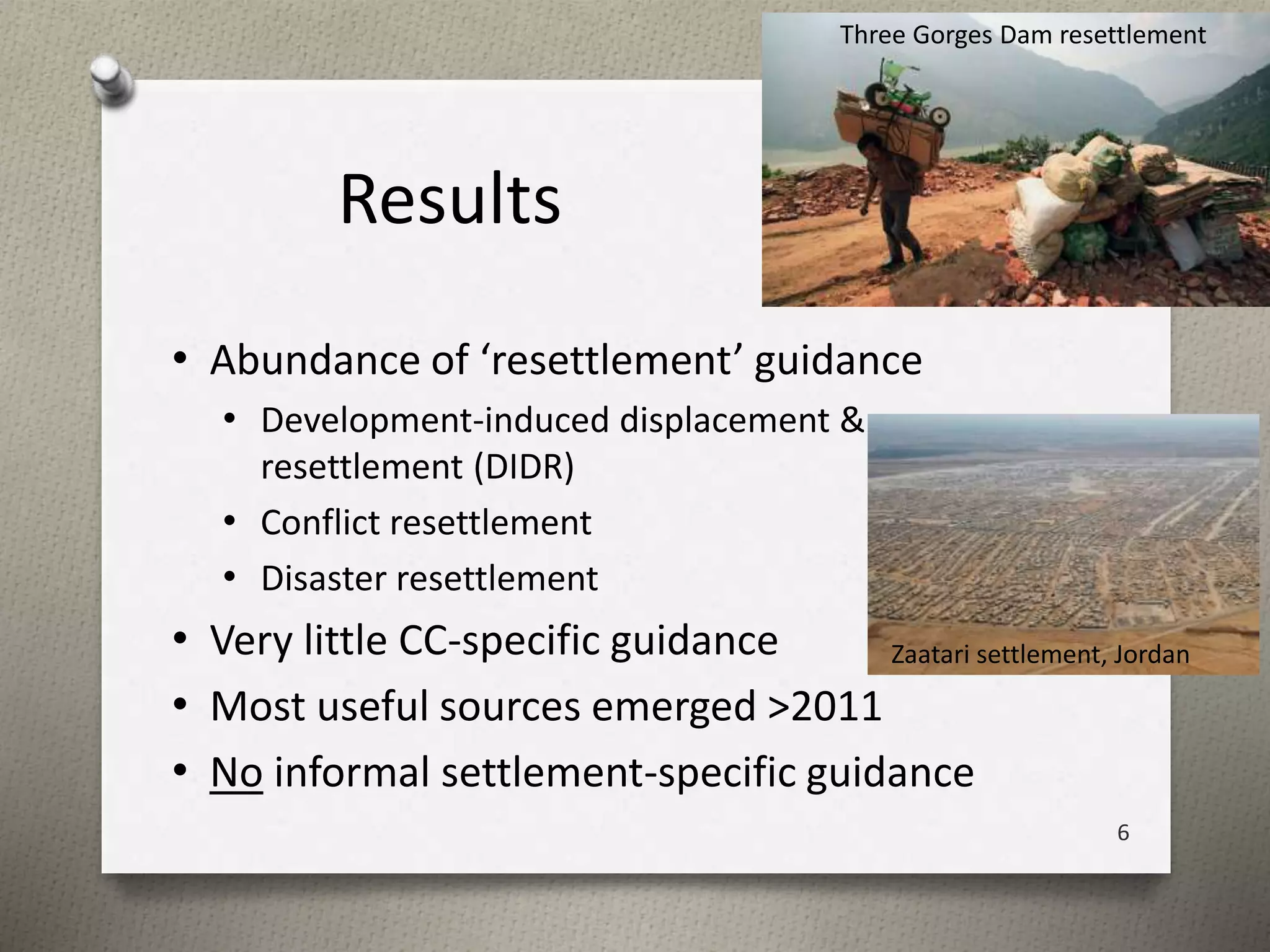
Research Method 
Question: to what extent is guidance available for CC 
relocation practice? 
• Guidance=principles, ‘how-to’ manuals, policy 
documents, guidelines, etc. 
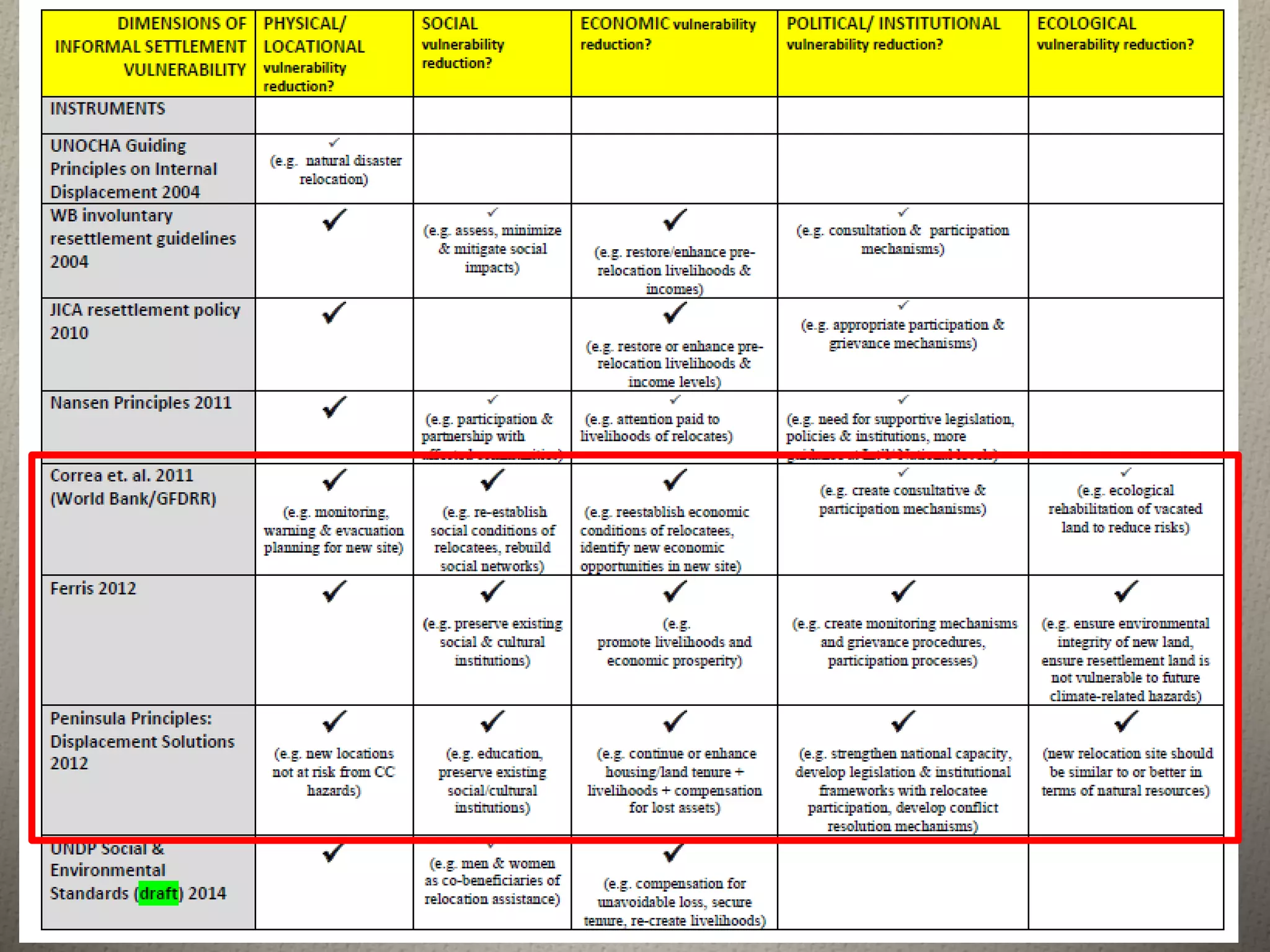
• Guidance? comprehensive vulnerability 
reduction through resettlement 
• Physical, social, economic, political & ecological 
vulnerability reduction 
Method: 
-secondary document search (n=47) 
-contents analysis of ‘top’ documents (n=8) 
5
Results 
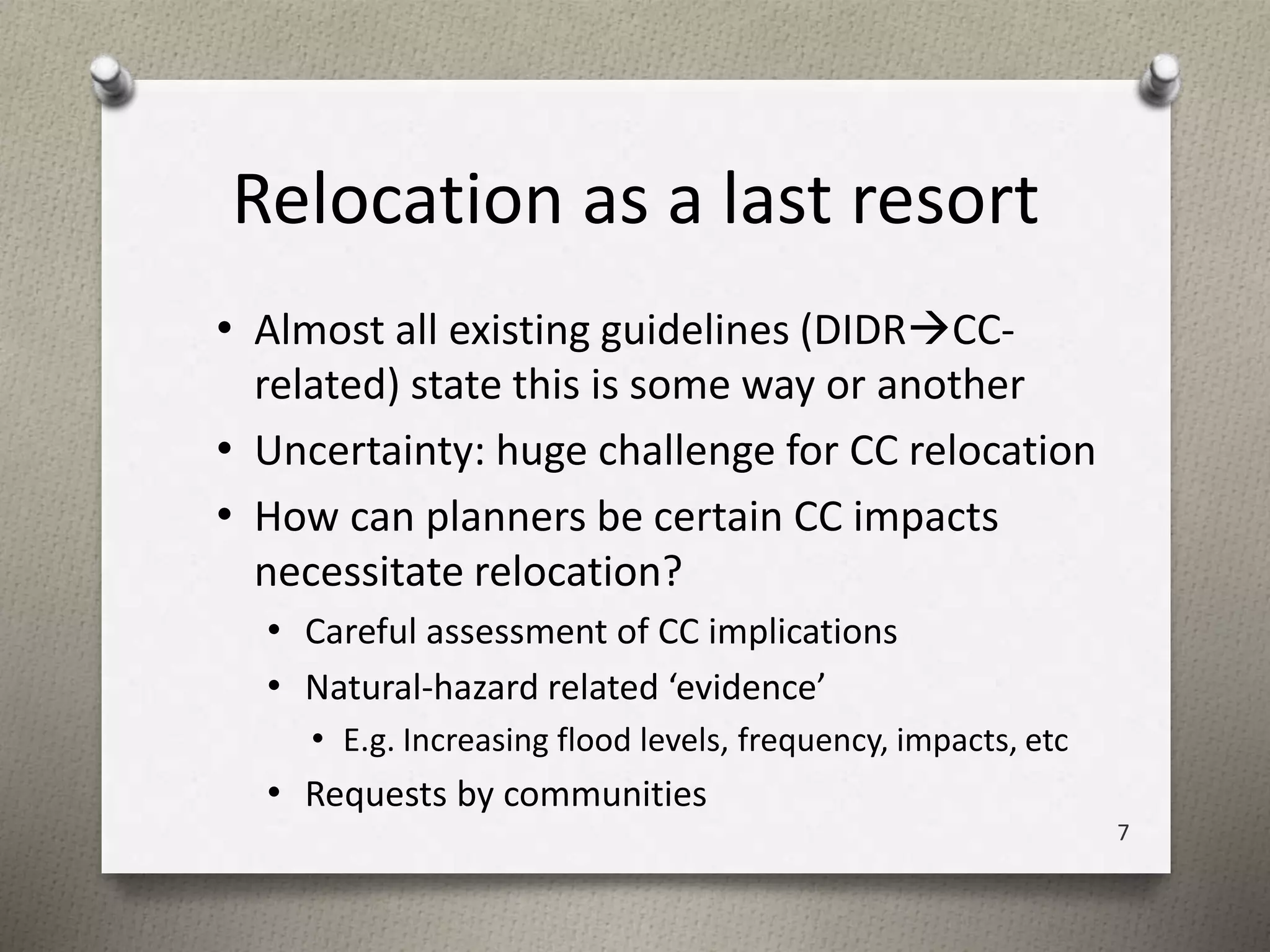
Three Gorges Dam resettlement 
• Abundance of ‘resettlement’ guidance 
• Development-induced displacement & 
resettlement (DIDR) 
• Conflict resettlement 
• Disaster resettlement 
• Very little CC-specific guidance 
• Most useful sources emerged >2011 
• No informal settlement-specific guidance 
Zaatari settlement, Jordan 
6
Relocation as a last resort 
• Almost all existing guidelines (DIDRCC-related) 
state this is some way or another 
• Uncertainty: huge challenge for CC relocation 
• How can planners be certain CC impacts 
necessitate relocation? 
• Careful assessment of CC implications 
• Natural-hazard related ‘evidence’ 
• E.g. Increasing flood levels, frequency, impacts, etc 
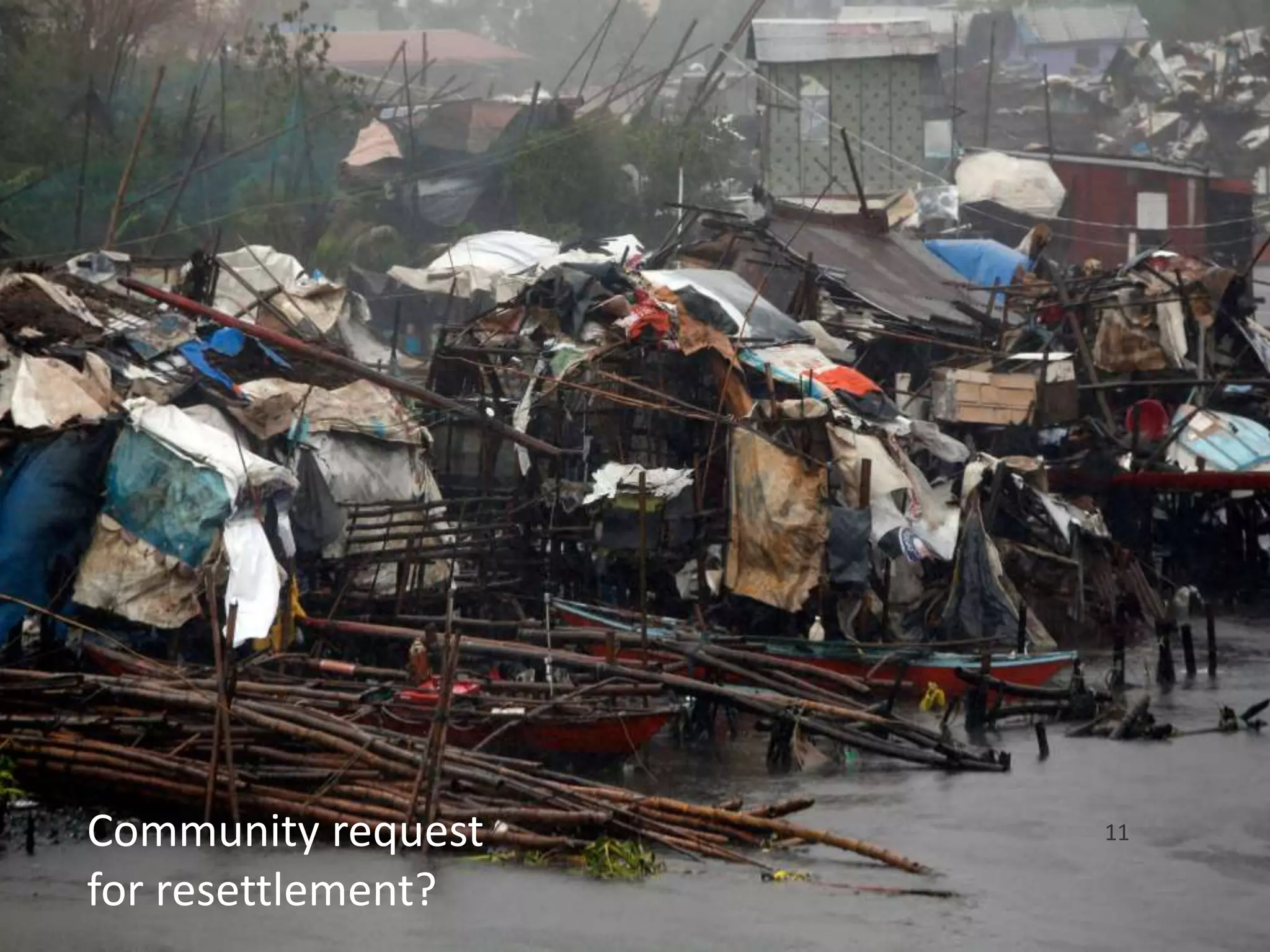
• Requests by communities 
7
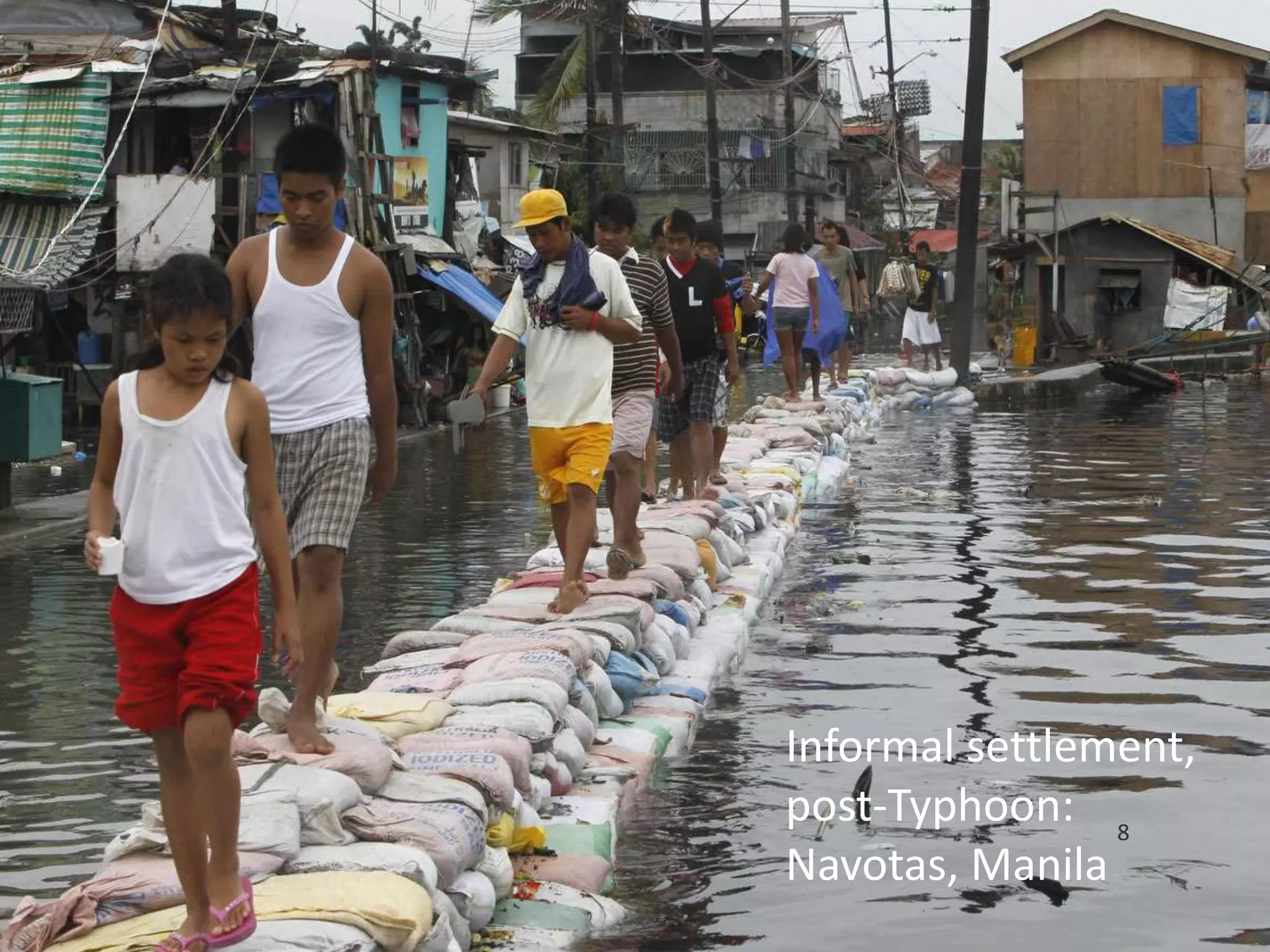
Informal settlement, 
post-Typhoon: 
8 
Navotas, Manila
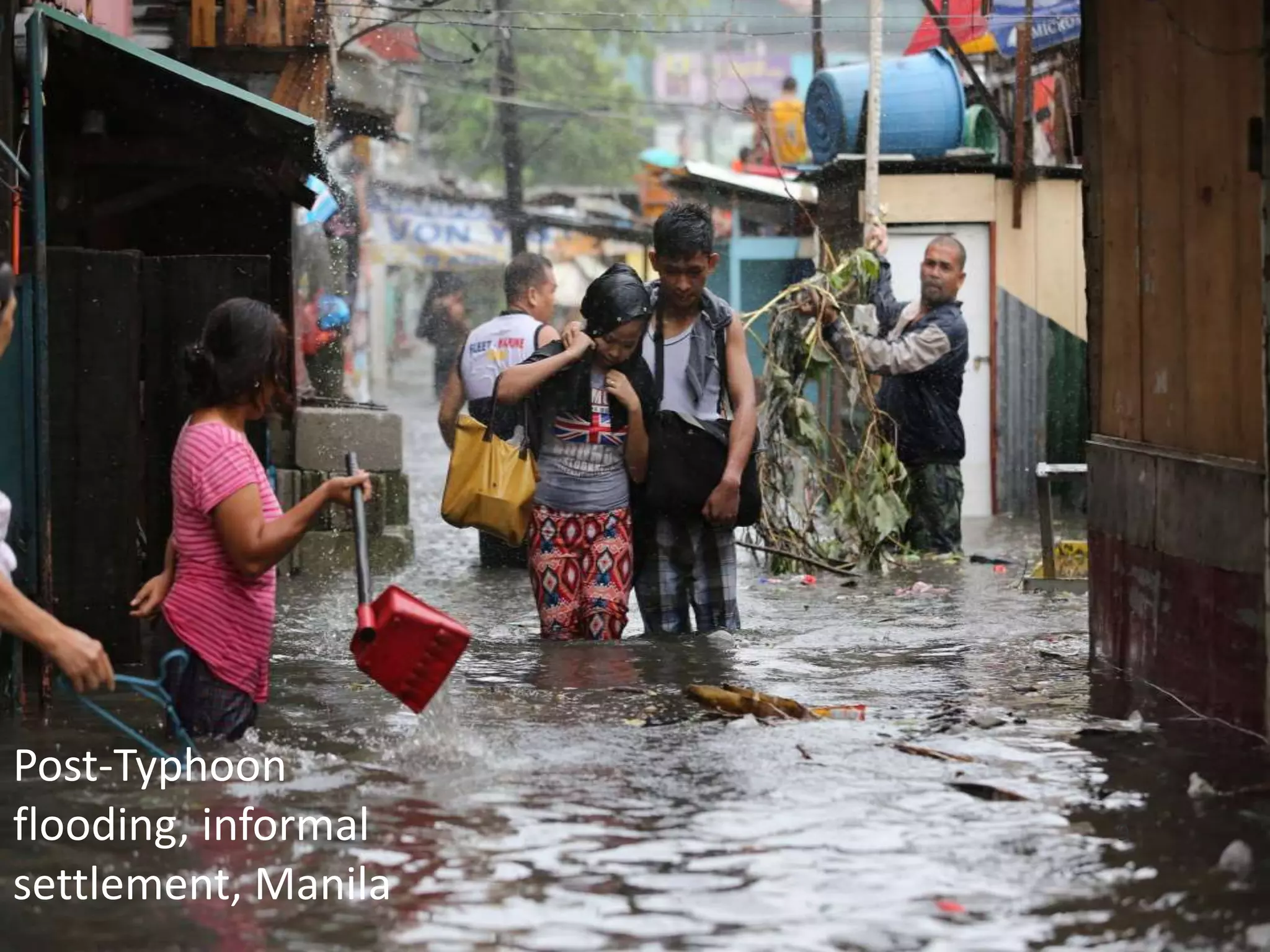
Post-Typhoon 
flooding, informal 
settlement, Manila 
9
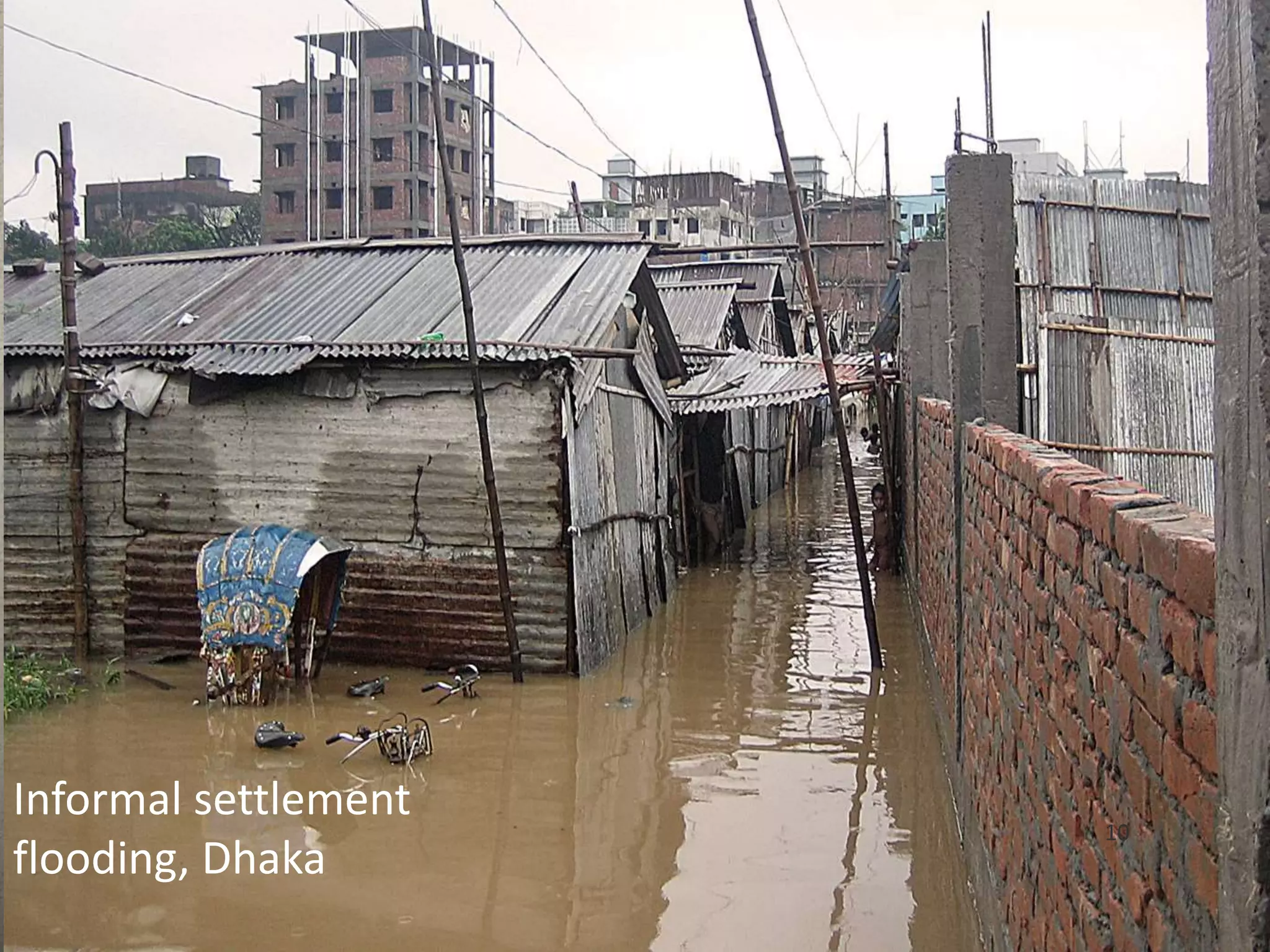
Informal settlement 
flooding, Dhaka 
10
Community request 11 
for resettlement?
12
13
14
15
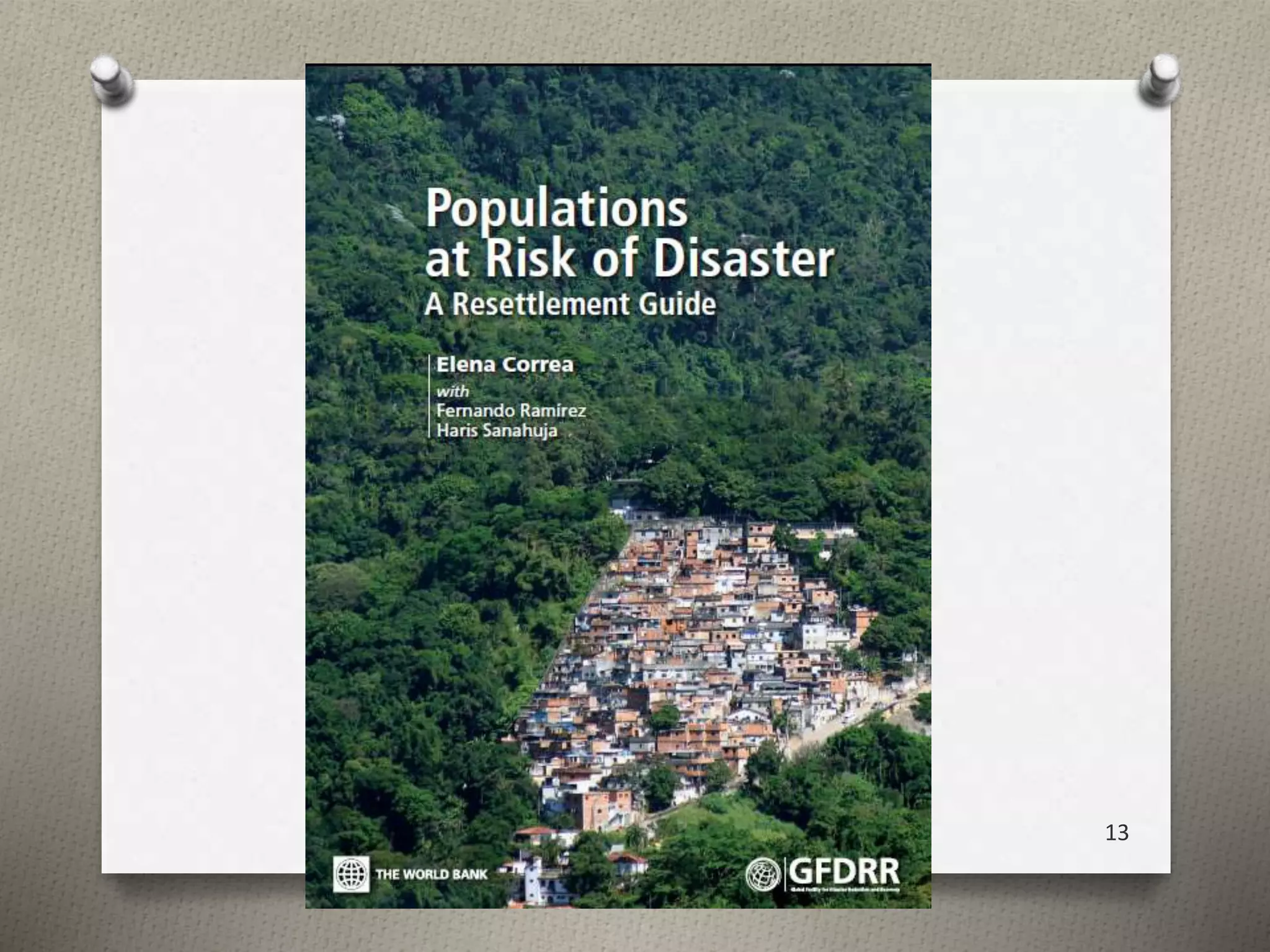
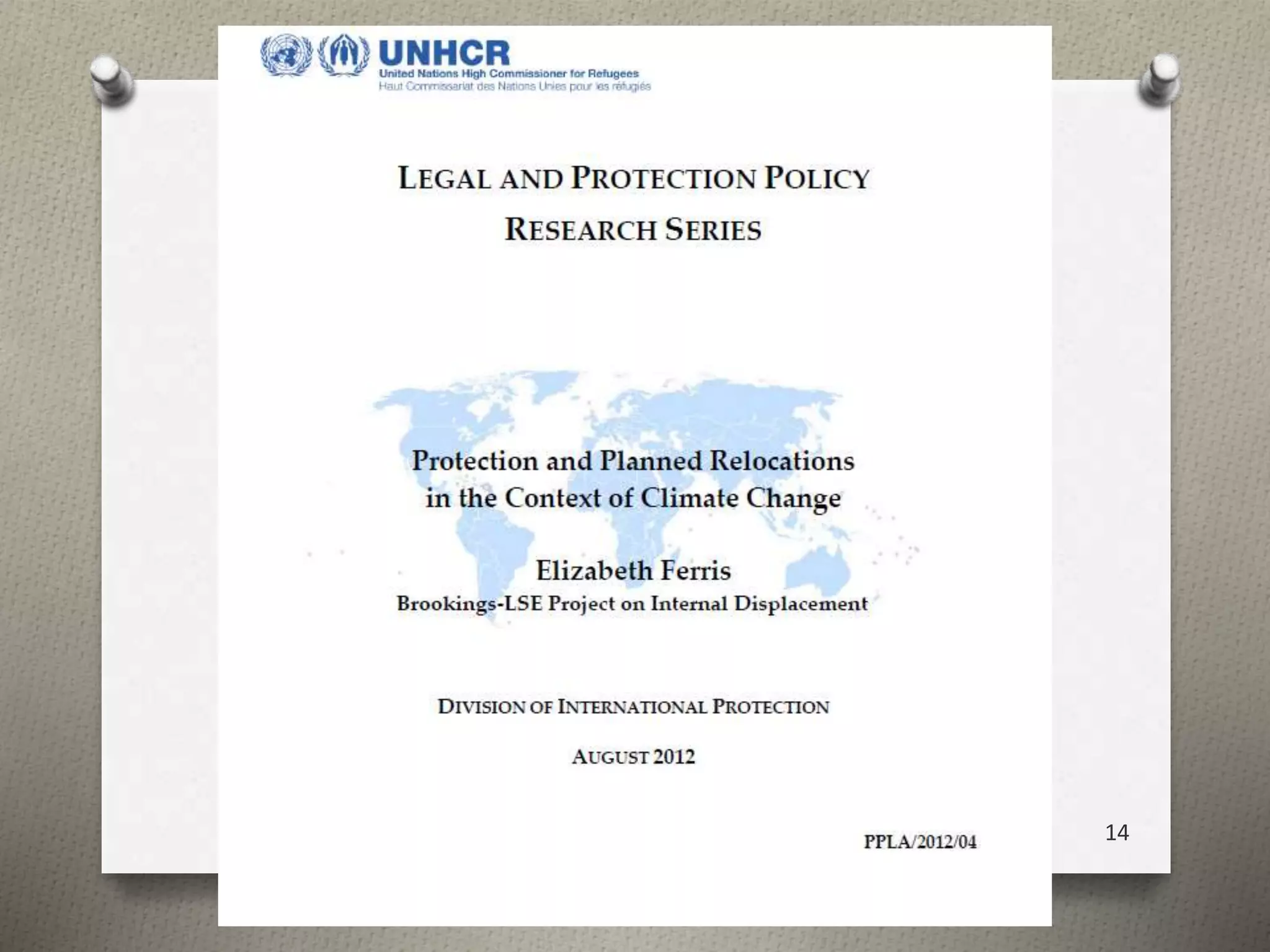
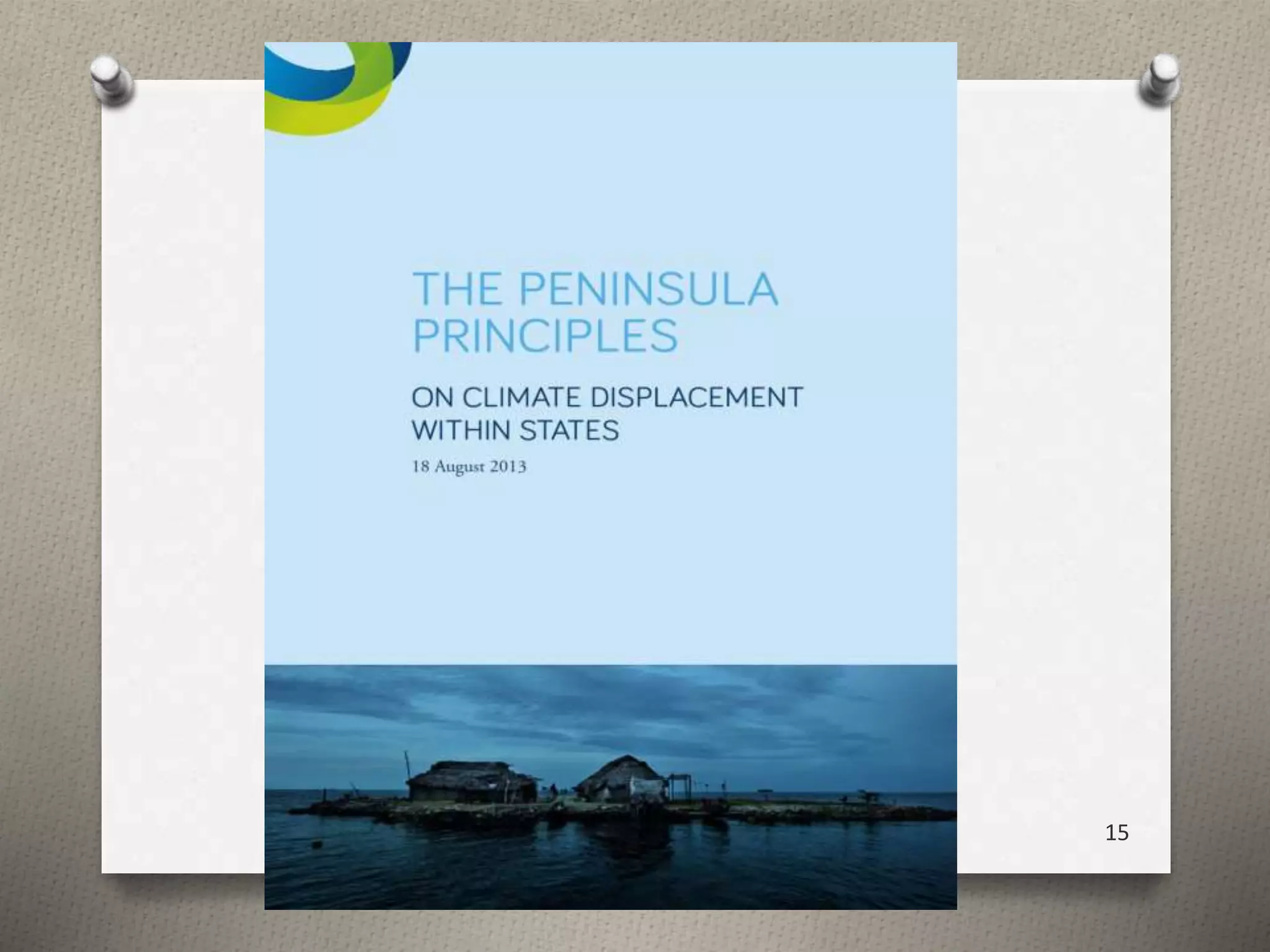
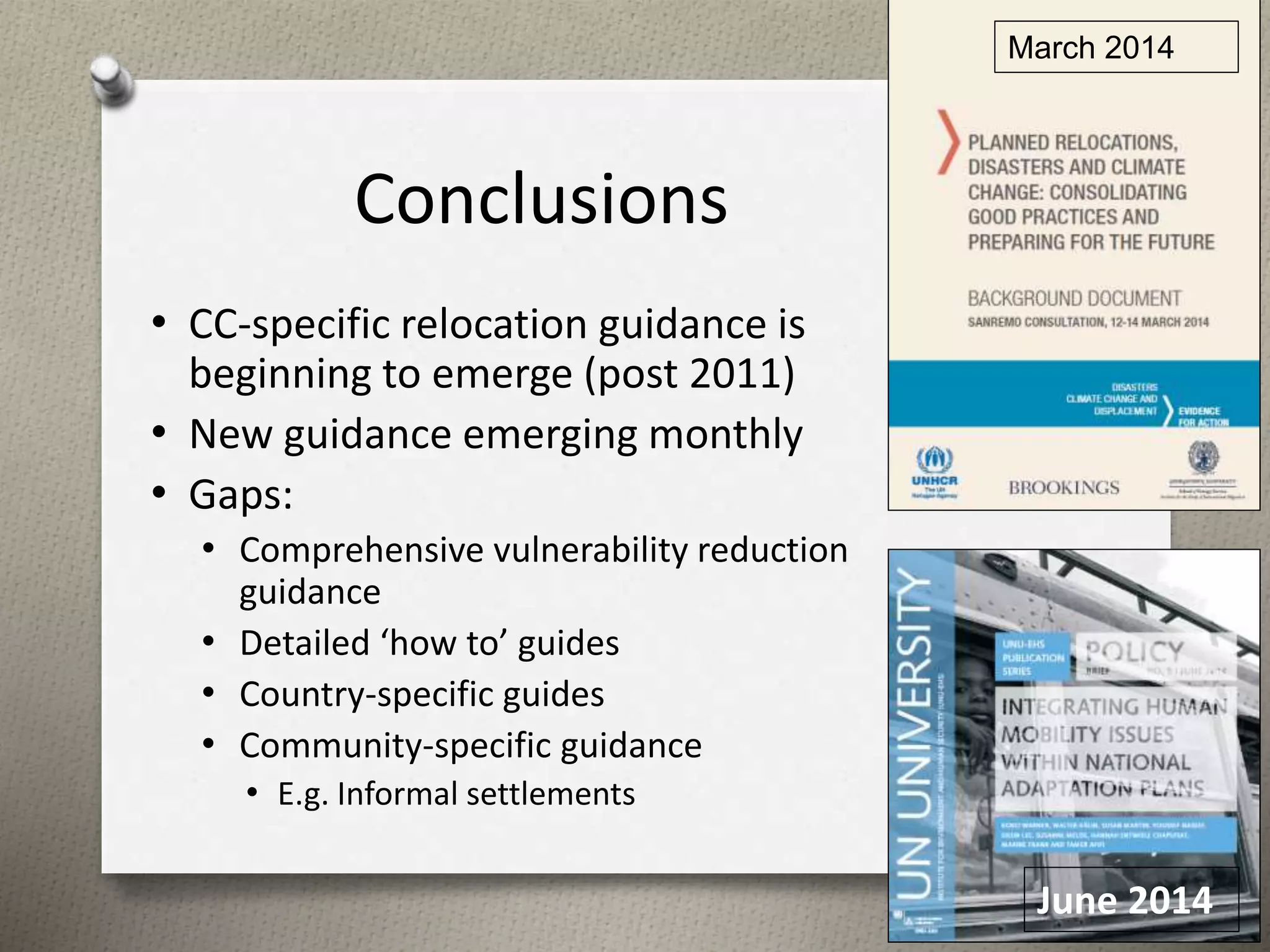
Conclusions 
• CC-specific relocation guidance is 
beginning to emerge (post 2011) 
• New guidance emerging monthly 
• Gaps: 
• Comprehensive vulnerability reduction 
guidance 
• Detailed ‘how to’ guides 
• Country-specific guides 
• Community-specific guidance 
• E.g. Informal settlements 
March 2014 
16 
June 2014
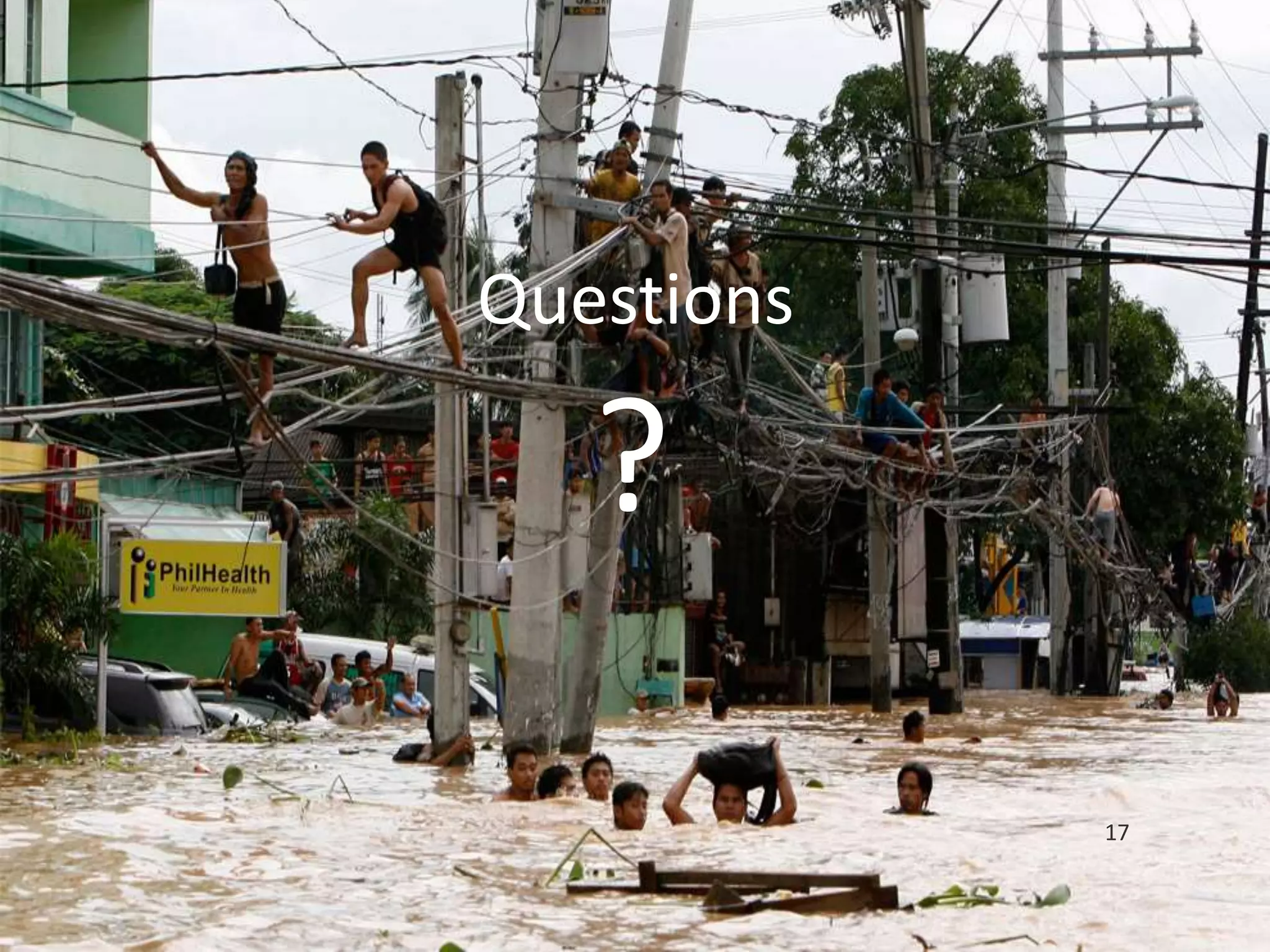
Questions 
? 
17

IDRC Davos presentation Doberstein FINAL Aug 24

  • 1.
    Climate change-related relocationin LDC cities: A review of existing guidelines for informal settlements Stilt homes: Manila, Philippines 1 Dr. Brent Doberstein, University of Waterloo bdoberst@uwaterloo.ca
  • 2.
    Next 13 minutes… • Origin of research/rationale • Methods • Results • Brief conclusions 2
  • 3.
    Rationale/‘Gap’ • Broadunderstanding: • Climate change-related displacement has/will continue to affect millions of people • Human displacement: a sorely neglected aspect of the current climate change debate (emphasis added, Displacement Solutions 2011) • Planned or assisted relocation increasingly seen as a logical and legitimate climate change (CC) adaptation strategy (IOM 2010, Black et. al. 2011). • Relocation planning as an adaptation strategy is virtually nonexistent in (CCA) policy design. (ADB 2012) 3
  • 4.
    Types of CCDisplacement Presentation focus (Displacement Solutions 2011) 4
  • 5.
    Research Method Question:to what extent is guidance available for CC relocation practice? • Guidance=principles, ‘how-to’ manuals, policy documents, guidelines, etc. • Guidance? comprehensive vulnerability reduction through resettlement • Physical, social, economic, political & ecological vulnerability reduction Method: -secondary document search (n=47) -contents analysis of ‘top’ documents (n=8) 5
  • 6.
    Results Three GorgesDam resettlement • Abundance of ‘resettlement’ guidance • Development-induced displacement & resettlement (DIDR) • Conflict resettlement • Disaster resettlement • Very little CC-specific guidance • Most useful sources emerged >2011 • No informal settlement-specific guidance Zaatari settlement, Jordan 6
  • 7.
    Relocation as alast resort • Almost all existing guidelines (DIDRCC-related) state this is some way or another • Uncertainty: huge challenge for CC relocation • How can planners be certain CC impacts necessitate relocation? • Careful assessment of CC implications • Natural-hazard related ‘evidence’ • E.g. Increasing flood levels, frequency, impacts, etc • Requests by communities 7
  • 8.
  • 9.
    Post-Typhoon flooding, informal settlement, Manila 9
  • 10.
  • 11.
    Community request 11 for resettlement?
  • 12.
  • 13.
  • 14.
  • 15.
  • 16.
    Conclusions • CC-specificrelocation guidance is beginning to emerge (post 2011) • New guidance emerging monthly • Gaps: • Comprehensive vulnerability reduction guidance • Detailed ‘how to’ guides • Country-specific guides • Community-specific guidance • E.g. Informal settlements March 2014 16 June 2014
  • 17.