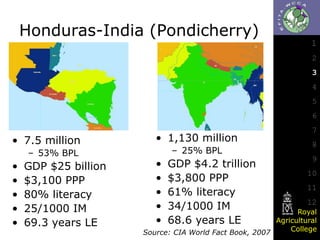
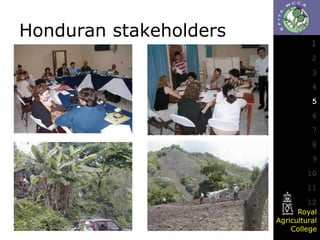
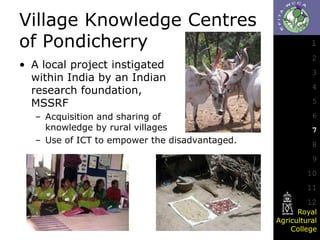
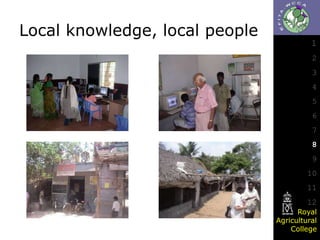
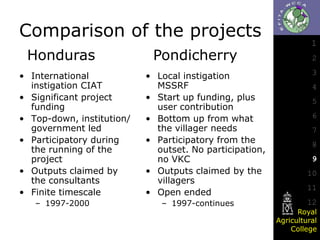
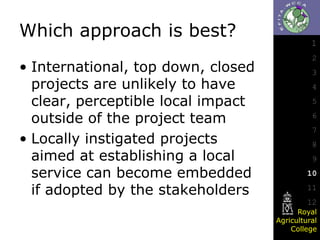
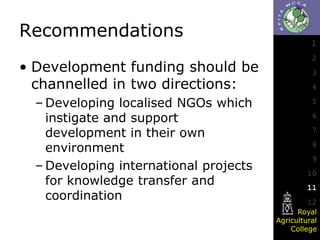
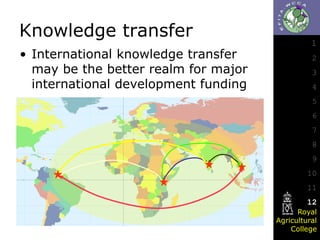
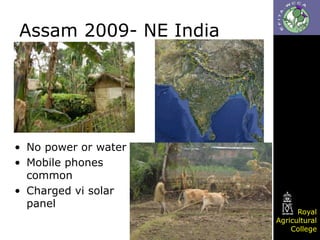
This document compares two rural empowerment projects that aimed to provide access to knowledge through information and communication technologies (ICT). The first project in Honduras was initiated by an international non-governmental organization and had a top-down approach, while the second project in India establishing Village Knowledge Centers was locally initiated. The Honduras project produced reports but did not have lasting local impact after funding ended, while the India project continues to be utilized by local villagers. The document concludes that locally initiated projects can have more sustainable impacts than top-down international projects, and that future development efforts should support both local NGOs and international knowledge transfer initiatives.



![Getting Started with Apache Spark: Big Data Made Simple [Free Meetup]](https://cdn.slidesharecdn.com/ss_thumbnails/apachesparkgettingstarted-260203175547-8361bcc3-thumbnail.jpg?width=640&height=640&fit=bounds)


