
1 
Developing an approach for best 
risk governance practices of shale 
gas production in Europe 
N. Arnold1, K. Gufler1, G. Giersch 2 
1 Institute of Security/Safety- and Risk Sciences, University of Natural 
Resources and Life Sciences, Vienna, risk@boku.ac.at, www.risk.boku.ac.at 
2 Organisation for International Dialogue and Conflict Management – IDC, 
Vienna, info@idialog.eu, www.idialog.eu
2 
Overview 
 Introduction 
 Shalegas in US and Europe 
 Approach for risk governance practice 
 Final thoughts
3 
Introduction 
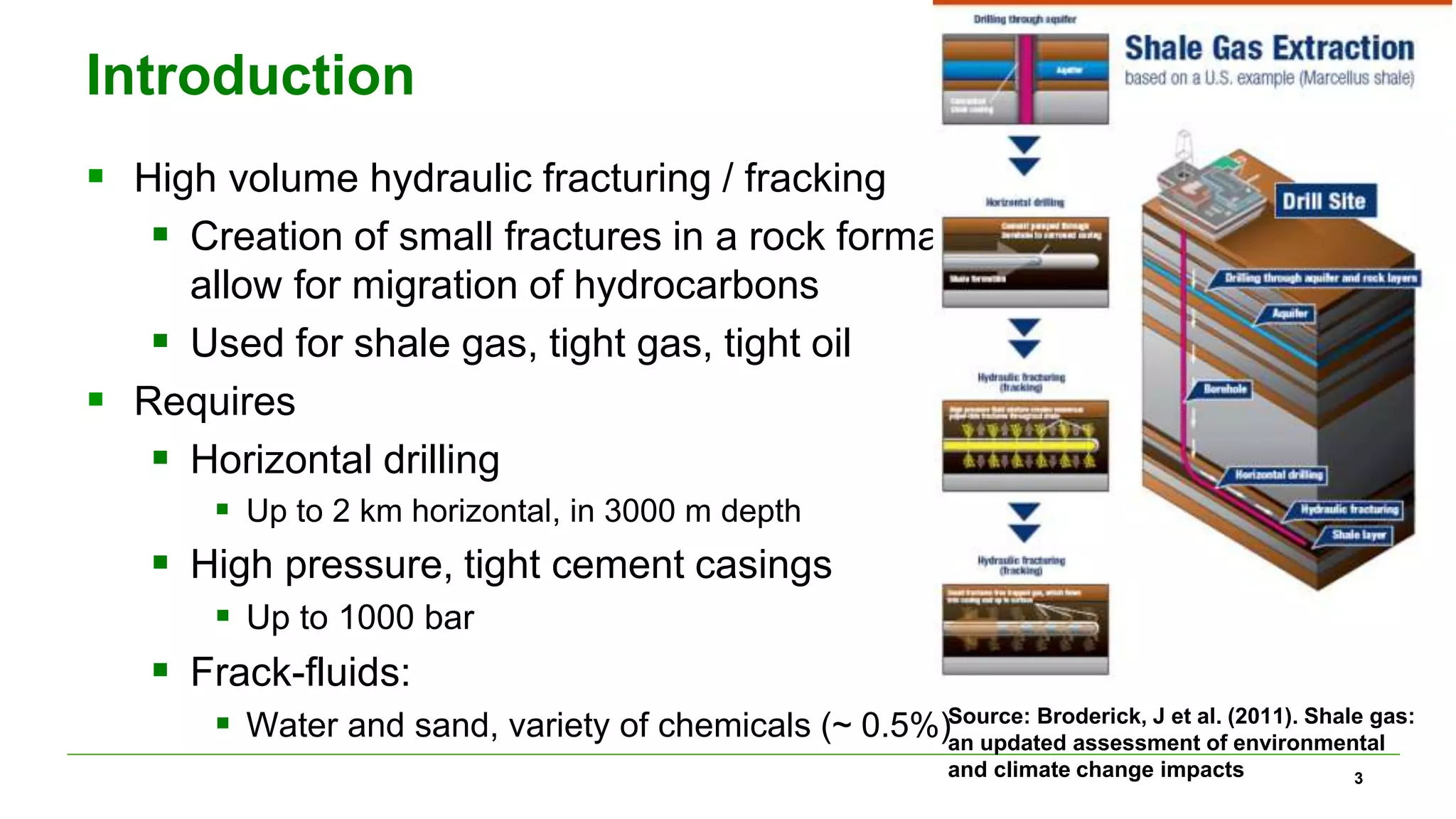
 High volume hydraulic fracturing / fracking 
 Creation of small fractures in a rock formation to 
allow for migration of hydrocarbons 
 Used for shale gas, tight gas, tight oil 
 Requires 
 Horizontal drilling 
 Up to 2 km horizontal, in 3000 m depth 
 High pressure, tight cement casings 
 Up to 1000 bar 
 Frack-fluids: 
 Water and sand, variety of chemicals (~ 0.5%) Source: Broderick, J et al. (2011). Shale gas: 
an updated assessment of environmental 
and climate change impacts
4 
Shale gas production in the US 
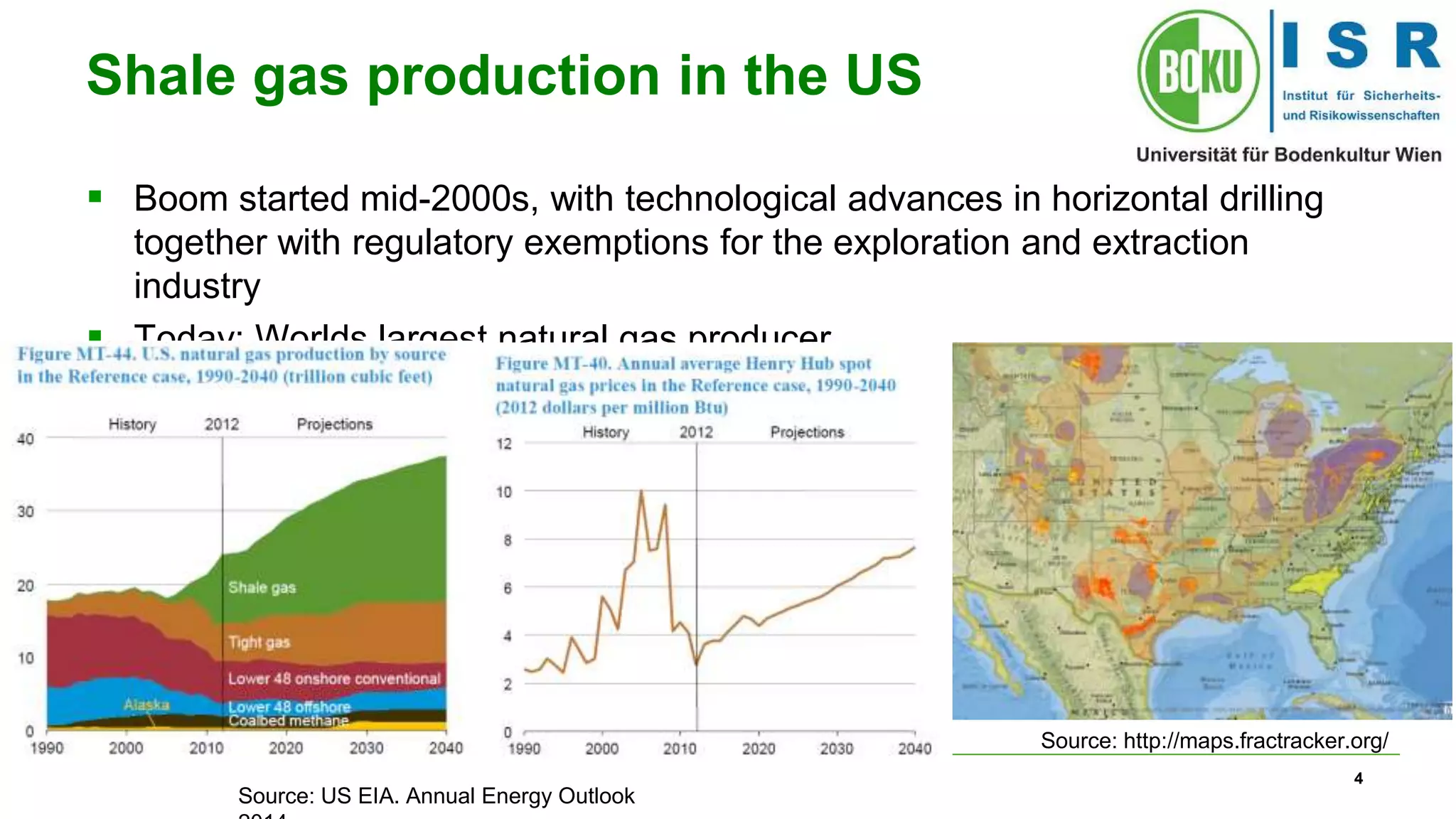
 Boom started mid-2000s, with technological advances in horizontal drilling 
together with regulatory exemptions for the exploration and extraction 
industry 
 Today: Worlds largest natural gas producer 
Source: http://maps.fractracker.org/ 
Source: US EIA. Annual Energy Outlook 
2014
5 
Shale gas in the EU 
 EC has highlighted its commitment to further GHG emission 
reduction term 
 The Energy Roadmap 2050 and Strategic Energy Technology 
Plan (SET‐Plan take notice of the potential implication of shale 
gas for the EU. 
 The EC has so far stepped away from comprehensive EU 
regulation 
 In contrast to US: divers regulations, diverging interests, trans-boundary 
issues 
 Countries with promissing ressources 
 Germany 
 France
6 
Approach for best risk governance 
practices 
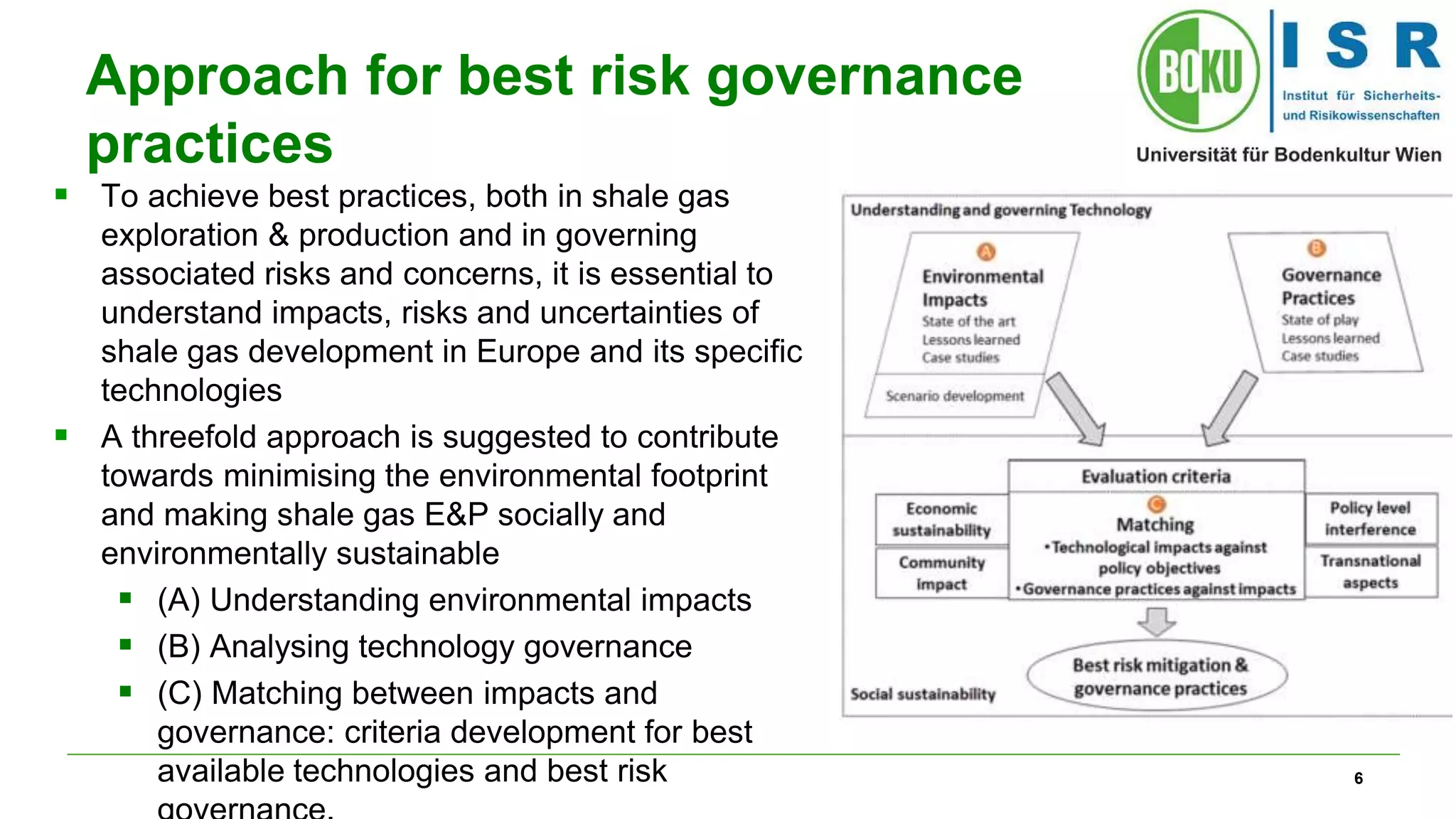
 To achieve best practices, both in shale gas 
exploration & production and in governing 
associated risks and concerns, it is essential to 
understand impacts, risks and uncertainties of 
shale gas development in Europe and its specific 
technologies 
 A threefold approach is suggested to contribute 
towards minimising the environmental footprint 
and making shale gas E&P socially and 
environmentally sustainable 
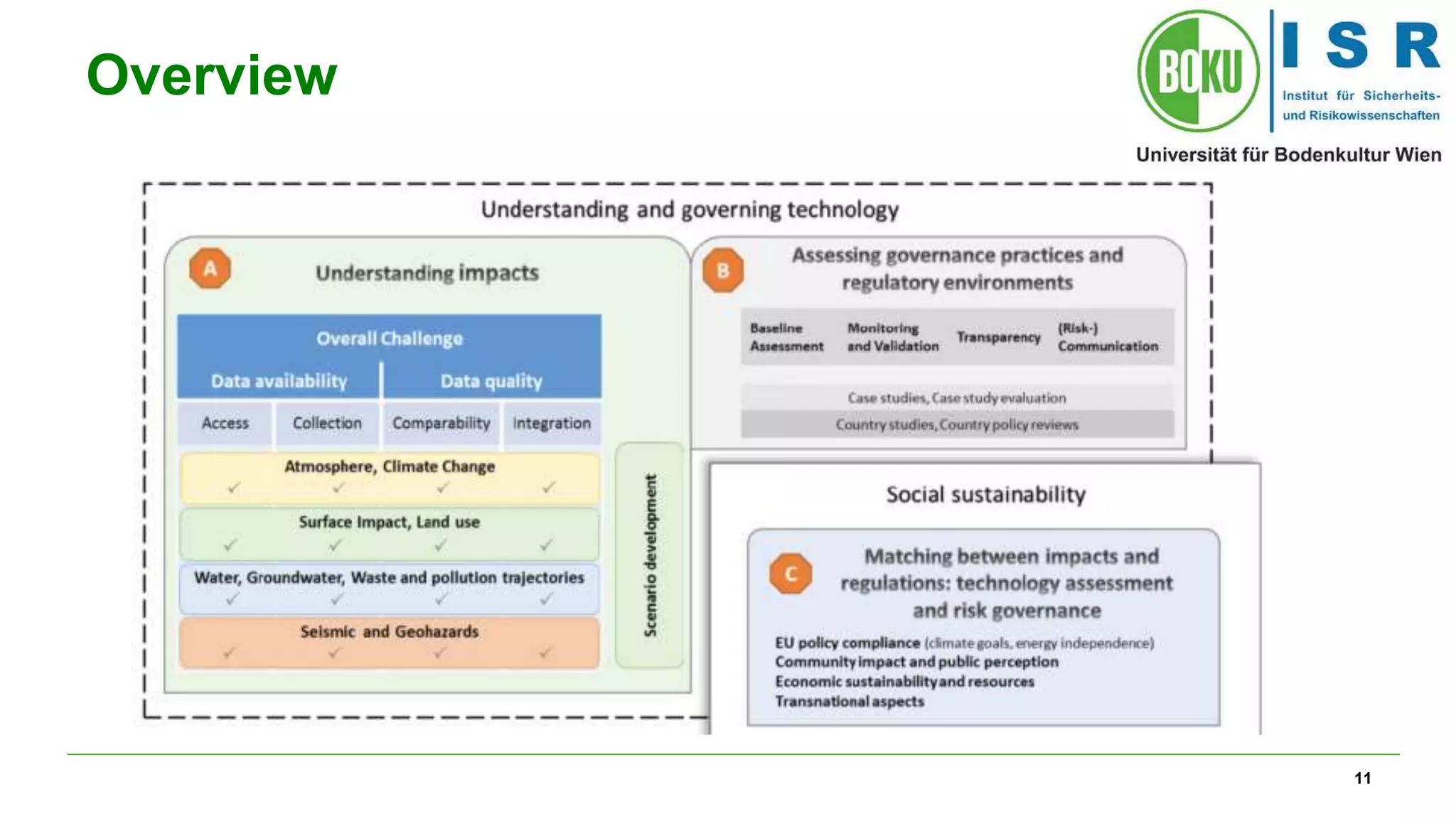
 (A) Understanding environmental impacts 
 (B) Analysing technology governance 
 (C) Matching between impacts and 
governance: criteria development for best 
available technologies and best risk 
governance.
7 
(A) Environmental risks and 
uncertainties / impacts of fracking 
 Extending the knowledge base on environmental impacts and 
risks 
 Based on experiences/data of ongoing shale gas production (e.g. 
the US) 
 Issues are interlinked, some of the pathways of risks and impacts 
are still unknown 
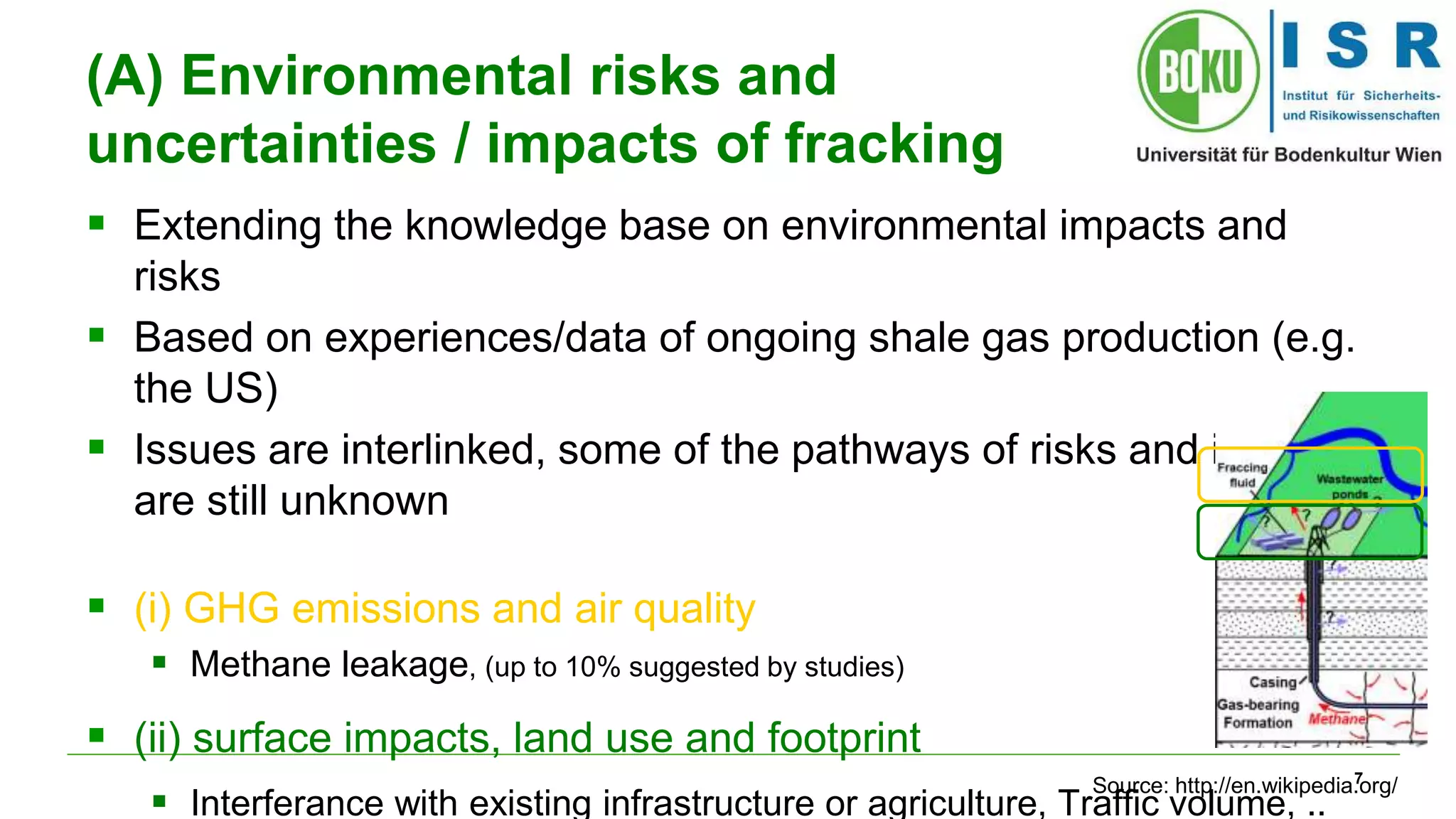
 (i) GHG emissions and air quality 
 Methane leakage, (up to 10% suggested by studies) 
 (ii) surface impacts, land use and footprint 
Source: http://en.wikipedia.org/ 
 Interferance with existing infrastructure or agriculture, Traffic volume, ..
8 
(A) Environmental risks and 
uncertainties / impacts of fracking 
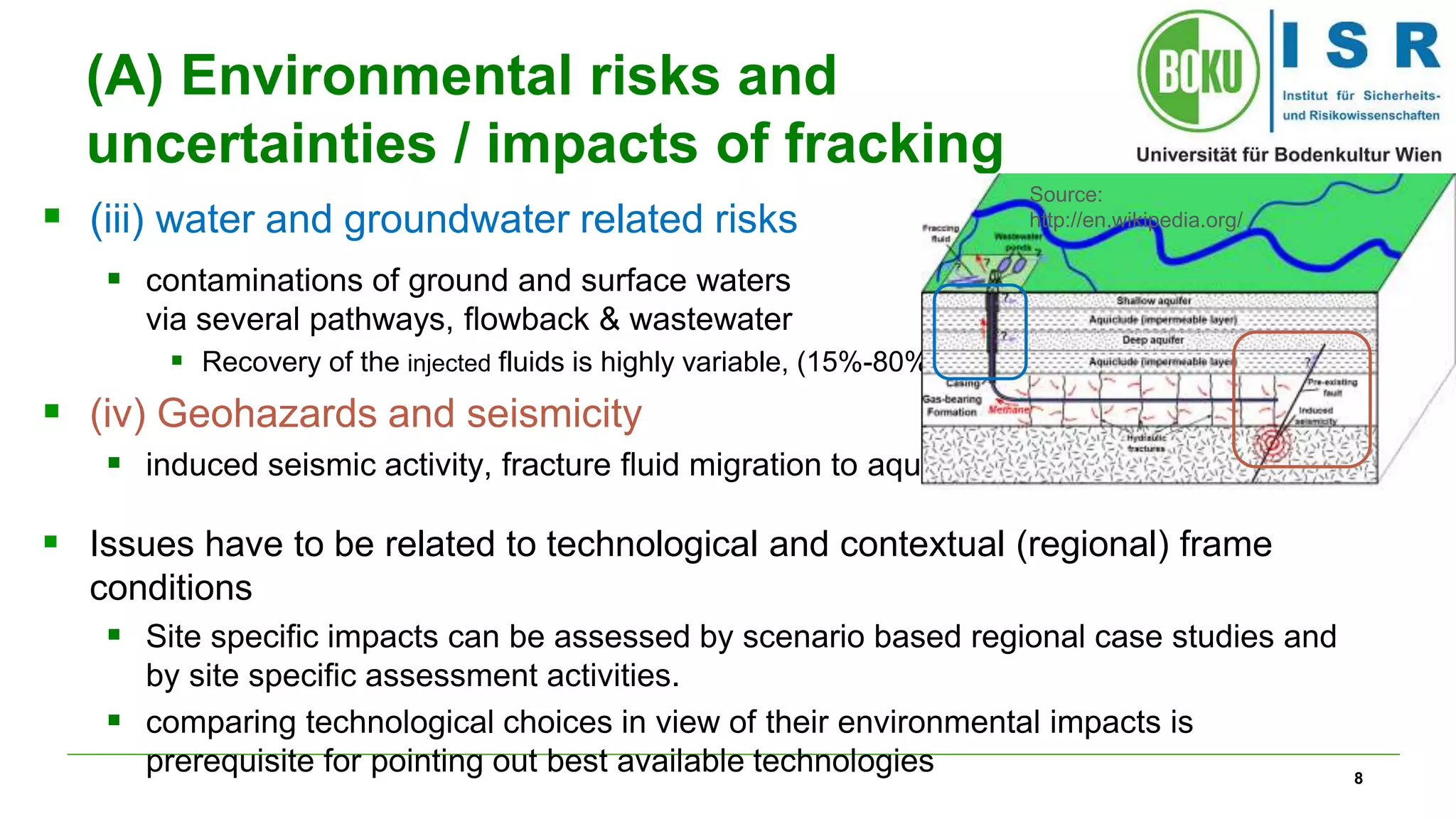
 (iii) water and groundwater related risks 
 contaminations of ground and surface waters 
via several pathways, flowback & wastewater 
 Recovery of the injected fluids is highly variable, (15%-80%) 
 (iv) Geohazards and seismicity 
 induced seismic activity, fracture fluid migration to aquifer 
 Issues have to be related to technological and contextual (regional) frame 
conditions 
 Site specific impacts can be assessed by scenario based regional case studies and 
by site specific assessment activities. 
 comparing technological choices in view of their environmental impacts is 
prerequisite for pointing out best available technologies 
Source: 
http://en.wikipedia.org/
9 
(B) Analysing technology 
governance 
 The assessment of relevant EU regulations and governance, is 
based on a comparative analysis of various parameters derived from 
well-established risk governance frameworks. 
 The assessment should be structured along the analysis of the 
following aspects: 
 Environmental baseline assessment practices, requirements and 
standards; 
 Environmental monitoring and compliance oversight, as well as methods 
and regulatory approaches to impact data and data comparability; 
 Transparency requirements, transparency practices and transparency 
demands; 
 Risk communication approaches, dialogue and community participation.
10 
(C) Matching between impacts and 
governance 
 The matching approach is directed towards the elaboration of criteria 
for the identification and evaluation of risks and impacts, best 
available technologies (BAT) and best risk governance practices. 
While the results will depend on data and valuations of stakeholders, 
the objectives of such a transparent risk evaluation framework can 
be pointed out as follows: 
 specify fits and misfits between environmental impact (and impact scenarios) and 
regulatory provisions or (existing) risk governance practices; 
 find out potentials to shape related technology and regulation practice in order to 
reduce environmental risks and to provide governance strategies for the 
implementation of best available technologies (BAT); 
 elaborate checklists and criteria for the evaluation of best practices in risk 
management.
11 
Overview
12 
Final thoughts 
 An appropriate governance framework for shale gas development has to 
consider more than impact assessments, and existing national rules and 
regulations. It is influenced by the questions of economic impacts, resource 
availability and competition with alternative energy carriers. 
 In the EU‐context it will face transboundary issues and different grades of 
public acceptance. 
 Matching impacts against EU policy objectives and risk governance practices 
and involving interested stakeholders for criteria development requires a trans 
disciplinary approach. 
 It is directed to European best practices in risk governance in view of 
mitigating environmental impacts and fostering the social sustainability and 
acceptance of shale gas development. 
 Although it has been developed for shale gas development in EU, it can be
13 
Thank you for your kind attention!

IDRC_2014_Risk_governance_shale_gas

  • 1.
    1 Developing anapproach for best risk governance practices of shale gas production in Europe N. Arnold1, K. Gufler1, G. Giersch 2 1 Institute of Security/Safety- and Risk Sciences, University of Natural Resources and Life Sciences, Vienna, risk@boku.ac.at, www.risk.boku.ac.at 2 Organisation for International Dialogue and Conflict Management – IDC, Vienna, info@idialog.eu, www.idialog.eu
  • 2.
    2 Overview Introduction  Shalegas in US and Europe  Approach for risk governance practice  Final thoughts
  • 3.
    3 Introduction High volume hydraulic fracturing / fracking  Creation of small fractures in a rock formation to allow for migration of hydrocarbons  Used for shale gas, tight gas, tight oil  Requires  Horizontal drilling  Up to 2 km horizontal, in 3000 m depth  High pressure, tight cement casings  Up to 1000 bar  Frack-fluids:  Water and sand, variety of chemicals (~ 0.5%) Source: Broderick, J et al. (2011). Shale gas: an updated assessment of environmental and climate change impacts
  • 4.
    4 Shale gasproduction in the US  Boom started mid-2000s, with technological advances in horizontal drilling together with regulatory exemptions for the exploration and extraction industry  Today: Worlds largest natural gas producer Source: http://maps.fractracker.org/ Source: US EIA. Annual Energy Outlook 2014
  • 5.
    5 Shale gasin the EU  EC has highlighted its commitment to further GHG emission reduction term  The Energy Roadmap 2050 and Strategic Energy Technology Plan (SET‐Plan take notice of the potential implication of shale gas for the EU.  The EC has so far stepped away from comprehensive EU regulation  In contrast to US: divers regulations, diverging interests, trans-boundary issues  Countries with promissing ressources  Germany  France
  • 6.
    6 Approach forbest risk governance practices  To achieve best practices, both in shale gas exploration & production and in governing associated risks and concerns, it is essential to understand impacts, risks and uncertainties of shale gas development in Europe and its specific technologies  A threefold approach is suggested to contribute towards minimising the environmental footprint and making shale gas E&P socially and environmentally sustainable  (A) Understanding environmental impacts  (B) Analysing technology governance  (C) Matching between impacts and governance: criteria development for best available technologies and best risk governance.
  • 7.
    7 (A) Environmentalrisks and uncertainties / impacts of fracking  Extending the knowledge base on environmental impacts and risks  Based on experiences/data of ongoing shale gas production (e.g. the US)  Issues are interlinked, some of the pathways of risks and impacts are still unknown  (i) GHG emissions and air quality  Methane leakage, (up to 10% suggested by studies)  (ii) surface impacts, land use and footprint Source: http://en.wikipedia.org/  Interferance with existing infrastructure or agriculture, Traffic volume, ..
  • 8.
    8 (A) Environmentalrisks and uncertainties / impacts of fracking  (iii) water and groundwater related risks  contaminations of ground and surface waters via several pathways, flowback & wastewater  Recovery of the injected fluids is highly variable, (15%-80%)  (iv) Geohazards and seismicity  induced seismic activity, fracture fluid migration to aquifer  Issues have to be related to technological and contextual (regional) frame conditions  Site specific impacts can be assessed by scenario based regional case studies and by site specific assessment activities.  comparing technological choices in view of their environmental impacts is prerequisite for pointing out best available technologies Source: http://en.wikipedia.org/
  • 9.
    9 (B) Analysingtechnology governance  The assessment of relevant EU regulations and governance, is based on a comparative analysis of various parameters derived from well-established risk governance frameworks.  The assessment should be structured along the analysis of the following aspects:  Environmental baseline assessment practices, requirements and standards;  Environmental monitoring and compliance oversight, as well as methods and regulatory approaches to impact data and data comparability;  Transparency requirements, transparency practices and transparency demands;  Risk communication approaches, dialogue and community participation.
  • 10.
    10 (C) Matchingbetween impacts and governance  The matching approach is directed towards the elaboration of criteria for the identification and evaluation of risks and impacts, best available technologies (BAT) and best risk governance practices. While the results will depend on data and valuations of stakeholders, the objectives of such a transparent risk evaluation framework can be pointed out as follows:  specify fits and misfits between environmental impact (and impact scenarios) and regulatory provisions or (existing) risk governance practices;  find out potentials to shape related technology and regulation practice in order to reduce environmental risks and to provide governance strategies for the implementation of best available technologies (BAT);  elaborate checklists and criteria for the evaluation of best practices in risk management.
  • 11.
  • 12.
    12 Final thoughts  An appropriate governance framework for shale gas development has to consider more than impact assessments, and existing national rules and regulations. It is influenced by the questions of economic impacts, resource availability and competition with alternative energy carriers.  In the EU‐context it will face transboundary issues and different grades of public acceptance.  Matching impacts against EU policy objectives and risk governance practices and involving interested stakeholders for criteria development requires a trans disciplinary approach.  It is directed to European best practices in risk governance in view of mitigating environmental impacts and fostering the social sustainability and acceptance of shale gas development.  Although it has been developed for shale gas development in EU, it can be
  • 13.
    13 Thank youfor your kind attention!