EDU 03
TECHNOLOGY AND COMMUNICATION IN
EDUCATION
SCOPE OF INFORMATION AND
COMMUNICATION TECHNOLOGY IN
EDUCATION
Submitted to
Ms. LAIJI. R
Assistant professor
Mount Tabor Training College
Pattanapuram
Submitted by
Remya Mathew
Sajitha S.M
Santhwana Saseendran
Saranya Raj B
Shane Mathew Justus
Theresa Mathews
Option : COMMERCE
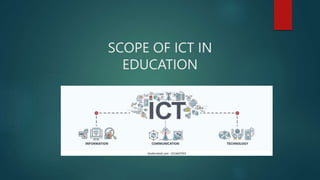
MEANING OF INFORMATION
COMMUNICATION TECHNOLOGY
 The infrastructure and components that enable
modern computing.
 The combination of manufacturing and services
industries that capture, transmit display data and
information electronically.
 The mode of education that use information and
communications technology to support, enhance, and
optimise the delivery of information.
DEFINITIONS
 I.C.T widely used in the context of education. It
mainly refers to utilizing digital technologies such as
Computer, Television, E-mail etc. to help individuals
or organizations to work with digital information.
Technology used to communicate required
information at the right place & time by means of
communication media.
 Information communication technology is a diverse
mixture of technology tools & resources to create,
differentiate, store & manage information for
communication.
SCOPE OF ICT IN
EDUCATION
SCOPE OF ICT IN EDUCATION
 A person from village also can refer the latest
information and research everyday.
 Television broadcast is one of the best
communication media to educate students,
farmers, sportsman.
 The difficult experiments, advance surgery for
medical students etc. can be viewed.
 LCD projectors can be used for effective training.
 The manpower problem, the human mistakes can
be avoided by on-line examination.
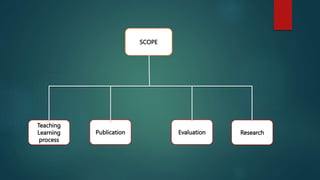
SCOPE
Teaching
Learning
process
Publication Evaluation Research
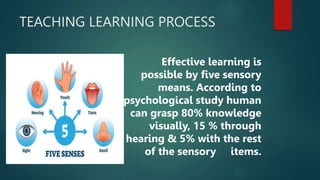
TEACHING LEARNING PROCESS
Effective learning is
possible by five sensory
means. According to
psychological study human
can grasp 80% knowledge
visually, 15 % through
hearing & 5% with the rest
of the sensory items.
 So it becomes necessary to present the content by attractive
means. Computer technology helps us to provide rich
 To provide rich presentation, it is necessary to use the various
components like:-
1. Text matter presentation
2. Animation presentation
3. Graphic presentation
4. Audio presentation
5. Video presentation
Computer Aided Teaching has become popular now a days.
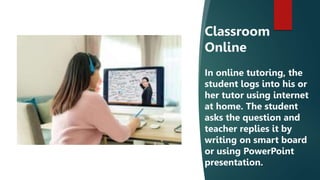
Classroom
Online
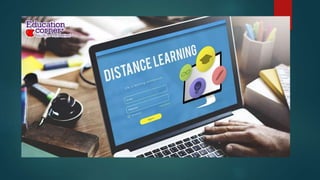
In online tutoring, the
student logs into his or
her tutor using internet
at home. The student
asks the question and
teacher replies it by
writing on smart board
or using PowerPoint
presentation.
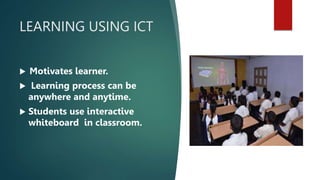
LEARNING USING ICT
 Motivates learner.
 Learning process can be
anywhere and anytime.
 Students use interactive
whiteboard in classroom.
IMPACT ON TEACHERS
Teacher access to:
Lesson plans
Network of teachers
 Pedagogical techniques
 Information resources
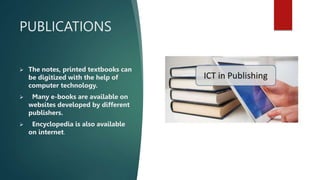
PUBLICATIONS
 The notes, printed textbooks can
be digitized with the help of
computer technology.
 Many e-books are available on
websites developed by different
publishers.
 Encyclopedia is also available
on internet.
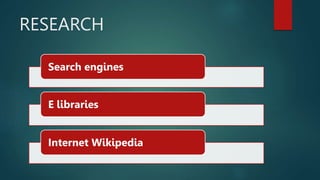
RESEARCH
Search engines
E libraries
Internet Wikipedia
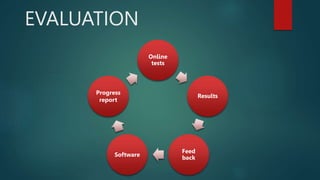
EVALUATION
Online
tests
Results
Feed
back
Software
Progress
report
ADVANTAGES OF ICT FOR
EVALUATION
 Student accept more responsibility for their own
learning and its assessment, developing expertise
in the process.
 Teacher application of curriculum can be
monitored by analyzing test results. This can be
used by teachers for assessing and improving
their own performance meeting state and
national standards.
USE OF ICT IN DAY-TO-DAY LIFE OF
STUDENTS AND TEACHERS
 Students use ICT as reference tool. They use computers to browse
the internet to look information, project information and literature
survey.
 Teachers use ICT in research for preparing teaching material,
participate in online forums and online conference.
 Researchers use ICT tool to collect ,process and analyze data.
 School administrators use ICT tool for administrative purpose to
make sure that the entire operation runs smoothly.
 E.g. to get student details at the click of a button.
ICT and Education
 ICT to enhance teaching and learning environments. ICT enables
self-paced learning through various tools such as assignment,
computer etc. as a result of this the teaching learning enterprise
has become more productive and meaningful.
 ICT helps facilitate the transaction between producers and users
by keeping the students updated and enhancing teachers' capacity
and ability fostering a live contact between the teacher and the
student through e-mail, e-learning, web-based learning including
internet, intranet, extranet, , TV audio-video aids, CD-ROM.
 Edusat technology has become very powerful media for
interactive participation of experts and learners, and it reaches
the unreachable.
How ICT is being used very effectively
 Broadening horizons with more opportunities for creative
expression
 Flexibility to study where, when and how best suits individual
needs and preferences
 Increased motivation through learning that stimulates and
stretches
 Wider access to learning and participation
 Sensible choices about when, when not and how to use new
technology to enhance, enrich and extend learning
EDU 03.pptx

EDU 03.pptx

  • 1.
    EDU 03 TECHNOLOGY ANDCOMMUNICATION IN EDUCATION SCOPE OF INFORMATION AND COMMUNICATION TECHNOLOGY IN EDUCATION Submitted to Ms. LAIJI. R Assistant professor Mount Tabor Training College Pattanapuram Submitted by Remya Mathew Sajitha S.M Santhwana Saseendran Saranya Raj B Shane Mathew Justus Theresa Mathews Option : COMMERCE
  • 2.
    MEANING OF INFORMATION COMMUNICATIONTECHNOLOGY  The infrastructure and components that enable modern computing.  The combination of manufacturing and services industries that capture, transmit display data and information electronically.  The mode of education that use information and communications technology to support, enhance, and optimise the delivery of information.
  • 3.
    DEFINITIONS  I.C.T widelyused in the context of education. It mainly refers to utilizing digital technologies such as Computer, Television, E-mail etc. to help individuals or organizations to work with digital information. Technology used to communicate required information at the right place & time by means of communication media.  Information communication technology is a diverse mixture of technology tools & resources to create, differentiate, store & manage information for communication.
  • 5.
    SCOPE OF ICTIN EDUCATION
  • 6.
    SCOPE OF ICTIN EDUCATION  A person from village also can refer the latest information and research everyday.  Television broadcast is one of the best communication media to educate students, farmers, sportsman.  The difficult experiments, advance surgery for medical students etc. can be viewed.  LCD projectors can be used for effective training.  The manpower problem, the human mistakes can be avoided by on-line examination.
  • 7.
  • 8.
    TEACHING LEARNING PROCESS Effectivelearning is possible by five sensory means. According to psychological study human can grasp 80% knowledge visually, 15 % through hearing & 5% with the rest of the sensory items.
  • 9.
     So itbecomes necessary to present the content by attractive means. Computer technology helps us to provide rich  To provide rich presentation, it is necessary to use the various components like:- 1. Text matter presentation 2. Animation presentation 3. Graphic presentation 4. Audio presentation 5. Video presentation Computer Aided Teaching has become popular now a days.
  • 11.
    Classroom Online In online tutoring,the student logs into his or her tutor using internet at home. The student asks the question and teacher replies it by writing on smart board or using PowerPoint presentation.
  • 12.
    LEARNING USING ICT Motivates learner.  Learning process can be anywhere and anytime.  Students use interactive whiteboard in classroom.
  • 13.
    IMPACT ON TEACHERS Teacheraccess to: Lesson plans Network of teachers  Pedagogical techniques  Information resources
  • 14.
    PUBLICATIONS  The notes,printed textbooks can be digitized with the help of computer technology.  Many e-books are available on websites developed by different publishers.  Encyclopedia is also available on internet.
  • 15.
  • 16.
  • 17.
    ADVANTAGES OF ICTFOR EVALUATION  Student accept more responsibility for their own learning and its assessment, developing expertise in the process.  Teacher application of curriculum can be monitored by analyzing test results. This can be used by teachers for assessing and improving their own performance meeting state and national standards.
  • 18.
    USE OF ICTIN DAY-TO-DAY LIFE OF STUDENTS AND TEACHERS  Students use ICT as reference tool. They use computers to browse the internet to look information, project information and literature survey.  Teachers use ICT in research for preparing teaching material, participate in online forums and online conference.  Researchers use ICT tool to collect ,process and analyze data.  School administrators use ICT tool for administrative purpose to make sure that the entire operation runs smoothly.  E.g. to get student details at the click of a button.
  • 19.
    ICT and Education ICT to enhance teaching and learning environments. ICT enables self-paced learning through various tools such as assignment, computer etc. as a result of this the teaching learning enterprise has become more productive and meaningful.  ICT helps facilitate the transaction between producers and users by keeping the students updated and enhancing teachers' capacity and ability fostering a live contact between the teacher and the student through e-mail, e-learning, web-based learning including internet, intranet, extranet, , TV audio-video aids, CD-ROM.  Edusat technology has become very powerful media for interactive participation of experts and learners, and it reaches the unreachable.
  • 20.
    How ICT isbeing used very effectively  Broadening horizons with more opportunities for creative expression  Flexibility to study where, when and how best suits individual needs and preferences  Increased motivation through learning that stimulates and stretches  Wider access to learning and participation  Sensible choices about when, when not and how to use new technology to enhance, enrich and extend learning