Analytics in 
Context: 
Modelling in a 
Regulatory Environment 
Presented to: 
International Conference 
on Analytics Solutions 
Ottawa, Ontario, 
September 29-30, 2014 
Albert Simard 
Integrated Knowledge Services 
albert.simard@outlook.com
Outline 
2 
Modelling Context 
Human, Technical 
Framework 
Structure, Hierarchy
3 
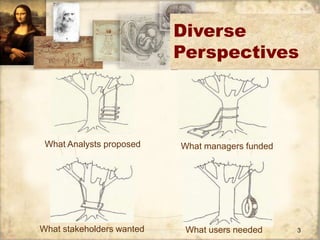
Diverse 
Perspectives 
What Analysts proposed What managers funded 
What stakeholders wanted What users needed
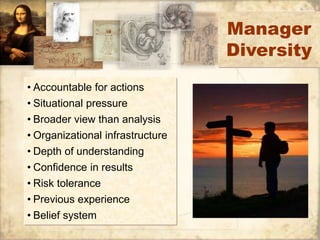
Manager 
Diversity 
• Accountable for actions 
• Situational pressure 
• Broader view than analysis 
• Organizational infrastructure 
• Depth of understanding 
• Confidence in results 
• Risk tolerance 
• Previous experience 
• Belief system
Analyst 
Diversity 
• Objective Criteria 
–Problem space 
–Type of problem 
–Available techniques 
• Subjective Criteria 
–Awareness 
–Diversity 
–Skill 
–Experience 
–Expertise 
–Mental model
User 
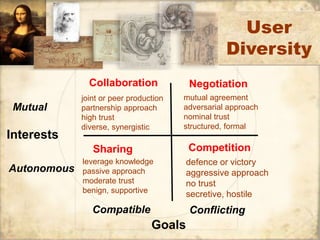
Diversity 
Compatible Conflicting 
Goals 
Mutual 
Interests 
Autonomous 
Competition 
defence or victory 
aggressive approach 
no trust 
secretive, hostile 
Collaboration 
joint or peer production 
partnership approach 
high trust 
diverse, synergistic 
Negotiation 
mutual agreement 
adversarial approach 
nominal trust 
structured, formal 
Sharing 
leverage knowledge 
passive approach 
moderate trust 
benign, supportive
The 
Challenge 
Integrating the diverse 
views to increase 
understanding and 
achieve a mutually 
agreed solution! 
7
8 
Modelling 
Process 
• Modelling combines science & computers; 
judgement & experience; insight & intuition. 
• Principles: effort, simple, data, knowledge, 
transparent, understandable. 
• Complexity: Modelling is a dynamic feedback 
process with delays and uncertainty. 
• Development: techniques are well-understood; 
management less understood and practiced. 
• Use: Decision making under uncertainty, unknown 
elements, outcome probabilities.
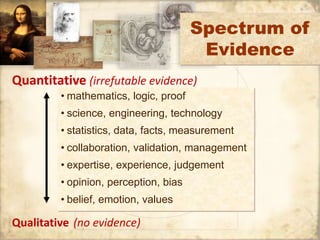
Spectrum of 
Evidence 
Quantitative (irrefutable evidence) 
• mathematics, logic, proof 
• science, engineering, technology 
• statistics, data, facts, measurement 
• collaboration, validation, management 
• expertise, experience, judgement 
• opinion, perception, bias 
• belief, emotion, values 
Qualitative (no evidence)
10 
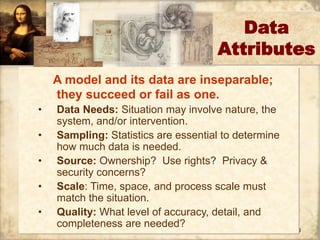
Data 
Attributes 
A model and its data are inseparable; 
they succeed or fail as one. 
• Data Needs: Situation may involve nature, the 
system, and/or intervention. 
• Sampling: Statistics are essential to determine 
how much data is needed. 
• Source: Ownership? Use rights? Privacy & 
security concerns? 
• Scale: Time, space, and process scale must 
match the situation. 
• Quality: What level of accuracy, detail, and 
completeness are needed?
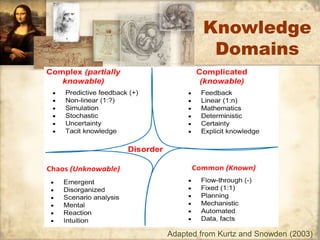
Knowledge 
Domains 
Adapted from Kurtz and Snowden (2003)
Outline 
12 
Modelling Context 
Human, Technical 
Framework 
Structure, Hierarchy
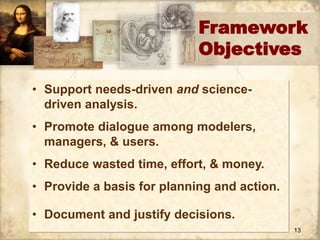
Framework 
Objectives 
13 
• Support needs-driven and science-driven 
analysis. 
• Promote dialogue among modelers, 
managers, & users. 
• Reduce wasted time, effort, & money. 
• Provide a basis for planning and action. 
• Document and justify decisions.
Framework 
14 
Design 
• Reflect modelling, management, and 
user perspectives. 
• Balance efficiency and effectiveness 
with cost and effort. 
• Applicable to both demand and supply 
approaches to modelling. 
• Applicable to both logical and 
computational models
Framework 
15 
Hierarchy 
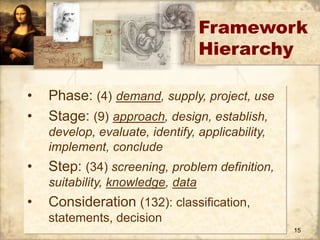
• Phase: (4) demand, supply, project, use 
• Stage: (9) approach, design, establish, 
develop, evaluate, identify, applicability, 
implement, conclude 
• Step: (34) screening, problem definition, 
suitability, knowledge, data 
• Consideration (132): classification, 
statements, decision
Framework 
16 
Phases 
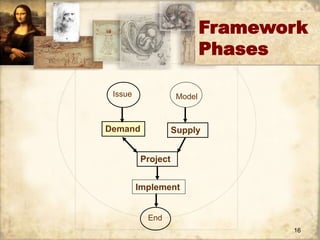
Issue Model 
Demand Supply 
Project 
Implement 
End
Supply & 
Demand 
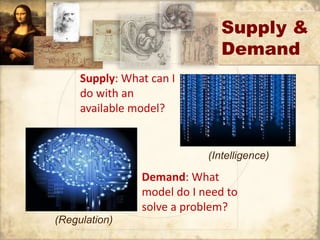
Supply: What can I 
do with an 
available model? 
(Intelligence) 
Demand: What 
model do I need to 
solve a problem? 
(Regulation)
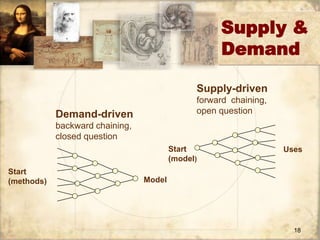
Supply & 
Demand 
18 
Start 
(methods) 
Demand-driven 
backward chaining, 
closed question 
Model 
Supply-driven 
forward chaining, 
open question 
Start 
(model) 
Uses
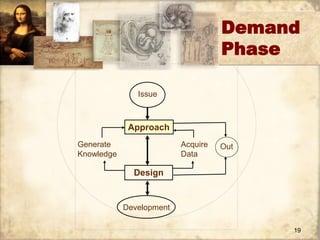
Demand 
19 
Issue 
Approach 
Design 
Development 
Acquire 
Data 
Generate 
Knowledge 
Phase 
Out
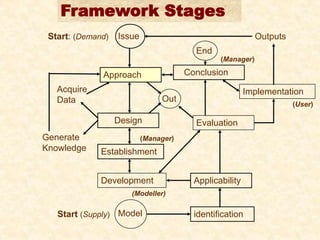
20 
Framework Stages 
Design 
Acquire 
Data 
Generate 
Knowledge 
Approach 
Out 
End 
Evaluation 
Start: (Demand) Issue 
Outputs 
Implementation 
Conclusion 
(Manager) 
Establishment 
Development 
(Modeller) 
(Manager) 
(User) 
Applicability 
Start (Supply) Model identification
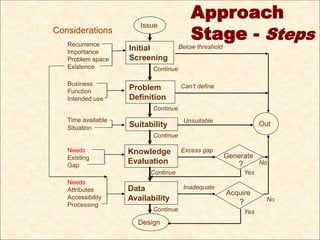
Considerations Stage - Steps 
21 
Issue 
Initial 
Screening 
Problem 
Definition 
Suitability 
Knowledge 
Evaluation 
Data 
Availability 
Design 
Recurrence 
Importance 
Problem space 
Existence 
Business 
Function 
Intended use 
Time available 
Situation 
Needs 
Existing 
Gap 
Needs 
Attributes 
Accessibility 
Processing 
Continue 
Continue 
Continue 
Continue 
Continue 
Approach 
Below threshold 
Can’t define 
Unsuitable 
Excess gap 
Inadequate 
Generate 
? 
Yes 
Acquire 
? 
Yes 
Out 
No 
No
Considerations 
22 
• Explain what is being considered 
• Classify a situation or write a short 
description. (categories) 
• Complete a statement. (template) 
• Decide where to go next. (decision guide) 
• Not a cookbook to be followed without 
interpretation. 
• Compliments experience & judgement; 
doesn’t replace them.
Consideration 
23 
Template 
• [Specified data] are needed to [develop, run] 
a model of [function, process] because 
[explanation]. 
• The [model name] needs [specified 
knowledge] about [specified function, 
process] because [explanation].
24 
• If a substantial majority of the data needed by the 
model exist, go to Data Accessibility. 
• If a majority of the data needed by the model exist, go 
to Data Accessibility, subject to limits or conditions; 
describe the limits. 
• If existing data are adequate for a simpler or partial 
model, go to problem definition; redefine the problem. 
• If existing data are not adequate for a simpler or 
partial model, go to Data Acquisition. 
Decision 
Guide
The Modelling 
Framework 
• Supports business objectives 
• Facilitates horizontal integration 
• Minimizes waste & inefficiency 
• Maximizes likely success 
• Documents & justifies decisions 
“Using a clear blueprint first prevents 
chaos latter.” Carla O’Dell (1998)

Analytics in Context: Modelling in a regulatory environment

  • 1.
    Analytics in Context: Modelling in a Regulatory Environment Presented to: International Conference on Analytics Solutions Ottawa, Ontario, September 29-30, 2014 Albert Simard Integrated Knowledge Services albert.simard@outlook.com
  • 2.
    Outline 2 ModellingContext Human, Technical Framework Structure, Hierarchy
  • 3.
    3 Diverse Perspectives What Analysts proposed What managers funded What stakeholders wanted What users needed
  • 4.
    Manager Diversity •Accountable for actions • Situational pressure • Broader view than analysis • Organizational infrastructure • Depth of understanding • Confidence in results • Risk tolerance • Previous experience • Belief system
  • 5.
    Analyst Diversity •Objective Criteria –Problem space –Type of problem –Available techniques • Subjective Criteria –Awareness –Diversity –Skill –Experience –Expertise –Mental model
  • 6.
    User Diversity CompatibleConflicting Goals Mutual Interests Autonomous Competition defence or victory aggressive approach no trust secretive, hostile Collaboration joint or peer production partnership approach high trust diverse, synergistic Negotiation mutual agreement adversarial approach nominal trust structured, formal Sharing leverage knowledge passive approach moderate trust benign, supportive
  • 7.
    The Challenge Integratingthe diverse views to increase understanding and achieve a mutually agreed solution! 7
  • 8.
    8 Modelling Process • Modelling combines science & computers; judgement & experience; insight & intuition. • Principles: effort, simple, data, knowledge, transparent, understandable. • Complexity: Modelling is a dynamic feedback process with delays and uncertainty. • Development: techniques are well-understood; management less understood and practiced. • Use: Decision making under uncertainty, unknown elements, outcome probabilities.
  • 9.
    Spectrum of Evidence Quantitative (irrefutable evidence) • mathematics, logic, proof • science, engineering, technology • statistics, data, facts, measurement • collaboration, validation, management • expertise, experience, judgement • opinion, perception, bias • belief, emotion, values Qualitative (no evidence)
  • 10.
    10 Data Attributes A model and its data are inseparable; they succeed or fail as one. • Data Needs: Situation may involve nature, the system, and/or intervention. • Sampling: Statistics are essential to determine how much data is needed. • Source: Ownership? Use rights? Privacy & security concerns? • Scale: Time, space, and process scale must match the situation. • Quality: What level of accuracy, detail, and completeness are needed?
  • 11.
    Knowledge Domains Adaptedfrom Kurtz and Snowden (2003)
  • 12.
    Outline 12 ModellingContext Human, Technical Framework Structure, Hierarchy
  • 13.
    Framework Objectives 13 • Support needs-driven and science-driven analysis. • Promote dialogue among modelers, managers, & users. • Reduce wasted time, effort, & money. • Provide a basis for planning and action. • Document and justify decisions.
  • 14.
    Framework 14 Design • Reflect modelling, management, and user perspectives. • Balance efficiency and effectiveness with cost and effort. • Applicable to both demand and supply approaches to modelling. • Applicable to both logical and computational models
  • 15.
    Framework 15 Hierarchy • Phase: (4) demand, supply, project, use • Stage: (9) approach, design, establish, develop, evaluate, identify, applicability, implement, conclude • Step: (34) screening, problem definition, suitability, knowledge, data • Consideration (132): classification, statements, decision
  • 16.
    Framework 16 Phases Issue Model Demand Supply Project Implement End
  • 17.
    Supply & Demand Supply: What can I do with an available model? (Intelligence) Demand: What model do I need to solve a problem? (Regulation)
  • 18.
    Supply & Demand 18 Start (methods) Demand-driven backward chaining, closed question Model Supply-driven forward chaining, open question Start (model) Uses
  • 19.
    Demand 19 Issue Approach Design Development Acquire Data Generate Knowledge Phase Out
  • 20.
    20 Framework Stages Design Acquire Data Generate Knowledge Approach Out End Evaluation Start: (Demand) Issue Outputs Implementation Conclusion (Manager) Establishment Development (Modeller) (Manager) (User) Applicability Start (Supply) Model identification
  • 21.
    Considerations Stage -Steps 21 Issue Initial Screening Problem Definition Suitability Knowledge Evaluation Data Availability Design Recurrence Importance Problem space Existence Business Function Intended use Time available Situation Needs Existing Gap Needs Attributes Accessibility Processing Continue Continue Continue Continue Continue Approach Below threshold Can’t define Unsuitable Excess gap Inadequate Generate ? Yes Acquire ? Yes Out No No
  • 22.
    Considerations 22 •Explain what is being considered • Classify a situation or write a short description. (categories) • Complete a statement. (template) • Decide where to go next. (decision guide) • Not a cookbook to be followed without interpretation. • Compliments experience & judgement; doesn’t replace them.
  • 23.
    Consideration 23 Template • [Specified data] are needed to [develop, run] a model of [function, process] because [explanation]. • The [model name] needs [specified knowledge] about [specified function, process] because [explanation].
  • 24.
    24 • Ifa substantial majority of the data needed by the model exist, go to Data Accessibility. • If a majority of the data needed by the model exist, go to Data Accessibility, subject to limits or conditions; describe the limits. • If existing data are adequate for a simpler or partial model, go to problem definition; redefine the problem. • If existing data are not adequate for a simpler or partial model, go to Data Acquisition. Decision Guide
  • 25.
    The Modelling Framework • Supports business objectives • Facilitates horizontal integration • Minimizes waste & inefficiency • Maximizes likely success • Documents & justifies decisions “Using a clear blueprint first prevents chaos latter.” Carla O’Dell (1998)