Suresh Babu
Capacity Building Program on Methodologies in Agriculture Extension Research
September 21-24, 2015
Training Hall, NASC, Pusa, New Delhi
Policy Process and Extension Communication
Methods:
Lessons from Developing Countries and Developing
Tools for India
Organization of Presentation
• Why Study Policy Process?
• A Model of Policy Process
• Lessons from Role of Networks in Policy
Process
• Applications to Extension and Policy
Communications
• Concluding Remarks
Why study the Policy Process?
• What drives the process of policy making and
implementation under various political and
socioeconomic contexts in various countries?
• What are the challenges to design implement policies
or enacting the laws?
• How could be the process of policy change be
enhanced?
• What specific interventions will help in building better
capacity of the policy system at its actors and players?
• What innovations are need to track the improvements
in the policy process?
• What lessons could be learned from the case studies
form developing countries?
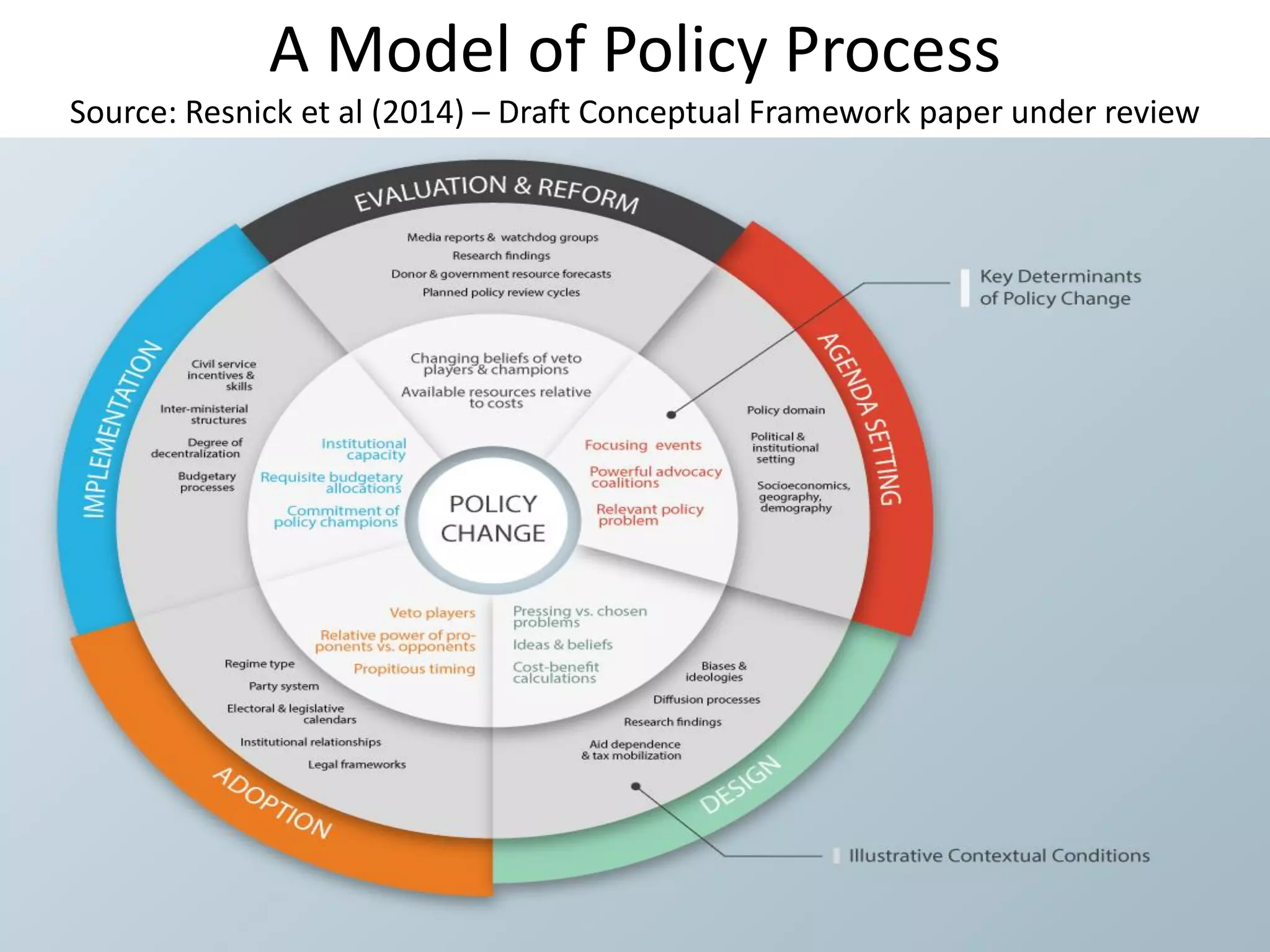
A Model of Policy Process
Source: Resnick et al (2014) – Draft Conceptual Framework paper under review
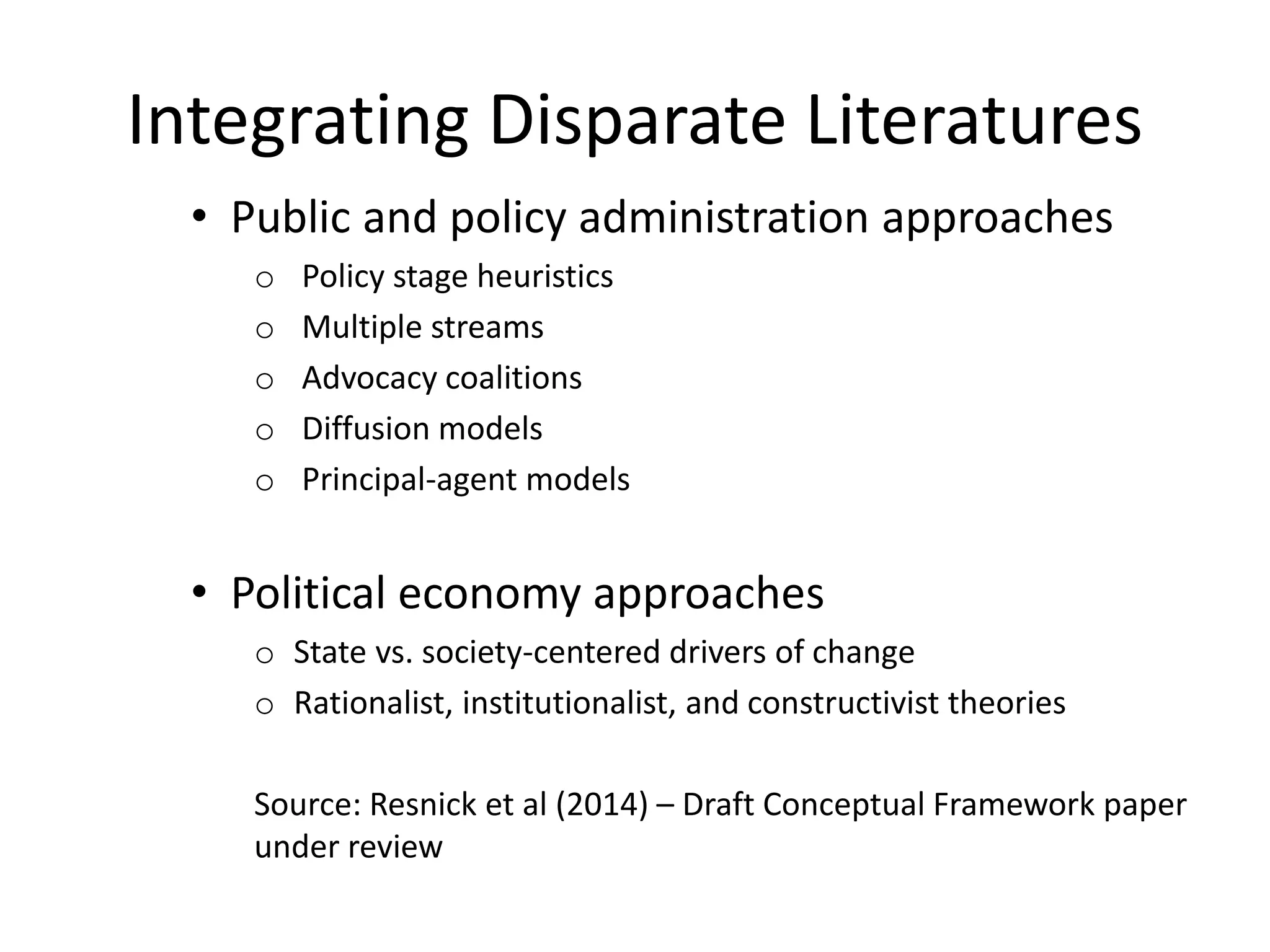
Integrating Disparate Literatures
• Public and policy administration approaches
o Policy stage heuristics
o Multiple streams
o Advocacy coalitions
o Diffusion models
o Principal-agent models
• Political economy approaches
o State vs. society-centered drivers of change
o Rationalist, institutionalist, and constructivist theories
Source: Resnick et al (2014) – Draft Conceptual Framework paper
under review
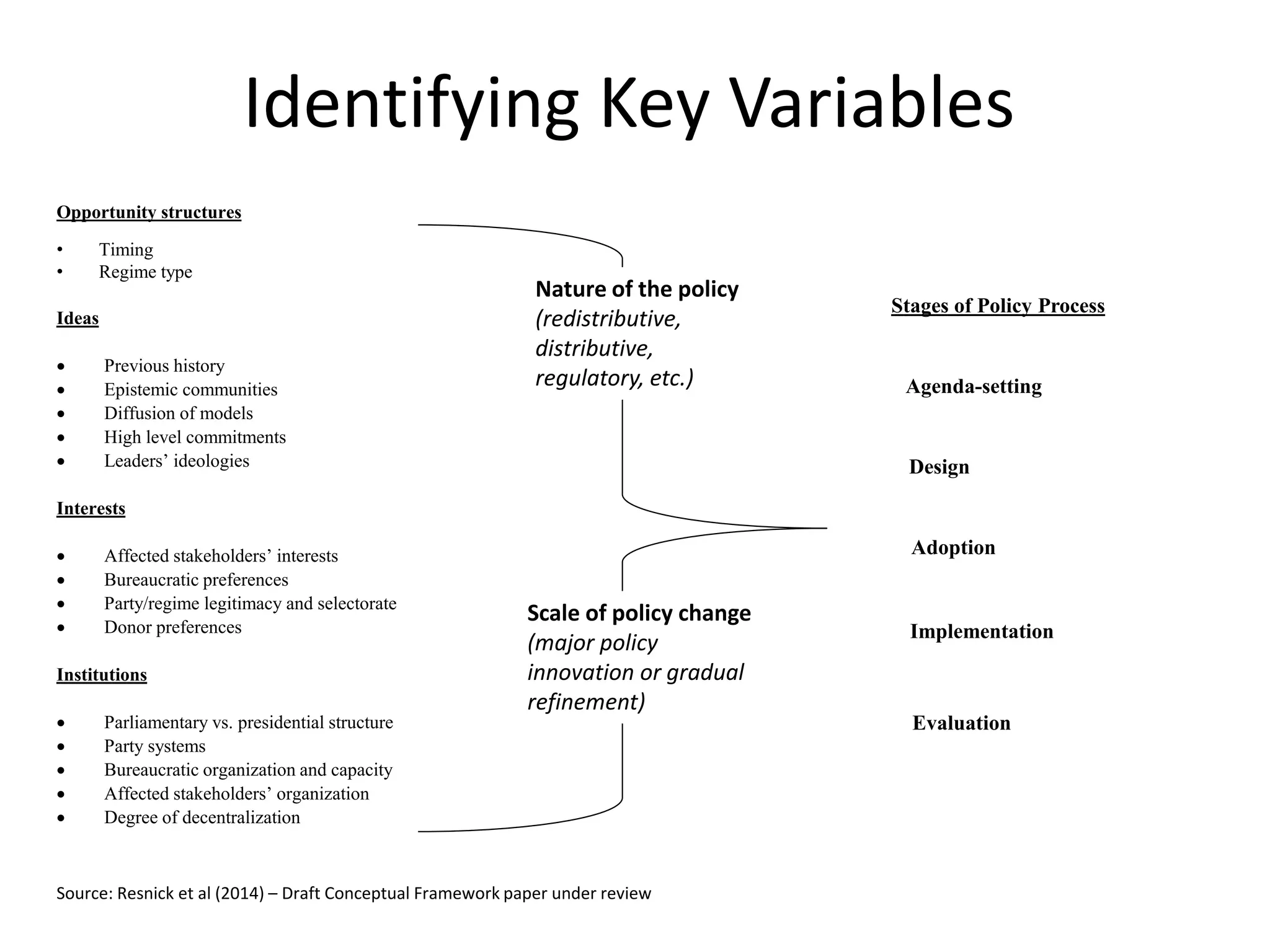
Identifying Key Variables
Agenda-setting
Design
Adoption
Implementation
Evaluation
Stages of Policy Process
Opportunity structures
• Timing
• Regime type
Ideas
 Previous history
 Epistemic communities
 Diffusion of models
 High level commitments
 Leaders’ ideologies
Interests
 Affected stakeholders’ interests
 Bureaucratic preferences
 Party/regime legitimacy and selectorate
 Donor preferences
Institutions
 Parliamentary vs. presidential structure
 Party systems
 Bureaucratic organization and capacity
 Affected stakeholders’ organization
 Degree of decentralization
Source: Resnick et al (2014) – Draft Conceptual Framework paper under review
Nature of the policy
(redistributive,
distributive,
regulatory, etc.)
Scale of policy change
(major policy
innovation or gradual
refinement)
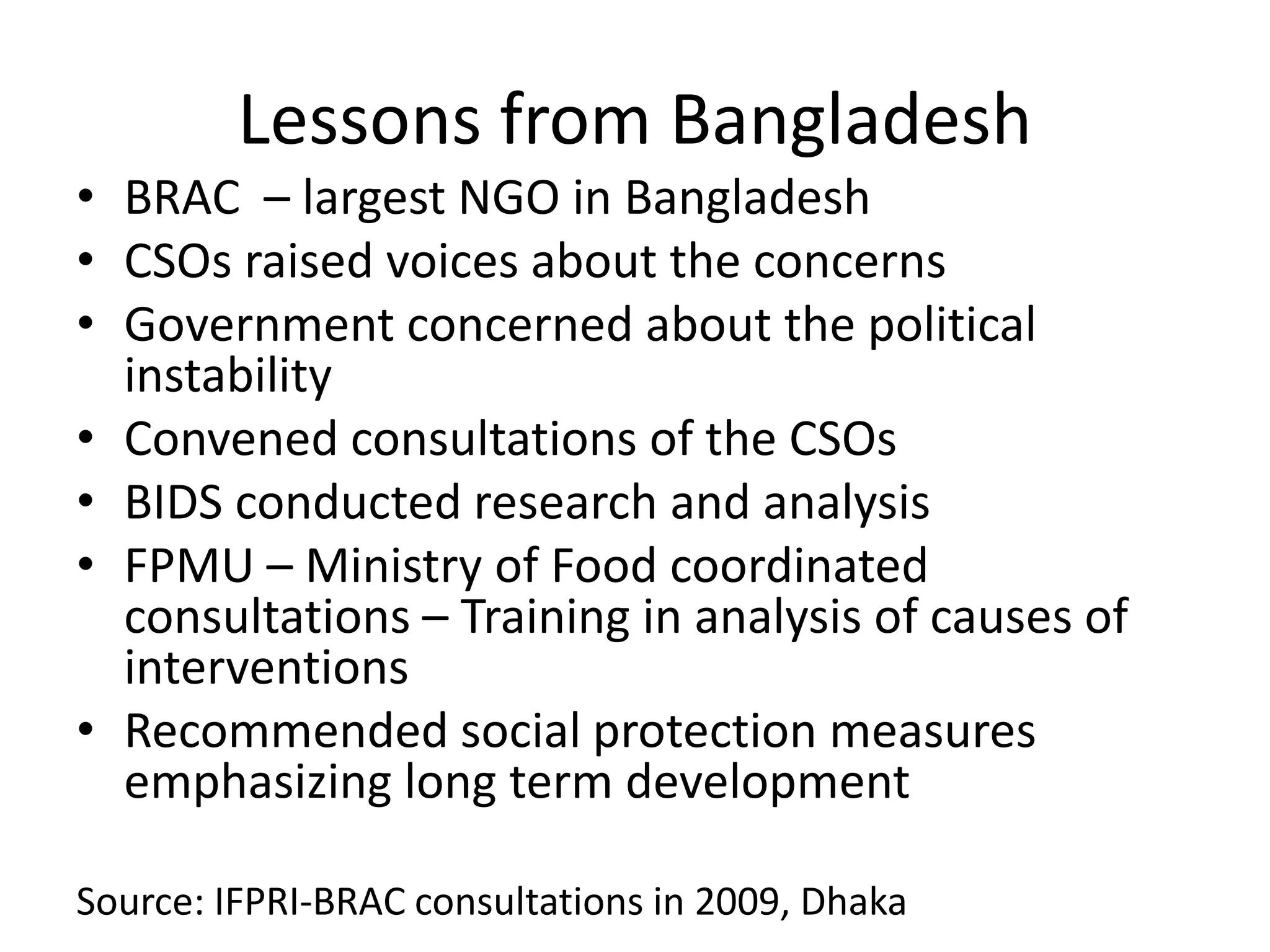
Lessons from Bangladesh
• BRAC – largest NGO in Bangladesh
• CSOs raised voices about the concerns
• Government concerned about the political
instability
• Convened consultations of the CSOs
• BIDS conducted research and analysis
• FPMU – Ministry of Food coordinated
consultations – Training in analysis of causes of
interventions
• Recommended social protection measures
emphasizing long term development
Source: IFPRI-BRAC consultations in 2009, Dhaka
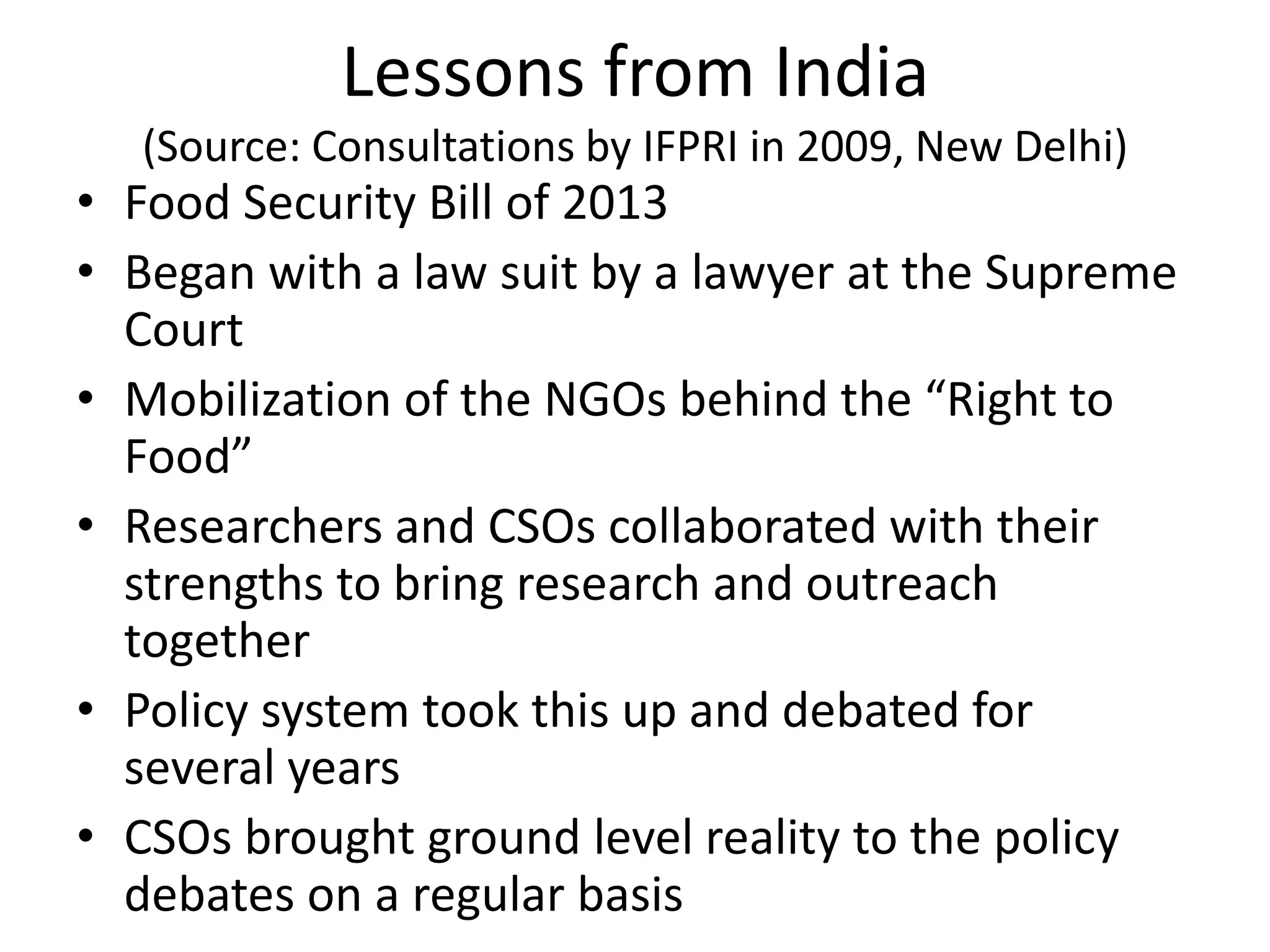
Lessons from India
(Source: Consultations by IFPRI in 2009, New Delhi)
• Food Security Bill of 2013
• Began with a law suit by a lawyer at the Supreme
Court
• Mobilization of the NGOs behind the “Right to
Food”
• Researchers and CSOs collaborated with their
strengths to bring research and outreach
together
• Policy system took this up and debated for
several years
• CSOs brought ground level reality to the policy
debates on a regular basis
Lessons from Vietnam
(Source: Consultations by IFPRI in 2011, Hanoi)
• Climate change policies and programs
• Several ministries and agencies are involved
• Initially doubts about the knowledge and role of
NGOs in the Climate change issues
• Leading NGO activist organization mobilized
other CSOs for consultation
• Several rounds of training and capacity
development were organized
• CSOs are beginning to help in the process of local
consultation and dissemination of information
about the potential challenges and adaptation
measures.
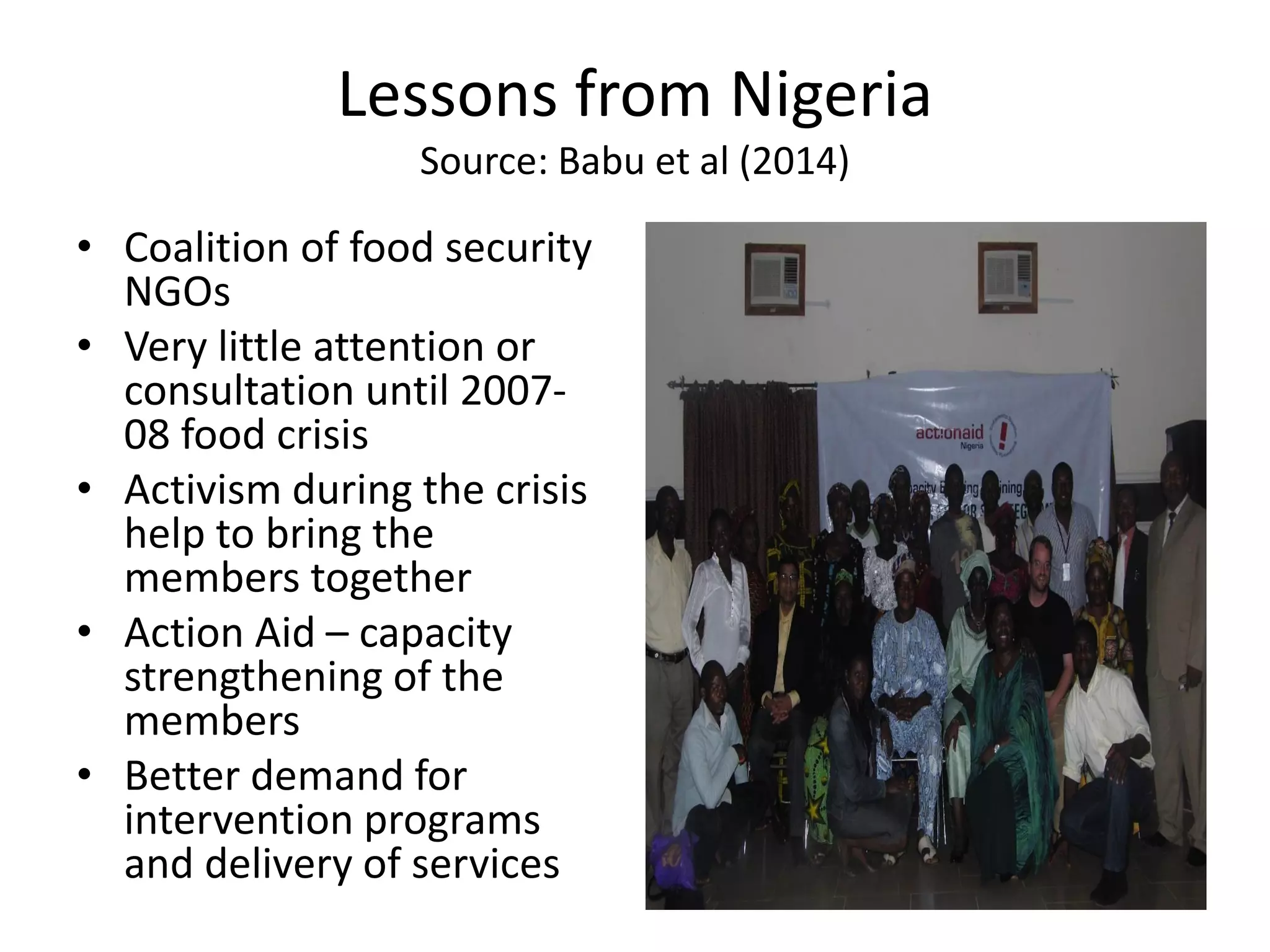
Lessons from Nigeria
Source: Babu et al (2014)
• Coalition of food security
NGOs
• Very little attention or
consultation until 2007-
08 food crisis
• Activism during the crisis
help to bring the
members together
• Action Aid – capacity
strengthening of the
members
• Better demand for
intervention programs
and delivery of services
Tools and Applications to Policy and
Extension Communications
• Setting extension policy priorities
• Mapping extension policy system
• Developing policy chronology fro extension
• Institutional Architecture Analysis
• Stakeholder mapping – Application to ATMA
• Assessing the needs for extension
communication
• Developing policy communication strategies
• All the above tools will be developed as part
of the group exercise by the participants
Concluding Remarks
• Addressing the issues, constraints and challenges of
policy makers and stakeholders in a policy system –
NGOs, networks play a key role
• Translating research and evidence into effective
agriculture, Food security and nutrition policies –
synthesis of research and consultation of the evidence
is a comparative advantage of the networks
• In the context of policy change, improving capacity of
the Network members in policy advocacy and
communication based on available evidence through
strategic analysis and synthesis could be effective

ICAR-IFPRI : Policy process and extension policy communications - Suresh Babu

  • 1.
    Suresh Babu Capacity BuildingProgram on Methodologies in Agriculture Extension Research September 21-24, 2015 Training Hall, NASC, Pusa, New Delhi Policy Process and Extension Communication Methods: Lessons from Developing Countries and Developing Tools for India
  • 2.
    Organization of Presentation •Why Study Policy Process? • A Model of Policy Process • Lessons from Role of Networks in Policy Process • Applications to Extension and Policy Communications • Concluding Remarks
  • 3.
    Why study thePolicy Process? • What drives the process of policy making and implementation under various political and socioeconomic contexts in various countries? • What are the challenges to design implement policies or enacting the laws? • How could be the process of policy change be enhanced? • What specific interventions will help in building better capacity of the policy system at its actors and players? • What innovations are need to track the improvements in the policy process? • What lessons could be learned from the case studies form developing countries?
  • 4.
    A Model ofPolicy Process Source: Resnick et al (2014) – Draft Conceptual Framework paper under review
  • 5.
    Integrating Disparate Literatures •Public and policy administration approaches o Policy stage heuristics o Multiple streams o Advocacy coalitions o Diffusion models o Principal-agent models • Political economy approaches o State vs. society-centered drivers of change o Rationalist, institutionalist, and constructivist theories Source: Resnick et al (2014) – Draft Conceptual Framework paper under review
  • 6.
    Identifying Key Variables Agenda-setting Design Adoption Implementation Evaluation Stagesof Policy Process Opportunity structures • Timing • Regime type Ideas  Previous history  Epistemic communities  Diffusion of models  High level commitments  Leaders’ ideologies Interests  Affected stakeholders’ interests  Bureaucratic preferences  Party/regime legitimacy and selectorate  Donor preferences Institutions  Parliamentary vs. presidential structure  Party systems  Bureaucratic organization and capacity  Affected stakeholders’ organization  Degree of decentralization Source: Resnick et al (2014) – Draft Conceptual Framework paper under review Nature of the policy (redistributive, distributive, regulatory, etc.) Scale of policy change (major policy innovation or gradual refinement)
  • 7.
    Lessons from Bangladesh •BRAC – largest NGO in Bangladesh • CSOs raised voices about the concerns • Government concerned about the political instability • Convened consultations of the CSOs • BIDS conducted research and analysis • FPMU – Ministry of Food coordinated consultations – Training in analysis of causes of interventions • Recommended social protection measures emphasizing long term development Source: IFPRI-BRAC consultations in 2009, Dhaka
  • 8.
    Lessons from India (Source:Consultations by IFPRI in 2009, New Delhi) • Food Security Bill of 2013 • Began with a law suit by a lawyer at the Supreme Court • Mobilization of the NGOs behind the “Right to Food” • Researchers and CSOs collaborated with their strengths to bring research and outreach together • Policy system took this up and debated for several years • CSOs brought ground level reality to the policy debates on a regular basis
  • 9.
    Lessons from Vietnam (Source:Consultations by IFPRI in 2011, Hanoi) • Climate change policies and programs • Several ministries and agencies are involved • Initially doubts about the knowledge and role of NGOs in the Climate change issues • Leading NGO activist organization mobilized other CSOs for consultation • Several rounds of training and capacity development were organized • CSOs are beginning to help in the process of local consultation and dissemination of information about the potential challenges and adaptation measures.
  • 10.
    Lessons from Nigeria Source:Babu et al (2014) • Coalition of food security NGOs • Very little attention or consultation until 2007- 08 food crisis • Activism during the crisis help to bring the members together • Action Aid – capacity strengthening of the members • Better demand for intervention programs and delivery of services
  • 11.
    Tools and Applicationsto Policy and Extension Communications • Setting extension policy priorities • Mapping extension policy system • Developing policy chronology fro extension • Institutional Architecture Analysis • Stakeholder mapping – Application to ATMA • Assessing the needs for extension communication • Developing policy communication strategies • All the above tools will be developed as part of the group exercise by the participants
  • 12.
    Concluding Remarks • Addressingthe issues, constraints and challenges of policy makers and stakeholders in a policy system – NGOs, networks play a key role • Translating research and evidence into effective agriculture, Food security and nutrition policies – synthesis of research and consultation of the evidence is a comparative advantage of the networks • In the context of policy change, improving capacity of the Network members in policy advocacy and communication based on available evidence through strategic analysis and synthesis could be effective