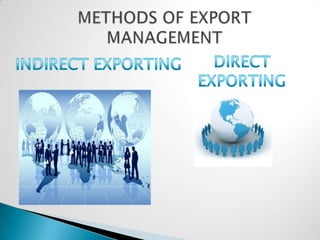
EXPORTING


ANGELA MARIA ÑUSTES ALVAREZ
KAREM ANDREA GALVIS FORERO
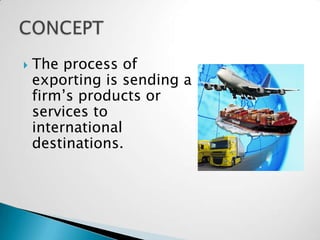
   The process of
    exporting is sending a
    firm’s products or
    services to
    international
    destinations.
The company may choose various ways to
  export its products:
 1. sometimes the company does nothing more
  than supply the products for export.

   2. sells abroad through its own affiliates or
    branches.

   3. could sell through an export commision
    house or through an export buyer acting as a
    purchasing agent for various foreign buyers
   Indirectly involvement: the firm participates
    through an intermediary and does not deal
    with foreign customers or firm.

   Direct involvement: the firm works with and
    develops a relationship with foreign
    customers, suppliers or markets.
   CHARACTERISTICS: Firms don’t have the cost
    efficiencies, scale economies, or foreign knowledge to
    export directly.


   This firms may contract with another
    enterprise that having the experience and
    knowledge in the export such as
    combination    export   manager                or        a
    manufacturer’s export agent.
   We can find a combination export manager
    (CEM), is an independent firm that acts as
    the export department of the company.

   A manufacturer’s export agent, unlike the
    CEM, doesn’t make sales in the name of
    each manufacturer it represents but retains
    its own identity by operating in its own
    name
   Direct exports are goods and services that are sold to
    an independent party outside of the exporter’s home
    country

   The direct approach involves more expense and
    detail than the indirect method

   The company takes responsibility to sell its products
    without intermediary, to an importer or buyer located
    in a market abroad.

   The company creates an export department to
    enable its own staff to concentrate on developing
    new markets abroad.
   Companies that want to separate international
    marketing from its domestic counterpart may
    form a separate sales subsidiary.

   Companies that feel the need for closer
    supervision over the sales of their products in a
    certain market may choose to establish their own
    selling offices abroad functioning as foreign
    sales branches of the home company.

   In time, the foreign sales branch may be
    incorporated by the company as a foreign sales
    subsidiary.
   Both direct and indirect exporters frequently
    make use of intermediaries who can assist
    with troublesome such as

   DOCUMENTATION
   FINANCING
   TRANSPORTATION
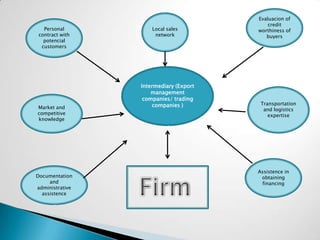
Evaluacion of
                                            credit
   Personal          Local sales        worthiness of
 contract with        network              buyers
   potencial
  customers


                 Intermediary (Export
                     management
                  companies/ trading
                     companies )         Transportation
Market and                                and logistics
competitive                                 expertise
knowledge


                                        Assistence in
Documentation                            obtaining
     and                                 financing
administrative
  assistence
   Exporting requires significantly lower level of
    investment than other modes of international
    expansion, such as FDI.

   International experience and the ability to
    develop either low-cost or differentiated
    products within the contacts of its value
    chain.
   Increasing sales
   Increasing profits
   Diversifying income streams
   For Small-and-Medium Enterprises (SME) with
    less than 250 employees, selling goods and
    services to foreign markets seems to be more
    difficult than serving the domestic market.

   The lack of knowledge for trade
    regulations, cultural differences, different
    languages and foreign-exchange situations
    as well as the strain of resources and staff
    interact like a block for exporting
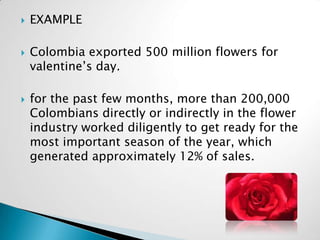
   EXAMPLE

   Colombia exported 500 million flowers for
    valentine’s day.

   for the past few months, more than 200,000
    Colombians directly or indirectly in the flower
    industry worked diligently to get ready for the
    most important season of the year, which
    generated approximately 12% of sales.
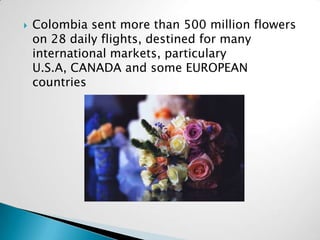
   Colombia sent more than 500 million flowers
    on 28 daily flights, destined for many
    international markets, particulary
    U.S.A, CANADA and some EUROPEAN
    countries

Exposicion exporting

  • 1.
    EXPORTING ANGELA MARIA ÑUSTESALVAREZ KAREM ANDREA GALVIS FORERO
  • 2.
    The process of exporting is sending a firm’s products or services to international destinations.
  • 3.
    The company maychoose various ways to export its products:  1. sometimes the company does nothing more than supply the products for export.  2. sells abroad through its own affiliates or branches.  3. could sell through an export commision house or through an export buyer acting as a purchasing agent for various foreign buyers
  • 5.
    Indirectly involvement: the firm participates through an intermediary and does not deal with foreign customers or firm.  Direct involvement: the firm works with and develops a relationship with foreign customers, suppliers or markets.
  • 6.
    CHARACTERISTICS: Firms don’t have the cost efficiencies, scale economies, or foreign knowledge to export directly.  This firms may contract with another enterprise that having the experience and knowledge in the export such as combination export manager or a manufacturer’s export agent.
  • 7.
    We can find a combination export manager (CEM), is an independent firm that acts as the export department of the company.  A manufacturer’s export agent, unlike the CEM, doesn’t make sales in the name of each manufacturer it represents but retains its own identity by operating in its own name
  • 8.
    Direct exports are goods and services that are sold to an independent party outside of the exporter’s home country  The direct approach involves more expense and detail than the indirect method  The company takes responsibility to sell its products without intermediary, to an importer or buyer located in a market abroad.  The company creates an export department to enable its own staff to concentrate on developing new markets abroad.
  • 9.
    Companies that want to separate international marketing from its domestic counterpart may form a separate sales subsidiary.  Companies that feel the need for closer supervision over the sales of their products in a certain market may choose to establish their own selling offices abroad functioning as foreign sales branches of the home company.  In time, the foreign sales branch may be incorporated by the company as a foreign sales subsidiary.
  • 10.
    Both direct and indirect exporters frequently make use of intermediaries who can assist with troublesome such as  DOCUMENTATION  FINANCING  TRANSPORTATION
  • 11.
    Evaluacion of credit Personal Local sales worthiness of contract with network buyers potencial customers Intermediary (Export management companies/ trading companies ) Transportation Market and and logistics competitive expertise knowledge Assistence in Documentation obtaining and financing administrative assistence
  • 12.
    Exporting requires significantly lower level of investment than other modes of international expansion, such as FDI.  International experience and the ability to develop either low-cost or differentiated products within the contacts of its value chain.  Increasing sales  Increasing profits  Diversifying income streams
  • 13.
    For Small-and-Medium Enterprises (SME) with less than 250 employees, selling goods and services to foreign markets seems to be more difficult than serving the domestic market.  The lack of knowledge for trade regulations, cultural differences, different languages and foreign-exchange situations as well as the strain of resources and staff interact like a block for exporting
  • 14.
    EXAMPLE  Colombia exported 500 million flowers for valentine’s day.  for the past few months, more than 200,000 Colombians directly or indirectly in the flower industry worked diligently to get ready for the most important season of the year, which generated approximately 12% of sales.
  • 15.
    Colombia sent more than 500 million flowers on 28 daily flights, destined for many international markets, particulary U.S.A, CANADA and some EUROPEAN countries