MONUMENTS IN FRANCE 
PR SENTATION PAR 
- DAKSH JAIN 
- ROLL NO- 10 
TYBBM (IB)
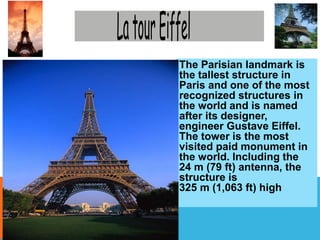
The Parisian landmark is 
the tallest structure in 
Paris and one of the most 
recognized structures in 
the world and is named 
after its designer, 
engineer Gustave Eiffel. 
The tower is the most 
visited paid monument in 
the world. Including the 
24 m (79 ft) antenna, the 
structure is 
325 m (1,063 ft) high
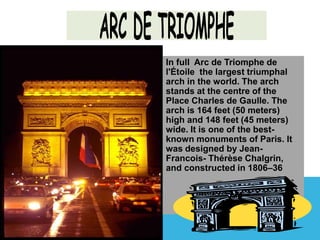
In full Arc de Triomphe de 
l'Étoile the largest triumphal 
arch in the world. The arch 
stands at the centre of the 
Place Charles de Gaulle. The 
arch is 164 feet (50 meters) 
high and 148 feet (45 meters) 
wide. It is one of the best-known 
monuments of Paris. It 
was designed by Jean- 
Francois- Thérèse Chalgrin, 
and constructed in 1806–36
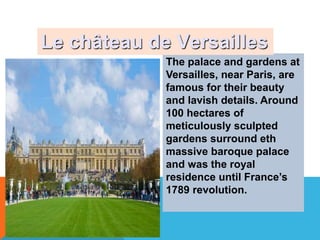
Le château de Versailles 
The palace and gardens at 
Versailles, near Paris, are 
famous for their beauty 
and lavish details. Around 
100 hectares of 
meticulously sculpted 
gardens surround eth 
massive baroque palace 
and was the royal 
residence until France’s 
1789 revolution.
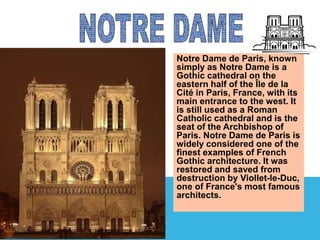
Notre Dame de Paris, known 
simply as Notre Dame is a 
Gothic cathedral on the 
eastern half of the Île de la 
Cité in Paris, France, with its 
main entrance to the west. It 
is still used as a Roman 
Catholic cathedral and is the 
seat of the Archbishop of 
Paris. Notre Dame de Paris is 
widely considered one of the 
finest examples of French 
Gothic architecture. It was 
restored and saved from 
destruction by Viollet-le-Duc, 
one of France's most famous 
architects.
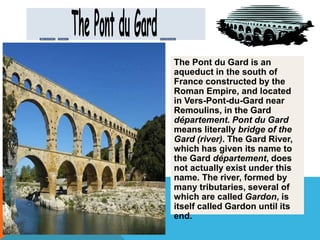
The Pont du Gard is an 
aqueduct in the south of 
France constructed by the 
Roman Empire, and located 
in Vers-Pont-du-Gard near 
Remoulins, in the Gard 
département. Pont du Gard 
means literally bridge of the 
Gard (river). The Gard River, 
which has given its name to 
the Gard département, does 
not actually exist under this 
name. The river, formed by 
many tributaries, several of 
which are called Gardon, is 
itself called Gardon until its 
end.
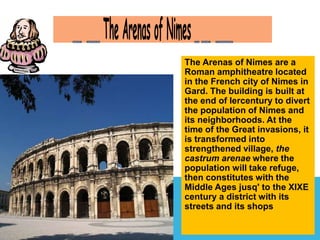
The Arenas of Nimes are a 
Roman amphitheatre located 
in the French city of Nimes in 
Gard. The building is built at 
the end of Iercentury to divert 
the population of Nimes and 
its neighborhoods. At the 
time of the Great invasions, it 
is transformed into 
strengthened village, the 
castrum arenae where the 
population will take refuge, 
then constitutes with the 
Middle Ages jusq' to the XIXE 
century a district with its 
streets and its shops
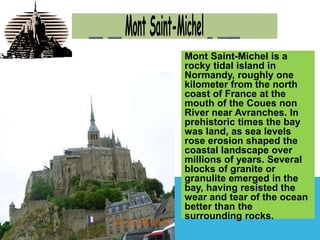
Mont Saint-Michel is a 
rocky tidal island in 
Normandy, roughly one 
kilometer from the north 
coast of France at the 
mouth of the Coues non 
River near Avranches. In 
prehistoric times the bay 
was land, as sea levels 
rose erosion shaped the 
coastal landscape over 
millions of years. Several 
blocks of granite or 
granulite emerged in the 
bay, having resisted the 
wear and tear of the ocean 
better than the 
surrounding rocks.
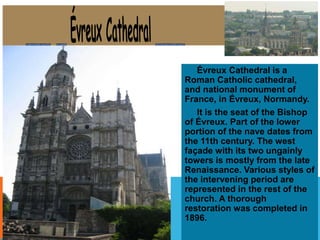
Évreux Cathedral is a 
Roman Catholic cathedral, 
and national monument of 
France, in Évreux, Normandy. 
It is the seat of the Bishop 
of Évreux. Part of the lower 
portion of the nave dates from 
the 11th century. The west 
façade with its two ungainly 
towers is mostly from the late 
Renaissance. Various styles of 
the intervening period are 
represented in the rest of the 
church. A thorough 
restoration was completed in 
1896.
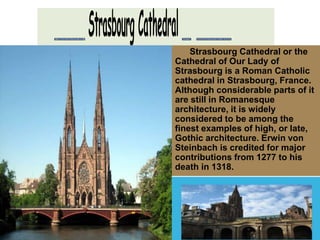
Strasbourg Cathedral or the 
Cathedral of Our Lady of 
Strasbourg is a Roman Catholic 
cathedral in Strasbourg, France. 
Although considerable parts of it 
are still in Romanesque 
architecture, it is widely 
considered to be among the 
finest examples of high, or late, 
Gothic architecture. Erwin von 
Steinbach is credited for major 
contributions from 1277 to his 
death in 1318.
MERCI 
POUR 
REGARDER

monuments in france ppt

  • 1.
    MONUMENTS IN FRANCE PR SENTATION PAR - DAKSH JAIN - ROLL NO- 10 TYBBM (IB)
  • 2.
    The Parisian landmarkis the tallest structure in Paris and one of the most recognized structures in the world and is named after its designer, engineer Gustave Eiffel. The tower is the most visited paid monument in the world. Including the 24 m (79 ft) antenna, the structure is 325 m (1,063 ft) high
  • 3.
    In full Arcde Triomphe de l'Étoile the largest triumphal arch in the world. The arch stands at the centre of the Place Charles de Gaulle. The arch is 164 feet (50 meters) high and 148 feet (45 meters) wide. It is one of the best-known monuments of Paris. It was designed by Jean- Francois- Thérèse Chalgrin, and constructed in 1806–36
  • 4.
    Le château deVersailles The palace and gardens at Versailles, near Paris, are famous for their beauty and lavish details. Around 100 hectares of meticulously sculpted gardens surround eth massive baroque palace and was the royal residence until France’s 1789 revolution.
  • 5.
    Notre Dame deParis, known simply as Notre Dame is a Gothic cathedral on the eastern half of the Île de la Cité in Paris, France, with its main entrance to the west. It is still used as a Roman Catholic cathedral and is the seat of the Archbishop of Paris. Notre Dame de Paris is widely considered one of the finest examples of French Gothic architecture. It was restored and saved from destruction by Viollet-le-Duc, one of France's most famous architects.
  • 6.
    The Pont duGard is an aqueduct in the south of France constructed by the Roman Empire, and located in Vers-Pont-du-Gard near Remoulins, in the Gard département. Pont du Gard means literally bridge of the Gard (river). The Gard River, which has given its name to the Gard département, does not actually exist under this name. The river, formed by many tributaries, several of which are called Gardon, is itself called Gardon until its end.
  • 7.
    The Arenas ofNimes are a Roman amphitheatre located in the French city of Nimes in Gard. The building is built at the end of Iercentury to divert the population of Nimes and its neighborhoods. At the time of the Great invasions, it is transformed into strengthened village, the castrum arenae where the population will take refuge, then constitutes with the Middle Ages jusq' to the XIXE century a district with its streets and its shops
  • 8.
    Mont Saint-Michel isa rocky tidal island in Normandy, roughly one kilometer from the north coast of France at the mouth of the Coues non River near Avranches. In prehistoric times the bay was land, as sea levels rose erosion shaped the coastal landscape over millions of years. Several blocks of granite or granulite emerged in the bay, having resisted the wear and tear of the ocean better than the surrounding rocks.
  • 9.
    Évreux Cathedral isa Roman Catholic cathedral, and national monument of France, in Évreux, Normandy. It is the seat of the Bishop of Évreux. Part of the lower portion of the nave dates from the 11th century. The west façade with its two ungainly towers is mostly from the late Renaissance. Various styles of the intervening period are represented in the rest of the church. A thorough restoration was completed in 1896.
  • 10.
    Strasbourg Cathedral orthe Cathedral of Our Lady of Strasbourg is a Roman Catholic cathedral in Strasbourg, France. Although considerable parts of it are still in Romanesque architecture, it is widely considered to be among the finest examples of high, or late, Gothic architecture. Erwin von Steinbach is credited for major contributions from 1277 to his death in 1318.
  • 11.